Dental Crowns
September 30, 2026
What Is Amelogenesis Imperfecta and How Is It Treated?
 Dr. Rifat Alsaman
.webp&w=3840&q=75)
Amelogenesis Imperfecta, often shortened to AI, is an inherited group of disorders affecting how tooth enamel develops. Enamel may be too thin, too soft, discolored, or rough. It can affect baby teeth, permanent teeth, or both. Treatment cannot rebuild natural enamel. Instead, it protects teeth, relieves sensitivity, restores function, and improves appearance.
What Is Amelogenesis Imperfecta?
AI describes several inherited disorders of enamel formation. It usually affects many or nearly all teeth. Enamel may be thin, soft, porous, rough, or discolored. More than 20 genes are linked to it, including AMELX, ENAM, FAM20A, and MMP20. The condition is rare and usually affects only the teeth.
How does Amelogenesis Imperfecta affect tooth enamel?
Enamel is the hard outer layer of each tooth. Cells called ameloblasts build and mineralize it during development. Genetic changes can disrupt this process. The result may be too little enamel, or enamel that is soft and brittle. Weak enamel chips easily and expose the sensitive dentin beneath.
Is Amelogenesis Imperfecta a genetic condition?
Yes. It is mainly caused by variants in genes that control enamel development. More than 20 such genes have been identified. The gene involved affects the pattern and how it is inherited. However, current tests do not find a cause in everyone. A negative test does not rule out the diagnosis.
Which teeth can be affected?
Usually, many teeth are affected, often in a similar way on both sides. Incisors, premolars, and molars can all be involved. Severity may differ between tooth groups. Dentists examine the whole mouth, not just the front teeth. Defects limited to one or two teeth usually point to another cause.
Can both baby teeth and permanent teeth be affected?
Yes. Both sets of teeth can be involved. Parents often first notice yellow, rough, or fragile baby teeth. Permanent teeth may later erupt with similar changes. X-rays can sometimes show problems in permanent teeth before they appear. Care in childhood focuses on comfort, protection, and preventing decay.
Learn how to tell the difference in Is It TMJ or Tooth Pain?
What Are the Symptoms of Amelogenesis Imperfecta?
Symptoms depend on the type and severity. Teeth may look yellow, brown, cream, or opaque. Surfaces may be rough, pitted, or grooved. Teeth can seem small or wear down quickly. Many people feel sensitivity to cold or sweet foods. Some also develop cavities, chipping, or bite problems.
What does abnormal enamel look and feel like?
Affected enamel may look yellow, brown, chalky, or mottled. It can feel rough or pitted rather than smooth. Thin enamel lets the darker dentin show through. Soft enamel may break away soon after teeth erupt. Similar signs occur in fluorosis and MIH, so a dental examination is needed.
Can Amelogenesis Imperfecta cause tooth sensitivity?
Yes. Thin or weak enamel gives less protection to the dentin underneath. Cold, heat, sweets, or brushing can then cause sharp discomfort. Severity ranges from mild to strong enough to affect eating. Fluoride, desensitizing toothpaste, and protective restorations can help. Persistent pain should always be checked by a dentist.
Why can teeth become yellow, brown, pitted, grooved, or unusually small?
Thin or poorly mineralized enamel lets yellow dentin show through. Pits and grooves form where enamel did not develop fully. Teeth look small when the enamel layer is reduced. Porous enamel also picks up stains more easily. Wear and exposed dentin can darken teeth further over time.
Can weak enamel lead to rapid tooth wear or breakage?
Yes. Weak enamel may not withstand normal chewing forces. It can chip, wear, or break away after teeth erupt. Exposed dentin then wears even faster. Grinding speeds up this damage. Early protection with restorations or crowns can slow progression and preserve tooth structure.
Can Amelogenesis Imperfecta affect chewing or the bite?
Yes. Worn teeth become shorter and may no longer meet properly. Some people also develop an open bite, where front teeth do not touch. Chewing can become uncomfortable or less efficient. Orthodontic and restorative treatment can help rebuild a stable, comfortable bite.
Can symptoms vary significantly from one person to another?
Yes. Severity varies widely, even between relatives with the same gene change. Some people mainly have cosmetic concerns. Others have strong sensitivity and major tooth breakdown. Diet, hygiene, grinding, and past treatment also play a role. This is why each patient needs an individual assessment.
Read about the safety of Acetaminophen Gummies or Soft Chews
What Causes Amelogenesis Imperfecta?
The cause is usually a genetic variant affecting enamel development. These variants disrupt enamel proteins, enzymes, or mineralization. More than 20 genes are involved. Inheritance can be dominant, recessive, or X-linked. Some people have a new variant with no family history. Environmental factors do not cause this inherited condition.
Which genes are associated with Amelogenesis Imperfecta?
Key genes include AMELX, ENAM, MMP20, KLK4, FAM20A, SLC24A4, WDR72, and DLX3. AMELX and ENAM make the main enamel-building proteins. MMP20 and KLK4 make enzymes needed for enamel to harden. Some genes cause dental changes only. Others are linked with wider syndromes.
How do gene variants interfere with enamel formation?
Enamel forms when proteins are laid down, then removed as crystals harden. Gene variants can disrupt any step of this process. Too little protein gives thin enamel. Poor protein removal gives soft, immature enamel. These differences explain why the types look and behave differently.
How is Amelogenesis Imperfecta inherited?
It depends on the gene involved. The condition can follow dominant, recessive, or X-linked inheritance. Some people inherit it from a parent. Others have a new variant not found in either parent. A detailed family history and genetic counseling can clarify the pattern.
Autosomal dominant inheritance
In dominant forms, one altered gene copy is enough to cause the condition. An affected parent has a 50% chance of passing it to each child. ENAM is commonly linked with this pattern. Severity can still differ between family members.
Autosomal recessive inheritance
In recessive forms, a child inherits an altered copy from both parents. Parents are usually carriers without symptoms. The condition may therefore appear unexpectedly in a family. MMP20, KLK4, and FAM20A are examples of genes linked with recessive forms.
X-linked inheritance
X-linked forms involve the AMELX gene on the X chromosome. Males are usually more severely affected. Females may show vertical bands of normal and abnormal enamel. Fathers do not pass X-linked traits to their sons.
Can Amelogenesis Imperfecta occur without a known family history?
Yes. A new genetic variant can cause it without any affected parent. Recessive inheritance can also hide the condition, because carrier parents look unaffected. Relatives may also have mild, undiagnosed changes. So a negative family history does not rule out the diagnosis.
Can Amelogenesis Imperfecta occur as part of a syndrome?
Yes, occasionally. FAM20A variants can cause enamel-renal syndrome, which also involves kidney calcification. DLX3 variants are linked with tricho-dento-osseous syndrome, affecting hair, teeth, and bone. Most patients, however, have dental findings only. Unusual medical signs may prompt further evaluation.
Can environmental factors cause Amelogenesis Imperfecta?
No. Environmental factors do not cause the inherited condition. However, illness, fever, poor nutrition, trauma, or excess fluoride can cause similar enamel defects. These usually affect specific teeth or follow the timing of development. A careful medical history helps tell them apart.
Understand the causes and treatment for Condensing Osteitis
What Are the Types of Amelogenesis Imperfecta?
There are four main types: hypoplastic, hypomaturation, hypocalcified, and a mixed form with taurodontism. They differ in enamel thickness, hardness, and mineral content. A recent scoping review of 33 pediatric studies found 54% hypoplastic, 36% hypomatured, and 10% hypocalcified cases. These figures describe the reviewed studies, not global prevalence.
Hypoplastic Amelogenesis Imperfecta
This type involves too little enamel. Enamel may be thin, pitted, grooved, or partly missing. Teeth can look small, with gaps between them. The enamel present is usually hard and bonds reasonably well. Composite or crowns can restore shape and protect teeth.
Hypomaturation Amelogenesis Imperfecta
Enamel is normal in thickness but not fully hardened. It may look mottled white, cream, yellow, or brown. Some patients have a snow-capped pattern near the biting edges. The enamel chips and wears easily. Bonding to it may be less predictable.
Hypocalcified Amelogenesis Imperfecta
Enamel has near-normal thickness but is very soft and poorly mineralized. It can wear away quickly after teeth erupt. Teeth often become yellow-brown and sensitive. Heavy tartar build-up may also occur. Early protection is important to limit rapid tooth loss.
Hypomaturation–Hypocalcified Amelogenesis Imperfecta with Taurodontism
This mixed form combines weak, soft enamel with taurodontism. Taurodont teeth have enlarged pulp chambers. This can make root canal treatment more demanding. One 2026 review reported taurodontism in 60% of its AI sample versus 16.7% in its MIH sample.
How are the different types distinguished clinically and genetically?
Dentists assess enamel thickness, hardness, color, and how it breaks down. X-rays compare enamel density with dentin density. Family history can suggest an inherited pattern. Genetic testing may identify the exact gene. Together, these findings guide diagnosis and treatment choices.
Amelogenesis Imperfecta Enamel Defects: What Changes in the Tooth?
The condition changes enamel thickness, hardness, mineral content, or structure. Some defects are visible when teeth erupt. Others appear later as enamel breaks down under chewing. Enamel cannot regrow, so lost structure stays lost. Treatment starts by assessing how much healthy teeth remain.
Thin enamel versus weak or poorly mineralized enamel
Thin enamel is a quantity problem: there is simply less of it. Weak enamel is a quality problem: thickness may be normal, but hardness is low. Thin enamel often bonds well. Weak enamel may need stronger protection because it breaks down easily.
How enamel thickness, hardness, color, and surface texture can differ
Thickness ranges from almost absent to near normal. Hardness ranges from firm to very soft. Color varies from white and cream to yellow, brown, or gray. Surfaces may be smooth, rough, pitted, or grooved. Dentists record these features to classify the type and plan care.
What is post-eruptive enamel breakdown?
It means enamel breaks down after a tooth enters the mouth. Chewing, brushing, and acidic foods gradually remove weak enamel. Edges become irregular and dentin becomes exposed. Sensitivity and plaque build-up often follow. New molars may need early protection.
Why enamel defects can increase the risk of decay and tooth damage
Rough and pitted surfaces trap plaque. Sensitivity can discourage thorough brushing. Thin enamel protects dentin less well. Worn teeth may crack under normal chewing. Still, decay is not inevitable. Fluoride, good hygiene, and regular checks greatly reduce the risk.
Can the enamel repair itself after it has formed?
No. Mature enamel has no living cells, so it cannot regrow. Fluoride can strengthen the surface but cannot rebuild missing enamel. Lost structure must be replaced with dental materials, such as composite or crowns. Be cautious of products claiming to regrow enamel.
Learn how to treat a Mouth Ulcer
Amelogenesis Imperfecta in Children
Children need special care because their teeth are still developing. Sensitivity and breakdown can affect eating, brushing, sleep, and confidence. Early diagnosis and staged treatment give the best results. Parents play a key role in daily hygiene, diet, and regular visits.
What are the early signs parents may notice?
Parents may notice yellow, brown, rough, or pitted teeth. New teeth may look small or chip soon after appearing. Children may complain that cold drinks hurt. They may avoid brushing because it feels uncomfortable. Similar changes on many teeth suggest an inherited cause.
Why can Amelogenesis Imperfecta be challenging during primary and mixed dentition?
Teeth are constantly erupting and changing position. New teeth may break down quickly after they appear. Treatment must protect teeth without blocking future orthodontic or restorative options. Young children may also struggle with long appointments. Plans therefore need regular updating.
How can tooth sensitivity affect eating, brushing, and daily activities?
Children may avoid cold, sweet, or acidic foods. Some brush less because it hurts, which increases decay risk. Discomfort can also affect sleep and concentration. Parents may mistake this avoidance for bad behavior. A dental check can find the cause and relieve it.
Why is early pediatric dental assessment important?
Early assessment records a baseline before major damage occurs. It starts prevention, such as fluoride and diet advice, early. It also helps plan protection for new teeth as they erupt. Positive early visits help children feel comfortable with later treatment.
How does treatment change as permanent teeth develop?
Young children usually receive prevention and protective crowns on baby teeth. During mixed dentition, new permanent molars may need early coverage. Teenagers often receive composite restorations while growth continues. Adults can then receive longer-lasting crowns or veneers. Each stage keeps future options open.
When should a child with suspected Amelogenesis Imperfecta see a pediatric dentist?
A child should be seen when several teeth look abnormal without a clear reason. Pain, sensitivity, chipping, or fast wear also need prompt review. Parents should not wait for permanent teeth to erupt. A first dental visit by age one is recommended for all children anyway.
Explore the link between Dehydration During Exercise and Tooth Erosion
How Is Amelogenesis Imperfecta Diagnosed?
Diagnosis is mainly clinical. The dentist examines the enamel, its pattern, and how it breaks down. Dental and family history add important clues. X-rays help assess enamel density and tooth development. Genetic testing can confirm the cause in some patients.
What happens during a dental examination?
The dentist asks about symptoms, past treatment, illnesses, and relatives' teeth. Each tooth is checked for color, texture, pits, wear, and fractures. Gums and bites are also assessed. Photographs may record the starting point. X-rays or genetic tests are added when needed.
How does a dentist assess enamel thickness, texture, color, and distribution?
Teeth are dried and examined under good light. The dentist looks for exposed dentin and missing enamel. A gentle probe shows whether enamel is hard or soft. Color and texture are recorded on each tooth. The dentist also checks whether both sides are affected equally.
Why are family history and the pattern of affected teeth important?
Similar teeth in relatives suggest an inherited cause. Changes affecting many teeth symmetrically also point to AI. By contrast, defects mainly on first molars and incisors suggest MIH. However, new variants can occur without family history. These clues are combined with other findings.
When are dental X-rays useful?
X-rays show enamel density, tooth shape, roots, and pulp chambers. They can reveal problems in permanent teeth before they erupt. They also help plan larger treatments. X-rays are taken only when they answer a clear clinical question, keeping radiation low.
When might CBCT or other imaging be clinically appropriate?
CBCT gives 3D images for selected complex cases. It can help with unusual roots, impacted teeth, or detailed treatment planning. It is not needed to diagnose most enamel defects. The benefit must outweigh the extra radiation, especially in children.
When can genetic testing support the diagnosis?
Genetic testing helps when many teeth in both sets are affected. It can identify the gene, clarify inheritance, and guide relatives. NHS guidance supports testing in selected cases after environmental causes are excluded. A negative result does not rule out the condition.
What conditions can look similar to Amelogenesis Imperfecta?
Several conditions can look similar. These include fluorosis, MIH, enamel hypoplasia, and dentinogenesis imperfecta. Tetracycline staining, erosion, and decay can also mimic it. The pattern, timing, and family history help tell them apart.
Amelogenesis Imperfecta versus dental fluorosis
Fluorosis results from too much fluoride while teeth are forming. It often appears as white lines, flecks, or brown stains. It usually affects teeth formed during the same period. A history of high fluoride intake supports fluorosis. A family history of similar teeth points toward AI.
Amelogenesis Imperfecta versus molar-incisor hypomineralization
MIH mainly affects first permanent molars and often incisors. Its patches have clear borders and are often uneven between sides. Premolars and second molars are usually spared. AI tends to affect most teeth evenly. Hypomature forms of AI can still look similar to MIH.
Amelogenesis Imperfecta versus enamel hypoplasia
Acquired enamel hypoplasia causes pits or grooves from a specific event. Causes include illness, trauma, or infection of a baby tooth. It usually affects one tooth or teeth forming at the same time. AI usually affects many teeth symmetrically.
Amelogenesis Imperfecta versus dentinogenesis imperfecta and other inherited tooth disorders
Dentinogenesis imperfecta affects dentin rather than enamel. Teeth may look blue-gray or amber and wear quickly. X-rays often show bulbous crowns, short roots, and closed pulp chambers. It is usually linked to the DSPP gene. Correct diagnosis guides treatment and family advice.
Why should enamel defects not be self-diagnosed from photographs alone?
Photos cannot show enamel hardness, thickness, or X-ray findings. Lighting and filters can also change tooth color. Many conditions look alike in pictures. Self-diagnosis may lead to delayed care or unnecessary cosmetic work. A dental examination is always needed.
Read about the risks of Chewing Tobacco Teeth Damage
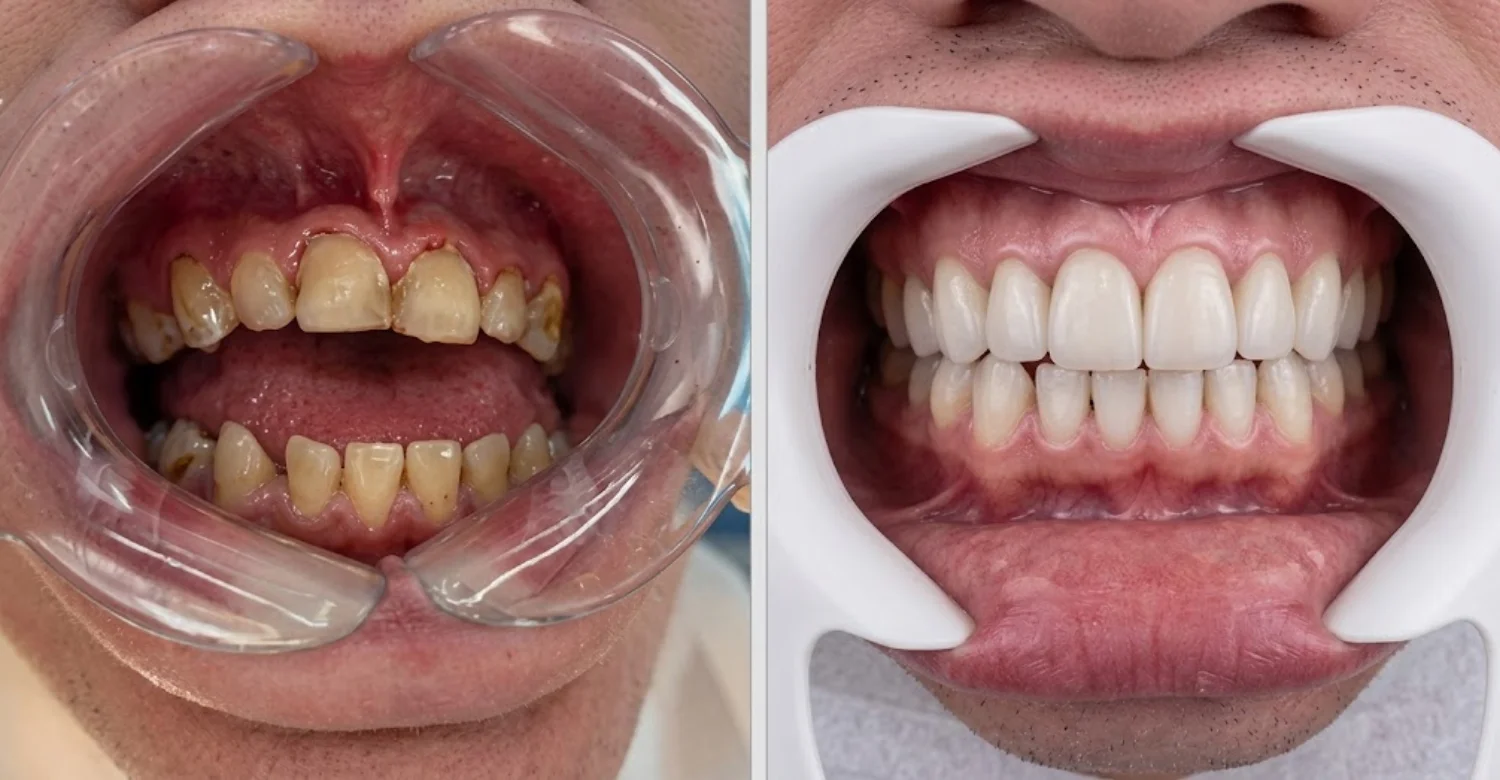
Note : All images used are for editorial and illustrative purposes only and may not originate from the original news provider or associated company.
What We Notice Clinically
In the clinic, patterns matter more than color alone. Dentists check whether changes are widespread, symmetrical, and present in both sets of teeth. Family history, sensitivity, wear, and bite changes are also noted. At Vitrin Clinic, this assessment is combined with digital records before any restorative plan.
Common clinical patterns in patients with generalized enamel defects
Many teeth often show similar thin, rough, discolored, or broken enamel. Both sides of the mouth are usually affected. Patients often report sensitivity, fast wear, or fillings that keep falling out. Gaps between teeth and short crowns are also common findings.
Why symmetry, dentition involvement, family history, and enamel appearance matter
Each feature adds a clue. Symmetry suggests a developmental cause. Involvement of both baby and adult teeth supports an inherited condition. Family history can reveal a genetic pattern. Enamel appearance helps identify the type. No single feature is enough on its own.
Common misconceptions about discolored or unusually shaped teeth
Not every stained tooth has an enamel disorder. Food, drinks, tobacco, and medicines can also stain teeth. Severe discoloration does not always mean severe weakness. Whitening often works poorly on inherited enamel defects. Diagnosis should rely on structure, not color alone.
Why not every white, yellow, or pitted enamel change means Amelogenesis Imperfecta
White or yellow marks can come from fluorosis, MIH, early decay, or trauma. Pits can result from a single illness during childhood. Surface stains can also mimic deeper defects. Inherited defects are more likely when many teeth are affected evenly. A careful examination avoids wrong labels.
Important clinical distinctions between inherited and acquired enamel defects
Inherited defects usually affect most teeth in both sets. Acquired defects often affect specific teeth or appear as horizontal bands. These bands match the timing of an illness or other event. Medical history, examination, X-rays, and sometimes genetics help separate the two.
What factors can change the treatment plan?
Plans depend on age, enamel type, remaining tooth structure, and symptoms. Decay, gum health, bite, and tooth position also matter. Previous fillings or crowns affect the options. Grinding habits, budget, and personal goals also shape the sequence. Treatment is always tailored to the individual.
Clinical Note
Dr. Rifat Alsaman , on assessing enamel structure before choosing restorative treatment
Dr. Rifat Alsaman is Head of the Medical Team at Vitrin Clinic and a cosmetic dentist. Dr. Alsaman stresses assessing tooth structure before choosing any restoration. Color alone cannot show whether enamel is thin, soft, or missing. Each tooth deserves its own decision, while healthy structure is preserved for the future.
Find out if Subperiosteal Implants for Severe Jawbone Atrophy are right for you
.webp)
Increased tooth sensitivity and discomfort
Weak enamel leaves dentin exposed to cold, heat, and touch. Brushing and eating can become uncomfortable. Short, sharp pain is typical of exposed dentin. Lingering pain may signal a nerve problem instead. Fluoride, desensitizing products, and protective restorations can help.
Tooth wear, enamel loss, and fractures
Weak enamel wears away under normal chewing. Once dentin is exposed, wear speeds up. Front teeth may become short or chipped. Back teeth may lose their cusps. Grinding adds extra damage. Small defects can be bonded, while larger ones may need crowns.
Dental caries and difficulty maintaining oral hygiene
Rough enamel traps plaque, and sensitivity can discourage brushing. Together, these raise the risk of decay and gum inflammation. Fluoride, diet control, and regular checks lower this risk. Smooth restorations are often easier to clean than rough enamel.
Changes in bite, tooth position, or vertical dimension
Worn teeth become shorter, which can lower the bite height. Some patients also have an open bite. Chewing may become less efficient. Orthodontic treatment can correct tooth positions. Restorations can then rebuild tooth height and a stable bite.
Aesthetic concerns and their potential effect on quality of life
Discolored or damaged teeth can affect self-esteem, especially in teenagers. Some young people avoid smiling or speaking in groups. Studies report better quality of life after restorative care. Treatment should improve appearance while preserving healthy tooth structure.
Why long-term monitoring may be needed
Enamel defects last for life. Teeth can keep wearing, and restorations eventually need maintenance. Children need checks as new teeth erupt. Adults may need older restorations replaced. Regular reviews prevent emergencies and keep treatment simpler.
Discover the connection between Swimming and Tooth Erosion
How Can Amelogenesis Imperfecta Tooth Sensitivity Be Relieved?
Relief starts with finding the cause. Mild sensitivity often improves with fluoride toothpaste and gentle brushing. Desensitizing toothpaste can also help. Stronger cases may need professional fluoride or protective restorations. Persistent pain should always be checked by a dentist.
What can temporarily reduce sensitivity at home?
Use a soft toothbrush and fluoride toothpaste. Brush gently, and try lukewarm water. Limit very cold, hot, or acidic foods for a while. Desensitizing toothpaste may take a few weeks to work. See a dentist if pain persists or worsens.
How can fluoride and desensitizing products fit into preventive care?
Fluoride strengthens enamel and reduces decay. The ADA supports fluoride varnish for children under six. Older high-risk patients may benefit from stronger fluoride products. Desensitizing toothpastes, such as those with potassium nitrate, ease sensitivity. None of these rebuild missing enamel.
Which foods and drinks may aggravate sensitivity?
Cold foods, citrus juices, fizzy drinks, sports drinks, and sour sweets can trigger pain. Frequent sugar also raises decay risk. Have acidic drinks with meals rather than sipping all day. Rinse with water afterward. Wait before brushing after acidic foods.
When does persistent sensitivity require professional assessment?
See a dentist if sensitivity lasts several weeks or affects eating. Pain without a trigger, or pain that lingers, also needs attention. Night pain needs prompt review. Swelling, fever, or pus requires urgent care. These may signal decay, cracks, or nerve damage.
What dental treatments may help protect exposed or fragile tooth surfaces?
Options include fluoride varnish, dentin sealants, and composite bonding. Sealants can protect deep grooves. Crowns may be needed when breakdown is extensive. Children may receive pediatric crowns on baby molars. The dentist removes as little of the tooth as possible.
What Is the Treatment for Amelogenesis Imperfecta?
Treatment is tailored to each patient. It may include prevention, fluoride, bonding, crowns, veneers, or orthodontics. Children usually receive staged care as their teeth develop. Adults may need full-mouth rehabilitation. No single treatment suits everyone.
Can Amelogenesis Imperfecta be cured?
No. The genetic cause cannot be reversed, and enamel cannot regrow. However, treatment can manage its effects very well. Restorations replace lost structure and reduce sensitivity. Prevention protects the teeth over time. Most patients can achieve comfortable, natural-looking teeth.
Why treatment focuses on protecting teeth, reducing symptoms, and restoring function
Weak enamel causes sensitivity, wear, decay, and bite problems. Restorations cover exposed surfaces and rebuild tooth shape. Prevention reduces decay and further damage. Together, they keep teeth comfortable and functional. Early protection often means less invasive treatment later.
How is treatment selected according to enamel type and severity?
Hypoplastic enamel is thin but usually hard, so bonding works well. Hypocalcified enamel is soft, so bonding is less reliable. These teeth often need fuller coverage. Hypomaturation falls between the two. The dentist also considers symptoms, decay, bite, and age.
Preventive treatment and caries-risk management
Prevention should start early. It includes fluoride toothpaste, professional fluoride, and diet advice. Sealants can protect deep grooves. Regular checks catch problems while they are small. Good prevention also helps restorations last longer.
Conservative restorative treatment
Conservative treatment repairs defects while removing little or no tooth. It suits pits, small fractures, and cosmetic concerns. Composite and glass ionomer are the main materials. These can be repaired or upgraded later. This approach is ideal for young patients.
Composite resin restorations
Composite is a tooth-colored material bonded directly to teeth. It can fix pits, chips, and discoloration. It can also rebuild worn teeth. Bonding may be weaker on soft enamel. Composite can stain or chip, but small repairs are simple.
Glass ionomer and other selected restorative materials
Glass ionomer bonds chemically to teeth and releases fluoride. It tolerates moisture well, which helps in young children. It is less wear-resistant than composite on biting surfaces. It is often used as a temporary or transitional option.
Sealants and protective measures where clinically appropriate
Sealants cover deep grooves in back teeth to prevent decay. They work best on newly erupted molars. Glass ionomer sealants suit teeth that are hard to keep dry. Sealants need regular checks and may need replacing.
Crowns and full-coverage restorations
Crowns cover the whole tooth when enamel loss is extensive. They reduce sensitivity, restore shape, and protect against further breakdown. Preparing a crown removes some tooth, so it must be justified. Children may receive stainless steel or zirconia crowns. Adults often receive ceramic or zirconia crowns.
When crowns may be considered for severely weakened enamel
Crowns suit teeth with major wear, fractures, or repeated filling failures. Severe sensitivity that resists simpler care may also justify them. The tooth must have enough healthy structure left. Onlays may be a more conservative option in some cases.
Pediatric crowns for selected primary teeth
Preformed stainless steel crowns protect damaged baby molars. In some cases, the Hall technique places them without drilling. Zirconia crowns offer a tooth-colored option. These crowns reduce pain and protect chewing until adult teeth arrive.
Zirconia, porcelain, or other restorative materials according to clinical needs
Zirconia is very strong and suits back teeth. Porcelain and lithium disilicate look natural and suit front teeth. Composite is used for conservative or temporary repairs. The best material depends on tooth position, bite, and remaining structure.
Veneers and minimally invasive aesthetic restorations
Veneers improve color and shape with less tooth removal than crowns. They need enough healthy enamel for bonding. Composite veneers are repairable and suit younger patients. Porcelain veneers resist staining and last longer. Severely weakened teeth may need crowns instead.
Orthodontic treatment when malocclusion or tooth positioning is involved
Braces or aligners can correct crowding, spacing, or an open bite. Aligning teeth first can make later restorations simpler. Brackets may bond poorly to weak enamel, so bands or build-ups may help. Orthodontic and restorative steps should follow one shared plan.
When multidisciplinary care is needed
Complex cases may involve pediatric, restorative, orthodontic, gum, and root canal specialists. Genetic counseling may also be helpful. Joint planning gives the patient one clear treatment path. NHS England recognizes complex enamel disorders as needing specialist team care.
Why treatment may occur in stages from childhood through adulthood
Teeth and jaws change until early adulthood. Treatment suited to a child may not suit an adult. Early stages focus on protection and comfort. Later stages provide longer-lasting restorations once growth settles. Each stage builds on the one before.
Clinical Note
Dr. Rifat Alsaman, Head of the Medical Team at Vitrin Clinic and cosmetic dentist, on balancing tooth preservation, function, aesthetics, and long-term restorability
A good plan balances four goals: preserving tooth structure, reliable function, natural appearance, and easy maintenance. Severely damaged teeth may need crowns. Healthier teeth often suit conservative options. A staged plan allows treatment to adapt as the teeth change.
Check the connection between Idiopathic Multicentric Castleman Disease and Dental Health
What Are the Amelogenesis Imperfecta Dental Treatment Options by Age?
Treatment changes with age. Young children need prevention and protection of baby teeth. Mixed dentition requires close monitoring as adult teeth erupt. Teenagers often receive transitional restorations. Adults can receive definitive rehabilitation once growth is complete.
Treatment considerations for young children
The focus is comfort, prevention, and protection. Fluoride, diet advice, and gentle brushing come first. Damaged baby molars may receive pediatric crowns. Short, positive visits help children cope. Sedation or general anesthesia may be considered for extensive treatment.
Treatment during mixed dentition
New adult teeth need close monitoring as they erupt. First permanent molars, around age six, often need early protection. Composite build-ups or preformed crowns can shield them. Fluoride remains essential. Orthodontic assessment may begin during this stage.
Treatment planning for adolescents
Teenagers often worry about appearance. Composite veneers can improve front teeth without heavy preparation. Orthodontics may come before final restorations. Young teeth have large pulp chambers, so conservative work is safer. Definitive crowns or veneers usually wait until adulthood.
Comprehensive restorative treatment in adults
Adults may have years of wear, fractures, and failed restorations. Treatment starts by stabilizing decay, gums, and any nerve problems. A new bite height may be tested with temporary restorations. Crowns, veneers, or composite then rebuild the smile. A night guard may protect the final result.
Why previous restorations and remaining tooth structure affect treatment choices
Every old filling or crown reduces natural tooth structure. Replacing them often removes a little more tooth. Removing old work may also reveal hidden damage. Dentists therefore plan conservatively to extend each tooth's lifespan. Past treatment records help these decisions.
What Are the Side Effects and Limitations of Amelogenesis Imperfecta Treatment?
No restoration lasts forever. Patients may have temporary sensitivity or gum irritation after treatment. Restorations can chip, wear, stain, or loosen. Bonding to weak enamel may be less reliable. Regular maintenance and realistic expectations are part of every plan.
Temporary sensitivity after restorative procedures
Mild sensitivity after treatment is common and usually settles within days or weeks. A restoration that feels high can be adjusted easily. Avoid very hot or cold foods for a short time. Pain that persists or worsens should be reported to the dentist.
Possible discomfort or gum irritation during treatment
Gums may feel sore after preparation or temporary crowns. Gentle cleaning helps them settle. Digital scanning can reduce discomfort from traditional impressions. Persistent swelling may mean a restoration needs adjusting. Healthy gums help restorations fit and last.
Restoration fracture, wear, or the need for maintenance
Composite can chip or stain, and ceramics can fracture under heavy force. Grinding increases this risk, so a night guard may help. Avoid biting ice, pens, or other hard objects. Regular checks allow small repairs before bigger problems develop.
Why some treatments may need replacement over time
Restorations age under daily chewing and temperature changes. Children's restorations may need updating as they grow. Adult restorations can wear or develop leaks at their edges. Some replacements are planned, such as upgrading temporary composites. Conservative treatment keeps more teeth for future replacements.
Why aggressive tooth preparation is not appropriate for every patient
Teeth with enamel defects often have little healthy structure left. Removing more can weaken them and risk nerve damage. This is especially true in young teeth with large pulp chambers. Bonded, minimal-preparation options often preserve more teeth. Preparation should match real structural needs.
Why treatment risks and benefits should be discussed before irreversible procedures
Irreversible treatment permanently changes the tooth. Patients should understand the benefits, risks, alternatives, and maintenance needs. Mock-ups or digital previews can help. Parents should be fully involved with their children. Taking time or seeking a second opinion is reasonable.
Learn how your body clock affects your mouth in Circadian Rhythm and Oral Health
What Can Patients Do to Protect Teeth With Amelogenesis Imperfecta?
Daily habits make a big difference. Brush gently with fluoride toothpaste and clean between teeth. Limit sugary and acidic snacks and drinks. Report sensitivity or chipping early. Avoid unproven enamel products and harsh whitening. Keep regular dental checkups.
Tips for Patients
Brush gently twice a day with fluoride toothpaste. Clean between your teeth daily. Drink water between meals. Limit sugary and acidic drinks. Wear a mouthguard for sports and a night guard if you grind. Keep records of past dental treatment.
Use fluoride toothpaste and maintain consistent oral hygiene
Fluoride helps protect weak enamel from decay. Use an age-appropriate amount, such as a smear or pea-sized amount for children. Spit after brushing rather than rinsing heavily. A soft or pressure-sensing electric toothbrush helps. Keep brushing sensitive teeth gently.
Clean between the teeth without traumatizing sensitive areas
Floss, interdental brushes, or water flossers remove plaque between teeth. Interdental brushes often suit the gaps common with thin enamel. Use slow, gentle movements. Mild bleeding usually improves with regular cleaning. Ask your dentist to show the best technique.
Limit frequent sugary snacks and drinks
How often you eat sugar matters more than how much. Keep sweets to mealtimes. Choose water or milk between meals. Avoid sipping sweet or acidic drinks over long periods. Drink only water after brushing at night.
Discuss sensitivity, chewing difficulty, and enamel breakage with the dentist
These signs show how the condition is progressing. Growing sensitivity may mean enamel loss. Chewing difficulty may signal wear or bite changes. Repeated chipping suggests a tooth needs stronger protection. Tell your dentist early rather than waiting for a routine visit.
Avoid trying unproven enamel-repair products or aggressive whitening methods without professional advice
No product can regrow defective enamel. Whitening can increase sensitivity and give uneven results. Charcoal powders and abrasive toothpastes can worsen wear. Lemon juice and other acidic home remedies damage teeth. Ask your dentist before trying any product.
Keep preventive examinations and recommended follow-up visits
Regular visits catch decay, wear, and restoration problems early. Your dentist can reapply fluoride and make small repairs. Visit frequency depends on your risk level. Checkups remain important even after major treatment. Book your next visit before you leave.
Prepare relevant family and dental history before an assessment
Bring details of past treatment, X-rays, and any genetic reports. Note whether relatives have similar teeth. Mention childhood illnesses, injuries, and fluoride use. Old photos of your teeth can also help. Write your questions down in advance.
Can Amelogenesis Imperfecta Be Prevented?
The condition itself cannot be prevented, because it is genetic. However, its complications can be reduced. Fluoride, good hygiene, a healthy diet, and early protection all help. Genetic counseling can explain the risk for future children in affected families.
Why a genetic enamel-development disorder cannot generally be prevented through routine oral hygiene
Enamel forms before teeth appear, much of it before birth. Brushing and diet cannot change the underlying gene. The condition is not caused by poor care, so parents should not blame themselves. Good hygiene still matters, because it prevents decay and further damage.
How preventive dentistry can reduce complications after diagnosis
Fluoride, sealants, diet advice, and regular checks reduce decay and damage. Early protective restorations stop weak enamel from breaking down. Easing sensitivity makes brushing easier. In children, prevention can reduce emergency visits and treatment under anesthesia.
How early diagnosis can support long-term oral health management
Early diagnosis allows prevention to start before damage occurs. It helps protect new teeth as they erupt. Siblings can also be checked. Families gain time to plan staged treatment and costs. Planned care is usually simpler than emergency care.
What Are the Warning Signs and When Should You See a Dentist?
See a dentist if you notice persistent sensitivity, rapid wear, chipping, or new cavities. Difficulty chewing or loose restorations also need attention. Children with abnormal enamel on many teeth should be assessed. Severe pain, swelling, or fever needs urgent care.
Tooth pain or sensitivity that interferes with eating or brushing
Pain that changes how you eat or brush needs assessment. It may come from exposed dentin, decay, or cracks. Children may avoid foods or refuse brushing. Home products may help briefly, but should not delay a visit.
Rapid enamel loss, chipping, or unexpected tooth breakage
Fast changes in tooth shape suggest weak enamel. Chips expose dentin and cause sensitivity. Sharp edges can irritate the tongue. Keep any broken piece and avoid chewing on that side. Early treatment usually saves more of the tooth.
New cavities developing around defective enamel
Rough enamel traps plaque, so cavities can form easily. Early decay may appear as white chalky spots or brown marks. Small lesions may respond to fluoride alone. Larger ones need fillings. Regular checks catch decay early.
Difficulty chewing because teeth are worn or damaged
Short, worn, or broken teeth can make chewing hard. You may notice food trapping, jaw tiredness, or avoiding tough foods. Clicking jaw joints may also occur. Temporary build-ups can restore comfort quickly while longer-term treatment is planned.
A child showing widespread enamel abnormalities across multiple teeth
Abnormal enamel on many teeth needs a dental assessment, even without pain. It may suggest an inherited condition. Siblings with similar teeth should also be checked. Early prevention can protect teeth before they break down. Reassure children if others comment on their teeth.
When urgent dental assessment is appropriate for severe pain, swelling, trauma, or signs of infection
Seek urgent care for severe pain, facial swelling, pus, fever, or a knocked-out tooth. Swelling near the eye or neck needs emergency medical help. Difficulty breathing or swallowing is always an emergency. Once the problem is controlled, longer-term treatment can be planned.
.jpg)
.jpg)
.jpg)
.jpg)
How Much Does Amelogenesis Imperfecta Treatment Cost in the US, UK, and Turkey?
Costs vary widely, because treatment ranges from prevention to many crowns. The figures below are 2026 planning references, not personal quotes.
Country | Treatment reference | Planning figure |
United States | Porcelain or ceramic crown | Approximately $1,312 per tooth |
United Kingdom | Private dental crown | Approximately $795 per tooth |
United Kingdom | NHS Band 3, England | $332.10 per course of treatment |
Turkey | Zirconia crown | Approximately $200–$350 per tooth |
Why there is no single average price for Amelogenesis Imperfecta treatment
One patient may need only fluoride and a few fillings. Another may need crowns on most teeth. Orthodontics, root canals, and diagnostics add to the total. The number of teeth treated is usually the biggest factor. Only a full treatment plan gives a reliable cost.
United States: 2026 planning reference for restorative treatment
US fees vary by state, clinic, and insurance. A 2026 compilation of 2024 ADA fee data reports about $1,312 for a porcelain or ceramic crown. Build-ups, temporaries, and root canals may cost extra. Insurance limits often cap coverage for extensive work.
Porcelain or ceramic crown: approximately $1,312 per tooth as a national private-fee reference based on 2024 fee data compiled from the ADA survey dataset; AI treatment involving multiple teeth can cost substantially more
This national average applies to one crown under code D2740. City fees are often higher than rural fees. Treating many teeth adds planning, temporaries, and follow-up costs. Ask for a written, itemized quote.
United Kingdom: 2026 private and NHS cost references
A private UK crown costs about $795 on average, with a wide range. On the NHS in England, Band 3 costs $332.10 from April 2026. This covers a course of treatment, including crowns, when NHS rules allow. Children under 18 receive free NHS dental care.
Private dental crown: approximately $795 per tooth as a current typical reference across tracked UK clinics; NHS Band 3 is $332.10 in England from April 2026 when the treatment is available under NHS rules
The $795 figure comes from a 2026 tracker covering hundreds of UK clinics. London fees are often higher. Specific cosmetic materials may require private treatment. Scotland, Wales, and Northern Ireland have separate NHS charges.
Turkey: 2026 planning reference for zirconia crowns
Istanbul prices are often lower than in the US or UK. A September 2026 guide lists about $200–$350 per zirconia crown. Packages may or may not include diagnostics, travel, or follow-up. Compare full written plans, not headline prices.
Zirconia crown: approximately $200–$350 per tooth in current Istanbul/Turkey published price guides; exact fees depend on the clinical plan and included services
This range covers one zirconia crown on a natural tooth. It excludes implants and root canals. Ask about the zirconia type, the laboratory, and the guarantee. Confirm how many visits and days in Turkey you will need.
What can increase the total cost of Amelogenesis Imperfecta treatment?
Costs rise with more teeth, more severe damage, and extra procedures. Root canals, orthodontics, gum treatment, and imaging all add up. Sedation for children and travel for international patients add more. Maintenance and future replacements should also be budgeted.
Number of teeth requiring treatment
This is usually the largest cost factor. Treating many teeth also needs bite planning and temporaries. Staging treatment can spread costs, but should follow clinical needs. Ask which teeth need treatment now and which can wait.
Severity and enamel condition
Soft, badly damaged enamel often needs crowns rather than bonding. Teeth with nerve damage may need root canals first. Milder cases may need only prevention and composite. Early treatment of mild cases can avoid larger costs later.
Restorative material and laboratory work
Composite costs less than ceramic or zirconia. Hand-layered ceramics usually cost more than milled ones. Custom shade matching adds laboratory time. A longer-lasting material may cost less over its lifetime. Ask which material is quoted and why.
Diagnostic imaging and specialist consultations
X-rays, CBCT, scans, and specialist opinions may be billed separately. Genetic testing may carry its own fees. Recent X-rays from another clinic can sometimes avoid repeats. Good diagnostics prevent costly mistakes later.
Orthodontic, periodontal, endodontic, or other additional treatment
Braces, gum treatment, root canals, or extractions may be needed. Each should appear separately on the quote. Different specialists may charge separately. A joint plan avoids repeated or unnecessary procedures.
Follow-up, maintenance, and replacement of restorations
Care continues after the last appointment. Checkups, cleaning, fluoride, and night guards add ongoing costs. Restorations may eventually need repair or replacement. Some clinics include early reviews in their fees. Plan for maintenance from the start.
Why these figures should be used as planning ranges rather than personalized quotes
Quotes differ in what they include, such as diagnostics or temporaries. NHS and private pricing work differently. Prices also change over time and with exchange rates. Use these figures for initial planning only. A clinical assessment is needed for an accurate quote.
Amelogenesis Imperfecta Assessment and Treatment at Vitrin Clinic
At Vitrin Clinic, assessment begins with your dental history and a full examination. Digital X-rays, CBCT when needed, and 3D scans support planning. Treatment is based on tooth structure, age, bite, and goals, not color alone. Complex cases receive a staged plan.
How Amelogenesis Imperfecta is assessed before restorative treatment
The dentist reviews enamel, wear, decay, gums, bite, and existing restorations. Photos and scans record the starting point. Urgent problems are treated first. Prevention and protection come before cosmetic work. The plan is reviewed after each stage.
Clinical examination of teeth, gums, and oral tissues
The examination covers teeth, gums, tongue, soft tissues, and the bite. It identifies plaque, gum inflammation, exposed dentin, fractures, and decay. Jaw joints and chewing muscles are also checked. Healthy gums are needed before crowns or veneers.
Digital X-rays and CBCT when clinically appropriate
Digital X-rays show roots, nerves, and developing teeth with lower radiation. CBCT gives 3D detail for complex cases only. Imaging is used only when it answers a clinical question. Results are explained so patients understand them.
3D intraoral scanning and digital assessment of tooth structure
A 3D scan creates a digital model of your teeth without messy impressions. It records shape, wear, spacing, and bite. Repeat scans can measure wear over time. Scans can also be shared with laboratories and specialists.
Individualized digital treatment planning based on enamel condition, remaining tooth structure, bite, age, and treatment goals
Digital planning combines enamel condition, tooth structure, bite, age, and goals. It organizes the order of treatment. New bite heights can be tested digitally first. Mock-ups let patients preview new tooth shapes before treatment.
How restorative options such as crowns or veneers are considered according to clinical indications rather than enamel appearance alone
A discolored tooth does not automatically need a crown. The key question is how much healthy structure remains. Weak teeth may need crowns. Stronger teeth may suit veneers or composite. Each tooth is assessed individually to avoid overtreatment.
Internal Link Opportunity: Dental Crowns Treatment Page
Crowns protect teeth with extensive enamel loss. For inherited enamel defects, they are used only when clinically needed. Learn how crowns are planned, fitted, and maintained on our Dental Crowns Treatment page.
Internal Link Opportunity: Veneers Treatment Page
Veneers can improve tooth color and shape when enough healthy enamel remains. Composite and porcelain options suit different needs. Learn more on our Veneers Treatment page.
Internal Link Opportunity: Orthodontic Treatment Page
Aligning teeth first can make restorations simpler and more stable. Braces or aligners may correct crowding, spacing, or an open bite. Find out more on our Orthodontic Treatment page.
How Vitrin Clinic Supports Your Treatment Journey
Complex cases need more than a single appointment. Vitrin Clinic coordinates your history review, diagnostics, treatment sequence, and follow-up. International patients receive help with scheduling across visits. All treatment decisions remain clinician-led.
Initial consultation and collection of dental history
The first visit covers your concerns, dental history, and family history. Bring previous X-rays and records if possible. International patients can share photos in advance. However, an in-person examination is still needed. Your goals help shape the plan.
Coordinating the clinical assessment and required digital diagnostics
Tests are arranged in a logical order, often on the same day. Each test answers a specific clinical question. Results are reviewed together before recommendations are made. This saves time and avoids unnecessary visits.
Creating an individualized treatment sequence for complex or multi-stage cases
Urgent problems are treated first, followed by prevention. Orthodontics may come before final crowns or veneers. Temporary restorations can test comfort and bite. For international patients, stages can be grouped to reduce trips.
Coordinating treatment across relevant dental specialties when required
Specialists in restorative, orthodontic, gum, and root canal care may be involved. Coordination ensures one step does not undo another. Shared records keep everyone informed. Patients know who leads their overall plan.
Explaining restorative options, expected maintenance, and treatment stages
Patients learn the pros and cons of each option. Maintenance needs and expected lifespans are explained clearly. Scans and mock-ups make choices easier to understand. Written summaries help families review decisions at home.
Supporting international patients with treatment coordination and appointment planning
International treatment involves several stages and laboratory time. The team helps plan appointments and travel days. Extra days allow for minor adjustments. Records can be shared with your local dentist for continued care.
Follow-up and aftercare after restorative treatment
A review soon after treatment checks comfort, bite, and gums. Small bite adjustments prevent later problems. Report any pain, looseness, or fracture. A night guard may be advised if you grind. Regular checkups protect your results.
Evidence and EEAT Sources for Amelogenesis Imperfecta
This article draws on trusted sources. They include MedlinePlus Genetics, peer-reviewed PubMed studies, ADA fluoride guidance, and NHS England standards. Pediatric treatment evidence is still limited, and many studies are case reports. Individual decisions should always be made with your dental team.
MedlinePlus Genetics for genetics, inheritance, symptoms, and recognized clinical types
MedlinePlus Genetics is run by the US National Library of Medicine. It describes the four main types and three inheritance patterns. It also lists more than 20 associated genes. Its patient-friendly content supports the genetics sections of this article.
PubMed and peer-reviewed literature for diagnosis, differential diagnosis, treatment planning, and long-term management
A 2024 review analyzed 38 publications on children and adolescents. Another systematic review found only four studies comparing restorative approaches. This shows that high-quality evidence remains limited. The literature supports individualized, staged treatment.
Recent pediatric evidence for diagnosis and restorative management in children and adolescents
A 2024 review supported genetic testing alongside clinical diagnosis. A scoping review of 33 studies described temporary, transitional, and permanent treatment phases. It found 54% hypoplastic, 36% hypomatured, and 10% hypocalcified cases. Early, staged, preventive care is consistently supported.
ADA evidence on fluoride toothpaste, caries prevention, and preventive oral care
The ADA supports fluoride varnish for children under six. Older high-risk patients may benefit from stronger fluoride products. Everyone should use age-appropriate fluoride toothpaste. Prevention should match each patient's risk level.
NHS England guidance identifying complex Amelogenesis Imperfecta as a developmental anomaly that may require specialist multidisciplinary care
NHS England lists complex enamel disorders among developmental anomalies needing specialist care. Its pathways include restorative dentistry and orthodontics. Genomic testing may be considered when nearly all teeth are affected. This supports coordinated, team-based treatment.
Ready to transform your smile?
Talk to our team and get a personal FREE treatment plan.
Key Takeaways
Accurate diagnosis and structural assessment should guide treatment. Symptoms range from mild discoloration to severe breakdown. Treatment ranges from prevention to full rehabilitation. Children need staged care. Costs vary widely by country and treatment scope.
Amelogenesis Imperfecta is a heterogeneous group of inherited tooth-development disorders affecting enamel formation
Enamel may be thin, soft, brittle, or poorly mineralized. More than 20 genes are involved. Some cases have no family history. Each patient's presentation is unique.
Symptoms can include abnormal enamel thickness or hardness, discoloration, pitting, sensitivity, wear, breakage, and functional problems
Some people have mainly cosmetic changes. Others have pain, rapid wear, and chewing problems. Both baby and adult teeth can be affected. Symptoms often change over time.
Diagnosis should combine clinical findings, dental history, family history, appropriate imaging, differential diagnosis, and genetic evaluation when indicated
No single sign confirms the diagnosis. Symmetry and distribution help separate it from MIH and fluorosis. X-rays and genetic testing add evidence. A negative gene test does not rule it out.
Treatment is individualized and may range from preventive and conservative care to crowns and multidisciplinary restorative management
Options include prevention, composite, crowns, veneers, and orthodontics. Choices depend on enamel type, structure, age, and goals. Maintenance is part of every plan.
Early assessment is especially important in children because management may need to continue across different stages of dental development
Early visits start prevention and protect new teeth. They create a baseline for monitoring. Positive early care helps children accept later treatment.
Relief of sensitivity and protection against decay, enamel breakdown, and further tooth damage are important parts of long-term care
Fluoride, hygiene, diet, and protective restorations reduce complications. Desensitizing products ease pain but do not rebuild enamel. Protection is an ongoing process.
Persistent pain, significant sensitivity, rapid tooth breakdown, swelling, or difficulty eating should prompt professional dental assessment
These signs may indicate decay, cracks, nerve damage, or infection. Swelling near the eye or neck is an emergency. Prompt care usually means simpler treatment.
Treatment costs vary substantially by country, number of teeth, severity, restorative material, diagnostics, and additional procedures, so published prices should be treated as planning references rather than personalized quotes
2026 crown prices differ widely between the US, UK, and Turkey. Total cost depends on the full plan, not one crown fee. Compare written, itemized quotes.
At Vitrin Clinic
At Vitrin Clinic, complex enamel cases are managed as long-term rehabilitation plans. Examination, digital diagnostics, and bite assessment guide each stage. Tooth preservation remains central to every aesthetic decision. International patients receive coordinated scheduling. Book a consultation and bring any previous dental records.
Reference
FAQs
Dr. Rifat Alsaman has more than 5 years of clinical experience in dentistry and currently serves as the Head of the Medical Team at Vitrin Clinic. He is dedicated to providing exceptional patient care, overseeing treatment planning, and ensuring the highest clinical standards across the team. His expertise, attention to detail, and commitment to continuous professional development have helped countless patients achieve healthier, more confident smiles.


