Dental Crowns
September 29, 2026
Root Canal vs Crown: What Is the Difference and Which Do You Need?
 Dr. Rifat Alsaman
When a tooth becomes damaged, painful, or weakened, two treatments often come up. Root Canal vs Crown describes two procedures with different purposes. A root canal treats problems inside the tooth. A crown restores and protects the remaining tooth structure. Some patients need only one treatment, while others need both within the same plan. The right choice depends on clinical findings, remaining tooth structure, and the condition of the pulp. Symptoms offer useful clues, but they cannot confirm the final diagnosis. An examination may include sensibility tests, percussion, bite testing, and dental imaging. Vitrin Clinic uses individualized assessment when planning restorative and endodontic care.
Root Canal vs Crown: What Is the Difference?
A root canal and a dental crown solve different dental problems. Root canal treatment addresses disease within the pulp and root canal system. A crown addresses structural weakness in the visible part of the tooth. The two treatments can therefore work together on one tooth. A badly decayed tooth may first need endodontic treatment and then a crown. However, not every crowned tooth needs a root canal. Equally, not every root-treated tooth needs a full crown.
What Is a Root Canal?
A root canal is an endodontic procedure that treats inflamed or infected dental pulp. The pulp contains nerves, blood vessels, and connective tissue. Deep decay, cracks, trauma, or repeated procedures can damage it. During treatment, the dentist removes the diseased tissue. The canals are then cleaned, shaped, disinfected, and sealed. A restoration is placed afterward to protect the tooth.
What Is a Dental Crown?
A dental crown is a custom-made restoration placed over a prepared tooth. It replaces lost external structure and protects what remains. Common materials include zirconia, ceramic, porcelain-based options, and metal-containing options. The choice depends on tooth location, function, and aesthetics. A crown can restore a tooth weakened by decay, fracture, or a large filling. However, it does not remove infected pulp.
What Is a Crown vs Root Canal?
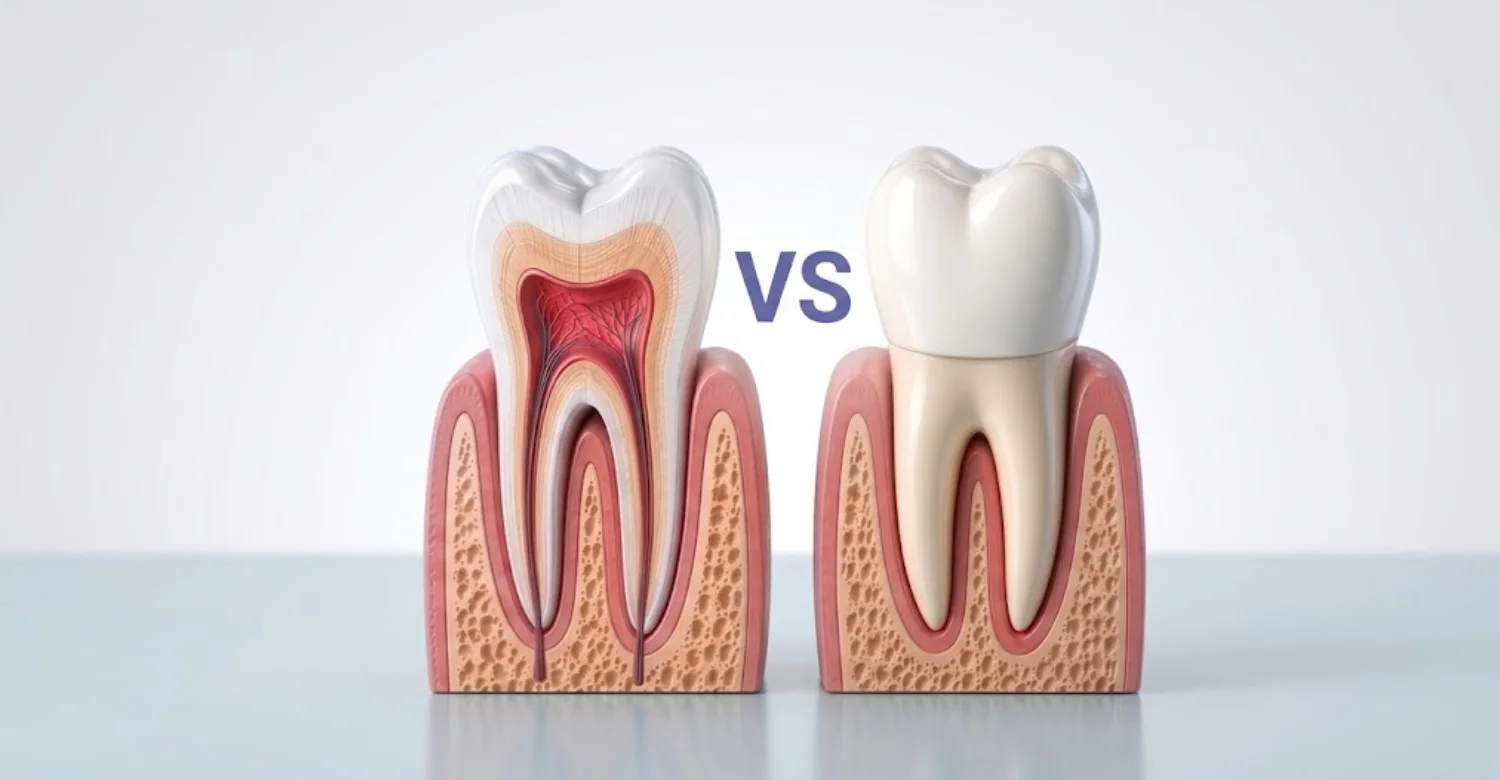
The main distinction is which part of the tooth is treated. A root canal treats the internal pulp and canal system. A crown treats the external structure above the gumline. Root canal treatment is mainly therapeutic, while a crown is restorative and protective. A crown cannot disinfect an infected canal. A root canal cannot replace missing chewing surfaces.
Are Root Canal and Crown Alternatives or Can You Need Both?
They are not always alternatives. Often, they address different stages of the same damage. A heavily decayed tooth may have both pulp infection and major structural loss. Endodontic treatment addresses the infection, and a crown then provides external protection. The American Association of Endodontists states that treated teeth are restored with a crown or filling. Some teeth suit a bonded restoration instead of full coverage.
When a Root Canal Is Used to Treat the Inside of a Tooth
Root canal treatment is used when the dental pulp becomes irreversibly inflamed or infected. Deep decay, cracks, trauma, and defective restorations are common causes. Diagnosis requires more than simply identifying pain. Dentists combine history, examination findings, pulp tests, and appropriate imaging. Radiographs can show changes around the root. A root canal is targeted treatment for a biological problem.
When a Crown Is Used to Restore and Protect the Tooth
A crown can protect a tooth with substantial structural loss. Large restorations may leave too few walls for long-term function. Cracks and root-treated back teeth may also need cuspal protection. A crown surrounds the tooth and spreads chewing forces across the restoration. It also restores shape, contacts, and chewing anatomy. However, the pulp must be assessed before crown treatment begins.
Compare options in Implant-Supported Dentures vs Traditional Dentures
When Do You Need a Root Canal vs Crown?
The answer depends on the underlying dental problem. Root canal treatment is considered when the pulp cannot recover or has become infected. A crown is considered when the tooth needs structural reinforcement. Some patients need neither, because a simple filling is enough. Others need extraction because the tooth cannot be predictably restored. Every Root Canal vs Crown decision therefore assesses both biology and structure. Vitrin Clinic evaluates the tooth, gums, surrounding tissues, and existing restorations.
When a Root Canal May Be Recommended
A root canal may be recommended when the pulp is irreversibly inflamed or infected. Common causes include deep decay, cracks, trauma, and repeated dental work. Symptoms may include spontaneous pain or lingering temperature sensitivity. Some infections cause little discomfort, especially after the pulp dies. Imaging may reveal changes around the root.
Deep Tooth Decay and Pulp Infection
Deep decay can spread toward the pulp chamber and trigger inflammation. Early decay often remains suitable for a conventional filling. Advanced decay, however, may cause irreversible pulpal damage. Sensibility tests and radiographs help show how badly the pulp is affected. When infection is established, endodontic therapy may become necessary. The AAE lists deep decay among the common reasons for root canal treatment.
Persistent Tooth Pain or Temperature Sensitivity
Persistent sensitivity can signal pulpal inflammation, but symptoms alone are not diagnostic. Cold or hot sensitivity may occur with reversible or irreversible conditions. Pain when biting has several possible causes, including cracks and high fillings. Prolonged pain after cold exposure raises concern about pulp involvement. Clinical testing is still necessary before any decision.
Dental Abscess or Infection Around the Root
An abscess can form when infection spreads beyond the root canal system. Patients may notice swelling, tenderness, drainage, or pressure. Some abscesses are very painful, while others cause little pain. Root canal treatment may suit a tooth that remains restorable. Extraction may be needed when the tooth cannot be predictably restored. Antibiotics do not usually replace definitive treatment of the dental source. Facial swelling or difficulty swallowing or breathing needs urgent medical attention.
Cracked or Traumatized Teeth With Pulp Damage
Cracks can affect enamel, dentin, pulp, and sometimes the root. Trauma can damage the pulp even without a visible fracture. The AAE explains that a crack reaching the pulp may need a root canal and a crown. A crack extending below the gumline can make the tooth non-restorable. Treatment depends on crack location, depth, and gum involvement.
When a Crown May Be Recommended
A crown may be recommended when a tooth has lost significant structure. Large fillings can weaken the remaining walls and cusps. Fractured, severely worn, or misshapen teeth may also need coverage. Back teeth face strong chewing forces and often need stronger protection. A crown can sometimes be placed without a root canal.
A Severely Damaged or Weakened Tooth
Extensive structural loss reduces a tooth's ability to handle chewing forces. A filling may not reinforce such a tooth adequately. A crown covers the remaining walls and restores proper anatomy and contacts. The dentist must first confirm that the damage is still restorable. Some fractures extend too deeply for predictable treatment.
Large Fillings or Significant Loss of Tooth Structure
Large fillings replace substantial amounts of natural tooth structure. The remaining enamel and dentin may become prone to fracture. A crown can provide broader coverage and support. However, a large filling alone does not automatically justify a crown. Wall thickness, cusp involvement, tooth position, and pulp health all matter.
Cracked Teeth That Remain Restorable
A restorable cracked tooth may benefit from protective coverage. The aim is to limit crack growth during chewing. A fractured cusp may be managed with a restoration or crown. A deeper crack may need root canal treatment before full coverage. The AAE notes that full coverage offers maximum protection for some cracked teeth.
Protecting a Tooth After Root Canal Treatment
Root-treated teeth often lost structure before treatment began. The access opening removes a little more. Back teeth may therefore need protection from strong chewing forces. A crown can help protect suitable teeth from fracture. However, the AAE explains that crowns or fillings may both be appropriate.
When You May Need Both a Root Canal and Crown
Both treatments may be needed when internal disease and structural damage coexist. A deeply decayed molar is a common example. Root canal treatment addresses the infected canal system. A crown then restores chewing anatomy and protects the remaining tooth. The AAE describes this same sequence for certain cracked teeth.
Find out the causes and solutions for a Scalloped Tongue
How Can You Tell the Difference?
Root Canal
Crown Symptoms
Symptoms can hint at different problems, but they cannot make the diagnosis alone. Root Canal vs Crown symptoms often overlap because one tooth can have several problems. Pulp disease often causes temperature pain or spontaneous aching. Structural damage more often causes pain when chewing or biting. A cracked tooth can show both patterns at once. Some badly infected teeth become surprisingly quiet.
Symptoms That May Point to Pulp Inflammation or Infection
Pulp inflammation can cause sensitivity to cold or heat. Pain may linger after the trigger disappears. Spontaneous or night pain can also occur. Advanced infection may cause swelling or drainage near the tooth. However, a dead pulp may barely respond to temperature at all. Infection can still progress despite limited pain.
Symptoms of a Cracked, Broken, or Weakened Tooth
Cracked teeth often cause inconsistent pain when chewing. Some patients feel pain when releasing their bite. Cold sensitivity may also appear. Many patients cannot identify exactly which tooth hurts. A fractured cusp or broken filling may cause sharper, localized pain. AAE guidance stresses early evaluation for cracked teeth.
Why Symptoms Alone Cannot Determine the Treatment
Dental symptoms are not specific enough to guide a Root Canal vs Crown choice by themselves. Cold sensitivity and biting pain each have several possible causes. A painful tooth can also have more than one problem. Clinical tests and radiographs improve diagnostic accuracy. CBCT may reveal anatomy hidden on standard images.
Can You Need a Crown Without Needing a Root Canal?
Yes, a crown can be placed on a tooth with a healthy pulp. Large restorations, fractures, or severe wear can create restorative needs without infection. Pulp testing helps confirm that endodontic treatment is not required. Avoiding an unnecessary root canal preserves more biological tissue. However, extensive preparation can occasionally irritate the pulp.
Can You Need a Root Canal Without Immediately Needing a Crown?
Yes, some root-treated teeth can be restored without a full crown. The choice depends on remaining structure and functional risk. A front tooth may suit an adhesive restoration. Other teeth may receive an onlay or partial coverage. Back teeth usually need more protection because chewing loads are higher.
Compare cavity prevention in Dental Sealants vs Fluoride Treatment
How Is Root Canal vs Crown Diagnosed?
Diagnosis begins with a detailed clinical assessment. A Root Canal vs Crown decision cannot safely be made from a photograph alone. The dentist first reviews symptoms, previous treatment, and dental history. The tooth is then examined and tested. Pulp tests, percussion, and bite tests each add information. Radiographs reveal decay, restorations, and changes around the root. CBCT may help in complex cases.
What Does the Dentist Check During the Examination?
The examination looks at the whole tooth rather than one symptom. Dentists inspect enamel, dentin, restorations, cracks, and decay. The gums and supporting tissues are also assessed. Pulp responses may be compared with neighboring teeth. The bite is checked for excessive contact.
Tooth and Gum Examination
Visual inspection can reveal cavities, fractures, discoloration, and failing restorations. The gums around the tooth are checked for swelling or drainage. A periodontal probe may find isolated deep pockets linked to cracks. Crown and filling margins are examined for breakdown. Neighboring teeth are also checked, because pain can be referred.
Pulp Sensibility and Other Clinical Tests
Pulp sensibility tests measure how a tooth responds to controlled stimuli. Cold testing is the most common method. Heat and electric pulp tests may help in selected cases. These tests measure nerve response, not blood flow. Results are compared with nearby teeth.
Bite and Percussion Testing
Bite testing can help locate pain from cracks or heavy contact. Pain when releasing the bite may point toward a crack. Percussion testing checks tenderness in the tissues around the root. A painful response may signal inflammation there. Neither test gives a diagnosis alone.
When Are Dental X-Rays Needed?
Radiographs are often used when pulpal or root disease is suspected. They show decay, restorations, root anatomy, and surrounding bone. However, they provide only two-dimensional information. A normal image does not always rule out early pulp disease. Dentists therefore combine imaging with clinical findings.
When Might CBCT or 3D Imaging Be Considered?
CBCT provides three-dimensional information about teeth and surrounding bone. It can reveal anatomy that standard radiographs may hide. It may help with complex roots, uncertain diagnoses, or suspected fractures. However, it should not replace conventional images automatically. Radiation exposure and clinical benefit must be weighed.
How Does the Dentist Decide Whether the Tooth Can Be Restored?
Restorability depends on how much structure remains and where defects sit. Cracks, decay, gum support, and root length all matter. A fracture extending deep below the gumline creates serious limitations. The AAE notes that such cracks may make a tooth untreatable. The goal is a predictable function, not simply completing a procedure.
What Findings Can Change the Treatment Plan?
New findings can change the treatment sequence. An unnoticed crack may alter restorative plans. Deep decay may expose the pulp unexpectedly. Gum disease can affect restorability. CBCT may reveal extra canals or missed anatomy.
What Happens During Root Canal Treatment?
Root canal treatment removes diseased pulp and cleans the internal canal system. The dentist opens the tooth, then locates, shapes, and disinfects the canals. Finally, the canals are filled and sealed. In Root Canal vs Crown planning, this is the biological stage. A crown, if needed, is the later structural stage. The number of visits depends on anatomy, infection, and complexity.
How a Root Canal Treats an Infected or Inflamed Pulp
The procedure begins with an opening into the pulp chamber. Diseased tissue is removed from the chamber and canals. Instruments shape the canals, and irrigating solutions disinfect them. The canals are then filled, and the opening is sealed. Treatment cannot replace tooth structure already lost.
Local Anesthesia and Isolation
Local anesthesia controls discomfort during treatment. Inflamed teeth can sometimes be harder to numb. Additional techniques may then be used. A rubber dam usually isolates the tooth. This keeps the area clean and protects the patient from solutions and instruments.
Cleaning and Shaping the Root Canals
Fine instruments enter the canals through the access opening. The dentist measures each canal's length and shapes it carefully. Irrigation continues throughout the process. Molars usually have more complex anatomy than front teeth. Curved or narrow canals may need specialized techniques.
Disinfection and Filling
Disinfection is a critical part of treatment. Instruments alone cannot reach every microscopic irregularity. Irrigants help reduce bacteria and dissolve tissue remnants. The canals are then dried and filled. Gutta-percha is the usual core filling material, used with a sealer.
Sealing and Final Restoration
After filling, the access cavity is sealed. A temporary restoration may be used if the final one cannot be placed immediately. The definitive restoration should prevent bacterial leakage and fracture. Options include a filling, onlay, or crown. The AAE emphasizes restoring the tooth promptly after treatment.
How Long Does Root Canal Treatment Take?
Treatment time depends on anatomy and complexity. Front teeth usually have fewer canals than molars. Curved, calcified, or retracted canals can take longer. Some cases finish in one visit, while others need two or more. Your dentist can estimate the schedule after examination.
What Happens After a Root Canal?
Mild tenderness is common after treatment. Follow your dentist's advice on eating and oral hygiene. Avoid chewing hard on a temporary restoration. The tooth may then need a definitive restoration. Persistent or worsening pain or swelling should be assessed.
Why Timely Final Restoration Matters
A root-treated tooth stays vulnerable until it is properly restored. Temporary fillings are not designed for long-term use. Delaying the final restoration can raise the risk of fracture or contamination. The AAE links delayed crown placement to later retreatment. The right timing depends on the tooth's condition.
Learn how your body clock affects your mouth in Circadian Rhythm and Oral Health
What Happens During Dental Crown Treatment?
Crown treatment begins with assessment and tooth preparation. The dentist shapes the tooth to create space for the crown. A digital scan or impression then records the prepared tooth. A temporary crown protects it while the final crown is made. The final crown is checked for fit, contacts, color, and bite. It is then cemented or bonded in place.
How a Tooth Is Prepared for a Crown
Preparation shapes the tooth for retention and fit. Damaged structure is removed while sound tissue is preserved where possible. The margins are positioned to suit the situation. Any decay or cracks are managed first. Pulp health should be checked before extensive preparation.
Digital Impressions or Intraoral Scanning
An intraoral scanner records the prepared tooth in three dimensions. The dentist can review the scan during planning. Digital records improve communication with the laboratory. Accuracy depends on isolation, technique, and scanner quality. Conventional impressions remain useful in many cases.
Temporary Crown and Laboratory Fabrication
A temporary crown protects the tooth until the final crown is ready. It helps maintain contacts and chewing functions. It is not designed for indefinite use. Avoid hard or sticky foods while wearing it. Meanwhile, the laboratory fabricates the final crown from the chosen material.
Fitting and Cementing the Permanent Crown
The permanent crown is first tried without cement. The dentist checks margins, contacts, and bites. The crown should not feel high when you close. Appearance is reviewed for visible teeth. Once approved, the crown is cemented or bonded.
How Long Does a Dental Crown Take?
Crown treatment may take one or several appointments. Same-day digital workflows are available in some settings. Laboratory-made crowns usually need extra time. Temporary crowns may be worn between visits. International patients should confirm the number of visits beforehand.
Do You Always Need a Crown After a Root Canal?
Not every root-treated tooth needs a conventional crown. Restoration depends on remaining structure, tooth location, and chewing forces. A heavily damaged back tooth may need cuspal coverage. Some front teeth suit bonded restorations instead. Onlays can also provide suitable protection in some cases. Good Root Canal vs Crown planning avoids automatic assumptions.
Why Tooth Location and Remaining Structure Matter
Tooth position shapes the forces a restoration must handle. Molars take heavy chewing loads. Incisors face different forces and often keep more outer structure. Intact walls and cusps improve fracture resistance. The amount of remaining structure matters more than the root canal itself.
Why Molars and Premolars Often Need Strong Cuspal Protection
Premolars and molars receive strong forces during chewing. Root-treated back teeth have often lost significant structure already. A crown or onlay can protect the weakened cusps. The need depends on remaining structure, not on the root canal alone. Restorative planning should begin before endodontic treatment ends.
When an Incisor or Canine May Be Restored Without a Full Crown
Front teeth usually face lighter chewing forces. Some root-treated incisors keep most of their structure. A bonded composite restoration may then be enough. Discoloration or fractures may still call for other options. A full crown remains appropriate when much structure is lost.
Why a Crown Should Not Be Automatically Recommended for Every Root-Treated Tooth
Automatic full coverage can remove healthy structure unnecessarily. Fracture risk varies between teeth. Front and back teeth behave differently under load. Some teeth suit adhesive or partial restorations. The AAE recognizes both crowns and fillings after endodontic treatment.
Check the connection between Idiopathic Multicentric Castleman Disease and Dental Health
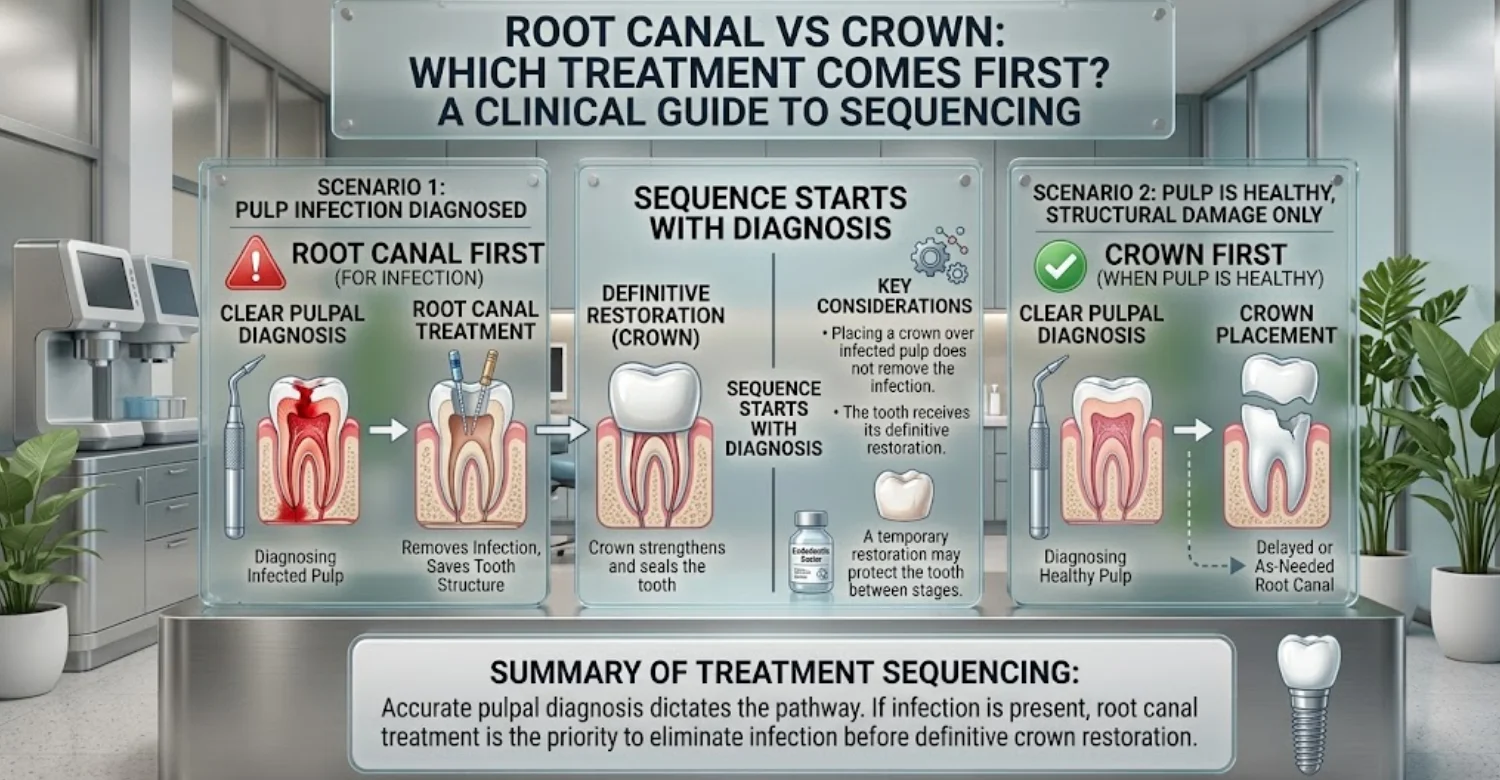
When the Root Canal Must Be Completed Before the Crown
A root canal generally comes before the final crown when the pulp needs treatment. The dentist needs access to the canals first. The infected tissue is removed, and the tooth is sealed. The final restoration is made after appropriate evaluation. This keeps biological treatment separate from structural restoration.
Why Placing a Crown Does Not Remove an Infected Pulp
A crown covers the outside of the tooth only. It does not reach the pulp chamber or clean the canals. An infected pulp remains active under it. Symptoms may continue, and infection may spread. Treating the wrong problem simply delays proper care.
Can a Crown Be Placed on a Tooth With an Untreated Infection?
A definitive crown is not a treatment for active pulp infection. Pulp status must be assessed before crown work begins. A tooth with irreversible pulp disease may need a root canal first. Infection around the root also needs treatment before final restoration. Temporary protection can bridge the stages.
Typical Root Canal and Crown Treatment Sequence
Treatment usually starts with diagnosis and restorative assessment. Any needed endodontic treatment follows. Temporary protection then stabilizes the tooth. The definitive restoration comes next, followed by review. Emergency symptoms may change this order.
Diagnosis and Treatment Planning
The dentist confirms the diagnosis before any Root Canal vs Crown decision. Pulp status, structural damage, gum support, and restorability are evaluated. Imaging is added when clinically needed. The dentist then explains each option and what it treats. Costs should separate endodontic and restorative parts.
Root Canal Treatment When Indicated
When pulp infection or irreversible inflammation is diagnosed, a root canal treats it. The canals are cleaned, disinfected, filled, and sealed. The access cavity receives a temporary or final restoration. Pain and swelling are monitored afterward. The root canal does not rebuild missing walls or cusps.
Temporary Protection
A temporary restoration protects the tooth between stages. It limits food packing and bacterial leakage. It also lowers fracture risk while you wait. Avoid heavy chewing on it when advised. Report a loose or lost temporary promptly.
Definitive Crown or Other Restoration
The final restoration depends on structure and function. Options include a crown, onlay, or filling. Fit and bite are checked before cementation. Material choice reflects function and appearance. The restoration must seal and protect the tooth.
Follow-Up and Occlusal Assessment
Follow-up confirms that the restoration works properly. The dentist checks your bite and contacts. Any lingering symptoms are reviewed. Healing after infection may need longer observation. Regular check-ups and good hygiene remain essential.
Root Canal vs Crown Pain, Recovery, and Side Effects
Pain varies between procedures and between patients. Root Canal vs Crown treatments can both cause temporary discomfort afterward. A root canal often leaves some tenderness around the tooth. A new crown may cause brief sensitivity while the tooth settles. AAE patient information says modern root canals can be performed comfortably. It also reports root canal patients were six times likelier to call treatment painless than extraction patients. That comparison involves extraction, not crowns.
Does a Root Canal Hurt?
Modern anesthesia is designed to control pain during treatment. Sharp pain is uncommon when numbness is effective. Inflamed teeth can be harder to numb, so extra techniques may help. Temporary tenderness afterward is common. The AAE describes root canals as a way to relieve dental pain.
Does Getting a Dental Crown Hurt?
Crown preparation is usually done under local anesthesia. You may feel pressure or vibration. Tell the dentist immediately about any sharp pain. Mild sensitivity or gum tenderness can follow preparation. A crown that sits too high can cause biting pain.
What Relief Can You Expect After Treatment?
Relief depends on what caused the pain. Pain from an infected pulp often improves after endodontic treatment. Tenderness around the root may linger briefly. Structural sensitivity may ease once the tooth is properly restored. No procedure guarantees instant relief.
Common Short-Term Side Effects After a Root Canal
Mild discomfort is common after endodontic treatment. The tooth may feel tender when biting. The surrounding tissues can stay sensitive for a while. Pain should steadily improve. Increasing swelling, fever, or severe pain needs assessment.
Temporary Tenderness
Tenderness occurs because tissues around the root may stay inflamed. The tooth may feel sore under pressure. Avoid chewing hard on the temporary restoration when instructed. Tenderness usually eases as the tissues recover. Worsening pain should be reviewed.
Mild Sensitivity or Discomfort
Mild sensitivity may affect chewing or temperature awareness. The tooth may feel different from its neighbors. Symptoms should gradually improve. Follow professional advice on pain relief. The AAE advises against placing aspirin directly on the gums.
Common Short-Term Side Effects After Crown Placement
Temporary sensitivity can follow crown preparation and cementation. The gums may feel mildly tender. Your bite may feel slightly different at first. A high crown can cause pressure when chewing. A quick adjustment often fixes this.
Temporary Sensitivity
Sensitivity to cold or hot drinks may follow crown treatment. Exposed dentin after preparation is a common reason. It should be monitored over time. Worsening sensitivity may require pulp evaluation. Report lingering pain after temperature triggers.
Gum Tenderness
The gums may feel tender where the crown margin sits. Preparation can briefly irritate the tissue. Gentle brushing and careful cleaning help. Persistent bleeding or swelling should be examined. A well-shaped crown allows easy cleaning.
Bite Feeling Different
A new crown can feel taller than neighboring teeth. An uneven bite can cause pain when chewing. The dentist can check and adjust the contacts. Do not test the crown by biting hard objects. Early reporting prevents a small issue growing.
What Symptoms Are Not Typical During Recovery?
Severe or rapidly increasing pain is not typical. Significant swelling should never be ignored. Fever can signal spreading infection. Difficulty swallowing or breathing needs urgent care. A loose or lost temporary should be reported.
When Pain or Swelling Requires Prompt Dental Assessment
Seek prompt assessment if symptoms become severe or worsen quickly. New swelling around the tooth or jaw needs evaluation. Fever may point to wider infection. Difficulty swallowing or breathing requires emergency care. Untreated dental infection can spread into nearby tissues.
Note : All images used are for editorial and illustrative purposes only and may not originate from the original news provider or associated company.
Discover the connection between Swimming and Tooth Erosion
What Happens If You Delay a Needed Root Canal or Crown?
Delaying treatment can let infection or structural damage progress. Many Root Canal vs Crown questions start with uncertainty about urgency. An infected pulp can develop into an abscess. A weakened tooth can fracture further. Cracks may extend toward the root, making restoration harder. The AAE stresses early evaluation of cracked teeth.
Risks of Delaying Treatment for an Infected Tooth
Untreated pulp infection can spread beyond the tooth. An abscess may form around the root. Pain may fade even while infection continues. A dead pulp often feels less, not better. The AAE warns that untreated pulp infection can cause pain or abscess.
Risks of Delaying Protection of a Structurally Weak Tooth
A weakened tooth can break under normal chewing forces. Thin walls and unsupported cusps are especially vulnerable. Cracks may deepen with repeated loading. A fractured tooth becomes harder to restore. Some eventually become non-restorable.
Why a Broken or Lost Temporary Restoration Should Be Reported
Temporary restorations protect teeth between stages. If one loosens or falls out, contamination risk rises. Food can enter the prepared space. The tooth also becomes easier to fracture. The AAE notes that defective restorations can allow new infection.
When a Dental Problem Becomes Urgent
Some symptoms need same-day or emergency care. Severe infection can spread into facial tissues. Fever may accompany serious infection. Airway symptoms are a medical emergency. Do not wait for a planned dental trip in such cases. Treatment planning at Vitrin Clinic cannot replace local emergency services.
Facial or Jaw Swelling
Facial swelling can signal an advancing infection. Rapidly spreading swelling is especially concerning. A dentist can decide whether drainage or treatment is needed. Severe cases may need hospital care. Never squeeze or puncture the swelling yourself.
Fever or Feeling Systemically Unwell
Fever suggests the infection may involve wider tissues. Feeling generally unwell is also important. These signs need prompt assessment. Antibiotics may be prescribed when indicated. They do not replace treating the dental source.
Difficulty Swallowing or Breathing
Difficulty swallowing or breathing is an emergency warning sign. Seek emergency medical care immediately. Do not wait for a routine dental appointment. Emergency teams can protect the airway first. Dental treatment continues once you are stable.
Severe or Rapidly Increasing Dental Pain
Severe, escalating pain should be assessed quickly. It may signal unresolved pulp or root disease. A high crown or crack can also cause sudden pain. Painkillers may help briefly but do not find the cause. Prompt assessment prevents unnecessary delay.
What We Notice Clinically
In clinics, patients often blend two different concepts. A root canal and a crown can involve the same tooth, yet solve different problems. Many people assume every severe toothache means infection. Some painful teeth actually have structural or bite problems. Others hide serious infections behind mild symptoms. Every Root Canal vs Crown recommendation at Vitrin Clinic begins by identifying the underlying condition.
Patients Often Confuse Root Canal Treatment With a Crown
Patients often hear both terms in one consultation. Some assume a root canal is a type of restoration. Others think a crown treats the whole tooth. In reality, a root canal treats the inside, while a crown restores the outside. Explaining each stage separately clarifies costs and appointment numbers.
A Crown Does Not Treat Infection Inside the Tooth
A crown surrounds the outer tooth only. It cannot remove infected pulp. Endodontic treatment cleans and seals infected canals. A crown can then protect the tooth afterward. Diagnosis should therefore come before any definitive restoration.
Not Every Toothache Means You Need a Root Canal
Tooth pain has many possible causes. Decay, cracks, gum disease, bite trauma, and sinus problems can all mimic pulp disease. A high filling can also cause biting pain. Pulp tests and radiographs help separate these causes. Avoiding unnecessary treatment matters as much as identifying needed care.
Not Every Root-Treated Tooth Requires the Same Final Restoration
Root-treated teeth vary widely in remaining structure. Some keep several intact walls. Others have extensive decay and large fillings. Some suit bonded restorations, while others need crowns. The final restoration should balance protection with conservation.
Tooth Structure and Diagnosis Often Matter More Than the Symptom Alone
Symptoms do not measure structural strength. A mildly painful tooth can be badly compromised. A very painful tooth may still be restorable. Imaging and crack assessment can change the plan. Vitrin Clinic considers the complete clinical picture.
Why Treatment Planning Should Consider the Whole Tooth
A tooth works as one biological and mechanical unit. Pulp health, remaining structure, gum support, and bite all matter. Existing restorations affect leakage and strength. Root anatomy shapes endodontic complexity. Considering everything reduces surprises during treatment.
Clinical Note: Dr. Rifat Alsaman on Root Canal vs Crown Decisions
Dr. Rifat Alsaman stresses individualized assessment for every Root Canal vs Crown decision. The key question is not simply whether the tooth hurts. The team must identify what is causing the problem. Pulp status, remaining structure, cracks, and restorability all matter. A crown should protect sound structure, never hide untreated disease.
Dr. Rifat Alsaman
Dr. Rifat Alsaman is Head of the Medical Team at Vitrin Clinic and a cosmetic dentist. His approach puts diagnosis before treatment selection. He weighs pulp condition, remaining structure, and restorability together. Every plan should explain why each procedure is recommended.
Find out if Subperiosteal Implants for Severe Jawbone Atrophy are right for you
Root Canal vs Crown Cost: What Should You Expect?
Dental costs vary with complexity, tooth location, materials, and extra procedures.
A Root Canal vs Crown cost comparison is not direct because each treats something different.
Patients needing both should consider the combined cost.
Quotes should list imaging, anesthesia, temporaries, laboratory work, and cementation.
Specialist and general dentist fees may differ.
International treatment can also add travel and accommodation expenses.
The figures below are indicative planning ranges, not fixed quotations.
What Is Included in Root Canal Cost?
Root canal fees usually cover the endodontic procedure itself. Some clinics include consultation or imaging, while others charge separately. Molars usually cost more than front teeth. Retreatment often costs more than initial treatment. Posts, core build-ups, or temporary fillings may be additional.
Root Canal Cost Component | Usually Included? | Possible Additional Charge |
Dental examination | Sometimes | Yes |
X-rays | Sometimes | Yes |
Anesthesia | Usually | Sometimes |
Root canal procedure | Yes | Depends on complexity |
Temporary filling | Sometimes | Yes |
Post or core build-up | No | Often additional |
Retreatment | No | Usually higher than initial treatment |
Final crown | No | Separate restorative fee |
What Is Included in Crown Cost?
Crown fees may cover preparation, temporary crown, laboratory work, and cementation. Some clinics itemize these services separately. Material choice can affect the laboratory fee. A core build-up may be required when substantial tooth structure is missing. Digital scanning may also be included or charged separately.
Crown Cost Component | May Be Included | May Be Charged Separately |
Dental examination | ✓ | ✓ |
Tooth preparation | ✓ | ✓ |
Digital scan | ✓ | ✓ |
Temporary crown | ✓ | ✓ |
Laboratory crown | ✓ | ✓ |
Cementation | ✓ | ✓ |
Core build-up | Sometimes | Often |
Additional imaging | Sometimes | Often |
Why Root Canal Cost vs Crown Cost Is Not a Direct Like-for-Like Comparison
A root canal is biological treatment, while a crown is restorative. One cannot replace the other when both are clinically necessary. Comparing isolated fees can therefore be misleading. The more useful figure is the total cost of restoring the tooth. This may include diagnosis, imaging, endodontics, temporaries, and the final restoration.
Treatment | Main Purpose | Can Replace the Other? | Typical Relationship |
Root canal | Treats infected or inflamed pulp | No | May be needed before a crown |
Crown | Restores and protects a damaged tooth | No | May follow root canal treatment |
Root canal + crown | Treats and restores the tooth | — | Combined treatment pathway |
Average Root Canal and Crown Costs in the USA, UK, and Turkey
The table uses the indicative figures supplied for this article. They are planning estimates rather than fixed clinic quotations.
Market | Root Canal | Crown | Root Canal + Crown |
USA | ~700–1,600 | ~1,000–2,500 | ~1,800–3,200 |
UK | ~$300–$1,200 | ~$550–$1,200 | ~$1,000–$2,000 |
Turkey | ~$130–$400 | ~$200–$400 for zirconia | ~$300–$850 |
Average Cost by Market
Country | Lower-End Combined Cost | Upper-End Combined Cost | Main Price Drivers |
USA | ~$1,800 | ~$3,200 | Tooth type, specialist fees, materials |
UK | ~$1,000 | ~$2,000 | Private fees, tooth complexity, restoration |
Turkey | ~$300 | ~$850 | Materials, clinic, laboratory, case complexity |
Published UK data can show how private fees vary between providers. Private and NHS pricing systems should not be treated as equivalent. Always confirm whether the quoted price includes consultation, imaging, temporary restoration, and the final crown.
USA: Indicative Root Canal Cost and Crown Cost
The supplied figures place root canal treatment around 700–1,600. A crown is estimated around 1,000–2,500. Combined treatment may therefore reach approximately 1,800–3,200.
USA Treatment | Indicative Cost |
Root canal | ~700–1,600 |
Crown | ~1,000–2,500 |
Root canal + crown | ~1,800–3,200 |
Specialist treatment and molar complexity can increase the total. Additional imaging, post placement, or core build-up may also add costs. Request a complete written estimate before treatment begins.
UK: Indicative Private Root Canal Cost and Crown Cost
The supplied figures place private root canal treatment around $300–$1,200. A crown is estimated around $550–$1,200. Combined treatment may cost approximately $1,000–$2,000.
UK Private Treatment | Indicative Cost |
Root canal | ~$300–$1,200 |
Crown | ~$550–$1,200 |
Root canal + crown | ~$1,000–$2,000 |
Actual private fees vary between practices and regions. NHS charges follow a different pricing structure. Patients should confirm whether the quoted private fee includes imaging and temporary treatment.
Turkey: Indicative Root Canal Cost and Crown Cost
The supplied figures estimate root canal treatment at approximately $130–$400. Zirconia crowns are estimated around $200–$400. Combined treatment may cost approximately $300–$850.
Turkey Treatment | Indicative Cost |
Root canal | ~$130–$400 |
Zirconia crown | ~$200–$400 |
Root canal + zirconia crown | ~$300–$850 |
Specialist care, imaging, laboratory materials, and treatment complexity can change the total. Vitrin Clinic pricing depends on the individual clinical assessment and selected treatment plan.
Istanbul: How Local Clinic Pricing Can Vary
Istanbul clinics can differ in treatment models, laboratory partners, and included services. Dentist experience and case complexity can also affect pricing. Some international packages may include transportation or accommodation.
Istanbul Pricing Factor | Potential Effect |
Dentist experience | May affect professional fees |
Tooth complexity | Can increase treatment time |
Crown material | Changes laboratory cost |
Dental laboratory | Can affect restoration pricing |
Digital scanning | May be included or separate |
X-rays or CBCT | May add diagnostic costs |
Temporary restoration | May be included or separate |
Airport transfers | May be part of a package |
Hotel accommodation | May be part of a package |
Aftercare | May be included depending on the clinic |
Clinical and travel services should be separated when comparing international dental quotes. An itemized treatment plan makes comparisons more meaningful. Headline prices alone may not show the complete treatment cost.
What Makes Root Canal vs Crown Cost Higher or Lower?
Cost rises as treatment becomes more complex. Canal anatomy is a major factor. Crown material and laboratory choice also matter. Retreatment usually costs more than a first treatment. Extra imaging or core build-ups add to the total.
Front Tooth vs Premolar vs Molar
Front teeth usually have simpler canal systems. Premolars may have one or more canals. Molars often have several canals and complex anatomy. More complexity usually means more clinical time and cost. Crown design also varies by tooth position.
Number and Complexity of Root Canals
More canals generally mean a more complex procedure. Curved or narrow canals need extra care. Additional canals may be found during treatment. Specialists may charge more for difficult cases. Ask whether your quote assumes simple anatomy.
Initial Treatment vs Retreatment
Retreatment involves reopening a previously treated tooth. Old filling material must be removed. Missed anatomy may need to be located. The AAE lists missed canals and new contamination among causes. Retreatment therefore often takes longer and costs more.
Crown Material and Laboratory Choice
Crown materials differ in strength, appearance, and laboratory cost. Zirconia is widely used for durability and aesthetics. Ceramic systems offer different optical qualities. Laboratory expertise affects fit and appearance. Ask which material and laboratory are included.
Imaging, Temporary Restoration, and Additional Procedures
Imaging may be needed for diagnosis or planning. CBCT adds cost when clinically indicated. Temporary restorations may be charged separately. Core build-ups or posts are sometimes required. An itemized plan helps avoid financial surprises.
Why a Combined Root Canal and Crown Quote Should Be Itemized
A combined Root Canal vs Crown quote should separate diagnosis, endodontics, and restoration. Imaging, temporaries, and the crown material should be listed clearly. Laboratory fees should be explained. Any extra procedures should be marked as included or excluded. Ask what happens if retreatment becomes necessary.
Root Canal vs Crown in Turkey: What Should International Patients Know?
Turkey is a major destination for international dental care. However, treatment decisions must remain clinically driven. A Root Canal vs Crown plan in Turkey follows the same biological principles used elsewhere. An infected pulp still needs endodontic treatment. A weakened tooth may still need restorative protection. Understand each stage and what is included before traveling.
Root Canal vs Crown Turkey: Understanding the Treatment Sequence
Treatment starts with diagnosis and planning. If infection is confirmed, the root canal comes first. Temporary protection may follow. The final crown is then made and fitted. Some cases can be completed in one trip, while others cannot.
Root Canal vs Crown in Turkey: What May Affect the Price
Treatment complexity remains the main cost factor. Canal number affects root canal pricing. Crown material and laboratory affect restorative pricing. CBCT or retreatment can add to the total. Travel services may be priced separately or packaged.
Root Canal vs Crown Istanbul: What Should Be Included in a Treatment Plan?
A good plan states the diagnosis first. It then lists every planned procedure. The root canal and crown should be shown separately. The crown material and imaging needs should be specified. Temporaries, follow-up, and retreatment arrangements should be clear.
Root Canal vs Crown in Istanbul: Questions to Ask Before Treatment
Ask exactly what the recommended treatment includes. The diagnosis should be explained in plain language. Ask whether the pulp is infected and the tooth restorable. Confirm the final restoration and material. Request itemized costs and clear follow-up arrangements.
Is the Root Canal Included?
Check whether the plan includes the full root canal procedure. Retreatment should be listed separately when relevant. Imaging and temporaries may be charged independently. Ask whether specialist care changes the price. Written details improve transparency.
Is the Permanent Crown Included?
Crowns are often quoted separately from endodontics. Confirm whether the permanent crown is included. Ask which material and laboratory will be used. Check whether temporaries and cementation are covered. Vitrin Clinic clarifies the restorative stage in every plan.
Are X-Rays or CBCT Included When Clinically Required?
Discuss imaging before treatment starts. Standard digital X-rays are often included. CBCT may be priced separately when indicated. Ask which images are included and why. CBCT should be used for a clinical reason, not routinely.
What Happens If Retreatment Is Needed?
Some previously treated teeth need retreatment. The AAE cites missed anatomy and new contamination as causes. Ask how retreatment would be handled and charged. Follow-up responsibility should also be clear. Settle these details before you travel.
Should You Travel to Turkey for an Urgent Root Canal?
Urgent infections should be assessed promptly and locally. Travel should never delay emergency evaluation. Severe swelling or airway symptoms need local emergency care. Planned travel suits stable dental treatment. A clinician should first confirm your condition is stable.
Why Severe Dental Infection Should Be Assessed Promptly
Dental infection can spread into facial or neck tissues. Fever suggests wider involvement. Airway symptoms are an emergency. Treatment may involve drainage, a root canal, or extraction. Delaying urgent care to arrange travel adds unnecessary risk.
When Planned Dental Travel May Be Different From Emergency Care
Planned travel allows assessment and scheduling in advance. You can share X-rays and treatment history beforehand. The clinic can then estimate the likely stages. Acute infections may need immediate local care instead. Vitrin Clinic coordinates planned cases once they are stable.
Read about the risks of Chewing Tobacco Teeth Damage
How to Choose Between
Root Canal
Crown
Filling
Extraction
The choice depends on diagnosis, structure, and restorability. A root canal treats infected or irreversibly inflamed pulp. A crown restores and protects substantial structure. A filling repairs smaller defects. Extraction removes a tooth that cannot be predictably saved. No Root Canal vs Crown decision should rest on price alone.
Root Canal vs Crown vs Filling
A filling suits a tooth with enough remaining structure. A crown suits a tooth needing broader protection. A root canal is needed when the pulp is irreversibly damaged. These treatments can also follow one another. The treatment should match the specific problem.
Root Canal vs Crown vs Extraction
Extraction is considered when a tooth cannot be predictably restored. Deep fractures or severe gum disease can make saving it impossible. A root canal aims to preserve a suitable natural tooth. The AAE notes that cracks below the gumline may make a tooth untreatable. The decision should follow examination and imaging.
When Tooth Preservation May Be Considered
Keeping a natural tooth can offer real functional benefits. A root canal lets a restorable infected tooth remain. Preservation depends on structure and gum support. A tooth should not be kept merely because it is technically possible. Your dentist should explain the expected outlook.
When a Tooth May No Longer Be Restorable
Deep fractures can make restoration impossible. Cracks below the gumline seriously compromise a tooth. Severe gum disease or extensive decay can also rule out repair. Extraction may then be the safest option. Replacement may involve an implant, bridge, or other prosthesis.
Why the Decision Should Be Based on Examination and Imaging
Examination identifies visible and functional problems. Imaging shows structures hidden from view. Pulp tests reveal internal tooth status. Together, they form a stronger basis for decisions. Vitrin Clinic combines clinical findings with digital diagnostics when indicated.
Can You Prevent Needing a Root Canal or Crown?
Not every root canal or crown is preventable. However, good habits reduce several major risks. Treating decay early can stop it reaching the pulp. Daily hygiene lowers plaque and cavity risk. Protective habits reduce trauma and fractures. Regular check-ups find small problems before they grow.
Preventing Tooth Decay and Pulp Infection
Fluoride toothpaste strengthens enamel and helps prevent decay. Daily plaque control limits bacterial build-up. Reducing frequent sugar intake lowers cavity risk. Cleaning between teeth also matters. Regular examinations catch decay early.
Protecting Teeth From Fractures and Trauma
Avoid chewing ice and other very hard objects. People who grind their teeth may benefit from a night guard. Wear a fitted mouthguard during contact sports. Never open packages with your teeth. Have suspected cracks assessed early.
Maintaining Good Oral Hygiene
Brush twice daily with fluoride toothpaste. Clean between your teeth every day. Watch for bleeding, swelling, or lasting sensitivity. Crowns also need careful cleaning around their edges. Vitrin Clinic provides personalized hygiene guidance after treatment.
Regular Dental Examinations and Early Treatment
Routine examinations find problems before they become severe. Dentists check fillings, crowns, cracks, and early decay. Radiographs may be taken based on individual risk. Early treatment preserves more natural tooth structure. Keep attending check-ups even after successful treatment.
When a Damaged Filling or Crown Should Be Checked
Have a broken restoration checked promptly. Gaps can let bacteria enter underneath. A loose crown raises fracture risk. Biting pain may signal bite problems or deeper disease. Avoid relying on home repairs for long periods.
Explore the link between Dehydration During Exercise and Tooth Erosion
Tips for Patients
Good preparation makes treatment smoother. Bring any previous X-rays and dental records. Share a list of current medications and allergies. International patients should confirm the number of appointments. Clarify which procedures the quote includes. Follow all instructions for temporary restorations.
What to Do Before a Root Canal or Crown Appointment
Eat normally unless told otherwise. Keep up your usual oral hygiene. Bring previous imaging if available. Tell the dentist about allergies and medical conditions. Ask about anesthesia, appointment length, and temporary restorations.
What to Avoid While Waiting for Treatment
Avoid chewing hard foods on the weakened tooth. Do not bite ice, pens, or other hard objects. Never place aspirin directly on painful gums. Do not keep testing the tooth with cold drinks. Contact the clinic if swelling develops.
Questions to Ask Your Dentist Before Treatment
Understand your diagnosis before agreeing to treatment. Ask what is wrong with the pulp. Ask how much healthy structure remains. Ask which restoration will follow. Ask about total costs and possible extra procedures.
Is My Tooth Infected or Mainly Structurally Damaged?
Ask whether the main problem involves the pulp or the structure. Some teeth have both. Ask what evidence supports the diagnosis. Pulp tests and imaging often answer this question. The answer explains why procedures may be combined.
Is the Tooth Restorable?
Restorability is central to planning. Ask whether the remaining structure can support a lasting restoration. Ask whether any crack extends below the gumline. Ask what happens if the tooth cannot be saved. Discuss alternatives before major treatment.
Will I Need a Crown After Root Canal Treatment?
The answer depends on remaining structure and tooth position. Back teeth usually carry heavier loads. Front teeth may suit more conservative restorations. Ask about your tooth's fracture risk. The AAE recognizes both crowns and fillings after root canals.
What Is Included in the Total Treatment Cost?
Ask whether diagnosis and imaging are included. Check that the root canal fee covers the full procedure. Confirm whether the crown, material, and temporaries are included. Ask how retreatment would be charged. International patients should request a written estimate.
How to Protect a Tooth Between Treatment Stages
Protect temporary restorations from heavy chewing. Avoid very sticky foods when advised. Brush gently around the temporary. Floss carefully without forcing it through fragile contacts. Contact the dentist if the temporary changes or falls out.
Safe Relief Measures While Waiting for Dental Care
Follow pain-relief advice from your dentist or pharmacist. Use medicines only as directed. Never place aspirin directly against the gums. Rinse gently if food is trapped around the tooth. Chew on the other side where possible. A cold compress may ease some external swelling. Severe swelling or airway symptoms need urgent care. Home measures never replace proper diagnosis and treatment.
Root Canal vs Crown Treatment Planning at Vitrin Clinic
At Vitrin Clinic, treatment planning starts with a clinical assessment. Each Root Canal vs Crown decision reflects the actual condition of the tooth. The team evaluates teeth, gums, existing restorations, and remaining structure. Digital X-rays and, when needed, CBCT support diagnosis. Digital scanning supports restorative planning. International patients receive scheduling support.
Comprehensive Tooth and Oral Examination
The examination starts with the affected tooth. The team checks decay, fractures, restorations, and structural loss. Gums and surrounding tissues are also examined. Pulp, bite, and percussion tests add information. Neighboring teeth are checked to avoid treating the wrong source.
Digital X-Rays and CBCT When Clinically Appropriate
Digital X-rays show decay, root anatomy, and bone changes. CBCT adds three-dimensional detail in selected cases. It helps when anatomy or diagnosis remains uncertain. Every scan should answer a clear clinical question. Vitrin Clinic uses imaging according to need, not routine.
Digital Intraoral Scanning for Restorative Planning
Intraoral scanning captures detailed three-dimensional surface data. It supports crown design and laboratory communication. The scan can be reviewed during planning. Technique and scanner quality affect accuracy. Conventional impressions remain suitable in some cases.
Assessing Whether Root Canal Treatment and Crown Restoration Are Both Indicated
The team first decides whether the pulp needs endodontic treatment. Structural assessment then shows whether further restoration is needed. Some teeth need both procedures, others only one. Walls, cusps, cracks, and chewing forces guide the decision. Treatment is never expanded automatically.
Individualized Treatment Planning Based on Tooth Structure and Clinical Findings
Each tooth presents different anatomy and restorative needs. Location affects chewing load. The remaining structure affects fracture resistance. Pulp status determines endodontic needs. The plan combines all these findings into clear stages.
Coordinating Endodontic and Restorative Treatment When Required
Endodontic and restorative care must work together. The root canal treats internal disease. The final restoration seals and protects the tooth. The AAE links delayed restoration to later problems. Vitrin Clinic coordinates both stages when both are required.
How Vitrin Clinic Supports Your Treatment Journey
Vitrin Clinic combines clinical planning with international patient coordination. You can discuss your concerns before traveling. Existing records support preliminary planning. A clinical examination then confirms the diagnosis. When both procedures are needed, appointments are coordinated carefully. Help with scheduling and transport is also available.
Initial Consultation and Review of Dental Concerns
The consultation begins with your main concern. Past treatments and symptoms provide useful background. Photos and existing X-rays help early discussions. However, remote information cannot replace an examination. Coordinators support communication before arrival.
Digital Treatment Planning
Digital planning combines clinical and restorative information. Intraoral scans document the teeth in three dimensions. Photos and imaging add further detail. The dentist then builds an individualized sequence. Digital tools support, but never replace, clinical judgment.
Coordinating Root Canal and Crown Treatment When Both Are Needed
When both stages are needed, careful sequencing matters. The root canal treats the infected or inflamed pulp. The crown then provides structural protection. Temporaries bridge the gap between stages. Laboratory timing determines when the final crown is fitted.
Treatment Scheduling for International Patients
Scheduling must allow for appointment length and laboratory time. Some cases suit faster digital workflows. Others need several appointments. Complex endodontic cases may take longer. Airport transfers and hotel support can ease the trip.
Follow-Up and Aftercare Planning
Aftercare covers the treated tooth and its restoration. You should know which symptoms are normal. You should also know which warning signs need review. Follow-up checks your bite and restoration. International patients receive clear instructions before departure.
Clear Communication About Treatment Steps and Expected Costs
You should understand every step before treatment begins. Each procedure should have a defined purpose. The final restoration should be named. Any extra imaging should be explained. Costs should be presented clearly, stage by stage.
Ready to transform your smile?
Talk to our team and get a personal FREE treatment plan.
Key Takeaways
A root canal and a crown are not interchangeable procedures. One treats internal pulp disease, while the other restores and protects tooth structure. Every Root Canal vs Crown decision should follow diagnosis and a restorability check. Some patients need only one treatment, and some need both. Symptoms alone cannot reliably decide the pathway. Examination and appropriate imaging provide stronger evidence.
Root Canal vs Crown: The Main Difference
The main difference is the treatment target. A root canal treats the pulp and canal system. A crown restores the visible tooth structure. The two combine when infection and weakness occur together. A crown cannot disinfect canals, and a root canal cannot rebuild cusps.
When Root Canal Treatment May Be Needed
A root canal may be needed when pulp inflammation becomes irreversible. Deep decay, trauma, cracks, or repeated procedures can cause infection. Symptoms may include lingering sensitivity, spontaneous pain, or an abscess. Diagnosis requires testing and imaging. Restorability must also be confirmed.
When a Crown May Be Needed
A crown may be needed after substantial loss of tooth structure. Large fillings and cracks often weaken cusps. Root-treated back teeth may need extra protection. However, a crown is not automatic for every tooth. Alternatives can sometimes preserve more natural structure.
When Both Treatments May Be Part of the Same Plan
Both treatments may be needed when pulp disease and structural damage coexist. Deep decay or a crack reaching the pulp are common examples. The root canal treats the disease first. The crown then restores and protects the tooth. The sequence should always be individualized.
.jpg)
.jpg)
.jpg)
.jpg)
Relief, Recovery, and Expected Side Effects
Modern anesthesia generally keeps both procedures comfortable. Temporary tenderness may follow a root canal. A crown may cause brief sensitivity or gum tenderness. A high bite can cause discomfort but is easily adjusted. Persistent or worsening pain should be checked.
Warning Signs That Need Prompt Dental Assessment
Rapidly spreading swelling needs prompt evaluation. Fever may signal wider infection. Severe, worsening pain should be assessed quickly. Difficulty swallowing or breathing is an emergency. Never delay emergency care for planned dental travel.
Why Diagnosis Should Come Before Treatment Selection
Diagnosis identifies the real biological and structural problem. Symptoms alone cannot choose the treatment. Tests assess the pulp, and imaging reveals roots, bone, and decay. Restorability decides whether the tooth can be saved. Vitrin Clinic assesses every case before selecting procedures.
Reference
FAQs
Dr. Rifat Alsaman has more than 5 years of clinical experience in dentistry and currently serves as the Head of the Medical Team at Vitrin Clinic. He is dedicated to providing exceptional patient care, overseeing treatment planning, and ensuring the highest clinical standards across the team. His expertise, attention to detail, and commitment to continuous professional development have helped countless patients achieve healthier, more confident smiles.


