Dental Tourism in Turkey
November 5, 2026
Traditional Dental Bridge Turkey: Could It Be the Right Solution for Missing Teeth?
 Dr. Rifat Alsaman

A traditional dental bridge Turkey treatment may replace missing teeth without implant surgery. It uses neighbouring natural teeth to support a fixed replacement tooth. This option can restore chewing function, improve appearance, and fill visible gaps. However, suitability depends on supporting tooth health, gum condition, and bite forces. Understanding the procedure, materials, costs, and limitations helps patients make informed decisions. This guide explains the treatment process, expected results, and long-term considerations.
Key Takeaways
A traditional dental bridge in Turkey replaces missing teeth using neighbouring natural teeth for support.
A conventional three-unit bridge consists of two supporting crowns and one artificial tooth.
Suitable candidates need sufficiently strong supporting teeth and healthy gums.
Zirconia and porcelain-fused-to-metal are common material options.
Bridge treatment avoids implant surgery but requires permanent preparation of supporting teeth.
A traditional bridge can restore chewing function and smile appearance but does not prevent bone loss beneath the missing tooth.
A three-unit dental bridge in Turkey may cost approximately €350–€900.
Proper cleaning and regular dental visits help maintain the bridge and supporting teeth.
Vitrin Clinic provides personalised bridge treatment plans, digital planning, and aftercare support.
Ready to transform your smile?
Talk to our team and get a personal FREE treatment plan.
What Is a Traditional Dental Bridge and How Does It Restore Missing Teeth?
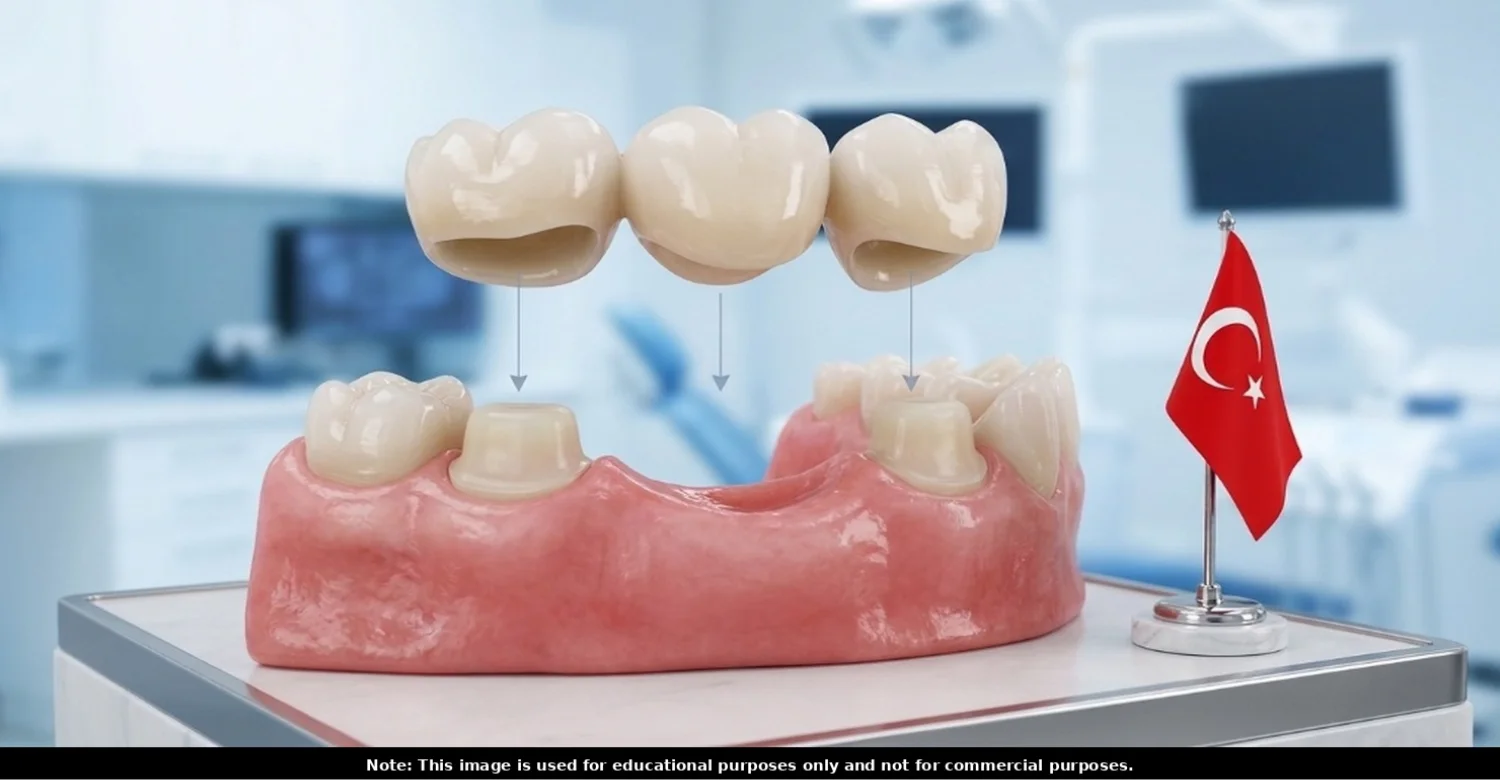
A traditional dental bridge replaces missing teeth with an artificial tooth secured between crowns placed on neighbouring natural teeth. The replacement tooth is called a pontic, while the supporting crowns are known as retainers. Together, they form one fixed restoration designed to restore chewing function and fill the gap.
How Does a Tooth-Supported Bridge Work?
A traditional dental bridge Turkey restoration relies on natural teeth on both sides of the missing-tooth space. These supporting teeth, known as abutments, are prepared to receive crowns. The crowns connect to the pontic, and the completed bridge is permanently cemented into place.
What Happens When a Traditional Bridge Replaces a Missing Tooth?
The artificial tooth fills the empty space while the supporting crowns help distribute chewing forces across neighbouring teeth. This restores continuity within the dental arch, but it does not replace the missing tooth root or prevent bone loss beneath the gap.
What Makes a Three-Unit Dental Bridge?
A three-unit bridge replaces one missing tooth through three connected components:
First retainer: A crown covering the supporting tooth on one side.
Pontic: The artificial tooth filling the gap.
Second retainer: A crown covering the supporting tooth on the opposite side.
The three components work as one fixed structure. Longer gaps may require additional units and stronger supporting structures, depending on the clinical findings.
.jpg)
.jpg)
.jpg)
Is a Traditional Dental Bridge the Right Fit for Your Missing Teeth?
A traditional dental bridge Turkey treatment may be suitable for patients with missing teeth and strong neighbouring teeth that can support the restoration. Gum health, bite forces, and oral hygiene also play an important role in determining whether this option is appropriate.
Can a Traditional Bridge Replace One Missing Tooth?
Yes. A traditional dental bridge can fill a single-tooth gap using the natural teeth on either side for support. It may be worth considering when neighbouring teeth already require crowns. However, preparing otherwise healthy teeth requires careful consideration.
Can It Restore Several Missing Teeth?
A traditional dental bridge can replace selected consecutive missing teeth. However, longer spans place greater pressure on supporting teeth. Their strength, spacing, number, and periodontal support all influence whether the restoration is suitable. Some patients may benefit from implant-supported alternatives.
What Makes Someone a Suitable Candidate?
Several factors help determine whether a traditional bridge is appropriate:
Strong, stable supporting teeth.
Healthy gums and controlled periodontal conditions.
Sufficient tooth structure for crown preparation.
Manageable bite forces and teeth-grinding habits.
Appropriate spacing between remaining teeth.
Good oral hygiene and commitment to ongoing maintenance.
Active tooth decay or gum disease should be addressed before proceeding with definitive restorative treatment.
Traditional Dental Bridge Cost in Turkey vs UK vs US
The traditional dental bridge Turkey cost is often lower than private treatment prices in the UK and US. However, the final price depends on the material, number of units, laboratory work, and any additional dental procedures.
How Much Does a Three-Unit Dental Bridge Cost?
United Kingdom
Estimated Cost: $2,000 – $4,150
Estimated Cost
Estimated cost: $2,000 – $4,150
Private UK clinic standard rate
Domestic specialist dental care
Turkey
Estimated Cost: $350 – $900
Estimated Cost
Estimated cost: $350 – $900
Up to ~75–80% savings vs. US/UK
Internationally certified clinic care
United States
Estimated Cost: 2,500–5,800
Estimated Cost
Estimated cost: 2,500–5,800
US private clinic standard rate
Domestic treatment standard
What Determines Your Final Dental Bridge Cost?
The price can change depending on:
Material: Zirconia and porcelain-fused-to-metal have different costs.
Bridge size: More units generally mean higher laboratory and restoration fees.
Clinical needs: Tooth preparation, imaging, or gum treatment may add expenses.
Treatment package: Temporary bridges, cementation, and follow-up may or may not be included.
What Should You Check Before Accepting a Quote?
At Vitrin Clinic, we recommend requesting a written, itemised treatment estimate. Confirm the material, number of units, examination and imaging fees, temporary restoration, final fitting, and follow-up arrangements. This helps you compare prices accurately rather than focusing on the headline figure alone.
Which Materials Make the Best Traditional Dental Bridges?
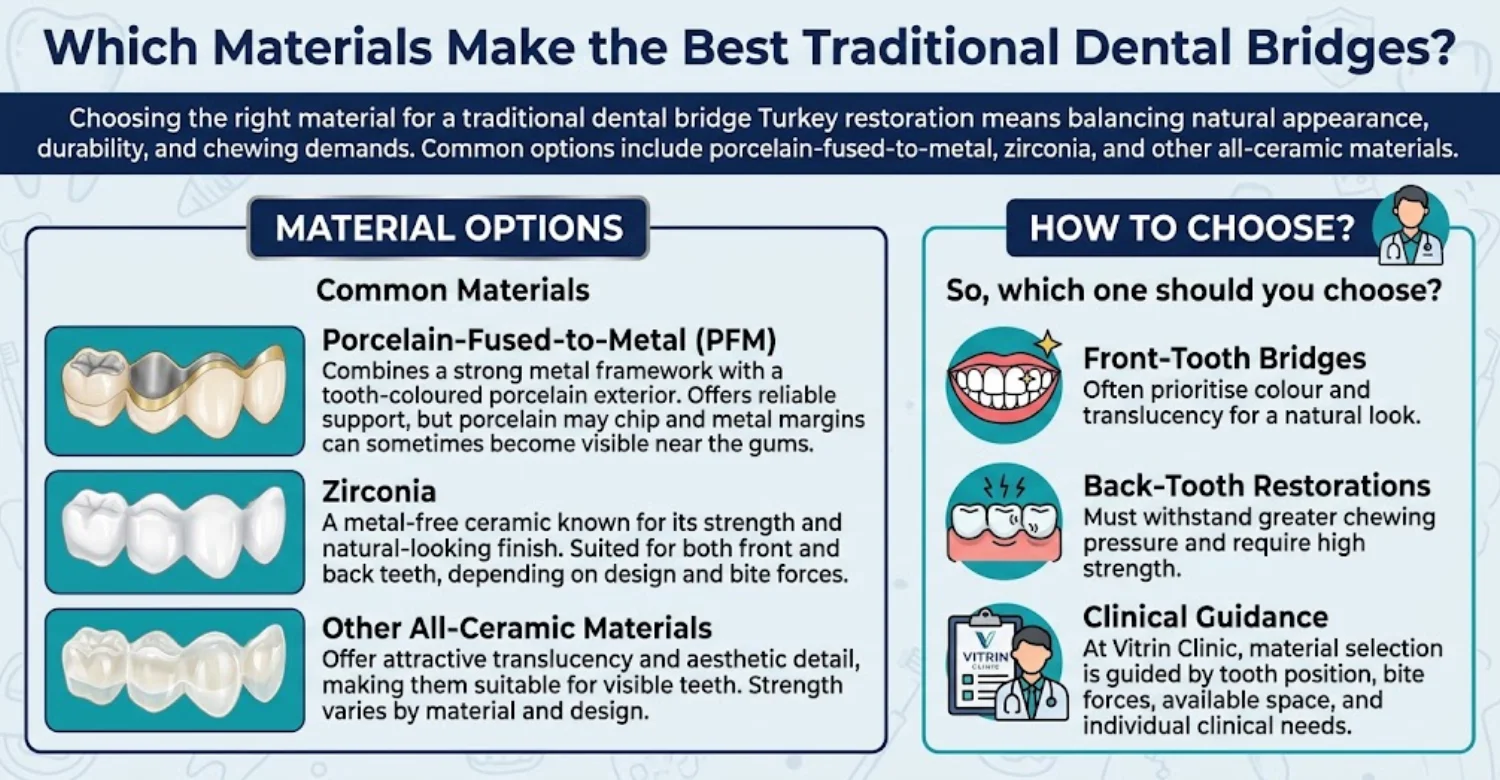
Choosing the right material for a traditional dental bridge Turkey restoration means balancing natural appearance, durability, and chewing demands. Common options include porcelain-fused-to-metal, zirconia, and other all-ceramic materials.
Porcelain-Fused-to-Metal (PFM): Combines a strong metal framework with a tooth-coloured porcelain exterior. It offers reliable support, although porcelain may chip and metal margins can sometimes become visible near the gums.
Zirconia: A metal-free ceramic known for its strength and natural-looking finish. It may suit both front and back teeth, depending on the design and bite forces.
Other All-Ceramic Materials: Offer attractive translucency and aesthetic detail, making selected options suitable for visible teeth. Their strength varies by material and restoration design.
So, which one should you choose? Front-tooth bridges often prioritise colour and translucency, while back-tooth restorations must withstand greater chewing pressure. At Vitrin Clinic, material selection is guided by tooth position, bite forces, available space, and individual clinical needs.
Traditional Dental Bridge: Benefits, Trade-Offs, and Alternatives
A traditional dental bridge Turkey restoration can fill missing-tooth gaps without implant surgery. It offers a fixed solution, but its success depends on the supporting teeth and proper maintenance.
What Are the Main Benefits and Limitations?
Advantages | Limitations |
Replaces visible gaps with fixed teeth | Requires permanent preparation of supporting teeth |
Restores selected chewing and speaking functions | Needs careful cleaning beneath the pontic |
Avoids implant surgery | Supporting teeth may develop decay or sensitivity |
Offers a fixed alternative to removable dentures | May loosen or experience ceramic damage |
Can suit teeth that already need crowns | Does not prevent bone loss beneath the missing tooth |
Traditional Dental Bridge vs Dental Implant: Which Should You Choose?
A traditional bridge relies on neighbouring teeth for support, while a dental implant uses a surgically placed fixture in the jawbone. Bridges generally avoid surgery and implant-healing time, but require preparation of adjacent teeth. Implants preserve neighbouring natural teeth and help maintain bone around the implant, but require suitable bone support and surgical evaluation.
The right choice depends on your oral health, supporting teeth, bone condition, and treatment priorities. At Vitrin Clinic, we evaluate these factors before recommending a suitable option.
Ready to transform your smile?
Talk to our team and get a personal FREE treatment plan.
How Does Vitrin Clinic Perform Traditional Dental Bridge Treatment in Istanbul?
Getting a traditional dental bridge Turkey restoration at Vitrin Clinic involves a planned process, from examining the supporting teeth to fitting the final bridge. Each stage is organised around the patient's clinical needs and laboratory requirements.
Step 1: Initial Examination and Personalised Planning
Our dental team examines the missing-tooth area, neighbouring teeth, and gum health. Bite alignment and existing restorations are also reviewed. Digital dental X-rays may be recommended when clinically necessary. These findings guide the proposed bridge design.
Step 2: Preparing Supporting Teeth and Digital Scanning
For a conventional bridge, the supporting teeth are reshaped to accommodate the crowns. Local anaesthesia helps manage discomfort during preparation. We use digital scanning or conventional impressions to record the prepared teeth and surrounding structures. The appropriate restoration shade is also selected.
Step 3: Temporary Bridge Placement
When required, a temporary bridge protects prepared teeth while the permanent restoration is being fabricated. It helps maintain appearance and basic function. Our team provides guidance on eating and cleaning during this stage.
Step 4: Final Bridge Fitting and Cementation
Once the permanent bridge is ready, the dentist checks its fit, appearance, and bite alignment. Any necessary adjustments are completed before cementation. The restoration is then secured, followed by personalised cleaning and maintenance instructions.
How Long Does Traditional Bridge Treatment Take at Vitrin Clinic?
Most conventional cases require two or three appointments. Laboratory fabrication may take several days, depending on the restoration design and clinical requirements. Our team coordinates the schedule with international patients before travel, although additional treatment may extend the overall timeframe.
.jpg)
.jpg)
.jpg)
.jpg)
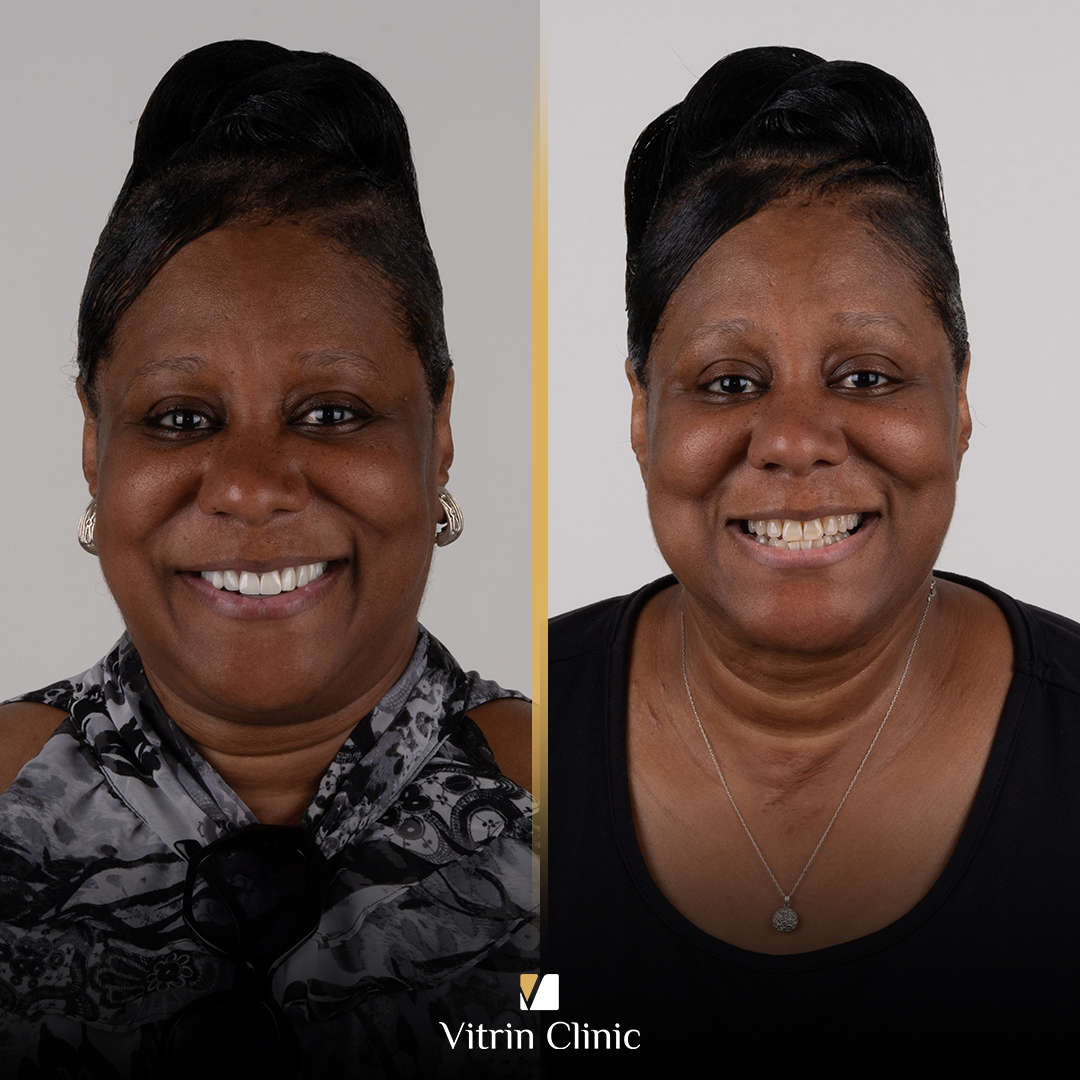
Traditional Dental Bridge Before and After: What Transformation Can You Expect?
A traditional dental bridge Turkey restoration can close visible gaps, create a more complete smile, and restore selected chewing and speaking functions. The final result depends on supporting teeth, gum health, bite alignment, and material choice.
How Can a Dental Bridge Change Your Smile and Daily Function?
The replacement tooth is designed to blend with neighbouring teeth in shape and shade. Proper fit and bite adjustment help support comfortable chewing. For front teeth, colour, translucency, and gum contours are especially important.
What Influences Your Before-and-After Results?
Every smile has different clinical needs. Results can vary according to:
Strength and position of supporting teeth.
Gum health and surrounding tissue condition.
Bridge material, shade, and laboratory precision.
Bite alignment and chewing habits.
Oral hygiene and long-term maintenance.
At Vitrin Clinic, we consider these factors during treatment planning to establish realistic expectations before the final bridge is made.
Recovery After Traditional Dental Bridge Placement: What Should You Expect?
Recovery after a traditional dental bridge Turkey procedure is usually manageable, although temporary sensitivity, gum tenderness, or mild chewing discomfort may occur. These symptoms should gradually settle as your mouth adapts to the restoration.
Is Dental Bridge Treatment Painful?
Local anaesthesia helps minimise discomfort during supporting tooth preparation. You may feel pressure or vibration, followed by mild tenderness once the anaesthetic wears off.
Common Side Effects and How to Manage Them
Temporary effects may include:
Sensitivity to hot and cold foods.
Mild gum tenderness around supporting teeth.
Awareness of the new bridge.
Discomfort when chewing or biting.
To support recovery, choose softer foods, avoid excessive pressure, brush gently, and clean beneath the artificial tooth daily. Paracetamol may help relieve mild discomfort when suitable for you. Follow the product instructions and seek professional advice if you have health conditions, take other medication, or are unsure whether it is appropriate.
When Should You Contact Your Dentist?
Persistent or worsening pain, increasing sensitivity, swelling, or a loose bridge requires dental review. A high bite may also need adjustment. Rapidly spreading facial swelling requires urgent medical attention, while breathing or swallowing difficulties require emergency care.
How Long Does a Traditional Dental Bridge Last, and How Can You Protect It?
A traditional dental bridge Turkey restoration can serve for many years with proper care. Its lifespan depends on supporting tooth health, restoration material, bite pressure, and daily oral hygiene. Regular dental reviews help keep potential problems in check.
What Affects Your Bridge's Lifespan?
Many conventional bridges remain functional for 10 years or longer, although results vary and no lifespan is guaranteed. Common reasons for failure include:
Decay developing beneath supporting crowns.
Gum disease affecting abutment teeth.
Cement failure or bridge loosening.
Ceramic chipping or structural fractures.
Excessive bite pressure or teeth grinding.
How Can You Keep Your Dental Bridge in Good Condition?
Protect your restoration with a consistent care routine:
Brush twice daily, focusing on the gumline.
Clean beneath the pontic using suitable interdental tools.
Avoid biting hard objects or foods.
Attend regular dental examinations and professional cleanings.
When Should a Dental Bridge Be Repaired or Replaced?
Persistent looseness, recurrent decay, structural damage, or loss of supporting tooth stability may require intervention. Gum recession can also expose crown margins. A dental examination helps determine whether repair is possible or replacement is necessary.
The Clinical Factors That Shape a Successful Traditional Dental Bridge
A traditional dental bridge Turkey restoration is only as reliable as the structures supporting it. Tooth strength, gum health, bite pressure, and cleaning access all influence treatment suitability and long-term performance.
Why Supporting Teeth and Gum Health Matter
Supporting teeth carry additional chewing forces after bridge placement. Existing decay, cracks, large fillings, or previous root canal treatment may affect their ability to support the restoration. Healthy periodontal tissues are equally important for long-term stability.
How Do Bite Forces Influence Bridge Performance?
Heavy grinding and uneven bite contacts can place excessive pressure on the bridge. This may increase the risk of ceramic damage or complications affecting supporting teeth. Evaluating bite relationships helps guide restoration design and protective measures.
Dr. Rifat Alsaman's Clinical Perspective
Dr. Rifat Alsaman, Head of the Medical Team at Vitrin Clinic, highlights the importance of examining supporting teeth before selecting a bridge design. Root condition, remaining tooth structure, periodontal health, and chewing forces should guide treatment decisions—not material preference alone.
What Should Be Checked Before Bridge Preparation?
Root condition and supporting bone.
Existing restorations and remaining tooth structure.
Gum attachment and periodontal stability.
Bite contacts and possible teeth grinding.
Available space and access for daily cleaning.
These findings help determine whether a traditional bridge is suitable before any irreversible tooth preparation begins.
Ready to transform your smile?
Talk to our team and get a personal FREE treatment plan.
Planning Your Dental Bridge Treatment in Turkey: What Should You Know?
Before travelling for a traditional dental bridge Turkey treatment, make sure you understand the proposed restoration, total costs, and aftercare arrangements. A little preparation can make your treatment journey more organised.
What Should You Confirm Before Treatment?
Ask your dental team:
Why is this bridge design suitable for my teeth?
How many units will it include?
Which material is recommended, and why?
Do my supporting teeth need additional treatment?
What exactly does the written quotation cover?
How will complications or follow-up needs be handled?
How Can You Protect Your Bridge After Treatment?
Brush carefully around supporting crowns and gum margins. Clean beneath the pontic with a floss threader or suitable interdental cleaner. Avoid sharp objects when removing trapped food, and attend recommended dental reviews.
Which Records Should You Take Home?
Before leaving Turkey, request copies of your dental X-rays, examination findings, treatment plan, and bridge material details. Keep your aftercare instructions and confirm recommended review intervals and contact arrangements for any future concerns.
How Does Vitrin Clinic Personalise Traditional Dental Bridge Treatment?
At Vitrin Clinic, every traditional dental bridge Turkey treatment starts with understanding the cause of tooth loss and the condition of the remaining teeth. Our approach combines clinical evaluation and digital planning to identify a suitable restorative solution.
Examining Supporting Teeth and Gum Health
Our dental team checks supporting teeth, gum tissues, existing restorations, and bite relationships. Digital dental X-rays may be recommended when clinically necessary to examine root condition and supporting bone.
Using Digital Planning to Guide Material Selection
Digital scanning and imaging can help guide restoration design when appropriate. We consider tooth position, chewing forces, available space, and aesthetic requirements before recommending a material such as zirconia or porcelain-based ceramics.
Creating a Bridge Plan Around Your Dental Needs
Every bridge design is based on individual clinical findings. We consider the number of units, supporting tooth strength, and access for daily cleaning. Patients receive a clear explanation of the proposed treatment stages, material options, and an itemised written estimate covering anticipated costs and any additional procedures.
Your Traditional Dental Bridge Journey at Vitrin Clinic: From Consultation to Aftercare
At Vitrin Clinic, traditional dental bridge Turkey treatment combines personalised planning, coordinated appointments, and clear aftercare guidance. We help international patients understand each stage before travelling.
Consultation and Personalised Treatment Planning
We review available dental photographs and previous records to provide preliminary guidance. Final treatment suitability is confirmed through an in-person clinical examination, with additional imaging when clinically necessary.
Coordinated Appointments and Digital Planning
Our dental team evaluates supporting teeth, gum health, and bite alignment before confirming the bridge design and material. Appointments are coordinated around tooth preparation, temporary restoration, and final fitting. The schedule depends on individual clinical requirements.
International Patient Support and Aftercare
We explain anticipated costs, appointment arrangements, and recovery considerations. Before returning home, patients receive relevant treatment records and personalised maintenance instructions. We also clarify follow-up arrangements to help support long-term care of the restoration.
Conclusion: Is a traditional dental bridge Turkey Right for You?
A traditional dental bridge Turkey restoration may suit patients with missing teeth and sufficiently strong supporting teeth. It offers a fixed replacement without implant surgery. However, permanent tooth preparation and long-term maintenance require consideration. A clinical examination helps establish whether this option suits your dental condition. Discuss materials, alternatives, costs, and follow-up before making your decision.
Reference
FAQs
A traditional dental bridge Turkey restoration may cost approximately €350–€900 for a three-unit bridge. Material, laboratory work, supporting tooth condition, and additional procedures affect the final price. Some clinics quote per unit rather than per complete bridge. Request an itemised written estimate before treatment.
Dr. Rifat Alsaman has more than 5 years of clinical experience in dentistry and currently serves as the Head of the Medical Team at Vitrin Clinic. He is dedicated to providing exceptional patient care, overseeing treatment planning, and ensuring the highest clinical standards across the team. His expertise, attention to detail, and commitment to continuous professional development have helped countless patients achieve healthier, more confident smiles.


