Cosmetic Dentistry
September 9, 2026
Cosmetic Dentistry in Turkey: Veneers, Crowns & Smile Makeovers
 Dr. Rifat Alsaman
Turkey now treats more international dental patients than any other country in the world. Recent market analysis puts annual dental and health tourism arrivals to Turkey at well over a million patients a year, with cosmetic treatments veneers, crowns, and full smile makeovers among the most requested procedures. Most patients save 50–70% compared to UK, US, or Western European prices, even after flights and hotel stays are included.
This guide explains what cosmetic dentistry in Turkey actually involves, what it costs in 2026, which treatments fit which problems, and what to check before you book with clinical input from the team at Vitrin Clinic in Istanbul.
Quick answer: Cosmetic dentistry in Turkey covers veneers, crowns, composite bonding, teeth whitening, and gum contouring, performed by specialist cosmetic dentists at 50–70% lower cost than the UK or USA, typically over a 3–7 day clinic visit.
What Is Cosmetic Dentistry?
Cosmetic dentistry is dental treatment focused on how your teeth look — colour, shape, size, spacing, and the overall balance of your smile — rather than only fixing disease or damage. It includes veneers, crowns, bonding, whitening, and gum reshaping.
Clinical Note — Dr. Rifat Alsaman, Head of the Medical Team, Vitrin Clinic: "Patients often ask for a whiter smile, but color is rarely the only factor. Tooth proportion, gum line, and bite all decide whether a result looks natural or looks 'done'. We assess all three before recommending a treatment."
Roughly one in five UK dental tourists cites veneers specifically as their reason for travelling, making cosmetic work the single largest category of outbound UK dental tourism to Turkey.
Cosmetic Dentistry in Turkey: Before and After Results
Photographic evidence matters more in cosmetic dentistry than almost any other treatment, because the result is entirely visual. At Vitrin Clinic, every case in our before & after gallery is a real patient treated in our Istanbul clinic, reviewed and approved for use by the patient.
(Editorial note for content team: embed 8–10 real before/after image pairs here, with descriptive alt text such as "8 E-max veneers before and after — Vitrin Clinic Istanbul", plus a short case caption for each.)
Cosmetic Dentistry Prices in Turkey (2026)
Transparent pricing is one of the top three factors patients research before choosing a clinic abroad, according to dental tourism market surveys. Below are representative 2026 prices for the most common cosmetic procedures.
Treatment | Turkey (Vitrin Clinic) | UK | USA | Typical Saving |
E-max Veneer (per tooth) | £180 – £280 | £700 – £900 | £900 – £1,600 | up to 70% |
Porcelain Crown (per tooth) | £150 – £250 | £600 – £800 | £700 – £1,600 | up to 68% |
Composite Bonding (per tooth) | £80 – £120 | £200 – £300 | £250 – £450 | up to 65% |
Teeth Whitening (full arch) | £120 – £180 | £350 – £500 | £400 – £650 | up to 65% |
8-Veneer Smile Makeover | £1,650 – £2,400 | £6,500 – £9,000 | £9,000 – £16,000 | up to 75% |
Prices are per-tooth or per-package estimates for 2026 and vary based on material choice, number of teeth, and case complexity. Request a personalised quote after a free digital assessment.
What We Notice Clinically: Patients comparing clinics by price-per-tooth alone often overlook laboratory quality and the number of clinical review appointments included. A £50 difference per veneer rarely reflects the real cost gap between a hand-layered ceramic restoration and a mass-produced one.
Cosmetic Dentistry Packages in Turkey
Most international patients book an all-inclusive package rather than paying per procedure. A typical Vitrin Clinic cosmetic package includes:
Free digital consultation and smile assessment before travel
Digital Smile Design (DSD) preview
Hotel accommodation for the treatment stay
VIP airport and clinic transfers
All X-rays, scans, and the procedure itself
Aftercare instructions and remote follow-up
8 E-max Veneers Package
8 E-max Veneers is the most requested cosmetic package among international patients, designed to cover the eight front teeth visible in a natural smile (canine to canine).
Includes:
Digital Smile Design (DSD): Before any physical treatment, a digital preview of the final smile is created based on facial and lip proportions — the patient sees and approves the expected result before a single tooth is touched.
Temporary Veneers: After the teeth are prepared, temporary veneers are fitted the same day, so the patient leaves with a natural-looking smile while the final set is hand-crafted in the lab.
Hotel Stay: Accommodation for the full treatment period (typically 4–5 days) included in the package price.
VIP Transfers: Private transport between the airport, hotel, and clinic.
Aftercare: Post-treatment follow-up after the patient returns home, plus care instructions and warranty coverage.
8 Porcelain Crowns Package
The 8 Porcelain Crowns package is used when teeth need structural reinforcement, not just cosmetic improvement — for example, teeth with large old fillings, visible wear, or teeth that have previously had root canal treatment.
Includes:
Full Assessment: Comprehensive X-ray and scan-based evaluation to confirm crowns are the right solution rather than veneers — a deeper diagnostic step than the veneer package, since crowns remove more tooth structure.
Tooth Preparation: The tooth is reduced 360° to accommodate the crown, unlike veneers, which only cover the front surface.
Crown Fitting: Final placement after confirming shade match and bite function.
Hotel Stay + Transfers: Same as the veneers package.
Duration: 5–7 working days — slightly longer than veneers, since crown fabrication takes more lab time.
Popular Cosmetic Dentistry Treatments
Each treatment below solves a different problem, and most smile makeovers combine two or three of them rather than relying on one alone. The comparison table gives the quick answer; the sections after it go into clinical detail on candidacy, procedure, and longevity.
Treatment | Best For | Sessions | Reversible? | Typical Lifespan |
Veneers | Colour, shape, minor gaps on healthy teeth | 2 visits, 4–5 days | No (enamel removed) | 10–15 years |
Crowns | Heavily worn, filled, or weakened teeth | 2 visits, 5–7 days | No | 10–15 years |
Composite Bonding | Small chips, gaps, minor colour fixes | 1 visit, same-day | Yes | 3–7 years |
Teeth Whitening | Overall shade brightening | 1 visit, ~1 hour | Yes (fades over time) | 1–3 years |
Gum Contouring | Uneven or "gummy" smile line | 1 visit | No | Permanent |
Dental Veneers
Veneers are thin shells — usually porcelain or E-max ceramic, around 0.3–0.5mm thick — bonded to the front surface of the tooth to correct colour, shape, length, or minor spacing. They are the single most requested cosmetic procedure among international patients travelling to Turkey, and the main driver of the country's dental tourism volume specifically for aesthetic work.
How the procedure works:
The dentist lightly prepares the tooth surface (minimal enamel removal for most cases), takes a digital scan, and a dental laboratory hand-fabricates the veneers to match the agreed shade and shape from the Digital Smile Design preview. Temporary veneers are worn for 2–3 days while the final set is made, then the permanents are bonded in a second appointment.
Material choice matters more than most patients realise. E-max (lithium disilicate) veneers are more translucent and closer to natural enamel in how they reflect light, while feldspathic porcelain veneers can be made thinner for very conservative cases. Composite veneers are a non-permanent, lower-cost alternative but wear and stain faster than ceramic.
What We Notice Clinically: The most common veneer regret is not the shape or colour — it's over-preparation. Patients who skip a proper diagnostic mock-up sometimes end up with more enamel removed than necessary. A wax-up or digital mock-up before treatment lets you and the dentist agree on the final shape before any tooth is touched.
Good candidates have healthy enamel and gums, with cosmetic concerns limited to colour, minor shape irregularities, or small gaps. Patients with significant decay, active gum disease, or heavy grinding (bruxism) typically need those issues addressed first, or may be better suited to crowns.
Dental Crowns
Crowns fully encase the tooth rather than just covering the front surface, making them the right choice when a tooth needs structural reinforcement as well as a cosmetic upgrade — heavy wear, large old fillings, cracks, or a root-canal-treated tooth that has become brittle.
Zirconia vs. porcelain-fused-to-metal: modern cosmetic crowns in Turkey are almost always zirconia or E-max, both of which are metal-free and allow light to pass through in a way that mimics natural teeth. Older metal-based crowns are stronger under extreme bite force but look visibly opaque at the gumline over time — most cosmetic cases today avoid them for front teeth.
Process: more tooth structure is removed than for a veneer, since the crown needs to fit over the entire tooth. A temporary crown protects the prepared tooth while the permanent one is milled or hand-layered in the lab, then fitted and bite-checked at the second visit.
Clinical Note: A crown that looks perfect in isolation can still feel "wrong" if the bite isn't checked under function — biting, chewing, and grinding motions, not just a static mouth-closed check. This is one of the most common causes of post-treatment sensitivity or crown fracture within the first year.
Composite Bonding
Composite bonding uses tooth-coloured resin, applied directly to the tooth and sculpted by hand before being hardened with a curing light. It is the most conservative and lowest-cost entry point into cosmetic dentistry, and — unlike veneers or crowns — it is largely reversible, since little to no enamel is removed.
Where it works best: small chips, minor gaps, slightly uneven edges, or a single discoloured tooth that doesn't warrant a full veneer. It's also commonly used as a "trial run" before committing to veneers, since results are visible the same day.
Trade-off: composite resin is more porous than ceramic, so it stains faster (particularly with coffee, tea, or red wine) and typically needs polishing or replacement every 3–7 years, compared to 10–15 years for porcelain.
Teeth Whitening
In-clinic whitening uses a higher-concentration bleaching gel than over-the-counter products, activated with light in some protocols, and can lift tooth shade noticeably in a single session lasting under an hour.
Sequencing matters: whitening should always be done before veneers or crowns are shade-matched, not after. Ceramic restorations don't respond to bleaching gel the way natural enamel does, so whitening after veneers are placed can leave the natural teeth around them a different shade than the restorations — one of the most common causes of a visibly mismatched smile.
Tips for Patients: If you're planning both whitening and veneers, ask your clinic to whiten your natural teeth first, wait roughly two weeks for the shade to stabilise, then match the veneer or crown shade to the new colour — not the old one.
Gum Aesthetics (Gum Contouring)
When gums sit lower than they should, teeth can look short, uneven, or "gummy" even if the teeth themselves are healthy. Gum contouring reshapes the gum line — usually with a laser or scalpel technique — to expose more of the natural tooth and create better proportion between teeth and gums.
This is frequently combined with veneers or crowns in a full smile makeover, since correcting gum symmetry first gives the dentist a more accurate, final picture of tooth proportions before any restorative work is designed.
Tips for Patients: Ask whether whitening is done before veneer or crown shade-matching. Doing it in the wrong order is one of the most common causes of a mismatched smile.
What Problems Can Cosmetic Dentistry Correct?
Stained or discoloured teeth
Chipped or cracked teeth
Gaps between teeth
Worn-down or short-looking teeth
Uneven or asymmetric gum lines
Minor spacing and alignment issues
Who Is a Good Candidate for Cosmetic Dentistry?
Good candidates have healthy gums and teeth free of active decay. Smoking and teeth grinding can affect long-term results and should be discussed at consultation. Patients with untreated cavities or gum disease are treated for those issues first — cosmetic work is planned only once the mouth is clinically healthy.
Clinical Note: Roughly 1 in 4 patients who initially request veneers are advised, after examination, to consider crowns, bonding, or a combination instead — because veneers alone would not address the underlying issue.
How Does a Cosmetic Dentist Differ From a General Dentist?
A general dentist manages oral health: check-ups, fillings, and gum care. A cosmetic dentist has additional training in smile design, shade matching, and restorative aesthetics, and focuses on how teeth look as well as how they function. Many cosmetic dentists, including the team at Vitrin Clinic, are also trained in restorative dentistry, so structural problems are corrected as part of the same treatment plan.
Why Choose Turkey for Cosmetic Dentistry?
Turkey's position as the leading global destination for dental tourism did not happen by accident. Independent market analysis published in 2026 found Turkey now receives over 750,000 dental tourists a year, with savings of 70–90% against UK and US prices reported for major procedures. Search demand from US patients specifically has grown roughly tenfold in recent years, as awareness of Turkish clinics' technology and pricing has spread.
Key reasons patients choose Turkey:
Cost. Savings of 50–70% versus the UK, USA, and Western Europe, even including travel.
Specialist expertise. Many Turkish cosmetic dentists train internationally and treat foreign patients daily, developing high case volumes in aesthetic work specifically.
Modern equipment. Digital smile design, CAD/CAM restorations, and 3D scanning are standard at accredited clinics.
Short treatment windows. Most veneer and crown cases are completed in 3–7 days.
All-inclusive coordination. Hotel, transfers, and aftercare bundled into one plan.
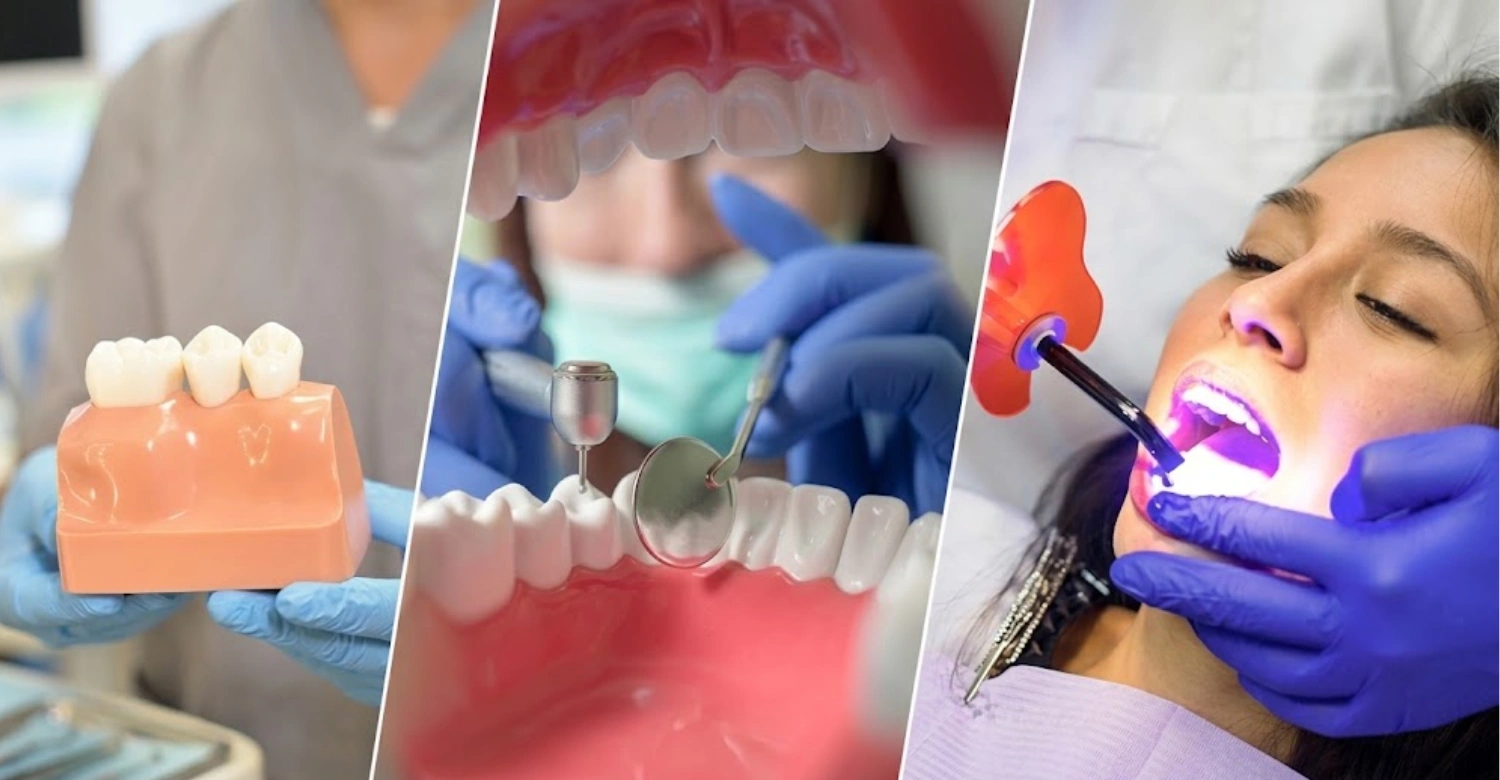
Note : All images used are for editorial and illustrative purposes only and may not originate from the original news provider or associated company.
Safety, Accreditation & Materials
Patient safety in a cosmetic dental trip depends on two things: clinic accreditation and material quality.
At Vitrin Clinic:
Treatment protocols follow internationally recognised sterilisation and infection-control standards.
Restorations use CE-approved ceramics from established brands (e.g. IPS e.max) rather than unbranded lab materials.
Every case is planned digitally before any tooth is touched, so both patient and dentist review the expected result in advance.
Clinical Note: Ask any clinic — Turkish or otherwise — for the specific brand of ceramic used and whether the lab is in-house or outsourced. This single question filters out a large share of budget clinics that compete on price alone.
Meet the Clinical Lead
Dr. Rifat Alsaman, Head of the Medical Team at Vitrin Clinic, has practised clinical dentistry with a focus on cosmetic and restorative treatment, overseeing treatment planning and clinical standards for the international patient team. He is a strong advocate for diagnosis-first treatment planning: correcting bite, gum health, and tooth structure before any aesthetic work begins, so results last.
Why Choose Vitrin Clinic for Cosmetic Dentistry in Turkey
Exclusive focus on cosmetic and restorative dentistry, not a general practice offering it as a side service
Digital Smile Design used on every case before treatment starts
Transparent, itemised quotes with no hidden costs
Multilingual international patient coordinators, available before, during, and after treatment
Located in Istanbul, with direct flight access from over 200 international destinations
Sources & Further Reading
Patients Beyond Borders / Mordor Intelligence, 2026 medical tourism cost comparisons.
UK Smiles, Turkey Dental Statistics 2025 — UK patient volume and treatment mix data.
FAQs
Dr. Rifat Alsaman has more than 5 years of clinical experience in dentistry and currently serves as the Head of the Medical Team at Vitrin Clinic. He is dedicated to providing exceptional patient care, overseeing treatment planning, and ensuring the highest clinical standards across the team. His expertise, attention to detail, and commitment to continuous professional development have helped countless patients achieve healthier, more confident smiles.


