Cosmetic Dentistry
October 20, 2026
Front Wing Technique: How Does It Close a Gap Between Your Front Teeth?
 Dr. Rifat Alsaman

The Front Wing Technique is a direct composite bonding method used to close a diastema, which is a gap between teeth. It is most often used between the upper front teeth. The dentist adds tooth-colored composite resin to the side surfaces of the teeth. This builds a new contact point and a natural contour. Many patients worry about visible gaps, bulky-looking teeth, long treatment, or losing healthy enamel. This approach is usually additive and conservative. Suitability depends on tooth proportions, bite, gum health, and the size of the gap.
What Is the Front Wing Technique in Diastema Closure?
The Front Wing Technique is a freehand direct composite method for closing diastemas and changing tooth shape. Its name comes from the thin composite “wing” built first on the facial side of each tooth. It is one form of diastema closure direct composite treatment. Composite is added to the sides of the front teeth to reduce or close the space. The goal is to skip the traditional wax-up and silicone index while still creating natural contours. Careful case selection remains essential.
How Does the Front Wing Technique Work?
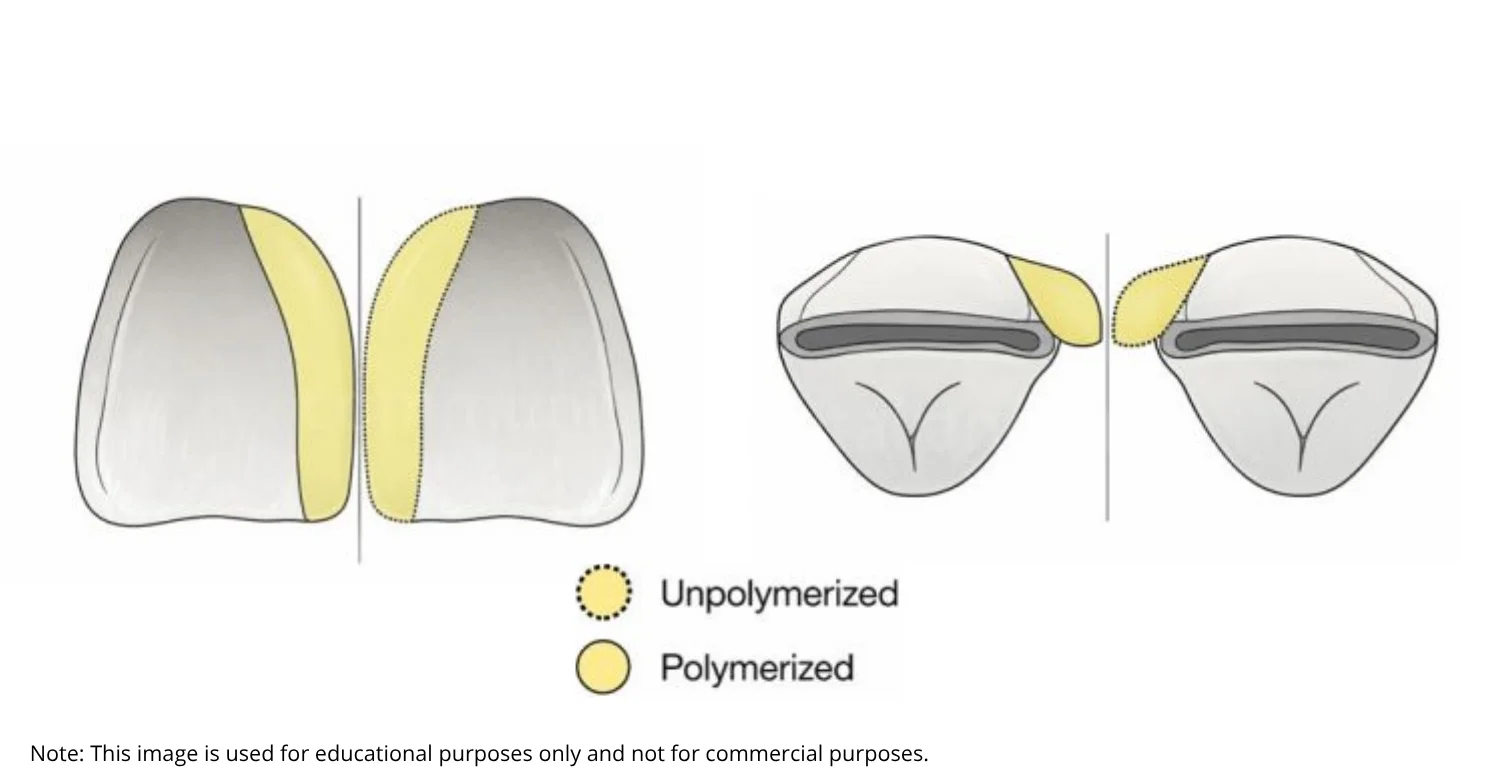
In the Front Wing Technique, the dentist first shapes a thin facial wall of composite on the side of the tooth facing the gap. This wall is the "wing." It is modeled freehand toward the gumline. Once cured, it guides the rest of the build-up. The dentist then fills the remaining space from the palatal side. This step creates the contact area and the emergence profile. The exact sequence depends on the clinical protocol and any matrix used.
Who May Be a Suitable Candidate?
Good candidates often have small or moderate gaps, well-proportioned teeth, healthy gums, and a stable bite. The Front Wing Technique works by adding width, so the teeth need room to grow without looking too wide. A large gap may need a broader plan. So may a tooth-size discrepancy, a thick frenum attachment, or teeth that are still moving. In these cases, orthodontic or periodontal assessment may come first. Your dentist confirms suitability after a full examination.
.jpg)
.jpg)
.jpg)
.jpg)
.jpg)
.jpg)
.jpg)
.jpg)
Ready to transform your smile?
Talk to our team and get a FREE treatment plan.
What Problems Can Front Wing Technique Address?
The Front Wing Technique mainly addresses aesthetic concerns in the front of the mouth. People often seek treatment for a visible gap, small or uneven incisors, or old bonding that looks bulky. Some also notice food collecting in the space. Direct composite bonding can improve shape and spacing without removing much tooth structure. However, it changes the teeth themselves, not their position in the jaw. The sections below explain where it helps and where it may fall short.
Closing a Gap Between the Front Teeth
A central diastema is the most common reason patients ask about the Front Wing Technique. Small gaps can often be shared between both central incisors. Adding equal amounts to each tooth helps keep the smile symmetrical. The size of the gap matters. So does its position relative to the facial midline. A gap closer to one side may need uneven additions. The dentist also checks the gum papilla, since its height affects whether a dark triangle may remain.
Improving Tooth Shape and Proportions
Composite additions can also improve teeth that look narrow, short, or uneven. A slightly small incisor can be widened or lengthened to match its neighbor. In many cases, this avoids the need for porcelain veneers. Direct bonding usually keeps natural enamel intact. Proportion is the main limit. Ideal width-to-length ratios vary between people. The dentist plans the final shape so each tooth looks balanced, not simply wider. A mock-up can help you preview the change first.
Creating Natural-Looking Interproximal Contacts
Interproximal contact composite bonding focuses on where and how two teeth touch. A good contact should look natural and support the gum tissue between the teeth. It should also let floss pass with gentle resistance. If the contact sits too far from the gum, a dark triangle may appear. If the area is too bulky, food and plaque can be collected. Contact position, contour, and cleansability matter as much as closing the gap itself.
When the Technique May Not Be Enough
The Front Wing Technique has clear limits. Generalized spacing across many teeth may need orthodontic treatment. Crowding, significant bite problems, and teeth that are still shifting are also poor fits for composite alone. Very large gaps raise another concern. Filling them with composite can make teeth look too wide or square. In these cases, the dentist may suggest orthodontics first, followed by smaller cosmetic additions. Other restorative options may also be considered.
What Causes a Gap Between Your Front Teeth?
A diastema can develop for several reasons. Many gaps are simply part of normal tooth and jaw development. Others reflect changes in the gums or habits over time. Not every gap needs treatment. Some people are happy with their natural spacing. Treatment becomes relevant when the gap bothers you, traps food, or signals another problem. Understanding the cause helps the dentist choose a stable plan. It also avoids simply masking an ongoing issue.
Natural Tooth Size and Jaw Proportions
The most common cause is a mismatch between tooth size and jaw size. When teeth are relatively small for the dental arch, spaces appear between them. This pattern often runs in families. Children also have temporary gaps that usually close as the permanent canines erupt. In adults, this type of spacing tends to be stable. That stability makes it one of the more predictable situations for composite closure. The dentist still measures the space carefully before planning.
Missing or Undersized Teeth
A missing tooth can leave extra space in the arch. Upper lateral incisors are among the teeth most often missing from birth. A small, cone-shaped lateral incisor, sometimes called a peg lateral, can have a similar effect. These situations affect both spacing and proportions. Adding composite to the central incisors alone may not look balanced. The plan may need to include the lateral incisors, orthodontics, or other restorative options such as implants or bridges.
Gum Disease and Changes in Tooth Position
Periodontitis can damage the bone and tissues that support the teeth. As support is lost, front teeth may drift, flare, or spread apart. This is known as pathological tooth migration. A new gap in adulthood should always prompt a gum assessment. Active gum disease must be treated and stabilized before cosmetic bonding. Otherwise, the teeth may keep moving. The new contact may also be harder to clean. Bleeding gums are an important early warning sign.
Frenum Attachment and Other Contributing Factors
The labial frenum is the fold of tissue connecting the upper lip to the gum. A thick or low frenum may contribute to persistent spacing in some people. Its exact role is debated, and it does not always need surgery. Other factors include tongue-thrust habits, lip habits, and relapse after orthodontic treatment. Previous extractions can also play a role. Identifying these factors helps reduce the risk of the gap returning after treatment.
How Do Dentists Assess a Diastema Before Composite Bonding?
A dentist looks at much more than the space itself. The aim is a result that looks natural, functions well, and stays healthy. Assessment usually includes an examination, photographs, and sometimes study models or digital scans. The dentist checks the teeth, gums, bites, and smile lines. This information shows whether bonding alone is suitable. It also shows how much composite each tooth needs. Skipping this step can lead to teeth that look too wide.
Tooth Proportions, Symmetry, and Smile Design
The dentist measures the width and length of each front tooth. Symmetry between the two central incisors is especially important. The midline, gum levels, and incisal edges are also reviewed. These measurements reveal how much composite is needed. They also show whether the final teeth will look in proportion. Sometimes the space is shared across several teeth instead of only the central incisors. This can give a more balanced and natural-looking smile.
Bite, Gum Health, and Existing Restorations
Occlusion, or how the teeth meet, affects the forces placed on new bonding. A deep bite or tooth grinding can increase the risk of chipping. Gum health is checked for bleeding, pockets, and recession. Enamel condition matters because composite bonds most reliably to sound enamel. Any previous bonding is assessed too. Old composite may need removal or repair before new material is added. Together, these checks support a longer-lasting result.
Choosing a Direct Composite Approach
Several direct methods exist, including silicone index techniques, injection techniques, and freehand modeling. The Front Wing Technique is one freehand option. Each method offers a different balance of contour control, speed, and predictability. No single approach is ideal for every patient. Matrix-guided methods may suit some gaps, while freehand modeling may suit others. The dentist chooses an approach based on the gap, tooth anatomy, and their own clinical experience. Your dentist should explain why a particular method was chosen for your case.
What Are the Treatment Steps for Front Wing Technique?
Treatment with the Front Wing Technique follows a logical order, from planning to polishing. Straightforward cases are often completed in one appointment. The steps below describe a typical sequence. However, the precise protocol varies with the case, the materials, and the dentist's preferred matrix system. Some steps may be shortened or expanded. Your dentist should explain each stage before starting, so you know what to expect. Most patients remain comfortable throughout.
Step 1 - Examination and Shade Selection
Treatment begins with a clinical examination and a review of your goals. Photographs are often taken to record the starting point. Shade selection is usually done early, before the teeth dry out. Dehydrated teeth temporarily look lighter, which can lead to a mismatch. The dentist may place small test buttons of composite on the tooth to compare shades. The final proportions, and how much space each tooth will receive, are planned at this stage.
Step 2 - Isolation and Tooth Preparation
Moisture control is essential because saliva and blood weaken bonding. Rubber dam isolation for diastema closure keeps the field dry and can help retract the gum slightly. Some cases use alternative isolation, depending on access to the gumline. Preparation is often minimal or unnecessary. The enamel is usually cleaned and lightly roughened. It is then etched and coated with a bonding agent. Any removal of tooth structure depends on enamel condition and contour.
Step 3 - Building the Composite Wings
This is the core of the Front Wing Technique. The dentist sculpts a thin facial layer of composite on the side of the tooth facing the gap. This layer forms the "wing." It defines the new outline as seen from the front. After light curing, the wing acts as a stable wall. The space behind it is then filled from the palatal side. Each tooth is usually built one at a time for better control.
Step 4 - Forming the Contact and Emergence Profile
The anterior composite emergence profile is the way the restoration rises from the gum toward the contact. It should flow smoothly, without ledges or overhangs. A good profile supports the papilla and helps prevent dark triangles. The dentist shapes this area freehand or with a suitable matrix. Then the second tooth is built to meet the first. The final contact must be tight enough to hold, yet still allow easy cleaning.
Step 5 - Curing, Finishing, and Polishing
Each layer is cured with a dental curing light. Excess material is removed with fine instruments, discs, and strips. The dentist checks the contact with floss and adjusts the bite. Finishing and polishing anterior composites creates surface texture and a natural shine. A smooth surface also resists staining and plaque. Final polishing is sometimes refined at a later visit, once the teeth have rehydrated and the shade can be judged accurately.
Which Matrix Systems Help With Anterior Diastema Closure?
A matrix is a thin band or strip that guides composite into the right shape. In the front teeth, matrices help control contour, contact position, and the outline at the gum. They also limit excess material that could irritate the gums. Some dentists rely heavily on matrices. Others prefer freehand modeling with selective matrix support. The right choice depends on gap size, tooth shape, gum position, and clinical skill. No single system suits every case.
Sectional Matrix Anterior Diastema Techniques
A sectional matrix anterior diastema approach uses a short, curved band placed between the teeth. It can help establish a smooth proximal wall. It also helps keep composite away from the gum. Some published case reports describe placing flowable composite against a sectional matrix during wing-style builds. Matrix choice depends on tooth anatomy, root shape, and how wide the gap is. A poorly fitting matrix can create unwanted bulk, so careful seating is essential.
Matrix-Assisted Versus Freehand Composite Placement
Matrix-assisted placement can improve contour control near the gum. It may also make results more predictable for some clinicians. Freehand placement offers flexibility and good visibility of the working area. The Front Wing Technique relies largely on freehand modeling, sometimes combined with matrices for refinement. Both approaches are technique sensitive. Neither is universally superior. The best results come from matching the method to the case and the dentist's experience. Many dentists combine both within one treatment.
.jpg)
Ready to transform your smile?
Talk to our team and get a FREE treatment plan.
Should You Choose Single Shade or Layered Composite?
Material choice affects how the bonding blends with your natural teeth. The single shade vs layering composite decision depends on tooth color, translucency, and how much composite is added. Both options can look natural in the right case. Neither is automatically better. Your dentist should explain which option suits your teeth and why. Shade testing on the tooth itself often helps guide this choice. Consistent lighting and clinical photographs can also support the decision.
Single Shade Composite Bonding
Single-shade, or universal, composites are designed to blend with the surrounding tooth color. This blending is often called a chameleon effect. They simplify shade selection and can shorten treatment time. They tend to work well for small additions surrounded by natural tooth structure. Results may be less convincing with very translucent edges, unusually bright teeth, or large additions. Published case reports show acceptable aesthetic results in selected diastema closures using a single shade.
Layered Composite for Greater Optical Control
Layering uses several composite shades and opacities. A more opaque dentin layer can recreate the tooth's inner color. A more translucent enamel layer can mimic natural edges and depth. This approach offers more control over translucency, halo effects, and color variation. It is useful when teeth have strong natural characterization or when larger additions are needed. However, layering takes more time and depends heavily on the dentist's skill and artistic judgment.
Which Approach May Look More Natural?
There is no single answer. The final appearance depends on the material, the lighting, your natural tooth characteristics, shade matching, and the dentist's technique. Two shades are not automatically better than one. A well-placed single-shade restoration can look very natural. A poorly layered restoration can look artificial. Surface texture and polish also strongly influence how light reflects from the tooth. Ask to see documented examples of similar cases before deciding.
Single-Visit Diastema Closure: Can You Close the Gap Between Your Front Teeth in One Appointment?
Single-Visit Diastema Closure means closing a gap between the front teeth with direct composite bonding in one appointment. Because the composite is shaped directly in the mouth, no dental laboratory is needed. For many small or moderate gaps, this is a realistic option. However, speed should never be the main goal. Suitability depends on the size of the gap, tooth proportions, gum health, and bite. A careful examination decides whether one appointment is truly enough for you. It also avoids temporary restorations.
How Does Single-Visit Diastema Closure Work?
Treatment usually starts with an examination of the gap, the gums, and the bite. The dentist then selects a composite shade while the teeth are still hydrated. Next, the teeth are isolated, often with a rubber dam, and the enamel is prepared for bonding. Composite resin is added to the sides of the teeth to build new contours and a tight contact. When the case is suitable, the Front Wing Technique may be used for this step. The composite is then cured and polished.
Which Factors Determine Whether One Visit Is Enough?
Not every gap can be closed in a single appointment. These factors influence treatment time and suitability:
The size and location of the diastema.
The number of teeth that need composite additions.
Existing tooth proportions and alignment.
Gum health, bite, and any need for other treatment first.
The complexity of shade matching, contouring, and finishing.
A small central gap between well-proportioned teeth is often straightforward. Multiple gaps or active gum problems usually need more time.
What Results Can You Expect After One Visit?
You may notice a smaller or completely closed gap as soon as treatment ends. Before you leave, the dentist should check the contact with floss and confirm your bite. Tooth proportions and the contours near the gum should also be reviewed. Some patients need a short follow-up for final polishing or small adjustments, especially once the teeth rehydrate. A single visit does not guarantee that every case can be completed successfully in one sitting. Mild gum tenderness usually settles quickly.
When Might Diastema Closure Require More Than One Visit?
More appointments may be needed when gum disease must be treated first. An orthodontic assessment may also be necessary, especially for large or multiple gaps. Extensive spacing can make teeth look too wide if it is closed with composite alone. Some cases need a mock-up or more detailed planning to get the proportions right. In every case, the priority is a healthy, functional, and natural-looking result. Finishing quickly matters far less than finishing well. Your dentist will explain the expected timeline.
Patient Reviews
Ready to transform your smile?
Talk to our team and get a FREE treatment plan.
What Results Can You Expect From Single-Visit Diastema Closure?
Single-Visit Diastema Closure is one potential benefit of direct composite bonding. With the Front Wing Technique, straightforward cases can often be finished in one appointment. No dental laboratory is needed. Patients usually leave with the gap closed and the teeth reshaped. Expectations should stay realistic, though. Outcomes depend on case selection, gum health, and technique. More complex cases may require further visits, additional planning, or other treatment before bonding.
Before and After: Changes You May Notice
After treatment, the gap should look smaller or fully closed. The teeth may appear more symmetrical, and the smile line may look more continuous. Some patients notice their speech feels slightly different at first, especially with "s" sounds. This usually settles quickly. When showing outcomes, clinics should use documented clinical photographs of real cases. These photographs should be taken under consistent lighting so the changes are represented accurately.
Benefits of Direct Composite Veneers Without Wax-Up
Direct composite veneers without wax-up can save time and laboratory cost. The dentist shapes composite directly in the mouth rather than copying a model. This can suit simple cases with clear proportions. However, a wax-up is not obsolete. Complex cases may benefit from a mock-up, a wax-up, or digital planning. These tools let you preview the shape before committing. The right choice depends on case complexity and your expectations.
Limitations, Maintenance, and Longevity
Composite is durable but not permanent. Over time, it can stain, lose shine, or chip at the edges. Most small problems can be polished or repaired without starting again. Coffee, tea, red wine, and smoking increase staining. Regular check-ups help catch issues early. Lifespan varies with bite forces, habits, and care, so no specific number can be guaranteed. Composite is also not suitable for every gap or every patient.
What Are the Risks and Limitations of Front Wing Technique?
The Front Wing Technique is conservative, but it is not risk-free. Success depends on case selection, isolation, bonding technique, contour, and bite forces. Problems usually arise when one of these factors is compromised. Most risks are manageable, and many can be corrected. Understanding them helps you ask better questions before treatment. It also helps you recognize when a follow-up visit is needed. The main risks are outlined below.
Over contouring and Food Trapping
Over contouring means adding too much bulk, especially near the gum. Excess composite can create a ledge where plaque collects. This may cause gum inflammation, bleeding, or bad breath. A poorly shaped contact can also trap food or shred floss. Proper emergence profile design reduces these risks. If cleaning feels difficult after treatment, the contour can often be adjusted. Tell your dentist promptly, because early correction protects gum health.
Chipping, Discoloration, and Contact Changes
Composite is softer than natural enamel and can wear over time. Edges may chip under heavy biting or grinding. The surface may gradually absorb stains and lose its gloss. Contacts can also loosen slightly, allowing food to catch. These changes are usually gradual. Most can be managed with polishing, small repairs, or reshaping. A night guard may be advised if you grind your teeth. Regular reviews help spot changes early.
When to Seek a Dental Review
Book a review if your gums stay sore, red, or bleed around the bonding. Floss that repeatedly shreds or catches is another sign that needs attention. A new gap, a rough or loose edge, or a piece of composite breaking off should also be checked. Pain when biting is never something to ignore. Early review usually means a simpler fix. Waiting can allow small problems to grow.
How Can You Care for Your Teeth After Diastema Closure?
Good daily habits protect both the bonding and the gums around it. Composite itself does not decay, but the tooth next to it still can. Plaque along the contact can also irritate the gum papilla. Routine dental check-ups and professional cleaning help maintain the surface and spot early issues. Most aftercare is simple. It mainly involves consistent cleaning and avoiding habits that stress the front teeth.
Daily Cleaning Around Composite Contacts
Brush twice daily with fluoride toothpaste, using a soft-bristled brush. Clean between your teeth once a day with floss or suitable interdental aids. Floss should pass through the new contact with gentle resistance. If it will not pass, or it snaps through suddenly, tell your dentist. Avoid highly abrasive whitening pastes, which can dull the polish. Ask your dentist which products suit composite restorations best.
Habits That May Damage Composite Bonding
Some habits put extra stress on bonded front teeth. Nail biting, chewing pens, and biting ice can chip the edges. Using your teeth to open packaging or cut thread is another common cause of damage. Biting directly into very hard foods with the front teeth can also be risky. Bruxism, or teeth grinding, may need assessment. A custom night guard can help protect the composite while you sleep.
Preventing Recurrent Spacing
Bonding closes the visible gap, but it does not correct every underlying cause. If gum disease causes the spacing, ongoing periodontal care is essential. If you had orthodontic treatment, wearing your retainer as advised helps keep teeth in place. Tongue or lip habits may also need attention. Report any new tooth movement early. Addressing the cause gives the restoration the best chance of lasting.
What We Notice Clinically
The Front Wing Technique works best when the plan considers the whole smile, not just the gap. Dr. Rifat Alsaman, Head of the Medical Team and cosmetic dentist at Vitrin Clinic, places strong emphasis on individualized assessment before any composite is added. At Vitrin Clinic, the aim is a result that looks natural and stays healthy. Careful planning usually matters more than speed. The points below reflect this clinical approach.
Why Contact Shape Matters as Much as Gap Closure
Closing the space alone does not guarantee a balanced smile. A contact placed too far from the gum can leave a dark triangle. A contact that is too long can make teeth look square and heavy. The dentist also considers tooth proportions, the gingival embrasure, and the emergence profile. These details decide whether the result looks natural. They also affect how easily the area can be cleaned every day.
A Conservative Approach to Cosmetic Bonding
Dr. Rifat Alsaman, Head of the Medical Team and cosmetic dentist at Vitrin Clinic, emphasizes a conservative approach. This means healthy gums before cosmetic work, controlled composite addition, and preserving sound tooth structure where possible. Additive bonding often requires little or no drilling. Every plan is individualized. The aim is to improve appearance while keeping future options open. Minimal intervention keeps more natural enamel available for repairs or other treatment later.
When a Different Treatment Plan May Be More Appropriate
Sometimes composite is not the best first step. If additions would make teeth look disproportionately wide, orthodontic treatment may be recommended. Aligners or braces can redistribute space more evenly. Small cosmetic additions can then refine the result. If the cause is gum disease or a missing tooth, other treatments may be needed first. The goal is a stable, healthy outcome, not simply the fastest closure.
Clinical Note
Direct composite bonding is technique sensitive. Success with the Front Wing Technique depends on diagnosis, moisture control, bonding protocol, contact design, and finishing. Published reports present it as an alternative approach, not a proven superior one. Comparative long-term evidence remains limited. A single-visit result is possible for selected cases. Complex spacing, gum disease, bite problems, or tooth-position issues may need staged care. Gum health, cleansability, proportions, and realistic maintenance should guide the plan.
Prevention: How Can You Reduce the Risk of Future Dental Spacing Problems?
Natural spacing caused by tooth and jaw size cannot always be prevented. However, some contributing factors can be managed. Healthy gums, good orthodontic retention, and attention to habits all help keep teeth stable. These steps also protect any bonding you already have. Prevention works best when combined with regular dental reviews. Small changes in tooth position are easier to manage when they are caught early.
Maintain Healthy Gums
Healthy gums help hold teeth in position. Brush twice daily and clean between your teeth every day. Do not ignore bleeding when brushing, as it is often an early sign of gum inflammation. Receding gums or teeth that feel loose also need prompt assessment. Professional cleaning removes hardened deposits that brushing cannot. Treating gum disease early reduces the risk of teeth drifting apart over time.
Follow Orthodontic Retention Advice
Teeth can drift back after orthodontic treatment. This is called relapse. Retainers help hold teeth in their new positions while the surrounding tissues adapt. Your orthodontist may prescribe a removable retainer, a fixed wire, or both. Follow the wear schedule exactly as advised. Check fixed retainers regularly for loose bonds. If a retainer breaks or no longer fits, arrange a replacement promptly to avoid unwanted movement.
Address Habits and Bite Concerns
Persistent tongue thrusting, lip habits, and grinding can push teeth or stress restorations. These habits are worth evaluating, especially if a gap keeps returning. Changes in your bite or tooth position should also be checked. Composite can close a gap, but it cannot stop the forces that move teeth. Managing the cause may involve habit guidance, a night guard, or orthodontic input alongside cosmetic treatment.
Takeaway: Is the Front Wing Technique Right for Your Smile?
The Front Wing Technique can close selected gaps between the front teeth using direct composite bonding. It is conservative, often completed in one visit, and avoids a laboratory wax-up in suitable cases. However, a natural-looking result depends on more than closing the space.
Tooth proportions, contact design, gum health, bite, finishing, and long-term care all matter. An individualized assessment is the best starting point. Vitrin Clinic offers consultations to discuss whether this approach suits your smile. No particular result can be guaranteed for every patient.
How Vitrin Clinic Approaches Patient Care
Vitrin Clinic in Istanbul, Türkiye, takes an individualized, diagnosis-first approach to diastema closure. Before recommending direct composite bonding or other treatment options, the team assesses tooth proportions, gum health, bite alignment, existing restorations, and each patient’s aesthetic goals. This helps identify the most suitable approach while considering oral health, function, and long-term maintenance.
Dental and Cosmetic Treatments at Vitrin Clinic
Depending on each patient’s needs, Vitrin Clinic offers a range of treatments:
Subperiosteal Implants – Implant solutions for selected patients with insufficient jawbone volume for conventional implants.
Same-Visit Dentistry – Dental procedures planned for completion within a single visit when clinically appropriate.
Dental Bridges – Traditional and zirconia bridges to replace missing teeth.
Dental Crowns – Restorations that protect damaged teeth and restore their shape and function, including same-day CEREC options when suitable.
Endodontics – Root canal treatment to address disease or damage affecting the dental pulp.
Gingival Esthetics – Gum contouring procedures to improve gum symmetry and address a gummy smile.
Periodontics – Treatment for gum disease, gingival recession, and periodontal tissue damage.
Teeth Whitening – Professional whitening to reduce tooth discoloration.
Hollywood Smile – A personalized smile makeover using suitable cosmetic and restorative treatments.
Invisalign – Clear aligner treatment to correct selected orthodontic concerns without traditional metal brackets.
Veneers – Thin restorations that improve the appearance of teeth affected by discoloration, chips, or gaps.
Dental Implants – Implant-based solutions to replace missing teeth and support functional restoration.
Personalized Treatment Planning
The aim is to provide practical, realistic recommendations tailored to each patient’s oral health, needs, and goals. To discuss suitable diastema closure options and receive a personalized treatment plan, request a consultation.






This article is for general information and does not replace a personal assessment by a qualified dentist. Prices are approximate 2026 averages, with UK and Turkey figures converted to US dollars, and may vary by clinic and case.
Not sure whether Veneers or Hollywood Smile is right for you?
Book your FREE treatment plan with Vitrin Clinic and get a personalized assessment and treatment plan from our dental team.
Ready to transform your smile?
Talk to our team and get a FREE treatment plan.
References:
FAQs
Dr. Rifat Alsaman has more than 5 years of clinical experience in dentistry and currently serves as the Head of the Medical Team at Vitrin Clinic. He is dedicated to providing exceptional patient care, overseeing treatment planning, and ensuring the highest clinical standards across the team. His expertise, attention to detail, and commitment to continuous professional development have helped countless patients achieve healthier, more confident smiles.


