Cosmetic Dentistry
October 5, 2026
Whitening With Braces at Home: Is It Safe and Effective?
 Dr. Rifat Alsaman
Whitening with braces at home can seem convenient, but orthodontic appliances change how products contact teeth. Brackets, wires, and attachments can complicate even application. Whitening products may also increase sensitivity or irritate gums during treatment. The American Dental Association recognizes peroxide bleaching as effective for natural teeth. Vitrin Clinic recommends individual assessment before any cosmetic whitening decision. This approach separates cosmetic goals from problems that need preventive or restorative care.
What Is Whitening With Braces at Home?
Whitening with braces at home means applying a whitening product yourself while orthodontic appliances are in place. Products include toothpaste, strips, gels, and dentist-supplied trays. Peroxide-based products break down compounds that make teeth look darker. Stain-removing products work mechanically by reducing deposits on the surface. Whitening should never replace brushing, fluoride, or routine dental care. Vitrin Clinic can help patients decide whether whitening suits their current treatment stage.
What does teeth whitening actually do to tooth color?
Teeth whitening changes how natural tooth color looks through chemical or mechanical action. Bleaching products usually contain hydrogen peroxide or carbamide peroxide. Peroxide reacts with colored molecules called chromophores inside tooth tissue. This reaction reduces the visual intensity of many stains. Whitening changes color, but it does not rebuild damaged enamel. Anyone considering whitening with braces at home should understand this limit first.
How is whitening different from removing surface stains?
Surface stain removal targets deposits sitting on the outside of the tooth. Coffee, tea, tobacco, and colored foods are common sources. Whitening toothpaste mostly relies on mild abrasives to lift these deposits. Bleaching works differently by chemically changing color-producing compounds. Plaque-related dullness may be mistaken for a problem that needs stronger bleaching.
Why does orthodontic treatment make tooth whitening more complicated?
Orthodontic appliances create uneven access to tooth surfaces. Fixed brackets cover small areas of enamel throughout treatment. Orthodontic patients may also develop white spot lesions from enamel mineral loss. A 2025 meta-analysis found these lesions in about 55% of orthodontic patients. For this reason, whitening with braces at home needs more planning than ordinary whitening. Careful evaluation matters more than choosing the strongest product.
How brackets and wires affect access to the tooth surface
Brackets sit directly on the enamel surface. Whitening material cannot reach the enamel underneath them. Surrounding enamel may lighten while covered areas stay the same. Wires also limit access for toothbrushes and cleaning aids. Patients should never scrub harder to compensate.
Why whitening may produce uneven teeth color
Uneven results happen when bleaching gel reaches some surfaces better than others. Brackets block direct contact with part of each tooth. White spot lesions may look more obvious once surrounding enamel lightens. This does not always mean the product caused damage. It may simply reveal differences that already existed.
Understand potential reasons if you have a tooth hurts no cavity
Can You Whiten Your Teeth While Wearing Braces?
Whitening during orthodontic treatment may be possible for selected patients. Suitability depends heavily on appliance type and oral health. Some dentists recommend waiting until appliances are removed. Others may approve whitening with braces at home under close guidance. The American Association of Orthodontists advises discussing whitening with your dentist or orthodontist first. The best plan should reflect clinical findings rather than a single universal rule.
Can you whiten your teeth with metal braces?
Metal braces make whitening harder because brackets cover part of the enamel. Gel cannot reach every area around each bracket evenly. Strips and trays may also clash with the appliance. Whitening with braces at home using stronger products does not solve access limits. Patients should check for chalky white spots before bleaching.
Can you whiten teeth while wearing ceramic braces?
Ceramic brackets create the same access limits as metal brackets. Their tooth-colored look does not make whitening safer. Gel still needs direct contact with natural enamel. Products may also touch bracket materials or nearby restorations. A dentist can decide whether whitening with braces at home suits this appliance.
Can you whiten teeth with clear aligners?
Clear aligners are removable, so access differs from fixed braces. Patients can remove them for eating, cleaning, and some cosmetic treatments. However, whitening gel should not be placed inside an aligner by default. Only products prescribed for that use should be considered. Discuss timing with your orthodontist before combining whitening with braces at home and aligner therapy.
Can you whiten teeth with lingual braces?
Lingual braces attach to the inner surfaces of the teeth. This leaves the front enamel more open to whitening products. However, product choice still needs care. Lingual appliances make cleaning behind teeth and near the gums harder. A professional check helps confirm whether whitening with braces at home is reasonable here.
When might it be better to wait until braces are removed?
Waiting may give a more even result across visible enamel. Brackets no longer block parts of the tooth surface. Dentists can also examine areas that were hidden during treatment. Timing may also depend on retainers, bonding, or planned restorations.
The difference between whitening during treatment and after braces
During treatment, brackets and attachments block some enamel completely. After removal, the full front surface of each tooth is available. A cleaning can then remove leftover plaque and calculus. Remaining discoloration becomes easier to assess accurately. Whitening becomes only one part of post-orthodontic cosmetic planning.
Why treatment timing should be individualized
Patients respond differently depending on enamel condition and stain type. Sensitivity levels also vary widely between people. Appliance type changes how easily products reach enamel. Some patients improve with cleaning alone. Individual planning avoids unnecessary product exposure and supports safer sequencing.
Why Do Teeth Become Yellow or Stained During Orthodontic Treatment?
Yellowing during orthodontic treatment has several possible causes. Some involve outside deposits, while others involve changes within enamel. Plaque control becomes harder when brackets and wires are present. Coffee, tea, tobacco, and colored foods can add surface staining. Anyone planning whitening with braces at home should first identify the cause. Vitrin Clinic emphasizes diagnosis before choosing any cosmetic approach.
Teeth staining while wearing braces
Staining develops when pigments repeatedly contact tooth surfaces. Brackets make these deposits harder to remove completely. Plaque can also hold pigments around appliance edges. Regular brushing and interdental cleaning reduce this buildup. A dentist can separate surface deposits from deeper color changes.
Common causes of tooth discoloration from braces
Orthodontic discoloration often relates to plaque, diet, tobacco, and enamel changes. Poor cleaning leaves deposits around brackets and along the gumline. Acid exposure can weaken enamel over time. Existing fillings can also create color differences. Correct diagnosis prevents unnecessary or disappointing bleaching.
Plaque accumulation around brackets
Brackets create sheltered areas where plaque collects easily. Food particles can also remain around bracket edges. Plaque bacteria produce acids from dietary sugars. These acids can gradually remove minerals from enamel. Good home care therefore has both cosmetic and preventive value.
Coffee, tea, cola, and other pigmented foods and drinks
Coffee and tea are common causes of surface staining. Cola and dark sauces may also affect tooth color. Frequent exposure gives pigments more chances to stick. Braces make removing these stains around brackets harder. No product prevents new stains from continued exposure.
Tobacco exposure
Tobacco causes visible staining and broader oral health risks. Tar and other compounds build up on tooth surfaces. Braces make these deposits harder to remove. Smoking also affects gum health and healing. Quitting offers far greater value than repeated bleaching.
Inadequate brushing and interdental cleaning
Braces increase the number of surfaces that need daily cleaning. Missed areas can stain and lose minerals. Whitening cannot make up for ongoing plaque buildup. Strong bleaching may also irritate inflamed gums. Improved hygiene often brightens teeth without any bleaching.
Enamel changes and demineralization
Demineralization happens when enamel loses minerals after repeated acid exposure. Plaque around brackets can encourage this process. White spot lesions are one visible result. They may look chalky, cloudy, or matte. Preventive care should therefore come before cosmetic bleaching.
How to whiten yellow teeth while wearing braces safely
The safest approach starts by finding out why teeth look yellow. Surface stains may improve with better hygiene and stain-removing toothpaste. Whitening with braces at home can give disappointing results when brackets block contact. Use products only as instructed and never exceed the recommended schedule. A dental check should come first when the cause is unclear.
Understand potential reasons if you have a tooth hurts no cavity
What Are White Spots After Braces?
White spots are areas where enamel looks lighter than the surrounding tooth. They may appear during orthodontic treatment or exist before it. The American Association of Orthodontists notes these lesions can become permanent. A 2025 meta-analysis of 9,101 orthodontic patients found them very common. Whitening with braces at home should not be treated as the main remedy. Cosmetic camouflage can be considered later when appropriate.
Are white spots after braces the same as tooth stains?
No, white spot lesions differ from ordinary surface stains. Stains usually involve pigments sitting on the outside. White spots reflect changes within or beneath the enamel. Whitening can even make white spots more noticeable. Patients should not assume every color difference is a stain.
What causes white spot lesions around orthodontic brackets?
White spots often form when plaque acids stay against enamel. Brackets create areas where brushing is less effective. Risk can rise with longer treatment time. Conventional fixed appliances showed greater risk in recent research. Early recognition allows action before lesions advance.
How can you tell staining from enamel demineralization?
Staining usually looks yellow, brown, or gray and sits on the tooth surface. It often lightens after a professional cleaning or polishing. Demineralization usually looks chalky, cloudy, or matte white. It often becomes more visible when the tooth is dried. It may also outline the shape of a former bracket. Cleaning does not remove these areas because the enamel itself has changed. A dentist can confirm the difference before whitening with braces at home begins.
Chalky or cloudy white areas
Chalky or cloudy areas usually suggest early mineral loss. They often look more visible when teeth are dry. Their matte surface differs from healthy glossy enamel. These areas are not ordinary external stains. Better plaque control may improve early lesions.
Brown or yellow discoloration
Brown or yellow areas can mean staining, enamel breakdown, or both. Surface pigments may come from food, drinks, or tobacco. Deeper color can appear after enamel changes progress. An examination shows whether the color is external or internal. Stronger bleaching will not necessarily fix them.
Changes that remain after brackets are removed
Some discoloration stays visible after appliances come off. This may include white spots, brown patches, or general staining. Some mild lesions fade with time and better hygiene. Others stay stable and need cosmetic management. Treatment should therefore be individualized.
How to get rid of white spots after braces
Management depends on whether a lesion is early, stable, or established. Preventive care remains essential after braces come off. Fluoride toothpaste supports everyday enamel health. Whitening with braces at home should not be presented as a white spot treatment. Vitrin Clinic can assess whether prevention, remineralization, or cosmetic correction comes first.
Why whitening is not the same as treating enamel demineralization
Whitening changes tooth color through bleaching. Demineralization is mineral loss inside enamel. These are different processes with different treatments. Bleaching does not replace missing minerals. Diagnosis should therefore come before any cosmetic step.
When fluoride or remineralization-focused care may be discussed
Fluoride care may be discussed when early mineral loss is suspected. Fluoride helps enamel resist daily acid attacks. Studies have examined toothpastes, varnishes, and other preventive options. Results differ between products and study designs. Monitoring shows whether the plan is working.
When cosmetic treatment may be considered after orthodontics
Cosmetic treatment may be considered once oral health is stable. Some white spots remain despite good preventive care. Options can include microabrasion or resin infiltration. Suitability depends on lesion depth and appearance. The order of treatments matters when several are planned.
Discover the signs to help answer should I get a root canal?
How a Dentist Evaluates Tooth Discoloration Before Whitening
A dental evaluation looks beyond the visible shade. The clinician checks enamel, gums, restorations, plaque, and possible decay. The pattern of discoloration offers useful clues. Surface stains usually differ from color changes inside the tooth. White patches may suggest mineral loss rather than staining. The ADA recommends professional evaluation when dental problems might increase sensitivity or irritation.
What does a dental examination look for?
The examination reviews teeth, gums, plaque, restorations, and enamel. The dentist checks for cavities and active inflammation. Gum recession can expose sensitive root surfaces. Cracks may also increase discomfort during bleaching. The result creates a baseline before whitening with braces at home begins.
How dentists distinguish extrinsic and intrinsic discoloration
Extrinsic discoloration affects the outer tooth surface. Coffee, tea, tobacco, and food pigments are common causes. Intrinsic discoloration sits within the tooth structure. Causes include aging, trauma, medications, and developmental conditions. Accurate classification helps set realistic expectations.
When are dental X-rays or other diagnostic tests relevant?
X-rays are not needed for every whitening consultation. They become relevant when symptoms suggest another problem. A suspected cavity or crack may need imaging. CBCT should only be used when clinically justified. Vitrin Clinic chooses diagnostics according to clinical need.
Why cavities, gum inflammation, enamel defects, and sensitivity should be considered first
Active dental problems can make whitening painful or unsuitable. Peroxide can irritate teeth with cavities. Inflamed gums may react strongly to whitening gel. Enamel defects can complicate the final appearance. Whitening with braces at home should never be used to hide symptoms.
Why healthy teeth and gums matter before bleaching
Healthy tissues give elective treatment a safer starting point. Cleaning removes deposits that hide the true shade. Fluoride care can support weak enamel when needed. Cosmetic whitening should stay secondary to oral health.
Best Ways to Whiten Teeth With Braces
The best method depends on the appliance, stain type, and treatment stage. Whitening toothpaste can help with surface stains during routine brushing. Strips may work but can contact enamel unevenly around brackets. Trays offer controlled delivery when they fit the appliance. Dentist-supervised whitening with braces at home gives more control than unsupervised trial and error. Vitrin Clinic can help choose the most suitable sequence.
Which whitening options are available during orthodontic treatment?
Options include stain-removing toothpaste, strips, gels, trays, and professional treatment. Not every option suits every appliance. Fixed braces present the biggest access challenge. Evidence specific to braces remains limited.
Whitening toothpaste for braces
Whitening toothpaste mainly removes surface stains. Most formulas rely on mild abrasives. Some contain small amounts of peroxide. Its main advantage is that it fits normal brushing. Patients should choose a product suitable for daily use.
Can you use whitening toothpaste with braces?
Many whitening toothpastes can be used during braces. Their main action is surface stain removal. Brush gently around brackets and along the gumline. It should never replace interdental cleaning.
What whitening toothpaste can and cannot remove
Whitening toothpaste can reduce some external stains. It may help with coffee, tea, or tobacco discoloration. It cannot reliably change intrinsic tooth color. It also cannot rebuild enamel lost to demineralization. Think of it as maintenance rather than intensive bleaching.
How abrasive toothpaste may affect everyday cleaning
Abrasives remove stains mechanically from tooth surfaces. Stronger abrasion does not always mean better hygiene. Too much pressure can irritate gums. Abrasive products may not suit sensitive teeth. Soft-bristled brushes improve comfort around brackets.
Whitening strips with braces
Many whitening strips contain peroxide gel. Studies support their ability to lighten natural teeth. However, brackets interfere with even strip contact. Some areas receive more gel than others. Strips are not automatically suitable for whitening with braces at home.
Can you use whitening strips with braces?
Strips are hard to use evenly with fixed braces. Brackets break contact between strip and enamel. Some areas receive less gel, while others receive too much. Ask your orthodontist before using strips. Waiting until removal often improves evenness.
Why strips may not contact every part of the tooth evenly
Strips are designed for smooth tooth surfaces. Brackets create bumps that break contact. Adhesive around each bracket adds more surface variation. Areas near the gumline may receive less coverage. The delivery system may simply be a poor match for braces.
What to discuss with your orthodontist before using strips
Ask whether the product suits your exact appliance. Mention any white spots, cavities, sensitivity, or gum problems. Ask whether your treatment stage makes whitening worthwhile. Ask which symptoms mean you should stop.
Whitening trays with braces
Trays place gel more precisely than many strips. However, standard trays may not fit over fixed brackets. Tight trays can press on appliances or spread gel unevenly. Custom tray design is therefore important. Never use an orthodontic appliance as a bleaching tray without approval.
Can custom whitening trays work with orthodontic appliances?
Some custom trays can be designed for selected cases. Traditional trays may not fit comfortably over bonded brackets. Extra clearance may be needed in the design. The tray should avoid pressure on brackets and gums. The gel and tray must match the intended system.
Why tray design and appliance type matter
Tray design decides where the gel sits. Brackets change the shape the tray must cover. A standard tray may hold gel against brackets instead of enamel. It can also push gel toward the gums. Patients should never reshape trays themselves.
Why dentist-supervised trays may differ from OTC trays
Dentist-supervised trays are made for the patient's own mouth. The dentist controls gel strength and checks gum health. OTC trays usually fit less precisely. Supervision does not remove every risk.
Dentist-supervised home whitening during orthodontic treatment
Supervised home whitening offers controlled bleaching outside the clinic. The dentist chooses the product and schedule. Custom trays may give a better fit for suitable cases. Follow-up allows any sensitivity to be addressed. This is often the safest form of whitening with braces at home.
Professional teeth whitening with braces
Professional whitening offers closer supervision than home treatment. Dentists protect the gums and control exposure. Concentration is chosen according to the treatment plan. However, enamel under brackets still will not respond. Sensitivity can still occur despite supervision.
When in-office whitening may be considered
In-office whitening may suit patients who want close monitoring. It usually works faster than home systems. The dentist can isolate the gums during treatment. Brackets can still create uneven contact. Treatment may suit the post-braces stage better.
Potential problems with uneven whitening around brackets
Uneven bleaching can leave contrast between covered and exposed enamel. This contrast often shows after bracket removal. White spots may also stand out against lighter enamel. Patients may mistake this for treatment failure. Waiting until removal may reduce the problem.
Which whitening method is best with braces?
No single method suits every orthodontic patient. Mild stains may respond to cleaning and whitening toothpaste. Sensitive teeth may need gentler approaches or a delay. The best option is the gentlest one that meets the goal.
Best option for mild surface staining
Mild stains may respond to a cleaning and daily fluoride toothpaste. Whitening toothpaste can reduce some pigment deposits. Interdental cleaning also improves overall appearance. Professional hygiene is often the most conservative first step.
Best option when sensitivity is a concern
Sensitivity calls for a cautious approach. The dentist can review its cause and severity. Desensitizing toothpaste may help suitable patients. Treatment may be delayed until teeth and gums settle.
Best option for patients close to finishing orthodontic treatment
Waiting is often the most practical choice near the end of treatment. Full access returns once brackets come off. Whitening can then be planned with retainers and restorations. This sequence avoids repeating treatment.
Best option after braces removal
After removal, the full front surface of each tooth is visible. Whitening can reach enamel more evenly. A cleaning can remove leftover plaque first. Whitening can be planned around the final shade and restorations.
How to Whiten Teeth Without Damaging Braces
Safe whitening depends on choosing and using products correctly. Normal whitening ingredients rarely damage braces themselves. The bigger risks are misuse, uneven exposure, and tissue irritation. Follow the manufacturer's or dentist's instructions exactly. Stronger concentrations are not automatically safer or faster. Safe whitening with braces at home relies on control, not experimentation.
How to use whitening products according to their instructions
Read the directions before every whitening course. Check the recommended wear time and frequency. Use only the specified amount of gel. Keep products away from irritated tissue.
Why stronger or longer applications are not automatically better
Whitening depends on controlled exposure, not maximum exposure. More peroxide raises the risk of sensitivity. Longer sessions increase gum irritation. Overuse may also affect the enamel surface. Avoid chasing a shade through repeated cycles.
Which ingredients should patients discuss with their dentist?
Common ingredients include hydrogen peroxide and carbamide peroxide. Concentrations vary widely between products. Some professional systems include desensitizing ingredients. Tell your dentist about allergies or past reactions. The ADA reports limited evidence for charcoal whitening.
How to protect gums and minimize irritation
Gum protection starts with careful product placement. Strips should not overlap much onto the gums. Stop if the gums burn or become inflamed. Avoid whitening over irritated tissue.
Avoiding excess whitening gel on the gums
Tray systems usually need only a small amount of gel. Excess gel can escape around tray edges. It may then irritate gum tissue. Never overfill a tray to speed results.
Avoiding unnecessary repeated whitening cycles
Repeated bleaching adds exposure without matching benefit. Overuse can increase sensitivity and gum irritation. Allow enough time between whitening courses. Treating the cause of staining reduces repeat needs.
What whitening mistakes should people with braces avoid?
Common mistakes include stacking products and extending wear time. Some patients ignore gum irritation or scrub too hard. Others try lemon or vinegar remedies. Many also assume white spots are simple stains.
Using multiple whitening products at the same time
Combining strips, gels, and rinses increases exposure. Each product has its own strength and schedule. Stacking them may raise sensitivity without better results. Toothpaste can usually stay part of daily care.
Whitening when there is untreated decay or gum inflammation
Dental problems should be treated before elective bleaching. Peroxide can worsen sensitivity in damaged teeth. Inflamed gums react strongly to whitening gel. Pain or bleeding should prompt an assessment first.
Using abrasive or acidic DIY methods
Acids can soften enamel and raise erosion risk. Lemon juice and vinegar are common examples. Abrasive powders can wear tooth surfaces. Avoid viral whitening hacks with uncertain safety.
Find relief and remedies for an ache in mouth
Whiten Teeth Naturally With Braces at Home: What Is Safe?
Natural whitening claims are common online, but many lack reliable evidence. Some methods rely on acids or abrasion rather than true bleaching. These approaches may change the surface briefly without safely improving color. Enamel protection matters even more during orthodontic treatment. For most people, good preventive care is the best starting point for whitening with braces at home. Natural does not automatically mean harmless.
Can you whiten teeth naturally with braces at home?
Natural whitening usually means using household ingredients instead of whitening products. Evidence for most popular methods is limited. Some only remove deposits mechanically. Others rely on acids that may harm enamel. Water also reduces contact with staining drinks.
Which “natural” whitening methods lack reliable evidence?
Popular methods include lemon, vinegar, charcoal, baking soda mixes, and oil pulling. Evidence does not support them as reliable whitening treatments. The ADA notes limited evidence and possible safety concerns. Oil pulling has not shown reliable whitening either.
Why lemon, vinegar, and other acidic remedies can be problematic
Lemon juice and vinegar contain acids that soften enamel. Frequent exposure can contribute to erosion. Any brightness may come from surface changes, not safe bleaching. Patients should never apply acids directly to teeth.
Why abrasive powders may not be appropriate for enamel
Abrasive powders can remove outside deposits. However, they may also wear away healthy enamel. Thinner enamel can make teeth look more yellow. Soft brushes and suitable toothpaste offer better control.
Safer habits that help teeth look cleaner and brighter
Daily hygiene strongly affects how teeth look during braces. Brush around brackets, along the gumline, and across exposed enamel. Use interdental tools for spaces brushing misses. Keep regular dental and orthodontic appointments.
Consistent fluoride toothpaste use
Fluoride helps enamel resist daily acid attacks. It also supports repair of early enamel changes. Reviews support fluoride within orthodontic prevention. Spitting instead of rinsing may keep more fluoride on teeth.
Thorough cleaning around brackets
Brackets create areas that normal brushing can miss. Angled brushing improves cleaning around bracket edges. Interdental brushes reach narrow spaces. Consistency matters more than force.
Limiting frequent exposure to staining foods and drinks
Reducing how often you consume stains is more practical than strict avoidance. Coffee, tea, cola, red wine, and berries can stain. Water between meals reduces pigment contact. Good hygiene reduces stain buildup during treatment.
Learn about different types of partial dentures
Oral Hygiene During Orthodontic Treatment
Oral hygiene is central to how teeth look during braces. Appliances create more surfaces where plaque can collect. Plaque contributes to staining, gum inflammation, and enamel mineral loss. White spot lesions are a well-documented orthodontic concern. Good hygiene therefore supports both cosmetic and preventive goals. Any plan for whitening with braces at home should come second to these habits.
How to keep teeth white with braces
Keeping teeth bright starts with plaque control. Brush every reachable surface around brackets and wires. Use fluoride toothpaste to protect enamel. Clean between teeth with suitable orthodontic aids. Consider whitening with braces at home only once oral health is stable.
How to prevent teeth staining with braces
Preventing stains is easier than bleaching them later. Brush after meals when practical. Rinse with water when brushing is not possible. Attend professional cleanings when recommended.
How often should you brush while wearing braces?
Most orthodontic patients should brush at least twice daily. Some benefit from cleaning after meals. The exact schedule depends on diet, plaque levels, and advice. Technique matters more than frequency alone. Orthodontic visits are a good time to review your routine.
How should you clean around brackets and wires?
Start at the gumline and bracket edges. Angle the brush toward each bracket from above and below. Clean the exposed enamel between brackets. Use interdental brushes around wires. Replace worn brushes regularly.
Interdental brushes
Interdental brushes reach spaces that normal bristles miss. They work well around bracket edges and wires. Your orthodontic team can recommend suitable sizes. They complement brushing rather than replace it.
Flossing or orthodontic flossing aids
Flossing removes plaque between teeth and under wires. Threaders and orthodontic flossers make access easier. Water flossers can be a useful extra. Avoid snapping floss against the gums.
Fluoride toothpaste
Fluoride toothpaste protects enamel throughout treatment. Brackets increase plaque buildup and acid exposure. Fluoride supports enamel strength and repair. Higher-strength products need a professional recommendation.
Professional dental cleanings
Professional cleanings remove calculus and surface deposits. Hygienists reach areas patients often miss. Visits also allow early detection of gum or enamel problems. Cleanings never replace daily home care.
Which foods and drinks are most likely to stain teeth?
Coffee and tea are common causes of surface staining. Cola, red wine, berries, and dark sauces can also contribute. Smoking causes more persistent discoloration. Stains often show more around brackets. Changes should be practical rather than extreme.
How oral hygiene helps reduce the risk of white spots
White spots are strongly linked to plaque and acid exposure. Better cleaning reduces plaque around brackets. Fluoride helps enamel withstand repeated acid attacks. Established lesions may become permanent. Report any new chalky or cloudy areas promptly.
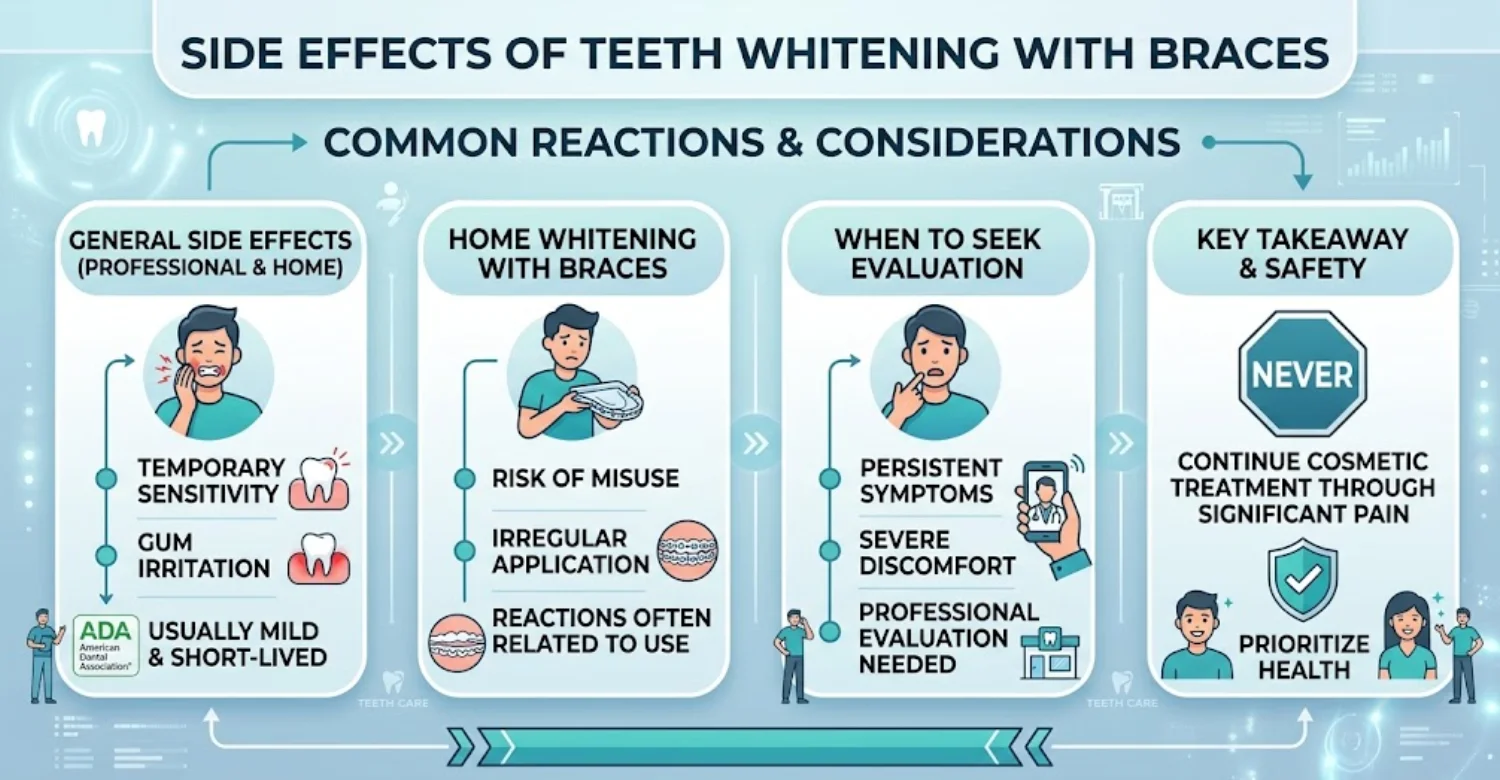
What are the most common side effects of tooth whitening?
Temporary sensitivity is the most common effect. Gum irritation can follow when peroxide touches soft tissue. Higher concentrations may raise sensitivity risk. Frequent treatment can also worsen symptoms. Patients with braces should watch the tissue around brackets closely.
Temporary tooth sensitivity
Sensitivity happens when peroxide reaches deeper tooth layers. It often feels like a short, sharp reaction to temperature. Higher strength and longer contact increase risk. Persistent sensitivity needs assessment for other causes.
Gum irritation
Gum irritation occurs when gel touches soft tissue. It may cause redness, burning, or soreness. Poor tray fit and excess gel are common causes. Significant irritation means treatment should stop.
Tooth or mouth discomfort
Some patients feel mild general discomfort during whitening. Discomfort in one tooth deserves more attention. Cracks, decay, or exposed dentin can cause it. Persistent symptoms need a dental check.
Why can whitening sensitivity happen?
Peroxide can pass through enamel and dentin. It may briefly affect the tooth's inner pulp. This reaction can cause sensitivity. Existing sensitivity or gum recession can make it worse.
What should you do if whitening causes irritation?
Pause the product if significant irritation develops. Remove any remaining gel from teeth and gums. Follow any instructions your dentist gave you. Never increase product strength to make up time. Keep brushing gently while tissues recover.
When is sensitivity more than a normal short-term reaction?
Persistent, severe, or worsening pain needs evaluation. Pain in a single tooth is especially important. Symptoms that continue after stopping may have another cause. Contact your dentist when symptoms do not settle.
Explore options and fit for a bottom denture
How to Relieve Teeth Whitening Sensitivity at Home
Mild sensitivity often improves after reducing or stopping bleaching. Sensitivity toothpaste may help when appropriate. Softer brushing reduces extra stimulation. Avoiding very cold or hot foods can improve comfort for a while. Some patients doing whitening with braces at home need a short break between sessions. Home care should support recovery, not mask a dental problem.
What can help relieve temporary sensitivity?
Sensitivity toothpaste with suitable ingredients may help. Gentle brushing reduces mechanical stimulation. Avoid extreme temperatures for a few days. Reducing whitening frequency lowers exposure. Follow the advice your dentist gives you.
How can patients reduce irritation during home whitening?
Use only the recommended amount of gel. Check tray fit before every application. Remove excess gel from the gumline. Avoid using several bleaching systems together.
When should whitening be stopped?
Stop whitening if significant burning or worsening pain develops. Persistent sensitivity also calls for a pause. Pain in one tooth needs special attention. Never continue just to finish a course.
Persistent or worsening pain
Persistent pain is not a reason to keep bleaching. It may point to decay, cracks, or pulp inflammation. Stop the product and seek an assessment. Whitening can resume only when it is safe.
Significant gum irritation
Significant gum irritation may mean too much peroxide exposure. Poor tray fit can also be the cause. Stop the product and rinse gently with water. Never continue through painful gum burning.
Pain associated with a particular tooth
Pain in one tooth needs careful assessment. The cause may be unrelated to whitening. Possible causes include decay, cracks, or trauma. The tooth may need restorative or root canal care instead.
When Should You Avoid Whitening During Orthodontic Treatment?
Whitening should be delayed when oral health is unstable. Active decay is one important reason to wait. Significant gum inflammation is another. Severe sensitivity may need evaluation and treatment first. Whitening with braces at home should begin only after these issues are ruled out. The AAO recommends discussing whitening with your dentist or orthodontist.
Is teeth whitening safe during orthodontic treatment for everyone?
No whitening treatment suits every orthodontic patient. Suitability depends on teeth, gums, appliance type, and stage. Healthy patients may still need appliance-specific guidance. Existing sensitivity can change the recommendation. A clinical evaluation is the safest first step.
When should whitening be postponed?
Postpone whitening when active dental problems exist. Gum inflammation should be treated first. Unexplained sensitivity also needs assessment. Cosmetic goals should not override orthodontic priorities.
Active tooth decay
Decay can expose vulnerable tooth layers. Peroxide may then increase discomfort. Whitening should wait until decay is treated. Bleaching should never replace restorative care.
Significant gum inflammation
Inflamed gums are more sensitive to whitening gel. Braces already increase plaque near the gumline. Bleaching during inflammation adds discomfort. Better plaque control should come first.
Severe or unexplained tooth sensitivity
Severe sensitivity may signal an underlying dental problem. Causes include exposed dentin, recession, decay, or cracks. Whitening can make symptoms worse for a while. The cause should be identified before bleaching.
Cracks, enamel defects, or other unresolved dental problems
Structural defects change how teeth respond to bleaching. Cracks can let peroxide trigger local sensitivity. Enamel defects may alter the final look. Diagnosis should come before cosmetic treatment.
Why individual dental and orthodontic assessment matters
Every orthodontic case differs in appliance design and tooth condition. Some patients have excellent hygiene and little discoloration. Others have heavy staining or early enamel changes. Individual assessment matches whitening with braces at home to each patient's real situation. Vitrin Clinic follows this approach when planning cosmetic care.
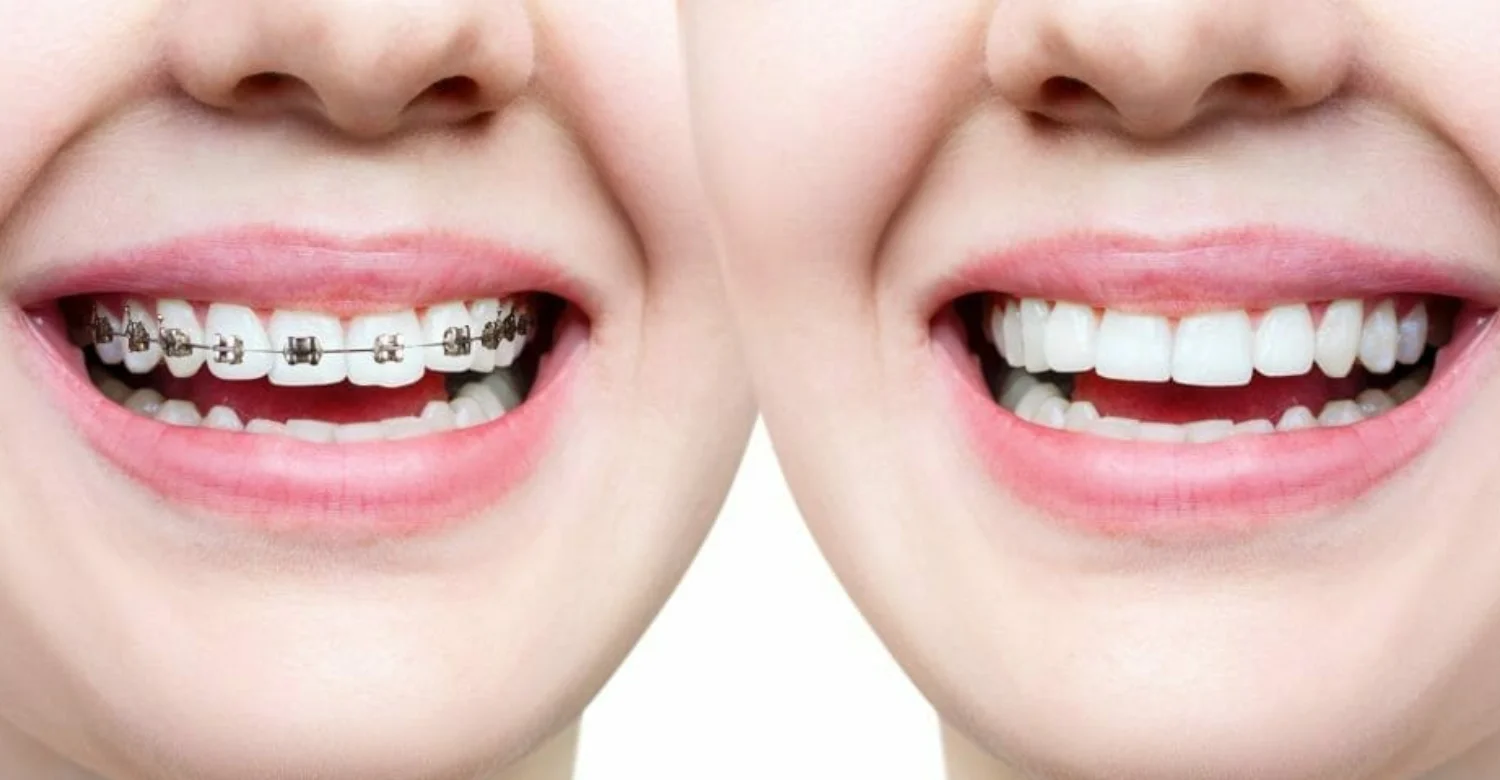
Note : All images used are for editorial and illustrative purposes only and may not originate from the original news provider or associated company.
Understand the causes and treatment for gum pockets treatment
What We Notice Clinically
Patients often describe every color difference as a stain. Examination frequently reveals a more complex picture. White spots can mean mineral loss rather than pigment. Dark areas may come from deposits, enamel defects, or internal discoloration. Braces can make these differences more visible. Vitrin Clinic weighs aesthetic goals alongside underlying dental findings.
Why patients often mistake white spots for ordinary stains
White spots can look like small patches of discoloration. Patients may expect stronger whitening to remove them. However, they often reflect enamel mineral loss. Cleaning may not change their appearance. An evaluation avoids unsuitable whitening with braces at home.
Why whitening does not solve every type of discoloration
Whitening mainly affects natural tooth color. Some structural defects respond poorly or not at all. White spots reflect mineral changes, not pigment. Severe discoloration may need restorative options instead.
The clinical difference between surface staining and enamel changes
Surface staining sits mainly on the outside of the tooth. Enamel changes involve the tooth structure itself. Cleaning often improves surface stains. Diagnosis improves both expectations and treatment choice.
Why patients with braces often want whitening before treatment is finished
Many patients want a brighter smile during treatment. Photos and special events can increase this pressure. Fixed braces, however, make even whitening difficult. Whitening can then follow bracket removal.
Why appliance type, tooth condition, and treatment stage influence the recommendation
Metal, ceramic, lingual, and aligner systems differ in design. Each design changes access to enamel. Tooth condition affects sensitivity and suitability. Treatment stage affects timing. A personal recommendation brings all these factors together.
Clinical Note
A clinical note should explain reasoning rather than promise a universal result. Whitening is cosmetic, but oral health remains the foundation. Patients deserve to understand limits before buying products. The best timing may come after orthodontic treatment ends.
Dr. Rifat Alsaman, Head of the Medical Team at Vitrin Clinic and cosmetic dentist: Clinical perspective on whitening during orthodontic treatment
Clinical perspective: “Whitening decisions should begin with the condition of the teeth and gums. Braces can change how evenly whitening products contact enamel. White areas may represent mineral changes rather than simple staining. I prefer an individualized assessment before recommending cosmetic bleaching. For some patients, cleaning and better hygiene are enough. Others may benefit from professional whitening later in treatment. Timing strongly influences how uniform the final appearance looks. The safest cosmetic plan is the one that respects oral health first.”
Teeth Whitening After Braces
After braces come off, the full front surface of each tooth is visible. This gives whitening products easier access. Dentists can also examine enamel that brackets once covered. A cleaning can remove leftover plaque and deposits. Many patients find post-braces whitening more predictable than whitening with braces at home. Vitrin Clinic can include whitening within a broader smile plan.
How to whiten teeth after braces removal
Start with an examination and cleaning when appropriate. The dentist reviews enamel, gums, restorations, and remaining stains. White spots should be identified before bleaching. A suitable system can then be chosen. The choice depends on sensitivity, stain type, and goals.
Why teeth whitening after braces may produce a more uniform result
Bracket removal exposes enamel that was previously covered. Gel can then reach more of each tooth evenly. Shade assessment also becomes easier. White spots can be judged without appliances in the way.
When should you consider in-office teeth whitening after braces?
In-office whitening may suit patients who want quicker results. It can help before events or final cosmetic work. Professional isolation protects soft tissues. Extensive white spots may need extra planning first.
Can whitening help improve uneven teeth color after braces?
Whitening can reduce general natural discoloration. It may make some color differences less noticeable. White spots, however, may stay visible after bleaching. Whitening may be part of the solution, not all of it.
What happens if white spots remain after braces?
Remaining white spots need assessment, not automatic bleaching. The dentist checks whether mineral loss is active or stable. Preventive care may continue after treatment. Vitrin Clinic can recommend treatment based on lesion appearance and goals.
Whitening versus enamel-focused treatment
Whitening changes color but does not rebuild minerals. Enamel-focused care targets the health or look of enamel. Fluoride and remineralization aim to prevent or repair. Whitening usually follows evaluation of the underlying problem.
Cosmetic options for persistent discoloration
Options depend on the cause and severity. Professional whitening may improve general tooth color. Microabrasion may suit some shallow defects. Resin infiltration can camouflage certain white spots. Treatment should stay as minimally invasive as possible.
Professional Teeth Whitening
Home Whitening With Braces
Professional and home whitening differ mainly in control and supervision. In-office treatment lets clinicians protect gums and monitor exposure. Dentist-supplied kits combine professional products with home convenience. OTC products are easy to buy but offer less personal control. Brackets block enamel contact, so professional input matters more for whitening with braces at home. Cost, sensitivity, appliance type, and stage all shape the choice.
How do professional and at-home whitening compare?
Professional whitening offers more supervision and controlled strength. Home systems usually need more applications. Dentist-supplied kits sit between the two. OTC products are cheaper and easier to find. Choose based on suitability, not speed alone.
Which option offers more control over treatment?
In-office treatment offers the most control over strength and tissue protection. Supervised home treatment also provides structured control. OTC products leave more responsibility with the patient. Professional oversight catches problems early.
Which option may be more practical during orthodontic treatment?
Practicality depends on the appliance and treatment stage. Whitening toothpaste suits mild surface staining. Aligner patients have more flexibility than fixed-brace patients. Waiting may be most practical near braces removal.
When is professional whitening preferable to OTC products?
Professional whitening suits patients with sensitivity, restorations, or complex staining. It also helps when close monitoring is needed. OTC whitening with braces at home may suit healthy patients with simple stains. Confirm suitability with your orthodontist first.
Understand the causes and treatment for gum pockets treatment
Average Teeth Whitening Cost in
US
UK
Turkey
Whitening prices vary by country, city, provider, whitening system, and included services. US references from CareCredit list about $583 for one in-office system, around $792 for laser whitening, and approximately 375–500 for dentist-provided take-home kits. UK private clinics commonly list around $299–$500, while Istanbul listings start from about $ 6,398. Whitening with braces may involve additional examinations or custom trays. Always confirm the final price directly with the provider.
Average Professional Teeth Whitening Costs by Country
Country | Whitening Option | Average / Indicative Cost | Pricing Note |
US | In-office Zoom-style whitening | ~$583 | CareCredit reference |
US | Laser whitening | ~$792 | CareCredit reference |
US | Professional take-home kit | 375–500 | Dentist-provided |
UK | Private home whitening | ~$299–$500 | Clinic examples |
Turkey | Istanbul whitening | From ~$ 6,398 | Marketplace listing |
Turkey | Broader planning range | ~$ 6,000–15,000 | Depends on provider and method |
How Much Does Professional Teeth Whitening Cost in the United States in 2026?
US prices vary according to the whitening system and provider.
US Whitening Option | Indicative Cost |
Zoom-style whitening | ~$583 |
Laser whitening | ~$792 |
Professional take-home kit | 375–500 |
Typical planning range | ~300–1,000 |
A roughly 300–1,000 range can cover many professional whitening options. CareCredit reports laser whitening around 611–1,368 and Zoom-style treatment around 463–1,011. These figures are planning references rather than guaranteed clinic prices.
How Much Does Professional Teeth Whitening Cost in the UK in 2026?
Private UK whitening prices commonly fall within several hundred pounds.
UK Whitening Option | Indicative Cost |
Home whitening | ~$299 |
Professional whitening system | ~$395 |
Common private-clinic range | ~$299–$500 |
Broader planning range | ~$150–$700 |
Prices vary by clinic, whitening method, and whether consultation or additional treatment is included. Comparing local UK prices is more reliable than relying on changing currency conversions.
How Much Does Professional Teeth Whitening Cost in Turkey in 2026?
Istanbul marketplace listings start from approximately $ 6,398, but private clinic prices vary significantly.
Turkey Whitening Reference | Indicative Cost |
Istanbul marketplace starting price | From ~$ 6,398 |
Istanbul planning range | ~$6,000–15,000 |
National average | No reliable standardized figure |
The final price may depend on the whitening system, examination, cleaning, products, and whether additional cosmetic procedures are included.
What Can Increase the Total Cost of Whitening With Braces?
Additional Service | Potential Cost Impact |
Dental examination | May add a separate consultation fee |
Professional cleaning | May be charged separately |
Custom whitening trays | Increases take-home whitening costs |
In-office whitening | Usually costs more than home systems |
Treatment for decay or gum disease | Adds separate dental treatment costs |
White spot lesion management | May require additional preventive or cosmetic care |
Why Published Whitening Prices Are Planning References
Online prices can exclude examinations, hygiene treatment, custom trays, or other services. Braces may also affect the recommended whitening approach and treatment sequence. Patients should request a written treatment plan showing exactly what is included before treatment.
.jpg)
.jpg)
.jpg)
.jpg)
.jpg)
.jpg)
.jpg)
Tips for Patients
Good preparation improves comfort and predictability. First, confirm that your teeth and gums are healthy. Ask whether your appliance suits the chosen system. Follow the exact wear time you are given. These steps make whitening with braces at home safer and more effective. Vitrin Clinic can help align your cosmetic goals with orthodontic care.
What should you ask your orthodontist before whitening at home?
Ask whether your appliance works with the product. Ask whether you have white spots or mineral loss. Mention any history of sensitivity. Ask whether whitening with braces at home should wait until treatment ends.
How should you prepare your teeth before starting whitening?
Brush and clean between teeth thoroughly. Book a dental check when appropriate. Treat cavities or gum inflammation first. Remove heavy surface stains with a professional cleaning. Choose only a product suited to your appliance.
What should you avoid while whitening with braces?
Avoid overfilling trays or extending wear time. Do not stack several bleaching products. Never whiten through significant gum irritation. Do not ignore pain in one tooth. Do not assume every white patch is a stain.
How can you protect your teeth from new stains during treatment?
Limit frequent dark drinks and rinse with water afterward. Brush thoroughly around brackets. Avoid tobacco completely. Attend professional cleanings and keep using fluoride toothpaste.
What should you do before braces removal if whitening is a priority?
Tell your orthodontist about your cosmetic goals early. Ask whether whitening should wait until brackets come off. Request an evaluation of any white spots. Consider planned restorations before choosing a final shade.
When to Seek Professional Dental Care
Seek evaluation when discoloration changes unexpectedly. New white spots around brackets should be checked promptly. Persistent sensitivity deserves attention, especially in one tooth. Pain, swelling, bleeding, or suspected decay need clinical assessment. Never use whitening with braces at home to self-treat these symptoms. Report changes promptly instead of waiting for braces removal.
Which discoloration changes should be evaluated by a dentist?
Sudden, localized, or unexplained color changes need evaluation. New white patches during braces deserve attention. Brown or black areas may be more than stains. Color changes with pain need prompt care.
When should white spots around brackets be checked?
Check white spots as soon as they appear or grow. Early lesions may respond to preventive care. The AAO advises professional attention when spots develop. Do not wait until braces removal to report them.
When should persistent tooth sensitivity be evaluated?
Sensitivity lasting beyond the expected short period needs evaluation. Sensitivity in one tooth is especially important. Symptoms that worsen after each session also need review. Normal whitening sensitivity should fade quickly.
When should pain, swelling, bleeding gums, or suspected decay be assessed?
These symptoms need dental care, not cosmetic treatment. Swelling may signal infection or inflammation. Bleeding gums may indicate plaque-related disease. Postpone whitening until the cause is clear.
Why sudden or unexplained tooth discoloration should not automatically be treated with whitening
Sudden discoloration may come from internal tooth changes. Trauma can darken a single tooth. Decay or cracks may also cause darkening. Diagnosis must come before any bleaching.
Personalized Teeth Whitening Planning During Orthodontic Treatment
Personalized planning starts with an examination and a cosmetic discussion. The clinician reviews tooth color, enamel, gums, restorations, and stains. Appliance type is also considered. Treatment stage influences the best timing. A personal plan decides whether whitening with braces at home fits now or later. Vitrin Clinic coordinates cosmetic planning with broader dental care.
How Vitrin Clinic evaluates tooth color and oral health before cosmetic whitening
Vitrin Clinic begins with an individual dental assessment. The team reviews natural tooth color and staining patterns. Teeth, gums, and nearby tissues are examined. White spots receive separate attention. This shows whether whitening is timely and appropriate.
Personalized assessment for stains, enamel appearance, gums, and overall dental condition
A cosmetic plan considers more than shade. The clinician checks surface stains and deeper discoloration. Gum inflammation raises irritation risk. These findings help set realistic expectations.
Digital diagnostics and treatment planning when clinically appropriate
Digital tools support detailed planning when indicated. Imaging documents existing dental structures. Scans help coordinate several planned procedures. Simple whitening rarely needs advanced imaging.
Digital X-rays, CBCT, or 3D scanning when indicated
Digital X-rays help assess suspected cavities. CBCT may help with complex structural questions. 3D scanning supports digital planning and impressions. Routine whitening does not require CBCT.
How whitening may fit into a broader orthodontic or cosmetic dental plan
Whitening can be one step in a larger smile plan. The sequence may include alignment, hygiene, whitening, and restorations. Whitening often comes before bonding or veneer shade selection. Vitrin Clinic coordinates these steps within one plan.
Treatment planning for whitening before or after orthodontic treatment
Some patients benefit from waiting until treatment ends. Others have mild stains that can be managed during braces. Appliance type and white spot risk affect the decision. A coordinated plan avoids repeated treatment.
How Vitrin Clinic Supports Your Treatment Journey
Vitrin Clinic approaches cosmetic treatment through individual planning. International patients can receive guidance before traveling. Care can combine diagnostic, cosmetic, and orthodontic needs. The exact pathway depends on clinical findings. Follow-up guidance helps maintain the final result.
Initial consultation and individualized treatment assessment
The first consultation reviews oral health and aesthetic goals. Teeth and gums are checked before any whitening decision. Restorations and discoloration patterns are discussed. The clinician explains realistic expectations and limits.
Digital treatment planning based on the patient's dental findings and goals
Digital planning organizes findings from examinations and scans. It supports coordination between orthodontic and cosmetic work. Technology use depends on clinical need. This approach helps avoid unnecessary procedures.
Coordination between cosmetic and orthodontic treatment needs
Whitening should never interfere with orthodontic priorities. Cosmetic steps are timed around orthodontic progress. This can improve final shade consistency. It also shows when waiting is the better choice.
Guidance for international patients before, during, and after treatment
International patients often need clear plans before visiting Istanbul. Discussions can cover examination, hygiene, whitening, and orthodontic needs. Travel schedules can shape the treatment order. Recommendations always rest on individual findings.
Follow-up support and personalized aftercare guidance
Follow-up reviews healing, sensitivity, and cosmetic response. Patients receive personal advice for keeping results. Diet and hygiene affect long-term appearance. Ongoing guidance helps when several treatments are planned.
Ready to transform your smile?
Talk to our team and get a personal FREE treatment plan.
Key Takeaways
A safe plan starts with diagnosis rather than product choice. Orthodontic appliances limit even access to enamel. Surface stains differ from enamel demineralization. White spots need separate assessment and prevention. Whitening can cause temporary sensitivity or gum irritation. Whitening with braces at home works best with professional guidance.
Whitening with braces at home may require a more cautious and individualized approach
Fixed braces add surfaces and reduce access to enamel. The same product may not suit every appliance. Sensitivity and gum health also affect suitability. Professional guidance helps set the safest timing.
Surface stains, tooth discoloration, and white spot lesions are not the same problem
Surface stains are external pigment deposits. Intrinsic discoloration lies deeper within the tooth. White spots reflect mineral loss in enamel. Diagnosis should come before any bleaching.
Whitening products can cause temporary sensitivity or gum irritation
Sensitivity and gum irritation are common side effects. They are usually temporary with correct use. Higher strength increases sensitivity risk. Persistent symptoms need professional evaluation.
Good oral hygiene is central to preventing stains and white spots during orthodontic treatment
Brushing and interdental cleaning reduce plaque around appliances. Fluoride supports enamel health. Diet choices limit repeated pigment exposure. White spot prevention remains a major priority.
Post-braces whitening may offer a more uniform cosmetic result in some patients
Removing brackets exposes previously covered enamel. Bleaching products can then reach teeth more evenly. White spots can be fully assessed. Individual findings still guide the final decision.
Persistent discoloration, pain, sensitivity, or suspected enamel damage warrants professional evaluation
Unexplained symptoms should not be treated with cosmetic products alone. Pain in one tooth may signal a separate problem. Persistent sensitivity can have other causes. Cosmetic care should follow a clear diagnosis.
The safest whitening plan depends on the type of braces, tooth condition, oral hygiene, and stage of orthodontic treatment
No single method suits every orthodontic patient. Appliance design affects product contact. Enamel and gum health affect safety. Vitrin Clinic coordinates these factors within one personal plan.
At Vitrin Clinic
Vitrin Clinic treats cosmetic whitening as part of personalized dental planning. Care begins with oral health, tooth appearance, and patient expectations. The team identifies whether discoloration is staining, internal color, or enamel change. Digital diagnostics are used when clinically appropriate. Whitening may be planned before or after orthodontic treatment. The goal is a natural, balanced result rather than excessive bleaching.
Reference
FAQs
Dr. Rifat Alsaman has more than 5 years of clinical experience in dentistry and currently serves as the Head of the Medical Team at Vitrin Clinic. He is dedicated to providing exceptional patient care, overseeing treatment planning, and ensuring the highest clinical standards across the team. His expertise, attention to detail, and commitment to continuous professional development have helped countless patients achieve healthier, more confident smiles.


