
A gummy smile makes gums appear more prominent than teeth. Crown Lengthening for a Gummy Smile corrects excessive gum coverage when tissue position causes it. The procedure reshapes gum tissue and modifies supporting bone to expose natural tooth crowns. Treatment depends on tooth proportions, gum thickness, bone position, and smile dynamics, requiring detailed periodontal assessment first. Research shows excessive display can have dental, skeletal, muscular, or soft-tissue causes, often occurring together. At Vitrin Clinic, treatment planning focuses on diagnosis before cosmetic correction. The goal is balanced proportions, not simply removing maximum gum tissue.
Many patients arrive convinced gum surgery is the answer, often based on online photos. This instinct is understandable, but reality is nuanced. Some patients have straightforward excess gum tissue. Others have mixed contributing factors where gum surgery alone leaves concerns untreated. A structured diagnostic process, not quick visual impressions, guides decisions.
What Is Crown Lengthening for a Gummy Smile?
This treatment removes selected gum tissue to reveal visible tooth structure, changing proportions seen when smiling. Some patients undergoing Crown Lengthening for a Gummy Smile also need controlled bone reshaping when the bone crest sits too close to new margins. The approach depends on distances between gum margin, cementoenamel junction, and bone crest. Proper planning avoids excessive tissue removal that leaves teeth looking unnaturally long or exposes sensitive roots.
Crown lengthening helps when altered passive eruption creates short-looking crowns—a situation where gum tissue never receded to adult positions. A recent study found altered passive eruption in 56.1% of gummy-smile patients. Vitrin Clinic uses clinical photographs, periodontal measurements, and digital planning during assessment, combining several sources of information. Treatment stays individualized, because two similar-looking patients can have different underlying anatomy.
What Is a Gummy Smile?
A gummy smile describes excessive gingival display during smiling. Researchers commonly use 2 millimeters as a clinical threshold, though perception varies. Some patients notice small amounts of visible gum and dislike asymmetry. Others show considerably more tissue and feel their smile is dominated by gum. Underlying causes matter more than measurements alone, since two patients with identical measurements need different treatments.
When considering Crown Lengthening for a Gummy Smile, causes include altered passive eruption, gingival enlargement, lip hypermobility, and vertical maxillary excess. Incisor position can also bring more gum tissue into view. A 2026 Egyptian study found 44.3% of affected participants had multiple etiologies. Nearly half involved more than one contributing cause, explaining why a single treatment cannot suit every patient.
What Is Crown Lengthening?
Crown Lengthening for a Gummy Smile is a periodontal procedure increasing visible clinical crown height. It involves gingival reshaping alone when bone position is favorable, or includes osseous recontouring when bone needs adjustment. The procedure may be cosmetic, restorative, or both. Cosmetic treatment focuses on tooth exposure and gingival proportions, while restorative treatment creates tooth structure for crowns or veneers.
Clinicians evaluate whether the bone crest sits too close to intended margins. If bone remains too coronal, gum tissue can rebound after removal, meaning cosmetic improvements will not last. Osseous crown lengthening may be necessary even when concerns seem purely soft-tissue related. Procedures touching bone require longer stabilization than those limited to soft tissue, while preserving overall periodontal architecture.
How Does Crown Lengthening Fix a Gummy Smile?
Crown Lengthening for a Gummy Smile reduces excessive gum coverage over visible tooth surfaces, revealing natural crowns when smiling. This makes teeth appear longer and improves tooth-to-gum proportions. When altered passive eruption is involved, the gum margin covers crown structure that is present but hidden. Bone reduction may be required when the osseous crest limits stable gum positioning, as soft tissue follows bone contours over time.
Final results depend on original tooth dimensions, so naturally short teeth will not gain unlimited length. Excessive removal creates disproportionate, long teeth; insufficient removal leaves concerns unresolved. Digital smile planning improves communication between clinician and patient before touching any tissue.
Clinical Note
Assessment evaluates the cementoenamel junction before removing tissue, marking natural crown boundaries. Probing depths, keratinized tissue width, and bone position determine if gingivectomy alone is appropriate. Target crown width-to-length ratios average 0.75 to 0.80. The objective is a harmonious dentogingival relationship, not simply removing visible gum wherever found.
Why Do Some Patients Need Crown Lengthening for a Gummy Smile?
Some patients have excessive gum tissue covering normally positioned teeth; others have altered passive eruption leaving crowns partially covered into adulthood. Gingival enlargement can increase visible tissue from chronic inflammation, medication, or hormonal changes. Active inflammation must be addressed before cosmetic surgery. Gummy smiles also originate from lip movement or skeletal proportions, where surgical gum treatment alone will not resolve concerns.
Crown lengthening cannot correct every cause of a gummy smile; it mainly addresses dentogingival causes. Recent reviews emphasize excessive gingival display is multifactorial. Correct diagnosis prevents unnecessary periodontal surgery on patients whose main concern lies elsewhere.
What Causes Excessive Gum Display?
Several anatomical and functional factors contribute to excessive display:
Altered Passive Eruption: Leaves excess gingiva covering anatomical crowns.
Gingival Enlargement: Increases visible tissue through swelling or tissue overgrowth.
Hyperactive Upper Lip: Elevates substantially during smiling, exposing wider gum bands.
Short Upper Lip: Exposes more gingiva even without unusual muscle activity.
Vertical Maxillary Excess: Creates longer lower facial appearance, bringing gums and teeth lower relative to lips.
Incisor Extrusion: Changes tooth-to-lip relationships, often from mouth breathing or childhood habits.
Combinations of these factors are common, making gummy-smile cases a spectrum rather than a single diagnosis. Treatment begins with complete diagnostic assessment rather than assumptions based on appearance.
When Is Excess Gum Tissue the Main Problem?
Crown Lengthening for a Gummy Smile is appropriate when teeth appear short despite normal anatomical dimensions. Periodontal probing identifies cementoenamel junction positions relative to visible margins. Photographs capture lip-to-gum relationships across different smile types. Bone sounding under local anesthesia estimates bone architecture without full surgical flaps.
If the bone crest is positioned appropriately, gingival reshaping alone suffices. If bone lies too close to intended margins, osseous reduction becomes necessary to prevent relapse. Vitrin Clinic treatment planning weighs these anatomical relationships before recommending surgery.
How Does Altered Passive Eruption Affect a Gummy Smile?
A common reason patients seek Crown Lengthening for a Gummy Smile is altered passive eruption. This occurs when gingival migration does not progress normally after tooth eruption, leaving margins coronal for patient age. Teeth appear unusually short or square. A 2024 study involving 86 gummy-smile patients found altered passive eruption in 56.1% of cases. Several affected patients also showed hypermobile upper lips, proving visible symptoms have multiple underlying causes.
Treatment focuses on exposing anatomical crowns through careful gingival, and when needed, bone recontouring. Bone position determines whether gingivectomy alone is adequate. Accurate diagnosis remains essential before selecting surgical techniques.
How Is a Gummy Smile Crown Lengthening Procedure Performed?
Crown Lengthening for a Gummy Smile begins with comprehensive diagnosis, not immediate gum removal. Clinical photographs document resting, natural, and maximum smiling positions, as display varies considerably. Periodontal measurements evaluate gum thickness and tissue dimensions. The clinician determines desired final gumlines tooth by tooth for arch symmetry.
Local anesthesia ensures patient comfort throughout procedure. Selected tissue is reshaped according to plan rather than adjusted freehand during surgery. Some patients require flap elevation and bone recontouring for direct access to underlying bone, followed by stabilizing sutures. Digital workflows transfer planned measurements into surgery, with 3D-printed guides illustrating technological advances in periodontal cosmetic procedures.
Step 1: Smile and Periodontal Assessment
Photographs capture resting, natural, and maximum smiling positions. The clinician measures visible gingiva and crown dimensions, assesses upper-lip length and mobility, and performs periodontal probing. Bone sounding, intraoral scans, and radiographs provide a complete picture. A 2026 study used clinical examination, photography, video, and CBCT during assessment, reflecting multi-method diagnostic protocols beyond single smile photographs.
Step 2: Treatment Planning
Diagnostic findings are converted into specific surgical designs. The clinician determines visible tooth height for each tooth, balancing individual proportions against overall smile symmetry, existing restorations, and tooth shape. Bone levels are assessed before finalizing plans. Some patients need additional orthodontic or restorative treatment, discussed during planning. Digital smile design demonstrates anticipated proportions, while clinicians explain realistic limitations to patients with vertical maxillary excess or hyperactive lips.
Step 3: Gum Reshaping and Crown Exposure
Clinicians mark planned margins before removing tissue using scalpels, electrosurgery, or lasers depending on cases. Final margins follow natural tooth contours rather than appearing flat, with symmetry checked across neighboring teeth. Gingivectomy works when sufficient biological space exists; flap surgery is necessary when deeper structures require modification. Unnecessary tissue removal is avoided, as excessive removal alters proportions and increases sensitivity by exposing root surfaces.
Step 4: Osseous Crown Lengthening When Needed
Some cases require bone modification alongside soft-tissue reshaping to create adequate space between bone crests and planned margins. This space keeps gum tissue from creeping back toward biting edges. Clinicians raise periodontal flaps for direct visualization, performing controlled osteotomy and osteoplasty in small, deliberate increments. Bone removal remains conservative along natural root contours. Bone recontouring is an important component for selected altered passive eruption cases, guided by clinical and radiographic findings.
What we notice clinically
The relationship between bone and the cementoenamel junction is vital. Simple gingivectomies rebound when bone remains too close, undoing cosmetic improvements over time. Tissue thickness influences postoperative contours, with thicker biotypes healing more predictably than thin tissue. Vitrin Clinic clinicians combine clinical measurements with digital planning for controlled treatment, selecting techniques based on anatomy rather than marketing terminology.
Is Crown Lengthening Good for a Gummy Smile?
Crown Lengthening for a Gummy Smile is effective when excessive gingival display results from dentogingival factors. It is relevant for altered passive eruption, where periodontal surgery is specifically designed to help. It does not correct excessive lip elevation or reposition developed maxillae, so diagnosis determines appropriateness. Studies describe aesthetic crown lengthening as an established approach with predictable outcomes when diagnoses are correct. Patients must understand cosmetic goals must remain biologically realistic.
Who May Benefit From Crown Lengthening?
Patients considering Crown Lengthening for a Gummy Smile benefit when excessive gum coverage makes healthy teeth appear short. Altered passive eruption is a common indication, particularly in younger adults whose smile looked "gummy" since adolescence. Gingival enlargement requires treating underlying inflammatory or medication-related causes first. Adequate periodontal health and good oral hygiene support predictable healing. Clinicians confirm enough tooth structure exists beneath gums; patients with naturally short teeth may need veneers or crowns once healing stabilizes. Vitrin Clinic consultations help determine whether periodontal treatment addresses primary concerns.
When May Crown Lengthening Not Be the Best Option?
Crown Lengthening for a Gummy Smile may not help when gum tissue is not the primary cause. A hyperactive upper lip can produce significant display despite normal gum levels, so gum surgery would not meaningfully change the smile. Vertical maxillary excess may require orthodontic or surgical evaluation instead. Severe tooth wear can complicate desired proportions, and uncontrolled periodontal inflammation requires disease management first. Poor oral hygiene increases postoperative complication risk. Some patients have unrealistic expectations that the underlying anatomy simply cannot support removing excessive tissue to meet such expectations can leave a result the patient likes even less than before. Alternative treatments may provide a better path for these patients.
How Is the Best Treatment for a Gummy Smile Determined?
The best treatment begins with identifying why the gums appear excessive. The clinician evaluates teeth, gums, lips, jaw position, and smile movement together. Periodontal probing, facial analysis, lip mobility measurements, orthodontic records, and radiographic assessment all contribute pieces of the picture, and digital photographs help evaluate symmetry across different smile types. Treatment may involve one procedure or several coordinated ones, depending on how many factors are found. A systematic review describes personalized treatment as essential because causes vary considerably between patients, even when their smiles look superficially similar.
Clinical Note
A visible gummy smile does not automatically mean excessive gum tissue is the cause. The clinician should first identify the dominant factor, or factors, before recommending treatment, since treating only the gums may leave residual gingival display in patients with mixed causes. A recent Egyptian study found 44.3% of participants had multiple causes, underlining how common combined etiologies are in everyday practice.
Crown Lengthening vs Gum Contouring for a Gummy Smile
Gum contouring and Crown Lengthening for a Gummy Smile overlap, but they are not identical. Gum contouring reshapes soft tissue without changing the supporting bone. Crown lengthening can involve soft tissue and bone together, addressing both layers when diagnostic findings indicate this is necessary. The choice depends on periodontal anatomy: patients with adequate bone-to-gingival relationships may need only simpler reshaping, while patients with altered passive eruption may require deeper correction. Clinic terminology can vary, so patients should ask exactly which tissues will be modified in their specific procedure.
What Is Gum Contouring for a Gummy Smile?
Gum contouring reshapes excess gingival tissue, generally without touching the underlying bone, using conventional instruments or laser technology depending on the case. It works well when adequate biological space already exists, but may not remain stable when bone lies too close to the planned margin. Gum contouring can also correct uneven margins that developed for reasons unrelated to excess tissue volume.
What Is the Difference Between Crown Lengthening and Gum Contouring?
Gum contouring leaves the bone untouched; crown lengthening can alter both soft tissue and bone. The difference becomes important with altered passive eruption, since soft-tissue treatment alone is unlikely to hold. A simple gingivectomy may expose more tooth temporarily, but tissue can migrate back toward its original position if the underlying bone was never adjusted. Osseous modification addresses the root cause of potential relapse rather than only its visible symptom.
Which Is Better for a Gummy Smile?
Neither is universally better; the right choice depends on individual diagnostic findings. Patients with skeletal or lip-related causes may need other treatments entirely. Ask whether bone reshaping is required, since this single question clarifies much of the expected recovery and long-term stability. Vitrin Clinic can develop an individualized treatment pathway after assessing the entire smile, rather than defaulting to a single standard procedure.
What Does Crown Lengthening Before and After a Gummy Smile Look Like?
Before Crown Lengthening for a Gummy Smile, excessive gingiva can make teeth appear shorter and the gumline uneven. After treatment, more anatomical tooth structure becomes visible, and the smile appears more balanced. Early postoperative photographs look different from the final result, since swelling and initial healing don't reflect the mature outcome. Digital planning offers a visual preview, but simulations cannot guarantee an identical final result; individual healing introduces some natural variation. Patients should judge results after adequate stabilization, not immediately after surgery.
What Changes After Treatment?
Increased visible tooth height and a more symmetrical gumline are the most noticeable changes. The lips and facial proportions remain unchanged unless additional treatment is performed, since periodontal surgery has no direct effect on lip length or jaw position; it mainly changes the dentogingival relationship. A successful outcome balances tooth exposure with periodontal health rather than pursuing maximum visibility alone.
Why Can the Smile Look Different During Early Healing?
Healing tissue can look swollen or irregular in the first days, and some initial recession is a normal part of healing, not a sign anything has gone wrong. Soft tissue gradually remodels over weeks to months, and stabilization takes longer when bone is modified. A clinical review reports approximately 8 to 12 weeks for stabilization after flap procedures, and bone removal may require around six months for full soft-tissue stabilization. Early photographs should not be treated as final results.
What Determines the Final Smile Appearance?
Tooth anatomy, gum thickness, bone position, and healing all interact throughout recovery. Lip mobility, existing restorations, and smile symmetry also play a role. Digital planning improves prediction but remains an estimate, and patient oral hygiene affects healing quality. The final appearance should be assessed only after adequate stabilization, with follow-up evaluations before judging the definitive result.
How Long Does Crown Lengthening Take for a Gummy Smile?
The time required for Crown Lengthening for a Gummy Smile varies by the number of teeth and surgical complexity. Simple soft-tissue reshaping can be completed relatively quickly, while flap elevation and bone modification require more clinical time and a longer recovery. Healing should not be confused with appointment duration; these are two very different measures of "how long" the process takes. The gumline may continue changing after initial healing, gradually settling into its final position over the following weeks or months.
How Long Does the Crown Lengthening Procedure Take?
Appointment length depends on the surgical approach. Limited gingival reshaping requires less time than open-flap treatment involving bone; multiple teeth also extend the treatment area. The clinician confirms planned margins before removing tissue, and suturing extends appointment time when a full flap has been raised. Treatment complexity differs significantly between individuals, so a personalized estimate is more useful than any general average.
How Long Is the Gummy Smile Crown Lengthening Recovery Time?
Recovery from Crown Lengthening for a Gummy Smile involves several days of sensitivity and tenderness, with soft-tissue healing continuing for several weeks beyond that. Clinical reviews report four to six weeks for tissue maturation after gingivectomy, roughly eight to twelve weeks for flap procedures, and bone modification can extend stabilization to several months in complex cases. Patients should follow their dentist's instructions throughout recovery, since deviating from hygiene or activity guidelines can slow healing or affect the final result.
What Happens During Crown Lengthening Healing Time?
The gum responds first with inflammation and early repair, then gradually contracts and reorganizes over the following weeks. Bone remodeling continues beneath the soft tissue longer than the visible healing itself. Oral hygiene remains important throughout, and smoking is a well-recognized risk factor for delayed or compromised healing. Follow-up appointments help identify irregularities early, and final cosmetic assessment should wait until adequate stabilization.
Tips for Patients
Protect the treated area, follow prescribed medication and hygiene instructions, and favor softer foods during initial recovery. Keep every follow-up appointment even when symptoms improve quickly. Contact the dental team if bleeding is persistent, or if pain, swelling, fever, or unusual discharge increases. Do not judge the final cosmetic result during early healing, and keep photographs from the same angle for meaningful comparisons.
What Is Crown Lengthening Recovery Like for a Gummy Smile?
Recovery moves from an initial period of discomfort and swelling toward a longer phase of gradual tissue maturation. Gum color and sensitivity to cold or touch can change noticeably during the first several weeks. More extensive procedures require longer observation, sometimes with follow-up visits spread across several months rather than a few weeks. Bone modification generally requires more stabilization time than soft-tissue-only treatment.
What Should You Expect During the First Few Days?
Mild discomfort, swelling, tenderness, and occasional temporary bleeding are common, and symptoms should gradually improve rather than worsen. Eating softer foods and avoiding vigorous brushing directly over the surgical area both help. Follow prescribed medications exactly as directed, and contact the dentist if symptoms become increasingly severe rather than simply waiting.
When Can You Return to Normal Activities?
Return to normal activities depends on the procedure's extent. Limited tissue reshaping allows a faster return to routine than more involved flap surgery, and exercise should increase gradually rather than resuming immediately. The clinician's specific instructions matter more than any generic online timeline.
When Does the Gumline Stabilize?
Soft-tissue procedures stabilize sooner than procedures involving bone. Clinical reviews report four to six weeks for gingivectomy maturation, roughly eight to twelve weeks for flap procedures, and several months for cases involving bone removal. Final cosmetic evaluation should occur only after adequate maturation, and early revisions should be avoided unless clinically necessary.
Clinical Note
The early gumline should never be mistaken for the final result. Healing tissue can continue changing for weeks or months, and bone modification extends the period during which appearance may still be settling. Consistent hygiene and follow-up help detect unexpected tissue movement early, before it becomes a larger concern.
What Are the Risks of Crown Lengthening for a Gummy Smile?
Like other periodontal procedures, Crown Lengthening for a Gummy Smile carries potential risks patients should understand clearly. Temporary discomfort, swelling, bleeding, and sensitivity are common and generally resolve as part of normal healing. Gumline asymmetry can occur if margins were not carefully planned, and excessive tissue removal can make teeth appear disproportionately long, an outcome that is difficult to reverse. Root exposure can increase sensitivity, infection is uncommon but possible, and delayed healing may occur from smoking, certain medications, or poorly controlled health conditions. Tissue rebound can affect the final appearance when bone modification would have been appropriate but was not performed. Careful planning reduces avoidable risks considerably, though it cannot eliminate every general surgical risk.
Can Crown Lengthening Cause Tooth Sensitivity?
Yes, temporary sensitivity can occur once previously covered root surfaces are exposed, and exposed dentin can respond to cold, touch, or acidic foods. Sensitivity often improves as tissue heals and patients adapt, though persistent symptoms should be evaluated by the treating dentist. Desensitizing products may help, and minimizing unnecessary root exposure is part of balancing cosmetic goals against long-term comfort.
Can Crown Lengthening Change the Gumline Permanently?
Treatment aims to establish a new stable gumline, though some tissue movement can occur during initial healing. Bone position plays an important role in long-term tissue location, since soft tissue generally follows the bone contour beneath it. Inadequate biological space can encourage rebound, which is why appropriate bone positioning matters even in purely cosmetic cases.
Clinical Note
The gumline should be planned around anatomical landmarks, not visual preference alone. Overcorrection can create a smile that looks unnaturally tooth-dominant; under-correction leaves residual gingival display. The best result balances visibility, symmetry, and periodontal health rather than optimizing any single factor at the expense of the others.
Does Crown Lengthening Permanently Fix a Gummy Smile?
The results of Crown Lengthening for a Gummy Smile can be long-lasting when the underlying cause is properly addressed. Altered passive eruption can often be corrected with stability lasting many years in well-planned cases. However, a gummy smile can have multiple causes, and periodontal surgery only addresses the dentogingival component; it cannot eliminate excessive lip movement or change skeletal proportions. Long-term stability depends on periodontal health and ongoing maintenance, not just a single successful surgery.
Is the Result of Crown Lengthening Permanent?
The repositioned gumline can remain stable for many years when surgery is well planned and executed, but oral hygiene, natural aging, new gum inflammation, and later restorative work can all gradually change tooth and gum appearance. Routine dental care remains necessary regardless of a successful earlier procedure.
Can a Gummy Smile Return After Crown Lengthening?
Residual display can appear when another cause, such as lip hypermobility or vertical maxillary excess, remains untreated. Inflammatory gingival enlargement can recur without adequate hygiene, and tissue rebound can occur where bone modification would have been appropriate but was not performed. Recurrence, in these cases, does not necessarily mean the periodontal procedure itself failed.
What Can Help Maintain the Results?
Good oral hygiene, regular professional cleanings, smoking cessation, and appropriate occlusal management all support long-term stability. Follow-up visits let clinicians monitor the treated area over time, and Vitrin Clinic can provide ongoing periodontal and cosmetic monitoring, particularly for patients with periodontal risk factors.
Is Laser Crown Lengthening for a Gummy Smile Better?
Laser technology can be used for selected Crown Lengthening for Gummy Smile cases and may reduce mechanical trauma in appropriate situations, but it is not automatically superior for every patient. Bone modification may still require different instrumentation, since lasers are primarily suited to soft-tissue applications. The correct technique depends on periodontal anatomy, not on general preference for newer technology, and marketing claims should never replace evidence-based treatment planning. Patients interested in laser-based periodontal procedures can also explore Laser Dentistry as part of their treatment options.
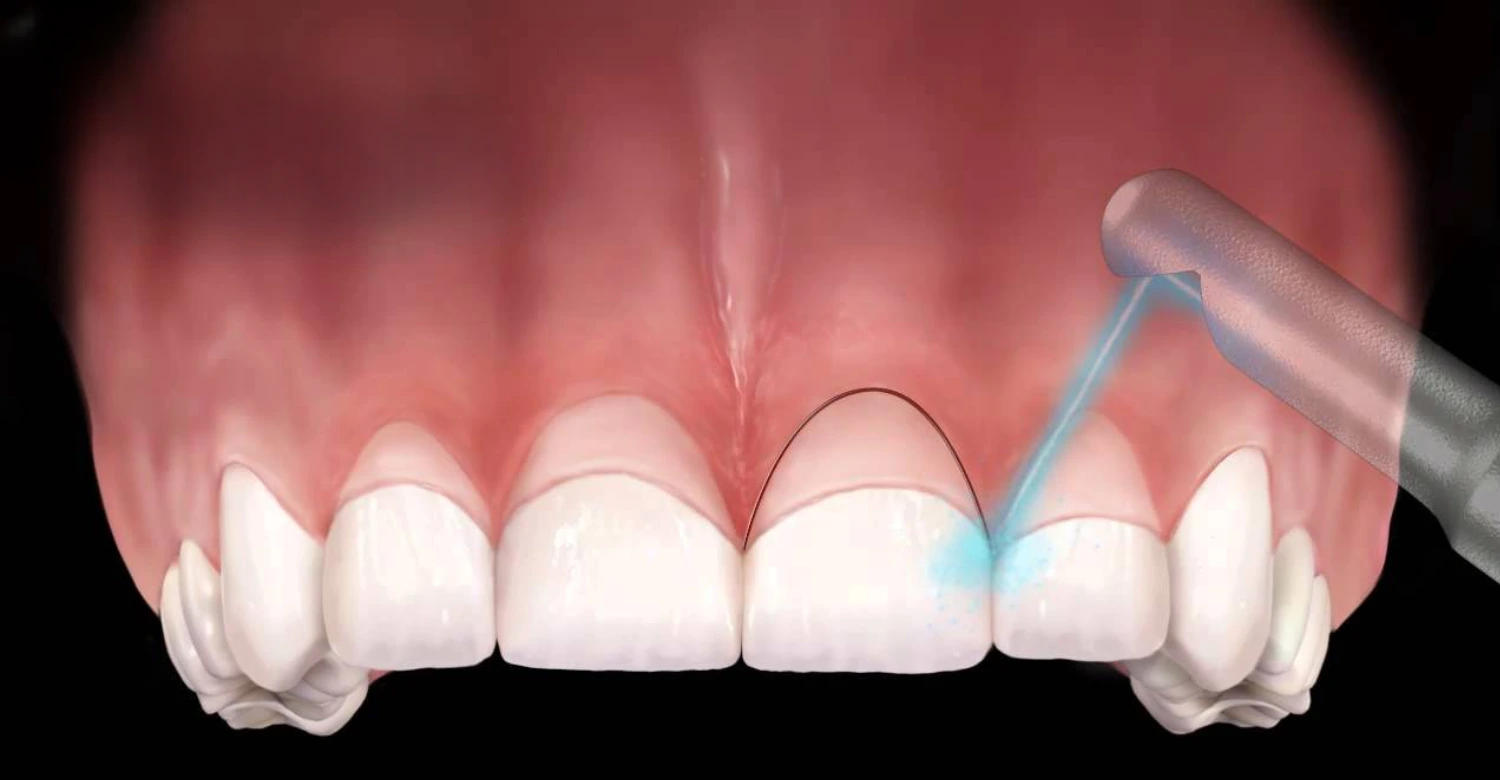
What Is Laser Crown Lengthening?
Laser crown lengthening uses concentrated light energy to remove or reshape gingival tissue, with different wavelengths producing different tissue effects. It does not eliminate the need for periodontal diagnosis, and bone-related crown lengthening may still require additional surgical approaches beyond what a soft-tissue laser can accomplish alone.
What Are the Potential Benefits of Laser Treatment?
Potential benefits include precise soft-tissue cutting, reduced bleeding during the procedure, and in some cases limited postoperative discomfort. However, outcomes depend on laser type, technique, and clinical indication evidence does not support assuming every laser procedure is universally superior to conventional technique.
Is Laser Crown Lengthening Suitable for Everyone?
No. Patients requiring significant bone modification typically need conventional flap surgery, and patients with skeletal causes need an entirely different treatment strategy. Vitrin Clinic patients should receive recommendations based on diagnosis rather than technology preference.
Dr. Rifat Alsaman's Opinion: Treatment should begin with identifying the cause before any instrument is chosen. Laser technology can be useful for appropriate soft-tissue reshaping, but it does not replace periodontal diagnosis, and no laser can independently correct skeletal or muscular causes. Patients should ask what anatomical problem the treatment addresses, not simply which technology will be used.
How Much Does Crown Lengthening for a Gummy Smile Cost?
The cost of Crown Lengthening for a Gummy Smile varies substantially between patients and clinics, reflecting the extent of surgery, location, and clinician experience. The number of teeth treated, whether bone modification is involved, diagnostic imaging, and any planned restorative work can all affect the total fee. Patients should request an itemized estimate, since comparing prices without comparing treatment scope can be misleading; a lower quoted fee may simply reflect a more limited procedure. Vitrin Clinic can provide a personalized estimate once the full extent of planned treatment is determined.
What Affects Crown Lengthening Cost for Gummy Smile?
The number of teeth requiring treatment, surgical complexity, whether bone modification is required, diagnostic imaging, and any planned restorative work all influence the final cost. Existing periodontal disease may require preliminary therapy, adding an extra phase before cosmetic surgery can proceed.
Is Crown Lengthening More Expensive Than Gum Contouring?
There is no universal price difference pricing depends on the specific scope of treatment. Bone-involving crown lengthening is generally more complex and can cost more, but clinic pricing structures differ considerably, so patients should ask whether diagnostics and follow-up are included in any quoted price.
What Should Be Included in a Treatment Estimate?
A detailed estimate should specify the procedure, number of teeth, diagnostic imaging, whether bone modification is included, anesthesia, follow-up visits, and any separate restorative costs. Written treatment plans make comparisons between clinics far easier and reduce the risk of unexpected charges later.
What Are the Alternatives to Crown Lengthening for a Gummy Smile?
Alternatives to Crown Lengthening for a Gummy Smile depend on the cause of excessive gingival display. Gum contouring addresses selected soft-tissue cases; orthodontic treatment corrects tooth-position problems; lip relaxation treatments reduce excessive upper-lip elevation temporarily; orthognathic surgery addresses significant skeletal discrepancies; and restorative dentistry can refine tooth proportions once periodontal healing has stabilized. Some patients need combinations of these approaches, and the safest path always addresses the actual anatomical cause rather than defaulting to the most familiar treatment.
Gum Contouring
Gum contouring reshapes soft tissue without modifying bone and works best when underlying periodontal dimensions are already favorable. Patients with altered passive eruption may need deeper correction than contouring alone provides, so a periodontal exam should always precede treatment.
Orthodontic Treatment
Orthodontics can correct tooth positioning, particularly intruded incisors, sometimes reducing visible gum without any periodontal surgery. It may also be combined with periodontal procedures in patients whose gummy smile has more than one cause; evidence identifies orthodontic treatment as one option for selected etiologies.
Lip Relaxation Treatments
Temporary muscle-relaxing treatments can reduce lip elevation but require repeat treatment every several months. A recent review reports an average gingival-display reduction of approximately 3.4 millimeters after botulinum toxin, with effects typically declining after around 24 weeks. These treatments don't change tooth or gum anatomy and may complement periodontal treatment in multifactorial cases.
Orthognathic Surgery
Orthognathic surgery addresses significant skeletal causes such as pronounced vertical maxillary excess, repositioning the maxilla itself. This is considerably more invasive than periodontal treatment and is generally reserved for appropriately diagnosed skeletal problems following thorough assessment.
Restorative Dentistry
Veneers or crowns can refine tooth proportions after gum correction, but restorations should never be used to hide untreated periodontal problems. Periodontal stabilization should come before definitive restorations, and Vitrin Clinic can coordinate cosmetic and periodontal considerations within one overall plan.
What Is the Best Treatment for a Gummy Smile With Excess Gum Tissue?
The best treatment depends on why excess gum tissue is visible in the first place. Simple gingival enlargement needs disease control first; altered passive eruption needs periodontal crown exposure; lip hyperactivity needs a soft-tissue approach combined with lip-focused treatment; skeletal excess needs orthodontic or surgical management. Multiple causes may require combined, sequenced treatment. A complete examination prevents unnecessary procedures aimed at the wrong factor.
Why Does Diagnosis Come Before Treatment?
Diagnosis identifies the structures responsible for excessive gingival display. Without it, treatment may target the wrong anatomical factor and leave the patient's actual concern unresolved. Periodontal, facial, lip, and tooth measurements together provide a far more reliable basis for treatment than a photograph alone.
When Is Crown Lengthening the Preferred Approach?
Crown lengthening is particularly relevant when excessive gum covers adequate anatomical tooth structure, as is common with altered passive eruption. Bone position determines whether osseous correction is necessary, and patients with major lip or skeletal causes may need additional treatment beyond periodontal surgery.
Can Multiple Treatments Be Combined?
Yes. Periodontal surgery, orthodontics, lip treatment, and restorative dentistry can all be sequenced together based on diagnosis rather than convenience. Periodontal stabilization typically needs to occur before definitive restorations are placed.
What We Notice Clinically When Treating a Gummy Smile
Successful treatment requires more than removing visible tissue; it requires evaluating tissue quality, bone architecture, tooth proportions, and smile dynamics together. Digital planning helps integrate these factors, and clinical decisions should stay conservative and biologically guided rather than chasing dramatic but risky change.
Gum Thickness and Tissue Quality
Thicker tissue often allows a more forgiving surgical approach, while thin tissue is more vulnerable to recession and calls for conservative planning. A 2024 study found relationships between keratinized gingival width and bone thickness, supporting the value of considering soft tissue and bone characteristics together.
Tooth Proportions and Symmetry
Excessive removal makes teeth look unusually long; insufficient treatment leaves the smile overly gingival. Central incisors often serve as important reference teeth, and a commonly cited width-to-length ratio of approximately 0.75 to 0.80 offers a useful, though not rigid, guideline.
Bone Position and Periodontal Architecture
The gumline cannot be planned independently from the supporting bone, since soft tissue tends to follow bone contour over time. Osseous recontouring, when needed, addresses relapse risk directly rather than hoping tissue simply stays where it was placed.
Smile Dynamics
A smile changes continuously as the lips move, so static photographs rarely tell the full story. Assessing natural and maximum smiling positions helps reveal how much upper-lip mobility contributes to what initially looks like excess gum tissue.
Clinical Note
The best aesthetic result should look natural during movement, not just in a single still photograph. Over-treatment creates excessively long crowns; under-treatment leaves residual display. Careful planning achieves a proportionate transition between teeth and gums.
Dr. Rifat Alsaman's Opinion:
Diagnosis is the foundation of predictable gummy-smile treatment. Gum removal should follow anatomical measurements rather than how much a patient wants removed, and lip movement should be evaluated whenever significant gingival exposure remains. The goal is a balanced smile, not maximum tooth exposure.
Why Choose Vitrin Clinic for Crown Lengthening for a Gummy Smile?
Vitrin Clinic can approach gummy-smile treatment through comprehensive smile and periodontal assessment rather than a single standardized procedure. Treatment planning considers cosmetic appearance and periodontal health as equally important. Clinical photographs, periodontal measurements, and digital planning together support an individualized pathway, and patients can discuss alternative treatments whenever periodontal surgery is not the best fit. Patients should receive clear information about healing, risks, and maintenance so expectations stay realistic throughout.
Personalized Gummy Smile Assessment
Assessment begins by identifying the source of gingival display through clinical examination, photography, and measurement rather than visual impression alone. Bone assessment, photographs of smile dynamics, and digital scans together help determine whether gum contouring or crown lengthening is more appropriate, reducing the likelihood of treating the wrong cause.
Comprehensive Treatment Planning
Planning connects periodontal treatment with the final smile objective, working from measurements rather than deciding margins freehand. Restorative or orthodontic treatment can be incorporated when tooth shape or position contributes to the concern, and this multidisciplinary approach is particularly useful for complex, multifactorial cases.
Patient-Focused Recovery and Aftercare
Clear instructions about hygiene and activity, tailored to the extent of surgery, support smoother healing. Follow-up visits track progress against the expected timeline, and patients receive guidance on warning signs that call for prompt review rather than waiting.
Dr. Rifat Alsaman's Clinical Perspective
Patient education should begin before treatment. Patients should understand what the procedure changes and what it cannot change, and maintaining periodontal health afterward matters just as much as the surgical planning itself.
Tips for Patients Considering Crown Lengthening for a Gummy Smile
Prioritize professional diagnosis over general online research, since individual anatomy varies too much for generic advice to apply reliably. Ask whether bone modification is required, discuss existing restorations, disclose relevant medications and health information, and address smoking or hygiene habits before surgery. Realistic expectations matter, since no technique can produce a result the underlying anatomy does not support.
What Should You Do Before Treatment?
Maintain excellent oral hygiene, complete any recommended periodontal treatment first, and attend the diagnostic appointment with relevant medical history in hand. Ask which teeth will be treated, confirm whether bone modification is anticipated, and avoid basing decisions solely on generic before-and-after photographs.
How Should You Care for Your Gums After Treatment?
Follow hygiene instructions precisely, take medications as directed, favor softer foods while tender, and attend every follow-up appointment. Avoid smoking, contact the dental team if symptoms worsen, and continue long-term oral hygiene well after the gumline stabilizes.
What Questions Should You Ask Your Dentist?
Ask what specifically causes your excessive gingival display, whether altered passive eruption is present, whether bone modification is required, how much tooth will become visible, and how long stabilization may take. Ask whether alternatives could address the same concern and what is included in the treatment cost.
Final Thoughts: Is Crown Lengthening Right for Your Gummy Smile?
Crown Lengthening for a Gummy Smile can be an effective option when excessive gum coverage is rooted in the gum-and-tooth relationship itself, especially with altered passive eruption. However, not every gummy smile results from excess gum tissue lip movement, tooth position, and skeletal proportions can also contribute, sometimes alongside gum tissue and sometimes as the dominant factor on their own. A comprehensive diagnosis should always precede surgery. At Vitrin Clinic, treatment planning should focus on a natural, proportionate smile that balances cosmetic goals with long-term periodontal health.
Why Professional Assessment Matters
Professional assessment identifies the anatomical source of excessive gingival display and prevents unnecessary treatment of unrelated structures. Periodontal, facial, and tooth measurements together provide the objective data needed to plan a stable result, and a professional consultation allows patients to choose the least invasive treatment that still achieves a meaningful, lasting improvement.
Reference
FAQs

Dr. Rifat Alsaman has more than 5 years of clinical experience in dentistry and currently serves as the Head of the Medical Team at Vitrin Clinic. He is dedicated to providing exceptional patient care, overseeing treatment planning, and ensuring the highest clinical standards across the team. His expertise, attention to detail, and commitment to continuous professional development have helped countless patients achieve healthier, more confident smiles.


