Periodontics
October 19, 2026
Exposed Tooth Roots and Gingival Recession: What Causes Them and How Can You Treat Them?
 Dr. Rifat Alsaman

Exposed tooth roots and gingival recession can make your teeth look longer than before. They may also cause sharp sensitivity to cold drinks, sweet foods, or brushing. Recession happens when the gum margin moves away from the crown and uncovers part of the root. However, exposed tooth root causes vary from person to person. Some people have brushing trauma, while others have gum disease or naturally thin tissue. Identifying the cause comes first. The right gum recession treatment depends on it.
.jpg)
.jpg)
.jpg)
.jpg)
.jpg)
.jpg)
.jpg)
Ready to transform your smile?
Talk to our team and get a FREE treatment plan.
Exposed Tooth Roots and Gingival Recession: What Are They?
Exposed tooth roots & gingival recession are two closely linked dental findings. Gingival recession describes the gum margin moving toward the root tip. Exposed roots are the result: part of the root surface becomes visible in the mouth. The condition can affect one tooth or several. It may be mild and stable, or it may progress over time. Understanding the basic anatomy helps explain why symptoms appear and why treatment varies so much between patients.
What Does It Mean When a Tooth Root Becomes Exposed?
Healthy gum tissue normally covers the root. Its margin sits on the enamel, just past the point where crown meets root. The crown is protected by enamel, the hardest tissue in the body. The root has no enamel. Instead, it is covered by cementum, a thin and much softer layer. When gums recede, cementum is exposed to brushing, acids, and plaque. It wears away easily, uncovering the dentine underneath. That is why exposed tooth roots and gingival recession often come with sensitivity.
How Does Gingival Recession Differ from Normal Gum Contours?
Gum levels naturally vary between people and between teeth. Canines, for example, often have a slightly higher gum line than neighboring teeth. Some people simply have longer crowns. Recession is different. It means the gum margin has moved past the cementoenamel junction, where enamel meets root, toward the root tip. Recession also becomes more common with age. A visible root does not always mean the same degree of damage. The supporting bone and the tissue between teeth also matter when judging severity.
Why Does Root Exposure Matter for Your Oral Health?
An exposed root is more vulnerable than enamel-covered surfaces. Exposed dentine can cause sensitivity to cold, touch, and sweet or acidic foods. Root surfaces also wear more easily from abrasive toothpaste and hard brushing. Cementum and dentine begin to dissolve at a less acidic level than enamel, so decay can start sooner on roots. This is called root caries. Appearance matters too, as uneven gum lines may affect confidence. With exposed tooth roots and gingival recession, early attention helps limit these problems.
What Are the Symptoms of Exposed Tooth Roots?
Symptoms of exposed tooth roots range from barely noticeable to quite uncomfortable. Many people first notice a change in how their teeth look. Others feel a quick, sharp twinge when drinking something cold. Some have no symptoms at all, and the recession is found during a routine checkup. Symptoms do not always match severity. A small area may be very sensitive, while wider recession may cause little discomfort. The sections below explain the most common signs of exposed tooth roots and gingival recession.
Why Do My Teeth Look Longer Than They Used To?
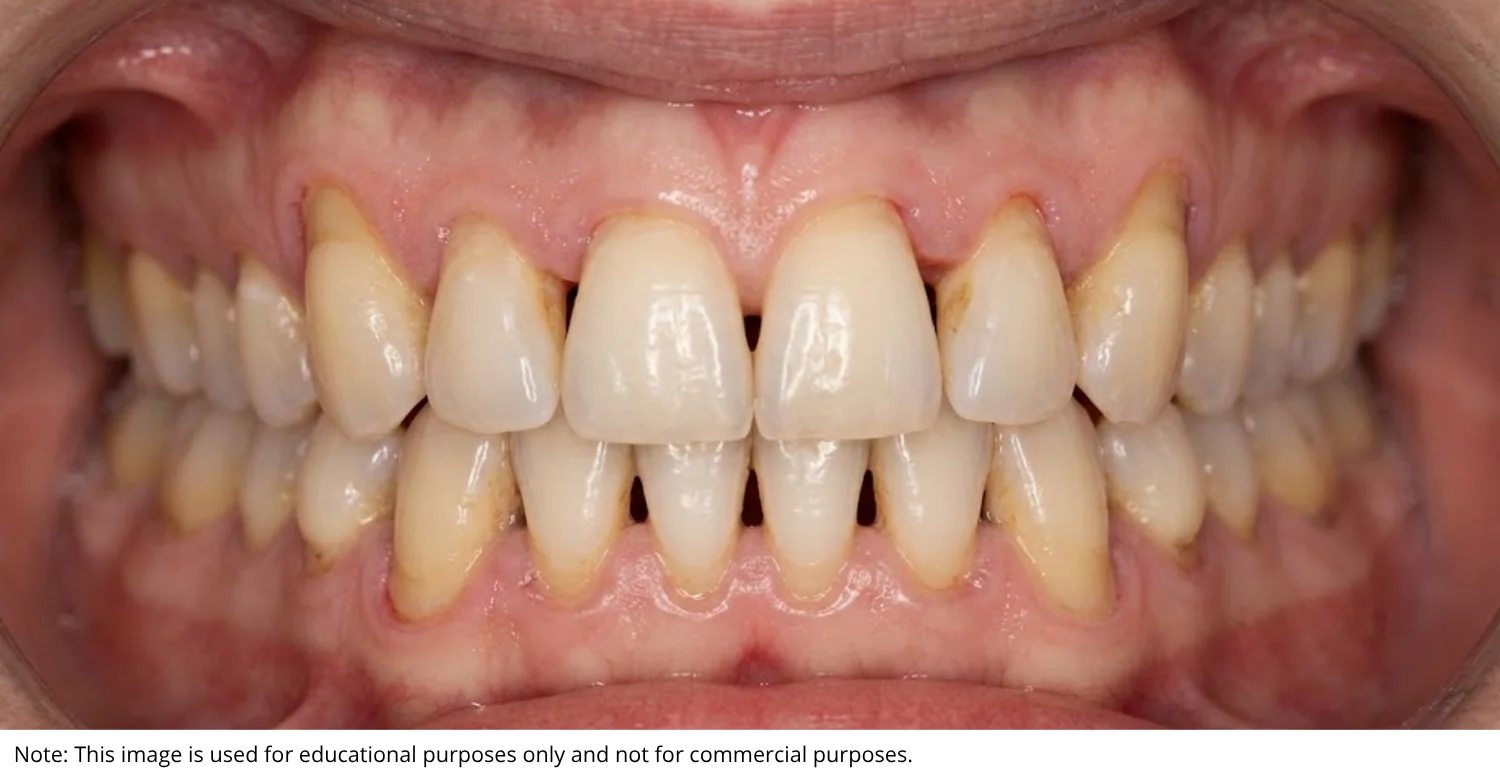
Teeth appear longer when the gum margin moves toward the root tip. You may see a band near the gumline that looks different from the enamel above. The gum line may also become uneven, with one tooth looking taller than its neighbors. In some cases, small dark triangles appear between teeth where gum tissue once filled the space. These changes often develop slowly. Comparing older photos can reveal how exposed tooth roots and gingival recession have progressed.
Why Do My Teeth Hurt When I Drink Something Cold or Hot?
This is usually dentine hypersensitivity, a common form of exposed tooth root pain. Dentine contains thousands of microscopic tubules filled with fluid. When the root is exposed, cold, heat, air, or touch moves the fluid inside these tubules. This movement stimulates nerve fibers near the pulp. The result is a short, sharp pain that fades quickly once the trigger is removed. Cold is the most common trigger. Pain that lingers for minutes may suggest a different problem and needs assessment.
Why Does Brushing Near My Gumline Feel Painful?
Brushing can trigger pain because bristles touch exposed dentine directly. The sensation is usually brief and sharp. Acidic foods, such as citrus fruits or vinegar dressings, can cause similar discomfort. Some people then avoid brushing the sensitive area, which allows plaque to build up. Plaque inflames the gums and makes them tender, adding a second source of discomfort. Sensitive teeth due to gum recession should not stop you from cleaning. A softer brush and gentler technique usually help.
Can Exposed Tooth Roots Cause Gumline Notches or Discoloration?
Yes, they can. Exposed roots often look more yellow than the crown because they lack the whiter, translucent enamel covering. Roots may also stain more easily. Over time, small notches or grooves may form at the gumline. These are called non-carious cervical lesions. They may result from abrasion, acid erosion, or a combination of factors. Exposed tooth roots and gingival recession frequently occur alongside these lesions. However, a notch is not the same as decay.
Note: All images used are for editorial and illustrative purposes only and may not originate from the original news provider or associated company.
What Causes Exposed Tooth Roots and Receding Gums?
The causes of receding gums are often combined rather than single. One person may have thin gums and also brush too hard. Another may have periodontal disease and smoke. The causes below are listed from common to less common or more clinically significant. Each affects the gums differently. Understanding exposed tooth root causes helps your dentist decide whether the priority is changing habits, treating infection, or protecting the root. In many cases of exposed tooth roots & gingival recession, several factors work together.
Brushing Too Hard or Using the Wrong Toothbrushing Technique
Aggressive horizontal scrubbing with a hard brush is often linked with recession, especially on canines and premolars. Repeated mechanical trauma may gradually wear the gum margin away. The research is mixed, and not everyone who brushes hard develops recession. Risk seems higher when brushing trauma combines with thin gum tissue or prominent roots. Abrasive toothpaste can also wear exposed root surfaces. Brushing harder does not clean better. Gentle, controlled strokes remove plaque effectively while protecting the gums.
Gum Disease and Periodontal Tissue Loss
Gingivitis is inflammation limited to the gums. It causes redness, swelling, and bleeding, and it is reversible with good plaque control. Periodontitis is different. It destroys the ligament and bone that support the teeth. As this support is lost, the gums can recede and roots become exposed. Recession caused by periodontitis often affects the spaces between teeth as well. This type of exposed tooth roots and gingival recession needs periodontal treatment first, before any cosmetic coverage is considered.
Thin Gum Tissue and Natural Anatomical Factors
Some people naturally have thin gum tissue and thin underlying bone. This is called a thin gingival phenotype. Thin tissue is more fragile and recedes more easily after trauma or inflammation. Tooth position also matters. A tooth that sits outside the bony arch may have very little bone over its root. Gaps in that bone, called dehiscences, are not unusual. A narrow band of firm attached gum and a muscle attachment pulling on the gum margin may also add risk.
Teeth Grinding, Clenching, and Bite-Related Factors
Grinding and clenching place heavy forces on the teeth. These forces can cause tooth wear, cracks, and jaw muscle pain. Some clinicians believe they may also contribute to notches near the gumline. However, the evidence linking grinding directly to gum recession is weak and inconsistent. Grinding should not be assumed as the cause in every case. It may act as one factor alongside others. A dentist can check for signs of grinding and decide whether a night guard is useful.
Plaque Buildup and Inadequate Oral Hygiene
Plaque is a sticky film of bacteria that forms on teeth every day. If it is not removed, it irritates the gums and causes gingivitis. Plaque can harden into calculus, or tartar, which brushing cannot remove. In susceptible people, ongoing inflammation can progress to periodontitis. That leads to loss of the tissues supporting the teeth. Poor plaque control is therefore an indirect but important cause of exposed tooth roots and gingival recession. Regular cleaning and checkups help break this cycle.
Orthodontic Tooth Movement and Previous Dental Procedures
Orthodontic treatment is generally safe for the gums. Risk rises when teeth move outside the bone that surrounds them, for example when front teeth are tipped forward. Thin bone over the root may then thin further, and the gum can follow. Previous procedures can also play a role. Crowns or fillings with margins placed deep under the gum may irritate tissue. Some periodontal surgeries intentionally reduce gum height. These effects matter mainly in already vulnerable tissue.
Smoking, Tobacco Use, and Other Contributing Risk Factors
Smoking is one of the strongest risk factors for periodontitis. It reduces blood flow to the gums and weakens the immune response. Smokers may bleed less, which can hide gum disease until it is advanced. Tobacco also slows healing after periodontal treatment and gum grafting. Other contributing factors include poorly controlled diabetes, lip or tongue piercings, and a family history of gum disease. Several risk factors often coexist. Addressing each one improves the long-term outlook for exposed tooth roots and gingival recession.
What Other Symptoms Can Occur Alongside Exposed Tooth Roots?
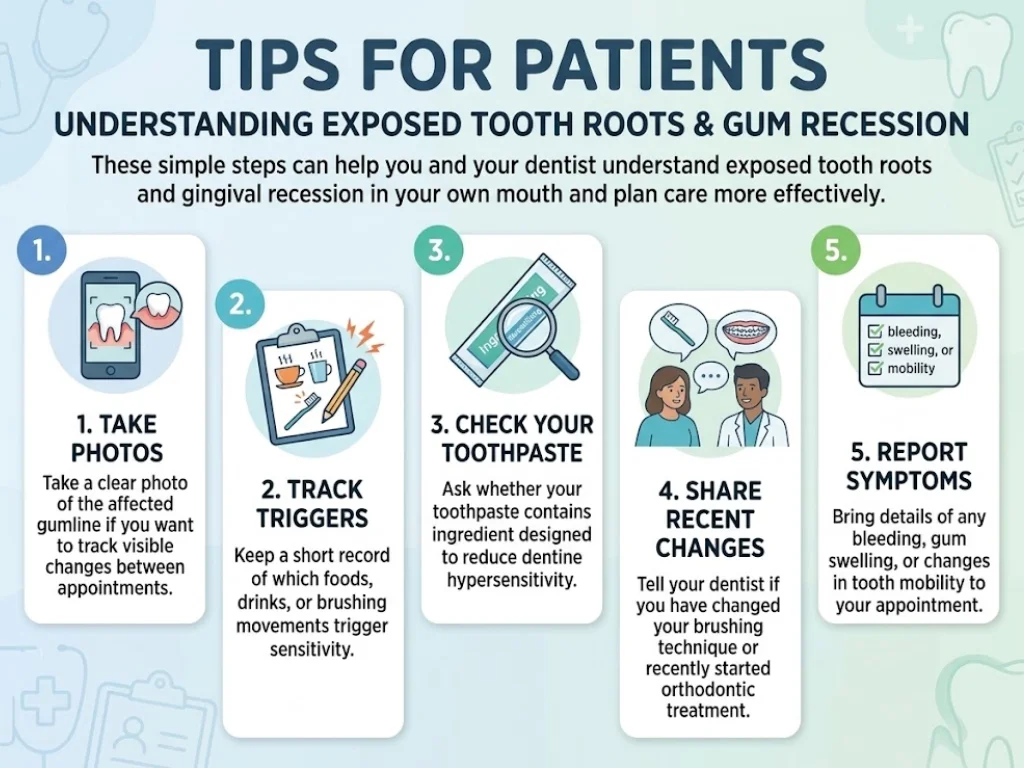
Exposed roots rarely appear in isolation. Other symptoms can point to the underlying cause. Bleeding gums, bad breath, food trapping, and loose teeth may suggest active gum disease. Discoloration or soft spots may suggest decay. Recognizing these signs helps separate simple recession from a more serious problem. It also helps your dentist choose the right tooth root exposure treatment. The questions below cover symptoms patients often notice alongside exposed tooth roots and gingival recession.
Why Do I Have Sensitive Teeth and Bleeding Gums at the Same Time?
These two symptoms have different causes but often occur together. Sensitivity comes from exposed dentine responding to cold or touch. Bleeding comes from gum inflammation, usually caused by plaque. When brushing a sensitive area hurts, people often brush it less. Plaque then builds up, and the gums become inflamed and bleed. Periodontitis can also cause both, by triggering recession and inflammation together. Bleeding is never normal. It should be checked, even if sensitivity seems the bigger concern.
Why Does Food Keep Getting Stuck Near My Gumline?
When gums recede, the shape of the gum line changes. The tissue between teeth, called the papilla, may shrink. This leaves small triangular spaces where food can collect. Fibrous foods, such as meat, are especially likely to get trapped. Trapped food feeds plaque bacteria and can inflame the gums further. It also raises the risk of root decay. Interdental brushes are often easier than floss for cleaning these wider spaces. Your dentist can recommend the right size.
Can Exposed Roots Cause Bad Breath or Loose Teeth?
Uncomplicated recession usually does not cause bad breath or loose teeth. When these symptoms appear, periodontal disease is a more likely explanation. Deep gum pockets harbor bacteria that produce unpleasant odors. As bone support is lost, teeth may begin to move or feel loose. Persistent bad breath, bleeding, and mobility together are warning signs. They suggest that exposed tooth roots and gingival recession may be part of a wider gum problem. Early periodontal treatment can slow further damage.
How Can I Tell If My Tooth Has Root Decay Instead of Simple Sensitivity?
It can be hard to tell at home. Root decay often appears as a yellow, brown, or dark area near the gumline. It may feel soft or leathery rather than hard and smooth. Simple sensitivity usually affects a surface that looks intact. Notches from wear can also resemble cavities. Root caries may cause sensitivity to sweet foods, but early lesions are often painless. A dental examination is needed to distinguish decay from sensitivity linked to exposed tooth roots & gingival recession.
What Can You Do at Home for Exposed Tooth Roots?
Home care plays a major role in managing exposed roots. It can reduce sensitivity, control plaque, and help prevent decay. It also helps stop further damage from brushing trauma. However, home care works best alongside professional assessment. If gum disease is present, home measures alone will not control it. The steps below form the foundation of care for exposed tooth roots and gingival recession. Consistency matters more than any single product.
Use a Soft-Bristled Toothbrush and Gentle Brushing Technique
Choose a soft-bristled brush and replace it every three months, or sooner if the bristles splay. Angle the bristles about 45 degrees toward the gumline. Use small, gentle circular or vibrating strokes instead of hard horizontal scrubbing. Hold the brush lightly, like a pen, to reduce pressure. Brush twice a day for about two minutes. Gentle does not mean ineffective. Plaque is soft and comes away easily. Ask your hygienist to check your technique at your next visit.
Choose Toothpaste for Sensitive Teeth
Desensitizing toothpaste is often the first step for sensitive teeth due to gum recession. Potassium nitrate works by calming the nerve's response. Stannous fluoride and arginine-based formulas work by blocking the open tubules in dentine. Relief is not instant. Most people notice improvement after two to four weeks of twice-daily use. Stopping often brings sensitivity back. Spit after brushing, but avoid rinsing with water, so the active ingredients stay on the teeth longer.
Reduce Dietary Triggers for Tooth Sensitivity
Frequent acidic foods and drinks can soften tooth surfaces and open dentine tubules. Common examples include soft drinks, citrus fruits, sports drinks, wine, and vinegar. Frequency matters more than total amount. Sipping acidic drinks throughout the day is more harmful than having them with a meal. You do not need to cut these foods out completely. Enjoy them in moderation, use a straw for acidic drinks, and rinse with water afterward. Waiting a while before brushing may also help.
Maintain Daily Interdental Cleaning
Brushing cannot reach the spaces between teeth. Daily interdental cleaning removes plaque from these areas, where gum disease often starts. Floss works well for tight contacts. Interdental brushes are usually more effective for wider gaps caused by recession. Choose a brush that fits snugly without forcing it. Move it gently in and out a few times. Bleeding may occur at first if the gums are inflamed. It usually settles within one to two weeks of consistent cleaning.
Why Home Remedies Cannot Regrow Lost Gum Tissue
Can receding gums grow back? Unfortunately, no. Once gum tissue has receded, it does not regenerate on its own. Oil pulling, herbal rinses, and special pastes cannot rebuild lost tissue, despite online claims. Home care still matters. It can reduce inflammation, ease sensitivity, and help stop recession from getting worse. Swollen gums may also tighten as inflammation settles. However, true restoration of lost coverage requires professional procedures in suitable cases.
.jpg)
Ready to transform your smile?
Talk to our team and get a FREE treatment plan.
Which Tools Can Help Manage Sensitive Exposed Tooth Roots?
The right tools make daily care easier and safer. They can reduce sensitivity, limit brushing force, and improve plaque removal. Tools do not replace professional care, but they support it between visits. The best choice depends on your gum condition, the spaces between your teeth, and your sensitivity level. Your dentist or hygienist can recommend specific products. The options below are commonly used for exposed tooth roots and gingival recession.
Desensitizing Toothpaste and Fluoride Products
Desensitizing toothpastes reduce sensitivity by calming nerves or sealing dentine tubules. Fluoride strengthens root surfaces and helps prevent decay. For people at higher risk of root caries, dentists may prescribe a high-fluoride toothpaste, often containing 5,000 ppm fluoride. It should be used only as directed and is generally intended for adults. A fluoride mouthwash may also be recommended. These products work gradually. Regular use matters more than occasional heavy application.
Electric Toothbrushes with Pressure Sensors
Many electric toothbrushes include a pressure sensor. It lights up, slows the motor, or signals in another way when you press too hard. This feedback helps people who habitually brush with excessive force. Electric brushes may also remove plaque slightly more effectively than manual brushes for many users. They are not essential, though. A soft manual brush used gently works well too. The key is controlled pressure and thorough cleaning along the gumline.
Interdental Brushes and Other Cleaning Aids
Interdental brushes come in many sizes. The correct size fills the gap without being forced. A brush that is too large can injure the gums. A hygienist can measure your spaces and suggest suitable sizes. Water flossers may help people with bridges, implants, or limited dexterity. Single-tufted brushes are useful around exposed roots and uneven gum lines. Use any tool gently. The goal is to remove plaque without causing new trauma.
When Should You See a Dentist About Exposed Tooth Roots?
You should see a dentist whenever you notice gum recession, even if it seems mild. Early assessment identifies the cause and checks for gum disease or decay. It also creates a baseline for tracking future changes. Some signs need prompt attention, while others can wait for a routine visit. Knowing the difference helps you act appropriately. Regular checkups remain the best way to monitor exposed tooth roots and gingival recession over time.
Signs That Need a Dental Examination
Book an examination if you notice any of the following. These signs may indicate progressing recession, gum disease, or damage to the root surface:
Persistent or worsening tooth sensitivity.
Gum recession that appears to be progressing.
Bleeding, swelling, or recurring gum inflammation.
A visible cavity, notch, or darkened area near the root.
A loose tooth or a change in how your teeth fit together.
Even one of these signs is worth checking. Early care is usually simpler and more conservative.
When Is Tooth Root Exposure a More Urgent Concern?
Some symptoms suggest infection or another significant problem. These include severe or throbbing pain, facial swelling, pus around a tooth, fever, or symptoms that worsen quickly. Such signs need urgent dental assessment, ideally the same day. A dental abscess will not resolve without treatment. If swelling affects your breathing or swallowing, seek emergency medical care immediately. These situations are uncommon but can be serious. Do not wait for a routine appointment.
How Is the Cause of Gum Recession Diagnosed?
Diagnosis starts with a clinical examination. The dentist measures recession depth and width with a periodontal probe. Probing also checks pocket depths and bleeding around each tooth. Tooth mobility, plaque levels, and gum thickness are assessed. Your brushing habits, medical history, and smoking status are reviewed. Dental X-rays may be taken when indicated to evaluate supporting bone. Imaging helps, but it cannot replace a clinical examination. Together, these findings identify the cause of exposed tooth roots and gingival recession.
What Are the Treatment Options for Exposed Tooth Roots?
Tooth root exposure treatment depends on the cause, severity, symptoms, remaining gum tissue, and any decay or gum disease. There is no single solution for everyone. Many patients ask how to fix receding gums quickly, but the first step is controlling the cause. Treatment for exposed tooth roots & gingival recession then follows a logical order, from conservative to more invasive. Some patients need only sensitivity management. Others need periodontal care, restorations, or surgery.
Professional Cleaning and Periodontal Treatment
When gum disease is present, it must be treated first. Professional cleaning removes plaque and calculus above the gumline. For periodontitis, deeper cleaning below the gumline is usually needed. This is called subgingival instrumentation. It reduces inflammation and helps pockets heal. Some cases also need periodontal surgery. Afterward, regular maintenance visits help keep the disease stable. Controlling inflammation does not reverse recession. However, it is essential for preventing further loss of support around exposed roots.
Fluoride Treatment and Professional Desensitization
Dentists can apply fluoride varnish to exposed root surfaces. It strengthens the surface and reduces the risk of root decay. Varnish may also ease sensitivity. Professional desensitizing agents work by sealing open dentine tubules. They may contain oxalates, resins, or glutaraldehyde-based solutions. Effects can be immediate but often fade over time, so repeat applications may be needed. These treatments are quick, painless, and conservative. They suit patients whose main concern is sensitivity rather than gum coverage.
Dental Bonding for Exposed Root Surfaces
Tooth-colored composite resin or glass ionomer can be bonded over selected exposed root areas. This is useful for notches, wear defects, or persistent sensitivity. Bonding seals the surface, restores the tooth's contour, and can improve appearance. It is usually completed in one visit. However, bonding does not replace missing gum tissue. Poorly finished margins can also trap plaque. Careful case selection is important, especially when gum grafting might be planned later.
Gum Grafting Surgery for Receding Gums
Gum grafting is the main surgical gum recession treatment. The most common approach uses a connective tissue graft, usually taken from the palate. It is placed under the gum over the exposed root. A free gingival graft mainly thickens the tissue. Tissue substitutes may be used in some cases. Grafting can increase tissue thickness and improve coverage. Complete root coverage is most predictable when the bone and gum between teeth remain intact. It is not always achievable.
Pinhole and Other Minimally Invasive Root-Coverage Techniques
Some techniques reposition existing gum tissue through limited access instead of larger incisions. The pinhole surgical technique loosens the gum through a small entry point and slides it over the exposed root. Tunnel techniques work in a similar way and are often combined with grafts. These approaches may reduce surgical trauma. However, long-term research on the pinhole technique remains limited compared with conventional grafting. Suitability depends on anatomy, tissue availability, and the clinician's assessment.
Treatment of Root Caries and Structural Damage
Early root decay may be arrested without drilling. High-fluoride toothpaste, fluoride varnish, or silver diamine fluoride can harden soft lesions. Silver diamine fluoride, however, stains them dark. Cavitated or deeper lesions usually need a filling. Glass ionomer is often chosen near the gumline because it releases fluoride. Larger cervical defects may need more extensive restorations. If decay reaches the pulp, root canal treatment may be required. The choice depends on depth, extent, and access.
Patient Reviews
Ready to transform your smile?
Talk to our team and get a FREE treatment plan.
What Results Can You Expect Before and After Gum Recession Treatment?
Results depend on the treatment chosen and the original problem. Sensitivity often improves significantly. Gum disease can usually be stabilized. Root coverage may improve after surgery, but the amount varies. Realistic expectations are important before any procedure. Results also depend on habits after treatment. Without gentle brushing, plaque control, and checkups, problems may return. A clear discussion beforehand helps you understand the likely outcome for your exposed tooth roots and gingival recession.
Can Treatment Reduce Sensitivity and Protect Exposed Roots?
Yes, in most cases. Desensitizing toothpaste helps many people within a few weeks. Professional agents and fluoride varnish offer extra relief and protection. Bonding can seal a sensitive area directly. Grafting may cover the root, which can also reduce sensitivity, although this is not guaranteed. If inflammation contributes to discomfort, periodontal treatment may help. The best result comes from matching treatment to the cause. Persistent pain despite treatment should be re-examined for decay or cracks.
Will Gum Grafting Make My Teeth Look Shorter Again?
It may. Successful grafting can cover part or all of the exposed root, making teeth look shorter and more even. Gum symmetry can also improve. Results are best when bone and gum between the teeth are preserved. Where that support has been lost, full coverage is less likely. Grafted tissue usually blends in over time, but its color or texture may remain slightly different. Complete coverage cannot be guaranteed. Your clinician can estimate likely results after examination.
How Long Does Recovery Take After Gum Recession Surgery?
Early healing usually takes one to two weeks. Mild pain, swelling, and tenderness are common for the first few days, especially at the palate donor site. A soft diet is usually advised. You may be asked not to brush the treated area at first and to use a prescribed rinse instead. Stitches are often removed at a follow-up visit. The tissue keeps maturing for several months. Recovery depends on the procedure and individual healing.
What We Notice Clinically
According to Dr. Rifat Alsaman, Head of the Medical Team and cosmetic dentist at Vitrin Clinic, the visible amount of root exposure is only one part of the assessment. Two patients may show the same visible exposed tooth roots and gingival recession, yet differ in gum thickness, bone support, and inflammation. Tooth position and root sensitivity also vary. One patient may want cosmetic improvement, while another wants comfort. Each factor shapes the plan, so identical measurements can justify different treatments.
Why Treating Sensitivity Alone May Not Address the Underlying Problem
Dr. Rifat Alsaman, Head of the Medical Team and cosmetic dentist at Vitrin Clinic, notes that desensitizing products can relieve symptoms effectively. However, relief may mask an ongoing problem. Recession may continue to progress, or periodontal disease may remain active. In these situations, symptom control alone is not enough. Additional treatment may be needed to protect the tooth. Identifying the underlying cause of exposed tooth roots and gingival recession should come before planning long-term care.
When Root Coverage Is Not the Only Clinical Goal
Dr. Rifat Alsaman, Head of the Medical Team and cosmetic dentist at Vitrin Clinic, explains that complete cosmetic coverage is not always the main aim. For some patients, the priority is periodontal stability. For others, it is preventing root decay, reducing sensitivity, or protecting fragile tissue. Sometimes full coverage is not achievable because of bone loss between teeth. A successful outcome is measured by health, comfort, and protection, not only by how much root is covered.
Clinical Note
Gingival recession is a common finding, but it is not a single disease. It has several possible causes and can overlap with other conditions. Treatment should therefore be based on findings, not assumptions. This clinical note summarizes key principles for understanding exposed tooth roots and gingival recession. It covers why assessment is individualized, what imaging can and cannot show, and how realistic expectations help patients make better decisions.
Why an Individualized Assessment Matters
Exposed roots may coexist with periodontal disease, cervical tooth wear, or root caries. Each needs a different response. Not all recession requires surgery. Many stable, painless cases need only monitoring and good home care. Equally, sensitivity does not automatically mean nerve damage. In most cases, it reflects exposed dentine rather than disease inside the pulp. An individualized assessment helps avoid both overtreatment and undertreatment. It ensures care targets what is actually happening in your mouth.
What Dental Imaging Can and Cannot Show
Dental X-rays are useful when clinically indicated. They help evaluate bone levels between teeth, root-related pathology, and some types of decay. However, standard X-rays show little about the thin bone on the front or back of roots. They also cannot measure gum thickness, pocket depths, or sensitivity. Clinicians must assess these directly. Imaging is a supporting tool, not a substitute for examination. Together, both give an accurate picture of gum and bone health.
Setting Realistic Treatment Expectations
Treatment can achieve several different goals. It may control inflammation, reduce sensitivity, protect root surfaces, or improve gum coverage. Not every goal is possible in every case. The achievable outcome depends on the underlying cause and the tissue available. For example, lost bone between teeth limits how much root can be covered. Discussing goals openly before treatment helps patients make informed decisions. Realistic expectations lead to greater satisfaction when treating exposed tooth roots and gingival recession.
How Can You Prevent Gum Recession and Further Root Exposure?
Knowing how to prevent gum recession is valuable whether your gums are healthy or already receding. Prevention focuses on reducing trauma, controlling plaque, and treating gum disease early. Not every risk factor can be changed. Gum thickness and tooth position are largely inherited. However, many contributing factors are within your control. Small daily habits, combined with regular professional care, can significantly reduce the risk of exposed tooth roots and gingival recession worsening over time.
Improve Your Brushing Technique Without Compromising Plaque Control
Use a soft-bristled brush and light pressure. Angle the bristles toward the gumline and use small, gentle movements. Avoid aggressive horizontal scrubbing. Choose a low-abrasive toothpaste if your roots are exposed. Do not swing to the opposite extreme by brushing too lightly or too briefly. Plaque left behind causes inflammation, which also drives recession. The aim is thorough cleaning with minimal force. A hygienist can demonstrate the right technique for your mouth.
Treat Gum Disease Early
Gum disease is often painless in its early stages. Bleeding when brushing is one of the first warning signs. Do not ignore it. Gingivitis is reversible with professional cleaning and better home care. Periodontitis can be stabilized but not fully reversed. If supporting tissue loss is present, regular periodontal maintenance visits are essential. These visits remove deposits you cannot reach and track changes. Early treatment is one of the most effective ways to limit exposed tooth roots and gingival recession.
Manage Teeth Grinding and Other Contributing Factors
If you grind or clench, your dentist can look for signs such as worn edges, cracks, or tight jaw muscles. A custom night guard may protect teeth from excessive forces. However, grinding should not be assumed to cause every recession pattern. Other contributing factors also deserve attention. These include oral piercings, tooth movement in thin tissue, and restorations that irritate the gums. Clinical assessment should guide each decision. Managing the relevant factors protects both teeth and gums.
Avoid Tobacco and Maintain Regular Dental Checkups
Stopping tobacco use lowers your risk of periodontitis and improves healing after treatment. Support services and nicotine replacement can make quitting easier. Regular checkups allow your dentist to measure gum levels and compare them over time. Small changes can then be caught early, before they cause sensitivity or decay. Your dentist will recommend a checkup interval based on your risk. People with gum disease usually need more frequent visits. Consistency is the foundation of long-term prevention.
Protecting Exposed Tooth Roots and Maintaining Healthy Gums
Exposed tooth roots and gingival recession can arise from several causes, including brushing trauma, thin gum tissue, and periodontal disease. Symptoms range from mild sensitivity to visible changes in your smile. Early assessment helps identify the cause, reduce sensitivity, and protect exposed root surfaces. If you have persistent sensitivity, progressive recession, bleeding, or suspected root decay, arrange a dental assessment. Treatment should address the underlying cause and match your individual clinical findings.
Vitrin Clinic's Approach to Exposed Tooth Roots and Gingival Recession
At Vitrin Clinic in Istanbul, Türkiye, care for exposed tooth roots and gingival recession begins with identifying the underlying cause. Rather than simply covering exposed roots or masking sensitivity, the team focuses on long-term gum health, patient comfort, and protecting tooth structure. Each patient undergoes an individualized assessment of the teeth, gums, existing restorations, symptoms, and daily oral hygiene habits. This helps distinguish dentine hypersensitivity from other conditions that can cause similar pain and determine the factors contributing to gum recession. Based on the findings, the team develops a personalized treatment plan tailored to the patient's needs.
The clinic offers a wide range of treatments, including periodontics, gingival esthetics, endodontics, dental crowns, dental bridges, veneers, Hollywood Smile, teeth whitening, Invisalign, dental implants, subperiosteal implants, and same-visit dentistry. Depending on the diagnosis, recommendations may include personalized oral hygiene guidance, sensitivity management, periodontal treatment, or other appropriate procedures. The aim is to provide practical, evidence-informed care that addresses the underlying cause, supports gum health, and helps patients make informed decisions at every stage.






Ready to transform your smile?
Talk to our team and get a FREE treatment plan.
References:
FAQs
Dr. Rifat Alsaman has more than 5 years of clinical experience in dentistry and currently serves as the Head of the Medical Team at Vitrin Clinic. He is dedicated to providing exceptional patient care, overseeing treatment planning, and ensuring the highest clinical standards across the team. His expertise, attention to detail, and commitment to continuous professional development have helped countless patients achieve healthier, more confident smiles.


