Dental Tourism in Turkey
November 12, 2026
What Are Endosteal Dental Implants Turkey? Procedure, Suitability, and Cost
 Dr. Rifat Alsaman

Missing teeth can affect chewing, speech, facial support, and everyday comfort. Dental implants offer a fixed replacement option without preparing neighbouring natural teeth. Endosteal Dental Implants Turkey are an option for international patients seeking implant treatment in Istanbul.
These implants sit inside the jawbone and act as artificial tooth roots. They can support individual crowns, bridges, and full-arch restorations. However, successful treatment depends on bone availability, gum health, implant positioning, and long-term care.
Key Takeaways
Endosteal implants sit inside the jawbone and support different types of replacement teeth.
Suitability depends on bone volume, gum health, medical history, and jaw anatomy.
Treatment usually involves implant placement, healing, and final restoration.
Potential complications include infection, peri-implantitis, nerve injury, and mechanical problems.
Endosteal Dental Implants Turkey costs vary according to implant numbers, restoration materials, and additional procedures.
Prices from £200 per tooth
Full mouth restoration from
£1,600
Timescale
5 to 7 days
Hotel + transfers available
Airport-Hotel-Clinic
coordination included
Ready to transform your smile?
Talk to our team and get a personal FREE treatment plan.
What Exactly Are Endosteal Dental Implants?
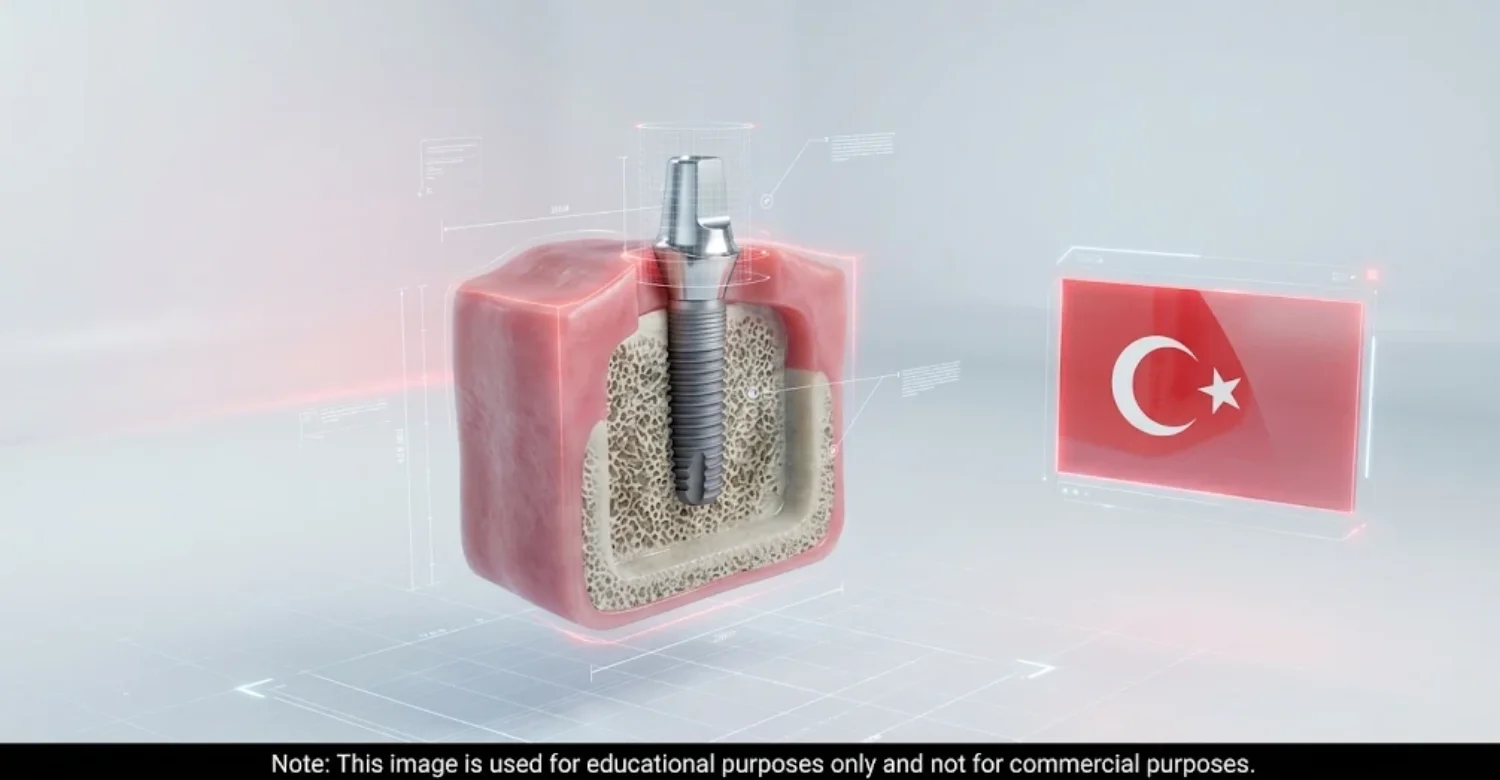
Endosteal implants are artificial tooth roots placed directly inside the jawbone. Most are made from titanium or titanium alloys and commonly feature a screw-shaped design.
Once placed, the implant gradually connects with the surrounding bone through a process called osseointegration. This biological connection provides the foundation for attaching replacement teeth.
Depending on the patient's needs, an implant may support:
One missing tooth: An individual implant crown.
Several missing teeth: An implant-supported bridge.
Complete tooth loss: A fixed full-arch restoration.
The number and position of implants depend on bone availability, bite forces, and the planned restoration.
How Does an Implant Become Stable Inside the Jawbone?
After placement, new bone gradually forms around the implant surface. This creates a stable biological connection that helps the implant support replacement teeth.
Healing depends on several factors:
Bone quality and available volume.
Implant position and initial stability.
Surgical technique and healing conditions.
Gum health and oral hygiene.
General health, medications, and nicotine use.
Integration usually takes several months. The dentist confirms sufficient healing before proceeding with the final restoration. See what a dental implant looks like before the crown.
Endosteal vs Subperiosteal Implants: What Is the Difference?
The main difference is where each implant sits in relation to the jawbone.
Feature | Endosteal implants | Subperiosteal implants |
Position | Inside the jawbone | On the jawbone, beneath the gum |
Design | Commonly screw-shaped | Custom framework |
Bone requirements | Needs suitable bone support | May be considered in selected cases with severe bone loss |
Typical use | Crowns, bridges, full arches | Selected complex cases |
Endosteal implants are widely used when the jawbone can support them. Subperiosteal implants may be considered in specific situations, but significant bone loss does not automatically make someone suitable for this alternative.
For Endosteal Dental Implants Turkey, the appropriate design depends on individual anatomy and restorative requirements. Learn more about subperiosteal implants in Turkey.

.jpg)
.jpg)
Which Implant Designs and Materials Are Available?
Implants differ in material, dimensions, and design. The dentist selects a system according to bone anatomy, the missing teeth, and the intended restoration.
Screw-Shaped Implants: Why Are They Commonly Used?
Root-form screw implants have threaded surfaces that help provide initial mechanical stability. Their dimensions and positioning are selected according to available bone and restorative needs.
They can support individual crowns, bridges, and full-arch prostheses. Compare with screwless dental implants.
Titanium or Zirconia: Which Material Is More Suitable?
Material | Main characteristics | Clinical considerations |
Titanium and titanium alloys | Strong, biocompatible, widely established | Extensive history of clinical use |
Zirconia | Ceramic, metal-free alternative | Different designs and a more limited long-term evidence base |
Does the Number of Missing Teeth Change the Implant Design?
The restoration depends on how many teeth need replacing:
Single-tooth replacement: One implant can support an individual crown.
Multiple-tooth replacement: Several implants may support a bridge.
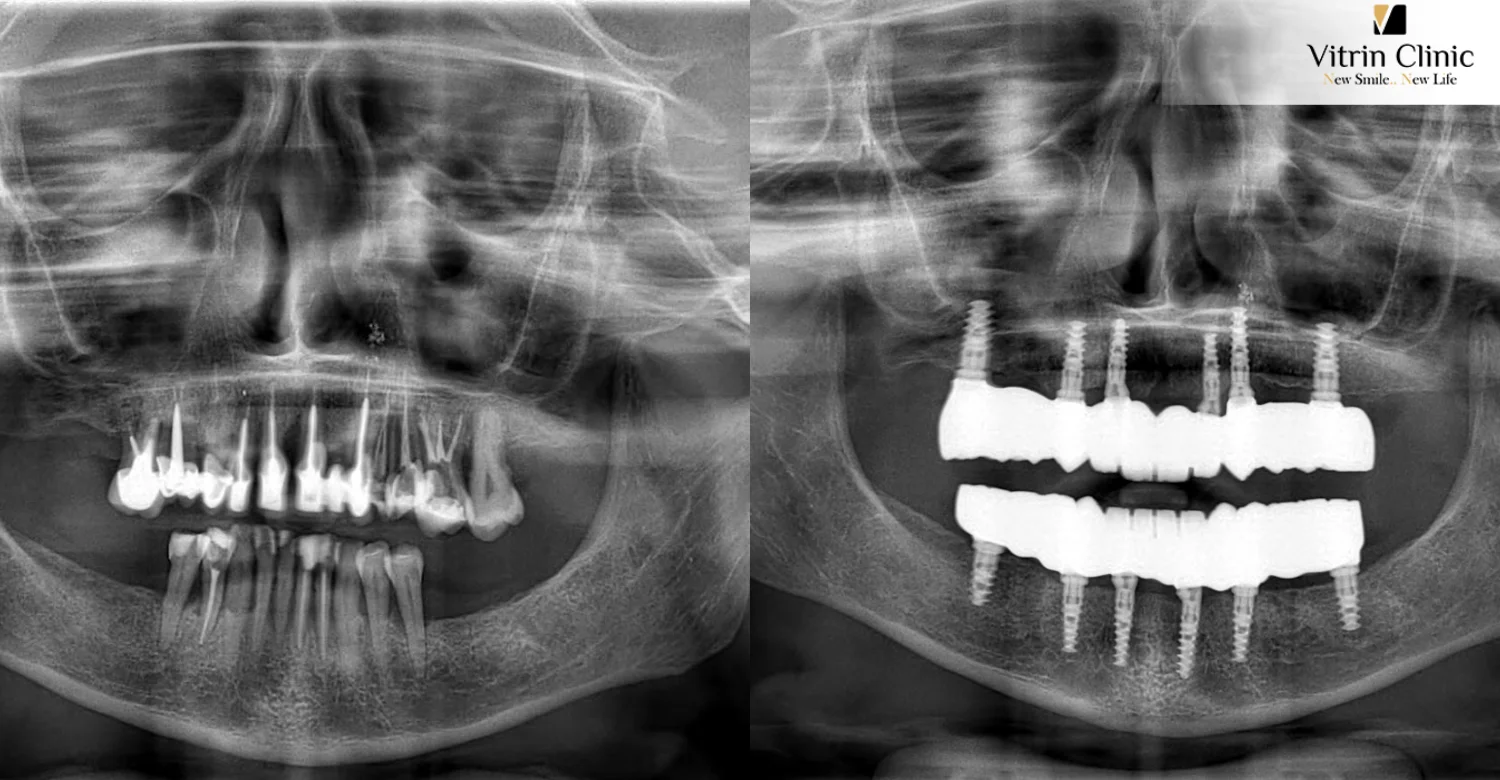
Full-arch replacement: Strategically positioned implants support a fixed bridge across one jaw.
A full-arch restoration is a prosthetic configuration, not a separate implant material or design. See how much a full set of dental implants costs.
Who Can Receive Endosteal Dental Implants?
Patients generally need suitable jawbone support and healthy oral tissues. However, Endosteal Dental Implants Turkey are not suitable for everyone with missing teeth.
The dentist considers bone anatomy, gum health, medical history, and the planned restoration before recommending surgery.
How Much Jawbone Is Needed for Implant Placement?
The available bone must provide sufficient height, width, and quality for the planned implant position. Bone density also influences initial stability.
Tooth loss can gradually reduce the surrounding bone. This process, known as bone resorption, may limit implant placement or change the available treatment options. For narrow bone, learn about mini implants.
Will You Need Bone Grafting Before Implant Surgery?
Bone grafting may be recommended when existing bone cannot adequately support the planned implant position.
However, reduced bone volume does not always mean grafting is necessary. Depending on the anatomy, the dentist may consider alternative implant positions or techniques. Learn what happens during implant sinus lift surgery.
Clinical situation | Possible approach |
Sufficient bone | Implant placement may proceed |
Localised bone deficiency | Bone grafting may be considered |
Reduced upper posterior bone height | Sinus lift may be considered |
Advanced bone loss | Alternative implant approaches may require specialist review |
Which Health Conditions Can Affect Implant Suitability?
Several factors may influence surgical planning and healing:
Smoking and nicotine: Can impair healing and increase complication risks.
Diabetes: Poorly controlled blood glucose may affect recovery and infection risk.
Periodontal disease: Active gum disease generally needs treatment before surgery.
Medical conditions: Certain immune conditions can influence healing.
Medications: Some medicines affect bleeding, bone metabolism, or recovery.
Oral hygiene: Effective daily cleaning is essential for long-term maintenance.
Patients should disclose their medical history, allergies, and current medications before treatment. Find out whether you can smoke after dental implants.
When Should Implant Surgery Be Postponed?
Surgery may need to wait if a patient has an untreated oral infection, uncontrolled periodontal disease, or a medical condition that makes surgery unsafe.
Significant bone deficiencies may also require preparatory treatment. In some cases, another tooth-replacement option may be more appropriate.
How Do Dentists Check Whether Your Jawbone Can Support Implants?
Planning Endosteal Dental Implants Turkey involves more than checking a standard dental X-ray. The dentist evaluates the bone, gums, remaining teeth, bite, and nearby anatomical structures.
What Does the Pre-Surgical Examination Include?
The clinical review typically considers:
Bone height, width, and quality at proposed implant sites.
Gum health and signs of periodontal disease.
Remaining teeth and possible infections.
Bite alignment and available restoration space.
Nearby nerves and the maxillary sinus.
The inferior alveolar nerve in the lower jaw and the maxillary sinus in the upper posterior jaw require particular attention.
Are Digital X-Rays and CBCT Scans Always Necessary?
No. Digital dental X-rays provide information about teeth and surrounding structures. CBCT offers three-dimensional views of bone dimensions and nearby anatomy.
A CBCT scan may be recommended when conventional imaging does not provide enough information for safe planning. It should be used when clinically justified, not automatically for every patient.
Why Must Implant Position Match the Final Teeth?
The implant must be positioned with the final restoration in mind. Its angle and location influence appearance, chewing forces, crown design, and access for daily cleaning.
Planning the replacement teeth before surgery helps the dentist connect the surgical and restorative stages. Understand the difference between an abutment vs crown.
Ready to transform your smile?
Talk to our team and get a personal FREE treatment plan.
How Is Implant Surgery Performed at Vitrin Clinic?
The process for Endosteal Dental Implants Turkey generally includes clinical examination, surgical placement, healing, and restoration. The exact sequence depends on the patient's anatomy and treatment requirements.
1. Consultation and Personalised Planning
The dentist reviews the patient's medical and dental history and examines the teeth, gums, and supporting tissues.
Appropriate imaging helps evaluate bone availability and nearby structures. The team then discusses the proposed implant positions, restoration, possible additional procedures, costs, and expected appointments. Find out how long a dental implant procedure takes.
2. Preparing the Surgical Area
The treatment area is prepared according to the clinical protocol. Local anaesthesia numbs the surgical site to minimise discomfort.
Sedation may be considered in selected cases when clinically appropriate.
3. Preparing the Implant Site
The dentist uses specialised surgical instruments to prepare the bone according to the planned implant dimensions and position.
Careful preparation helps preserve surrounding bone and protect nearby anatomical structures.
4. Placing the Implant Fixture
The implant is inserted into the prepared site. The dentist checks its initial mechanical stability.
This finding helps determine the appropriate healing approach and whether immediate loading may be considered.
5. Choosing a Healing Abutment or Covering Screw
The dentist selects how the implant will heal:
Healing abutment: Extends through the gum and helps shape the tissue around the future restoration.
Covering screw: Sits on the implant while the gum is closed over it.
When the implant heals beneath the gum, a second procedure may be needed to expose it before restoration.
6. Fitting the Final Restoration
After sufficient healing and integration, the dentist connects the final crown, bridge, or full-arch restoration.
The final checks include bite alignment, fit, appearance, and access for daily cleaning. Follow-up appointments help monitor the restoration and surrounding tissues.
Single-Stage or Two-Stage Implant Surgery: Which Approach Is Used?
The difference concerns how the implant is managed during initial healing.
Clinical factor | Single-stage | Two-stage |
During healing | Healing abutment remains exposed | Implant is covered by gum tissue |
Exposure surgery | Usually not required | Required before restoration |
Healing approach | Tissue heals around an exposed component | Initial healing occurs beneath the gum |
Appointments | May involve fewer surgical appointments | Includes a separate exposure procedure |
Main consideration | Requires suitable stability and tissue conditions | May be preferred when protected healing is appropriate |
.jpg)
.jpg)
.jpg)
Does Implant Surgery Hurt? What Happens During Recovery?
Endosteal Dental Implants Turkey usually involve surgery under local anaesthesia. Patients may feel pressure or vibration, but sharp pain should be controlled during the procedure.
After surgery, some discomfort and swelling are common. Read our tips on how to relieve pain from a dental implant.
Which Symptoms Are Normal After Surgery?
Temporary effects may include:
Mild swelling around the surgical area.
Bruising of the gums or facial tissues.
Minor bleeding or blood-stained saliva.
Tenderness when eating or touching the area.
Temporary difficulty chewing comfortably.
Symptoms should generally become less noticeable as healing progresses.How Should You Eat and Clean Your Teeth After Surgery?
Follow the dentist's postoperative instructions. Patients are generally advised to:
Choose soft foods and avoid chewing directly over the surgical site.
Avoid very hot, hard, or crunchy foods during early healing.
Clean their teeth gently as instructed.
Avoid disturbing the wound or stitches.
Avoid smoking and nicotine.
Resume strenuous exercise according to clinical advice.
Medication should be selected according to medical history and current medicines. Find out how long to take antibiotics after a dental implant.
Which Symptoms Need Prompt Dental Attention?
Contact the treating dentist if you experience worsening pain, increasing swelling, persistent bleeding, fever, spreading redness, or discharge.
A loose implant or sudden change in the bite also requires prompt examination.
Difficulty breathing or swallowing requires immediate emergency medical attention. Find out whether a dental implant falling out is an emergency.
How Long Does Implant Healing Take?
Healing for Endosteal Dental Implants Turkey varies according to bone quality, implant location, general health, and additional procedures.
Osseointegration commonly takes several months. However, the dentist must confirm sufficient healing before fitting the final restoration.
What Can Slow Down Osseointegration?
Several factors can affect the healing process:
Limited bone volume or poor bone quality.
Smoking and nicotine use.
Certain medical conditions or medications.
Bone grafting and other additional procedures.
Infection or excessive movement during healing.
Individual progress matters more than following a fixed calendar.
Can You Receive Temporary Teeth Immediately?
Some patients may receive temporary teeth shortly after implant placement. This is known as immediate loading.
It may be considered when bone conditions, initial implant stability, implant distribution, and bite forces are suitable.
Temporary restorations must protect healing implants from excessive pressure. Immediate loading is not appropriate for every patient.
When Can the Final Crown or Bridge Be Fitted?
The final restoration is fitted when the dentist confirms sufficient healing and implant stability.
Clinical reviews may include examination of the surrounding tissues, stability measurements, and imaging when indicated. The final timing depends on the individual treatment plan.
What Complications Can Occur With Endosteal Implants?
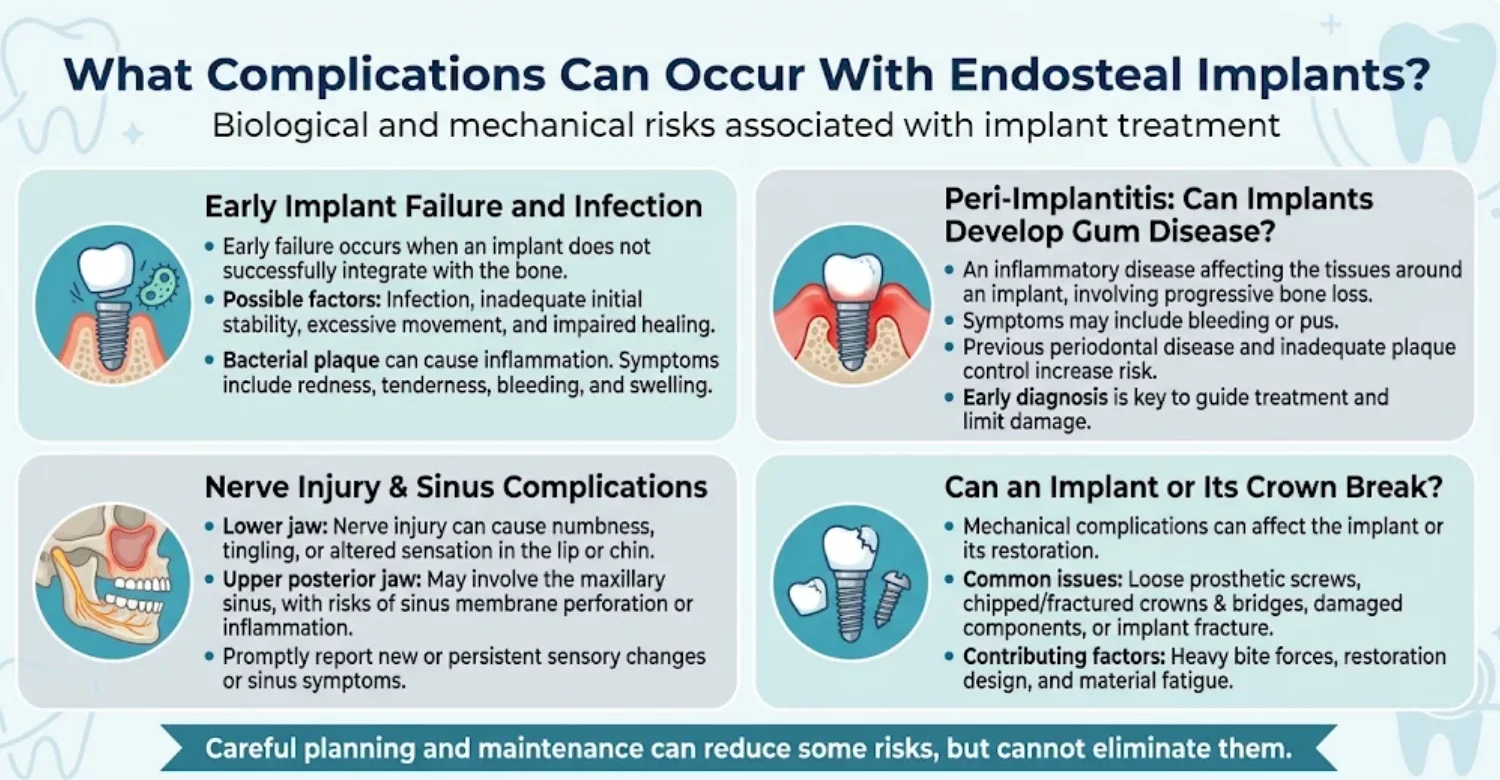
Like other surgical procedures, implant treatment carries potential biological and mechanical risks. Careful planning and maintenance can reduce some risks but cannot eliminate them.
Early Implant Failure and Infection
Early failure may occur when an implant does not establish or maintain successful integration with the bone.
Possible contributing factors include infection, inadequate initial stability, excessive movement, and impaired healing.
Bacterial plaque can also cause inflammation around an implant. Symptoms may include redness, tenderness, bleeding, and swelling. Learn whether a dental implant infection can be seen on an X-ray.
Peri-Implantitis: Can Implants Develop Gum Disease?
Peri-implantitis is an inflammatory disease affecting the tissues around an implant. It involves progressive supporting bone loss and may include bleeding or pus.
Previous periodontal disease and inadequate plaque control can increase the risk. Early diagnosis helps guide treatment and may limit further damage.
Nerve Injury and Sinus Complications
Implant placement in the lower jaw requires careful protection of nearby nerves. Injury may cause numbness, tingling, or altered sensation in the lip or chin.
In the upper posterior jaw, surgery may involve the maxillary sinus. Possible complications include sinus membrane perforation or sinus-related inflammation.
New or persistent sensory changes and sinus symptoms should be reported promptly. Read the honest answer to how safe dental implants are.
Can an Implant or Its Crown Break?
Mechanical complications may affect the implant or its attached restoration.
Examples include:
Loose prosthetic screws.
Chipped or fractured crowns and bridges.
Damaged implant components.
Implant fracture in severe cases.
Bite forces, restoration design, and material fatigue can contribute to these problems. Find out whether dental implants fall out.
What Are the Main Benefits and Limitations of Endosteal Implants?
Endosteal Dental Implants Turkey can provide fixed tooth replacement, but treatment involves surgery, healing, and ongoing maintenance.
Potential advantages | Possible limitations |
Fixed replacement teeth | Requires surgery and recovery |
Individual crowns without preparing neighbouring teeth | Needs suitable bone support |
Supports bridges and full-arch restorations | Grafting may be necessary |
Can restore chewing function | Final teeth may require a healing period |
Flexible implant positioning and restoration planning | Biological and mechanical complications are possible |
Does not rely on removable dentures when fixed treatment is suitable | Requires long-term cleaning and professional reviews |
Temporary swelling, bruising, tenderness, and minor bleeding may occur after surgery. Persistent numbness, worsening pain, fever, or discharge needs professional attention. Learn whether dental implants cause permanent pain.
Long-term care includes daily cleaning, regular reviews, and following instructions about bite forces and temporary restorations.
How Long Can Endosteal Implants Last?
Implants can remain functional for many years, but their lifespan is not guaranteed. The implant fixture and the crown or bridge it supports may also have different replacement timelines.
Long-term performance depends on:
Successful integration with the jawbone.
Healthy surrounding gum tissues.
Correct implant positioning.
Balanced bite forces.
Effective daily plaque control.
Regular professional maintenance.
How Can You Recognise Early Implant Problems?
Watch for bleeding during cleaning, gum swelling, persistent discomfort, discharge, implant movement, or changes in your bite.
These signs require professional examination. Early diagnosis may help limit further damage.
Will the Implant Crown Need Replacing?
Crowns, bridges, and connecting components experience everyday chewing forces. They may eventually wear, loosen, chip, or fracture.
A damaged crown does not necessarily mean the implant fixture needs replacing. The dentist evaluates each component separately before recommending repair or replacement. Find out whether dental implants can be removed.

.jpg)
.jpg)
How Much Do Endosteal Dental Implants Cost in Turkey?
The price of Endosteal Dental Implants Turkey depends on the implant number, system, restoration material, and surgical complexity.
The following 2026 figures are indicative estimates, not guaranteed treatment prices. Final quotations depend on clinical findings and the procedures included.
How Do Implant Prices in Turkey Compare With the UK and USA?
UK
From $2,100
Dental implant cost comparison
Single implant with crown: $2,100–$3,000
All-on-4, per jaw: $10,000–$15,000
All-on-6, per jaw: $15,000–$22,000
Turkey
From $500
Dental implant cost comparison
Single implant with crown: 500–1,100
All-on-4, per jaw: 3,500–7,500
All-on-6, per jaw: 4,500–9,000
Save up to ~60–80% vs. UK & USA
USA
From 3,000
Dental implant cost comparison
Single implant with crown: 3,000–5,000
All-on-4, per jaw: 18,000–30,000
All-on-6, per jaw: 24,000–32,000
Highest domestic private expense
What Determines the Final Treatment Price?
The total cost may change according to:
Implant brand, system, and number of fixtures.
Crown, bridge, or full-arch restoration material.
Bone grafting or sinus lift requirements.
Extractions and infection management.
Temporary restorations and laboratory work.
Imaging, follow-up, and other included services.
Patients should confirm what the quotation includes before making travel arrangements. Explore your options for All-on-4 financing.
What Are the Indicative Prices at Vitrin Clinic?
Vitrin Clinic's supplied indicative price for a single implant is approximately 700–1,500. This figure should not automatically be interpreted as the complete cost of an implant with its final crown.
Treatment | Indicative price |
Vitrin Clinic single implant | 700–1,500 |
Vitrin Clinic All-on-6 | Individual quotation |
What Should a Written Implant Quotation Include?
Before booking, check that the quotation explains:
Implant manufacturer, system, and number of implants.
Surgical fees and additional procedures.
Abutments and final crowns, bridges, or full-arch restorations.
Temporary teeth, if required.
Imaging and laboratory fees.
Accommodation and transport, if included.
Exclusions, follow-up arrangements, and possible additional costs.
A written treatment plan helps patients understand the expected costs before travelling.
Ready to transform your smile?
Talk to our team and get a personal FREE treatment plan.
What Should International Patients Plan Before Travelling to Turkey?
Travelling for Endosteal Dental Implants Turkey requires planning around surgery, healing, and restoration appointments. Patients should understand the expected schedule before booking flights.
How Many Visits Are Usually Needed?
The number of visits depends on the treatment plan.
Treatment stage | What may happen |
Initial visit | Examination, planning, and implant placement |
Healing period | Osseointegration and clinical monitoring |
Later visit | Exposure surgery, if required, and final restoration |
Additional visits | Grafting, complications, or complex restorative work |
Some patients need more than two visits. A temporary restoration may be possible during healing when clinically appropriate.
What Should You Arrange Before Your Trip?
Confirm consultation and surgery dates.
Check the expected length of the initial stay.
Allow time for postoperative reviews.
Confirm accommodation and airport transfers.
Discuss possible additional appointments.
Obtain contact details for postoperative concerns.
Confirm when it is appropriate to book your return flight.
Travel plans should account for clinical recovery rather than assuming every patient follows the same schedule.
What Follow-Up Care Is Needed After Returning Home?
Ask for copies of relevant dental images and treatment records. Keep the implant manufacturer and system details, surgical notes, and restoration information.
Arrange regular reviews with a suitably qualified local dentist. Report persistent pain, swelling, discharge, or implant movement promptly.
What Should You Check About Implant Guarantees?
A written guarantee should explain which components and procedures it covers, its duration, exclusions, and how complications are managed.
It should also clarify whether replacement components, additional appointments, or travel costs are included.
A treatment guarantee does not guarantee biological success or replace regular clinical monitoring.
How Does Vitrin Clinic Organise Implant Treatment for International Patients?
At Vitrin Clinic, planning for Endosteal Dental Implants Turkey is based on the patient's dental condition, available bone, and intended restoration.
Personalised Planning Before Implant Surgery
The process begins with a review of medical and dental history and current oral health. Patients may share existing records and imaging for an initial review.
Digital X-rays or CBCT scans may be recommended when clinically necessary. The findings help identify suitable treatment options and whether additional procedures may be required.
Selecting Implant Positions and Restoration Design
Implant positions should reflect available bone and the planned replacement teeth. The dentist considers bone dimensions, bite forces, implant distribution, and access for daily cleaning.
The number of implants depends on the pattern of tooth loss and the intended restoration. If bone support is insufficient, preparatory procedures or alternative approaches may be discussed.
Coordinating Surgery and Restorative Appointments
The surgical and laboratory stages need to be coordinated with the final restoration in mind.
Temporary teeth may be considered when implant stability and clinical conditions allow. Otherwise, another temporary arrangement may be recommended during healing.
Patients should receive information about the expected appointment sequence and restoration timing.
Monitoring Healing and Follow-Up Care
Follow-up reviews help monitor implant integration, gum health, bite, and restoration condition.
International patients should request relevant treatment records and implant system details. After returning home, they should continue professional reviews and follow the recommended cleaning routine.
What Should You Consider Before Choosing Implant Treatment?
Choosing Endosteal Dental Implants Turkey involves more than confirming that enough bone is available. The clinical team should consider the reason for tooth loss, surrounding tissues, implant position, bite, and final restoration.
Why Is Bone Availability Only One Part of Implant Planning?
Sufficient bone volume does not automatically mean an implant can be placed in the ideal position.
Nearby anatomical structures, bone shape, and space for the final restoration can influence placement. Gum health and bite forces also affect the treatment plan.
These factors should be considered together to support a functional and maintainable restoration.
What Should Patients Ask Dr. Rifat Alsaman Before Treatment?
Patients can ask the clinical team:
Why is this number of implants recommended?
Is my bone suitable for the proposed positions?
Will I need grafting or a sinus lift?
Which implant system and restoration materials are planned?
How long should healing take?
What temporary teeth options are available?
What complications and alternatives should I understand?
What maintenance and follow-up will I need?
Clinical editorial note: Any direct clinical opinion attributed to Dr. Rifat Alsaman should be reviewed and approved by him before publication. Do not publish an invented quotation.
All-on-6 Dental Implants in Turkey: How Does the Treatment Work?
All-on-6 uses six strategically positioned implants to support a fixed bridge across one jaw. It may suit patients who have lost most or all of their teeth, provided their anatomy and oral health allow appropriate placement. Read our full guide to All-on-6 dental implants.
Why Are Six Implants Used for a Full Arch?
Six implants provide multiple support points for the bridge. Their distribution is planned to support the restoration and manage chewing forces.
However, six implants are not automatically better than four. The appropriate number depends on bone availability, jaw anatomy, prosthetic design, and bite forces. Learn what All-on-8 dental implants are.
How Are the Implants Positioned and Placed?
The dentist plans implant positions according to available bone and the intended restoration. Anterior implants may be placed more vertically, while posterior positions depend on anatomy.
During surgery, the dentist prepares the implant sites, inserts the fixtures, and checks their initial stability. Extractions or preparatory procedures may be needed in selected cases.
Can Patients Receive Fixed Temporary Teeth on the Same Day?
Some patients may qualify for a temporary fixed bridge shortly after surgery. This is called immediate loading.
Eligibility depends on primary stability, bone conditions, implant distribution, and controlled biting forces. The temporary bridge must protect the healing implants from excessive pressure.
Same-day fixed teeth are not guaranteed. Another temporary arrangement may be recommended when immediate loading is unsuitable.
What Happens When the Final All-on-6 Bridge Is Ready?
The final bridge is fitted after sufficient healing and stability have been confirmed.
The dentist checks bite alignment, fit, appearance, gum contact, and cleaning access. Restoration materials depend on clinical requirements and the agreed treatment plan.
Is All-on-6 Possible With Bone Loss?
Some patients with reduced bone volume may still qualify. Strategic positioning can sometimes make use of the available bone.
However, severe bone loss may require grafting or alternative implant approaches. Six implants cannot automatically overcome insufficient bone support.
What Are the Advantages and Limitations of All-on-6?
Potential advantages | Possible limitations |
Fixed full-arch replacement | Requires surgery and healing |
Multiple implant support points | May involve higher initial costs |
Can restore chewing function | Grafting may be necessary |
May avoid removable dentures | Same-day teeth are not guaranteed |
Planned support distribution | Requires long-term maintenance |
The dentist should explain the expected benefits, limitations, alternatives, and maintenance requirements before recommending treatment.
Ready to transform your smile?
Talk to our team and get a personal FREE treatment plan.
All-on-6 vs All-on-4: Which Full-Arch Option Is More Suitable?
Both approaches use implants to support a fixed full-arch bridge. The difference is the number of implants and how support is distributed.
Comparison | All-on-4 | All-on-6 |
Number of implants | Four | Six |
Support points | Four | Six |
Implant positioning | Based on available bone | Based on available bone |
Bone requirements | Individual clinical evaluation | Individual clinical evaluation |
Typical cost | Usually lower | Usually higher |
Suitable cases | Selected full-arch cases | Selected full-arch cases |
Does All-on-6 Always Give Better Results?
No. More implants do not automatically mean better outcomes. Bone quality, implant distribution, initial stability, restoration design, and maintenance all influence treatment performance.
All-on-4 may provide suitable support for some patients. Others may benefit from the additional support points of All-on-6.
The dentist should explain why the recommended configuration suits the patient's anatomy and restorative needs.
How Should You Maintain Implants After Treatment?
Long-term care for Endosteal Dental Implants Turkey involves daily plaque control and regular professional reviews. Implants can develop inflammation and support bone loss if cleaning is inadequate.
How Should You Clean Around Implant-Supported Teeth?
Patients should:
Brush carefully around the implant-supported restoration.
Clean beneath fixed bridges with suitable interdental brushes or recommended aids.
Use a water flosser when advised.
Avoid aggressive techniques that irritate the gum tissues.
Follow the cleaning method demonstrated by the dental team.
The correct tools depend on the restoration design and available cleaning access.
Why Are Professional Implant Reviews Important?
Regular reviews help identify inflammation, tissue changes, and mechanical problems.
The dentist checks the surrounding gums, restoration condition, bite, and implant stability. Cleaning requirements and appointment frequency depend on individual risk factors.
What Should You Do if an Implant or Bridge Becomes Loose?
Movement requires prompt professional examination. It may indicate a loose prosthetic component, failed integration, or supporting bone problems.
Avoid chewing on the affected area. Do not attempt to tighten or repair components yourself. Contact the treating dentist to identify the cause.

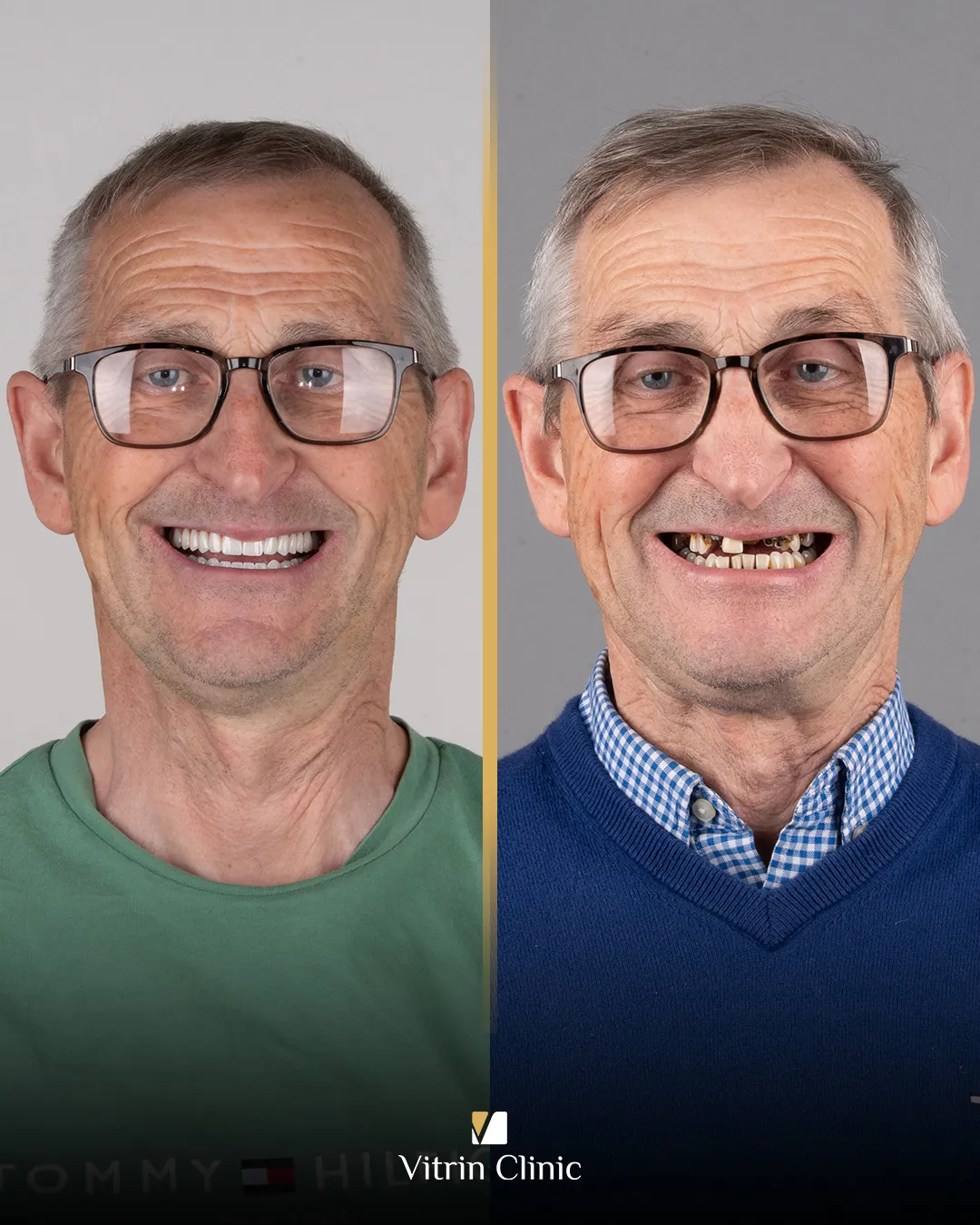
How Can You Prepare for an Implant Consultation in Turkey?
Good preparation helps patients understand their options and receive a clearer treatment explanation.
Which Records Should You Bring?
Provide relevant information before your consultation:
Previous dental X-rays or CBCT scans, when available.
Records of previous dental procedures or implants.
Current medication list.
Relevant medical conditions and allergies.
Details of previous surgical complications.
Existing records may help with preliminary planning, but they do not replace an in-person examination.
What Questions Should You Ask Before Agreeing to Treatment?
Clarify which implant system is recommended, how many implants are planned, and whether grafting is necessary.
Ask about temporary and final restorations, healing time, possible complications, and alternatives. Request an itemised quotation and written treatment schedule.
You should also understand the follow-up arrangements after returning home.
Ready to transform your smile?
Talk to our team and get a personal FREE treatment plan.
Conclusion: Are Endosteal Dental Implants Turkey the Right Choice for You?
Endosteal Dental Implants Turkey can support individual crowns, implant-supported bridges, and full-arch restorations, including All-on-4 and All-on-6.
However, suitability depends on bone availability, gum health, medical history, and restorative requirements. No implant design or configuration guarantees success.
A detailed clinical examination, appropriate imaging, and personalised treatment plan help patients understand their options. International patients should also consider healing time, travel arrangements, and long-term maintenance before choosing treatment.
Reference
FAQs
They may be suitable for patients seeking fixed tooth replacement. They can support individual crowns, bridges, and full-arch restorations. Suitability depends on bone quality, gum health, and medical history. A clinical examination is necessary before treatment.
Dr. Rifat Alsaman has more than 5 years of clinical experience in dentistry and currently serves as the Head of the Medical Team at Vitrin Clinic. He is dedicated to providing exceptional patient care, overseeing treatment planning, and ensuring the highest clinical standards across the team. His expertise, attention to detail, and commitment to continuous professional development have helped countless patients achieve healthier, more confident smiles.


