Dental Crowns
October 18, 2026
Dental Restoration in Turkey: Types, Procedure, Cost & Lifespan
 Dr. Rifat Alsaman

A chipped, decayed, worn or missing tooth can make eating harder and affect your confidence. Dental restoration is any treatment that repairs or replaces a damaged, decayed or missing tooth. It brings back the tooth's function, shape and appearance. Common options include fillings, crowns, veneers, bridges and dental implants.
This guide explains each type of dental restoration and how the procedure works. You will also learn how long results last and what costs to expect. Practical points for international patients treated in Istanbul are included too.
Ready to transform your smile?
Talk to our team and get a personal FREE treatment plan.
What Is Dental Restoration?
Dental restoration is the repair or replacement of tooth structure lost to decay, injury, wear or tooth loss. It aims to stop further damage, restore chewing and speech, and protect the remaining tooth. The term covers small repairs, such as a filling, and larger work, such as an implant crown. Dentists choose materials based on strength, appearance and how much natural tooth remains. Composite resin, ceramic, zirconia and metal alloys are common choices.
What Is the Restoration of a Tooth?
Restoring a single tooth means rebuilding the part that is missing or damaged. First, the dentist removes decay or weak tooth structure. Then the space is filled or covered with a durable material. A small cavity may need only a filling. A tooth with a large break may need an onlay or crown. The aim is to keep the natural root whenever it is healthy.
Restorative Dentistry vs. Cosmetic Dentistry
Restorative dentistry mainly treats health and function, while cosmetic dentistry mainly improves appearance. The two often overlap. A tooth-coloured filling repairs decay and also looks natural. A crown can strengthen a cracked tooth and improve its shape. Veneers are usually cosmetic, but they can also cover worn or chipped enamel. A good treatment plan considers both goals. Health needs should always come first.
.jpg)
.jpg)
.jpg)
.jpg)
Direct vs. Indirect Dental Restoration
A direct dental restoration is placed in the mouth in one visit. An indirect one is made outside the mouth. Fillings are the main direct option. Indirect options include crowns, veneers, inlays and onlays. These are made in a dental laboratory or by digital milling.
Feature | Direct | Indirect |
Visits | Usually one | Usually two or more |
Durability | Good for small to medium repairs | Often better for large repairs |
Cost | Lower | Higher |
Examples | Composite fillings | Crowns, veneers, inlays, onlays |
A systematic review looked at teeth after root canal treatment. Crowns showed higher five-year and ten-year survival than direct fillings.
Types of Dental Restoration
The right type of dental restoration depends on how much tooth is damaged or missing. Lifespans below are typical ranges from research and vary between patients.
Type | Best for | Visits | Typical lifespan | Relative cost |
Composite filling | Small to medium cavities | 1 | About 6–14 years | Low |
Inlay or onlay | Medium damage on back teeth | 2 | Often 10+ years | Medium |
Crown | Large damage, cracks | 2 | About 10–15+ years | Medium–high |
Veneer | Front-tooth chips, stains, wear | 2 | About 10–15 years | Medium–high |
Bridge | One to three missing teeth | 2+ | Often 10+ years | High |
Implant crown | Missing teeth | Several, over months | Often 10+ years | Highest |
Denture | Many or all missing teeth | Several | Varies; relines needed | Medium |
Dental Fillings (Composite or Tooth-Coloured)
A filling repairs a small or medium cavity directly inside the tooth. Composite fillings are tooth-coloured resin bonded to the enamel. They suit most small cavities and minor chips. The dentist removes decay, places the resin in layers and hardens each layer with a light. One systematic review reported a median survival of about 11 years for back-to-tooth composite fillings. Large fillings, heavy biting and new decay can shorten this.
Inlays and Onlays
Inlays and onlays repair damage too large for a filling but too small for a crown. An inlay fits inside the cusps of a back tooth. An onlay also covers one or more cusps. Both are usually made from ceramic or composite and bonded in place. This option keeps more natural teeth than a full crown. One meta-analysis reported ceramic inlay and onlay survival of about 90% at five years.
Dental Crowns (Zirconia, E-max, Porcelain-Fused-to-Metal)
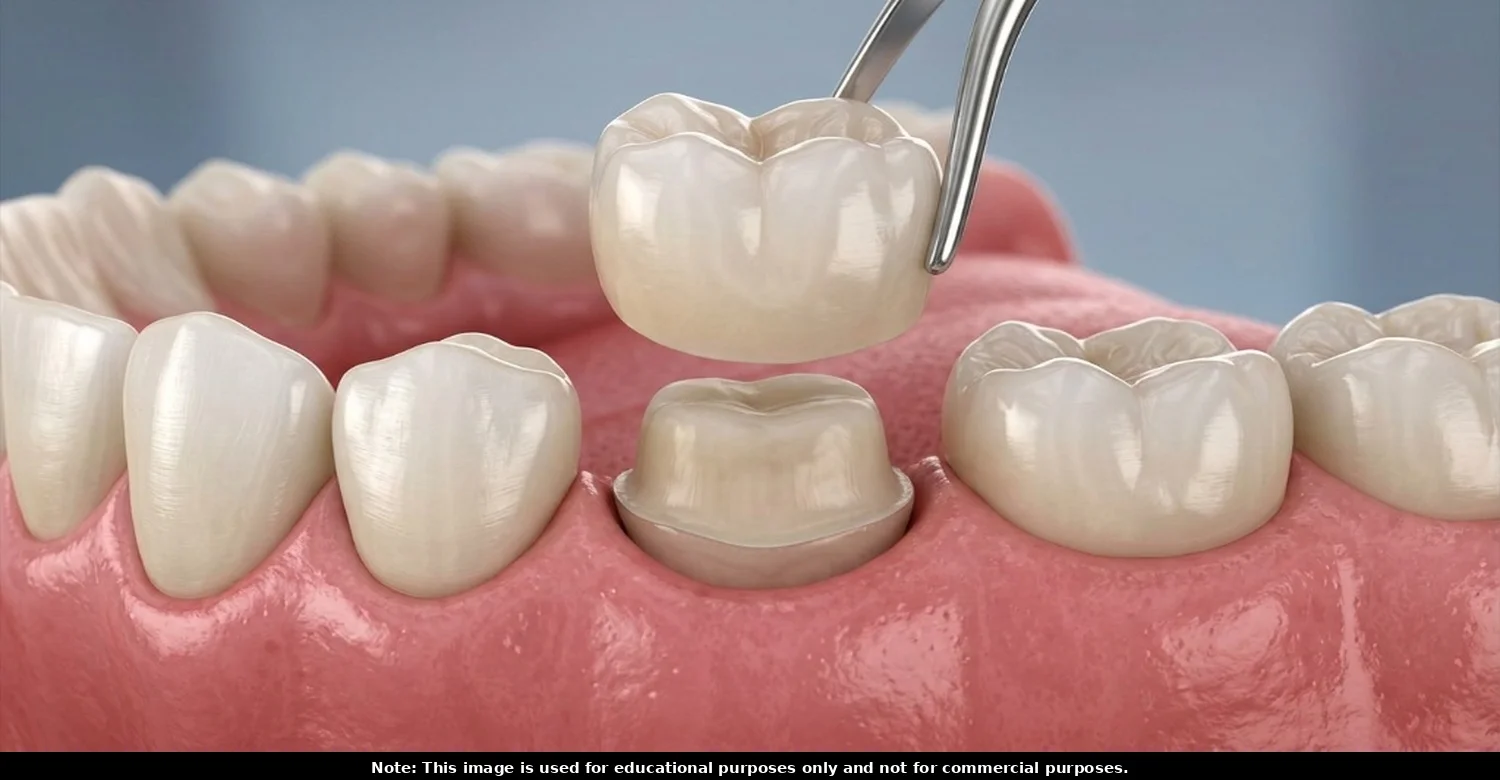
A crown is a cap that covers the whole visible part of a weakened tooth. It is used for large fillings, cracked teeth and many back teeth after root canal treatment. Zirconia is very strong and suits back teeth. Lithium disilicate ceramic, often known as E-max, gives a natural look for front teeth. Porcelain-fused-to-metal crowns combine a metal base with a porcelain surface. Many crowns last 10–15 years or longer with good care.
Dental Veneers
A veneer is a thin shell bonded to the front surface of a tooth. Veneers treat chips, worn edges, small gaps, stains and minor shape problems. Porcelain veneers are made in a laboratory. Composite veneers can be built directly in the mouth. Porcelain veneers often need some enamel removal, which cannot be reversed. They are not suitable for teeth with active decay or untreated gum disease. Porcelain veneers often last 10–15 years.
Dental Bridges
A bridge replaces one or more missing teeth by joining a false tooth to supporting teeth or implants. A traditional bridge places crowns on the teeth on each side of the gap. Those supporting teeth must be shaped, even if they are healthy. A resin-bonded bridge uses small wings glued behind neighbouring teeth. Bridges suit gaps where neighbouring teeth already need crowns. Careful cleaning under the false tooth helps prevent decay and gum problems.
Dental Implants and Implant Restorations
An implant is a titanium or zirconia post placed in the jawbone to replace a missing root. After the bone heals around it, an abutment connects the post to a crown. The crown is the visible implant restoration. Implants do not require shaping of neighbouring teeth. Healing usually takes several months before the final crown is fitted. Smoking, uncontrolled diabetes and gum disease can raise the risk of complications. Bone grafting may be needed if the bone is thin.
Dentures and Implant-Supported Dentures
A denture is a removable replacement for several or all missing teeth. Partial dentures fill gaps between natural teeth. Complete dentures replace a full arch. Implant-supported dentures clip onto implants for better stability when eating and speaking. This makes them a popular choice for people with loose lower dentures. Dentures need relining as the gums and bone change shape. Many people need a new set after several years.
Root Canal Treatment Plus Crown
Root canal treatment saves a tooth whose inner pulp is infected or badly inflamed. The dentist cleans, shapes and seals the canals inside the root. The tooth then needs a strong, well-sealed restoration to keep bacteria out. Back teeth are usually crowned because they become more likely to crack. Front teeth with little damage may only need a filling. A tooth with a poor seal can become infected again.
Basic vs. Major Restorative Dental Services
Basic and major restorative services are insurance categories, not clinical terms. US dental plans use them to decide how much they pay. Basic services usually include fillings and simple extractions. Major services usually include crowns, bridges, implants and dentures. Plans often pay a smaller share for major work. They may also have waiting periods and yearly limits. Each plan defines these categories differently. Check your policy to understand your share of any treatment bill. Some patients compare these out-of-pocket costs with treatment abroad.
What Is the Most Common Type of Dental Restoration?
Fillings are the most common type of dental restoration, and composite resin is the most widely used filling material. Fillings treat tooth decay, which the World Health Organization lists among the most common health conditions worldwide. Crowns are another very common option. They are often used when a tooth has a large filling or a crack. Your dentist can confirm the right option after an exam and X-rays.
What Is the Best Tooth Restoration?
The best restoration depends on how many healthy teeth are left. No single material or method suits every case. Use this simple guide as a starting point:
Small cavity → filling
Medium damage on a back tooth → inlay or onlay
Large damage or a crack → crown
Front-tooth chip or stain → veneer or composite bonding
One missing tooth → implant or bridge
Many missing teeth → denture or implant-supported denture
Your bite, gum health, budget and medical history also matter. Ask a Vitrin dentist to confirm your options after an exam.
The Dental Restoration Procedure at Vitrin, Step by Step
At Vitrin, we follow a clear sequence so you know what happens at each stage.
Online review: You send photos or X-rays for an initial opinion.
In-clinic exam: We check your teeth, gums and bite, with digital scans and X-rays.
Treatment plan: We explain your options and give a written estimate.
Preparation: We remove decay and shape the tooth. A temporary restoration may protect it.
Fabrication: The laboratory makes crowns, veneers or onlays from your digital scan.
Fitting: We check fit, colour and bite before final bonding.
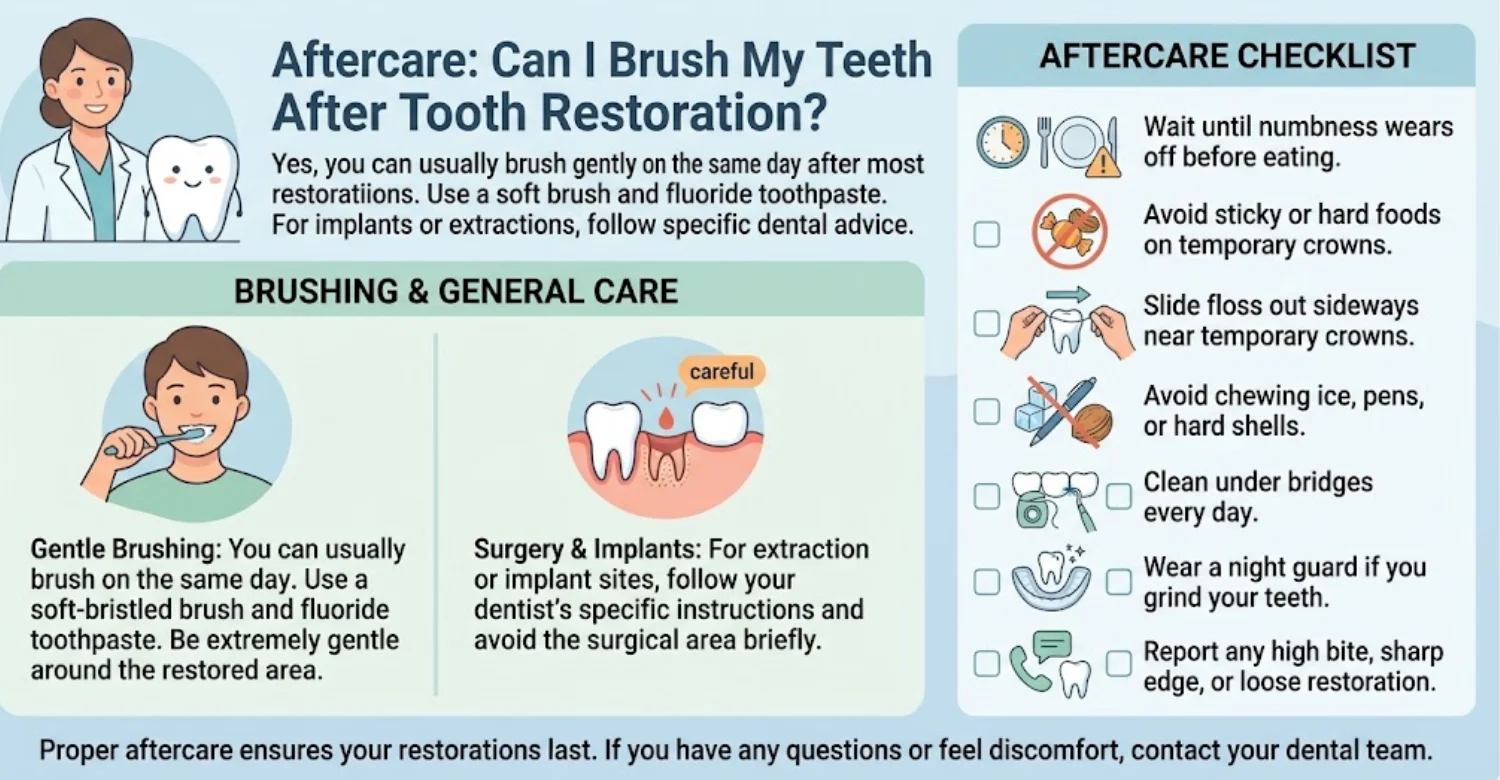
Aftercare: We give written instructions and arrange remote follow-up.
Each treatment plan may skip or add steps, depending on your needs.
Note : All images used are for editorial and illustrative purposes only and may not originate from the original news provider or associated company.
How Painful Is Tooth Restoration?
Most restorative treatment is not painful during the procedure, because the area is numbed with local anaesthetic. You may still feel pressure, vibration or noise. Sedation may be available for anxious patients after a medical assessment. Numbness usually wears off within a few hours. Mild sensitivity to hot, cold or biting is common for a few days. Implant surgery may cause swelling and soreness for several days. Pain that worsens or lasts beyond two weeks should be checked.
Pain Relief After Dental Restoration
Paracetamol may ease mild to moderate discomfort for a short time after treatment. It cannot remove decay, drain an abscess or fix a poorly fitting restoration. The safe dose depends on the product, age, weight for children, health conditions and other medicines. Always follow the label or advice from your dentist or pharmacist. Some combination products also contain paracetamol, so check labels to avoid a double dose. Speak to a doctor first if you have liver or kidney problems. Do the same if you drink alcohol heavily, are pregnant or are breastfeeding. If you may have taken too much, get urgent medical advice immediately. Do this even if you feel well.
When Symptoms Need Urgent Care
Some symptoms need urgent assessment rather than pain relief at home. Seek emergency medical help if you have difficulty breathing or swallowing. Do the same for swelling that spreads quickly towards the eye, neck or floor of the mouth. Fever with facial swelling also needs same-day care. Contact a dentist promptly for throbbing pain, pus, a bad taste or a loose restoration. Toothache that persists or worsens always needs a dental examination.
Ready to transform your smile?
Talk to our team and get a personal FREE treatment plan.
How Long Does Dental Restoration Last?
A dental restoration can last from several years to a few decades, depending on its type and care. The figures below are typical ranges from studies and clinical reviews. They are not guaranteed.
Restoration | Typical lifespan |
Composite filling | About 6–14 years |
Ceramic inlay or onlay | About 90% still working at 5 years |
Crown | About 10–15+ years |
Porcelain veneer | About 10–15 years |
Bridge | Often 10+ years |
Implant | Often 10+ years; the crown may need replacing sooner |
Your dentist can estimate how long teeth restoration should last in your own case.
What Affects the Lifespan of a Dental Restoration?
Hygiene, grinding, diet, material and the dentist's skill all affect how long a restoration lasts. Poor cleaning lets new decay form at the edges. Teeth grinding and clenching can crack fillings, crowns and veneers. A sugary or acidic diet raises decay risk. Material choice and restoration size also play a role. Research shows patient factors, such as decay risk and check-up frequency, strongly affect longevity. A precise fit at the margins also matters.
What Is the 2-2-2 Rule for Teeth?
The 2-2-2 rule means brushing twice a day, for two minutes, and seeing a dentist twice a year. It is a simple memory aid rather than a formal clinical guideline. Your dentist may suggest check-ups more or less often, depending on your risk. Regular brushing reduces decay at the edges of fillings and crowns. Regular visits allow small problems, such as a worn margin, to be fixed early.
How Much Does Dental Restoration Cost in Turkey?
Published 2026 guide fees for dental restoration in Turkey are lower than average US cash prices. However, final costs depend on your case. These figures are estimates, not quotes.
Treatment | US | UK | Turkey |
Exam and X-rays | About $203 with cleaning | $27.90 | 1,650 exam; 830 X-ray |
Composite filling | About $226 | $76.60 | 3,375 |
Root canal | About $1,100 | $76.60 | 4,610–10,350 |
Extraction | About $300 | $76.60 | 2,475–4,950 |
Abscess treatment | Varies | $27.90 urgent | Varies |
NHS charges cover a full course of treatment. Turkish guide fees are minimum reference fees, not clinic prices. Tooth position, complexity, infection severity, extra imaging and specialist care change the total.






Why Get Dental Restoration in Istanbul, Turkey?
Istanbul attracts international patients because of lower fees, frequent flights and many restorative dental clinics. Lower cost should never be the only reason to choose a clinic. Check the dentist's qualifications, the materials used and how problems are handled after you return home. A well-planned dental restoration in Istanbul allows time for healing and adjustments. Rushed treatment can raise the risk of complications.
How Many Days Do You Need in Istanbul?
Your stay depends on the treatment. Typical planning ranges are:
Fillings: one to two days.
Crowns or veneers: often five to ten days for scans, laboratory work and fitting.
Bridges: often about a week.
Implants: usually two trips. The first is for placement. The second, after about three to six months, is for the final crown.
Your dentist will confirm the timeline after the exam. Root canal treatment or bone grafting may add extra time.
Quality and Safety
Ask for clear evidence of quality before treatment. Check the dentist's degree and any specialist training. Ask whether they are registered with the Turkish Dental Association. Ask which implant and ceramic brands will be used, such as Straumann, Nobel Biocare or E-max. Request the product details for your records. Ask how instruments are sterilised between patients. Turkey's Ministry of Health authorises providers of international health tourism, so you can ask to see this authorisation.
Guarantee and Aftercare for International Patients
Ask for the warranty terms in writing before treatment starts. Check what the warranty covers, how long it lasts and what conditions apply. Many warranties require regular check-ups and good oral hygiene. Ask who pays for travel if a repair is needed. Ask whether a dentist at home can make minor adjustments. Keep copies of your X-rays, treatment notes and material details. This record helps any future dentist care for your restored teeth.
Will Regrowing Teeth Be Possible in 2026?
No, tooth regrowth is not an available treatment in 2026. In Japan, an experimental antibody drug began human testing at Kyoto University Hospital in 2024. Its developer says the first phase confirmed safety, but detailed results are not yet public. In August 2026, the developer said Japan's regulator had completed its review for a Phase IIa study. The drug is first being developed for people born without some teeth. The developer aims for commercial use around 2030 if trials succeed. For now, dental restoration remains the proven way to repair or replace teeth.
.jpg)
.jpg)
.jpg)
.jpg)
Real Results from Vitrin Patients
This section shows before-and-after photos shared with each patient's written consent. Cases are grouped by treatment type, such as fillings, crowns, veneers and implants. Every patient starts from a different condition, so similar results cannot be guaranteed. When reviewing any clinic's photos, check that lighting and angles match. Look for cases similar to your own. Video stories and independent Google or Trustpilot reviews add another useful view.
Why Choose Vitrin Dental Clinic in Istanbul
Vitrin Dental Clinic in Istanbul, Turkey, focuses on diagnosis first, clear estimates and planned follow-up. The two sections below explain how this works in practice.
Diagnosis Comes Before Treatment
At Vitrin, we identify the cause of the problem before recommending treatment. Toothache or damage can come from decay, a crack, gum disease, an infected nerve or a failing old filling. Each cause needs a different approach. We start with a clinical exam of your teeth, gums and bite. Digital X-rays are taken when appropriate. They can show decay between teeth, bone levels and root infections. 3D imaging may be used before implant planning. Treatment is then matched to the diagnosis. A cracked tooth may need a crown. An infected nerve may need root canal treatment first. A tooth that cannot be saved may need extraction and replacement. We cannot guarantee outcomes, but we explain the risks and alternatives clearly.
Estimates, Follow-Up and Practical Planning
After diagnosis, we provide a written treatment estimate that lists each stage and its cost. For implants, the estimate shows the implant, abutment and crown separately. This makes the cost of dental implant restoration easier to understand. Hidden problems, such as decay under an old crown, can change the plan. If this happens, we explain the change and its cost before continuing. International patients receive a suggested schedule with the number of visits and days needed. Before you fly home, we check your bite and give written aftercare instructions. Remote follow-up lets you send photos or questions after you return. Our coordinator can confirm which services, such as transfers or accommodation, your package includes.
Ready to transform your smile?
Talk to our team and get a personal FREE treatment plan.
Medical Disclaimer
This article is for general information only. It does not replace an examination by a qualified dentist or doctor. Suitability, risks and lifespans of any treatment vary between patients. Do not delay care because of information you read online. If you have severe pain, swelling, fever, or difficulty breathing or swallowing, seek urgent medical help.
Conclusion
Dental restoration repairs or replaces damaged and missing teeth to restore comfort, function and appearance. The right option depends on how many healthy teeth remain, your oral health and your goals. Damaged teeth usually get worse over time, so early care often means simpler and less costly treatment.
Reference
FAQs
Dr. Rifat Alsaman has more than 5 years of clinical experience in dentistry and currently serves as the Head of the Medical Team at Vitrin Clinic. He is dedicated to providing exceptional patient care, overseeing treatment planning, and ensuring the highest clinical standards across the team. His expertise, attention to detail, and commitment to continuous professional development have helped countless patients achieve healthier, more confident smiles.


