Dental Implant
December 22, 2025
Dental Crowns for Front Teeth: Options, Procedure and Care
 Dr. Rifat Alsaman

Dental Crowns for Front Teeth are full, tooth-colored caps that restore a damaged or discolored front tooth. Most cases start with an all-ceramic crown. E.max usually gives the most natural look. Zirconia suits cases where strength matters more. The right choice depends on the shade underneath, your bite and your smile line.
Key Takeaways
Dental Crowns for Front Teeth restore damaged, weakened, fractured, or deeply discolored teeth while improving their shape and appearance.
E.max crowns are often preferred for their natural translucency, while zirconia crowns may be more suitable for darker underlying teeth or cases requiring greater strength.
The best crown material depends on tooth color, bite alignment, gum thickness, smile line, and the amount of healthy tooth structure remaining.
The front tooth crown procedure usually requires two appointments, including tooth preparation, digital scanning or impressions, a temporary crown, and final placement. Same-day crowns may be possible in selected cases.
Front tooth crowns typically last 5–15 years, although their lifespan varies with material, oral hygiene, grinding habits, and accidental damage.
Ceramic crowns resist staining but do not whiten. If you plan to whiten your natural teeth, do so before the final crown shade is selected.
Crowns are not always the most conservative option. Veneers or dental bonding may be more appropriate when a tooth is healthy and only minor cosmetic changes are needed.
Proper aftercare protects your crown, including brushing twice daily, cleaning between teeth, attending regular dental checkups, and using a custom night guard if recommended for grinding.
Ready to transform your smile?
Talk to our team and get a personal FREE treatment plan.
What Is a Dental Crown for Front Teeth?
A dental crown for front teeth is a custom cap covering the whole visible tooth down to the gum. Crowns are one type of dental prosthetics, alongside bridges and implant restorations. Read our overview of dental restoration options. Front crowns differ from molar crowns in three ways. They are thinner, more translucent and shaped mainly for appearance. Front teeth take lower chewing forces than molars. That allows lifelike ceramics that let light pass through, like enamel. Shape, edge translucency and gum-line contour matter as much as strength. Dental Crowns for Front Teeth must also match the neighboring teeth closely. Every detail shows when you smile or speak.
When Does a Front Tooth Need a Crown?
A front tooth needs a crown when a filling or veneer can no longer restore it. Common reasons include:
A large fracture or chip after trauma
Decay too large for a filling
A big, failing filling that weakens the tooth
A root-canal-treated tooth that has darkened or become brittle
Severe wear from grinding or acid erosion
Deep discoloration that whitening cannot fix
A misshapen or undersized tooth
.jpg)
.jpg)
.jpg)
.jpg)
Types of Dental Crowns for Front Teeth
Five crown types are used on front teeth, and each balances looks and strength differently.
Crown type | Look and translucency | Strength | Masks a dark tooth? | Tooth removed | Gray-line risk | Best for |
E.max (lithium disilicate) | Very lifelike | Good | Partly | Moderate | None | Most single front teeth |
Layered zirconia | Very good | High core | Yes | Moderate | None | Dark teeth, metal posts |
High-translucency zirconia | Good, slightly opaque | High | Limited | Lower | None | Grinders, edge-to-edge bites |
Feldspathic porcelain | Excellent | Lower | No | Lowest | None | Low-force cosmetic cases |
Porcelain-fused-to-metal (PFM) | Good, more opaque | High | Yes | Higher | Possible | Some bridges, tighter budgets |
Porcelain and E.max Crowns for Front Teeth
A porcelain front tooth crown is the classic choice for a natural look. Today, most porcelain crowns for front teeth are glass-ceramics such as E.max. E.max is lithium disilicate, a strong glass-ceramic. Read our full guide to E-max crowns. It transmits light much like natural enamel. It can be bonded to the tooth, which adds support. Among ceramic crowns, E.max is often the default for a single tooth. It works best when the tooth underneath has a fairly normal color. A 2026 review reported 98.5% five-year survival for solid lithium disilicate single crowns. That analysis had no front-tooth studies for this design. Front-tooth results may therefore differ. Feldspathic porcelain looks even more lifelike but is weaker. It is now used mostly for veneers.
Zirconia Crowns for Front Teeth: Layered vs High-Translucency
Zirconia crowns are the strongest tooth-colored option for front teeth. Learn more about zirconia crowns. They come in two main forms.
Layered zirconia: a zirconia core covered with hand-layered porcelain. The core hides dark teeth and metal posts. The porcelain layer can chip.
High-translucency zirconia: one solid, milled piece. It resists chipping and suits heavy bites. It looks slightly more opaque than E.max.
Zirconia versus lithium disilicate comes down to priorities. E.max usually wins on lifelike translucency. Zirconia wins on strength and on masking dark teeth. The same review reported five-year survival of 97.3% for layered zirconia crowns. Solid zirconia crowns reached 96.8%. Both materials are metal-free, so neither causes a gray gum line. Zirconia crowns are also gentle on opposing teeth when well polished.
Porcelain-Fused-to-Metal on Front Teeth: Still an Option?
Porcelain-fused-to-metal (PFM) crowns are still an option, but rarely the first choice for front teeth. Read our guide to porcelain-fused-to-metal crowns. They have a metal base under porcelain. The metal blocks light, so the crown looks more opaque. If the gum recedes, a dark metal edge may show. PFM crowns are strong and have a long track record. The 2026 review reported 97.1% five-year survival for metal-ceramic crowns overall. PFM crowns may wear opposing teeth more than polished zirconia. Dentists may still use them for some bridges or tighter budgets. For front teeth, most dentists now prefer metal-free ceramics when suitable.
Why Metal and Gold Crowns Aren't Used on Front Teeth
Metal and gold crowns are not used on front teeth because their color shows. Gold is very durable and gentle on opposing teeth. Learn when gold dental crowns make sense. It also needs little tooth removal. These strengths matter most on back molars under heavy chewing forces. On a visible incisor, the metallic look is usually unacceptable. All-resin crowns are also unsuitable long term. They cost less but wear, stain and break more easily. Dentists mainly use resin for temporary crowns.
Which Dental Crown Is Best for Front Teeth?
The best dental crown for front teeth depends on your tooth, bite and gums. No single material suits every case. This table shows common starting points.
Your situation | Suggested material | Why |
Natural tooth color, normal bite | E.max | Most lifelike translucency |
Dark tooth after root canal or metal post | Layered zirconia or higher-opacity ceramic | Masks the dark base |
Grinding or edge-to-edge bite | Zirconia | Higher fracture resistance |
Thin gums or high smile line | All-ceramic, no metal | No gray margin |
What Does Your Dentist Check Before Choosing Dental Crowns for Front Teeth?
Before recommending a front tooth crown, your dentist evaluates five key factors to determine which material can provide the right balance of appearance, strength, and long-term function.
Tooth Shade and Discoloration: If the underlying tooth is severely stained or dark, a more opaque crown material may be needed to mask the discoloration while maintaining a natural appearance. 2. Bite Alignment and Grinding: Your dentist checks how your upper and lower teeth meet. Deep bites, edge-to-edge contact, and teeth grinding can increase stress on the crowns and affect the risk of chipping or fracture.
Gum Thickness: Thin gum tissue may allow the underlying tooth or crown margin to show through, particularly with certain materials. The dentist considers the gum condition and selects a design that supports a natural-looking result.
Smile Line: If your gums show when you smile, the crown margins and surrounding gum contours become especially important. Material selection and precise placement can help create a more seamless appearance.
Front-Tooth Challenges That Affect Your Crown
Front teeth raise cosmetic challenges that back teeth rarely do. Small differences in color, shape or gum height show in photos and conversation. The sections below explain the most common challenges. They also explain how dentists usually manage them. Knowing them helps you set realistic expectations for your treatment.
Matching a Single Front Tooth to Its Neighbor
Matching one crown to a natural neighbor is the hardest task in front-tooth dentistry. A natural incisor has several colors in one tooth. Its edge is often translucent, and its surface has fine texture. Dentists use shade guides and photos under controlled light. Learn how dental crown shades are selected. Many send these images to the lab with written notes. The lab may add internal color effects, called characterization. Some cases need a second try-in or a shade visit at the lab. Patience at this stage improves the final match. A single front crown often needs more shade work than a full set.
Covering a Dark Tooth Underneath
A dark tooth underneath needs a crown that blocks color without looking flat. Read our guide to choosing a crown for a stained tooth. Root canal treatment, old trauma or metal posts can darken a tooth. A very translucent ceramic lets that darkness show through. Dentists may choose a higher-opacity material or a zirconia core. Some first try internal bleaching of a root-treated tooth. A tooth-colored fiber post can replace a metal one in some cases. Your dentist will explain which approach fits your tooth.
Avoiding a Gray Line or Black Triangle at the Gum
A gray line at the gum usually comes from a metal base or a dark root. Metal-free crowns remove the metal source. Careful margin placement and healthy gums also help. A black triangle is a small dark gap between teeth near the gum. It forms when gum tissue does not fill the space between crowns. Crown shapes can sometimes close small gaps. Uneven gum heights may need crown lengthening surgery before the crown is made. See how gum contouring evens out the gum line. This minor gum procedure evens out the gum line.
Should You Crown One, Two or Six Front Teeth?
The number of crowns depends on what needs restoring and on symmetry. One crown restores a single damaged tooth, but matching is hardest. Two central incisors are often crowned together for symmetry. Six front teeth may be treated together for a full smile change. Crowning healthy teeth only for symmetry removes enamel permanently. Ask whether veneers or bonding could treat the neighboring teeth instead. Compare veneers vs crowns before you decide. Crowns should cover only teeth that genuinely need them.
Whiten First, Then Crown
Whitening should happen before your front crown is made. Learn more about professional teeth whitening. Ceramic crowns do not change color with whitening products. If you whiten later, natural teeth may become lighter than the crown. Dentists usually wait a short period after whitening before matching the shade. This lets the tooth color settle. Your crown is then matched to your new, stable shade. Planning whitening first keeps Dental Crowns for Front Teeth from looking darker later.
The Dental Crown Procedure for Front Teeth
The Dental Crown Procedure for Front Teeth typically involves two main appointments, although the timeline can vary depending on the tooth's condition, laboratory requirements, and the clinic's workflow. The goal is to protect the prepared tooth while restoring its shape, shade, and function.
1. Dental Examination, X-Rays and Shade Selection
Your dentist examines the front tooth, checks the surrounding gums, and evaluates the remaining tooth structure. X-rays may be taken to assess the root and identify problems that are not visible during the examination. The dentist also records the tooth shade and photographs your smile to help plan a natural-looking result.
2. Digital Smile Design and Optional Mock-Up
Digital Smile Design may be used to preview the proposed crown's shape, proportions, and relationship to the surrounding teeth. See how Digital Smile Design works. When appropriate, a temporary mock-up can help you and your dentist discuss the expected appearance before the final restoration is made.
3. Tooth Preparation
Local anesthesia is administered to keep you comfortable. The dentist removes any decay, if present, and carefully reshapes the tooth to create enough space for the crown. The amount of tooth reduction depends on the material selected and the condition of the existing tooth. Root canal treatment is only needed when clinically indicated, not automatically for every crown.
4. Digital Scanning or Dental Impressions
After preparation, the dentist records the tooth's shape, the surrounding teeth, and your bite using a digital intraoral scanner or a conventional impression. These records help the dental laboratory fabricate a crown that fits accurately and blends with your natural teeth.
5. Fitting the Temporary Crown
A tooth-coloured temporary crown is usually fitted to protect the prepared tooth while the permanent crown is being made. It also helps maintain appearance and function between appointments. Follow your dentist's instructions and avoid biting into very hard or sticky foods with the temporary crown.
6. Laboratory Fabrication and Shade Characterization
The dental laboratory creates the permanent crown using the selected material, such as zirconia or a suitable ceramic. The technician customizes its shade, translucency, and surface details to coordinate with the adjacent teeth. The time required depends on the material, design, and laboratory workflow.
7. Final Try-In, Placement and Bite Check
At the next appointment, the dentist checks the crown's fit, colour, shape, contact with neighboring teeth, and bite. Adjustments may be made before the crown is secured with the appropriate dental cement or bonding system. The dentist then checks your bite again and gives you instructions for cleaning and caring for the restoration.
After placement: Brush twice daily, clean between your teeth, and attend regular dental checkups. Contact your dentist if the crown feels loose, causes persistent discomfort, or interferes with your bite.
Step | Typical timing |
Exam, X-rays, shade, smile design | Visit 1 or a planning visit |
Preparation, scan, temporary | Visit 1 |
Lab fabrication | About 2–3 weeks |
Try-in and bonding | Visit 2 |
Temporary Crowns on Front Teeth: You're Never Without a Tooth
You leave the first visit with a temporary crown, so you are never without a front tooth. It protects the tooth while your Dental Crowns for Front Teeth are made. Temporaries are usually made of acrylic or resin. They are weaker than the final crown and may feel slightly different. Avoid biting hard foods with the temporary. Choose non-sticky foods, and slide floss out sideways rather than pulling up. Mild gum soreness or sensitivity is common. Call your dentist if the temporary loosens or breaks. Persistent temporary crown pain should also be checked. Read what causes temporary crown pain and when to act.
Does Getting a Front Tooth Crown Hurt?
Getting a front tooth crown should not hurt during treatment because local anesthesia numbs the area. You may feel pressure or vibration. Afterward, gums can feel tender for a few days. Some people notice mild sensitivity to cold. Over-the-counter pain relief, used exactly as the label directs, may help short term. Ask a pharmacist first if you have health conditions or take other medicines. Pain relief can ease symptoms, but it cannot fix a problem under the crown. Pain that lasts or worsens needs a dental review.
Can You Get a Front Tooth Crown in One Day?
Some front tooth crowns can be made in one day with in-office CAD/CAM milling. The dentist scans the tooth, designs the crown and mills it from a ceramic block. Same-day crowns suit straightforward cases with normal tooth color. Complex shade matching often benefits from a lab technician's hand layering. Not every clinic or case is suitable. Same-day Dental Crowns for Front Teeth save a visit, but appearance should come first.
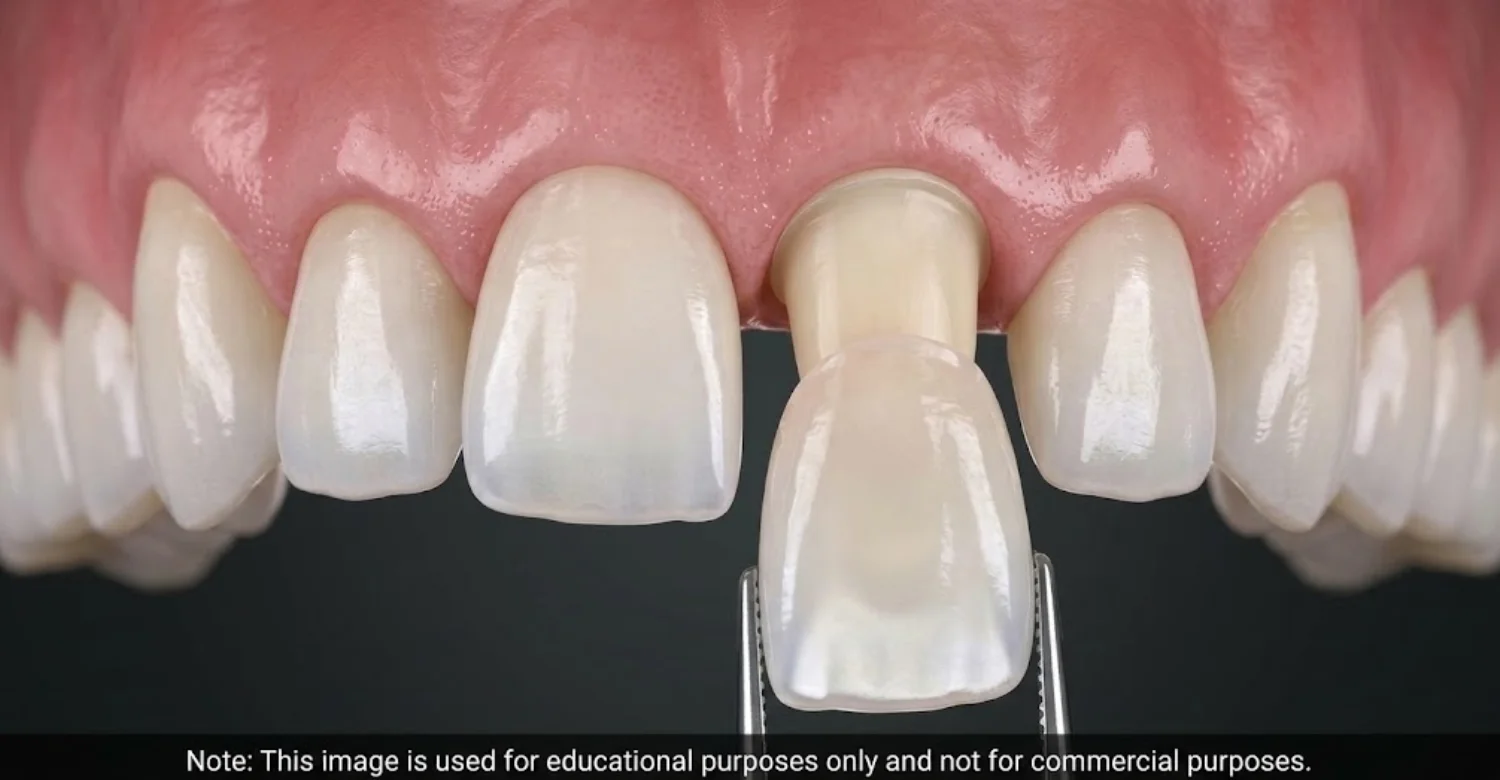
Pros and Cons of Front Tooth Crowns
Front tooth crowns offer strong protection and cosmetic change, but they also remove tooth structure. Weigh both sides with your dentist before deciding on Dental Crowns for Front Teeth.
Advantages
Well-planned Dental Crowns for Front Teeth can:
Protect a weak, cracked or root-treated tooth
Change color, shape and size in one restoration
Cover deep stains that whitening cannot fix
Resist everyday staining with glazed ceramic
Last many years with good care
Restore confidence when speaking and smiling
Disadvantages
Dental Crowns for Front Teeth also have real limits:
Remove more enamel than veneers or bonding
Tooth preparation cannot be reversed
Possible sensitivity for a few weeks
Porcelain can chip with trauma or grinding
A poorly fitting edge can trap bacteria and cause decay
Crowns eventually need replacement
Usually cost more than bonding
Rare allergic reactions to crown materials
Ready to transform your smile?
Talk to our team and get a personal FREE treatment plan.
Front Tooth Crowns vs Veneers vs Bonding
Crowns, veneers and bonding suit different levels of damage.
Feature | Crown | Veneer | Bonding |
Damage level | Moderate to severe | Mild, mainly cosmetic | Minor chips or small gaps |
Enamel removed | Most, from all sides | Small amount, front surface | Little or none |
Strength | Highest | Moderate | Lowest |
Lifespan | Long | Long | Shorter |
Stain resistance | High | High with porcelain | Lower |
Best for | Broken, root-treated or heavily filled teeth | Healthy teeth needing a cosmetic change | Small repairs on a budget |
When a Crown Isn't the Answer: Missing Front Teeth
A crown needs a natural tooth or an implant beneath it, so a missing tooth needs another plan. A dental bridge provides a fixed, non-removable solution. It uses neighboring teeth or implants for support. The Maryland bridge needs only minimal preparation of adjacent teeth. Learn more about Maryland bridges. Its thin wings bond to the back of the neighboring teeth. A single tooth implant replaces the root with a post placed in the jawbone. See what a single tooth implant involves. A crown is then attached on top. Dental Crowns for Front Teeth cannot replace a missing tooth on their own. Your dentist compares bone, gum and neighboring tooth health before advising.
Recovery and Care for a Front Tooth Crown
Recovery is usually quick, and most people return to normal activities the same day.
Period | What to expect | What to do |
First 48 hours | Numbness fades; mild gum tenderness | Eat soft foods; avoid biting with the tooth |
First week | Mild cold sensitivity may occur | Brush gently; report a high bite |
Long term | Feels like a natural tooth | Brush twice daily, floss daily, attend checkups |
Eating With a Front Tooth Crown
You can eat normally with a front tooth crown, but avoid biting hard foods with it. Cut apples, carrots and crusty bread into small pieces. Chew them with your back teeth. Do not bite ice, hard candy, popcorn kernels or bones. Sticky caramel and toffee can pull at crown edges. Coffee, tea and red wine may stain the gum line and neighboring teeth. Rinse with water after staining drinks. Dental Crowns for Front Teeth are not designed for biting hard objects.
Cleaning Around the Gum Line
The gum line is where most crown problems begin, so clean it carefully. Brush twice daily with a soft brush and fluoride toothpaste. Angle the bristles toward the gum. Floss once daily, or use interdental brushes your dentist recommends. Plaque at the margin can cause gum inflammation and decay under the crown. Healthy gums also keep the crown edge hidden. Clean margins help Dental Crowns for Front Teeth stay natural-looking. An antibacterial mouthwash may help, if your dentist suggests one.
Night Guards for Grinders
A custom night guard protects front crowns if you grind or clench your teeth. Read our guide to night guards for bruxism. Grinding puts heavy sideways force on front teeth. That force can chip porcelain or loosen a crown. A guard made from a scan fits better than a store-bought one. Wear it every night and bring it to checkups. Your dentist can check it for wear. Common grinding signs include jaw ache, flattened edges and morning headaches.
How Long Do Dental Crowns for Front Teeth Last?
Dental Crowns for Front Teeth typically last around 5–15 years, and many last longer with proper care. The same general lifespan applies to dental crowns overall.
A 2026 systematic review and meta-analysis found that the five-year survival rate of single crowns ranged from 90.4% to 98.5%, depending on the ceramic material and crown design. These results cover crowns on both front and back teeth, rather than front teeth exclusively. Crown survival also does not mean that no repairs or complications occurred.
What Can Shorten the Lifespan of Front Tooth Crowns?
Front teeth experience particular risks because they are visible, exposed to accidental impacts, and involved in biting into food. The following factors can damage a crown or affect its appearance over time:
Dental injuries: Falls, sports accidents, or direct impacts to the mouth can crack or dislodge a crown.
Biting hard objects: Chewing ice, biting pens, or using your teeth to open packaging can increase the risk of chipping or fracture.
Teeth grinding and clenching: Excessive pressure can damage the crown or place stress on the underlying tooth.
Gum recession: Receding gums can expose the crown margin, affecting appearance and potentially making the underlying tooth more vulnerable to decay.
Poor oral hygiene: Plaque buildup around the crown can contribute to gum disease and decay in the natural tooth beneath it.
Poor fit or bite alignment: An unsuitable crown fit or excessive biting pressure can contribute to discomfort and mechanical complications.
How Can You Make Front Tooth Crowns Last Longer?
Brush twice daily with fluoride toothpaste, clean between your teeth every day, and attend regular dental checkups. Avoid biting hard objects, and ask your dentist about a custom night guard if you grind your teeth.
The lifespan of Dental Crowns for Front Teeth depends on the material, the condition of the underlying tooth, and your daily habits. Regular checkups can help identify damage, gum changes, or decay early, before they become more serious problems.
How Much Do Dental Crowns for Front Teeth Cost?
Dental Crowns for Front Teeth cost varies widely by country, material and clinic.
United Kingdom
From $332.10
Price per crown
Private crown Zirconia or E.max $600–$1,000
NHS Band 3England $332.10
Turkey
From $253
Starting prices, Istanbul clinic.
Zirconia crownFrom $253
E.max crownFrom $298
United States
$1,560
National average per crown
General crown fees $1,015–$2,670
National average $1,560
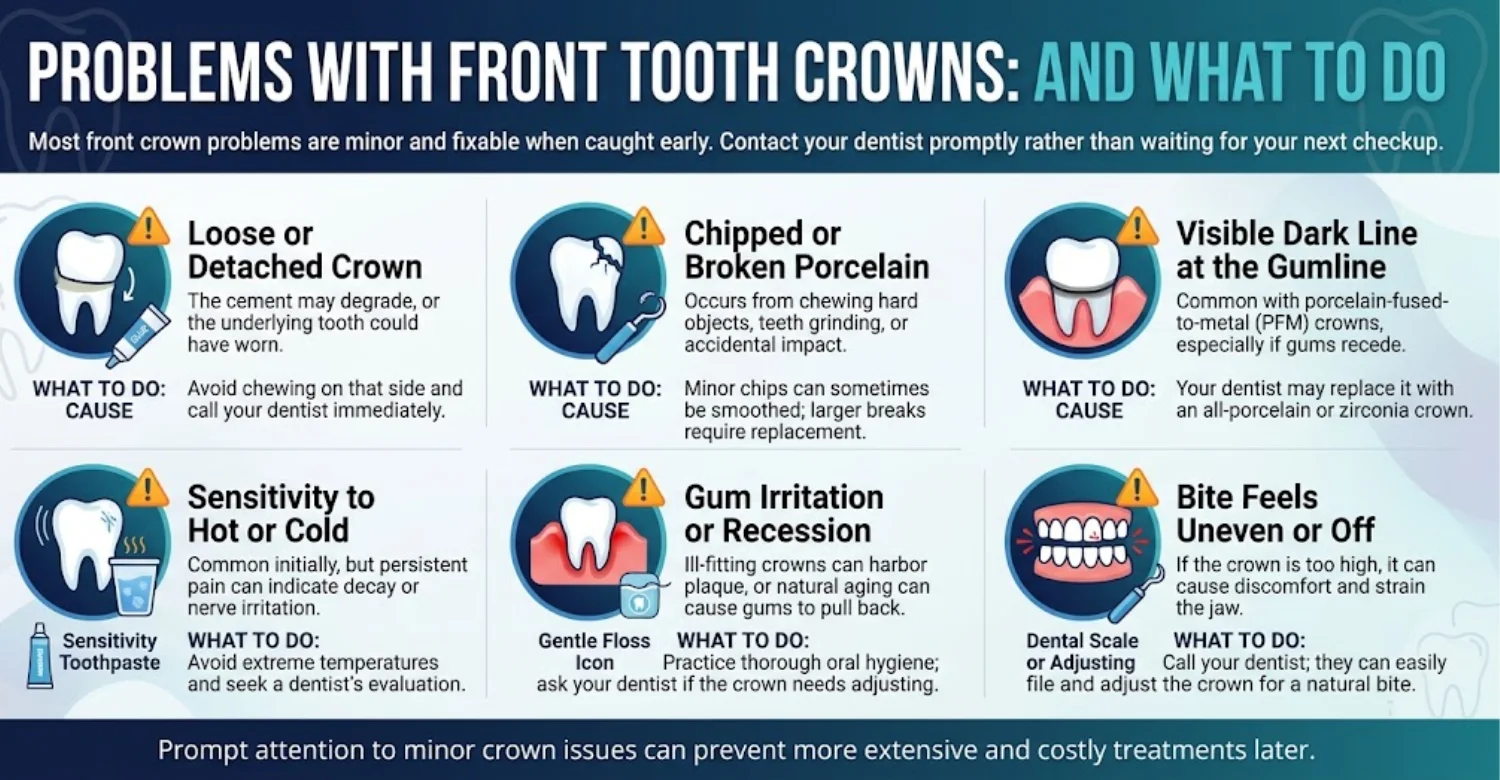
Do Front Tooth Crowns Fall Out?
Front tooth crowns can fall out, but it is uncommon with good fit and bonding. Causes include decay under the crown, a failed bond, trauma or too little tooth. Gum disease can also weaken support around the tooth over time. If yours comes off, keep the crown in a clean container. Call your dentist the same day if possible. See what to do if a dental crown falls off. Do not glue it back with household adhesives. These can damage both the tooth and the crown. Avoid chewing on that side until it is assessed.
Chipped Front Crown
A small chip in a front crown can often be polished or repaired with composite. Find out whether a dental crown can be repaired. Larger chips usually mean the crown needs replacing. Layered porcelain is more prone to chipping than solid zirconia. Chips are a common repair need with layered Dental Crowns for Front Teeth. Keep any broken piece and avoid biting with the tooth. Sharp edges can irritate your tongue or lip. Your dentist will check the bite and whether grinding caused the damage.
Sensitivity or Pain After a Crown
Mild sensitivity for a few weeks after a crown is common. It usually fades as the tooth settles. Pain when biting may mean the crown sits too high. A quick bite adjustment often solves it. Lingering pain, throbbing or swelling may point to nerve inflammation or infection. These need an X-ray and a dental assessment. Some deeply restored teeth later need root canal treatment. Common causes of dental crown tooth pain include a high bite, decay and gum irritation.
Crown Color No Longer Matches
A crown's color stays stable, but surrounding teeth can change. Natural teeth slowly darken with age, coffee and tea. If you whiten later, your teeth may become lighter than the crown. Gum recession can also reveal a darker root or margin. Professional cleaning may remove surface stain from neighboring teeth. If the mismatch bothers you, replacing the crown is usually the only fix.
When to Seek Urgent Care
Some symptoms need prompt or emergency care, not a routine appointment. Contact your dentist urgently for:
A loose crown or one that has come off
A bad taste, bad breath or pus near the crown
Throbbing pain or gum swelling
Seek emergency medical help immediately for:
Difficulty breathing or swallowing
Swelling spreading quickly across the face, eye or neck
Fever with facial swelling
A facial injury with a knocked-out or badly broken tooth
What You Should Know About Dental Crowns for Front Teeth: Common Questions
Do front tooth crowns stain?
Glazed ceramic crowns resist staining well. However, a crown will not lighten with whitening products. Natural teeth and gum margins around it can still stain. Rinse after coffee or tea and keep up regular cleanings.
What should I do if my front tooth crown falls off?
Keep the crown in a clean container and call your dentist promptly. Do not use household glue. Avoid chewing on that side if the tooth feels sensitive. Dental Crowns for Front Teeth that come off can often be re-bonded if both parts are intact.
Can people tell I have a crown on a front tooth?
Usually not, when the crown is well made. People mostly notice a color mismatch, an unnatural shape or a dark gum edge. Metal-free materials and careful margins reduce these signs. Modern Dental Crowns for Front Teeth are designed to blend in.
Can I eat normally with a front tooth crown?
Yes, for most foods. Cut hard foods into small pieces and chew with your back teeth. Avoid biting ice, hard candy and bones with the crown.
How Vitrin Clinic Plans Front Tooth Crowns
Vitrin Clinic plans each front crown around a confirmed diagnosis, not a preferred material. Two stages shape that plan: diagnosis, then a clear estimate and follow-up.
Diagnosis Before Treatment Selection
A crown should only be chosen once the cause of the problem is clear. A dark tooth may hide an old root infection. A chipped tooth may reflect a grinding habit. At Vitrin Clinic, assessment begins with a clinical examination of the tooth, gums and bite. Digital dental X-rays are taken when clinically appropriate. They can show the root, bone and hidden decay. Shade photographs record color under consistent light. Digital smile design may preview the planned shape before any preparation. The plan then follows the problem found. A healthy, stained tooth may suit a veneer or bonding instead.
Treatment Estimates, Follow-Up and International Patients
Vitrin Clinic shares a treatment estimate after the assessment, listing each planned step. It separates examination, imaging, crown work and any extra treatment. The estimate may change if new findings appear during treatment. International patients should ask how many days the full sequence needs before booking travel. Bringing existing X-rays and dental records can help planning. Allow time for a final bite check before flying home.






Conclusion
Dental Crowns for Front Teeth can restore a broken, dark or weak tooth with a natural look. E.max often suits teeth with good color. Zirconia suits dark teeth and heavy bites. Success depends on diagnosis, shade matching, gum health and daily care. To discuss your options, book your FREE treatment plan at Vitrin Clinic .
Ready to transform your smile?
Talk to our team and get a personal FREE treatment plan.
Medical Disclaimer
This article is general information, not a diagnosis or treatment plan. Crown choice depends on an examination, X-rays and your medical history. Follow your own dentist's advice for your situation. Before taking any medicine, read the label and ask a pharmacist about your health and other medicines. Seek emergency care for breathing or swallowing difficulty or rapidly spreading swelling.
References
FAQs
For most single front teeth, an E.max crown gives the most natural look. Layered zirconia often suits dark teeth or metal posts. Solid zirconia suits heavy grinders. The best choice among Dental Crowns for Front Teeth depends on your shade, bite and gums.
Dr. Rifat Alsaman has more than 5 years of clinical experience in dentistry and currently serves as the Head of the Medical Team at Vitrin Clinic. He is dedicated to providing exceptional patient care, overseeing treatment planning, and ensuring the highest clinical standards across the team. His expertise, attention to detail, and commitment to continuous professional development have helped countless patients achieve healthier, more confident smiles.


