Dental Implant
October 19, 2026
Implant Supported Dentures in Istanbul: Types, Benefits, Cost & Are They Worth It?
 Dr. Rifat Alsaman

Implant supported dentures are full or partial dentures that attach to dental implants placed in the jawbone. They don't rest only on the gums, so they stay firmly in place while you eat and speak. If your dentures slip, rub your gums, or need messy adhesive, this option can change daily life. The main types are snap-on, bar-retained, and fixed designs. Key benefits include stronger chewing, clearer speech, and slower jawbone loss. Cost depends on the number of implants, the design, and the material. For most suitable patients, they are worth the investment.
What Are Implant Supported Dentures?
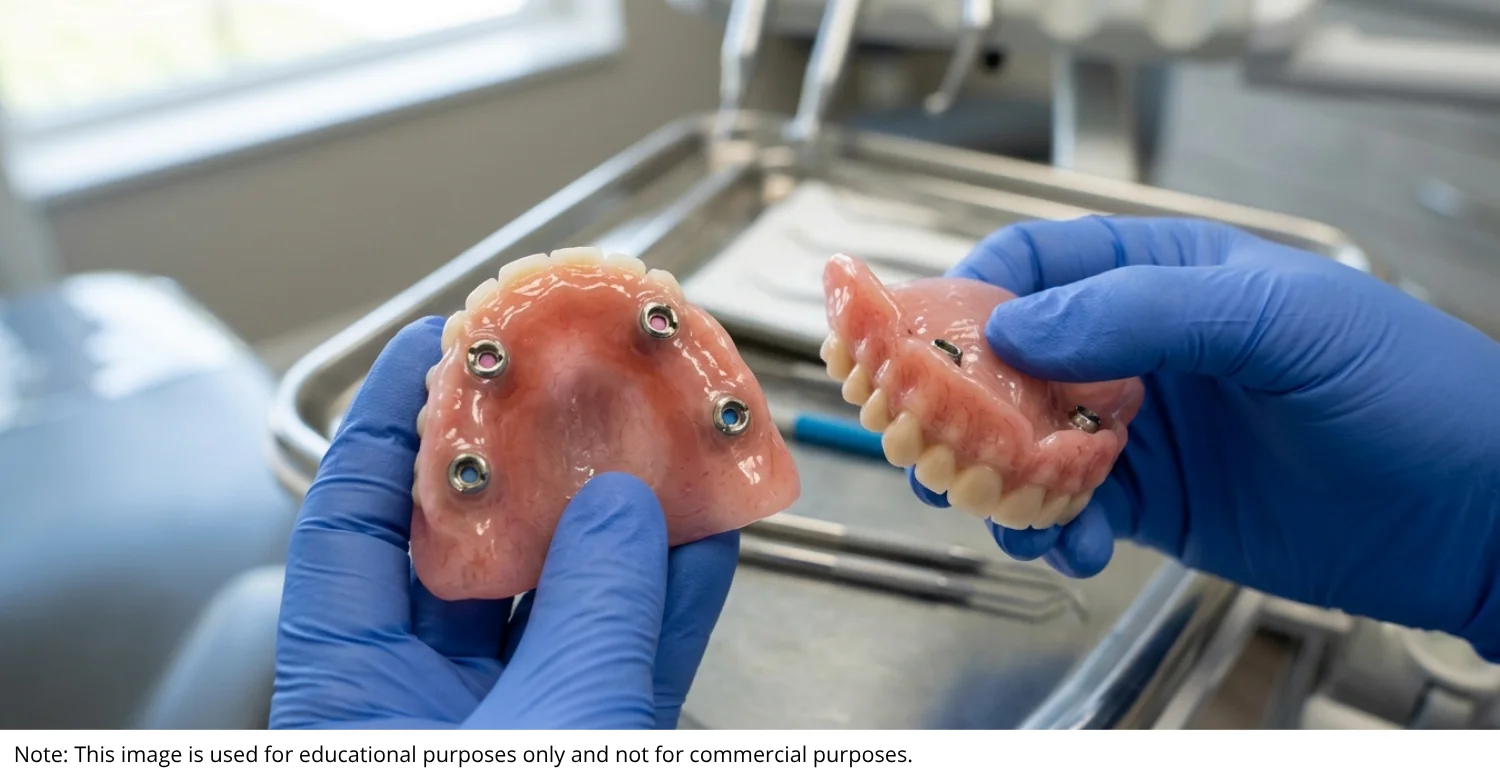
Implant supported dentures are dentures anchored to dental implants instead of resting on the gums alone. The implants are small posts, usually titanium, that fuse with the jawbone. The denture then clips or screws onto these anchors. The lower jaw usually needs two to four implants. The upper jaw often needs four to six, because upper bone is softer and less dense. Your dentist confirms the exact number after a 3D scan. These are also called overdentures or snap-in dentures.
.jpg)
.jpg)
.jpg)
.jpg)
.jpg)
.jpg)
.jpg)
.jpg)
Ready to transform your smile?
Talk to our team and get a FREE treatment plan.
Types of Implant Supported Dentures
There are four main designs. Each one balances stability, cleaning, and budget differently. Removable options snap onto implants or a bar, so you take them out daily. Fixed options are screwed in and stay in place. Partial versions replace several missing teeth while keeping healthy natural ones. The right type depends on your bone volume, bite, hygiene habits, and goals. The table below gives a quick comparison before we look at each option in more detail.
Type | Removable or fixed | Number of implants | Stability | Cleaning | Relative cost |
Snap-on overdenture | Removable | 2–4 lower, 4+ upper | Good | Remove daily to clean | $ |
Bar-retained overdenture | Removable | 2–4 lower, 4–6 upper | Very good | Remove daily; clean under the bar | $$ |
Fixed hybrid (All-on-4) | Fixed | 4–6 per arch | Excellent | Brush in place; water flosser | $$$ |
Implant supported partial denture | Removable or fixed | 2+ | Good to excellent | Depends on design | –$ |
Removable (snap-on) implant supported dentures
Removable implant supported dentures snap onto ball or locator attachments fixed to the implants. Small nylon inserts inside the denture grip these attachments. You remove the denture every day to clean it and the implants. This design usually needs the fewest implants, so it is often the most affordable. It is far more stable than a conventional denture. However, the inserts wear with use. They are typically replaced about once a year to keep the grip firm.
Bar-retained overdentures
A bar-retained overdenture uses a thin, custom metal bar that connects two or more implants. Clips inside the denture lock onto the bar. The bar spreads biting forces across all the implants, which adds stability. This design suits patients who want extra support but still prefer something removable. Cleaning takes more care, because plaque collects under the bar. A small interdental brush or water flosser helps. This option usually costs more than a snap-on design.
Fixed implant supported dentures (hybrid / All-on-4)
A fixed hybrid denture is screwed onto four to six implants and stays in your mouth. Only your dentist can remove it, usually during professional cleanings. The All-on-4 technique places the back implants at an angle. This can increase bone contact and sometimes avoid bone grafting. Fixed designs feel closest to natural teeth. They do not cover the palate, and they offer the strongest bite. They are also the most expensive design.
Implant supported partial dentures
An implant supported partial denture replaces several missing teeth when some healthy natural teeth remain. A few implants anchor the partial, so it relies less on metal clasps around your natural teeth. This reduces strain on the remaining teeth and improves stability. Some designs are removable, while others are fixed as implant bridges. Your dentist checks the health of your remaining teeth first. Teeth with weak support may need treatment, or removal, before planning begins.
Upper vs. lower implant supported dentures
Lower dentures often move the most, because the tongue and cheek muscles push them. Many patients notice a dramatic improvement with just two lower implants. The upper jaw has softer bone, so it usually needs more implants. With enough implants, an upper implant supported denture can leave the palate uncovered. This open design improves taste, temperature sensation, and comfort. It can also reduce gagging. Your 3D scan decides how many implants each jaw can support.
Implant Supported Dentures vs. Traditional Dentures
When comparing implant supported dentures vs traditional dentures, stability is the biggest difference. Implant dentures lock onto anchors, so they do not slip or need adhesive. They also put healthy load on the jawbone, which helps slow bone loss. Traditional dentures cost less upfront and need no surgery. However, they rest on the gums and loosen as the bone shrinks. That means more frequent relining and replacement. Over time, the price gap narrows.
Factor | Implant dentures | Traditional dentures |
Stability | Firmly anchored | Can slip and rock |
Chewing ability | Much stronger; handles firmer foods | Limited, especially the lower denture |
Comfort | Fewer sore spots; upper can leave palate open | Sore spots common; covers the palate |
Bone preservation | Helps slow bone loss around implants | Bone keeps shrinking |
Adhesive needed | No | Often |
Lifespan | Implants can last decades; denture part renewed over time | Usually replaced every 5–8 years |
Maintenance | Daily cleaning; insert and screw checks | Daily cleaning; relines every 1–2 years |
Upfront cost | Higher | Lower |
Long-term cost | Fewer relines and remakes | Ongoing relines, adhesive, replacements |
Implant Supported Dentures vs. Individual Implants vs. Bridges
A full arch of single implants gives each tooth its own implant and crown. It feels the most natural but needs plenty of bone, time, and budget. Implant bridges join crowns over fewer implants, often six to eight per arch. Implant dentures use even fewer implants and add pink material to replace lost gum and bone. After major bone loss, they are often the smarter, more affordable choice. Do they take up more space? Removable versions can feel slightly bulkier. Fixed hybrids feel slimmer.
Mini Implants vs. Standard Implants for Dentures
Mini implants are narrower than standard implants, usually under 3 millimeters wide. They need less bone, and placement is simpler and less invasive. This makes them useful for thin lower jaws, medically fragile patients, or tighter budgets. They are most often used to stabilize lower dentures. However, minis carry a higher risk of bending or fracture under heavy biting. They are less suited to the upper jaw or fixed teeth. When bone allows, standard implants remain the stronger long-term choice.
Note: All images used are for editorial and illustrative purposes only and may not originate from the original news provider or associated company.
Benefits of Implant Supported Dentures
The main implant supported denture benefits show up in everyday life. Patients can eat, talk, and smile with far less worry. Research consistently links implant overdentures with better chewing and higher satisfaction than conventional dentures. These are the outcomes most people notice:
Eat firmer foods like steak and apples again
No slipping when talking or laughing
No denture adhesive
Slower jawbone loss and less facial sagging
An open-palate option for the upper denture
Clearer, more confident speech
Long-lasting implants with proper care
Implant Supported Dentures Pros and Cons
No treatment is perfect, and honest expectations matter. Implant dentures solve the stability problem of conventional dentures. Yet they require surgery, healing time, and a bigger budget. Some patients also need bone grafting first. Smokers and people with poorly controlled diabetes face a higher risk of implant failure. Weighing both sides helps you decide with confidence. The table below summarizes the main advantages and drawbacks, so you can compare them at a glance.
Pros | Cons |
Firm, secure fit | Higher upfront cost |
Stronger chewing | Requires minor surgery |
No adhesive | Healing takes several months |
Helps slow bone loss | Bone grafting may be needed |
Better speech and confidence | Attachments need periodic maintenance |
Long-lasting implants | Not suitable for every health condition |
.jpg)
Ready to transform your smile?
Talk to our team and get a FREE treatment plan.
Acrylic vs. Zirconia Implant Supported Dentures
Acrylic and zirconia are the two most common materials for fixed implant teeth. Acrylic is lighter, gentler on the opposing teeth, and easy to repair. However, it wears faster and can stain. Zirconia is very strong, stain resistant, and highly natural looking. It costs more and is harder to repair if it chips. Among the most comfortable implant supported dentures options, some patients prefer acrylic's lighter feel. Others choose zirconia for durability and appearance.
Factor | Acrylic | Zirconia |
Strength | Moderate | Very high |
Appearance | Natural; can dull over time | Very lifelike |
Stain resistance | Lower | High |
Repairability | Relatively simple | Difficult; may need a remake |
Cost | Lower | Higher |
The Implant Supported Denture Procedure, Step by Step
At Vitrin Clinic, every step is planned around your bone and general health. Total treatment time often ranges from three to six months, and longer if grafting is needed. Most patients feel pressure rather than pain during surgery. Mild swelling and soreness usually ease within a few days.
Consultation and 3D scan to assess your bone
Extractions and bone grafting, if needed
Implant placement under local anesthesia, with sedation options
Temporary denture during healing
Osseointegration, usually three to six months
Final denture attached
Aftercare and regular check-ups
How Much Do Implant Supported Dentures Cost?
The cost of implant dentures varies widely, because every treatment plan is different. The main drivers are the number of implants, the design, the material, and any grafting. Treating one arch costs less than treating both. Removable snap-on designs usually sit at the lower end. Fixed zirconia bridges sit at the top. The only reliable figure is a personalized quote after your examination and 3D scan at Vitrin Clinic.
Dental Implant Cost: Vitrin Clinic vs. UK vs. USA
The cost of dental implant treatment varies significantly depending on the procedure scope, implant brand, and country of treatment. The following table provides a transparent comparison of average costs across the United Kingdom, United States, and Vitrin Clinic in Istanbul from a single implant to full-arch restoration allowing patients to evaluate their options with accurate financial context before committing to a treatment plan.
Basic
€0
Short description of this plan.
First benefit
Second benefit
Third benefit
Standard
€0
Short description of this plan.
First benefit
Second benefit
Third benefit
Premium
€0
Short description of this plan.
First benefit
Second benefit
Third benefit
Treatment type | 🇬🇧 UK | 🇺🇸 USA | 🇹🇷 Turkey |
|---|---|---|---|
Single dental implant Implant post + abutment + crown | $2,400 – $5,700 | $3,000 – $6,000 | $500 – $700 |
Implant-supported crown Crown on existing implant | $1,270 – $2,540 | $1,500 – $3,000 | $700 – $900 |
All-on-4 Per arch, fixed full-arch restoration | $10,000 – $22,000 | $18,000 – $30,000 | $3,500 – $7,500 |
All-on-6 Per arch, 6-implant full-arch restoration | $12,700 – $25,400 | $20,000 – $35,000 | $4,000 – $9,000 |
Full mouth reconstruction Both arches, upper + lower | $29,000 – $50,000+ | $36,000 – $70,000+ | $7,000 – $15,000 |
3D CT scan & consultation | Charged separately | Charged separately | Free & included |
Estimated saving | — | — | Up to 70% less |
* Prices are averages for reference only and may vary based on individual case requirements, implant brand, bone condition, and treatment complexity. A personalised quote is provided following your free consultation.
What do Dental Implant packages include?
Our Turkish clinic offers packages that cover the main parts of implant treatment, so you can plan your visit with fewer extra arrangements. Package options include:
Dental consultation
Full dental check-up before implant placement
3D Tomography (CT Scan) & Panoramic X-rays
Local Anaesthesia
Temporary prosthesis during the healing stage
Hotel accommodation for your stay
Airport and clinic transfers
ALL-ON-4 IMPLANTS
FROM: ≈$2,500
4 DENTAL IMPLANTS + FULL ARCH BRIDGE
HOTEL STAY
VIP TRANSFERS (AIRPORT/HOTEL/CLINIC)
3D CT SCAN & PANORAMIC X-RAY
ALL-ON-6 IMPLANTS
FROM: ≈$3,200
6 DENTAL IMPLANTS + FULL ARCH BRIDGE
HOTEL STAY
VIP TRANSFERS (AIRPORT/HOTEL/CLINIC)
3D CT SCAN & PANORAMIC X-RAY
ALL-ON-8 IMPLANTS
FROM: ≈$4,000
8 DENTAL IMPLANTS + FULL ARCH BRIDGE
HOTEL STAY
VIP TRANSFERS (AIRPORT/HOTEL/CLINIC)
3D CT SCAN & PANORAMIC X-RAY
Ready to transform your smile?
Talk to our team and get a FREE treatment plan.
What affects the cost
Several factors shape your final price. The number of implants matters most, since each implant adds surgical and component costs. Fixed designs cost more than removable ones because they need precise frameworks. Zirconia costs more than acrylic. Extractions, bone grafting, or sinus lifts add extra steps. Treating both arches roughly doubles the work. Sedation, temporary teeth, and the attachment system also affect the total. A good quote lists each item clearly.
Implant supported dentures vs. traditional dentures: cost comparison
Based on upfront price alone, implant supported dentures vs dentures looks like an easy win for conventional dentures. Lifetime cost tells a different story. Traditional dentures need relines as the gums shrink and full replacement every several years. Many wearers also buy adhesive for years. Implants can last decades with good care. You will still need insert changes, occasional relines, and eventual denture renewal. Yet many patients find the long-term value worth the difference.
Cost type | Implant dentures | Traditional dentures |
Upfront | Higher | Lower |
Relines | Less frequent | Every 1–2 years |
Adhesive | None | Ongoing |
Replacement | Denture part renewed; implants usually remain | Full denture every 5–8 years |
Financing, insurance & payment plans
Many patients prefer to spread treatment costs over time. Ask the Vitrin Clinic team which payment options are available for your plan. Some patients use third-party medical financing. Insurance coverage varies a lot between providers and countries. Many dental plans cover part of a denture but limit or exclude implants. Check your policy before treatment and request a written estimate. Ask our team for itemized treatment documents to support any insurance claim.
Are Implant Supported Dentures Worth It?
For most suitable patients, yes. They solve the biggest frustrations of conventional dentures: slipping, sore spots, and limited eating. Current denture wearers with ongoing bone loss benefit the most. People with failing teeth who want a stable full-arch solution also gain a lot. Anyone who wants to eat normally again will notice the difference quickly. Are they much better than normal dentures? For stability, chewing, and confidence, research and patient experience clearly say yes.
Are You a Candidate for Implant Supported Dentures?
Most adults missing many or all of their teeth can be assessed. A good candidate generally has:
Enough jawbone, or is open to bone grafting
Healthy gums, or treated gum disease
Well-controlled conditions such as diabetes
No recent head and neck radiation, or specialist-guided planning
A commitment to daily cleaning and check-ups
Tell your dentist about medications such as bisphosphonates. Smoking slows healing and raises failure risk. Low bone is not always a barrier, since grafting or angled implants can help.
Caring for Your Implant Supported Dentures
Daily care protects both the denture and the implants. Remove snap-on or bar dentures every day. Brush them with a soft brush and a non-abrasive cleaner. Then gently clean the attachments and your gums. Fixed dentures stay in, so brush twice daily and use a water flosser underneath. Visit your dentist every six months for checks and professional cleaning. With good care, implants can last decades. The denture teeth may need replacing over time.
Why Choose Vitrin Clinic for Implant Supported Dentures in Istanbul
Vitrin Clinic in Istanbul, Türkiye, provides personalized dental implant treatment under the supervision of Dr. Rifat Alsaman, Head of the Medical Team and cosmetic dentist. Each plan begins with a detailed examination and 3D imaging when clinically indicated. Sedation options may help anxious patients feel relaxed. The team explains procedures, costs, and alternatives clearly, while international patients receive coordinated support from consultation to final fitting. Book your consultation today.





Ready to transform your smile?
Talk to our team and get a FREE treatment plan.
References:
FAQs
Dr. Rifat Alsaman has more than 5 years of clinical experience in dentistry and currently serves as the Head of the Medical Team at Vitrin Clinic. He is dedicated to providing exceptional patient care, overseeing treatment planning, and ensuring the highest clinical standards across the team. His expertise, attention to detail, and commitment to continuous professional development have helped countless patients achieve healthier, more confident smiles.


