Dental Care Guide
September 21, 2026
What Is Carbamide Peroxide Dental Solution for Teeth Whitening?
 Dr. Rifat Alsaman
A carbamide peroxide dental solution is a whitening agent. It breaks down into hydrogen peroxide and urea once applied to the tooth surface. The active peroxide penetrates enamel and breaks apart staining molecules, gradually lightening tooth color. It comes in multiple concentrations and is widely used in both professional and at-home whitening treatments.
What Is Carbamide Peroxide Dental Solution?
A carbamide peroxide dental solution combines carbamide (urea) with hydrogen peroxide in a stable compound. It is designed for controlled release. This slow breakdown keeps the whitening agent active on the tooth surface for extended periods. That makes it suitable for both in-office treatments and take-home whitening trays.
What Is Carbamide Peroxide?
Carbamide peroxide is a chemical compound. It releases hydrogen peroxide when it contacts saliva or moisture. It's commonly used in dental whitening products because of its stability and gradual breakdown. This allows the whitening agent to stay effective on the tooth surface over a longer period than pure peroxide alone.
How Does Carbamide Peroxide Work on Teeth?
This compound works by breaking down into hydrogen peroxide. The peroxide penetrates the enamel and reacts with staining molecules trapped within the tooth structure. This oxidation process breaks apart pigmented compounds. It gradually lightens the visible color of the tooth without removing any enamel surface.
Why Is Carbamide Peroxide Used in Dental Whitening?
This ingredient is favored in dental whitening because of its gradual, sustained release. It works more slowly than fast-acting hydrogen peroxide. This makes a carbamide peroxide dental solution well-suited for longer wear times, such as overnight or extended daytime use with custom whitening trays under professional guidance.
Carbamide Peroxide and the Whitening Process
The whitening process begins as this compound breaks down into hydrogen peroxide and urea. The hydrogen peroxide component penetrates enamel and dentin, targeting discoloration molecules through oxidation. The urea byproduct is generally considered inactive in the whitening reaction itself, but it may support the release mechanism.
Clinical Note
Whitening results from this treatment depend on concentration, application time, existing tooth condition, and the type of discoloration present. Surface stains often respond faster than deeper, intrinsic discoloration. This is why results can vary noticeably between patients using the same product.
Learn more about nail biting and teeth
How Does Carbamide Peroxide Whiten Teeth?
This ingredient whitens teeth through a chemical breakdown process. It releases active hydrogen peroxide directly onto the tooth surface. This gradual release lets the solution work over extended contact time, making it effective for both professional and at-home whitening approaches.
How Carbamide Peroxide Breaks Down on the Teeth
Once applied, it slowly decomposes into hydrogen peroxide and urea when exposed to saliva and oral moisture. This breakdown isn't instantaneous. It occurs gradually over hours, which is why carbamide-based products are often designed for longer wear times than pure hydrogen peroxide formulas.
How Long Does Carbamide Peroxide Take to Whiten Teeth?
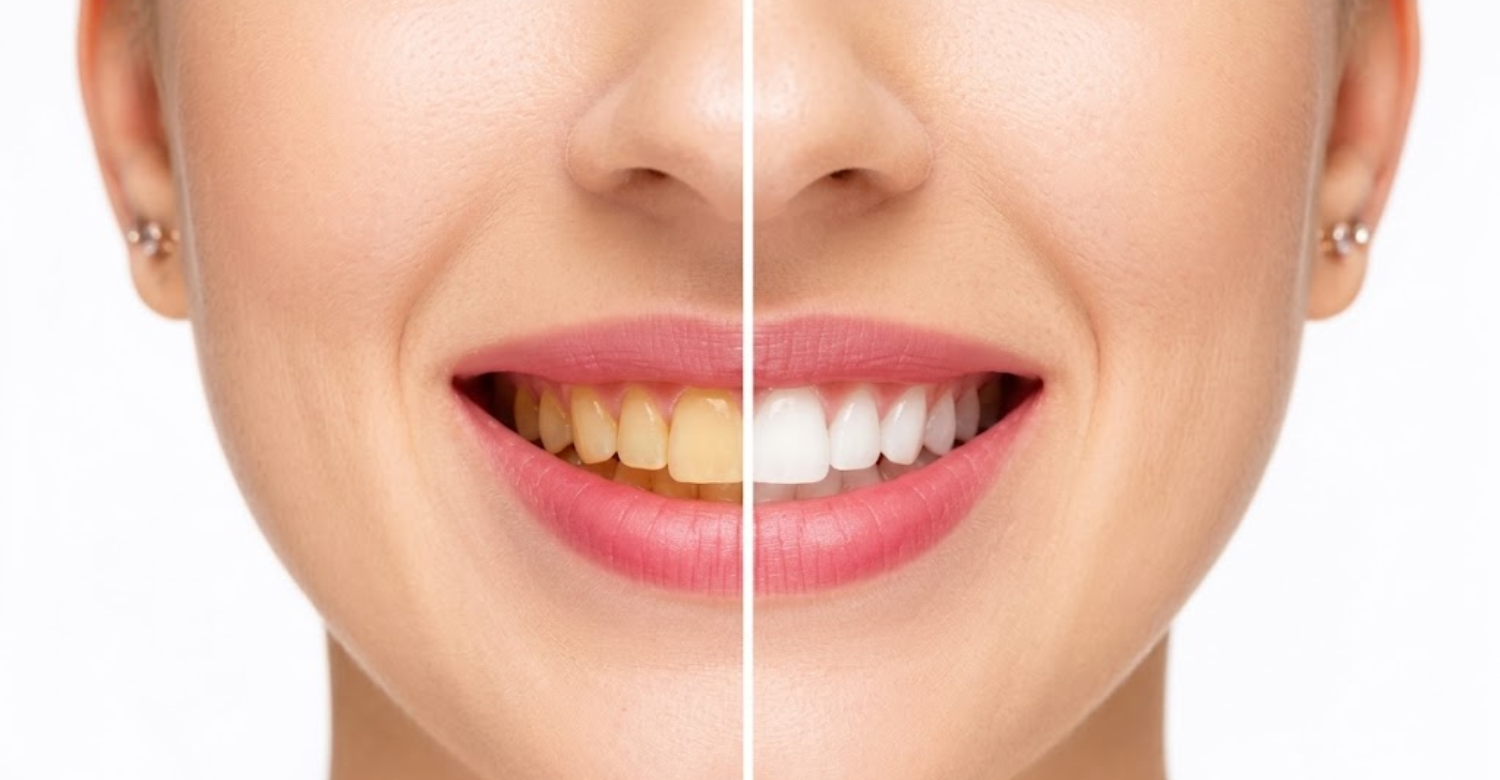
Whitening timelines vary depending on concentration and the severity of staining. Noticeable changes often begin within one to two weeks of consistent use. A carbamide peroxide dental solution used as directed typically shows gradual, cumulative results rather than an immediate, one-time change.
What Types of Tooth Stains Can Carbamide Peroxide Treat?
This treatment is generally effective against stains from food, drinks, and surface pigmentation, as well as some age-related yellowing. Deeper, structural discoloration may respond more slowly or incompletely. That's because the compound targets staining molecules within enamel and dentin rather than altering the tooth's underlying structure.
Extrinsic vs. Intrinsic Tooth Discoloration
Extrinsic discoloration sits on the tooth's outer surface, often from food, drinks, or tobacco. It typically responds well to whitening. Intrinsic discoloration occurs within the tooth structure itself, from factors like trauma or medication. It may respond more slowly or incompletely to this kind of treatment.
Tips for the Patients
Follow the recommended concentration and wearing time.
Avoid excessive or prolonged use.
Follow professional instructions when using whitening trays.
Note: All images used are for editorial and illustrative purposes only and may not originate from the original news provider or associated company.
What Is the Difference Between Carbamide Peroxide and Hydrogen Peroxide?
The difference between the two lies mainly in release speed and stability. A carbamide peroxide dental solution breaks down gradually, releasing hydrogen peroxide over time. Pure hydrogen peroxide acts faster, but for a shorter overall duration on the tooth surface.
Carbamide Peroxide vs Hydrogen Peroxide
This comparison comes down to chemistry and timing. Carbamide peroxide is a compound that slowly releases hydrogen peroxide, while hydrogen peroxide itself acts immediately and more intensely. Both ultimately whiten through the same active ingredient, but their application methods differ considerably.
How Carbamide Peroxide Converts to Hydrogen Peroxide
This conversion happens through a chemical reaction triggered by contact with saliva and oral moisture. Roughly one-third of the solution's concentration becomes active hydrogen peroxide. That's why carbamide products are often formulated at higher percentages than pure peroxide equivalents.
Which One Is Used for Dental Whitening?
Both are used for dental whitening, but a carbamide peroxide dental solution is more common for extended-wear applications like take-home trays. Hydrogen peroxide is typically reserved for shorter, higher-intensity in-office treatments, where faster results are prioritized under professional supervision.
Carbamide Peroxide vs Hydrogen Peroxide Concentrations
Concentrations of this compound are generally higher in number than their hydrogen peroxide equivalents, since only a portion converts into active peroxide. For example, a 10% carbamide peroxide solution roughly corresponds to about 3% hydrogen peroxide.
Whitening Speed and Application Time
Hydrogen peroxide typically works faster due to immediate release, making it suited for shorter professional sessions. This compound releases more slowly. That's why it's often applied for longer periods, such as overnight wear, allowing it to work gradually over extended contact time.
Clinical Note
These two compounds are chemically related but differ in concentration, release speed, and typical application time. This distinction affects how each is used in practice: a carbamide peroxide dental solution suits longer wear, while hydrogen peroxide suits shorter, more concentrated sessions.
Discover important information about aortic dissection and dental treatment
Is Carbamide Peroxide Safe for Teeth and Gums?
When used correctly, this treatment is generally considered safe for teeth and gums. Most side effects are mild and temporary, such as sensitivity or gum irritation. These typically resolve once treatment concentration or duration is adjusted or discontinued.
Can Carbamide Peroxide Damage Tooth Enamel?
This ingredient is not generally associated with permanent enamel damage when used as directed. It works through a chemical whitening process rather than physically eroding tooth structure. Excessive or improper use outside recommended guidelines could still contribute to temporary sensitivity or irritation.
Can Carbamide Peroxide Cause Tooth Sensitivity?
Yes, it can cause temporary tooth sensitivity, particularly at higher concentrations or with prolonged application. This sensitivity typically results from the peroxide's penetration into dentin and usually subsides after treatment ends. Patients with pre-existing sensitivity should discuss options before starting whitening.
Can Carbamide Peroxide Irritate the Gums?
This compound can irritate the gums if the solution contacts soft tissue directly, especially at higher concentrations. This irritation is usually mild and temporary, resolving once exposure stops. That's why proper tray fit and careful application matter in any whitening protocol.
How to Reduce Sensitivity During Teeth Whitening
Reducing sensitivity involves using an appropriate concentration and limiting wear time as directed. Taking breaks between applications can help if discomfort occurs. Desensitizing toothpaste before or after treatment also helps, and patients should discuss persistent sensitivity with their dental provider.
When Should You Stop Using a Whitening Solution?
Patients should stop using a whitening solution if they experience persistent pain, significant gum irritation, or sensitivity that doesn't improve between applications. Continuing despite these symptoms may worsen discomfort. Pausing and consulting a dental professional is the appropriate next step.
Clinical Note
Temporary sensitivity and soft-tissue irritation are potential effects of using this treatment, particularly at higher concentrations or with extended contact time. Proper concentration selection and correct application significantly reduce the likelihood of these side effects.
How Should Carbamide Peroxide Dental Solution Be Used?
Using this treatment correctly involves following recommended amounts, application times, and tray-fitting instructions. Proper use maximizes whitening effectiveness while minimizing the risk of sensitivity or gum irritation. Adherence to professional or product guidance is essential throughout treatment.
Using Carbamide Peroxide With Whitening Trays
Whitening trays hold the gel against the tooth surface, allowing consistent, controlled contact during the recommended wear period. Properly fitted trays help minimize gel contact with the gums. This reduces irritation risk while ensuring even distribution of the solution across all treated teeth.
How Much Carbamide Peroxide Should Be Used?
The amount used should follow product or professional instructions precisely, typically a thin, even layer within the tray. Using more than recommended doesn't speed up results. Instead, it increases the risk of gum contact, irritation, and unnecessary tooth sensitivity.
How Long Should Carbamide Peroxide Stay on the Teeth?
Wear time varies by concentration, ranging from shorter daytime applications for stronger solutions to longer overnight wear for milder ones. Following the specific recommended duration for a given carbamide peroxide dental solution ensures effective whitening while minimizing unnecessary exposure.
Professional Whitening vs At-Home Whitening
Professional whitening typically uses higher concentrations for shorter, supervised sessions with faster visible results. At-home whitening relies on lower concentrations worn longer over several days or weeks. Both approaches can be effective, and the right choice depends on timeline, sensitivity, and desired outcome.
Why Following the Recommended Application Time Matters
Exceeding the recommended time doesn't improve whitening proportionally. Instead, it raises the risk of sensitivity and gum irritation. Manufacturers and dental professionals calibrate these times based on concentration to balance effective results with tissue safety.
Tips for the Patients
Use the product according to professional or product instructions.
Avoid swallowing the solution.
Learn more about medical diagnostic technologyKeep whitening gel away from the gums whenever possible.
Do not increase the amount or frequency to speed up results.
What Factors Affect Carbamide Peroxide Teeth Whitening Results?
Several factors influence how well this treatment performs, including tooth color, staining type, concentration used, and overall enamel condition. Because these variables differ between patients, whitening outcomes can vary even when the same product and protocol are followed.
Tooth Color and Type of Staining
Naturally yellow teeth often respond better to whitening than grayish or brown-toned discoloration. Surface stains from food and drink typically lighten faster than deeper, structural discoloration. Starting tooth color and stain type both play a significant role in overall treatment results.
Carbamide Peroxide Concentration
The concentration used directly affects both whitening speed and potential side effects. Higher percentages release more active peroxide over a shorter period, while lower percentages work more gradually. Concentration selection is an important factor in tailoring treatment to individual needs.
Application Time and Frequency
Longer or more frequent application generally produces more noticeable whitening, up to a recommended limit. Exceeding suggested time or frequency doesn't necessarily improve results further. It instead raises the likelihood of sensitivity, so consistency within guidelines matters more than exceeding them.
Enamel Condition and Oral Health
Enamel thickness and overall oral health influence how a tooth responds to whitening. Thinner enamel may allow faster penetration but also increase sensitivity. Untreated cavities or gum disease should be addressed first, before starting this kind of treatment, to avoid complications.
Why Some Teeth Whiten More Easily Than Others
Teeth whiten differently due to variations in enamel thickness, dentin color, and the type of staining present. Genetic factors also influence baseline tooth color. Two patients using the identical product and protocol may see noticeably different degrees of whitening success.
Explore cosmetic dentistry in Turkey
Can Carbamide Peroxide Whiten All Types of Teeth?
This treatment doesn't whiten all types of teeth equally. Natural teeth generally respond well, while restorations like crowns or fillings do not change color with a carbamide peroxide dental solution. This is an important consideration for patients with existing dental work in visible areas.
Can It Whiten Yellow Teeth?
Yes, it is generally effective at whitening yellow teeth, as this type of discoloration often responds well to peroxide-based treatments. Results vary by individual, but yellow-toned staining typically shows more noticeable improvement compared to gray or brown-toned intrinsic discoloration.
Can It Remove Coffee and Tea Stains?
This ingredient is commonly effective against coffee and tea stains, since these are typically surface-level, extrinsic discoloration. Consistent use as directed can gradually break down these pigmented compounds, though deeply set or long-term staining may require extended treatment for full results.
Can It Whiten Naturally Dark Teeth?
Naturally dark or gray-toned teeth may respond more slowly to this treatment compared to yellow-toned discoloration. Results can still occur, but patients with naturally darker teeth may need longer treatment or professional guidance to achieve their desired outcome.
Can Carbamide Peroxide Whiten Dental Restorations?
This compound does not whiten dental restorations like crowns, veneers, or fillings the way it does natural teeth. These materials don't respond to peroxide-based bleaching. Existing restorations may appear mismatched in color after surrounding natural teeth have been successfully whitened.
Crowns, Veneers, Fillings, and Other Dental Restorations
Crowns, veneers, and fillings are made from materials that don't react to peroxide bleaching agents the way natural enamel does. Patients with visible restorations should discuss whitening plans carefully. A color mismatch may occur between treated natural teeth and unchanged restorations.
Clinical Note
Natural teeth may respond well to a carbamide peroxide dental solution, while existing restorations generally do not change color in the same way. This distinction matters for patients planning whitening treatment alongside visible crowns, veneers, or fillings in their smile.
How Does Vitrin Clinic Use Carbamide Peroxide for Dental Whitening?
Vitrin Clinic uses this treatment as part of a personalized whitening approach. The clinic tailors concentration and application method to each patient's tooth condition, sensitivity level, and whitening goals, rather than applying a single standard protocol to every case.
Personalized Teeth Whitening at Vitrin Clinic
Personalized teeth whitening at Vitrin Clinic begins with assessing the patient's tooth color, staining type, and oral health. The team then recommends a specific concentration and application plan, ensuring the approach fits the individual rather than following a generic, one-size-fits-all protocol.
Choosing the Appropriate Carbamide Peroxide Concentration
Choosing the right concentration at Vitrin Clinic depends on factors like sensitivity history, desired timeline, and staining severity. This tailored selection helps balance effective whitening with patient comfort, avoiding unnecessary strength that could increase the risk of sensitivity or gum irritation.
Evaluating Tooth Sensitivity Before Whitening
Evaluating sensitivity before starting this treatment helps identify patients who may need a milder concentration or additional precautions. This step reduces the likelihood of discomfort during treatment and supports a more predictable, comfortable whitening experience overall.
Professional Guidance for Whitening Results
Professional guidance throughout treatment helps ensure the whitening solution is applied correctly and for the right duration. It can also be adjusted if sensitivity or irritation develops. This ongoing oversight supports safer, more consistent results than unsupervised at-home use.
What We Notice Clinically
At Vitrin Clinic, Dr. Rifat Alsaman, Head of the Medical Team and a Cosmetic Dentist, emphasizes selecting the appropriate whitening approach for each patient rather than applying a standard concentration to everyone. This personalized philosophy reflects Vitrin Clinic's broader approach to dental whitening, prioritizing patient comfort and predictable results over one-size-fits-all treatment.
Tips for the Patients
A dental assessment before whitening can help identify cavities, gum problems, enamel issues, or restorations that may affect treatment.
Follow the whitening plan provided by the dental team.
Find out more about opioids and dental pain
Resource
https://pubmed.ncbi.nlm.nih.gov/41164653/
FAQs
Dr. Rifat Alsaman has more than 5 years of clinical experience in dentistry and currently serves as the Head of the Medical Team at Vitrin Clinic. He is dedicated to providing exceptional patient care, overseeing treatment planning, and ensuring the highest clinical standards across the team. His expertise, attention to detail, and commitment to continuous professional development have helped countless patients achieve healthier, more confident smiles.


