Dental Care Guide
September 30, 2026
What Causes White Spots on Teeth and How Can You Treat Them?
 Dr. Rifat Alsaman
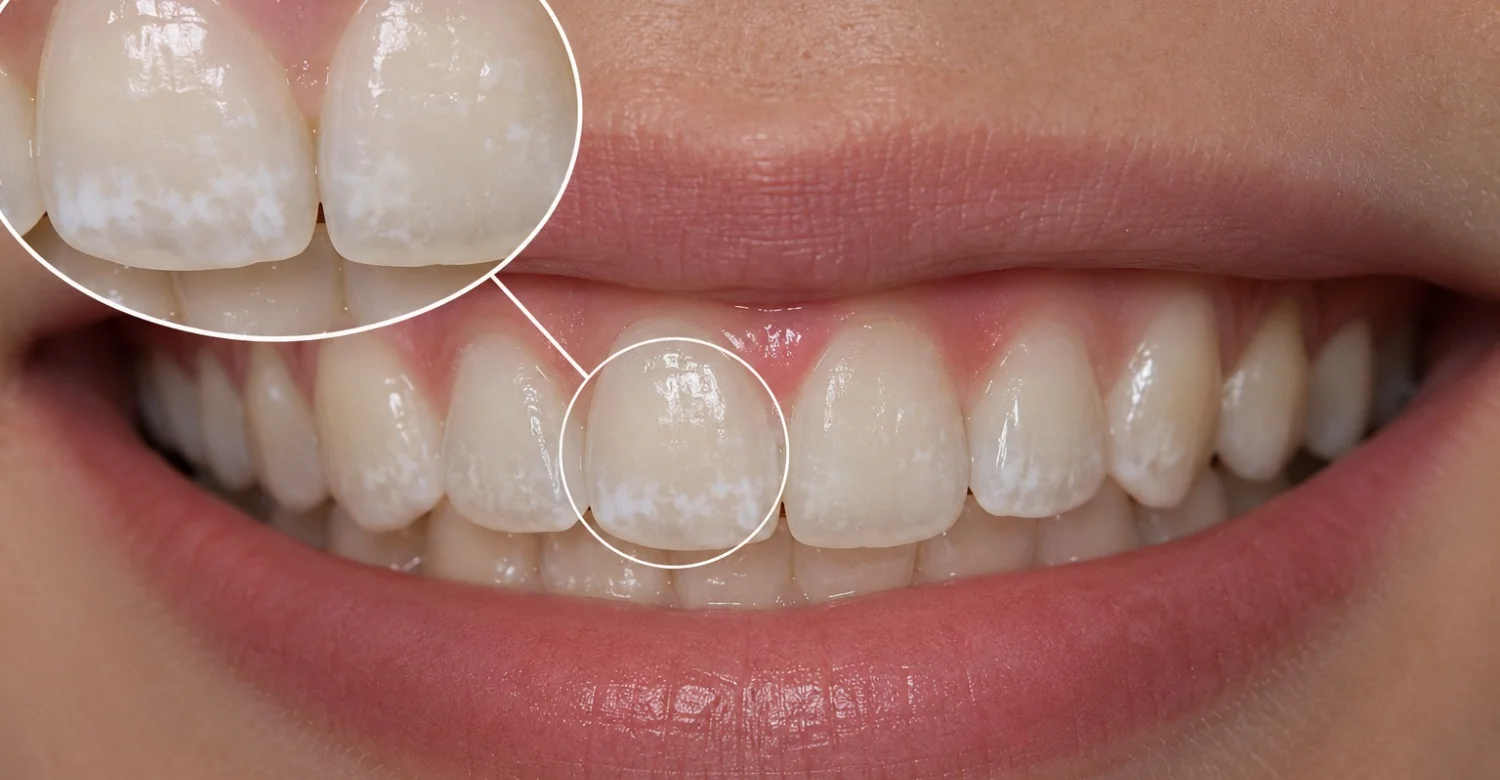
White Spots on Teeth are chalky or opaque patches that can appear on one tooth or on several. They can come from enamel development problems, too much fluoride in childhood, plaque buildup, or enamel changes after braces. Each cause behaves differently, so the underlying reason should be identified before choosing any treatment.
What Are White Spots on Teeth?
These spots are areas of enamel that look chalky, opaque, or noticeably lighter than the rest of the tooth. Some are temporary surface changes, while others reflect a difference in the enamel's structure. Their appearance, location, and timing help reveal the cause, for example whether they have been there since childhood or appeared after braces.
Understand the risks of Acidic Sugar-Free Candy and Tooth Erosion
Causes of the Condition
The most common white spots on teeth causes fall into two groups. The first is changes that develop after teeth come in, such as plaque-related demineralization. The second is developmental conditions that form while teeth are still growing, such as fluorosis and enamel hypoplasia. Knowing which group applies guides both prevention and treatment.
White Spots on Teeth from Plaque
When plaque stays on the teeth, its bacteria turn sugars into acids that dissolve minerals from the enamel surface. This demineralization usually starts along the gumline and between teeth, where cleaning is harder. The result is a chalky white patch, which is often the earliest visible sign of enamel breakdown before a cavity forms.
White Spots on Teeth After Braces
Brackets and wires create extra surfaces where plaque collects and a toothbrush struggles to reach. Acids from the trapped plaque demineralize the enamel around each bracket, sometimes within weeks. When the braces come off, chalky outlines may remain where the brackets were. Careful brushing, cleaning aids, and fluoride use throughout orthodontic treatment are the best protection.
White Spots on Teeth from Fluoride
Used as recommended, fluoride strengthens enamel and prevents decay. Problems arise only when young children swallow too much fluoride while their permanent teeth are forming, usually before about age eight. This causes a condition called fluorosis. Dental fluorosis white spots range from faint white streaks or flecks to more noticeable mottling in severe cases.
Enamel Hypoplasia White Spots
Enamel hypoplasia is a developmental defect in which teeth form with thinner or incomplete enamel. Enamel hypoplasia white spots may look white, yellow, or irregular, and are sometimes pitted. Because the defect forms while the tooth is developing, it is already present when the tooth comes in. Plaque-related demineralization, by contrast, develops later.
Other Possible Causes of White Spots
Frequent acidic foods and drinks can cause early enamel demineralization. Trauma or infection in a baby tooth can disturb the permanent tooth developing beneath it. Nutritional deficiencies, high fever, or other illness during childhood may interfere with enamel formation. Occasionally, a genetic enamel disorder is responsible.
Note : All images used are for editorial and illustrative purposes only and may not originate from the original news provider or associated company.
Explore the link between Long-Distance Endurance Exercise and Tooth Erosion
Problems Caused by the Condition
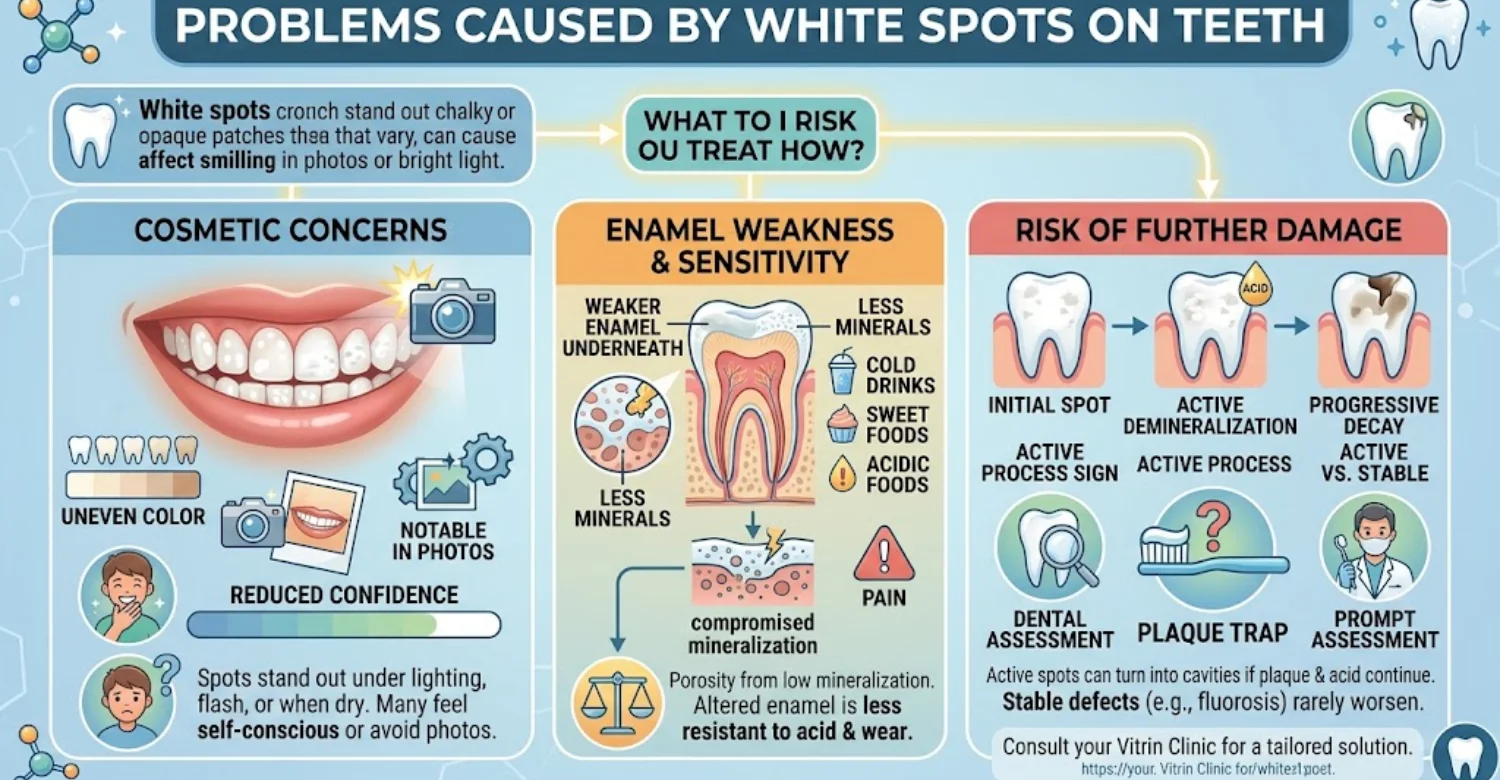
For many people, these white spots are mainly a cosmetic concern, but some reflect weaker enamel underneath. Depending on the cause, the spots may affect appearance or cause sensitivity. Some signal an active process that could progress to decay if the underlying problem is not controlled and managed early.
Cosmetic Concerns
White spots make tooth color look uneven, which is especially noticeable on the front teeth. They often stand out more under bright lighting, in camera flash, or when the teeth are dry. Many people feel self-conscious, smile less freely, or avoid photos, which can affect their confidence in social and professional settings.
Enamel Weakness and Tooth Sensitivity
Some white spots are areas of enamel with less mineral content or incomplete formation. This altered enamel can be more porous and less resistant to acid and wear. When mineralization is compromised, some people feel sensitivity to cold, sweet, or acidic foods. This is most common with hypoplastic enamel or deeper demineralized spots.
Risk of Further Enamel Damage
Active demineralization can progress if plaque and frequent acid exposure continue, eventually turning a chalky spot into a cavity. Stable developmental defects, such as mild fluorosis, usually do not get worse on their own. Telling an active spot from a stable one is a key part of the dental assessment.
Patient's Perspective
Patients usually have two main questions about these white spots: will they hurt, and do they mean something is wrong? Most spots cause no discomfort. Even so, their appearance can be surprisingly bothersome, and many people start worrying about their overall dental health.
What Do White Spots on Teeth Feel Like?
Most white spots cause no pain or physical symptoms. People usually notice them in the mirror or hear about them at a dental visit. Occasionally, when the enamel is weakened or thin, there is mild sensitivity to cold drinks, sweets, or brushing. Rough or pitted areas may also feel different to the tongue.
How White Spots Can Affect Daily Life
White spots can make people conscious of their smile when talking, laughing, or meeting others. Many become more aware of their teeth in photographs, video calls, and social situations. Others worry that the spots mean tooth decay. That is a reasonable concern, and a dental examination can answer it quickly.
Find out when Subperiosteal Implants for Maxillary Reconstruction are used
Ready to transform your smile?
Talk to our team and get a personal FREE treatment plan.
Doctor's Perspective
Dentists treat white spots as a visible sign rather than a diagnosis. Before recommending anything preventive or cosmetic, the dentist works out what caused the spots, whether they are active or stable, and whether they need treatment at all. This step helps patients avoid unnecessary procedures.
How Dentists Diagnose White Spots
Diagnosis starts with the patient's dental and medical history. The dentist asks about braces, fluoride exposure in childhood, oral hygiene habits, childhood illnesses, trauma, and when the spots first appeared. A visual and clinical examination follows, often with the teeth dried and well lit. This shows whether the spots look active, developmental, or purely cosmetic.
What Determines the Appropriate Treatment?
The right treatment depends on the cause, the severity and depth of the enamel changes, and how many teeth are affected and where. The patient's age and overall oral health matter too, as does whether the spot is active or stable. A shallow spot after braces needs a very different approach from deep hypoplasia.
How to Get Rid of White Spots on Teeth
The answer to how to get rid of white spots on teeth depends on why they formed. Treatment for these spots ranges from simple preventive care to professional procedures. The best results come from matching the method to the cause rather than choosing it based on appearance alone.
Remineralization and Preventive Care
When the spots come from early demineralization, better oral hygiene and support for remineralization may be enough. Brush twice a day with fluoride toothpaste. Your dentist may also recommend professional products such as fluoride varnish or calcium-phosphate pastes to help restore minerals. Controlling plaque and cutting back on frequent acidic or sugary snacks stops the process from progressing.
Professional White Spots on Teeth Treatment
A professional cleaning helps when plaque contributes to the appearance. Enamel microabrasion can treat selected shallow discolorations. Resin infiltration suits many spots where the enamel surface is still intact: a resin fills the porous enamel so the spot blends in. Veneers may suit severe or persistent cases. Treatment should always follow the underlying cause, not appearance alone.
Can White Spots Be Completely Removed?
Results vary. Early demineralization after braces and mild fluorosis often improve a great deal, sometimes becoming nearly invisible. Deeper fluorosis and enamel hypoplasia may only partly improve. For that reason, some developmental spots on the enamel are managed cosmetically, with resin infiltration or veneers, rather than fully reversed. A realistic assessment beforehand sets the right expectations.
Spot the early signs of Tongue Cancer
When Is It Serious and Requires a Checkup?
See a dentist promptly if white spots appear suddenly, increase in number, or come with pain or significant sensitivity. The same applies if the enamel feels rough, pitted, chipped, or weak, or if you see signs of cavities. Spots that stay despite better hygiene, new discoloration after braces, and unexplained changes across several teeth also need a checkup, because they may indicate active decay.
When the Patient Should Rest
White spots generally do not require bed rest or any physical rest, and you can continue your normal daily activities. Routine management, such as cleaning, fluoride application, or microabrasion, involves no recovery time. Temporary rest may be advised only after an invasive procedure done to treat a related dental problem, depending on the procedure.
Compare options in Single Dental Implant vs Multiple Implants
Rest Tips
After any enamel or cosmetic procedure for white spots, follow your dentist's instructions. If your teeth feel sensitive, avoid very hot, cold, or acidic foods for a while and brush gently with a soft brush. Avoid habits that stress the enamel, such as nail-biting or grinding. Contact the dental team if pain becomes significant or persistent.
About Vitrin Clinic
At Vitrin Clinic, we treat white spots as a clue to your enamel health, not only a cosmetic issue. Every plan begins with understanding the cause. That way, each patient receives preventive or cosmetic care that fits their teeth, their expectations, and their long-term oral health.
.jpg)
.jpg)
.jpg)

.jpg)
What We Notice Clinically
At Vitrin Clinic, we look beyond the appearance of white spots to identify the underlying enamel condition. Dr. Rifat Alsaman, Head of the Medical Team at Vitrin Clinic and a Cosmetic Dentist, emphasizes that the cause must be identified before choosing cosmetic or preventive treatment. Each plan weighs enamel condition, severity, location, patient expectations, and overall oral health. Not every white spot needs cosmetic treatment.
Tips for the Patients
Brush consistently with fluoride toothpaste as your dentist recommends, and clean carefully around brackets. Limit acidic drinks and foods. Avoid aggressive whitening or abrasive home remedies, which can make spots more noticeable. Book an examination if the white spots persist, spread, hurt, or change. Ask Vitrin Clinic about the cause before choosing a cosmetic procedure.
Learn how to manage a Fissured Tongue
Resource:
https://pubmed.ncbi.nlm.nih.gov/23597715/
https://pubmed.ncbi.nlm.nih.gov/28540937/
https://pubmed.ncbi.nlm.nih.gov/?term=Incidence+of+white+spot+formation+after+bonding+and+banding
FAQs
Dr. Rifat Alsaman has more than 5 years of clinical experience in dentistry and currently serves as the Head of the Medical Team at Vitrin Clinic. He is dedicated to providing exceptional patient care, overseeing treatment planning, and ensuring the highest clinical standards across the team. His expertise, attention to detail, and commitment to continuous professional development have helped countless patients achieve healthier, more confident smiles.


