Invisalign
October 25, 2026
Invisalign for Crowded Teeth: Does It Work, How Long It Takes and What It Costs
 Dr. Rifat Alsaman

Invisalign for crowded teeth is a clear aligner treatment that straightens overlapping teeth without metal brackets. Misaligned teeth are harder to clean. Many adults also hide them in photos. Yet many do not want fixed braces at this stage of life.
Clear aligners work well for mild to moderate crowding. They can also treat many severe cases. These usually need tooth slenderizing (IPR), arch expansion or, occasionally, extractions. Treatment usually takes several months to around 18 months. The timeline depends on how misaligned your smile is.
Send a smile photo to find out if your teeth suit Invisalign.
Ready to transform your smile?
Talk to our team and get a personal FREE treatment plan.
What Are Crowded Teeth and Why Fix Them?
Crowded teeth happen when the jaw lacks enough room for all teeth to line up. Genetics is one of the most common causes. Other causes include a small jaw, large teeth and early loss of baby teeth. Some people notice changes as wisdom teeth erupt, although their role is debated.
Crowding is not only a cosmetic issue. Overlapping teeth trap plaque in spots a toothbrush cannot reach. This raises the risk of tooth decay and gum disease. Crowding can also cause uneven tooth wear and bite problems.
The condition often worsens gradually with age, especially in the lower front teeth. Earlier assessment usually means simpler options. Many adults look into orthodontic aligners after years of cleaning problems. Treatment aims to improve both appearance and cleaning access.
What Are Crowded Teeth?
Crowded teeth occur when there is insufficient space in the jaw for teeth to align properly. They may overlap, twist, or grow out of position, affecting both smile appearance and oral health.
What Causes Crowded Teeth?
Common causes include genetics, a small jaw, larger teeth, and early loss of baby teeth. Changes in tooth position can also occur as people age, particularly in the lower front teeth.
Why Should You Fix Crowded Teeth?
Crowded teeth can make brushing and flossing difficult, increasing the risk of plaque buildup, tooth decay, and gum disease. Treatment can improve alignment, oral hygiene, and bite function.
Can Crowded Teeth Get Worse With Age?
Yes, crowding can gradually worsen with age, especially in the lower front teeth. Regular dental assessments help identify changes early and determine whether orthodontic treatment is needed.
Can Invisalign Fix Crowded Teeth?
Yes, Invisalign for crowded teeth can correct many mild to moderate alignment problems using clear, removable aligners. Severe crowding may require additional orthodontic treatment. A dental assessment determines whether Invisalign is suitable for your needs.
.jpg)
.jpg)
.jpg)
Does Invisalign Work for Crowded Teeth?
Yes. Invisalign for crowded teeth works in most cases, provided the plan creates enough space first. Teeth cannot line up until there is room for them. Aligners create that room in five main ways:
Interproximal reduction (IPR): polishing tiny amounts of enamel between teeth. One study planned 0.1–0.5 mm per tooth.
Arch expansion: gently widening the curve of the dental arch.
Slight forward movement: tipping the front teeth forward a little.
Attachments: small tooth-coloured bumps that help aligners grip and steer teeth.
Extractions: removing a tooth, reserved for some severe cases.
A study of 61 adults explains the mechanism. Invisalign resolved lower crowding through expansion, IPR and forward tipping of the lower incisors. With less than 6 mm of crowding, the lower incisor position stayed relatively stable .
How Does Invisalign Create Space for Crowded Teeth?
Invisalign creates space through techniques such as interproximal reduction (IPR), arch expansion, and controlled forward movement of certain teeth. Your orthodontist selects the appropriate method based on your dental anatomy and treatment goals.
What Is Interproximal Reduction (IPR) for Crowded Teeth?
Interproximal reduction (IPR) involves carefully removing tiny amounts of enamel between selected teeth to create space. It can help aligners reposition teeth without extractions in suitable cases. An orthodontist determines how much enamel can safely be removed.
Can Arch Expansion Help Correct Crowded Teeth?
Yes, arch expansion can create additional space by widening the dental arch within appropriate biological limits. Invisalign may achieve limited expansion in selected cases, but the amount possible depends on jaw anatomy, tooth position, and gum health.
Can Invisalign Move Front Teeth Forward to Reduce Crowding?
In some cases, Invisalign can move front teeth slightly forward to help relieve crowding. However, excessive forward movement may affect the bite or push teeth beyond their healthy supporting bone. Careful orthodontic planning is essential.
How Do Invisalign Attachments Help Align Crowded Teeth?
Invisalign attachments are small, tooth-coloured shapes bonded to selected teeth. They help aligners grip teeth more effectively and apply controlled forces for movements such as rotation, tipping, and root positioning.
Do Severe Crowded Teeth Require Extractions Before Invisalign?
Not always. Some cases can be treated using IPR, arch expansion, or other orthodontic movements. However, severe crowding may require tooth extraction when insufficient space is available. An orthodontic assessment determines the safest and most effective treatment plan.
Mild, Moderate, or Severe Crowding: What Invisalign Can Fix
Invisalign for crowded teeth suits most mild and moderate cases, while severe cases need careful selection. Orthodontists grade crowding by the space shortfall in millimetres. The bands below follow the Angle Orthodontist study.
Severity (approx. crowding) | What it looks like | Invisalign alone? | Typical approach | Typical duration |
Mild (2–3.9 mm) | Slight overlaps or one turned tooth | Usually yes | Small IPR, minor expansion | Shorter end of range |
Moderate (4–5.9 mm) | Clear overlaps across several teeth | Yes, in most cases | IPR plus expansion | Mid range |
Severe (6 mm or more) | Teeth stacked, blocked out or heavily rotated | Sometimes | Extraction, hybrid plan or braces | Longer, often with refinements |
Your orthodontist confirms your exact measurement from a 3D scan. These bands guide planning for Invisalign for crowded teeth, but they are not a diagnosis.
Are My Teeth Too Crowded for Invisalign?
Your teeth may be too crowded for aligners alone if space needs are large or teeth are badly rotated. Severe cases can still respond well to clear aligners in many instances. The plan may add extractions, palatal expansion or a short phase of fixed appliances. The Invisalign brand itself notes that extreme cases may need expansion or extraction first. Only a clinical exam with X-rays and a scan can answer this for you.
Snaggletooth and High Canines
A snaggletooth or high canine often responds to aligner treatment, but it usually takes longer. The canine has a long root and a rounded shape. Both make it harder for aligners to grip and move. Extra space and attachments are often needed. Some cases also need a refinement stage to finish the position.
Invisalign for Crowded Bottom Teeth
Yes. Lower front crowding is one of the most common problems Invisalign treats. It often uses IPR and slight expansion of the lower arch. Lower teeth sit in a narrow arch, so small overlaps show easily. Lower arch cases are among the most frequent applications for clear aligners.
Lower crowding is also the area most likely to return after treatment. The lower front teeth tend to drift as we age. This is why retainers matter so much after Invisalign for crowded teeth in the lower arch.
.jpg)
.jpg)
Invisalign for Crowded Front Teeth
Invisalign for crowded teeth can straighten overlapping upper incisors, rotated front teeth and uneven smile lines. Front teeth are the most visible, so small rotations matter cosmetically. Attachments help aligners turn and level these teeth. Mild rotations respond well. Large rotations may need extra aligners or a refinement stage. Upper front cases are a common reason adults choose clear aligner therapy.
Option: Invisalign Then Veneers or Bonding
Straightening first and then refining shape and colour often gives a more conservative result. Aligning teeth before cosmetic work can reduce how much enamel needs preparing. Bonding or veneers can then correct chips, worn edges or small size differences. Alignment changes position, not colour or shape. Cosmetic steps are best planned after orthodontics, not instead of it. Many patients combine clear aligners with later bonding or veneers.
What Disqualifies You from Invisalign?
Certain dental and health factors can rule out or delay treatment. Common reasons include:
Severe rotations: very twisted teeth, especially canines, may move unpredictably.
Impacted teeth: aligners cannot pull a buried tooth into place alone.
Active gum disease or bone loss: gums must be stable before teeth move.
Untreated decay: cavities must be treated first.
Complex bite or jaw problems: some need surgery combined with braces.
Low wear time: aligners need 20–22 hours of wear daily.
Vitrin recommends a fitting alternative in each case. This may be gum treatment first, fillings first, braces, or a combined surgical-orthodontic referral. These checks help make treatment safer and more predictable.
Can Severe Tooth Rotations Make You Unsuitable for Invisalign?
Severely rotated teeth, particularly canines, can be difficult to correct with Invisalign alone. Your orthodontist may recommend attachments, additional orthodontic techniques, or traditional braces.
Can Impacted Teeth Prevent Invisalign Treatment?
Impacted teeth may require surgical exposure or other orthodontic treatment before aligners can work effectively. Invisalign alone cannot reliably move every tooth trapped beneath the gums.
Does Gum Disease Disqualify You from Invisalign?
Active gum disease or significant bone loss may delay Invisalign treatment. Gum health must be assessed and stabilised before orthodontic tooth movement can proceed safely.
Do You Need to Treat Cavities Before Invisalign?
Yes, untreated cavities should generally be treated before starting Invisalign. Addressing decay helps protect tooth structure and reduces the risk of complications during orthodontic treatment.
Can Complex Bite or Jaw Problems Make Invisalign Unsuitable?
Severe bite discrepancies or skeletal jaw problems may require traditional braces, orthodontic appliances, or corrective jaw surgery. An orthodontic assessment determines whether Invisalign alone can achieve the desired result.
Can Poor Aligner Wear Time Disqualify You from Invisalign?
Invisalign typically requires wearing aligners for 20–22 hours daily. Inconsistent wear can delay progress and compromise results, so patients must be prepared to follow their prescribed schedule.
What Alternatives Does Vitrin Clinic Recommend if Invisalign Is Not Suitable?
Vitrin Clinic can assess alternative options based on your needs, including gum treatment, fillings before orthodontics, traditional braces, or referral for combined surgical and orthodontic care. The goal is to identify the safest approach for correcting crowded teeth.
Ready to transform your smile?
Talk to our team and get a personal FREE treatment plan.
Invisalign vs. Braces for Crowded Teeth
Both treatments can fix crowding. Braces may be more predictable for very severe crowding and complex rotations. Invisalign is nearly invisible, removable and easier to clean around. However, it needs consistent wear. Choosing between braces and Invisalign for crowded teeth depends on severity and lifestyle.
Factor | Invisalign | Fixed braces |
Visibility | Nearly invisible | Visible brackets |
Comfort | Smooth plastic, pressure at each change | Wires can rub cheeks |
Severe crowding | Case-dependent | Generally more predictable |
Rotations | Harder for round teeth | More control |
Hygiene | Remove to brush and floss | Harder to clean |
Compliance needed | High (20–22 hours daily) | Low |
Duration | Similar for mild to moderate cases | Similar |
Visits | Fewer, plus remote checks | Regular adjustments |
Cost in Turkey | See the cost section | Usually lower |
Best Invisalign Option for Adults with Crowded Teeth
The best option depends on how many teeth move and how far. Invisalign sells tiers ranging from short, limited treatments to comprehensive plans. Mild crowding may suit a shorter tier of Invisalign for crowded teeth. Moderate and severe crowding usually needs a comprehensive plan. Product names vary by market, so your provider confirms which tier fits.
In-Clinic Aligners vs. At-Home Aligners
Dentist-supervised aligners suit crowding better than at-home kits in most cases. Crowding often needs IPR, attachments and in-person checks. At-home (direct-to-consumer) aligners usually skip these steps. They also may not include X-rays to check gums and roots. Invisalign for crowded teeth is always delivered through a licensed dentist or orthodontist.
How Long Does Invisalign Take for Crowded Teeth?
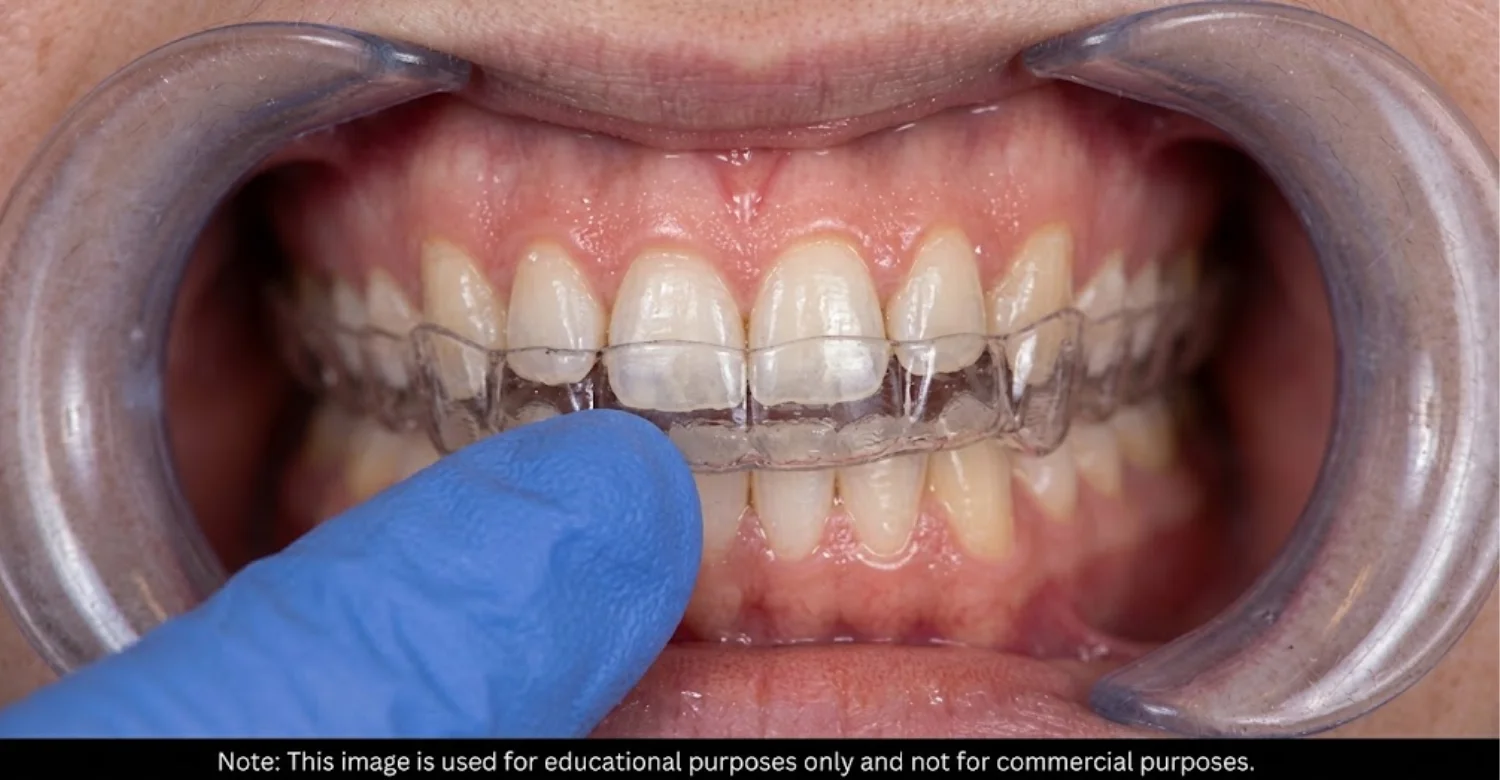
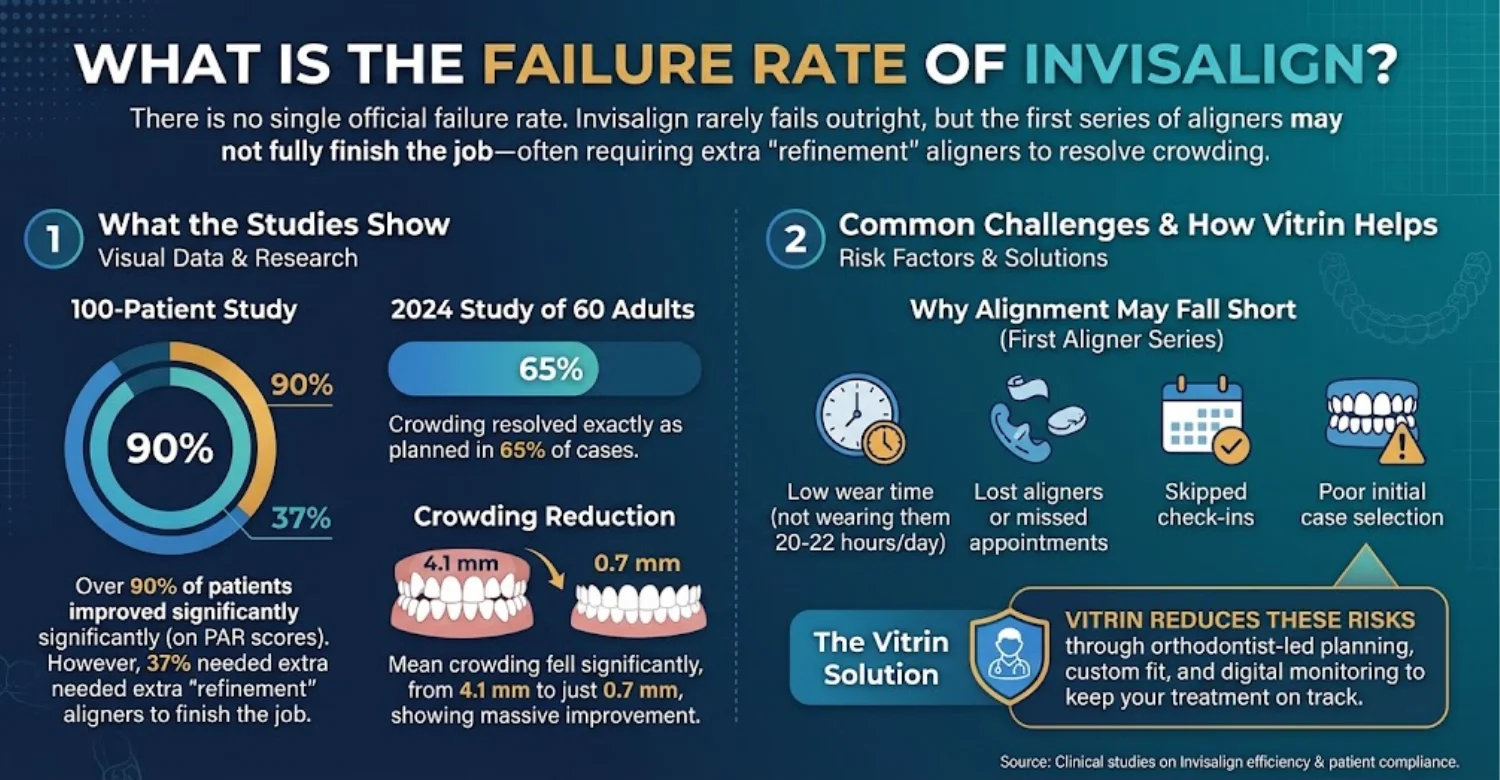
Invisalign for crowded teeth typically takes 6–18 months for many adults, depending on the severity of crowding and the complexity of tooth movements. Mild cases may finish sooner, while severe crowding and additional refinements can extend treatment. One study of 100 patients reported a mean treatment duration of 14 months, with refinements adding approximately seven months for patients who needed them.
How Can You Finish Invisalign Treatment on Time?
To help Invisalign for crowded teeth stay on schedule:
Wear aligners for 20–22 hours daily.
Change aligners according to your orthodontist’s instructions.
Attend all scheduled in-person or remote check-ins.
Report lost, damaged, or cracked aligners promptly.
Following your treatment plan consistently helps keep tooth movement on track, although the exact completion date depends on your individual response to treatment.
Why Don't Some Dentists Recommend Invisalign?
Some dentists hesitate because aligners are not ideal for every case. Severe rotations and complex bites can respond better to braces. Results also depend heavily on patient discipline. Poorly supervised aligner treatment can cause problems, such as teeth tipping without proper root control.
These concerns are valid for Invisalign for crowded teeth too. Good case selection is the answer. At Vitrin, the orthodontist reviews your scan and X-rays before recommending a treatment. If braces would serve you better, we will say so.
Invisalign Treatment at Vitrin for International Patients
Treatment selection at Vitrin starts with finding why your teeth are crowded and how severe it is. Crowding from a narrow arch needs different planning from crowding caused by large teeth. A clinical exam checks gums, existing fillings and your bite. Digital dental X-rays, when appropriate, show roots, bone levels and hidden or impacted teeth. A 3D digital scan then measures the space shortfall.
The plan then changes according to what the exam finds. Gum problems or decay are treated before aligners start. Mild crowding may need IPR only. Severe crowding may need expansion, extraction or braces. Invisalign for crowded teeth is only offered when the findings support it. Every plan is individual, and no outcome is guaranteed.
How Many Trips to Istanbul Are Needed?
Most international patients having Invisalign for crowded teeth need at least two trips. A typical journey looks like this:
Free online assessment from your smile photos.
First visit: exam, X-rays where needed, 3D scan and digital plan preview.
Attachments placed and IPR done in the clinic.
Aligners fitted or shipped to your home.
Remote monitoring through photo check-ins.
Refinements if needed.
Final visit or remote finishing, plus retainers.
You receive a written treatment estimate before you commit. Estimates can change if the exam reveals extra needs.
What If I Have a Problem with My Aligners at Home?
Most issues during Invisalign for crowded teeth can be handled remotely. Contact the clinic first, usually by WhatsApp with clear photos. A lost aligner is usually replaced by moving to the next set or ordering a new one. A loose attachment can often wait until your next visit. Ongoing pain, a broken tooth or swelling needs a local dentist promptly.
Invisalign for Crowded Teeth Before and After
Before-and-after results show what Invisalign for crowded teeth can realistically achieve. Each Vitrin case should list the crowding level, months of treatment and number of aligners. Cases should cover mild, moderate and severe crowding, bottom teeth and snaggletooth. When comparing Invisalign for crowded teeth results, look for photos taken from the same angle and lighting.
.jpg)
.jpg)
How Much Does Invisalign for Crowded Teeth Cost?
The cost of Invisalign for crowded teeth depends on the severity of crowding, treatment duration, number of aligners, and whether additional procedures or refinements are needed. These are planning ranges, not confirmed clinic quotations.
Average Invisalign Costs by Country
United Kingdom
~$4,000
Average price
Average ~$4,000
Estimated range $1,900–$7,400
United States
~$5,100
Average price
Average~$5,100
Estimated range $3,415–$8,965
These are estimated prices for full clear-aligner treatment, not exclusively crowded-teeth cases. The averages are reference figures from different pricing sources, not directly comparable national averages. Actual Invisalign prices vary by provider, treatment complexity, and package inclusions.
Vitrin's Invisalign Prices by Case Complexity
Vitrin Clinic provides a personalized quote after reviewing your teeth and treatment needs. The following are general Turkey market estimates, not confirmed Vitrin Clinic prices.
Case Complexity | Estimated Cost (USD) | Typical Treatment Needs |
Mild crowding | 1,500–2,500 | Minor alignment and limited tooth movement |
Moderate crowding | 2,500–4,000 | More aligners and possible interproximal reduction (IPR) |
Severe crowding | 4,000–6,500+ | Complex tooth movement, possible extractions, or additional orthodontic procedures |
Does Crowding Cost More Than Spacing?
Often, yes. Invisalign for crowded teeth may require additional aligners, interproximal reduction (IPR), and refinement stages. However, the price depends on the specific tooth movements required rather than crowding alone.
What's Included in the Invisalign Cost?
Treatment Component | Estimated Cost (USD) if Charged Separately |
Initial consultation | 0–150 |
Dental scans and treatment planning | 50–300 |
Attachments and IPR | 0–300+ |
Additional refinement aligners | 200–1,000+ |
Retainers after treatment | 100–500 |
Follow-up appointments | 0–150 per visit |
These are indicative estimates, not additional fees confirmed by Vitrin Clinic. Some clinics include these services in the overall treatment price.
Turkey vs. UK / US / EU Invisalign Prices
United Kingdom
From $2,000
Crowding treatment
Mild crowding$2,000–$3,400
Moderate crowding$3,000–$5,500
Severe crowding$4,000–$7,400
Turkey
From $1,500
Crowding treatment
Mild crowding$1,500–$2,500
Moderate crowding$2,500–$4,000
Severe crowding$4,000–$6,500+
United States
From $3,000
Crowding treatment
Mild crowding$3,000–$5,000
Moderate crowding$4,000–$7,000
Severe crowding$6,000–$9,000+
These case-based figures are broad planning estimates, not verified prices for identical Invisalign packages. Travel, accommodation, and additional visits may increase the total cost of treatment in Turkey. Compare written quotes that specify aligners, refinements, retainers, monitoring, and follow-up care.
Keeping Your Teeth Straight After Invisalign
Retainers are essential after Invisalign for crowded teeth, because teeth tend to drift back. This is especially true for lower front crowding. There are two main types:
Fixed retainers: a thin wire bonded behind the front teeth. They work without daily effort but need careful cleaning.
Removable retainers: clear trays worn at night. They are easy to clean but must be worn as instructed.
The 100-patient study suggested fixed bonded retainers help prevent relapse after both Invisalign and braces. Many orthodontists combine both types. Your orthodontist decides which suits your teeth.
Why Choose Vitrin for Invisalign
Vitrin focuses on honest case selection and planning based on your diagnosis. Every Invisalign for crowded teeth plan starts with a full diagnosis.
Key points:
Orthodontist-led assessment with exam, X-rays where needed and a 3D scan.
Treatment matched to the cause and severity of crowding.
Braces are recommended when they suit you better.
Written estimates before treatment begins.
Support and remote monitoring for international patients.
Option to add whitening, bonding or veneers after alignment.
How Does Vitrin Clinic Help You Achieve a Straighter Smile?
At Vitrin Clinic, correcting crowded teeth is about more than straightening their appearance. Our team evaluates your tooth alignment, bite, and overall oral health to help determine the most suitable approach for your smile.
Understanding your crowding: Identify how overlapping or rotated teeth affect your alignment and bite.
Exploring alignment options: Assess whether Invisalign or traditional braces may be more suitable for your case.
Planning each movement: Use digital planning tools, when appropriate, to support a personalized orthodontic approach.
Maintaining oral health: Address existing dental or gum concerns before starting orthodontic treatment when necessary.
Tracking your progress: Arrange follow-up appointments to assess tooth movement and make adjustments when needed.
Planning your final smile: Consider additional cosmetic treatments after alignment only if clinically appropriate.
Your journey to straighter teeth starts with the right plan. Contact Vitrin Clinic to explore your options for crowded teeth and request your FREE Treatment Plan!
Ready to transform your smile?
Talk to our team and get a personal FREE treatment plan.
Conclusion
Invisalign for crowded teeth works for most mild and moderate cases and for many severe ones. The key is honest assessment, enough space and consistent wear. Crowding tends to worsen over time, so earlier treatment is usually simpler.
Book Your Free Invisalign Assessment at Vitrin.
Medical Disclaimer
This article is for general information only. It does not replace an examination by a qualified dentist or orthodontist. Suitability, duration and cost vary from person to person. Seek urgent care for facial swelling, fever, or difficulty breathing or swallowing.
References
FAQs
Dr. Rifat Alsaman has more than 5 years of clinical experience in dentistry and currently serves as the Head of the Medical Team at Vitrin Clinic. He is dedicated to providing exceptional patient care, overseeing treatment planning, and ensuring the highest clinical standards across the team. His expertise, attention to detail, and commitment to continuous professional development have helped countless patients achieve healthier, more confident smiles.


