Orthodontics
April 26, 2026
Invisible Braces: Types, Cost and How to Choose the Right Option
 Dr. Rifat Alsaman

"Invisible braces" is an umbrella term for three treatments: clear aligners, ceramic braces and lingual braces. All three move teeth with gentle, controlled pressure. They differ in how visible they are, which cases they can treat, how comfortable they feel and what they cost. The right choice depends on your bite, your habits and your budget.
Ranked by how hidden they are, lingual braces come first, clear aligners second and ceramic braces third. Lingual braces sit fully out of sight when you smile. Aligners are nearly invisible when kept clean. Ceramic brackets blend in but can still be seen up close.
Key Takeaways
What Are Invisible Braces and What Are They Used For? Invisible braces are discreet orthodontic appliances that gradually straighten teeth, correct crowding and gaps, and improve bite alignment.
What Are the Types of Invisible Braces? The main types include clear aligners, such as Invisalign, and lingual braces, which are attached to the back surfaces of the teeth.
What Is the Recovery Like After Invisible Braces? Invisible braces generally require an adjustment period, during which mild pressure, soreness, or temporary speech changes may occur. Retainers are usually needed after treatment to help maintain the results.
How Much Do Invisible Braces Cost? The cost varies depending on the type of appliance, the complexity of the case, and the duration of treatment. A personalized consultation is needed to determine the final price.
.jpg)
.jpg)
.jpg)
.jpg)
Ready to transform your smile?
Talk to our team and get a FREE treatment plan.
Types of Invisible Braces
Each type hides treatment in a different way. Aligners replace brackets with plastic trays. Ceramic braces swap metal for tooth-coloured material. Lingual braces move the whole appliance behind the teeth. The table below compares them side by side.
Clear aligners | Ceramic braces | Lingual braces | |
Visibility | Nearly invisible | Subtle; wire still shows | Hidden when smiling |
Removable? | Yes | No | No |
Best for | Mild to moderate cases | Mild to complex cases | Mild to complex cases |
Comfort | Smooth, no wires | Some cheek rubbing | Tongue irritation at first |
Speech | Brief lisp possible | No change | Harder for a few weeks |
Cleaning | Easy (trays come out) | Harder around brackets | Hardest; behind the teeth |
Typical duration | 6–18 months | 12–24 months | 18–36 months |
Relative price | Mid | Lowest of the three | Highest |
Relies on patient wear? | Fully | No (fixed) | No (fixed) |
Check-up visits | Every 6–10 weeks | Once or twice a month | Once or twice a month |
Clear Aligners (Removable Trays)
Clear aligners are a series of thin, custom-made plastic trays. Each tray shifts your teeth a fraction of a millimetre. The trays are trimmed along the gum line. There are no wires or sharp parts to rub your cheeks or gums.
Because you take them out to eat, there is no list of banned foods. You can also brush and floss normally, which helps lower the risk of decay. The weak point is compliance. Aligners only work while you wear them. If you know you will struggle to keep them in, a fixed option may suit you better.
Ceramic (Clear) Braces
Ceramic braces work exactly like metal braces. Brackets bond to the front of each tooth, and a wire links them together. The only difference is the bracket material. Ceramic brackets match the colour of your teeth, so they blend in at normal speaking distance.
They are not fully hidden, as the wire still shows. But they can handle complex tooth movements that aligners struggle with. That makes them a strong middle ground for people who need extensive treatment but want to avoid the look of metal. Among the three discreet options, they are usually the most affordable.
Lingual Braces (Behind-the-Teeth)
Lingual braces bond to the inner surfaces of your teeth, facing the tongue. They are the only option that stays completely out of sight when you smile. A glimpse is possible when your mouth opens wide.
Each bracket is custom-made for the back of the tooth. Placing and adjusting them takes more skill and more chair time. That is why lingual braces tend to cost the most. Speech feels harder at first, because the brackets sit near your tongue. Most people adjust within a few weeks. Note that some clinics use the phrase "invisible braces" to mean lingual braces only. Always ask which type a quote refers to.
Doctor-Supervised vs At-Home Aligner Brands
At-home (direct-to-consumer) brands mail trays after a remote review. They cost less, but no one checks your teeth in person. Being removable does not make aligners risk-free. Poorly planned movements can damage roots, gums or your bite. Treatment should be planned and supervised by a trained clinician, ideally an orthodontist.
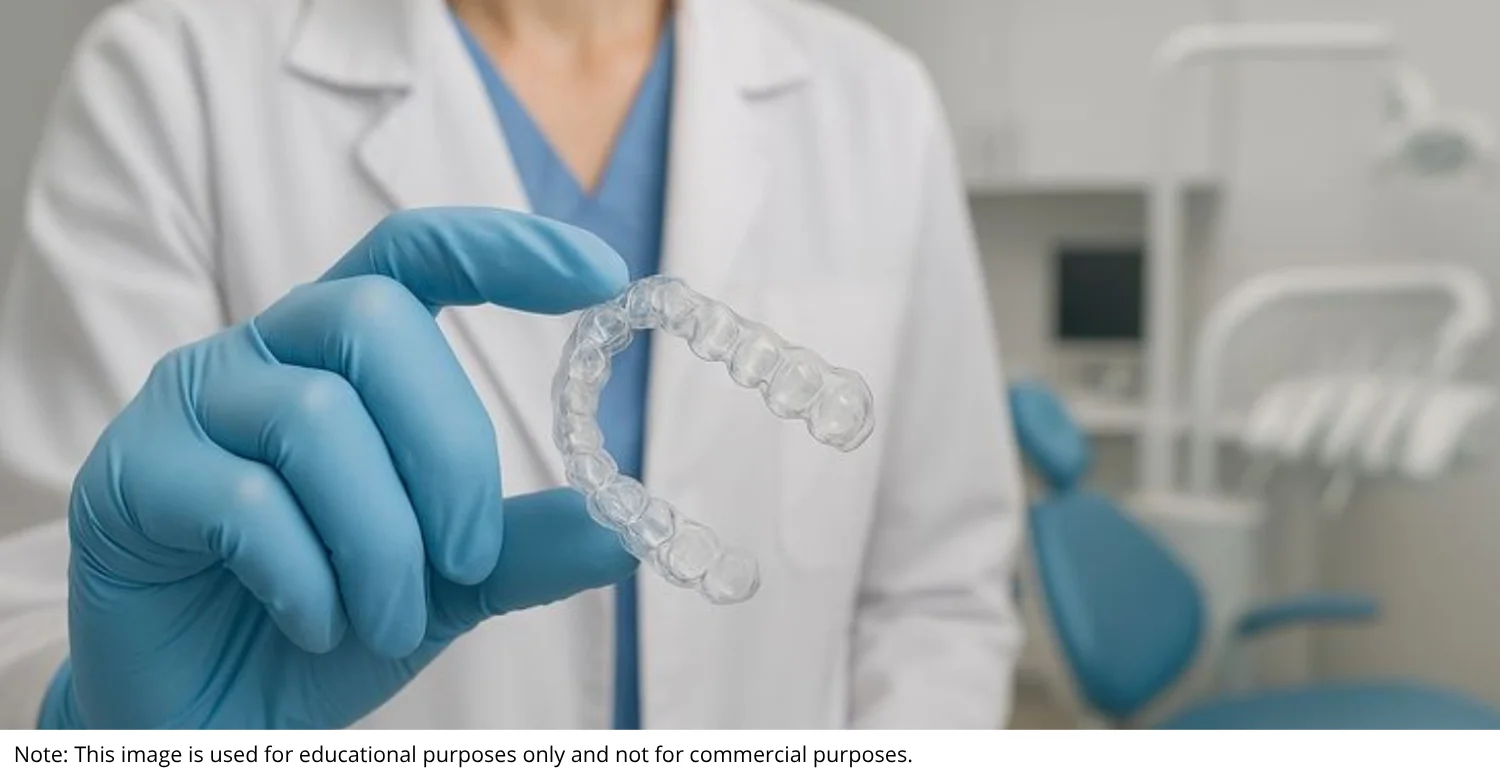
How Do Invisible Braces Work?
Every type relies on the same biology. Steady pressure on a tooth passes into the bone around its root. The bone breaks down slightly on the side the tooth moves toward. New bone then forms behind it. This cycle, called bone remodelling, lets teeth shift safely over time.
With aligners, a digital plan maps each step of the movement in advance. Small tooth-coloured bumps, called attachments, give the trays extra grip. With ceramic and lingual braces, the wire delivers the force, and your clinician adjusts it at each visit.
Step-by-Step Treatment Process
Scan: A digital intraoral scan records your teeth in 3D.
Plan: Software maps every movement, stage by stage.
Attachments: Small composite bumps are bonded to some teeth.
Trays: You switch to a new set every one to two weeks.
Check-ups: Your clinician checks progress and adjusts the plan.
Retainer: Once teeth are in place, a retainer holds them there.
For ceramic and lingual braces, steps three and four are replaced by bracket bonding and regular wire adjustments.
What Can Invisible Braces Fix, and What They Can't
Discreet orthodontics treats many common problems:
Mild to moderate crowding
Gaps between teeth
Mild overbite or underbite
Rotation of one or two teeth and slight tipping
Clear aligners have limits, though. Research shows that extrusion (pulling a tooth down) and rotation are the hardest movements to control with trays. Extrusion reached only about 30% accuracy in one systematic review.
Skeletal jaw problems, such as a recessed maxilla
Open bites and reverse bites in many cases
Teeth that have not erupted, such as an impacted canine
Abnormal jaw growth
In these cases, fixed ceramic or lingual braces usually give better control.
How Long Does Invisible Braces Treatment Take?
Most cases take between 6 and 18 months. Adults average around one year. Severe cases with jaw misalignment may need up to 24 months with fixed braces.
Case type | Typical duration |
Mild | 3–6 months |
Moderate | 12–18 months |
Complex | 18+ months |
The type of appliance does not decide how long you wear it. The severity of the problem does. A mild case with aligners and a mild case with ceramic braces will often finish around the same time. Many patients notice the first visible changes within about two months.
What Determines Your Timeline
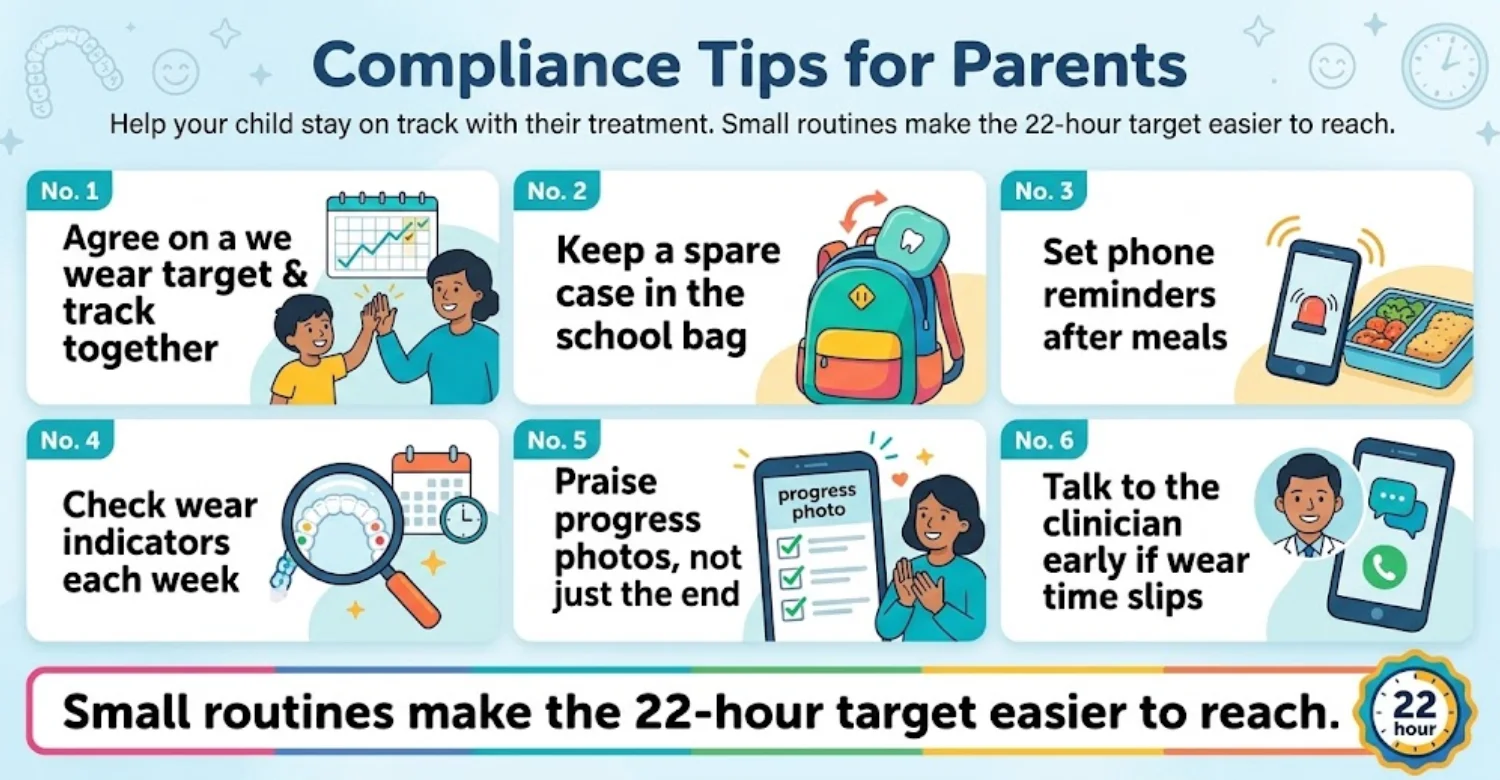
With aligners, your own habits matter most. Wear them at least 22 hours a day, and never less than 20. Remove them only to eat, drink anything other than water, and clean. Every extra hour out slows progress.
Other factors also shape your timeline:
Age: Younger patients' teeth move faster.
Jaw relationship: How your jaws line up affects the movements needed.
Bite type: Deep, open and crossbites take longer.
Spacing: Large gaps or heavy crowding add time.
Clinician skill: An experienced orthodontist plans more efficient movements.
Express vs Full Treatment
Many aligner systems offer two levels. Express (or "lite") plans use a limited number of trays. They suit minor crowding, small gaps or relapse after earlier braces. Treatment often lasts three to six months.
Full plans have no fixed tray limit. They cover moderate to complex cases and may include refinement trays near the end. Your clinician chooses the level after your scan. Picking express to save money on a complex case often leads to extra trays later.
Invisible Braces vs Traditional Metal Braces
Discreet options | Metal braces | |
Comfort | Aligners: smooth; lingual: tongue irritation early | Brackets can rub cheeks |
Speed | Similar for the same case | Similar for the same case |
Complex cases | Ceramic and lingual: yes; aligners: limited | Yes |
Eating | Aligners: no restrictions; fixed: avoid hard, sticky foods | Avoid hard, sticky, chewy foods |
Cleaning | Aligners: easy; fixed: needs extra tools | Needs extra tools |
Appearance | Hidden or subtle | Clearly visible |
Metal braces still offer the most control at the lowest price. Discreet options trade some of that for appearance and comfort. For most mild to moderate cases, results are comparable.
.jpg)
Ready to transform your smile?
Talk to our team and get a FREE treatment plan.
Invisible Braces for Adults
There is no upper age limit for orthodontic treatment. The only condition is healthy teeth and gums. Adult teeth do move a little more slowly, since the jaw has stopped growing.
Adults often prefer discreet treatment because of work, social life and photos. Aligners suit busy schedules, as visits are spaced out. Lingual braces suit adults who need complex movements but want zero visibility. Ceramic braces work well when budget matters. If you have gum disease, it must be treated before any tooth movement begins.
Aligners vs Veneers for Crooked Teeth
Veneers can make crooked teeth look straight in a few visits. But they cover the problem rather than fix it. They also require removing some enamel, which is permanent.
Aligners move the teeth themselves, keeping natural enamel intact. They take longer but correct the underlying position and bite. Some patients combine both: aligners first, then a few veneers for shape or colour.
Invisible Braces for Kids and Teens
Children and teenagers can benefit from discreet treatment too. Their growing jaws make tooth movement faster and more efficient. The right type depends on age, the problem and how responsible the child is with removable trays.
What Age Can Children Start?
An orthodontic check is usually advised around age 7. Some children need early treatment while baby and adult teeth are mixed. This phase may use removable appliances to guide jaw growth or stop habits such as thumb sucking and tongue thrusting.
Teeth move fastest while the jaws are growing, roughly between 12 and 20. Girls tend to reach this window earlier than boys. For children who need complex movements but may forget to wear trays, ceramic braces are a practical choice.
Teen Aligners: Eruption Space and Wear Indicators
Aligners for teenagers include two features adult trays often lack. First, eruption spaces leave room for adult teeth that are still coming in. The trays will not block them.
Second, wear indicators are small coloured dots that fade with use. They show parents and clinicians whether the trays are being worn enough. Teen systems also often include a few replacement trays, since lost aligners are common at this age.
How Much Do Invisible Braces Cost?
Cost depends on the type, your case and where you are treated. Discreet options are not always more expensive than metal braces. A short aligner course can cost less than a full set of metal braces.
US
Vitrin Clinic (Turkey)
Clear aligners / Invisalign
≈$1,800–$5,000
Flexible Veneer Packages
Transparent Estimated Pricing
Personalized Smile Design
Ceramic braces
≈$1,500–$2,500
Flexible Veneer Packages
Transparent Estimated Pricing
Personalized Smile Design
Lingual braces
≈$2,500–$4,000
Flexible Veneer Packages
Transparent Estimated Pricing
Personalized Smile Design
What Affects the Price
Case complexity: More movements need more trays or more adjustments.
Duration: Longer treatment means more visits and materials.
Refinements: Extra aligner sets may be needed near the end.
Retainers: Some quotes include them, others charge separately.
Compliance: Poor wear or lost trays can add cost.
Appliance care: Broken brackets or damaged trays need replacing.
Clinic costs: Location and running costs shape the final fee.
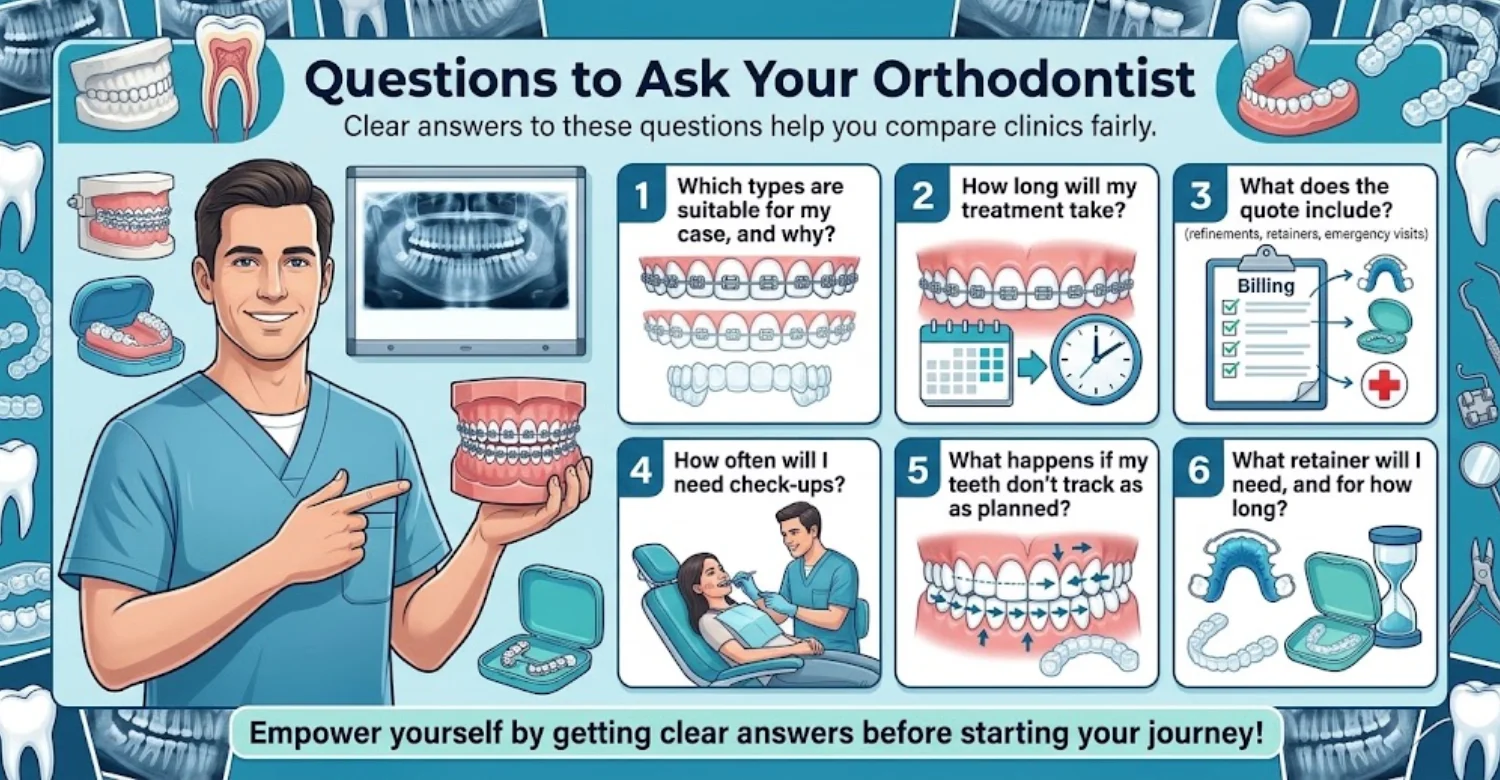
Always ask what a quote includes before you commit.
Are Cheap At-Home Aligners Worth It?
At-home aligners cost less up front. But you lose in-person checks, attachments and professional adjustments. Problems such as gum recession or a worsening bite may go unnoticed.
For very minor cosmetic changes, some people find them acceptable. For anything involving the bite, they carry real risk. Fixing a failed at-home treatment often costs more than supervised treatment would have from the start.
How to Choose the Best Invisible Braces
Use this checklist before you decide:
Your case: Mild issues suit aligners; complex bites may need fixed braces.
Your lifestyle: Frequent travel favours aligners; contact sports may favour fixed options.
Your discipline: Can you wear trays 22 hours a day?
Your budget: Ceramic is usually cheapest, lingual most expensive.
Your provider: Choose a specialist orthodontist where possible.
Your orthodontist may strongly recommend one option. Or they may present several suitable choices and let you decide.
Living With Invisible Braces
Daily life changes slightly during treatment. Most adjustments become routine within the first two weeks. The habits below help you stay comfortable and on schedule.
Putting In and Removing Your Aligners
Place each tray over your teeth and press gently with your fingertips until it clicks into place. Avoid biting trays into position, as this can crack them. To remove, ease the tray off from the back teeth first.
You will switch to a new set roughly every two weeks, depending on your plan. You can take trays out briefly for an important event or photo. Just remember that time counts against your daily 22 hours.
Cleaning Aligners
Clean your trays every time you take them out. Use a soft brush reserved for aligners, cool or lukewarm water and a mild, neutral soap. Avoid hot water, as it can warp the plastic.
Skip toothpaste and mouthwash on the trays. They can scratch the surface and make it cloudy. Use a dedicated cleaning or descaling product once or twice a week. Store trays in their original case to avoid loss or damage.
Cleaning Around Fixed Ceramic or Lingual Braces
Fixed braces trap food around brackets and wires. Brush after every meal, angling the brush above and below the wire. Use floss threaders or interdental brushes to clean between teeth.
Lingual braces need extra attention, as they are harder to see. A small mirror helps. Ceramic brackets can stain from coffee, tea or curry, so rinse after strongly coloured food and drinks.
Eating and Drinking
With aligners, remove the trays before eating and before any drink except plain water. Hot or sugary drinks can warp trays or trap sugar against teeth. Brush or rinse before putting them back.
With ceramic and lingual braces, avoid hard, sticky and chewy foods. Nuts, hard sweets and toffee can break brackets. Cut crunchy foods such as apples or carrots into small pieces.
Smoking and Habits That Stain Aligners
Smoking with aligners in can stain them yellow or brown, dulling your smile. If you smoke, remove the trays first. Brush your teeth before putting them back.
Every removal cuts into your wear time. Many patients use treatment as a reason to cut down. Fewer breaks mean better results, and both your teeth and your health benefit.
Does It Hurt?
Expect mild pressure, not sharp pain. With aligners, soreness usually appears with each new tray and fades within a couple of days. That pressure is a sign the treatment is working.
With fixed braces, the first three to five days bring mild to moderate soreness. After each adjustment, the discomfort is usually shorter and milder. Soft foods and over-the-counter pain relief help in the early days.
Monitoring Progress
Aligner patients usually visit every six to ten weeks. The clinician checks that each tooth is tracking with the plan. Some clinics also use remote photo monitoring between visits.
Fixed braces need closer contact. Expect a visit once or twice a month to adjust wires. Keep a simple photo log at home, as small changes are easier to see over weeks.
Our Patients Reviews
Ready to transform your smile?
Talk to our team and get a FREE treatment plan.
After Treatment: Retainers Keep Your Results
Teeth naturally try to drift back after treatment. A retainer holds them in their new position. Retainers come in two forms: fixed wires bonded behind the teeth, or removable clear trays.
Most patients wear a removable retainer at night, long term. If you are used to aligners, it will feel familiar and comfortable. Skipping it is the most common cause of relapse. Compare your options in our guide to fixed vs removable retainers. Habits such as poor tongue posture can also push teeth out of line.
How Vitrin Clinic Approaches Patient Care
Vitrin Clinic in Istanbul, Türkiye, takes an individualized, diagnosis-first approach to Invisalign and clear aligner treatment. Before recommending a treatment plan, the team assesses tooth alignment, bite relationships, gum health, existing restorations, and each patient’s orthodontic and aesthetic goals. This evaluation helps determine whether clear aligners are suitable and what results may be realistically achievable.
Invisible Braces Treatment at Vitrin Clinic
Vitrin Clinic offers Invisalign and clear aligner treatment to address selected orthodontic concerns, including:
Mild to Moderate Crowding – Clear aligners can gradually move crowded teeth into better alignment when the case is suitable.
Gaps Between Teeth (Diastema) – Aligners can help close spaces between teeth through controlled orthodontic movement.
Selected Bite Problems – Depending on the diagnosis, clear aligners may help correct certain overbites, underbites, crossbites, and open bites.
Crooked or Misaligned Teeth – A series of custom-made aligners can gradually improve tooth positioning without traditional metal brackets.
Relapse After Previous Orthodontic Treatment – Clear aligners may help manage teeth that have shifted after braces or earlier orthodontic treatment, depending on the extent of movement required.
Personalized Clear Aligner Treatment Planning
Vitrin Clinic personalizes Invisalign and clear aligner treatment based on each patient’s tooth alignment, bite, and oral health. Digital scans and treatment planning help guide tooth movement, while treatment duration depends on case complexity and aligner wear. Request a consultation for an individualized assessment and treatment plan.






Medical Disclaimer:
This article is for general information and does not replace a personal assessment by a qualified dentist. Prices are approximate 2026 averages, with UK and Turkey figures converted to US dollars, and may vary by clinic and case.
Book your FREE treatment plan with Vitrin Clinic and get a personalized assessment and treatment plan from our dental team.
Ready to transform your smile?
Talk to our team and get a FREE treatment plan.
References
FAQs
Dr. Rifat Alsaman has more than 5 years of clinical experience in dentistry and currently serves as the Head of the Medical Team at Vitrin Clinic. He is dedicated to providing exceptional patient care, overseeing treatment planning, and ensuring the highest clinical standards across the team. His expertise, attention to detail, and commitment to continuous professional development have helped countless patients achieve healthier, more confident smiles.


