Dental Implant
October 1, 2026
Single Dental Implant vs Multiple Implants: What Is the Difference?
 Dr. Rifat Alsaman
Replacing one missing tooth is very different from replacing several. That is why many patients research single dental implant vs multiple implants before starting treatment. The right approach depends on the number and location of missing teeth, bone condition, oral health, and goals. Understanding both options helps you plan with confidence.
Single Dental Implant vs Multiple Implants: What Is the Difference?
This comparison starts with understanding what each option includes and how each one restores missing teeth.
What Is a Single Dental Implant?
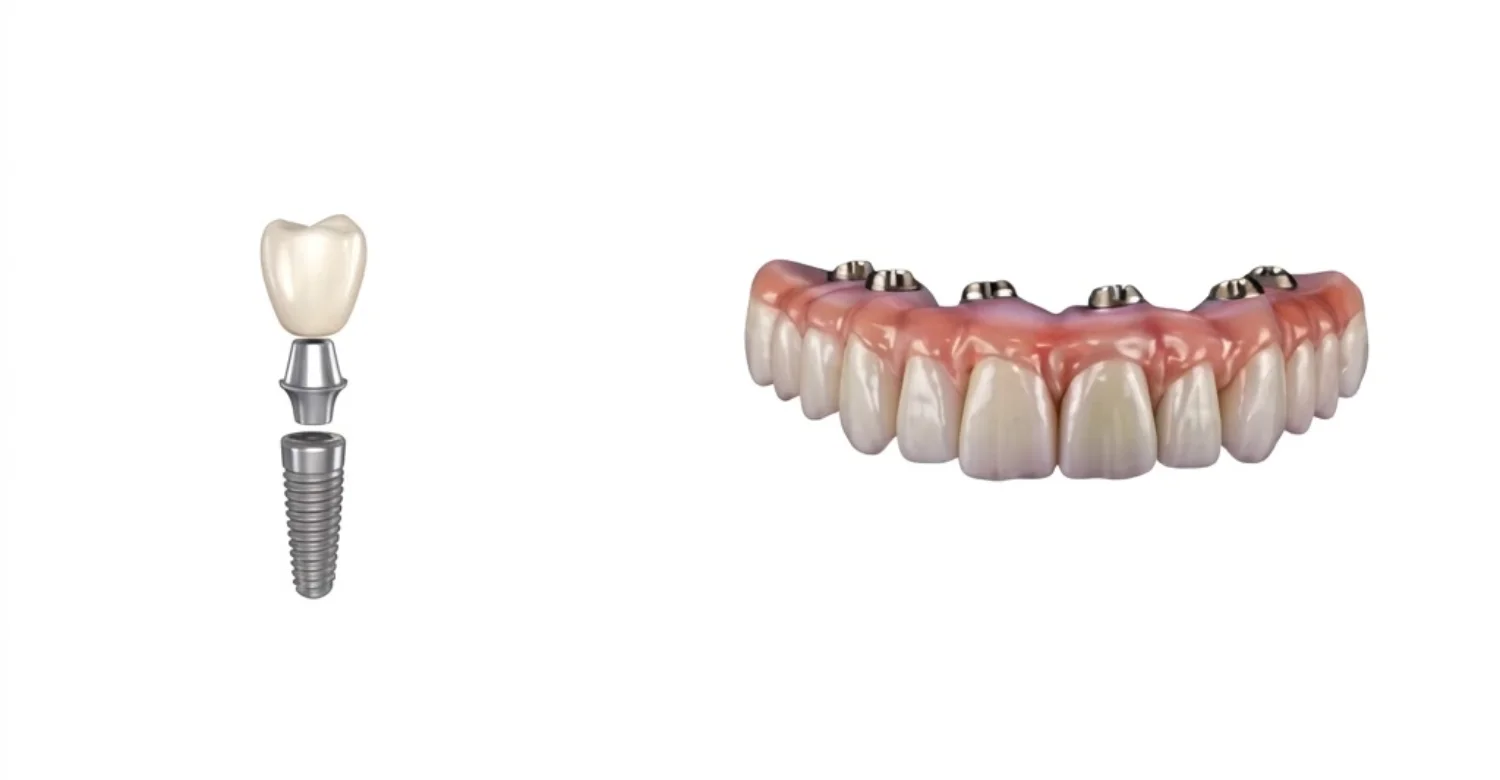
A single dental implant replaces one missing tooth using three parts. A titanium implant is placed in the jawbone as an artificial root. An abutment connects to it, and a custom crown sits on top. Like a natural tooth, it functions independently without relying on or altering neighboring teeth.
What Are Multiple Dental Implants?
Multiple dental implants are used to replace several missing teeth. Each implant may support its own crown. Alternatively, a few implants may support a larger fixed restoration, such as an implant-supported bridge. Individual replacement uses one implant per tooth, while bridges let fewer implants carry more teeth.
One Implant vs Multiple Implants: Key Differences
In one implant vs multiple implants, key differences include tooth count, implants required, complexity, and timeline. Multiple implants usually need more bone and planning. They also offer more restoration options, such as crowns or bridges. Maintenance differs too, as more implants mean more areas to clean and monitor.
Learn more about the Pain of Toothache
Causes of Tooth Loss
Before comparing your options, it helps to understand why teeth are lost and why the number of missing teeth matters.
What Causes a Person to Need a Dental Implant?
Several conditions can lead to tooth loss and the need for implants. These include severe decay, advanced gum disease, dental trauma, and badly damaged teeth that cannot be restored. Failed previous dental treatment is another common reason. Congenital absence of teeth, where teeth never develop, can also lead to implant treatment.
Why Does the Number of Missing Teeth Matter?
The number of missing teeth shapes the single dental implant vs multiple implants decision. One missing tooth is usually simpler to restore, while several missing teeth need broader planning. The position of the gaps also matters. Missing back teeth affect chewing more, while missing front teeth affect appearance and speech.
Note : All images used are for editorial and illustrative purposes only and may not originate from the original news provider or associated company.
Problems Caused by Missing Teeth
Whether one tooth or several are missing, gaps affect more than appearance. This is why the choice of treatment matters for long-term oral health.
What Happens When One Tooth Is Missing?
When one tooth is missing, chewing on that side can become harder. Neighboring teeth may gradually drift or tilt into the gap. The opposing tooth may also over-erupt, changing the bite. Without a tooth root to stimulate it, the jawbone around the gap begins to shrink over time.
What Happens When Multiple Teeth Are Missing?
Missing several teeth has a greater impact on chewing. It may also cause larger changes in bite and tooth position. Jawbone loss can progress across multiple areas. In some cases, reduced bone support can affect facial appearance, such as sunken cheeks or lips. Maintaining proper oral function also becomes increasingly difficult.
Understand the symptoms and treatment of Salivary Gland Infection
Single Dental Implant vs Multiple Implants: How Are They Placed?
The steps are similar for both, but the planning differs. Here is how the two procedures typically compare from start to finish.
Single Dental Implant Procedure
Treatment begins with a consultation, an examination, and imaging to assess the bone. The implant is then placed in the jawbone and left to heal. During this time, it fuses with the bone in a process called osseointegration. This often takes a few months. Finally, the abutment and custom crown are attached.
Multiple Dental Implant Procedure
Multiple implants require comprehensive treatment planning. The dentist assesses each missing-tooth area and determines the number and position of implants needed. Implants may be placed in one or several sessions, followed by a healing period. Once integration is complete, the final restoration, such as crowns or a bridge, is fitted.
Can Multiple Missing Teeth Be Replaced With Fewer Implants?
Yes, in many cases. Implant-supported bridges allow two implants to carry three or more replacement teeth. This works when bone and spacing are suitable, which makes it an important planning point. However, the exact number of implants requires a clinical and radiographic evaluation.
Explore the breakdown of Whole Mouth Dental Implants Cost
Individual Dental Implants Comparison: Which Approach Is Appropriate?
An individual dental implants comparison looks at which approach suits each case. In the end, clinical conditions guide the final choice.
When Is a Single Implant Usually Considered?
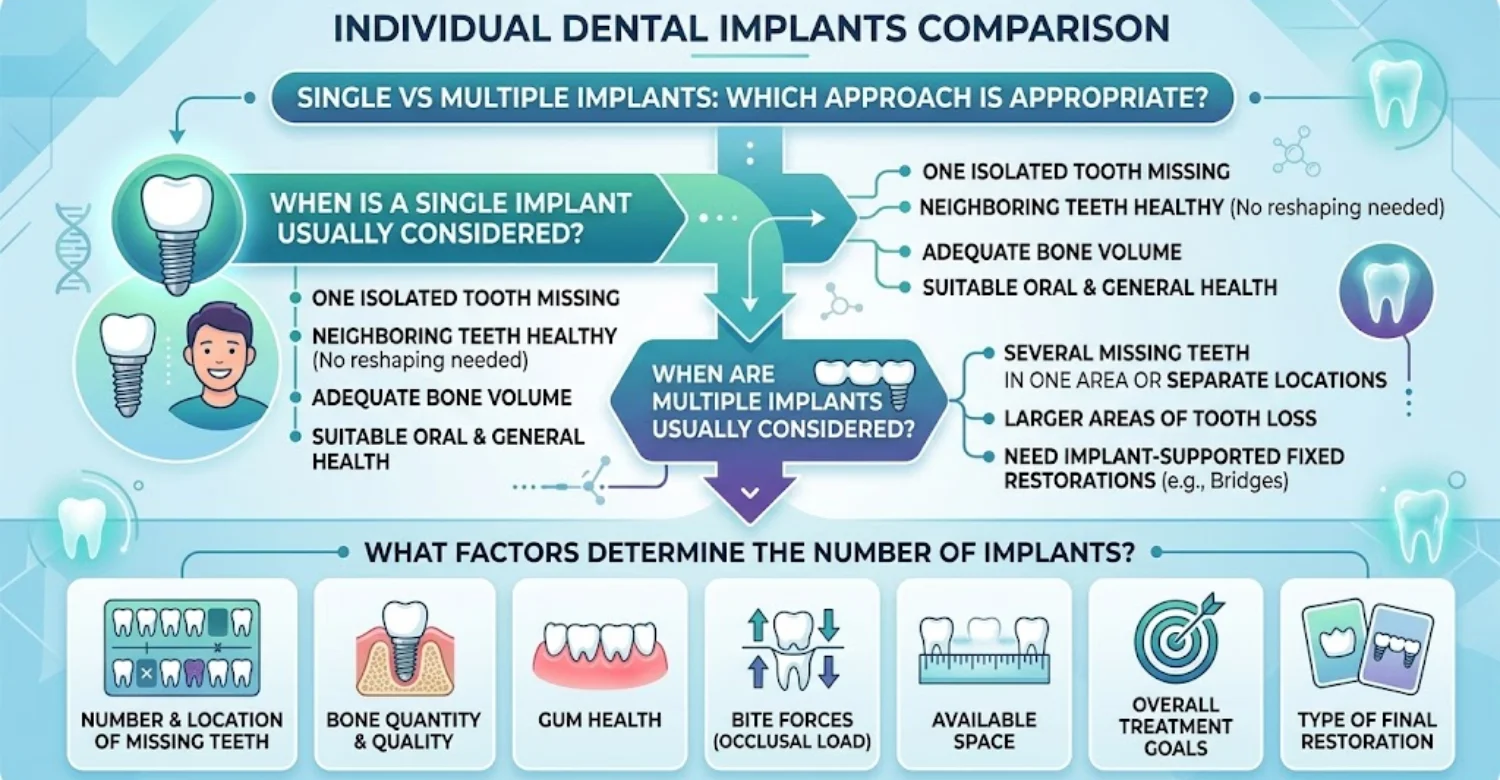
A single implant is usually considered when one isolated tooth is missing. The neighboring teeth should be healthy, so there is no need to reshape them for a bridge. Adequate bone volume at the site is important. Good oral and general health also support healing and long-term success.
When Are Multiple Implants Usually Considered?
Multiple implants are usually considered when several teeth are missing, in one area or across the mouth. They are also used for larger areas of tooth loss. They suit patients who want fixed restorations, such as bridges, instead of removable dentures. These restore chewing and appearance with greater stability.
What Factors Determine the Number of Implants?
The number of implants depends on the number and location of missing teeth. Bone quantity and quality, gum health, bite forces, and available space also matter. The overall treatment goals and the type of final restoration, such as crowns or bridges, shape the plan as well.
Multiple Implants vs Single Implant Cost
Cost is a major factor in the single dental implant vs multiple implants decision. The table below compares approximate costs in Turkey, the UK, and the US, in US dollars.
Treatment | Turkey | UK | US |
Single implant (implant, abutment, and crown) | $600 – $2,100 | $2,400 – $4,700 | $3,000 – $6,000 |
Three single implants (estimated) | $1,800 – $6,300 | $7,200 – $14,000 | $9,000 – $18,000 |
Bone graft (per site) | $150 – $700 | $270 – $2,000 | $300 – $3,000 |
Sinus lift | $900 – $2,250 | $1,050 – $3,350 | $1,500 – $5,000 |
Prices are approximate private-care ranges converted to US dollars. They vary by implant brand, crown material, and additional procedures. Published 2026 guide ranges place a single implant with its crown at roughly €500–€1,800 in Turkey. This compares with about £1,800–£3,500 in the UK and $3,000–$6,000 in the US. When comparing treatment abroad, also factor in travel, accommodation, time off work, and aftercare.
Discover treatment options for a Recessed Maxilla
What Affects the Cost of a Single Dental Implant?
The cost depends on the implant system, brand, and type of abutment. Crown material, such as zirconia or porcelain, also plays a role. Imaging and diagnostics, like CBCT scans, add to the total. Bone grafting and other procedures, such as extractions, also affect pricing.
Why Can Multiple Dental Implants Cost More?
Multiple implants often cost more because they involve more implants and more restorations, such as several crowns or a bridge. Planning is more extensive, and procedures may take longer. Some patients also need extra bone or gum procedures to prepare several sites. All of these increase the overall treatment cost.
Does One Implant Always Cost Less Than Multiple Implants?
Not necessarily. Total cost depends on the complete treatment plan, not just the implant count. A single implant that needs bone grafting may cost more than expected. On the other hand, fewer implants supporting a bridge may reduce costs. Always compare full plans, including restoration type and additional procedures.
Patient's Perspective
Knowing what to expect makes treatment easier. Here is how patients typically experience each option from start to finish.
What Does a Single Dental Implant Feel Like?
Placement is performed under local anesthesia, so patients usually feel pressure rather than pain. Mild swelling, sensitivity, or discomfort may last a few days. A temporary tooth may be used during the healing period. Once the final crown is fitted, most patients adapt quickly. It feels much like a natural tooth.
What Is It Like to Receive Multiple Dental Implants?
Receiving multiple implants usually involves a longer, more involved treatment. Recovery depends on the number and location of implants. Swelling or discomfort may be slightly greater than with one implant. Patients may need a short period to adjust to chewing and speaking with new restorations. Even so, adaptation is usually smooth.
Find out causes and solutions for a Mucocele Lip
Common Patient Concerns
Common concerns include pain, treatment duration, cost, appearance, recovery, and long-term maintenance. Discomfort is usually manageable, and implant crowns are designed to look natural. With good oral hygiene and regular checkups, implants can last many years. Discussing concerns openly helps set realistic expectations.
Ready to transform your smile?
Talk to our team and get a personal FREE treatment plan.
Doctor's Perspective
Clinically, single dental implant vs multiple implants is decided through careful evaluation, not by counting missing teeth.
How Does a Dentist Evaluate Implant Candidates?
A dentist evaluates candidates through a clinical examination and dental imaging, often including 3D scans. Bone volume and density are assessed, along with gum health. A bite evaluation helps the dentist understand chewing forces. Medical and dental history also matter, since diabetes or smoking can affect healing and implant success.
How Does a Dentist Choose Between One Implant and Multiple Implants?
The dentist considers the number and location of missing teeth, bone availability, and functional needs such as bite force. The final restoration design, whether individual crowns or a bridge, also matters. It determines how many implants are needed and where they are placed.
Why Is Individual Treatment Planning Important?
Implant treatment cannot be determined by tooth count alone. Two patients with the same number of missing teeth may need different implant configurations. This can be due to differences in bone levels, gum health, or bite. Personalized imaging and planning ensure each implant is placed where it offers the best support and stability.
Read about the procedure for Intraoral Periapical First
When Is It Serious and Requires a Checkup?
Whatever your treatment plan, certain signs mean you should see a dentist promptly rather than waiting.
Signs That a Missing Tooth Needs Evaluation
A missing tooth should be evaluated if chewing becomes difficult or neighboring teeth start moving or tilting. Changes in your bite also need attention. The same applies to gum problems around the gap or a sunken area in the jaw. Early assessment keeps more options open and may reduce the need for bone grafting.
Warning Signs After Implant Placement
After implant placement, contact your dentist immediately if you notice severe or worsening pain or significant swelling. Persistent bleeding, pus, drainage, or fever are also warning signs. Implant mobility, or difficulty opening the mouth or swallowing, requires urgent attention too. These signs may indicate infection or implant problems and should never be ignored.
Find out the answer to Is Root Canal Painless?
When the Patient Should Rest
Recovery needs differ between the two options. They mainly depend on how many implants are placed and whether extra procedures are needed.
Rest After a Single Dental Implant
After a single implant, most patients rest for the remainder of the day. They usually return to normal routines within a day or two. Avoid strenuous activity for a few days, as your dentist advises. Mild discomfort usually improves quickly, allowing a gradual return to normal activities.
Rest After Multiple Dental Implants
Multiple implants may require slightly more rest, depending on the number and location of implants. Additional procedures, such as bone grafting or sinus lifts, may extend recovery. Always follow your individualized post-operative instructions, which your dental team tailors to your treatment.
Rest Tips
Good aftercare supports healing whether you receive one implant or several. These simple habits help make your recovery smoother.
How to Support Recovery After Implant Surgery
Follow your post-operative instructions carefully. Keep the area clean with gentle brushing and any recommended rinses. Choose soft, cool foods during early recovery, and avoid chewing directly on the implant site. Avoid smoking, which slows healing, and skip strenuous activity when advised. Finally, attend all follow-up appointments.
.jpg)
.jpg)
.jpg)

About Vitrin Clinic
At Vitrin Clinic, every single dental implant vs multiple implants decision starts with a detailed assessment. Each plan reflects the patient's mouth and personal goals. The process begins with a thorough clinical examination and advanced dental imaging. These evaluate bone volume, gum health, and the position of missing teeth. Our team then explains the available options clearly. These include individual implants, implant-supported bridges, and any additional procedures that may be needed. Each treatment plan balances function, appearance, comfort, and long-term stability. Throughout treatment and recovery, Vitrin Clinic provides close follow-up to support healing and lasting, natural-looking results.
What We Notice Clinically
At Vitrin Clinic, we evaluate the number, location, and condition of missing teeth before planning implants. The Head of our Medical Team, a Cosmetic Dentist, emphasizes individualized planning. This planning is based on bone condition, oral health, tooth position, and the desired final restoration. The implant number is set only after clinical and radiographic assessment, because bone and space differ for every patient.
Tips for the Patients
Get a complete dental and radiographic assessment before treatment. Ask how many implants are recommended and why, and discuss the final restoration in advance. Ask whether bone grafting is required, as it affects cost and timing. Follow post-operative instructions carefully. Keep up regular implant follow-ups and good oral hygiene.
Resource:
https://pmc.ncbi.nlm.nih.gov/articles/PMC10839890/
FAQs
Dr. Rifat Alsaman has more than 5 years of clinical experience in dentistry and currently serves as the Head of the Medical Team at Vitrin Clinic. He is dedicated to providing exceptional patient care, overseeing treatment planning, and ensuring the highest clinical standards across the team. His expertise, attention to detail, and commitment to continuous professional development have helped countless patients achieve healthier, more confident smiles.


