

Teeth abnormalities in children cover any unusual pattern in tooth number, shape, size, structure, or eruption timing. Reported rates vary widely. Studies show these conditions affect anywhere from about 0.012% to 6% of children. The rate can run far higher, depending on the specific condition and population studied. Some children are born with natal teeth. Others develop enamel defects, or show missing or extra teeth as their permanent dentition forms. Understanding this variation helps parents recognize when a change is simply normal and when it needs professional pediatric dental evaluation. Early attention often makes treatment simpler and more effective later on.
What Are Teeth Abnormalities in Children?
Teeth abnormalities in children are deviations from typical tooth development. They're grouped into numerical, structural, and positional categories. These may involve missing teeth, extra teeth, enamel defects, or irregular eruption timing. Many variations are minor and harmless. Others reflect abnormal tooth development that benefits from monitoring, diagnosis, and, when needed, coordinated dental treatment.
What Causes Dental Abnormalities in Children?
These conditions usually stem from genetics, disrupted tooth-bud formation, trauma, infection, nutritional deficiencies, or systemic medical conditions during early development. Some cases run in families. Others appear without any clear inherited pattern. Environmental factors during pregnancy or infancy can also play a role, including habits such as prolonged pacifier use — see how pacifier use can affect a child's teeth. Certain medications, too, may influence how a child's teeth form, shape, and eventually erupt.
What Is Abnormal Tooth Development in Children?
Abnormal tooth development refers to teeth that differ from expected size, shape, number, or mineral structure. This can include fused teeth, unusually small or large teeth, missing enamel, or teeth erupting far earlier or later than typical. Recognizing this early allows dental professionals to track changes and plan appropriate care as the child grows, often starting with a child's first dental visit.
What Are the Most Common Children Teeth Problems?
Common children teeth problems include tooth decay, delayed or early eruption, and missing or extra teeth. Enamel defects such as hypomineralization are also frequent. Molar Incisor Hypomineralization alone has been reported at a pooled prevalence of roughly 14.2% to 15.5% globally in large meta-analyses. These problems vary in severity. Most respond well to timely dental attention.
What Are the Types of Teeth Abnormalities?
Types of teeth abnormalities generally fall into three groups. Numerical abnormalities affect tooth count, structural abnormalities affect enamel or dentin, and positional abnormalities affect eruption or alignment. Recognizing which category a child's condition belongs to helps guide diagnosis. Each type tends to have distinct causes and treatment pathways.
Tooth Shape Abnormalities
Tooth shape abnormalities include fused teeth, extra cusps, dens invaginatus, taurodontism, and protruding front teeth, sometimes referred to as buck teeth in children. In each of these, the tooth crown or root develops an unusual form. These irregularities can affect chewing efficiency. They sometimes create spaces where decay develops more easily, making regular dental monitoring important for children with noticeable shape differences.
Tooth Size Abnormalities
Tooth size abnormalities involve teeth that are unusually small (microdontia) or unusually large (macrodontia) compared with the rest of the dentition. These differences can affect spacing, bite alignment, and appearance. Microdontia is sometimes linked to hypodontia. Macrodontia, meanwhile, may crowd neighboring teeth as the child's jaw continues to develop.
Tooth Number Abnormalities
Tooth number abnormalities include missing teeth, known as hypodontia, and extra teeth, known as supernumerary teeth. Large studies report hypodontia prevalence around 13–15%. Supernumerary teeth affect roughly 0.7–2.4% of children depending on the population. This makes tooth number abnormalities among the more frequently studied dental conditions.
Enamel Defects in Children
Enamel defects range from mild discoloration to significant enamel hypoplasia or hypomineralization, where enamel forms thin, pitted, or weakened. School-screening studies have found enamel hypoplasia in about 1.2% of children. Broader enamel hypomineralization of any kind may affect roughly one in four children worldwide, according to recent epidemiological reviews.
Developmental Tooth Abnormalities
Developmental tooth abnormalities arise during the earliest stages of tooth formation, often before birth. They can affect enamel, dentin, root structure, or overall tooth number. Genetic conditions such as amelogenesis imperfecta are rarer. Prevalence estimates range from about 1 in 700 to 1 in 14,000, depending on the population studied.
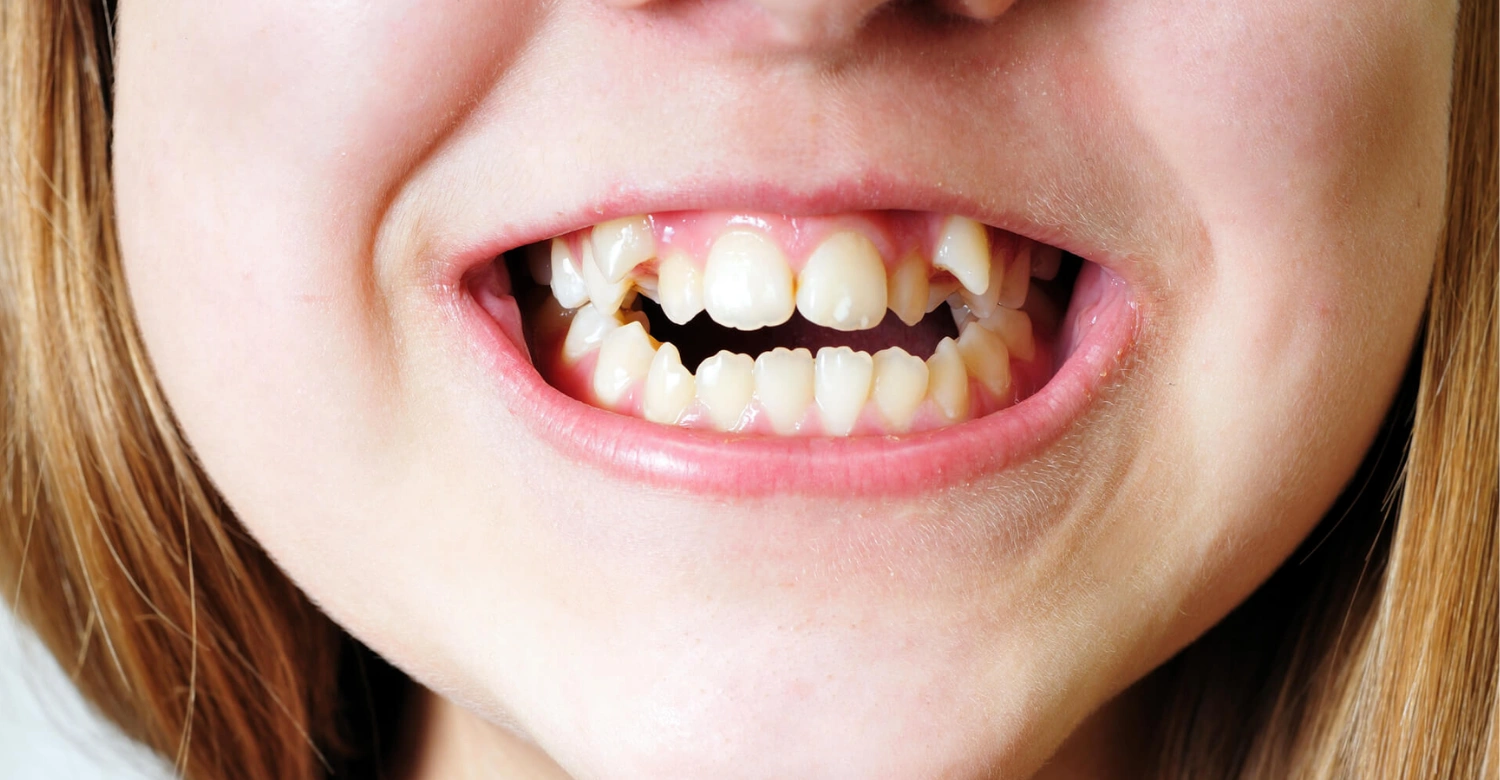
Types of Teeth Abnormalities in Children
These conditions span numerical, structural, and positional categories. Each requires a slightly different diagnostic and treatment approach. Below is a closer look at how each one typically presents in growing children: missing teeth, extra teeth, shape and size irregularities, enamel defects, and eruption problems.
Missing Teeth in Children
Missing teeth in children can affect a single tooth or several, most often the lateral incisors, premolars, or wisdom teeth. Reported hypodontia prevalence sits around 13–17% in large studies. This makes it one of the more common numerical dental abnormalities encountered in general dental practice.
Extra Teeth in Children
Extra teeth usually appear as a single mesiodens near the upper front teeth. Multiple supernumerary teeth can occur too, particularly alongside certain syndromes. Studies estimate they affect roughly 0.7% to 2.4% of the population. Early identification helps prevent overcrowding or delayed eruption of nearby permanent teeth.
Abnormal Tooth Shape and Size
Abnormal tooth shape and size includes fused teeth, peg-shaped laterals, dens invaginatus, microdontia, and macrodontia. These variations can be isolated findings or associated with syndromes affecting overall dental development. Children with noticeable shape or size differences benefit from monitoring. This helps catch related issues before they affect bite or appearance.
Enamel Defects in Children
Enamel defects include hypoplasia, where enamel forms thin or pitted, and hypomineralization, where enamel is present but poorly mineralized and prone to breakdown. Meta-analyses estimate that a substantial share of children worldwide show some degree of enamel hypomineralization affecting at least one tooth. Some reviews put the figure around a quarter of all children.
Tooth Eruption Problems
Tooth eruption problems take several forms: natal teeth present at birth, neonatal teeth appearing within the first month, delayed eruption, and impacted teeth unable to break through the gum. A global meta-analysis found natal teeth affect roughly 1 in 289 newborns. Neonatal teeth affect about 1 in 2,212, with a small share turning out to be supernumerary.
Tooth Color and Structure Abnormalities
Tooth color and structure abnormalities include intrinsic discoloration from medication exposure, trauma, or genetic conditions like dentinogenesis imperfecta. This condition affects dentin strength and gives teeth a translucent, discolored appearance. These are rare. Swedish data suggests roughly 1 in 45,455 individuals are affected, yet these structural issues can significantly weaken tooth durability.
How Are Teeth Abnormalities in Children Diagnosed?
Diagnosing these conditions combines clinical examination, patient and family history, and imaging when needed. A thorough evaluation helps distinguish harmless developmental variation from conditions requiring active management. This forms the foundation for any treatment plan involving missing teeth, extra teeth, enamel defects, or eruption irregularities.
What Does a Pediatric Dental Examination Include?
A pediatric dental examination typically includes a visual and tactile check of tooth number, shape, color, and alignment. It also involves a review of eruption timing compared with expected milestones. The dentist also assesses gum health, bite relationship, and any signs of decay during a routine dental checkup for kids. Together, these help identify problems at an early, more manageable stage.
When Are Dental X-Rays Needed?
Dental X-rays are typically needed when a tooth fails to erupt on schedule or when extra or missing teeth are suspected. They're also used when internal tooth structure needs closer evaluation. Imaging allows dentists to see unerupted teeth beneath the gum line and confirm tooth number. It also helps assess root and enamel development that isn't visible during a standard visual exam.
How Can Dentists Identify Children Tooth Development Problems?
Dentists identify these problems by comparing a child's eruption pattern, tooth count, and enamel quality against typical developmental timelines. Findings are then supplemented with X-rays when necessary. Family dental history and any relevant medical conditions are also considered. Several of these problems have genetic or systemic links worth investigating further, sometimes involving a pediatric endodontist for pulp-related concerns.
Clinical Note
Early evaluation can help distinguish normal variations in tooth eruption from developmental abnormalities that may require professional attention. Recognizing these issues sooner rather than later generally supports more straightforward, less invasive treatment planning. This matters as the child's permanent dentition continues to develop over subsequent years.
What Treatments Are Available for Teeth Abnormalities in Children?
Treatment ranges from simple observation to restorative, orthodontic, or surgical care, depending on the specific condition and its impact on function or appearance. The right approach depends on the child's age, the type of abnormality, and how it may affect future permanent teeth.
How Are Missing Teeth in Children Treated?
Missing teeth may be monitored during growth, with space maintainers used to preserve room for future permanent teeth. They can eventually be addressed through orthodontic treatment for children, bridges, or implants once jaw growth is complete. The chosen approach depends on how many teeth are missing and where they're located within the arch.
How Are Extra Teeth in Children Treated?
Extra teeth are often removed if they're causing crowding, delaying eruption of permanent teeth, or affecting alignment. Some supernumerary teeth that aren't causing problems may simply be monitored instead. Timing of extraction is carefully considered to avoid disrupting the eruption path of nearby developing permanent teeth.
How Are Enamel Defects in Children Managed?
Enamel defects are managed with fluoride treatments, remineralizing agents, dental sealants for kids, or restorative fillings and crowns for more severe cases like hypomineralized molars. The goal is protecting weakened enamel from further breakdown while managing sensitivity. Left untreated, these defects can progress to more extensive decay over time.
Can Orthodontic Treatment Correct Dental Abnormalities in Children?
Orthodontic treatment can correct many issues related to spacing, crowding, and bite misalignment, including problems caused by missing or extra teeth. Braces, expanders, or clear aligners gradually reposition teeth — see what pediatric braces involve and how braces for kids are planned. Orthodontic care is often coordinated with restorative or surgical treatment when multiple abnormalities occur together.
Can Restorative Dentistry Help Children With Tooth Abnormalities?
Restorative dentistry helps through fillings, crowns, veneers, or bonding that rebuild damaged or malformed tooth structure. Many parents ask whether kids need dental crowns, and in cases of significant decay or structural weakness, tooth caps for kids can protect the tooth until it's naturally replaced. These options address both function and appearance, particularly for enamel defects, structural anomalies, or teeth affected by trauma. They give children reliable chewing ability and a more typical smile as they grow.
Clinical Note
Treatment may involve observation, preventive care, restorative procedures, orthodontic management, or a combination of approaches depending on the specific abnormality. Children's dental conditions vary so widely in severity that individualized planning generally produces better long-term outcomes than a single standardized treatment approach.
Can Teeth Abnormalities in Children Affect Their Oral Health?
These conditions can influence oral health in several ways, from raising decay risk to altering bite function and speech development. Left unaddressed, some may also affect how permanent teeth erupt and align, making ongoing monitoring an important part of long-term dental care.
Can Abnormal Teeth Increase the Risk of Tooth Decay?
Abnormal teeth can increase the risk of tooth decay in children, particularly when enamel defects leave surfaces thin, pitted, or poorly mineralized, making them more vulnerable to bacteria and acid exposure. Irregularly shaped or crowded teeth can also trap food and plaque more easily — it's worth understanding the difference between tooth decay and a cavity. This further raises decay risk if oral hygiene isn't closely maintained.
Can Dental Abnormalities Affect a Child's Bite?
Dental abnormalities can affect a child's bite when missing, extra, or misaligned teeth disrupt normal spacing and jaw relationships. Malocclusion linked to these issues is common. Systematic reviews estimate global childhood malocclusion prevalence around 56%. Rates range from roughly 48% in Asia to as high as 81% in parts of Africa.
Can Tooth Abnormalities Affect Speech or Chewing?
Tooth abnormalities can affect speech and chewing, particularly when missing or misaligned teeth interfere with tongue placement or the ability to properly break down food. Structural enamel defects causing sensitivity may also lead children to avoid chewing on certain teeth. This can gradually affect eating habits and overall oral function.
Can Children Tooth Development Problems Affect Permanent Teeth?
Problems affecting primary teeth can sometimes influence permanent teeth, since primary teeth help guide the eruption path and spacing of teeth that follow — this is one reason baby teeth are so important. Infections, trauma, or early loss may occasionally affect the underlying permanent tooth bud. This underscores the value of early evaluation.
Tips for the Patients
Parents should maintain regular dental cleanings for kids, encourage effective brushing and flossing, and limit frequent sugary snacks and drinks. They should seek professional evaluation if they notice unusual tooth shape, delayed eruption, missing teeth, or extra teeth. These habits support healthier outcomes for children showing signs of dental abnormalities.
When Should Parents See a Dentist About Teeth Abnormalities in Children?
Parents should see a dentist whenever eruption seems significantly delayed, teeth look unusually shaped or discolored, or a child reports persistent discomfort. Early professional evaluation helps clarify whether a variation is simply normal or needs active monitoring and treatment. Knowing when to take a child to the dentist makes this decision easier for parents.
What Signs of Tooth Abnormalities Should Parents Watch For?
Signs parents should watch for include teeth that appear unusually small, large, or discolored, and gaps that seem too wide or too narrow. Teeth erupting far earlier or later than siblings did are another signal worth noting. So is persistent pain or swelling near developing teeth, which may call for an emergency dentist for kids.
When Is Delayed Tooth Eruption a Concern?
Delayed tooth eruption becomes a concern when a child shows no sign of a particular tooth well past the typical age range. This is especially true if adjacent teeth have already come in. This pattern can suggest impaction, missing teeth, or other developmental issues worth investigating with dental imaging.
When Should Missing or Extra Teeth Be Evaluated?
Missing or extra teeth should be evaluated as soon as they're suspected, ideally through a routine dental visit combined with imaging if needed. Early evaluation allows dentists to plan spacing, timing of any extraction, and future orthodontic or restorative needs proactively.
Clinical Note
A dental evaluation is particularly important when a child has significant delays in eruption or unusual tooth development. Persistent pain, swelling, or noticeable changes in tooth position or structure are also warning signs. These signs often indicate a condition that benefits from professional assessment rather than simple observation at home.
How Can Parents Prevent Dental Abnormalities in Children?
Genetic dental abnormalities can't always be prevented. Still, parents can reduce risk factors linked to enamel defects, decay, and some eruption problems. Consistent oral hygiene, balanced nutrition, and regular professional monitoring all help throughout a child's early development.
Can Good Oral Hygiene Prevent Tooth Abnormalities?
Good oral hygiene can't prevent genetic tooth abnormalities. Consistent brushing, flossing, and fluoride use still help. They protect existing enamel and reduce decay risk in teeth that already have structural weaknesses. For children with known enamel defects, careful hygiene becomes especially important in preventing further breakdown of vulnerable tooth surfaces over time.
How Does Nutrition Affect Children's Tooth Development?
Nutrition affects tooth development significantly, since deficiencies in calcium, vitamin D, and other nutrients during early development can weaken forming enamel and dentin. Balanced nutrition supports stronger tooth structure. High fever, illness, or malnutrition during infancy has been linked to enamel defects and other developmental issues.
How Important Are Regular Dental Checkups?
Regular dental checkups are important because they allow early detection of dental abnormalities before problems become more complex. Routine visits, including advanced options like pediatric laser dentistry, let dentists track eruption timing, monitor enamel quality, and catch missing or extra teeth early, often making treatment simpler than if abnormalities were discovered later in development.
Tips for the Patients
Parents can support healthy dental development by providing a balanced diet, maintaining daily oral hygiene, and using fluoride toothpaste appropriately. Protecting children's teeth from trauma and keeping regular dental appointments also matter. Together, these habits meaningfully reduce the impact of many common dental problems over the long term, especially since teeth caps for children and other restorative options are more effective when problems are caught early.
Teeth Abnormalities in Children at Vitrin Clinic
Vitrin Clinic provides dental evaluations and treatment planning for children with concerns related to tooth development. This covers enamel defects, missing teeth, extra teeth, eruption problems, and other dental abnormalities. The clinical team can assess the child's individual condition and develop an appropriate treatment approach based on age, oral health, and developmental needs.
What We Notice Clinically
At Vitrin Clinic, the clinical team highlights the importance of combining early assessment with an individualized treatment plan. This matters most when children show signs of abnormal tooth development. Because these conditions vary so widely, Vitrin Clinic focuses on tailoring each evaluation to the specific pattern observed in that child.
Clinical Note
Every child's dental development is different, so treatment decisions should be based on a professional examination rather than appearance alone. Vitrin Clinic emphasizes that accurately identifying the type of abnormality present is the first step toward building a realistic, individualized treatment plan.
Resource:
In conclusion, teeth abnormalities in children can affect normal dental development and should be identified early through regular dental examinations. Research published in Children found dental anomalies in 11.17% of the children studied, with root dilaceration and hypodontia among the most common findings. These results highlight the importance of early detection and appropriate dental care to support healthy tooth development.
https://pmc.ncbi.nlm.nih.gov/articles/PMC10136972/
https://pmc.ncbi.nlm.nih.gov/articles/PMC12357654/
https://pmc.ncbi.nlm.nih.gov/articles/PMC11818895/


