
Vitamin K supports normal blood clotting and healthy bone metabolism. Its oral-health role is less firmly established. Many people search for vitamin K for teeth hoping for stronger enamel. Current evidence does not show that supplements directly strengthen healthy enamel. Bleeding gums are more commonly linked with plaque-induced gingivitis or periodontal disease. Vitrin Clinic assesses oral symptoms individually rather than assuming one nutritional cause. This guide covers evidence, nutrition, safety, diagnosis, treatment, and costs.
What Is Vitamin K and Why Does the Body Need It?
Vitamin K is a fat-soluble nutrient with two well-established roles. It supports blood clotting and bone metabolism. It activates proteins through a process called gamma-carboxylation. Most vitamin K comes from foods, especially green vegetables. Gut bacteria also produce certain forms. NIH guidance states that deficiency is rare in healthy adults. Understanding these basics helps when judging claims about vitamin K for teeth. The body stores only small amounts compared with other fat-soluble vitamins. Absorption disorders and some medications can therefore change vitamin K status.
What does vitamin K do in the body?
Vitamin K activates clotting factors such as prothrombin. It also activates proteins involved in bone metabolism. Without enough vitamin K, clotting becomes less efficient. Severe deficiency can cause bruising or abnormal bleeding. However, biochemical importance does not prove that extra supplements help. A nutrient can be essential while additional amounts provide little advantage. Clinical outcomes depend on baseline status, diet, and overall health. NIH information emphasizes food-based intake for most people.
What are the main forms of vitamin K?
The two main dietary forms are vitamin K1 and vitamin K2. K1 is called phylloquinone and comes mainly from plants. K2 refers to menaquinones found in fermented and animal foods. Research examines whether these forms behave differently in bone pathways. No single form is established as a dental supplement. Dietary variety usually supplies both forms naturally. Marketing language often overstates the differences between these forms. Clinical decisions should rely on nutritional status and medical guidance.
Vitamin K1 (phylloquinone)
Vitamin K1 is the main dietary form found in plants. Kale, spinach, and collard greens are rich sources. Absorption improves with dietary fat because vitamin K is fat-soluble. Most people obtain enough K1 from balanced eating. People taking warfarin should keep their K1 intake consistent. Sudden dietary changes can alter anticoagulation control. The body can also convert some phylloquinone into other active forms. Certain digestive disorders can reduce how much K1 is absorbed.
Vitamin K2 (menaquinones)
Vitamin K2 describes a family of compounds called menaquinones. Examples include MK-4 and longer-chain forms. K2 occurs in fermented foods and some animal products. Researchers study K2 because several dependent proteins operate in bone. Supporters of vitamin K for teeth often cite this bone research. However, bone mechanisms do not prove that supplements improve teeth. Enamel, dentin, cementum, and alveolar bone each respond differently. A balanced diet remains the starting point for adequate intake.
Why is vitamin K important for blood clotting and bone health?
Vitamin K activates several proteins required for normal coagulation. This matters clinically when deficiency causes abnormal bleeding. It also activates osteocalcin, a protein made by bone-forming cells. Supplements do not automatically increase bone strength in everyone. Calcium, vitamin D status, age, and disease also matter. Persistent bleeding or bone concerns deserve medical assessment. NIH describes vitamin K as important for healthy bones and normal clotting. Suspected deficiency warrants investigation rather than assumption.
Is vitamin K directly involved in tooth health?
Direct evidence for tooth-specific benefits remains limited. Enamel is highly mineralized and does not remodel like bone. The supporting jawbone is more metabolically active than mature enamel. Vitamin K may therefore matter more for supporting bone than enamel. Reviews of vitamins and oral health describe its effects as unclear. Fluoride, plaque control, and dental checkups remain central. Dentin and cementum also have different biological properties from bone. Nutrition should therefore complement established preventive dental care.
Is Vitamin K Good for Teeth?
Vitamin K has an important systemic role, but direct dental benefits remain uncertain. Evidence does not support treating cavities with supplements. It also does not establish vitamin K for teeth as a standard enamel strategy. The clearest oral link involves bleeding when severe deficiency exists. Healthy adults usually get enough from food. Unexplained bleeding needs evaluation for both dental and medical causes. Vitrin Clinic emphasizes assessment before attributing symptoms to nutrition.
What does the evidence say about vitamin K and teeth?
Evidence directly linking vitamin K intake with better dental outcomes remains limited. Vitamin C and vitamin D have stronger established oral roles. A review of vitamins and oral health called vitamin K effects unclear. Observational links may reflect healthier diets overall. Randomized trials on vitamin K for teeth are still lacking. Biological plausibility should not be confused with proven benefit. Vitamin C deficiency clearly causes bleeding and inflamed gums. Vitamin D has established roles in calcium absorption and bone metabolism.
Can vitamin K strengthen teeth or support mineralization?
Vitamin K activates proteins linked to bone and mineral metabolism. However, enamel strengthening works differently from bone remodeling. Mature enamel cannot regenerate like living bone. Saliva, fluoride, bacteria, and acid exposure mainly control enamel integrity. Current evidence does not show that supplements rebuild damaged enamel. Weak or damaged teeth still need a dental diagnosis. Research into mineralization pathways remains valuable, especially for supporting bone. Laboratory mechanisms should not be presented as proven dental treatments.
Can vitamin K prevent cavities or tooth decay?
No clinical recommendation supports using vitamin K to prevent cavities. Decay develops from bacteria, sugars, saliva, tooth structure, and time. Fluoride remains a central evidence-based prevention method. Daily plaque removal and limited sugar exposure also reduce risk. Claims about vitamin K for teeth and cavities lack clinical support. Decay should be assessed through examination and appropriate radiographs. Vitamin K-rich foods can still form part of a healthy diet. Treatment for decay may involve fluoride, remineralization strategies, or fillings.
Does vitamin K help maintain the bone supporting the teeth?
The alveolar bone surrounds and supports tooth roots. Periodontitis can destroy this bone through chronic inflammation. Vitamin K participates in bone metabolism, so the link is plausible. However, it cannot remove plaque, calculus, or bacterial biofilm. Evidence does not establish it as a treatment for periodontal bone loss. Dental therapy remains essential when bone destruction is present. Vitamin D, calcium, and protein also contribute to skeletal health. Confirmed deficiencies may need targeted nutritional treatment.
What is established evidence versus emerging research?
Established evidence comes from consistent findings in well-designed human studies. Emerging research often begins with laboratory or observational work. Vitamin K has established roles in clotting and bone metabolism. Its direct effects on teeth remain less certain. This distinction matters when supplements are marketed for dental health. The evidence types below show why results must be read carefully. Patients deserve clear explanations about evidence quality. This prevents both unnecessary supplementation and false reassurance about oral disease.
Human clinical evidence
Human trials directly measure outcomes such as bleeding, pockets, or caries. Stronger trials compare supplements with placebo or standard care. For vitamin K for teeth, direct clinical trials remain limited. Trials must also control diet, hygiene, smoking, and medications. Current evidence does not justify routine dental vitamin K treatment. Trials also need adequate sample sizes and meaningful follow-up. Testimonials cannot replace randomized evidence.
Observational research
Observational studies examine relationships without randomly assigning treatment. They can reveal useful patterns and generate hypotheses. However, association does not prove causation. People with healthier diets may also smoke less and visit dentists more. Such findings should guide research rather than dictate supplementation. Socioeconomic factors can influence both nutrition and dental outcomes. Vitamin status may also reflect overall health rather than cause disease.
Laboratory and experimental research
Laboratory studies explain how nutrients interact with cells and proteins. They may examine inflammation, bone cells, or enamel components. Laboratory concentrations may differ from levels reached through diet. A cellular effect does not guarantee clinical improvement. These findings remain preliminary until human trials confirm them. Oral tissues interact with saliva, bacteria, diet, and immunity. Experimental models simplify these complex conditions considerably.
What Does the Evidence Show?
Vitamin K for Teeth
Gums
The link between vitamin K and gum health is interesting but not definitive. Vitamin K supports coagulation, which matters when deficiency is severe. However, most gum bleeding comes from plaque-induced inflammation. NIDCR describes red, swollen, bleeding gums as common signs of gum disease. Periodontal evaluation should come first when bleeding persists. Vitrin Clinic adds dietary assessment only when clinically relevant. Bleeding should not automatically be interpreted as nutritional deficiency. This approach avoids treating symptoms without identifying their cause.
Can vitamin K affect gum health?
Vitamin K may indirectly affect gums through its role in clotting. Adequate clotting supports normal tissue response after minor injury. Extra vitamin K does not improve already healthy gums. Gum inflammation is usually driven by plaque and the immune response. Persistent symptoms need examination rather than dietary experiments. Plaque can harden into calculus that requires professional removal. People with balanced diets rarely need supplements solely for gum protection.
Can vitamin K deficiency cause bleeding gums?
Severe deficiency can cause abnormal bleeding, including in the mouth. However, isolated bleeding gums are not a reliable sign of deficiency. Gingivitis commonly causes bleeding during brushing or flossing. Vitamin C deficiency can also cause bleeding gums. Bruising or digestive disorders may raise suspicion of a systemic cause. Supplements should follow assessment rather than replace it. Other deficiencies, medicines, and systemic disorders can also cause bleeding. A dental examination is therefore the first step.
Does vitamin K reduce gum inflammation or periodontitis?
Evidence is not strong enough to recommend vitamin K for periodontitis. Periodontitis results from biofilm and the body’s inflammatory response. Treatment removes plaque and calculus to control disease progression. Vitamin K cannot physically remove subgingival calculus. Patients with periodontitis should follow a structured treatment and maintenance plan. Adequate nutrition can still support general health during periodontal care. Research into micronutrients may reveal useful adjunctive strategies later.
What does research on vitamin K intake and periodontal health actually show?
Research specifically on vitamin K and periodontal disease remains limited. Reviews note that its oral effects remain unclear. Observational studies may show associations without proving treatment effects. Overall diet quality also influences gum health. Future trials may clarify whether correcting deficiency helps. Until then, nutrition should be viewed as supportive rather than curative.
Why bleeding gums should not automatically be blamed on vitamin deficiency
Plaque-induced inflammation is a common cause of bleeding gums. Calculus forms when plaque hardens and resists normal brushing. Smoking, diabetes, medications, and hormones also influence gum health. Assuming deficiency can delay treatment and allow disease to progress. Relying on vitamin K for teeth and gums alone can miss deeper pockets. A dental examination should come first.
Can Vitamin K Deficiency Affect Oral Health?
True deficiency can increase bleeding because clotting proteins stay inactive. This may become visible after injury or dental procedures. However, deficiency is rare in healthy adults. Gastrointestinal conditions, bariatric surgery, and some medications raise risk. Oral symptoms alone cannot diagnose deficiency. A dentist can check local causes first, then refer when needed. Unexplained bruising or prolonged bleeding deserves medical evaluation. This coordinated approach protects patients from missed diagnoses.
What are the signs of vitamin K deficiency?
Severe deficiency may cause easy bruising and abnormal bleeding. Bleeding may occur at several body sites, not only the gums. Prolonged bleeding after injury can also be concerning. These signs are nonspecific and have many possible causes. Gum bleeding alone is not enough to diagnose deficiency. Healing after procedures may occasionally appear unusually slow. Symptoms should be interpreted alongside diet, medications, and laboratory findings.
Can low vitamin K contribute to oral bleeding?
Low vitamin K can theoretically increase oral bleeding. This link is clearest in significant deficiency states. Minor gum bleeding is far more often caused by local inflammation. Blood during brushing therefore does not prove deficiency. Patients on anticoagulants need extra attention because medications also affect bleeding. A dentist should inspect the gumline for plaque, calculus, and pockets. The correct response depends on the cause rather than the symptom.
Who is more likely to develop vitamin K deficiency?
Healthy adults usually obtain enough vitamin K through food. Risk rises when absorption is impaired or intake is very poor. Newborns also have limited vitamin K stores. NIH lists cystic fibrosis, celiac disease, and ulcerative colitis among risk conditions. Risk depends more on medical circumstances than dental symptoms. People receiving medical nutrition support may also require monitoring. Short bowel syndrome is another recognized risk condition.
People with certain gastrointestinal or absorption disorders
Vitamin K needs normal digestion and fat absorption. Inflammatory bowel disease and short bowel syndrome can reduce availability. Active celiac disease and cystic fibrosis can also impair absorption. Not everyone with these conditions becomes deficient. Doctors may assess symptoms and laboratory markers when appropriate. Individual risk depends on disease severity and treatment. High-dose self-prescribing is no substitute for managing the underlying disorder.
People after some types of bariatric surgery
Bariatric surgery can alter digestion and nutrient absorption. Procedures that bypass intestinal segments carry greater nutritional risk. Fat-soluble vitamins may need monitoring afterward. Unusual bruising or bleeding should be reported promptly. Dentists should know about previous bariatric surgery during history review. Patients usually receive individualized nutrition guidance and monitoring. Supplement plans should follow the bariatric care team’s advice.
People taking medications that affect vitamin K
Warfarin directly opposes vitamin K-dependent clotting pathways. Prolonged antibiotics may reduce bacterial vitamin K production. Bile acid sequestrants and orlistat can reduce fat-soluble vitamin absorption. Patients should report every medicine and supplement. This is especially important before dental surgery. Medication effects vary considerably between individuals. A pharmacist or physician can decide whether changes are necessary.
Is vitamin K deficiency common in healthy adults?
Vitamin K deficiency is uncommon in otherwise healthy adults. Green vegetables provide rich dietary sources. Gut bacteria may also produce some menaquinones. Routine high-dose supplements are not justified for most people. Taking vitamin K for teeth without a medical reason is rarely necessary. Diet quality and medical conditions still influence individual status. A food-first approach suits people without a medical indication.
When should suspected vitamin K deficiency be medically investigated?
Investigation is appropriate when bleeding is unexplained or occurs in several places. Easy bruising without injury also deserves assessment. Digestive disorders and bariatric surgery increase relevance. A doctor may order laboratory tests based on the clinical picture. Severe or persistent bleeding needs urgent care. Medication review is essential when anticoagulants are involved. Treatment should target the identified cause rather than assumed deficiency.
for Teeth: Do They Work Together?
Vitamin D
Vitamin K
Vitamin D and vitamin K both influence calcium and bone biology. Vitamin D promotes intestinal calcium absorption. Vitamin K activates proteins involved in bone metabolism. This creates a plausible link between the two nutrients. However, interaction does not prove better dental outcomes from combined supplements. Fluoride, saliva, plaque control, and periodontal health remain essential. Deficiency correction is appropriate when testing or history supports it. Treatment decisions should therefore be individualized.
Why are vitamin D and vitamin K often discussed together?
Both nutrients participate in mineral and bone pathways. Bone researchers often study them together for this reason. Popular content then extends these findings to vitamin K for teeth. That conclusion goes beyond the available dental evidence. Teeth are not simply small bones and have different biology. Mature enamel does not continuously remodel like skeletal bone. Combined nutrient theories need direct dental evidence before becoming recommendations.
What role does vitamin D play in teeth and oral tissues?
Vitamin D supports calcium and phosphate balance and bone mineralization. It also plays roles in immunity and cell signaling. Adequate nutrition supports normal tooth development in children. Its link with periodontal disease is still being studied. Supplements do not replace plaque control or periodontal treatment. People with confirmed deficiency may need medically recommended supplements. Larger doses do not provide additional dental benefits.
What role does vitamin K play in bone and mineral-related pathways?
Vitamin K activates osteocalcin and matrix Gla protein. These proteins are studied in bone and mineral biology. The jawbone, however, sits within a specialized periodontal environment. Its health depends strongly on controlling infection and inflammation. Nutrient adequacy alone cannot stop periodontal destruction. Researchers continue investigating whether nutritional status modifies periodontal outcomes. Until evidence strengthens, nutrition should remain supportive.
Does taking vitamin D and vitamin K together improve dental health?
Direct evidence that combined supplements improve dental outcomes remains insufficient. Bone studies cannot automatically be applied to teeth. Decay and periodontal disease have distinct biological causes. Combined supplements may suit people with specific nutritional needs. Better-designed dental trials are still needed. Fluoride and plaque control remain central to caries prevention. Periodontal therapy directly targets plaque, calculus, and inflammation.
What the evidence supports
The evidence supports correcting documented or likely deficiencies. Vitamin D clearly supports calcium absorption and bone health. Vitamin K clearly supports clotting and bone-related protein activation. This does not justify routine combined supplements for stronger teeth. Patients should aim for sufficiency rather than high doses.
What remains uncertain
It remains uncertain whether combined supplements improve specific dental outcomes. Optimal dosing and patient selection are also unclear. Studies vary in populations, formulations, and outcomes. Osteoporosis results may not predict dental results. Marketing about vitamin K for teeth should not be confused with dental consensus.
Should everyone take vitamin D and K supplements for their teeth?
No, routine supplementation is not necessary for everyone. Most healthy adults meet their needs through diet and sunlight. Vitamin D may help when intake or blood levels are low. Warfarin users need particular caution with vitamin K. A clinician can decide whether testing or supplements are warranted.
for Teeth: Do You Need All Four?
Vitamin C
Vitamin D
Vitamin K
Magnesium
These four nutrients perform different functions. Vitamin C supports collagen and connective tissue. Vitamin D supports calcium absorption. Vitamin K supports clotting and bone metabolism. Magnesium supports hundreds of enzyme processes and bone structure. Their roles do not mean everyone needs four supplements. A food-first approach usually covers needs better than stacking products. Needs depend on diet, health, absorption, age, and medications. Unnecessary combinations add expense and potential medication concerns.
What does vitamin C contribute to gum and oral health?
Vitamin C is essential for collagen production and wound healing. Severe deficiency causes scurvy, with swollen and bleeding gums. A 2024 review of 16 studies linked vitamin C intake with periodontal outcomes. However, heterogeneity between studies was very high. Supplements should not replace periodontal treatment. Adequate dietary vitamin C remains sensible for general and oral health. Citrus fruits, peppers, and berries are practical sources.
What does vitamin D contribute to dental health?
Vitamin D supports calcium absorption and skeletal mineralization. Calcium is a major structural mineral in teeth and bones. Its periodontal effects remain an active research area. Deficiency should be corrected when identified. Excess supplementation offers no shortcut for preventing cavities.
What does vitamin K contribute to oral health?
Vitamin K contributes to coagulation and bone metabolism. These functions matter when oral tissues bleed or bone is involved. Direct benefits from extra vitamin K for teeth remain uncertain. Deficiency increases bleeding risk but is uncommon. Persistent bleeding still requires a periodontal examination.
What role does magnesium play in mineral metabolism?
Magnesium participates in more than 300 enzyme systems. It supports energy production, protein synthesis, and bone structure. A 2025 review of ten adult studies found inverse links with periodontal measures. However, evidence was too heterogeneous for supplement guidance. Adequate dietary magnesium remains sensible.
Can a combination of vitamins and minerals replace good dental care?
No supplement combination can remove hardened dental calculus. Vitamins cannot disrupt plaque beneath the gumline. They also cannot restore a cavity that needs a filling. NIDCR states that tartar requires professional removal. Nutrition complements dental care but cannot substitute for it.
When can nutrition become particularly important for oral health?
Nutrition matters most when dietary intake is inadequate. Restrictive diets, malabsorption, illness, and some medications raise risk. Older adults and surgical patients may also have higher needs. Oral symptoms still require direct dental evaluation. Coordinating dietitian, doctor, and dentist input gives the fullest approach.
Foods High in Vitamin K for Dental and Overall Health
Food is the most practical source of vitamin K for most people. Leafy greens are concentrated sources of K1. Fermented foods and some animal products provide K2. These foods also supply fiber, minerals, and antioxidants. Eating them supports health but does not prove vitamin K for teeth works. Warfarin users should keep their intake consistent. Replacing processed foods with nutrient-rich options improves overall diet quality. Avoid major dietary changes without medical guidance if you take medication.
Which foods provide vitamin K1?
Vitamin K1 is abundant in green vegetables. Kale, spinach, collards, and turnip greens are strong examples. Broccoli also contributes meaningful amounts. Eating greens with some fat improves absorption. Warfarin users should aim for consistency rather than avoidance. Cooking and portion size can greatly affect actual intake. Excessive oil or supplements are not required for good absorption.
Leafy green vegetables
Leafy greens provide substantial vitamin K1. They also supply fiber, folate, and carotenoids. Eating vegetables does not directly prevent cavities. Decay still depends on plaque, sugar, and saliva. Warfarin users should not suddenly increase or eliminate greens.
Other vegetables and plant foods
Broccoli, cabbage, and beans contain useful vitamin K. Amounts vary by variety, serving size, and preparation. A varied plant-rich diet supports overall nutrition. No vegetable is a proven cavity treatment. Oral hygiene remains essential.
Which foods provide vitamin K2?
Vitamin K2 includes several menaquinone compounds. Fermented foods and some animal foods are the main sources. Amounts vary with fermentation methods and food origin. No K2-rich food is an established dental therapy. Varied eating remains the most practical strategy. K2 nutrition is less straightforward than K1 intake from vegetables. Supplements should follow medical needs rather than marketing claims.
Fermented foods
Natto is a well-known fermented food high in vitamin K2. Some fermented cheeses also contain menaquinones. Amounts vary by bacteria and production methods. K2 content does not make a food a cavity treatment. Warfarin users should discuss major dietary changes first.
Animal-derived foods
Some meats and dairy products provide menaquinones. Quantities vary with animal diet and processing. These foods also supply protein and other nutrients. Overall diet quality matters more than maximizing one nutrient. Supplements are unnecessary when intake is adequate.
Does eating vitamin K-rich food protect teeth from cavities?
No strong evidence shows these foods independently prevent decay. Cavity prevention mainly involves limiting sugar and controlling plaque. Fluoride strengthens enamel and lowers caries risk. Eating greens for vitamin K for teeth should complement proven prevention. High-risk patients may need individualized fluoride plans.
How should vitamin K-rich foods fit into a balanced diet?
Treat vitamin K-rich foods as normal parts of a varied diet. Combine vegetables, fruits, whole grains, proteins, and healthy fats. Leafy greens fit easily into salads, soups, and cooked dishes. Warfarin users should keep intake steady and discuss changes. Food choices should never replace dental care.
.jpg)
.jpg)
.webp)
.webp)
Vitamin K Oil for Teeth: Does Applying It to Teeth Work?
Topical vitamin oils are often promoted online as natural dental remedies. Claims include enamel strengthening and cavity repair. There is insufficient evidence supporting vitamin K oil as dental treatment. Enamel remineralization depends on saliva, fluoride, calcium, and phosphate. Topical vitamin K for teeth has no proven role in reversing cavities. Vitrin Clinic recommends diagnosing the underlying problem first. Cavities that have progressed need professional assessment and often restoration. Gum disease also requires plaque and calculus control.
What is vitamin K oil?
Vitamin K oil is vitamin K dissolved in an oil-based carrier. Many products are formulated for skin rather than oral use. Purity, concentration, and ingredients vary widely. Oral labeling does not prove effectiveness for cavities or gum disease. Persistent symptoms deserve professional advice. Cosmetic formulations are not necessarily tested for ingestion. Check whether a product is specifically designed for oral use.
Can vitamin K oil remineralize enamel?
No clinical evidence shows topical vitamin K oil remineralizes enamel. Remineralization relies on mineral exchange at the tooth surface. Fluoride is the best-established agent for enamel resistance. Saliva supplies calcium and phosphate naturally. Existing cavities require diagnosis rather than oil application.
Can vitamin K oil treat cavities, sensitivity, or gum disease?
No established evidence shows vitamin K oil treats these conditions. Cavities involve bacterial acid and structural damage. Sensitivity may come from exposed dentin, recession, erosion, or cracks. Gum disease involves plaque-induced inflammation. Applying oil may delay needed treatment.
Is there enough clinical evidence to recommend putting vitamin K oil on teeth?
No. Evidence is insufficient to recommend topical vitamin K oil as routine care. Proven approaches already exist for enamel protection and gum disease. Claims about vitamin K for teeth in oil form rest mainly on theory. Until quality trials exist, these claims should remain cautious.
What should you know before trying an oral vitamin K oil product?
Check that the product is made for oral use. Review all ingredients, including flavors and carrier oils. Avoid products with unsupported medical claims. Warfarin users should be especially cautious with any vitamin K exposure. Never use such products to postpone a dental assessment.
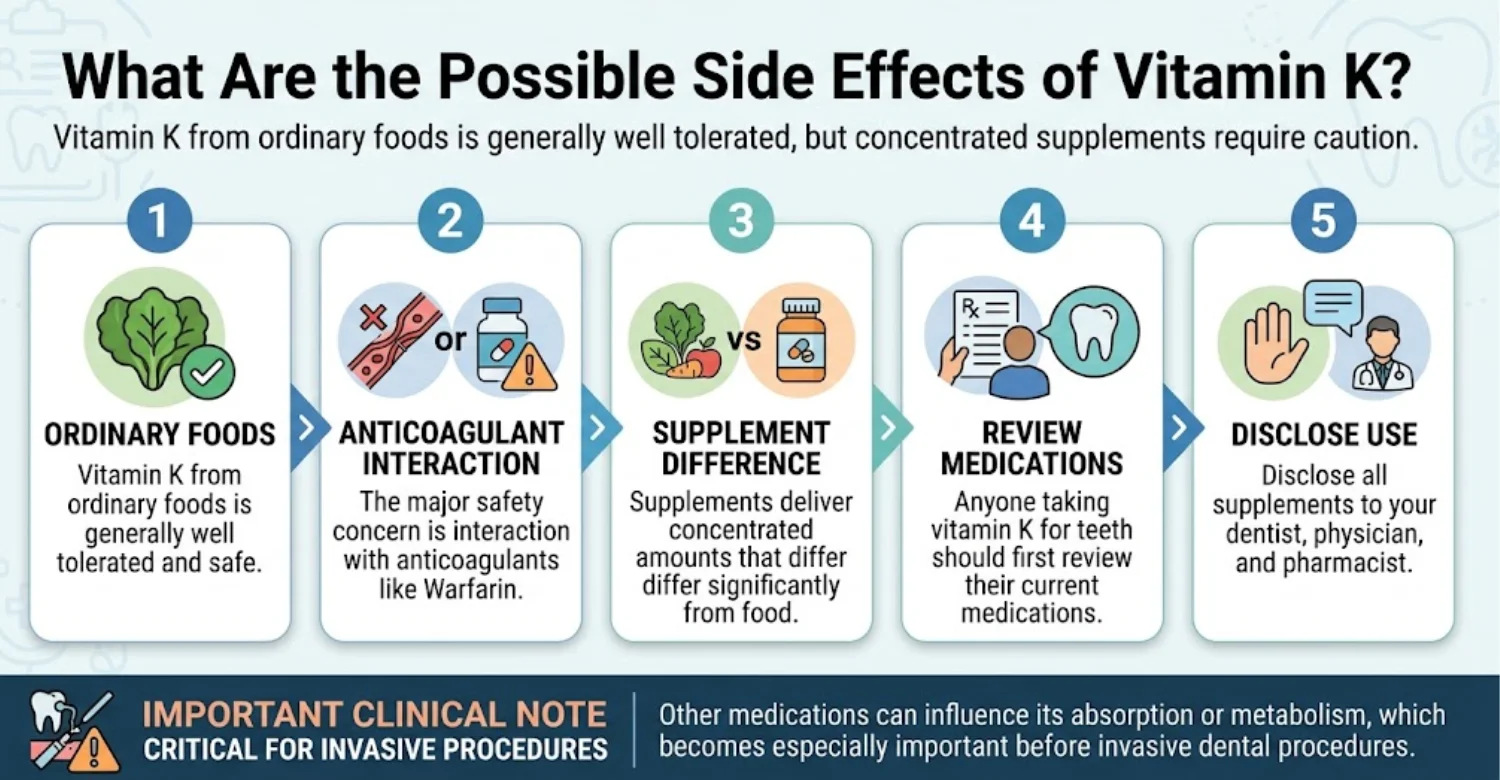
Is vitamin K generally safe when consumed in normal amounts?
Normal dietary intake is considered safe for healthy people. Vitamin K occurs naturally in many vegetables. Food also provides fiber and other beneficial compounds. The main concern is medication interaction rather than food itself. Warfarin users should keep intake consistent.
Can vitamin K supplements cause side effects?
High-dose supplements carry risks beyond ordinary food intake. The greatest concern is interaction with anticoagulants. Product quality and dosage vary between brands. Some people report digestive upset from certain formulations. A professional can review the exact product and dose.
What are the most important vitamin K drug interactions?
Warfarin is the most clinically important interaction. Prolonged antibiotics may reduce vitamin K availability. Bile acid sequestrants and orlistat can reduce absorption. Effects vary between individuals. Medication lists should be reviewed before dental surgery.
Vitamin K and warfarin
Warfarin needs stable vitamin K exposure for predictable effect. Suddenly increasing vitamin K can weaken warfarin. Decreasing intake can strengthen its effect. Never stop warfarin for dental treatment without medical instructions. Avoid starting vitamin K for teeth while on warfarin without advice.
Vitamin K and other medicines or supplements
Several medicines affect vitamin K absorption or availability. Cholestyramine and colestipol may reduce absorption. Orlistat lowers absorption of fat-soluble vitamins. Herbal products can complicate medication management. Pharmacists can identify interactions before you add supplements.
Should vitamin K supplements be stopped before dental treatment or surgery?
Do not stop prescribed medicines or supplements without professional advice. The answer depends on why vitamin K was prescribed. Warfarin therapy requires coordination with the prescribing clinician. Tell the dental office everything you take before treatment. The dentist can coordinate with your physician when needed.
When should you ask a doctor or pharmacist before taking vitamin K?
Ask first if you take warfarin or another clotting medication. Advice is also wise after bariatric surgery or with digestive disorders. Pregnancy and chronic illness justify individualized guidance. Pharmacists review interactions efficiently. The goal is targeted rather than unnecessary supplementation.
What We Notice Clinically
Bleeding gums usually have a local dental explanation. Plaque buildup causes inflammation that can progress to periodontal destruction. Nutrition influences tissue health but rarely explains every bleeding symptom. Patients often ask about vitamin K for teeth before their first examination. Vitrin Clinic checks plaque, calculus, pockets, recession, and mobility. Medical history, smoking, and diabetes are also reviewed. The aim is to identify the source of symptoms before treatment. This separates supportive nutrition from definitive dental care.
Why bleeding gums are more often related to local gum disease than vitamin K deficiency
Gingivitis is a common cause of bleeding during brushing. Plaque can harden into calculus that needs professional removal. Vitamin K deficiency, by contrast, is uncommon in healthy adults. Local periodontal causes are therefore more likely. Assuming deficiency first can distract from treatable gum disease.
Why nutrition should be considered alongside plaque, tartar, smoking, diabetes, medications, and other risk factors
Periodontal health results from many interacting factors. Plaque and tartar provide the local inflammatory trigger. Smoking and diabetes worsen disease and reduce treatment success. Medications can alter bleeding or gum tissue. No single supplement explains most persistent gum bleeding.
Why vitamin supplements should not delay treatment for periodontal disease
Periodontal disease can steadily damage supporting tissues and bone. Early treatment reduces inflammation and slows progression. Supplements cannot remove subgingival calculus or infected biofilm. Waiting for vitamin K for teeth to work may let pockets deepen. Timely periodontal care protects long-term oral health.
The difference between supporting overall nutrition and treating a dental condition
Nutrition supports the body’s normal physiological functions. Dental treatment directly addresses disease within the mouth. A healthy diet cannot remove calculus or fix a fractured tooth. Good care often combines both approaches. Keeping their roles separate prevents unrealistic expectations.
Gingivitis versus periodontitis
Gingivitis is gum inflammation that is usually reversible. Periodontitis destroys the tissues and bone supporting teeth. Deeper pockets and bone loss mark more advanced disease. Gingivitis often improves with plaque control and cleaning. Periodontitis needs professional therapy and ongoing maintenance. Confusing these conditions can lead to under-treatment. Interest in vitamin K for teeth should never delay diagnosing which one is present.
Nutritional support versus definitive dental treatment
Nutritional support supplies the body with necessary nutrients. Definitive dental treatment controls a diagnosed oral condition. These goals can work together but cannot replace each other. Professional care removes plaque, calculus, or damaged tooth structure. The right balance depends on clinical findings.
Clinical Note: Dr. Rifat Alsaman on evaluating bleeding gums and vitamin concerns
Clinical Note Dr. Rifat Alsaman: Bleeding should be investigated before choosing a nutritional explanation. We first look for inflammation, plaque, calculus, pockets, and recession. Medical history can reveal anticoagulant use or bleeding conditions. Patients asking about vitamin K for teeth deserve an honest evidence-based answer. Nutrition can support health, but supplements should not replace periodontal therapy.

Note : All images used are for editorial and illustrative purposes only and may not originate from the original news provider or associated company.
What Symptoms Should You Watch for?
Oral symptoms provide useful clues about gum and tooth health. Persistent bleeding deserves attention, especially despite good hygiene. Swelling, redness, recession, or loose teeth suggest periodontal problems. Easy bruising elsewhere may suggest a clotting issue. No single symptom identifies a vitamin deficiency. Early assessment usually offers more treatment options. Bad breath can also accompany periodontal disease. A proper examination connects symptoms with clinical findings.
Oral symptoms that may deserve a dental evaluation
Persistent bleeding, swelling, and redness may signal gum inflammation. Recession can expose roots and increase sensitivity. Loose teeth may indicate supporting bone loss. Pain while chewing and persistent bad breath also deserve attention. A dental examination is more useful than self-diagnosis.
Persistent bleeding gums
Bleeding during brushing often signals inflamed gums. Gingivitis is the most common cause. Bleeding that continues despite good hygiene needs assessment. Do not stop brushing because the gums bleed. Gentle cleaning removes the plaque driving inflammation. The dentist will look for calculus, pockets, and recession. Report unusual bruising or prolonged bleeding elsewhere as well.
Swollen, red, or tender gums
Swelling, redness, and tenderness indicate gingival inflammation. Plaque is the usual trigger. Hormones, medications, and infections can also affect gums. Persistent symptoms should not be treated only with supplements. Professional cleaning may be needed when calculus is present.
Gum recession or gums pulling away from teeth
Receding gums expose more of the tooth root. This increases sensitivity and creates plaque traps. Causes include periodontal disease, aggressive brushing, and anatomy. NIDCR lists gums pulling away from teeth as a warning sign. Treatment depends on the underlying cause.
Loose or sensitive teeth
Tooth mobility can indicate reduced periodontal support. Advanced disease destroys the bone holding teeth in place. Sensitivity may come from recession or enamel wear. A loose tooth should be evaluated promptly. Supplements cannot restore lost periodontal support.
Pain when chewing
Chewing pain may arise from several dental conditions. Gum inflammation, cracks, pulp problems, or high fillings can all cause it. The source needs localization and examination. Dentists may use clinical tests and imaging. Chewing pain should not be managed with supplements alone. Early diagnosis can prevent worsening damage. Cracked teeth in particular can deteriorate if left untreated.
Persistent bad breath
Persistent bad breath may stem from plaque, gum disease, or tongue coating. Dry mouth and some medical conditions also contribute. Mouthwash masks odor without treating the cause. A dental evaluation can identify local contributors. Ongoing symptoms deserve investigation.
Symptoms outside the mouth that may warrant medical assessment
Systemic symptoms change how oral bleeding is interpreted. Easy bruising suggests a broader bleeding tendency. Recurrent nosebleeds may also be relevant. Digestive conditions raise the possibility of absorption problems. A physician can decide which blood tests are appropriate.
Easy bruising or unusual bleeding
Unexpected bruising has many possible causes. Medications, platelet disorders, and deficiencies are among them. Vitamin K deficiency can impair normal clotting. Bruising plus persistent gum bleeding deserves attention. Medical assessment can distinguish the causes. Patients should provide complete medication and supplement details. This information speeds up an accurate diagnosis.
Prolonged bleeding after an injury or dental procedure
Bleeding that lasts unusually long should be reported. Anticoagulants, clotting disorders, or local injury may be responsible. Vitamin K status matters in selected cases. Dentists must know about anticoagulants before procedures. Never change prescribed medication on your own.
When bleeding needs prompt professional attention
Seek prompt care for heavy or uncontrolled bleeding. Dizziness, weakness, or widespread bruising need urgent medical attention. Significant bleeding after dental treatment should be reported. Anticoagulant users may need individualized instructions. Prompt assessment identifies the true source.
Diagnosis: How Can a Dentist or Doctor Determine the Cause?
Diagnosis begins with history and direct examination. The dentist assesses gums, teeth, plaque, calculus, and recession. Periodontal probing measures pocket depth around each tooth. Healthy pockets are usually one to three millimeters. Dental X-rays can reveal bone loss when needed. Questions about vitamin K for teeth are answered after the true cause is identified. Medical history identifies medication or systemic risk factors. A physician may investigate unexplained bleeding with blood tests.
How does a dentist assess bleeding gums?
The dentist examines the gumline for redness, swelling, and recession. Plaque and calculus levels are evaluated. Probing identifies deeper pockets around teeth. Medications, smoking, and diabetes are reviewed. Medical referral may follow if findings suggest systemic disease.
What does a periodontal examination include?
A periodontal examination evaluates tissues supporting each tooth. Inflammation and bleeding are recorded. Pocket depths are measured with a periodontal probe. Recession, attachment levels, and mobility are assessed. Radiographs check underlying bone when justified.
Gum inflammation and bleeding assessment
The clinician checks color, swelling, texture, and tenderness. Bleeding on probing indicates inflammation within the tissues. Plaque and calculus distribution add further information. Localized and generalized patterns suggest different causes. Results guide whether periodontal treatment is needed.
Periodontal pocket measurements
A probe measures the depth of the gingival pocket. Healthy pockets are around one to three millimeters. Deeper pockets suggest attachment loss or periodontitis. These measurements help stage disease severity. They are also tracked during maintenance.
Tooth mobility and sensitivity assessment
Mobility shows how securely periodontal structures support a tooth. Increased movement may follow bone or attachment loss. Sensitivity may result from exposed dentin, erosion, or cracks. Each symptom needs a separate assessment. A mobile tooth does not imply vitamin deficiency.
Dental X-rays when clinically appropriate
X-rays reveal structures that cannot be seen directly. In periodontal care, they show bone loss around teeth. They can also detect other causes of pain. CBCT adds three-dimensional detail when specifically indicated. Imaging should always match clinical needs.
When might a medical evaluation or blood testing be considered?
Medical evaluation is relevant when bleeding is widespread or unexplained. Easy bruising and prolonged bleeding increase concern. Digestive disorders and bariatric surgery may prompt testing. Testing should follow clinical findings, not supplement advertising. Results show whether supplementation is actually needed.
Can vitamin K deficiency be diagnosed from dental symptoms alone?
No. Dental symptoms cannot reliably diagnose vitamin K deficiency. Bleeding gums usually reflect local periodontal inflammation. Doctors may use coagulation studies when deficiency is suspected. A dental examination remains essential either way.
How medical history and medications change the evaluation
Medication history can significantly change bleeding risk. Warfarin and antiplatelet drugs affect procedural planning. Digestive medicines may influence nutrient absorption. Smoking and diabetes are established periodontal risk factors. Accurate history prevents wrong assumptions and treatment conflicts.
Treatment: What Actually Helps Teeth and Gums?
Treatment depends on the diagnosis, not nutrient intake alone. Gingivitis responds to plaque control and professional cleaning. Periodontitis may need scaling and root planing or surgery. Cavities need preventive or restorative care. Confirmed deficiencies need medical treatment. No version of vitamin K for teeth replaces these steps. Vitrin Clinic plans treatment after individual assessment. Damaged teeth may need fillings, crowns, or root canal treatment. The correct treatment addresses the actual cause of symptoms.
How is gingivitis treated?
Gingivitis treatment focuses on plaque control and better hygiene. Professional cleaning removes calculus that brushing cannot. Brush twice daily with fluoride toothpaste. Clean between teeth every day. Follow-up confirms whether inflammation has resolved. Persistent inflammation may point to other periodontal or medical factors. Using vitamin K for teeth is not a primary gingivitis treatment.
How is periodontitis treated?
Periodontitis treatment aims to remove deposits and control inflammation. Non-surgical care includes scaling and root planing. Persistent disease may require surgical procedures. Quitting smoking and controlling diabetes improve outcomes. Maintenance visits reduce recurrence.
Professional cleaning
Professional cleaning removes plaque and calculus from tooth surfaces. Ordinary brushing cannot remove hardened calculus. Cleaning helps treat gingivitis and maintain health. Deeper pockets may need further instrumentation. Good home care must follow. Visit frequency depends on individual clinical findings. Regular cleanings help keep gingivitis from returning.
Scaling and root planing
Scaling and root planing cleans below the gumline. Root surfaces are smoothed to support healing. NIDCR lists it as a common periodontal treatment. It is often done by quadrant with local anesthesia. Follow-up determines whether more treatment is needed. Pricing varies according to location and clinical complexity. Most patients return to normal activities the same day.
Periodontal treatment for persistent disease
Some sites stay active after initial non-surgical treatment. Persistent pockets may need further cleaning or surgery. ADA guidance notes treatment may be surgical or non-surgical. Long-term maintenance helps prevent recurrence. Nutrition supports health but does not control the disease.
When are fillings, crowns, root canal treatment, or tooth replacement considered?
Fillings repair cavities and small areas of damage. Crowns restore teeth with major structural loss. Root canal treatment addresses infected or irreversibly inflamed pulp. Replacement is considered when a tooth cannot be saved. Supplements cannot replace these procedures.
What happens when a confirmed nutrient deficiency is present?
A confirmed deficiency is treated according to medical guidance. Treatment may involve diet changes, supplements, or managing absorption problems. Dental symptoms may improve as systemic factors improve. Existing plaque, cavities, or pockets still need dental care. Follow-up confirms the response.
Can vitamin K supplementation replace dental treatment?
No. Supplements cannot remove calculus or close periodontal pockets. They cannot repair cavities or fractured teeth. The evidence for vitamin K for teeth supports only its systemic roles. Use supplements only when medically appropriate. Keep up routine dental care.
Relief: What Can Help Bleeding or Irritated Gums While You Arrange Care?
Temporary comfort measures should support, not replace, professional care. Gentle brushing with a soft brush removes plaque without trauma. Interdental cleaning reduces plaque between teeth. Avoiding tobacco supports healing. Home care cannot remove calculus below the gumline. Severe bleeding, swelling, fever, or pain needs professional assessment. Patients should never aggressively scrub bleeding gums. A dentist can decide whether deeper periodontal therapy is needed.
Safe measures for short-term oral comfort
Brush gently with a soft brush and fluoride toothpaste. Clean between teeth with floss or interdental brushes. Drink enough water if dryness worsens irritation. Avoid smoking and aggressive brushing. Ask a dentist which mouthrinse suits you. Short-term comfort should never delay evaluation of persistent bleeding. Relying on vitamin K for teeth at home is not a substitute for care.
How gentle brushing and interdental cleaning can help
Gentle brushing disrupts plaque along the gumline. Interdental cleaning reaches areas a brush cannot. NIDCR recommends cleaning between teeth daily. Removing plaque reduces the trigger for gingivitis. Bleeding usually lessens with consistent care.
Why stopping oral hygiene because gums bleed can make plaque-related problems worse
Many patients fear brushing is causing damage. Usually the bleeding reflects existing inflammation. Stopping hygiene lets plaque accumulate further. This can worsen gingivitis and disease progression. Gentle technique is better than avoidance.
What home remedies should you avoid?
Avoid remedies claiming to cure cavities or gum disease. Acidic substances can erode enamel. Abrasive powders can wear teeth and irritate gums. Undiluted essential oils may irritate oral tissues. Unproven vitamin K for teeth oils should not replace treatment.
When home measures are not enough
Home care fails when calculus or deep pockets are present. Persistent bleeding may need professional cleaning. Severe pain may signal infection or an abscess. Loose teeth suggest advanced support loss. Fever or facial swelling requires prompt treatment. Professional evaluation becomes essential when symptoms persist or worsen. Delaying care rarely makes treatment simpler.
Tips for Patients
Complete information helps clinicians assess you accurately. Tell your dentist about every medicine and supplement. Mention how long bleeding has lasted and when it occurs. Report bruising or nosebleeds elsewhere. Never stop medications before procedures without medical advice. Ask whether nutrition is relevant to your findings. Bring recent laboratory results when relevant. A coordinated approach prevents both under-treatment and unnecessary supplements.
What should you tell your dentist about supplements?
Give the product name, dose, frequency, and reason. Include vitamins, minerals, and herbal products. Mention any products marketed as vitamin K for teeth. Supplements can influence bleeding during treatment. A complete list improves safety.
What should you tell your doctor before taking vitamin K?
Tell your doctor about all medications and supplements. Warfarin is especially important. Mention digestive disorders, bariatric surgery, and unexplained bleeding. Your doctor can decide whether supplementation is needed. Do not change doses on your own.
How to prepare for an appointment about bleeding gums
Note when the bleeding started and when it happened. Record swelling, recession, pain, or bad breath. Bring a list of medicines and supplements. Mention smoking, diabetes, and other conditions. This helps clinicians spot patterns quickly.
Questions to ask about vitamin K, vitamin D, and other supplements
Ask whether your symptoms suggest a deficiency. Ask whether blood testing is justified. Ask which benefits of vitamin K for teeth have human evidence. Ask whether products interact with your medications. Most importantly, ask what dental treatment you need.
How to choose food-based nutrition before considering supplements
Start by reviewing your overall eating pattern. Include vegetables, fruits, whole grains, proteins, and healthy fats. Leafy greens supply plenty of vitamin K1. Supplements help when food cannot meet specific needs. They should not replace dietary variety. Medical conditions may also create higher requirements. A food-first plan beats buying vitamin K for teeth products without guidance.
How Much Does Gum-Related Dental Care Cost in the US, UK, and Turkey?
There is no universal price for gum treatment. Costs depend on severity, treatment type, imaging, and follow-up. The figures below are indicative planning benchmarks, not fixed quotes.
Average Gum Treatment Cost by Country
Country | Indicative Cost | Treatment Reference |
United States | About $900 | Multi-quadrant non-surgical periodontal treatment |
United Kingdom | About $450 | Indicative private periodontal treatment |
Turkey | From about $120 | Advertised starting price for gum treatment |
Actual prices vary by severity, number of quadrants, provider, imaging, surgery, and maintenance requirements.
Indicative Scaling and Root Planing Costs
Country | Approximate Cost | Basis |
United States | $242 per quadrant | Scaling and root planing benchmark |
United Kingdom | From $250 per quadrant | Example private London pricing |
Turkey | From about $120 | Advertised gum-treatment starting price |
United States: Approximately $900 for a Typical Course of Gum-Disease Treatment
About $900 can represent multi-quadrant non-surgical periodontal treatment. At approximately $242 per quadrant, four quadrants total about $968 before additional costs. X-rays, anesthesia, and follow-up may increase the final fee.
United Kingdom: Approximately $450 for Private Gum-Disease Treatment
Private UK periodontal fees vary significantly. An indicative $450 may cover limited treatment rather than full-mouth care. Some providers list scaling and root planing from around $250 per quadrant. Examinations and radiographs may cost extra.
Turkey: Approximately $120 and Upward for Gum-Disease Treatment
Some Turkish clinics advertise gum treatment for around $120. The final price depends on whether the patient needs basic cleaning, scaling and root planing, or periodontal surgery. Package inclusions should be confirmed before treatment.
What Can Change the Final Dental Treatment Cost?
Cost Factor | Potential Impact |
Disease severity | More advanced disease usually requires more treatment |
Number of affected areas | Multiple quadrants increase costs |
Periodontal examination | May be charged separately |
X-rays or CBCT | Additional cost when clinically required |
Scaling and root planing | Usually less costly than surgery |
Periodontal surgery | Higher cost because of surgical complexity |
Maintenance visits | Creates ongoing treatment costs |
NHS Dental Charges Versus Private UK Treatment
NHS England Band | From April 1, 2026 | Includes |
Band 1 | $27.90 | Examination and certain diagnostic/preventive care |
Band 2 | $76.60 | Band 1 services plus treatments such as fillings |
Band 3 | $332.10 | Band 1 and 2 services plus more complex treatment |
NHS charges follow treatment bands, while private periodontal care uses separate clinic pricing. The NHS figures should therefore not be compared directly with private periodontal treatment prices.
Personalized Oral Health Assessment at Vitrin Clinic
Vitrin Clinic approaches gum concerns through individualized assessment. The goal is to find the source of symptoms before treatment. Examination covers teeth, gums, oral tissues, and jaw joints. Digital X-rays or CBCT are used when clinically appropriate. Treatment follows findings, not assumptions about vitamin K for teeth. International patients receive coordinated appointment planning. The clinician considers plaque, tartar, recession, sensitivity, and mobility. The team also explains available options and expected follow-up.
How Vitrin Clinic evaluates bleeding gums and other oral symptoms
Evaluation starts with symptoms and medical history. The examination looks for local causes of bleeding. These include plaque, calculus, gingivitis, periodontitis, and recession. Anticoagulant use is reviewed. Nutrition is considered when history suggests deficiency risk.
When digital X-rays or CBCT may be clinically appropriate
Digital X-rays evaluate teeth and supporting bones. They show bone loss invisible to the eye. CBCT adds three-dimensional detail for complex cases. It is not used for every bleeding-gum complaint. Imaging choice follows clinical findings.
How periodontal findings influence treatment planning
Pocket depth, bleeding, recession, mobility, and bone levels guide decisions. Mild inflammation may need cleaning and better home care. Deeper pockets may need scaling and root planing. Advanced disease may need surgery or specialist care. Medical history may adjust the sequence.
Personalized treatment options based on teeth, gums, oral tissues, and symptoms
Options depend on the source of the problem. Gingivitis needs cleaning and plaque control. Periodontitis needs non-surgical or surgical therapy. Tooth problems may need fillings, crowns, or root canal treatment. Nutrition is addressed separately when relevant.
Relevant internal link: Vitrin Clinic periodontal and gum-treatment information
Readers can review Vitrin Clinic’s periodontal treatment information for more detail. The page explains assessment, treatment sequencing, and follow-up. It links naturally from symptom and treatment sections. Internal links support education but do not replace medical advice.
Relevant internal link: Vitrin Clinic Treatments page
The Vitrin Clinic Treatments page outlines available dental services. Readers can explore treatments relevant to their diagnosis. Gum treatment often comes before restorative or implant work. Links should point toward clinically relevant services only.
How Vitrin Clinic Supports Your Treatment Journey
International dental care involves more than the procedure itself. Patients need coordinated appointments, sequencing, travel planning, and follow-up. Vitrin Clinic supports this through structured treatment coordination. Plans reflect each patient’s findings, not a fixed package. Coordinators arrange appointments around clinical needs. Recommendations always follow examination findings. Digital diagnostics are incorporated when clinically appropriate. Follow-up planning explains what happens after treatment.
Consultation and individualized assessment
Consultation establishes your main concerns and goals. Examination determines the condition of teeth and gums. Medical history adds context on bleeding and medications. The assessment shows whether periodontal treatment is needed. Your plan reflects your individual findings. It can also reveal unrelated issues needing separate care. Questions are encouraged at every stage.
Digital diagnostics when clinically appropriate
Digital diagnostics support detailed treatment planning. Digital X-rays evaluate teeth and bone levels. CBCT is used when a clinical indication exists. 3D scanning assists selected planning workflows. Technology supports clinical judgment rather than replacing it.
Coordinating treatment planning for international patients
International patients often need several appointments organized efficiently. Sequencing affects both travel length and outcomes. Coordinators align consultation, diagnostics, treatment, and follow-up. Travel plans follow the treatment sequence. This supports safer, more predictable care.
Appointment scheduling and treatment coordination
Appointments are arranged around your treatment plan. Complex periodontal cases may need multiple visits. Diagnostic findings can change the schedule. Coordination reduces unnecessary delays. Estimates remain subject to clinical confirmation.
Follow-up and aftercare after dental treatment
Aftercare monitors healing and treatment response. Periodontal patients may need maintenance visits. Travelers should know how follow-up works at home. Clear records support continuity with local dentists. Report new swelling, pain, or bleeding promptly.
Ready to transform your smile?
Talk to our team and get a personal FREE treatment plan.
Key Takeaways
Vitamin K is an important systemic nutrient for clotting and bone. Direct evidence for vitamin K for teeth remains limited. Bleeding gums usually reflect local inflammation rather than deficiency. A balanced diet maintains adequate intake for most people. Dental disease still needs diagnosis and clinical treatment. Warfarin users need careful medication and diet management. Supplements should never delay professional care. Persistent or unexplained bleeding may need both dental and medical evaluation.
What the evidence really says about vitamin K for teeth
Evidence does not support vitamin K for teeth as a routine strengthening method. Vitamin K remains vital for clotting and bone proteins. Direct oral evidence is limited. Claims of dramatic enamel or cavity benefits deserve caution. Proven dental prevention has stronger support.
The importance of separating nutritional support from dental treatment
Nutrition provides the body’s building blocks. Dental treatment addresses oral disease and structural damage. Neither replaces the other. This matters most when gums bleed. Both contribute to comprehensive care.
When vitamin K intake may deserve medical attention
Seek medical advice for unexplained bruising or widespread bleeding. Risk rises with absorption disorders, bariatric surgery, and some medicines. Warfarin users should keep intake consistent. Supplementation should follow individual assessment.
The most important steps for protecting teeth and gums
Brush twice daily with fluoride toothpaste. Clean between teeth every day. Attend regular checkups and cleanings. Avoid tobacco and eat a varied diet. Manage diabetes and report symptoms early.
When to see a dentist or doctor for persistent bleeding or other warning signs
See a dentist if gums keep bleeding despite good hygiene. See a doctor if bleeding occurs throughout the body. Facial swelling or fever may signal urgent infection. Anticoagulant users should seek advice before changing medicines.
Reference
FAQs

Dr. Rifat Alsaman has more than 5 years of clinical experience in dentistry and currently serves as the Head of the Medical Team at Vitrin Clinic. He is dedicated to providing exceptional patient care, overseeing treatment planning, and ensuring the highest clinical standards across the team. His expertise, attention to detail, and commitment to continuous professional development have helped countless patients achieve healthier, more confident smiles.


.webp&w=3840&q=75)


