General Dentistry
October 7, 2026
Symptoms of Tooth Infection Spreading to Body: What Should I Watch For?
 Dr. Rifat Alsaman
Symptoms of tooth infection spreading to body include fever, chills, growing face swelling, and feeling unusually unwell. Swollen lymph nodes, difficulty opening the mouth, and trouble swallowing also matter. A dental infection usually begins inside a tooth or in the tissues supporting it. In some cases, it extends beyond that original area. A localized infected tooth mainly causes toothache, sensitivity, and pain when biting. Broader symptoms suggest that nearby tissues, or the whole body, may be reacting.
Many patients worry about a worsening toothache, throbbing tooth pain, facial swelling, or fever. Others simply wonder whether an untreated tooth infection can become dangerous. Not every toothache or swelling means an infection is spreading. However, certain changes need prompt dental assessment. This guide explains the symptoms of tooth infection, its causes, the warning signs, and the available treatments. It also explains when to see a dentist and when to call your doctor or seek urgent medical help.
Symptoms of Tooth Infection Spreading to Body: What Are the Warning Signs?
Signs of a tooth infection spreading to the body usually appear as changes beyond the tooth itself. An infection that begins locally may extend into the gum, jaw, cheek, or neck tissues. It may also trigger a body-wide response, such as fever or malaise. The main signs of a tooth infection spreading are increasing swelling, fever, swollen lymph nodes, and limited mouth opening. Symptoms vary with the location and severity of the infection. A lower molar and an upper front tooth can behave differently.
How Can I Tell If a Tooth Infection Is No Longer Just Local?
Local symptoms stay around the tooth, such as sensitivity or pain when biting. Broader involvement looks different. Watch for these changes:
Increasing or persistent toothache
Throbbing tooth pain
Increasing tooth infection swelling or face swelling
Fever or chills
Feeling unusually weak or unwell
Difficulty opening the mouth
Difficulty swallowing
Swollen lymph nodes
Symptoms that worsen despite temporary pain relief
Several of these together may be symptoms of tooth infection spreading to the body.
Can Tooth Infection Cause Fever and Feeling Unwell?
Yes. A tooth infection can cause fever, tiredness, and a general feeling of being unwell. Fever happens when the immune system releases chemical signals that raise body temperature in response to bacteria. Tooth infection fever is more concerning when it appears with swelling, worsening pain, or chills. That combination may reflect symptoms of tooth infection spreading to the body. However, fever alone does not prove that a dental infection has spread. Other illnesses can cause it, so examination is needed.
What Could Make a Tooth Infection Life-Threatening?
A life-threatening tooth infection is rare, but it can happen. The danger arises when bacteria move into deeper spaces of the face, floor of the mouth, or neck. Swelling there can narrow the airway and make breathing difficult. In rare cases, infection reaches the bloodstream and causes sepsis. Risk may be higher with delayed care, uncontrolled diabetes, or a weakened immune system. Most infected teeth never reach this stage. Still, an untreated tooth infection should not be left to chance.
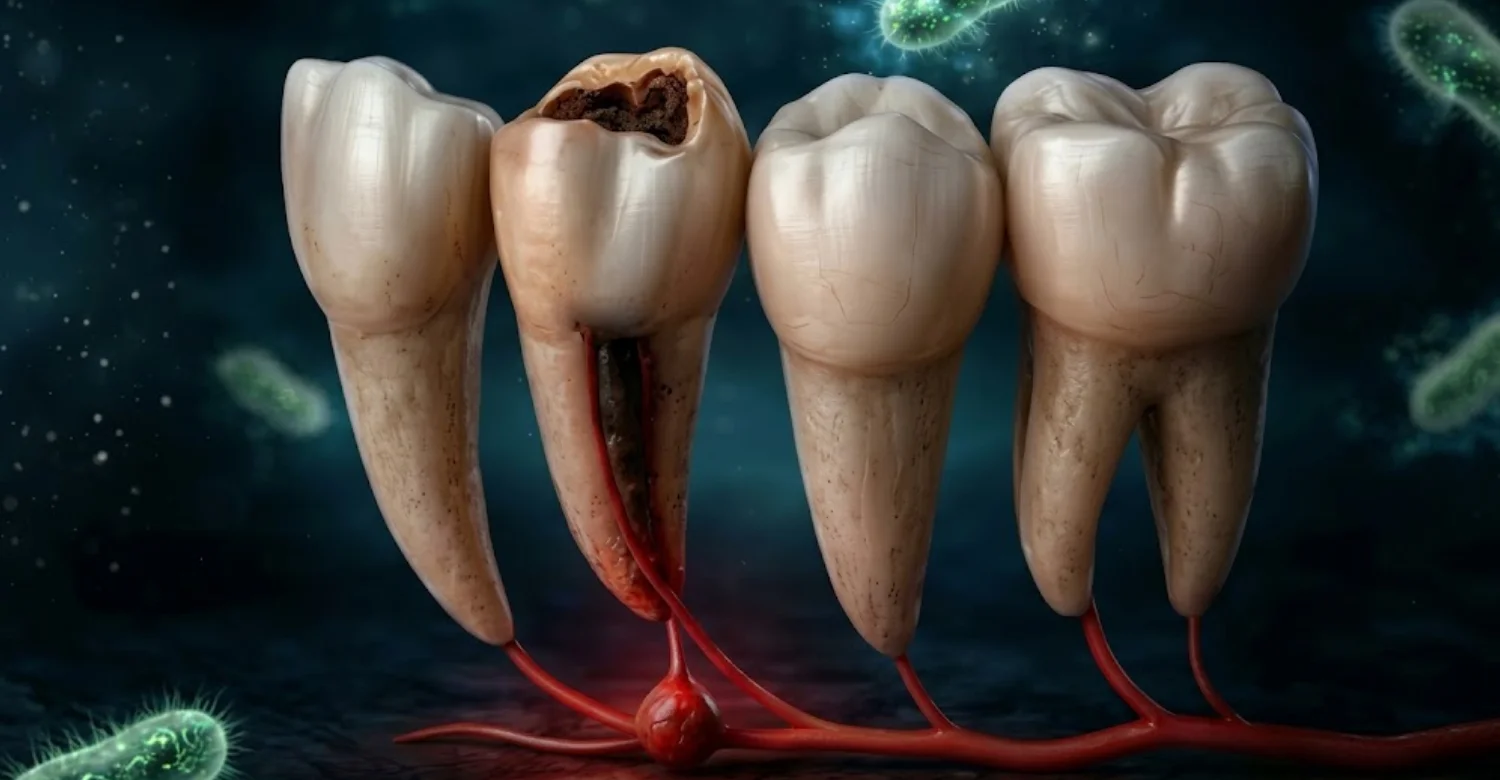
What Is an Infected Tooth and How Does a Tooth Become Infected?
An infected tooth is a tooth where bacteria have invaded the inner pulp or the tissues around the root. The pulp contains nerves and blood vessels. How does a tooth become infected? Bacteria need an opening, such as a cavity, crack, or leaking filling. Once inside, they multiply, and the body responds with inflammation. Pus may then collect and form an abscess. Understanding this process helps explain why signs of tooth infection spreading to body develop in some untreated cases.
How Does a Tooth Become Infected?
Bacteria reach the inside of a tooth through several pathways:
Deep untreated tooth decay
Cracks or fractures
Dental trauma
Failed or leaking restorations
Previous dental treatment that has broken down
Advanced gum disease
Other damage to tooth structure
Decay first breaks through the enamel, then the softer dentin. Next, the pulp becomes inflamed. If untreated, the pulp may die. Bacteria can then pass through the root tip, and an abscess may form.
What Are the Most Common Causes of Tooth Infection?
The causes of tooth infection, from most to least common, include:
Tooth decay: A cavity lets bacteria reach the pulp, causing sensitivity, then lingering toothache.
Cracked or broken teeth: Fractures open a hidden path and often cause pain on biting.
Leaking fillings or crowns: Gaps allow decay underneath, sometimes with few early symptoms.
Gum disease: Deep pockets let bacteria reach the root, causing gum swelling.
Trauma: A blow can damage the pulp's blood supply, sometimes darkening the tooth.
Timely treatment limits damage in every case.
Can an Untreated Tooth Infection Spread?
Yes, an untreated tooth infection can spread, although it does not always do so. Some infections stay localized for a long time. Others drain intermittently through a small gum boil, which eases pressure and pain. Some progress into surrounding tissues. The course is unpredictable. It depends on the infection's location, your immune response, your anatomy, and whether treatment has started. Because nobody can predict the outcome, new symptoms of tooth infection spreading to body should prompt a dental assessment.
Tips for Patients
These practical steps can help you get the right care sooner:
Don't wait for severe pain: Arrange an assessment if tooth pain persists or keeps returning.
Track changes in swelling: Note whether it is becoming larger, firmer, or spreading.
Tell your dentist about fever: Mention fever, chills, or feeling unwell.
Bring your medication list: It helps your dentist consider relevant medical factors.
Ask what the imaging shows: Learn whether infection sits around the root or beyond.
Ask about the long-term plan: Find out which restoration may follow.
What Symptoms Can Happen Together With a Tooth Infection?
Symptoms of tooth infection rarely appear alone. They tend to occur in recognizable combinations, and the combination tells more than any single complaint. Toothache with pain on biting usually points to a local problem. Swelling with fever suggests a stronger response from the body. Swelling with difficulty swallowing or breathing is the most serious pattern. Recognizing these groups helps you describe your condition clearly. It also helps identify possible signs of a tooth infection spreading to the body at an earlier stage.
Toothache and Throbbing Tooth Pain
Toothache is usually the first sign. When the pulp becomes inflamed, pressure builds inside the rigid tooth, which cannot expand. This produces throbbing tooth pain that may follow your pulse. The pain can linger after hot or cold drinks and may worsen when lying down. If infection reaches the tissues around the root, the tooth often feels tender when biting or tapping. Pain alone usually suggests a local problem rather than Signs of a tooth infection spreading to the body.
Tooth Infection Swelling and Face Swelling
Tooth infection swelling begins when pus and inflammatory fluid collect near the root. At first, you may notice a small, tender lump on the gum. If the inflammation extends into the cheek, lip, or jaw, visible face swelling can develop. The area may feel warm, firm, or tight. Small, stable gum swelling still needs dental care, though usually not emergency care. Rapidly increasing facial swelling is different. It deserves prompt assessment, because it may signal signs of a tooth infection spreading to the body.
Fever, Swollen Lymph Nodes, and Feeling Unwell
These symptoms show that your body is actively responding to infection. Lymph nodes under the jaw and in the neck filter bacteria and may become enlarged and tender. Fever reflects an immune reaction, not just a local problem. Tiredness, chills, and loss of appetite may follow. One of these signs alone is not always alarming. Together with swelling or worsening pain, they are possible Signs of a tooth infection spreading to the body. Tell your dentist about them clearly.
Difficulty Swallowing, Breathing, or Opening Your Mouth
These symptoms matter because of where they point. Limited mouth opening can mean the infection has reached the chewing muscles. Difficulty swallowing may indicate swelling under the tongue or in the throat. Difficulty breathing suggests the airway itself is affected. These are among the most serious signs of tooth infection spreading to body. They can indicate spread into deeper tissues. Difficulty breathing or swallowing requires urgent medical attention at an emergency department. Do not wait for a dental appointment.
What Can I Do at Home While Waiting for Dental Care?
At home, you can only ease discomfort temporarily. You cannot cure the infection yourself. Safe steps include suitable pain relief, soft foods, and avoiding triggers such as very hot or cold drinks. Keep the area clean with gentle brushing. Book a dental appointment as early as possible, even if the pain improves. Home care does not remove bacteria from inside the tooth. If you notice symptoms of tooth infection spreading to body, stop relying on home measures and seek care promptly.
Safe Ways to Manage Pain Temporarily
Low-risk measures can make waiting more comfortable:
Use over-the-counter pain relief only if it is medically suitable for you.
Follow the package directions carefully.
Avoid excessive doses, because more medication does not treat the infection.
Eat softer foods if chewing hurts.
Avoid extremely hot or cold foods if they trigger pain.
Ask a doctor first if you are pregnant, take other medicines, or have medical conditions. These steps reduce pain only. They do not stop an infected tooth from progressing.
What Should You Avoid Doing to an Infected Tooth?
Some common habits can cause harm:
Do not place aspirin directly on the gum. It can burn the tissue.
Do not try to drain an abscess yourself.
Do not ignore worsening swelling.
Do not use leftover antibiotics.
Do not delay professional care because pain temporarily improves.
Home measures may reduce discomfort, but they do not remove the source of a dental infection. Delay may allow symptoms of tooth infection spreading to body to develop.
.jpg)
When Should I See a Dentist for a Tooth Infection?
You should see a dentist as soon as you suspect an infection. Do not wait for it to become severe. Knowing when to see a dentist is simple. A toothache lasting over two days, gum swelling, a bad taste, or pain on biting all justify an appointment. Knowing when to call your doctor matters too. Contact a doctor or emergency service if a dentist is unavailable and fever or spreading swelling appears. These may be symptoms of tooth infection spreading to body.
When Is a Dental Infection an Emergency?
A dental infection is an emergency when any of these signs appear:
Difficulty breathing
Difficulty swallowing
Rapidly increasing face or neck swelling
Swelling around the eye
Severe difficulty opening the mouth
Confusion or marked deterioration
Signs of severe systemic infection, such as high fever, a racing heartbeat, or extreme weakness
Go to an emergency department or call emergency services immediately. These severe symptoms of tooth infection spreading to body should never wait for a routine dental appointment.
What Treatments Can Stop a Tooth Infection From Progressing?
Treatments that stop a tooth infection work by removing its source. Dentists generally consider tooth-preserving options first and more invasive options later. Root canal treatment can save many infected teeth. Drainage may relieve an abscess. Extraction is considered when the tooth cannot be predictably restored. Antibiotics are added only in selected cases. The right choice depends on the tooth, the extent of infection, and your general health. Timely treatment is the most reliable way to prevent symptoms of tooth infection spreading to body.
Treating the Source of the Infection
Successful treatment targets the cause, not only the pain. The source is usually infected or dead tissue inside the tooth, or bacteria trapped around the root. Painkillers reduce symptoms but leave those bacteria in place. Even antibiotics cannot reliably reach the inside of a tooth with a dead pulp, because it has no blood supply. Therefore, the dentist must clean the tooth, drain the infection, or remove the tooth. Once the source is addressed, the body can usually heal the surrounding tissues.
Root Canal Treatment
Root canal treatment removes infected or irreversibly damaged pulp from inside the tooth. The dentist then cleans and disinfects the internal canals and seals them. The procedure is performed under local anesthesia. Realistic expectations matter:
Pain often improves after treatment.
Tenderness can remain temporarily, especially when biting.
The tooth may need a filling or crown, depending on its remaining structure.
By removing the bacterial source, this treatment helps prevent symptoms of tooth infection spreading to body while keeping your natural tooth.
Drainage of a Dental Abscess
Drainage may be considered when pus has collected and formed a soft, localized swelling. The dentist may release it through the tooth or through a small incision in the gum. This relieves pressure and often reduces pain quickly. However, drainage does not necessarily replace treatment of the infected tooth. The bacteria inside the tooth remain, so the abscess can return. Root canal treatment or extraction is usually still needed. Larger swellings of the face or neck may require hospital-based care.
Tooth Extraction
Extraction may be considered when a tooth cannot be predictably restored. Examples include extensive decay, a vertical root fracture, or severe loss of supporting bone. Removing the tooth removes the source of infection, and the socket then heals over several weeks. Afterward, your dentist may discuss replacing the missing tooth. Options can include an implant, a bridge, or a removable denture. Replacement depends on the tooth's location, your bite, and your needs. Wisdom teeth, for example, are usually not replaced.
Are Antibiotics Always Needed for a Tooth Infection?
No. Antibiotics are not automatically required for every dental infection. A localized infection is often managed with dental treatment alone. Dentists may consider antibiotics when there are signs of systemic involvement or spreading infection. Examples include fever, facial swelling, or swollen lymph nodes. In other words, symptoms of tooth infection spreading to body can change the prescription decision. Even then, antibiotics generally do not replace definitive dental treatment. While the infected tooth remains the source, the infection can return after the course ends.
What We Notice Clinically
Dr. Rifat Alsaman, Head of the Medical Team and cosmetic dentist at Vitrin Clinic, is the clinical authority for this section. Patients often judge an infection by how much it hurts. Clinically, other details carry more weight. These include how the swelling behaves, whether fever is present, and what the imaging shows. Pain may also ease although the problem has not resolved. The following points explain how Signs of a tooth infection spreading to the body are evaluated in a clinical setting.
Why Pain Level Does Not Always Show How Serious an Infection Is
Severe pain is not the only marker of infection severity. An infected tooth can sometimes become less painful while the infection continues. This may happen when the pulp dies, because the nerve inside stops sending signals. It may also happen when pressure changes, for example when pus drains through the gum. The bacteria remain in both situations. Therefore, a quiet tooth is not necessarily a healthy tooth. Mild pain with fever or swelling may still represent symptoms of tooth infection spreading to body.
Why Facial Swelling Changes the Clinical Picture
Facial swelling shows that inflammation has moved beyond the tooth and into the surrounding soft tissues. That is why visible or progressive swelling receives more attention than isolated mild sensitivity. Sensitivity usually involves the tooth alone. Swelling raises additional questions. How fast is it growing? Is it soft or firm? Does it affect the eye, the floor of the mouth, or the neck? Is mouth opening limited? The answers help determine how urgently treatment is needed and whether medical support is appropriate.
Why Early Assessment Can Change the Treatment Path
Dr. Rifat Alsaman, Head of the Medical Team and cosmetic dentist at Vitrin Clinic, emphasizes two questions at an early visit. First, can the tooth still be preserved? Second, has the infection extended beyond the tooth? Earlier assessment often means more remaining tooth structure and more treatment options. It may also identify symptoms of tooth infection spreading to body before they become severe. However, early treatment does not always save the tooth. Some teeth are too damaged from the start.
What Dr. Rifat Alsaman Looks For Before Choosing Treatment
Before choosing treatment, Dr. Rifat Alsaman combines several findings rather than relying on one:
Symptoms: pain pattern, fever, and swelling
Clinical examination: the tooth, gums, and surrounding tissues
Dental imaging: the root and the bone around it
Tooth restorability: whether enough healthy structure remains
Periodontal condition: the health of the supporting gum and bone
Overall treatment needs: how the tooth fits into your wider dental plan
Together, these findings guide a decision suited to the individual tooth and patient.
Clinical Note
A dental infection is not automatically a spreading infection simply because you have pain or localized swelling. Clinicians assess the pattern, progression, location, systemic symptoms, and examination findings.
A more localized presentation may include:
Toothache
Sensitivity
Pain when biting
Local gum swelling
A more concerning presentation may include:
Fever
Rapidly increasing swelling
Facial or neck swelling
Difficulty swallowing
Difficulty breathing
Significant systemic illness
Online lists of symptoms of tooth infection spreading to body cannot determine how severe an individual infection is.
What Does Treatment for a Tooth Infection Usually Involve?
Treatment for a tooth infection usually follows a clear sequence. First comes diagnosis, which identifies the affected tooth and the extent of infection. Next comes relief of pain and pressure. The source is then treated with root canal treatment, drainage, or extraction. Finally, the tooth is restored or the gap is managed. Some patients complete this in one or two visits. Others need several. Follow-up confirms that healing is progressing and that no Signs of a tooth infection spreading to the body have appeared.
What Happens During the First Appointment?
The first appointment focuses on finding the cause. Your dentist asks about your symptoms, medical history, and medications. The examination includes the tooth, gums, and any swelling. Simple tests, such as gentle tapping or a cold test, may be used. Imaging is taken when indicated to show the root and surrounding bone. Pain management starts at this visit. Your dentist then explains the diagnosis and discusses the treatment options. In some cases, treatment begins the same day.
What Should You Expect After Treatment?
Recovery is usually gradual rather than instant. Realistic expectations include:
Pain should generally become more manageable within a few days.
Some tenderness may remain temporarily, especially when chewing.
Swelling should be monitored and should steadily decrease.
Follow-up may be required to check healing.
A definitive restoration, such as a crown, may be necessary.
Contact your dentist if pain or swelling worsens, or if fever develops. These changes could be Signs of a tooth infection spreading to the body and need reassessment.
How Can Vitrin Clinic Help You With an Infected Tooth?
Vitrin Clinic can assess an infected tooth through clinical examination and appropriate diagnostic imaging when indicated. Dr. Rifat Alsaman, Head of the Medical Team at Vitrin Clinic, coordinates dental evaluation and treatment planning. This includes:
Individual assessment
Digital dental imaging when clinically indicated
Treatment planning based on tooth condition
Coordination between restorative, endodontic, periodontal, and cosmetic needs when required
Discussion of tooth-preserving options when clinically appropriate
Not every infection requires the same procedure, so each plan is individual.
When Should You Take a Tooth Infection Seriously?
You should take every suspected tooth infection seriously, but not every infection is an emergency. Symptoms of tooth infection spreading to body should be understood in context rather than judged from one symptom alone. The most important warning signs are fever, worsening swelling, facial or neck swelling, difficulty swallowing, difficulty breathing, and significant systemic illness. The next step is clear. Persistent tooth pain, swelling, or suspected infection should be assessed by a dental professional. It should not be managed indefinitely at home.
Ready to transform your smile?
Talk to our team and get a FREE treatment plan.
References:
FAQs
Dr. Rifat Alsaman has more than 5 years of clinical experience in dentistry and currently serves as the Head of the Medical Team at Vitrin Clinic. He is dedicated to providing exceptional patient care, overseeing treatment planning, and ensuring the highest clinical standards across the team. His expertise, attention to detail, and commitment to continuous professional development have helped countless patients achieve healthier, more confident smiles.


.webp&w=3840&q=75)

