General Dentistry
October 14, 2026
Allergic Reaction in Mouth: What Causes It and How Can You Treat It?
 Dr. Rifat Alsaman
An allergic reaction in mouth can cause anything from mild itching and tingling to visible swelling of the lips, tongue, or throat. You might notice burning gums after brushing your teeth, irritation after eating certain foods, or a rash around your mouth after trying a new product. Mouth allergy symptoms can have several causes, and not every episode of oral irritation is an allergy. Understanding the likely triggers helps you choose the right next step. It also helps you recognize when an oral allergic reaction needs urgent medical attention.
What Is an Allergic Reaction in Mouth?
An allergic reaction in mouth happens when your immune system wrongly treats a harmless substance as a threat. In immediate reactions, it releases chemicals such as histamine, which cause itching, redness, or swelling. Symptoms can affect your lips, tongue, gums, inner cheeks, palate, and the skin around your mouth. Some reactions begin within minutes. Delayed contact reactions may appear hours or days later. An allergy differs from irritation, which is direct tissue damage from a harsh ingredient. It also differs from infections and other oral conditions that cause similar discomfort.
.webp)
Note: All images used are for editorial and illustrative purposes only and may not originate from the original news provider or associated company.
What Do Mouth Allergy Symptoms Feel Like?
Mouth allergy symptoms vary with the trigger, the type of immune response, and how sensitive you are. You may feel something minor, such as a brief tingle on your lips. You may also notice obvious swelling or a spreading rash. Paying attention to what you feel, where it starts, and how quickly it develops gives a clinician valuable clues. The sections below describe common sensations in plain terms. They can help you match them to your own experience of an allergic reaction in mouth.
Itching, Tingling, or Burning Inside Your Mouth
You may feel itchy gums, tingling lips, or a prickling sensation on your palate shortly after eating a particular food. Itchy gums allergy symptoms can also appear after switching to a new toothpaste or mouthwash. Some people describe a burning or raw feeling rather than an itch. These sensations are often the earliest sign of an allergic reaction in mouth. However, burning alone is not specific to allergy. Dry mouth, acidic foods, and nerve-related conditions such as burning mouth syndrome can feel very similar.
Swollen Lips, Tongue, or Inner Cheeks
Swollen lips allergy symptoms may appear suddenly as puffiness, tightness, or a feeling of fullness. Oral swelling allergy symptoms can also affect your tongue or inner cheeks, making them feel thick or awkward when you speak or eat. This deeper swelling is called angioedema, and it may develop over minutes to hours. Swelling of the tongue or throat is different from mild lip puffiness. If it comes with difficulty breathing or swallowing, treat it as a medical emergency and call emergency services immediately.
Mouth Rash, Redness, and Irritated Oral Tissues
A mouth rash allergy may show up as redness, small bumps, dryness, scaling, or itching around your lips and the corners of your mouth. Contact with flavourings in lip balms, toothpaste, or cosmetics is a common pattern. Inside the mouth, you might notice red patches or white, lace-like areas. Still, rashes and oral lesions also result from non-allergic causes. These include cold sores, fungal infections, and skin conditions such as perioral dermatitis. An examination helps tell these apart from an allergic reaction in mouth.
Mouth Inflammation and Gum Discomfort
Mouth inflammation allergy symptoms may include tender, swollen, or unusually red gums. Your inner cheeks or tongue may feel sore, and spicy or acidic foods may sting. Some people notice peeling of the inner cheek lining after using certain toothpastes. This is often irritation rather than true allergy. Persistent gum inflammation also commonly results from plaque buildup and gum disease. Because these conditions can look alike, ongoing discomfort deserves a dental examination rather than guesswork or repeated product changes.
What Causes an Allergic Reaction in Mouth?
An allergic reaction in mouth can follow contact with foods, oral care products, dental materials, or medicines. The timing, location, and nature of your symptoms can help narrow down the cause. For example, itching within minutes of eating raw fruit points in a different direction than a rash that develops days after dental work. However, symptoms alone cannot confirm an allergy. A clinician combines your history, an examination, and sometimes testing before identifying the most likely trigger.
Food Allergies and Oral Allergy Syndrome
Foods such as peanuts, tree nuts, milk, eggs, fish, and shellfish can trigger an immediate oral allergic reaction in susceptible people. These reactions can sometimes spread beyond the mouth. Oral allergy syndrome, also called pollen-food allergy syndrome, works differently. It affects people with certain pollen allergies, such as birch pollen allergy. Their immune system recognizes similar proteins in some raw fruits and vegetables, like apples or carrots. This usually causes brief itching of the lips, mouth, or throat. Cooking often breaks these proteins down.
Toothpaste, Mouthwash, and Oral Care Ingredients
Toothpaste, mouthwash, and other oral care products contain flavourings, fragrances, preservatives, and foaming agents. Some of these may trigger an allergic contact reaction, while others simply irritate the tissues. Cinnamon flavouring, known as cinnamaldehyde, is a well-documented trigger. Mint-related ingredients, such as peppermint, spearmint, and menthol, can also cause reactions in some individuals. Sodium lauryl sulfate, a common foaming agent, more often causes irritation than true allergy. If an allergic reaction in mouth follows a new product, review its ingredient list.
Dental Materials and Contact Allergies
Some dental materials can occasionally cause contact reactions. Possible triggers include metals such as nickel, palladium, or the mercury in amalgam fillings. Acrylates and other resin ingredients may also be responsible in some cases. Reactions may appear as redness, soreness, or white patches on the tissue touching the restoration. However, these reactions are uncommon. Symptoms around dental work do not automatically mean the material is responsible. Infection, a rough edge, or pressure from a poorly fitting restoration can produce similar discomfort.
Medications and Other Substances
Some medicines can trigger an allergic reaction in mouth, affecting the lips, tongue, or throat. Antibiotics and anti-inflammatory painkillers are among the drugs linked to allergic reactions. Certain blood pressure medicines, called ACE inhibitors, can cause tongue and lip swelling through a non-allergic mechanism. This swelling may appear even after years of use and may not respond to antihistamines. A suspected medication reaction therefore needs professional assessment. This is especially important when swelling, hives, or breathing changes develop.
Irritation and Conditions That Mimic an Oral Allergy
Several conditions can feel like an allergy without involving an allergic immune response. Dry mouth can cause burning and soreness. Mouth ulcers may sting when you eat. Oral candidiasis, a fungal infection, can cause redness, white patches, and burning. Mechanical irritation from a sharp tooth, a denture, or cheek biting can also inflame tissues. Inflammatory conditions, such as oral lichen planus, may look similar too. Persistent symptoms deserve an examination rather than repeated self-treatment for a suspected allergic reaction in mouth.
Which Symptoms May Occur Together?
Mouth allergy symptoms rarely appear in isolation. Looking at which signs occur together, and when, can offer useful clues about a possible cause. The combinations below are common patterns, not diagnostic rules. Similar symptom groups can arise from different conditions, and one person's reaction may not follow a typical pattern. Use these examples to prepare better questions for your clinician rather than to diagnose yourself. Any combination involving breathing or swallowing problems requires emergency care immediately.
Itchy Mouth After Eating Certain Foods
Immediate itching of the lips, palate, or throat after eating particular foods may suggest an oral allergic reaction. In oral allergy syndrome, symptoms usually start within minutes of eating certain raw fruits or vegetables and fade soon after. However, mouth itching can also be the first sign of a broader food allergy. Watch for symptoms that spread, such as hives, vomiting, wheezing, or throat tightness. These signs suggest a more serious allergic reaction in mouth and body that requires urgent medical help.
Swollen Lips With Hives or Skin Itching
Lip swelling accompanied by raised, itchy skin patches, known as hives, can occur during an allergic reaction. This combination suggests a histamine-driven response that may involve more than your mouth. Mild, localized symptoms may settle, but they still warrant medical advice. Widespread hives, rapid progression, or swelling that moves to the tongue or throat require prompt assessment. If breathing, swallowing, or your voice becomes affected, call emergency services immediately. These features may signal anaphylaxis.
Persistent Gum Irritation After Changing Products
Gum soreness, redness, or peeling that appears after starting a new toothpaste, mouthwash, or dental product may point to a contact reaction or irritation. Symptoms that have appeared each time you used the same product form a meaningful clue. Itchy gums allergy symptoms of this kind justify reviewing the ingredient list and seeking professional advice. A dentist can also check for gum disease. This common condition causes similar persistent inflammation but needs completely different treatment.
How Can You Relieve Mild Oral Allergy Symptoms at Home?
Home care may ease a mild allergic reaction in mouth, such as slight itching or localized irritation. It cannot confirm the cause, and it never replaces emergency treatment. The steps below aim to remove the suspected trigger, protect irritated tissues, and keep you comfortable while you arrange an assessment. If symptoms worsen, spread, or involve your tongue, throat, or breathing, stop home care. Seek emergency help immediately instead of waiting to see whether things improve.
Stop Using a Suspected Trigger
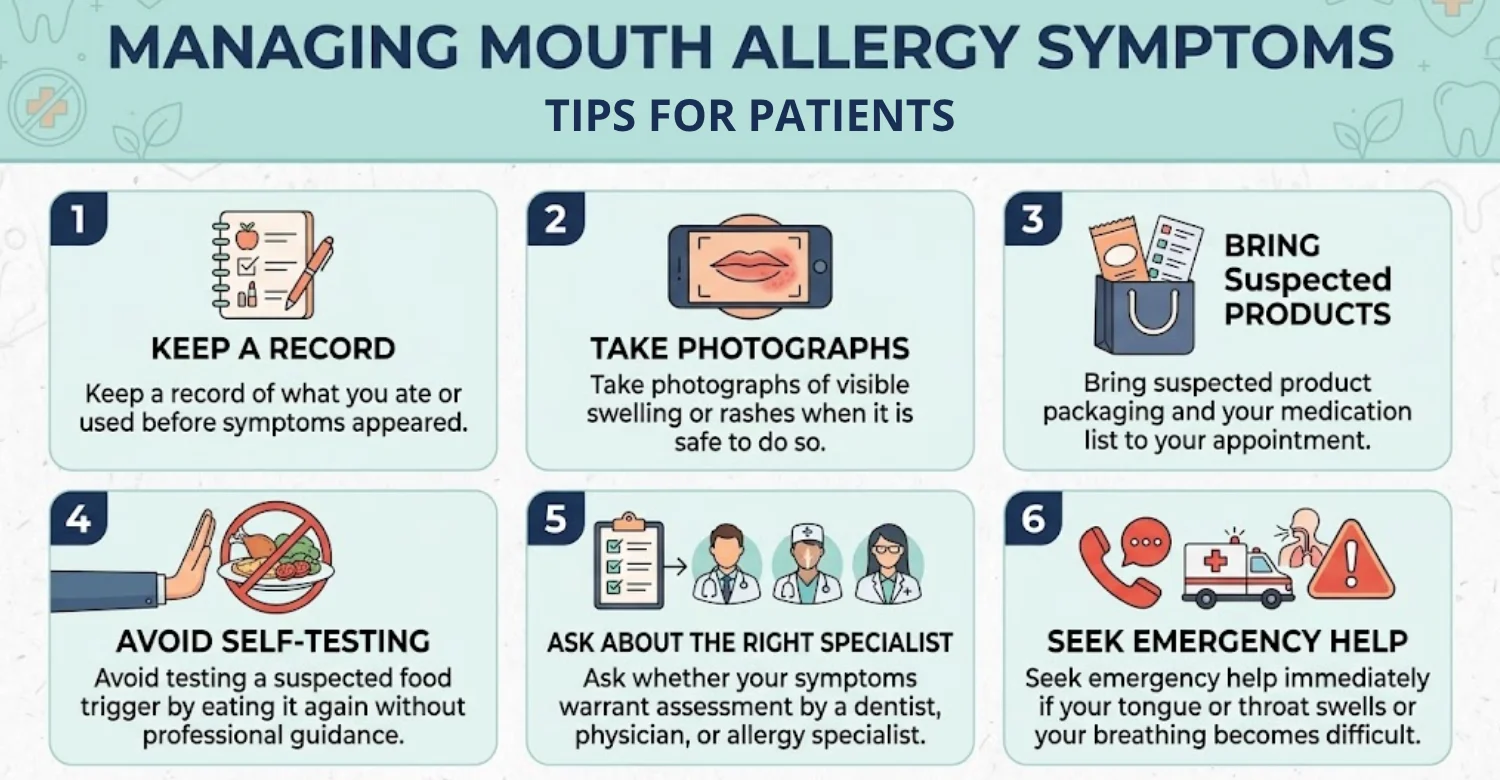
If you suspect a nonessential product, such as a new toothpaste, mouthwash, or lip balm, stop using it. Removing the possible trigger is often the simplest way to see whether symptoms settle. If you suspect a food, avoid it until you receive appropriate medical advice. Never deliberately eat the food again to test your reaction. A repeat exposure can sometimes cause a more severe response. Also, do not stop any prescribed medication without speaking to your doctor first.
Rinse Your Mouth Gently With Water
Rinsing your mouth gently with plain water after contact with a suspected food or oral care product may remove remaining residue. This reduces ongoing contact between the substance and your oral tissues. Use lukewarm water and avoid vigorous swishing if your mouth feels sore. Avoid alcohol-based mouthwashes, which may sting irritated tissues. Rinsing may make a mild oral allergic reaction more comfortable. However, it does not treat swelling or stop a reaction that is spreading.
Choose Gentle Oral Hygiene Products
While your mouth recovers, a soft-bristled toothbrush can reduce friction on sore gums. When appropriate, choose a mild, unflavoured or lightly flavoured toothpaste without strong cinnamon or intense mint. If sodium lauryl sulfate seems to irritate you, a product without it may feel gentler. Keep in mind that products labelled natural or herbal can still cause irritation or allergy. Plant extracts and essential oils are known contact allergens. Introduce one new product at a time so you can notice changes clearly.
Avoid Foods That Worsen Irritation
Temporarily avoiding very hot, spicy, salty, or acidic foods may make an irritated mouth more comfortable. Citrus fruits, tomatoes, vinegar, and chilli can sting inflamed tissues and prolong discomfort. Softer, lukewarm foods are usually easier to tolerate. This is a comfort measure, not an elimination diet. Avoiding these foods does not mean you are allergic to them. Keep your diet balanced, and avoid cutting out entire food groups unless a clinician advises it after a proper assessment.
Which Tools Can Help You Identify Oral Allergy Triggers?
Simple tracking tools can help you notice the patterns behind an allergic reaction in mouth. Many symptoms fade before an appointment, which makes them hard to describe accurately. Written notes, photographs, and product records give your clinician concrete details instead of vague memories. They can reveal links between symptoms and specific foods, products, medicines, or dental procedures. Good records also make any later testing more focused, because testing works best when a clear history guides it.
Keep a Food and Symptom Diary
A food and symptom diary helps you spot connections that are easy to miss. Each time symptoms appear, record what you ate, drank, or used beforehand. Include toothpaste, mouthwash, lip products, and medicines. Note when symptoms began and how long they lasted. Write down which areas were affected, such as your lips, gums, tongue, or throat. Also note symptoms elsewhere, like hives or wheezing. Over several weeks, patterns in your mouth allergy symptoms often become clearer.
Photograph Visible Changes
Photographs can document visible changes that may disappear before your appointment. When it is safe to do so, take clear, well-lit pictures of lip swelling, a mouth rash allergy, or visible changes inside your mouth. Photos taken at different stages can show how symptoms develop and settle. Record the date and time of each one. Never delay seeking emergency help to take pictures. If your tongue or throat is swelling, or breathing becomes difficult, call for help first.
Record Product Ingredients and Medication Changes
Keep the ingredient lists and packaging of any oral care products, cosmetics, or foods you suspect. Specific ingredient names help a clinician choose relevant tests, such as particular patch-test allergens. Also keep an up-to-date list of all your medicines, including supplements and recent changes. A newly started medicine is an important possible cause of an allergic reaction in mouth. However, do not stop a prescribed medicine without medical advice, unless emergency services instruct you to do so.
When Should You Seek Medical Attention for an Oral Allergic Reaction?
Knowing when to seek help is one of the most important parts of managing an allergic reaction in mouth. Some symptoms, such as mild tingling after eating raw fruit, can be discussed at a routine appointment. Others, such as tongue or throat swelling, are emergencies that need immediate care. The difference is not always about how uncomfortable you feel. It depends on which body parts are involved, how many systems are affected, and how quickly symptoms progress.
Signs That Require Emergency Care
Seek emergency help immediately if you develop:
Difficulty breathing or swallowing.
Rapid swelling of the tongue or throat.
A suddenly hoarse voice or a sensation that your throat is closing.
Faintness, collapse, or severe dizziness.
Symptoms involving several body systems, such as hives with breathing problems or vomiting.
These signs may indicate anaphylaxis, a severe allergic reaction that can become life-threatening within minutes. If you have a prescribed epinephrine auto-injector, use it as directed and seek emergency care, even if you start to feel better. Antihistamines are not a substitute for epinephrine in anaphylaxis.
When to Arrange a Dental or Medical Assessment
Arrange a dental or medical assessment if you have persistent mouth inflammation allergy symptoms, recurrent swelling, or unexplained oral lesions. You should also seek advice if symptoms return after using a particular product or eating a specific food. Any mouth ulcer or patch that does not heal within two to three weeks needs examination. However, breathing difficulties, tongue swelling, and throat swelling should never be managed by waiting for a routine dental appointment. They require emergency care immediately.
.jpg)
How Is an Allergic Reaction in Mouth Diagnosed?
Diagnosing an allergic reaction in mouth begins with a detailed symptom history and an examination. A clinician considers what you were exposed to, when symptoms started, and how they behaved. They also look for signs of other conditions that can mimic allergy. Testing is only useful when this history guides it. Depending on the suspected trigger and the severity of your symptoms, the right next step may involve a dentist, a physician, or an allergy specialist.
Medical History and Oral Examination
A clinician may ask about foods, medicines, oral care products, cosmetics, and recent dental treatment. They will want to know when symptoms began, how long they lasted, and whether they have happened before. Associated skin or breathing symptoms are especially important. The oral examination checks your lips, gums, tongue, cheeks, and palate for swelling, redness, ulcers, or white patches. The clinician may also look closely at tissues touching fillings, crowns, or dentures.
Allergy Testing When Appropriate
When an immediate allergy is suspected, an allergy specialist may use skin-prick testing or blood tests that measure specific IgE antibodies. These tests look for sensitization to particular foods, pollens, or other allergens. In some cases, a supervised oral food challenge may be considered under specialist care. Results must be interpreted alongside your history. A positive test alone does not always mean you will react. A negative result does not always exclude allergy either.
Patch Testing for Suspected Contact Allergy
Patch testing helps investigate delayed contact allergies, which involve a different immune process from immediate allergies. Small amounts of selected substances, such as flavourings, preservatives, metals, or acrylates, are applied to the skin of your back under adhesive patches. The skin is then checked over several days for localized reactions. Patch testing may help clarify a suspected reaction to toothpaste or dental materials. The appropriate test always depends on the suspected trigger and the type of oral allergic reaction.
What Treatments Are Available for an Oral Allergic Reaction?
Treatment for an allergic reaction in mouth depends on the suspected cause, the severity, and which tissues are affected. A mild contact reaction to toothpaste needs a very different approach from a sudden food-related reaction with throat swelling. Emergency treatment for anaphylaxis focuses on restoring breathing and circulation. Care for milder reactions focuses on removing the trigger and calming inflamed tissues. Your clinician will tailor the plan to your history and any test results.
Trigger Avoidance and Product Substitution
Identifying and avoiding a confirmed or strongly suspected trigger is the foundation of preventing recurrence. For product reactions, this often means switching to an alternative without the problem ingredient. For food allergies, it means learning to read labels and recognize hidden sources. However, avoid unnecessary dietary restrictions, especially when a suspected food allergy has not been properly assessed. Cutting out many foods without evidence can affect nutrition and quality of life, particularly in children.
Antihistamines for Selected Mild Reactions
For some mild allergic symptoms, such as itching or limited hives, a clinician or pharmacist may recommend an appropriate antihistamine. They will consider your age, other medicines, and medical conditions when choosing one. Antihistamines can ease histamine-driven itching and swelling. However, they do not treat airway obstruction or low blood pressure, and they do not replace emergency treatment for anaphylaxis. Swelling caused by certain blood pressure medicines may not respond to antihistamines at all.
Treatment for Contact Reactions and Oral Inflammation
For a contact reaction, a clinician will usually recommend stopping the offending product first. Many contact-related symptoms improve within days to weeks once exposure ends. When appropriate, they may prescribe medication to reduce inflammation, such as a topical corticosteroid preparation designed for use in the mouth. If an infection is present, it needs its own specific treatment instead. Persistent lesions may require additional investigation, sometimes including a biopsy, rather than repeated empirical treatment.
Emergency Treatment for Severe Allergic Reactions
Intramuscular epinephrine, also called adrenaline, is the first-line treatment for anaphylaxis. It is usually injected into the outer thigh and acts quickly to reduce swelling, open the airways, and support blood pressure. A further dose may be needed if symptoms do not improve. Emergency medical teams may provide oxygen, intravenous fluids, and additional respiratory and circulatory support. When an allergic reaction in mouth progresses to anaphylaxis, hospital observation is often recommended because symptoms can return.
How Can You Prevent Future Oral Allergy Reactions?
Preventing a future allergic reaction in mouth depends on two things: reducing exposure to known triggers and recognizing early warning signs. Prevention works best when it rests on an accurate diagnosis rather than guesswork. Simple habits, such as checking ingredient labels and keeping records, make a meaningful difference. If you have had a serious reaction before, preparation becomes even more important. The following steps can help you stay safer in daily life.
Identify and Avoid Confirmed Triggers
Accurate identification matters more than avoiding large groups of foods or products without evidence. Broad avoidance can feel safe, but it may limit your diet unnecessarily and still miss the real trigger. Once a specialist confirms a specific allergen, you can avoid it precisely. This includes learning its alternative names on labels and asking about ingredients when eating out. Targeted avoidance reduces the risk of another oral allergic reaction while keeping daily life as normal as possible.
Review Oral Care and Dental Product Ingredients
Check ingredient labels on toothpaste, mouthwash, lip balm, and similar products, especially if you have reacted before. Watch for flavourings, such as cinnamon or mint derivatives, if these have been identified as your triggers. Tell your dentist about any known allergies before treatment so they can choose suitable materials. If you suspect a reaction to an existing restoration, discuss it with a qualified clinician before replacing it. Unnecessary removal can damage healthy tooth structure.
Prepare for a Previous Severe Reaction
If you have had a severe reaction before, follow your individualized allergy action plan. This written plan explains which symptoms to watch for and what to do at each stage. When indicated, carry your prescribed emergency medication, such as epinephrine auto-injectors, at all times. Check expiry dates regularly and make sure you know how to use them. Tell family, friends, or colleagues about your allergy so they can help if an allergic reaction in mouth becomes severe.
What We Notice Clinically
Dr. Rifat Alsaman, Head of the Medical Team and cosmetic dentist at Vitrin Clinic, emphasizes the importance of distinguishing a possible allergy from other causes of oral discomfort before recommending treatment. A correct diagnosis protects patients from two risks: missing a genuine allergic reaction in mouth and treating a condition that is not actually an allergy. A structured history and a careful examination guide the decisions that follow, including whether referral for medical or allergy assessment is needed.
Why the Timing of Symptoms Matters
Dr. Rifat Alsaman, Head of the Medical Team and cosmetic dentist at Vitrin Clinic, highlights that the timing of symptoms can provide useful clues. Symptoms that appear soon after eating or using a product may suggest a trigger-related reaction. Symptoms that appear hours or days later may point toward a delayed contact reaction. However, timing alone cannot establish a diagnosis. It works best alongside a detailed history, an oral examination, and appropriate testing when indicated.
Why Not Every Mouth Irritation Is an Allergy
Dr. Rifat Alsaman, Head of the Medical Team and cosmetic dentist at Vitrin Clinic, stresses that irritation, infection, dry mouth, and inflammatory conditions can resemble an oral allergy. Fungal infections, mouth ulcers, and gum disease can all cause redness, burning, or soreness. Treating these as allergies may delay the right care. A careful history and examination can help determine whether further medical or allergy assessment is appropriate, or whether a dental cause explains the symptoms.
When Dental Assessment Is Appropriate
Dr. Rifat Alsaman, Head of the Medical Team and cosmetic dentist at Vitrin Clinic, recommends reviewing persistent symptoms that appear around dental treatment or after contact with oral care products. A dental examination can check for rough edges, poorly fitting restorations, infection, or tissue changes next to fillings and crowns. Suspected material sensitivity should be investigated before considering changes to otherwise functional dental restorations. This careful approach helps avoid removing healthy dental work without clear evidence.
Clinical Note
An allergic reaction in mouth can range from mild local irritation to a life-threatening systemic response. Swelling of the tongue or throat, breathing difficulty, and signs of anaphylaxis require emergency treatment. Persistent or recurrent symptoms need assessment because infections, inflammatory disorders, and contact irritation can resemble allergy. Diagnosis should be based on clinical history and appropriate testing, not symptoms alone. Treatment depends on the trigger and severity. Patients should avoid deliberate re-exposure to a suspected allergen until they receive appropriate advice.
Takeaway: Recognize the Signs and Choose the Right Next Step
Mouth itching, redness, burning, and swelling can have several causes. An allergic reaction in mouth is only one possibility, alongside contact irritation and other oral conditions. The timing of symptoms and possible triggers can help guide an assessment, but a professional evaluation may be needed to establish the cause.
Avoid suspected triggers when appropriate, document recurring symptoms, and seek advice if the problem persists. If your tongue or throat swells or you experience breathing difficulty, seek emergency care immediately. Early recognition and the right treatment can help reduce complications and guide safer future care.
About Vitrin Clinic
Vitrin Clinic in Istanbul, Türkiye, provides individualized dental assessment and treatment planning. When you report persistent oral irritation or symptoms associated with dental products or restorations, the dental team can assess the oral tissues and review relevant dental history. If the findings suggest a possible systemic allergy or a condition outside routine dental care, appropriate medical or allergy evaluation may be needed.
Dr. Rifat Alsaman, Head of the Medical Team and cosmetic dentist at Vitrin Clinic, supports a careful, evidence-informed approach to assessment and treatment planning. Dental evaluation can help investigate oral causes of an allergic reaction in mouth, but it does not replace emergency medical care or specialist allergy diagnosis.
Ready to transform your smile?
Talk to our team and get a FREE treatment plan.
References:
FAQs
Dr. Rifat Alsaman has more than 5 years of clinical experience in dentistry and currently serves as the Head of the Medical Team at Vitrin Clinic. He is dedicated to providing exceptional patient care, overseeing treatment planning, and ensuring the highest clinical standards across the team. His expertise, attention to detail, and commitment to continuous professional development have helped countless patients achieve healthier, more confident smiles.


.webp&w=3840&q=75)


