General Dentistry
October 22, 2026
Dental Procedures in Patients with Hemophilia: How Can They Be Performed Safely?
 Dr. Rifat Alsaman

Dental Procedures in Patients with Hemophilia require more planning than standard dental care. Hemophilia is an inherited condition that reduces the blood's ability to form a stable clot. As a result, tooth extractions, gum treatment, and oral surgery can cause prolonged bleeding. Many patients worry about bleeding, pain, and slow recovery. These concerns are understandable. With careful preparation, however, most treatment is possible. Safe care starts with coordination between the dentist and the patient's hematology team. It also depends on a clear assessment of bleeding risk and an individualized treatment plan.
.jpg)
.jpg)
.jpg)
.jpg)
Ready to transform your smile?
Talk to our team and get a FREE treatment plan.
Dental Procedures in Patients with Hemophilia: What You Need to Know
Dental treatment for patients with hemophilia are usually possible when risks are identified early. A few questions come first. What type of hemophilia does the patient have? How severe is it? Are inhibitors present? Which procedure is planned? Non-invasive care, such as examinations and fillings, often needs few extra steps. Invasive care, such as extractions, needs more preparation. Dental Management of Patients with Hemophilia therefore begins with information, not with instruments. Good planning reduces surprises and improves safety.
What Is Hemophilia and How Does It Affect Your Oral Health?
Hemophilia is a genetic bleeding disorder. Hemophilia A results from a deficiency of clotting factor VIII. Hemophilia B results from a deficiency of factor IX. Both factors are needed to build a firm clot after an injury. When levels are low, bleeding lasts longer than normal. It does not usually flow faster. This matters during dental procedures in patients with hemophilia, especially extractions, deep cleaning, and gum surgery. The mouth is rich in blood vessels, and saliva contains enzymes that can break down clots.
Can You Safely Receive Dental Treatment if You Have Hemophilia?
Yes, in most cases. Dental treatment for patients with hemophilia can often be performed safely with the right assessment and precautions. Many routine treatments need little or no clotting support. More invasive work may need factor replacement, antifibrinolytic medicine, or both. The level of risk varies between people. It depends on disease severity, recent bleeding history, current treatment, and inhibitor status. It also depends on how invasive the planned procedure is. No patient should avoid dental care out of fear.
Which Dental Procedures May Carry a Higher Bleeding Risk?
Bleeding Risks of Dental Procedures in Hemophilia Patients vary widely by procedure. Routine examinations and dental X-rays carry minimal bleeding risk. Professional cleaning above the gumline is usually low risk, while deeper periodontal treatment carries more. Fillings, crowns, and root canal treatment are generally low to moderate risk. Gum handling and the anesthetic technique influence this. Tooth extraction and periodontal surgery carry a higher risk. Dental implant placement and other oral surgery usually need the most planning. Planning dental procedures in patients with hemophilia starts with this risk ranking.
Common Oral Symptoms and Bleeding Concerns in Hemophilia
Some oral bleeding signs are common in people with hemophilia. Others point to a separate dental problem. Knowing the difference helps you seek the right care at the right time. Gum bleeding, oozing after treatment, and bruising inside the mouth are frequent concerns. Some are minor and manageable at home. Others need prompt review. Dental procedures in patients with hemophilia are easier to plan when these symptoms are reported early. Keep a simple record of when bleeding happens and how long it lasts.
Why Do My Gums Bleed When I Brush or Floss?
Bleeding gums usually signal inflammation. Plaque along the gumline causes gingivitis, which makes the gums swollen and fragile. Untreated, it can progress to periodontitis. Brushing too hard or using a stiff brush can also injure the tissue. Hemophilia may make this bleeding last longer, but it is not usually the only cause. Persistent gum bleeding should not be blamed on hemophilia without an examination. A dentist can check for plaque, tartar, and gum disease. Better daily cleaning often reduces bleeding within weeks.
Why Does My Mouth Keep Bleeding After Dental Treatment?
After an extraction or surgery, a clot should form in the wound. In hemophilia, that clot may be weak or may break down early. Saliva, tongue movement, and eating can disturb it further. This can cause oozing that continues for hours or restarts days later. Light pink staining of saliva is often expected. Steady red bleeding, large clots, or bleeding that does not slow with pressure is not normal. These signs need prompt contact with your dental or hematology team.
Can Hemophilia Cause Mouth Bruising or Swelling?
Yes. Minor trauma, such as biting the cheek or injury from hard food, can cause bleeding under the oral lining. This may appear as a dark bruise or a blood blister. Injections and surgery can also cause bleeding into deeper tissues, known as a hematoma. Most small bruises settle on their own. Swelling of the tongue, floor of the mouth, or throat is different. It can narrow the airway. This requires emergency assessment without delay. Do not wait to see whether it improves.
How Can Poor Oral Health Increase My Need for Invasive Treatment?
Untreated decay can spread to the nerve of the tooth. At that point, root canal treatment or extraction may be needed. Gum disease can loosen teeth over time and lead to tooth loss. Each of these steps increases the chance of invasive treatment. Invasive dental procedures in patients with hemophilia bring extra bleeding considerations and costs. Preventive care breaks this chain. Regular checkups, early fillings, and good gum care keep treatment simple. Simple treatment usually means lower bleeding risk.

Note: All images used are for editorial and illustrative purposes only and may not originate from the original news provider or associated company.
Causes and Factors That Increase Bleeding Risks During Dental Procedures
Several factors shape the bleeding risk during dental care. The most important is the level of clotting factor activity in the blood. Other factors include inhibitors, medications, and general health conditions such as liver disease. The type of procedure matters too. A small filling and a surgical extraction create very different wounds. Dental procedures in patients with hemophilia become safer when each factor is reviewed before treatment begins. This review guides decisions about clotting support and local measures.
How Does Hemophilia Severity Affect Dental Treatment?
Severity is based on the level of factor activity in the blood. Severe hemophilia means less than 1% of normal activity. Moderate hemophilia means 1% to 5%. Mild hemophilia means more than 5% but less than 40%. People with severe hemophilia may bleed after minor injury and often need clotting support before invasive care. People with mild hemophilia may bleed mainly after surgery or trauma. Even so, dental treatment for patients with hemophilia need planning in mild cases too.
How Do Clotting Factor Deficiencies Affect Wound Healing?
Hemophilia mainly affects how a clot forms and holds. It does not directly stop tissues from repairing. A wound may bleed longer, but the healing process itself is usually normal once bleeding is controlled. Problems arise when bleeding continues or a clot repeatedly breaks down. That can disturb the wound and delay closure. Infection can also slow healing. These complications are different from the clotting defect itself. Distinguishing between them helps the team choose the right response.
Can Medications or Other Medical Conditions Increase Dental Bleeding?
Yes. Anticoagulants, such as warfarin and newer oral anticoagulants, increase bleeding risk. Antiplatelet medicines, including aspirin and clopidogrel, affect platelet function. Many non-steroidal anti-inflammatory drugs, such as ibuprofen, can do the same. Liver disease may reduce the production of clotting factors. A low platelet count also matters. Some older patients with hemophilia have a history of hepatitis C from earlier blood products. Never stop or change any medicine without guidance from the prescribing doctor. Stopping some drugs suddenly can be dangerous.
What Happens if You Have Factor Inhibitors?
Inhibitors are antibodies that the immune system makes against replacement clotting factor. They neutralize the infused factor and make it less effective. Inhibitors are more common in severe hemophilia A, but they can occur in hemophilia B. When inhibitors are present, standard factor replacement may not control bleeding. The hematologist may use bypassing agents or other therapies instead. This changes the whole hemostatic plan. Patients with inhibitors usually need closer monitoring and coordinated, specialist-supported care for invasive dental treatment.
Ready to transform your smile?
Talk to our team and get a FREE treatment plan.
Dental Management of Patients with Hemophilia Before Treatment
Dental Management of Patients with Hemophilia starts long before the first instrument touches the mouth. It begins with a full medical history, a dental examination, and a clear treatment goal. The dentist then decides which procedures carry a bleeding risk. For higher-risk care, the hematology team is involved early. Dental procedures in patients with hemophilia go more smoothly when preparation is complete. Good preparation also helps the patient know what to expect before, during, and after treatment.
What Should Your Dentist Know Before Starting Treatment?
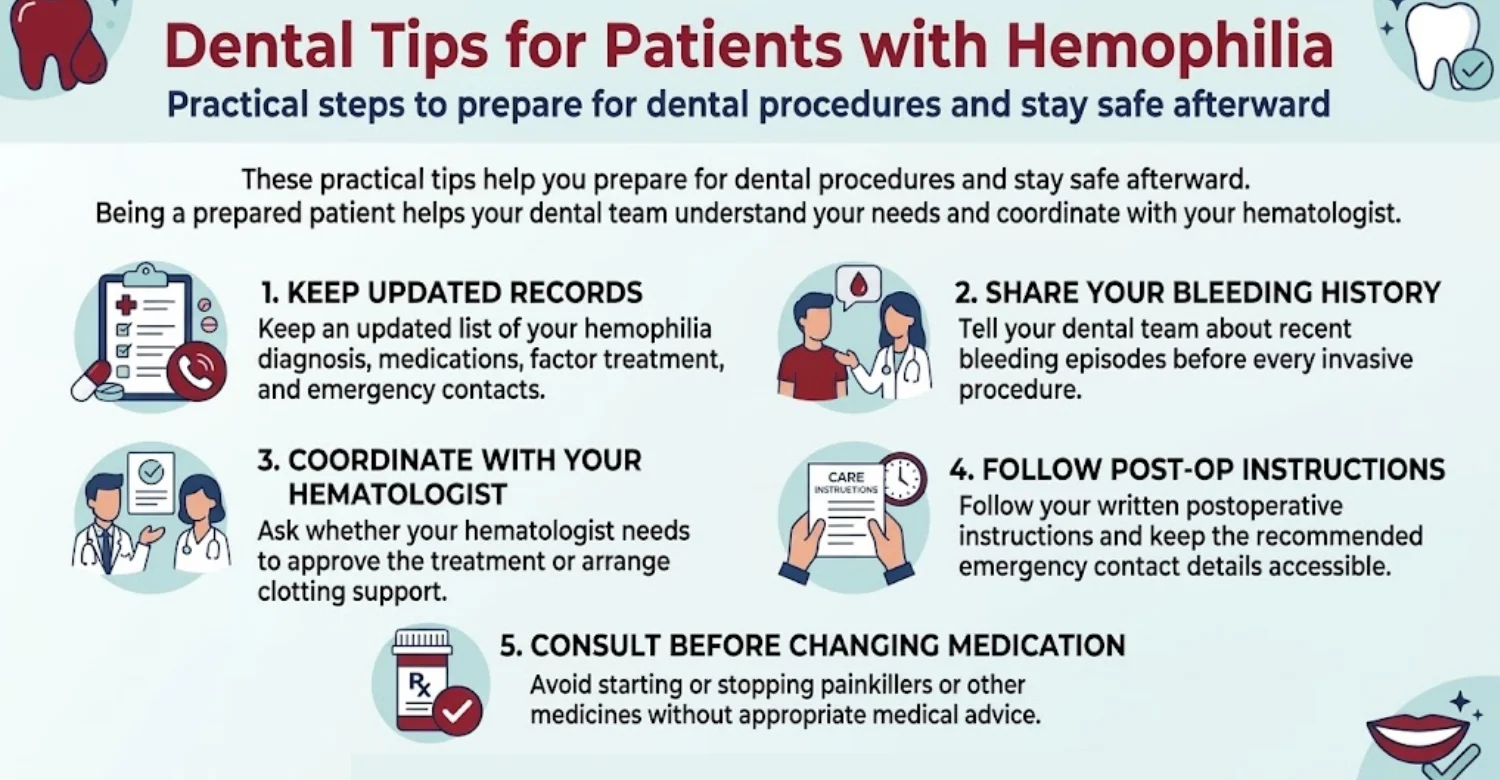
Share your hemophilia type and severity first. Then describe any recent bleeding episodes, including bleeding after past dental work. List all current medicines and supplements. Explain your factor treatment or prophylaxis schedule. Mention whether you have ever had inhibitors. Provide contact details for your hematologist or hemophilia treatment center. Bring any written care plan or emergency letter you hold. This information allows the dentist to judge risk accurately and avoid unsafe assumptions.
What Tests or Medical Assessments Might Be Needed?
Testing depends on the patient and the planned procedure. For invasive treatment, the hematologist may request a recent factor activity level. An inhibitor screen may be needed, especially before surgery or after a change in therapy. A full blood count can check platelets and hemoglobin. Liver function tests may be useful in some cases. Routine checkups usually need no blood tests. The hematology team decides which tests are relevant and when. Results then guide dental procedures in patients with hemophilia.
How Is a Dental Treatment Plan Adapted to Your Bleeding Risk?
The plan begins with choosing the least invasive treatment that meets the clinical need. The team may group procedures to reduce the number of bleeding events. Timing is planned around clotting support. Treatment early in the day and early in the week allows follow-up during working hours. Local measures, such as sutures and hemostatic materials, are prepared in advance. Dental Care Guidelines for Hemophilia Patients consistently emphasize coordination with the hematology team for invasive care.
Why Is Coordination Between Your Dentist and Hematologist Important?
The dentist understands the procedure. The hematologist understands the bleeding disorder. Safe care needs both perspectives. Together, they agree on whether clotting support is needed, which type, and when to give it. They decide on antifibrinolytic medicine and how long to use it. They also agree on pain relief and follow-up. Clear roles mean the patient knows whom to call if bleeding starts. Coordination is the backbone of dental procedures in patients with hemophilia.
Dental Treatment for Patients with Hemophilia: Available Procedures
Dental Treatment for Patients with Hemophilia covers almost the full range of modern dentistry. Patients can receive preventive care, fillings, root canal treatment, gum therapy, extractions, and implants. The difference lies in the preparation. Some procedures need no special steps. Others require clotting support and close monitoring. Dental procedures in patients with hemophilia are chosen to protect oral health while limiting avoidable bleeding. The sections below explain how each type of care is usually approached.
Routine Dental Examinations and Preventive Cleaning
Examinations and dental X-rays carry minimal bleeding risk. They allow problems to be found early, when treatment is simpler. Oral hygiene instruction helps patients clean effectively without injuring the gums. Professional cleaning above the gumline can usually be done with standard care. Gentle technique keeps gum trauma low. Regular cleaning reduces inflammation, which in turn reduces gum bleeding. These visits are the foundation of dental procedures in patients with hemophilia, because they help prevent invasive work.
Fillings, Crowns, and Root Canal Treatment
Restorative treatment repairs damaged teeth and helps keep them in the mouth. Fillings and crowns usually involve little soft-tissue injury. Root canal treatment removes infected pulp from inside the tooth. Bleeding within the canal is generally limited and controllable. These treatments often avoid the open socket created by extraction. However, risks still need assessment. Gum contact during crown preparation, rubber dam clamps, and certain anesthetic injections can cause bleeding. In dental procedures in patients with hemophilia, these details are planned in advance.
Periodontal Treatment for Gum Disease
Gum disease treatment removes plaque and tartar from above and below the gumline. Scaling and root planing clean the root surfaces to help the gums heal. Mild cleaning often needs no clotting support. Deep or extensive treatment may cause more bleeding. In these cases, the dentist may treat smaller areas per visit. Tranexamic acid or factor support may be advised for some patients. Periodontal surgery needs fuller planning. Reducing inflammation first often makes later treatment less bloody.
Tooth Extraction in Patients with Hemophilia
Tooth Extraction in Patients with Hemophilia needs careful planning because it leaves an open wound. Risk rises with multiple extractions, impacted teeth, and surgical removal. The hematologist may advise clotting factor replacement before the procedure when indicated. The dentist uses an atraumatic technique to limit tissue damage. Absorbable hemostatic materials can be placed in the socket. Sutures help close and stabilize the wound. Tranexamic acid is often continued for several days afterward. Follow-up checks confirm stable healing.
Dental Implants and Other Oral Surgery
Dental implants are possible for many people with hemophilia. Implant placement involves drilling into bone and lifting gum tissue. Bone grafting and sinus procedures add further complexity. These steps can cause more bleeding than a simple extraction. The need for clotting support depends on the extent of surgery and individual risk. Careful imaging helps avoid blood vessels and reduce surprises. Postoperative monitoring is usually more detailed. Implant decisions should be made with full hematology input.
.jpg)
Ready to transform your smile?
Talk to our team and get a FREE treatment plan.
Clotting Factor Replacement Before Dental Procedures
Clotting Factor Replacement Before Dental Procedures raises the missing factor to a level that allows effective clot formation. It is one of the main tools for invasive dental care. The hematologist decides the product, dose, and timing. The dentist then performs the procedure within that window. Dental procedures in patients with hemophilia do not always need factor replacement. When they do, careful timing is essential. Other medicines may be used alongside it or, in some cases, instead of it.
When Might Clotting Factor Replacement Be Necessary?
Factor VIII concentrate is used for hemophilia A. Factor IX concentrate is used for hemophilia B. Replacement may be needed before extractions, oral surgery, or deep nerve block injections in patients with significant deficiency. It is usually given shortly before the procedure. Some patients need further doses afterward. Patients on regular prophylaxis may have their schedule adjusted. The decision always comes from the hematology team. The dentist should not assume either that factor is needed or that it is not.
Can Every Patient with Hemophilia Receive Factor Replacement?
Not always. Patients with inhibitors may not respond to standard factor replacement. They may need bypassing agents, such as recombinant activated factor VII or activated prothrombin complex concentrate. Some patients with hemophilia A use non-factor therapies for prophylaxis. These treatments affect how extra support is planned and dosed. People with mild hemophilia A may sometimes use desmopressin instead. Severity and the planned procedure also influence the choice. The hematologist selects the safest strategy for each patient.
Can Medicines Such as Tranexamic Acid Help Control Dental Bleeding?
Tranexamic acid is an antifibrinolytic medicine. It slows the breakdown of blood clots. This is valuable in the mouth, where saliva and oral tissues promote clot breakdown. It may be used as a mouthwash after treatment. It may also be given as tablets or by injection when prescribed. It is widely used in dental procedures in patients with hemophilia, often for several days after extraction or surgery. It does not replace factor when factor is needed. Dose and duration must come from the treating team.
Is Desmopressin an Option Before Dental Treatment?
Desmopressin, also called DDAVP, can temporarily raise factor VIII levels by releasing the body's own stores. It may help selected patients with mild hemophilia A. It does not raise factor IX, so it does not treat hemophilia B. It is also not effective in severe hemophilia A. Patients usually need a test dose to confirm a good response. Side effects can include flushing, headache, and low sodium levels. Fluid intake may be restricted after a dose. Only the hematologist should prescribe it.
Local Anesthesia for Patients with Hemophilia
Local Anesthesia for Patients with Hemophilia is usually possible, but the technique matters. Most dental pain control relies on injections. Some injections are placed close to the surface. Others are placed deep in tissue near larger blood vessels. Deep injections carry a higher risk of hidden bleeding. Dental procedures in patients with hemophilia therefore include a careful choice of anesthetic method. The aim is effective numbness with the lowest practical risk of hematoma.
Can You Receive Local Anesthesia Safely?
Yes, most patients can. Infiltration injections near the tooth are often used with standard precautions. Intraligamentary injections, given into the space beside the tooth root, also carry low risk. Articaine infiltration can sometimes numb lower back teeth without a deep block. Bleeding risk is linked to injection depth and the tissue involved. A shallow injection in firm tissue rarely causes problems. A deep injection in loose tissue may bleed unnoticed. The dentist selects the method accordingly.
Which Anesthetic Techniques May Require Extra Precautions?
The inferior alveolar nerve block is the main concern. It is a common injection for numbing lower teeth. The needle passes into a deep space near blood vessels. Bleeding there may spread toward the throat and threaten the airway. Posterior superior alveolar blocks and lingual infiltrations can also cause deeper bleeding. For these injections, clotting factor cover is often advised in patients with significant deficiency. Superficial infiltration generally carries less risk. Each decision depends on severity and the procedure.
How Can Your Dental Team Reduce Injection-Related Bleeding?
Choosing a lower-risk technique is the first step. Using a fine needle and injecting slowly limits tissue damage. Aspiration helps avoid injecting into a blood vessel. Gentle pressure at superficial sites may reduce oozing. Anesthetics containing a vasoconstrictor, such as adrenaline, can reduce local bleeding when suitable. For deep blocks, clotting support is planned beforehand with the hematologist. The safest approach depends on the procedure and the patient's clinical circumstances. There is no single universal method.
Patients Reviews
Ready to transform your smile?
Talk to our team and get a FREE treatment plan.
How to Prevent Bleeding During Dental Procedures
How to Prevent Bleeding During Dental Procedures is a central question in hemophilia care. Prevention combines systemic support and local control. Systemic support includes clotting factor and antifibrinolytic medicine when indicated. Local control includes careful technique, pressure, sutures, and hemostatic materials. Dental procedures in patients with hemophilia are safest when both layers are planned together. Pain management also matters, because some painkillers increase bleeding. The following sections explain each step in practical terms.
Which Local Measures Can Help Control Bleeding?
Firm, direct pressure with gauze is the simplest first step. Sutures bring wound edges together and hold the clot in place. Absorbable hemostatic materials, such as oxidized cellulose, gelatin sponge, or collagen, can be placed in sockets. Fibrin sealant may be used in selected cases. Tranexamic acid can be applied locally or used as a mouthwash. A custom protective splint may help in some situations. In dental procedures in patients with hemophilia, measures are chosen according to wound size.
Why Is an Atraumatic Dental Technique Important?
An atraumatic technique means completing the treatment with minimal tissue damage. Smaller incisions create smaller wounds. Careful handling of the gums avoids tearing. During extraction, gentle elevation and sectioning of the tooth can reduce bone and soft-tissue injury. Less tissue damage means fewer bleeding vessels and a smaller area for the clot to cover. It also tends to reduce swelling and pain. Avoiding unnecessary surgical steps is one of the most effective ways to lower bleeding risk.
How Should Pain Relief Be Managed?
Pain relief must be chosen with bleeding in mind. Paracetamol, also called acetaminophen, is usually the first choice. Aspirin should be avoided because it impairs platelet function. Most non-steroidal anti-inflammatory drugs, such as ibuprofen, raise a similar concern. In some cases, the hematologist may approve specific alternatives. Stronger painkillers may be prescribed after surgery when needed. Other health conditions, such as liver disease, also affect the choice. Review every prescribed medicine with the treating medical team.
Postoperative Bleeding After Dental Treatment in Hemophilia Patients
Postoperative Bleeding After Dental Treatment in Hemophilia Patients can appear soon after the procedure or several days later. Delayed bleeding often happens when the clot breaks down. Saliva, food, and movement can disturb a weak clot. A written aftercare plan helps patients respond calmly and correctly. It should include contact numbers and clear warning signs. Dental procedures in patients with hemophilia require good aftercare, not only good surgery. Recovery is a shared responsibility between patient and team.
What Should You Expect After an Extraction or Oral Surgery?
Mild discomfort and slight swelling are common for a few days. Light oozing that tints saliva pink can occur in the first day. A dark clot should form and stay in the socket. Tranexamic acid may be prescribed for several days. Some patients need further factor doses. Pain usually improves steadily. Follow-up appointments check that the wound is stable. Following the individualized postoperative plan closely is the best way to support a smooth recovery. Report any change early.
How Can You Care for the Treatment Site at Home?
Use any prescribed tranexamic acid mouthwash exactly as directed. Avoid vigorous rinsing and spitting in the first day. Do not use straws or smoke, as suction can dislodge the clot. Eat soft, cool foods and chew on the other side. Avoid very hot drinks and hard or sharp foods. Keep brushing other teeth gently. Clean near the wound only as advised. Rest and avoid strenuous activity for a short period. Keep your head raised when lying down.
What Should You Do if Bleeding Starts Again?
Stay calm and gently wipe away any loose clot from the mouth. Place clean, folded gauze over the wound. Bite down with firm, continuous pressure for at least 20 minutes. Do not keep checking, as this disturbs the clot. Some plans advise gauze soaked in tranexamic acid. Follow your written instructions. If bleeding continues, contact your dental team or hemophilia center urgently. Persistent bleeding may need further clotting support, so prompt professional advice is essential.
When Is Postoperative Bleeding a Medical Emergency?
Some signs need emergency care immediately. These include bleeding that cannot be controlled with pressure. Rapidly increasing swelling in the mouth, jaw, tongue, or neck is a warning sign. Difficulty swallowing suggests bleeding into deeper tissues. Difficulty breathing or noisy breathing may mean the airway is under threat. Dizziness, fainting, or a racing heart can signal significant blood loss. In any of these cases, call emergency services or go to the nearest emergency department. Tell staff about your hemophilia.
Hemophilia and Oral Surgery Complications
Hemophilia and Oral Surgery Complications are uncommon when treatment is properly planned. However, the risk is never zero. Complications usually relate to bleeding, either from the wound or within the tissues. Infection and wound breakdown can also occur, as with any patient. Recognizing early signs allows faster treatment and better outcomes. Dental procedures in patients with hemophilia should always include clear guidance on what to watch for. The sections below describe the main complications.
What Complications Can Occur After Dental Surgery?
Persistent or delayed bleeding is the most common problem. A hematoma can form when blood collects in the soft tissues. Wound disruption may occur if the clot is lost or sutures loosen. Infection can develop, causing pain, swelling, and sometimes fever. Dry socket can occur after extractions. Each complication is more likely after complex surgery or when bleeding control is incomplete. The likelihood also varies with the patient's clinical condition and adherence to aftercare.
How Can You Recognize a Hematoma or Wound Problem?
A hematoma often appears as swelling that grows over hours. The area may feel firm and tender. Bruising can spread to the cheek, jaw, or neck. Pain that increases instead of improving is another warning sign. A wound may look open or keep oozing despite pressure. Any of these signs warrants prompt reassessment by the dental or hematology team. Swelling near the throat or under the tongue needs emergency care because it can affect breathing.
Does Hemophilia Always Delay Healing?
No. Hemophilia does not automatically cause delayed tissue healing. Once bleeding is controlled, wounds generally heal at a normal pace. Problems arise when bleeding continues, a hematoma forms, or the clot breaks down repeatedly. These events can disturb the wound and slow closure. Infection can also delay recovery. After dental procedures in patients with hemophilia, good hemostatic control and careful aftercare help most patients heal well. If healing seems slow, the dentist will look for a specific cause.
Preventing Dental Problems When You Have Hemophilia
Prevention is the most powerful tool for people with hemophilia. Healthy teeth and gums need fewer invasive treatments. Fewer invasive treatments mean fewer bleeding risks, fewer factor infusions, and lower costs. Prevention combines daily home care with regular professional support. Dental Care Guidelines for Hemophilia Patients place strong emphasis on early and regular dental visits. Dental procedures in patients with hemophilia become simpler when disease is caught early. Small habits add up to major protection.
How Can Daily Oral Hygiene Reduce Your Need for Surgery?
Brush twice daily with fluoride toothpaste for about two minutes. Use a soft brush and gentle, controlled movements. Clean between teeth daily with floss or correctly sized interdental brushes. Mild gum bleeding when starting interdental cleaning often settles as inflammation improves. Do not stop cleaning because of light bleeding, but report bleeding that persists. Reduce sugary snacks and drinks between meals. These habits limit decay and gum disease. Healthy gums bleed less and need fewer surgical procedures.
How Often Should You Schedule Dental Checkups?
There is no single interval for everyone. Recall intervals should reflect your oral health, decay risk, and gum condition. Many people with hemophilia benefit from checkups about every six months. Those with active gum disease or frequent decay may need shorter intervals. Patients with very stable oral health may be seen less often, as advised by their dentist. Regular visits allow early detection of problems. Early problems usually need simpler, lower-risk treatment. Ask your dentist to set your interval.
Which Preventive Treatments May Help Protect Your Teeth?
Professional fluoride varnish strengthens enamel and helps prevent decay. Fissure sealants protect the grooves of back teeth and are often used in children and teenagers. Early fillings stop small cavities from reaching the nerve. High-fluoride prescription toothpaste may be advised for high-risk patients. Personalized periodontal maintenance controls gum inflammation over time. Dietary advice can reduce sugar exposure. Together, these measures help preserve natural teeth and reduce the need for extractions or surgery. They are simple and non-invasive.
Why Should You Tell Your Dental Team About Changes in Your Hemophilia Treatment?
Hemophilia treatment changes over time. New medicines, including non-factor therapies, can change how procedures are planned. A switch in factor product or prophylaxis schedule matters too. Developing inhibitors can transform the bleeding risk. Recent bleeding episodes may also signal a need for extra precautions. Your dental team cannot know these changes unless you share them. Update them at every visit and bring your latest care letter. This simple step keeps dental procedures in patients with hemophilia accurate and safe.
What We Notice Clinically
Dr. Rifat Alsaman, Head of the Medical Team and cosmetic dentist at Vitrin Clinic, emphasizes that no two patients with hemophilia are the same. Two people with the same diagnosis may have very different bleeding histories and needs. Treatment decisions should consider bleeding history, current medical management, oral health, and the invasiveness of the planned procedure. A filling and a surgical extraction need very different preparation. A one-size-fits-all approach risks either unnecessary treatment or insufficient protection.
Why Preserving Natural Teeth Can Be Important
Dr. Rifat Alsaman, Head of the Medical Team and cosmetic dentist at Vitrin Clinic, places strong emphasis on prevention and timely restorative treatment where clinically appropriate. A restorable tooth can often be saved with a filling, crown, or root canal treatment. This may avoid the open wound and bleeding considerations of extraction. However, not every tooth can be saved. Severe decay, fractures, or advanced gum disease may make extraction the better choice. The diagnosis guides the decision.
Why Hematology Coordination Is Essential Before Invasive Treatment
From the perspective of Dr. Rifat Alsaman, Head of the Medical Team and cosmetic dentist at Vitrin Clinic, complex extractions and oral surgery should proceed only with an agreed plan. The hematology team understands the patient's clotting profile, inhibitor status, and current therapy. The dental team understands the surgical demands. Combining both views helps define clotting support, medication, timing, and follow-up. This shared plan reduces uncertainty for the patient. It also prepares everyone to respond quickly if bleeding occurs.
Clinical Note
This clinical note summarizes key medical points for patients and families. It does not replace personal advice from a dentist or hematologist. Dental procedures in patients with hemophilia involve medical decisions that depend on detailed individual information. The points below highlight what matters most before treatment. They also explain why plans differ between patients and when to seek urgent help. Use them as a guide to the questions you ask your care team before any invasive procedure.
Important Medical Considerations Before Dental Treatment
Hemophilia does not automatically prevent dental treatment. Most people with hemophilia can receive the dental care they need. The safest approach depends on several factors. These include the type and severity of hemophilia and current factor levels. Inhibitor status and current therapies also matter. Finally, the nature of the planned procedure shapes the plan. A clear assessment of these factors should come before any invasive work. Delaying needed care can create bigger problems later.
Takeaway: Safe Dental Care Starts with Individualized Planning
Hemophilia may increase bleeding risks, but it does not automatically rule out dental treatment. Dental procedures in patients with hemophilia can be performed safely with the right preparation. Prevention keeps treatment simple. Accurate assessment identifies risk. Coordination with a hematologist guides clotting support. Appropriate hemostatic measures and clear postoperative instructions protect recovery. Always disclose your diagnosis and current treatment before any dental procedure. The next step is to arrange an assessment and build a plan suited to your medical and dental needs.
How Vitrin Clinic Approaches Dental Care for Patients
Vitrin Clinic in Istanbul, Türkiye, takes an individualized approach to dental care for patients with hemophilia, prioritizing oral health while minimizing bleeding risks. Before treatment, the team reviews the patient's medical history, medications, oral health, and hematology recommendations to develop an appropriate treatment plan.
Personalized Dental Treatment
Vitrin Clinic offers a range of dental treatments, including preventive care, fillings, crowns, root canal treatment, periodontics, and selected surgical procedures. Treatment recommendations depend on the patient's dental needs, bleeding risk, and medical guidance. Invasive procedures require careful planning and coordination with the patient's hematology team when indicated.
Follow-Up and Recovery
Patients receive personalized aftercare instructions and follow-up based on the procedures performed. Sharing medical records before treatment helps the team plan appropriate precautions and support a safer recovery.






This article is for general information and does not replace a personal assessment by a qualified dentist. Prices are approximate 2026 averages, with UK and Turkey figures converted to US dollars, and may vary by clinic and case.
Not sure whether Veneers or Hollywood Smile is right for you?
Book your FREE treatment plan with Vitrin Clinic and get a personalized assessment and treatment plan from our dental team.
Ready to transform your smile?
Talk to our team and get a FREE treatment plan.
References:
FAQs
Dr. Rifat Alsaman has more than 5 years of clinical experience in dentistry and currently serves as the Head of the Medical Team at Vitrin Clinic. He is dedicated to providing exceptional patient care, overseeing treatment planning, and ensuring the highest clinical standards across the team. His expertise, attention to detail, and commitment to continuous professional development have helped countless patients achieve healthier, more confident smiles.


