
Tooth enamel repair gel may help strengthen weakened enamel by supporting remineralization, depending on its ingredients and the extent of mineral loss. Enamel is the hard outer shield of each tooth. It protects against acids, temperature changes, and daily chewing forces. When it weakens, a sip of iced water can trigger a sharp twinge. Teeth may also feel rough or look thinner at the edges. Early mineral loss can often be reversed. Enamel that has physically worn away, however, cannot grow back naturally. This guide explains how a tooth enamel repair gel works, which ingredients matter, and how to choose a suitable product. It also covers when professional enamel repair treatment may be the better option.
What Is Tooth Enamel Repair Gel, and How Does It Work?
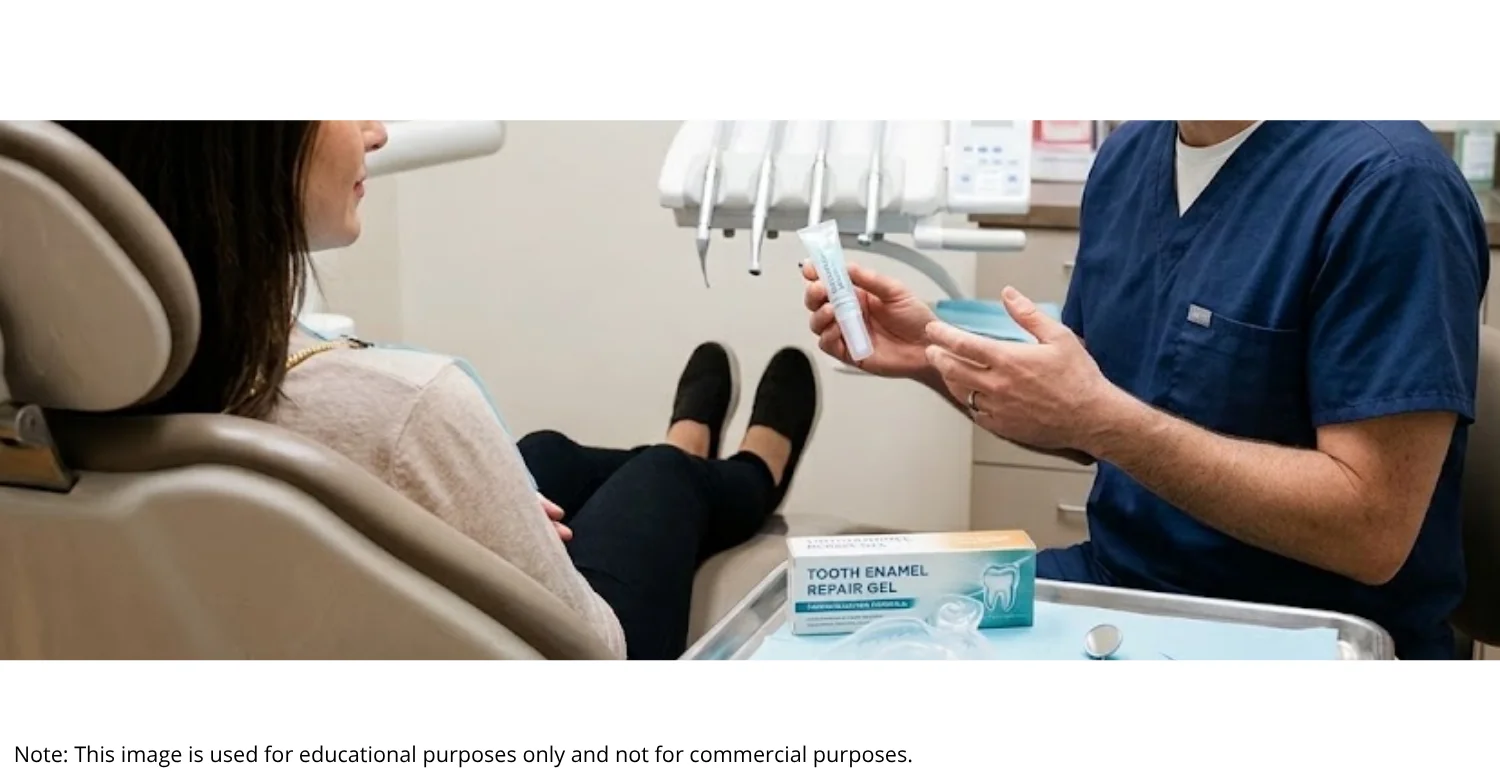
Tooth enamel repair gel is a topical product applied to the teeth to support mineral recovery in weakened enamel. Most formulations deliver fluoride, hydroxyapatite, or calcium-phosphate compounds to the tooth surface. These ingredients help replace minerals lost during acid attacks, especially in early lesions where the surface is still intact. Some gels also contain desensitizing agents. A gel often stays on the teeth longer than toothpaste foam, which may increase contact time. Still, any enamel remineralization gel works only on remaining enamel. It cannot create new tooth tissue.
What Is Tooth Enamel?
Enamel is the outermost layer of the tooth crown. It is the hardest tissue in the human body. Roughly 96% of its weight is mineral, mainly crystals of hydroxyapatite, a calcium-phosphate compound. This dense structure shields the softer dentin and pulp beneath it. Unlike bone, mature enamel contains no living cells. The cells that form enamel are lost once the tooth erupts. As a result, the body cannot regenerate enamel after substantial tissue has been lost through decay, erosion, or wear.
How Does Enamel Remineralization Work?
Enamel loses and regains minerals throughout the day. When plaque acids or dietary acids lower the pH in the mouth, calcium and phosphate dissolve from enamel crystals. This is demineralization. When the pH rises again, saliva supplies calcium and phosphate that can redeposit into weakened areas. Fluoride speeds this recovery and helps form a more acid-resistant mineral. A tooth enamel repair gel aims to boost this natural process. Remineralization differs from physical erosion, where enamel tissue is removed rather than simply depleted.
What Can an Enamel Repair Gel Actually Do?
Depending on its formulation, an enamel repair gel may support remineralization of early lesions, reduce sensitivity, or help protect vulnerable surfaces from acid. Results depend on the active ingredients, how consistently the product is used, and how severe the damage is. A tooth enamel repair gel can be useful for chalky white spots or mild sensitivity. However, it cannot rebuild a chipped edge, fill a cavity, or restore enamel that has already worn away. Structural damage needs a dentist's assessment.
.jpg)
.jpg)
.jpg)
.jpg)
.jpg)
.jpg)
Ready to transform your smile?
Talk to our team and get a FREE treatment plan.
What Are the Signs That Your Tooth Enamel May Be Weakening?
Enamel weakening often develops slowly, so early signs are easy to miss. Common warning signs include sensitivity to temperature or sweets, gradual yellowing, translucent or rough edges, and chalky white patches. None of these signs confirms enamel loss on its own. Gum recession, cracks, and decay can cause similar changes. Recognizing these signs early helps you seek advice sooner. It also helps you decide whether a tooth enamel repair gel is appropriate or whether an assessment should come first.
Tooth Sensitivity to Cold, Heat, or Sweet Foods
Many people notice a sudden, sharp sensation when drinking iced water, eating ice cream, or enjoying something sweet. This pain is usually brief and fades once the trigger is removed. It often happens when thinning enamel or receding gums expose dentin. Dentin contains thousands of microscopic tubules filled with fluid. Temperature changes move this fluid, which stimulates nerve endings inside the tooth. A tooth enamel repair gel may help, but persistent pain needs evaluation to rule out decay or cracks.
Yellowing or Changes in Tooth Appearance
Enamel is naturally translucent, while the dentin beneath it is more yellow. When enamel becomes thinner, more of that yellow dentin shows through. Teeth may then look darker or duller, even with good brushing habits. This differs from surface staining caused by coffee, tea, red wine, or tobacco. Surface stains can often be reduced by professional cleaning. Discoloration may also come from medications, old fillings, trauma, or developmental conditions. A dentist can identify the cause before treatment is chosen.
Rough, Transparent, or Worn Tooth Edges
The biting edges of front teeth may start to look glassy or see-through. Some people notice flattened chewing surfaces, small chips, or teeth that seem shorter than before. Small cupped dips may also appear on the back teeth. These changes usually suggest erosion or mechanical wear rather than simple mineral loss. In erosion, acid dissolves enamel layer by layer. In wear, grinding or friction removes it. Both involve lost tissue, so a gel alone cannot restore the original shape.
White Spots and Chalky Tooth Surfaces
White, opaque, or chalky areas may appear when enamel loses minerals beneath its surface. They are common near the gumline and around former orthodontic brackets. These early lesions can sometimes be remineralized when caught in time. However, white spots have several possible causes. Dental fluorosis, developmental enamel defects, and molar incisor hypomineralization can look similar. Each condition responds differently to treatment. For this reason, a dental assessment is wise before choosing a remineralizing gel for weakened tooth enamel.
What Causes Tooth Enamel to Weaken or Erode?
Enamel weakens when the challenges acting on it exceed its ability to recover. Chemical factors, such as dietary acids, stomach acid, and bacterial acids, dissolve minerals from the surface. Mechanical factors, such as hard brushing and grinding, physically remove tooth structure. Reduced saliva weakens the mouth's natural defenses. Several causes often act together. For example, brushing right after an acidic drink may increase wear. Identifying the main causes makes any enamel repair treatment more effective and longer lasting.
Frequent Acid Exposure From Food and Drinks
Enamel begins to dissolve when the pH at the tooth surface falls below roughly 5.5. Many common foods and drinks are acidic enough to reach this level. Examples include soft drinks, sports and energy drinks, fruit juices, citrus fruits, and vinegar-based foods. The frequency of exposure matters more than the total amount. Sipping an acidic drink slowly over hours keeps teeth under repeated acid challenge. Over time, these frequent attacks may progress from mineral loss to measurable erosion.
Acid Reflux and Repeated Vomiting
Stomach acid is far stronger than most dietary acids. In gastroesophageal reflux disease, acid can rise into the mouth, often during sleep. Repeated vomiting, including during pregnancy or with eating disorders, exposes teeth to the same acid. The inner surfaces of the upper teeth are frequently affected first. Because the source is medical, dental care alone cannot stop the damage. Persistent reflux or vomiting should be assessed by a physician alongside any dental treatment plan.
Brushing Too Hard or Using Abrasive Products
Brushing protects teeth, but technique matters. Scrubbing hard with a medium or hard-bristled brush can gradually wear enamel and exposed root surfaces. Some whitening pastes and powders are more abrasive than standard toothpaste. Wear is more likely when enamel has just been softened by acid. A soft-bristled toothbrush, gentle pressure, and small circular movements reduce this risk. Electric toothbrushes with pressure sensors may help people who brush too firmly. Your dentist can also check your technique.
Dry Mouth and Reduced Saliva
Saliva is one of the mouth's most important defenses. It dilutes and neutralizes acids, washes away food debris, and supplies calcium and phosphate for natural remineralization. When saliva flow drops, these protective effects decline. Dry mouth can result from many medications, dehydration, mouth breathing, head and neck radiation therapy, and conditions such as Sjögren's syndrome. People with reduced saliva face a higher risk of demineralization and tooth decay. Managing the underlying cause is as important as using protective products.
Teeth Grinding and Mechanical Wear
Bruxism is the involuntary grinding or clenching of the teeth. It may occur during sleep or during the day, often without the person noticing. Repeated forces can flatten chewing surfaces, chip edges, and cause cracks. Jaw tension, morning headaches, and worn teeth are common clues. This type of damage is mechanical, not chemical. A remineralizing gel cannot replace enamel that grinding has removed. Managing bruxism usually involves protection, such as a night guard, and addressing contributing factors.
Frequent Sugar Exposure and Tooth Decay
Oral bacteria feed on fermentable carbohydrates, including sugars and refined starches. They produce acids that lower the pH of dental plaque. Each sugary snack or drink can trigger an acid attack that may last 30 minutes or more. Frequent snacking keeps enamel under almost constant challenge. Early lesions appear as white spots and may be reversible with fluoride and better habits. Once a cavity forms, the surface has broken down. Established cavities usually need restorative treatment rather than remineralization alone.
Which Ingredients Should You Look for in the Best Gel for Tooth Enamel Repair?
Choosing the best gel for tooth enamel repair starts with the label, not the marketing. The active ingredient determines what a product can realistically achieve. Fluoride has the strongest body of evidence for preventing decay and supporting remineralization. Hydroxyapatite and other calcium-phosphate systems are newer alternatives with growing research. Desensitizing agents target sensitivity rather than mineral repair. A suitable tooth enamel repair gel should match your specific problem, age, and risk level. A dentist can help you interpret the ingredient list.
Fluoride Gel for Enamel Remineralization
Fluoride is the most extensively studied ingredient for enamel protection. It attracts calcium and phosphate to weakened areas and helps form a fluoride-enriched mineral. This mineral resists acid better than the original enamel. A fluoride gel for enamel remineralization may be available over the counter at lower strengths. Higher-concentration gels and toothpastes are usually prescribed or applied professionally for people at higher decay risk. Concentration, age, and swallowing risk all matter. Always follow the product's directions or your dentist's instructions.
Hydroxyapatite Enamel Repair Gel
Hydroxyapatite is a calcium-phosphate mineral closely resembling the main mineral in enamel. Many products use nano-sized or micro-sized particles. A hydroxyapatite enamel repair gel may deposit mineral on the tooth surface and help fill microscopic defects. Some clinical studies suggest it can support remineralization and reduce sensitivity. A few trials have reported results comparable to fluoride in specific settings. However, its evidence base is smaller than fluoride's. Results also vary by particle size, concentration, and formulation.
Calcium and Phosphate-Based Formulations
Several technologies aim to supply calcium and phosphate directly to weakened enamel. One example is casein phosphopeptide–amorphous calcium phosphate, known as CPP-ACP. These systems try to keep minerals available in a form enamel can take up. Their effectiveness depends on the specific formulation, mineral availability, and the oral environment, including saliva and plaque. Some are combined with fluoride. CPP-ACP is derived from milk protein, so people with a milk protein allergy should avoid it.
Ingredients for Sensitive Teeth
Some products include ingredients specifically designed to relieve sensitivity. Potassium salts, such as potassium nitrate, calm the nerve's response to stimuli. Stannous fluoride and arginine-based formulas help block exposed dentin tubules. An enamel repair gel for sensitive teeth may combine these agents with remineralizing ingredients. However, sensitivity relief and enamel remineralization are different goals. A product can reduce discomfort without increasing mineral content. Equally, a gel can remineralize enamel without fully resolving sensitivity. Knowing your main goal helps you choose wisely.
How to Compare Enamel Repair Gel Ingredients
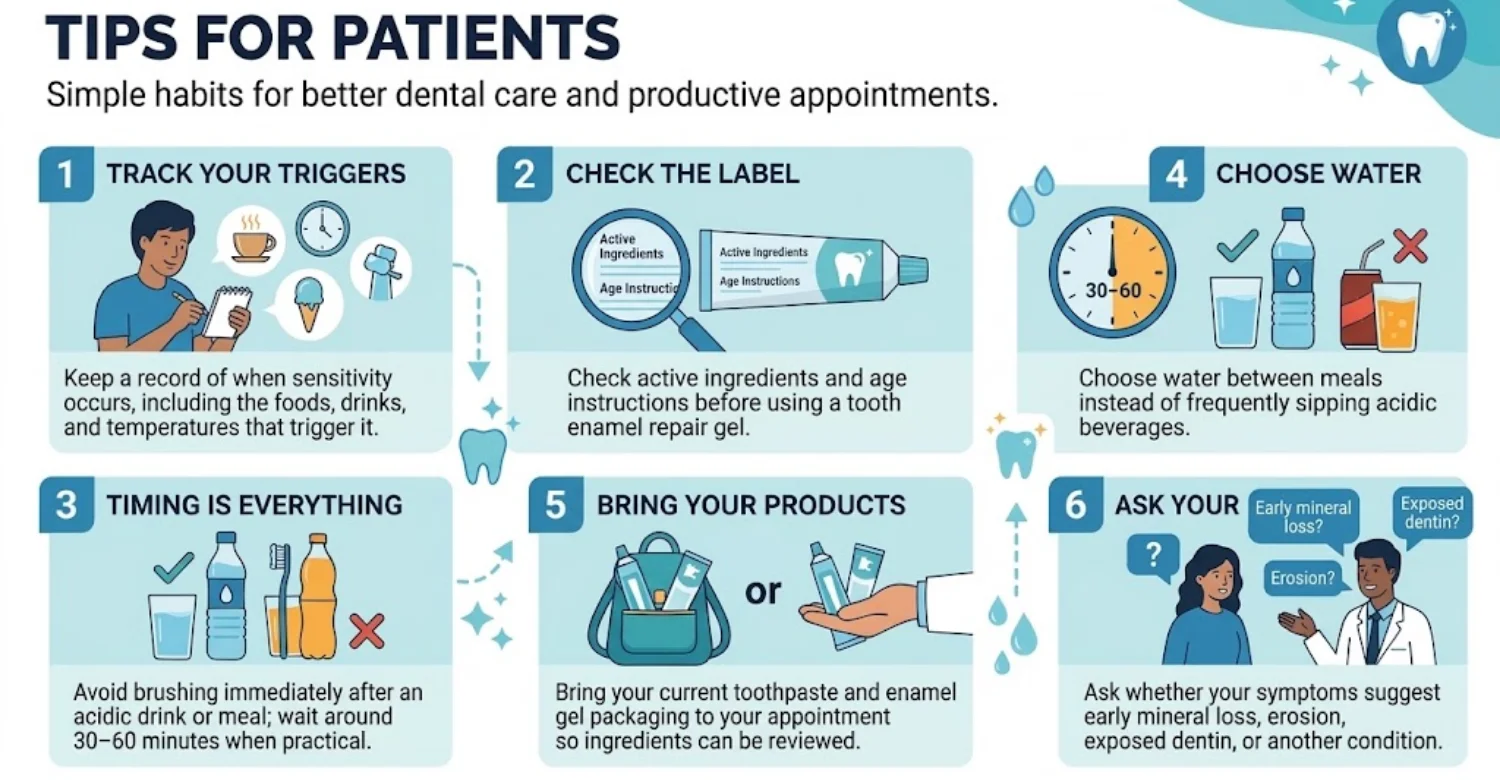
Start with the active ingredient and its concentration. Next, check the intended use, such as decay prevention, sensitivity relief, or enamel protection. Review age suitability and application instructions, including contact time and rinsing advice. Look for independent clinical evidence rather than testimonials. Be cautious of packaging that promises to "rebuild" or "regrow" enamel. No tooth enamel repair gel can regenerate lost tissue. Words like "repair" and "remineralize" mean little unless backed by meaningful clinical evidence.
What Is the Difference Between Enamel Repair Gel and Other Enamel Treatments?
Enamel repair gel is only one option among several approaches to weakened or damaged teeth. Toothpastes, varnishes, bonding, veneers, and crowns each serve different purposes. Some support mineral recovery, while others replace or cover lost structure. The right choice depends on whether the problem is early mineral loss or physical tissue loss. Comparing these options helps set realistic expectations. A tooth enamel repair gel sits at the preventive end of the spectrum, while restorations address established damage.
Enamel Repair Gel vs. Fluoride Toothpaste
Fluoride toothpaste cleans the teeth and delivers fluoride during brushing twice daily. Gels are usually applied separately, sometimes in a tray, and may remain on the teeth longer. Some gels contain higher fluoride levels or different active ingredients. However, a tooth enamel repair gel does not automatically outperform regular fluoride toothpaste. For many people with low decay risk, standard fluoride toothpaste used correctly is enough. Additional gels are more useful for higher-risk patients or those with active early lesions.
Hydroxyapatite Gel vs. Fluoride Gel
Fluoride works by promoting remineralization and forming a more acid-resistant mineral. Hydroxyapatite works by supplying a mineral similar to natural enamel to the tooth surface. Fluoride has decades of strong clinical evidence for caries prevention. Hydroxyapatite has promising but more limited research. Neither ingredient is universally superior for every patient. The recommendation may depend on decay risk, age, fluoride exposure from other sources, sensitivity, and personal preference. A dentist can weigh these factors with you.
Remineralizing Gel vs. Dental Bonding
A tooth enamel repair gel may help early mineral loss recover while the enamel surface remains intact. Composite bonding is different. It uses tooth-colored resin to rebuild areas where structure has already been lost, such as chips, worn edges, or eroded surfaces. Bonding can also cover exposed dentin to reduce sensitivity. However, it does not regenerate natural enamel. The material may stain, chip, or wear over time. It therefore needs regular checks and occasional repair or replacement.
Enamel Repair Gel vs. Veneers or Crowns
Veneers are thin shells bonded to the front of teeth, while crowns cover the entire visible tooth. Both can restore teeth with significant wear, erosion, fractures, or discoloration in selected cases. They often require removing some healthy tooth structure, although the amount varies. For this reason, they are not first-line solutions for sensitivity or early enamel weakening. Preventive options are usually considered first. Veneers or crowns become relevant when lost structure affects function, comfort, or appearance.
.jpg)
Ready to transform your smile?
Talk to our team and get a FREE treatment plan.
How Do You Use Tooth Enamel Strengthening Gel Safely?
Using a tooth enamel strengthening gel safely starts with understanding what the product contains and who it is designed for. Correct application improves results and reduces risks, particularly with fluoride-containing products. Using more product, or applying it more often than directed, rarely brings extra benefit. The gel should support, not replace, daily oral hygiene and healthy habits. A tooth enamel repair gel works best as one part of a wider prevention plan.
Follow the Product's Application Instructions
Every tooth enamel repair gel comes with specific directions. Some are designed for home use, while others are intended for use under professional guidance. Note how often to apply the product, how long to leave it on, and whether to rinse afterward. Many fluoride gels advise avoiding food, drinks, and rinsing for about 30 minutes after use. Spit out excess gel rather than swallowing it. Keep products away from children and contact your dentist if irritation develops.
Combine Gel Use With Effective Oral Hygiene
A gel works best alongside good daily habits. Brush twice daily with a fluoride toothpaste, unless a dental professional advises otherwise. Use gentle pressure and a soft-bristled brush. Clean between your teeth daily with floss or interdental brushes. Limit how often you consume acidic or sugary foods and drinks. Spitting out toothpaste without rinsing heavily helps fluoride stay on the teeth longer. Without these habits, even the best tooth enamel repair gel will have limited effect.
Avoid Using Multiple Products Without Guidance
Using several fluoride products at once, such as a high-fluoride toothpaste, gel, and mouthwash, may be unnecessary for some people. This matters especially for children, who are more likely to swallow too much fluoride. Adding a tooth enamel repair gel to an already complex routine may offer little extra benefit. Some product combinations have not been studied together. If your products share active ingredients or similar purposes, ask a dentist or pharmacist. They can help simplify your routine safely.
Can Enamel Repair Gel Help With Tooth Enamel Erosion?
Erosion is the chemical loss of tooth structure caused by acids, without bacterial involvement. In its earliest stage, acid softens the enamel surface. At this point, fluoride and remineralizing products may help harden the surface and reduce further damage. As erosion progresses, enamel tissue is permanently lost. Tooth enamel erosion repair then focuses on stopping the process, protecting what remains, and sometimes restoring lost structure. A tooth enamel repair gel can support prevention but cannot reverse advanced erosion.
What Happens When Enamel Starts Losing Minerals?
Mineral loss usually begins beneath the enamel surface, long before a visible cavity forms. The surface may look intact while the layer below becomes porous. These early lesions often appear as white or chalky areas. With appropriate preventive care, many can be arrested or partially reversed. This care includes fluoride, reduced sugar frequency, good plaque control, and healthy saliva flow. A tooth enamel repair gel may help at this stage. If acid challenges continue, the surface may collapse into a cavity.
Can Eroded Enamel Grow Back?
No. Eroded enamel cannot grow back. Remineralization can restore minerals to enamel that is still present, making softened surfaces harder and more resistant. However, it cannot regenerate enamel that has dissolved or worn away. The cells that build enamel no longer exist after a tooth erupts. This distinction matters when judging treatment results. Reduced sensitivity or improved appearance does not mean the original enamel thickness has returned. Lost structure can only be replaced with restorative materials.
What Treatments May Be Needed for Advanced Erosion?
Managing advanced erosion begins with identifying and controlling the acid source. This may involve dietary changes, treatment of reflux, or review of medications causing dry mouth. Fluoride-based prevention helps protect the remaining enamel. Desensitizing agents can ease discomfort from exposed dentin. When erosion affects function, comfort, or appearance, restorative options may be considered after clinical assessment. These include composite bonding, veneers, or crowns. The least invasive suitable option is generally preferred to preserve healthy tooth structure.
Patient Reviews
Ready to transform your smile?
Talk to our team and get a FREE treatment plan.
When Should You See a Dentist Instead of Relying on Enamel Repair Gel?
A tooth enamel repair gel is suitable for prevention and mild, early problems. It is not a substitute for diagnosis. Many dental conditions produce similar symptoms, including decay, cracked teeth, gum recession, and worn fillings. Using a gel for weeks while an untreated problem progresses may lead to more complex treatment later. Certain warning signs call for professional evaluation. These include persistent sensitivity, visible damage, pain or swelling, and white spots that do not improve.
Persistent or Worsening Tooth Sensitivity
Sensitivity that lasts for weeks, worsens over time, or lingers after the trigger is removed deserves attention. It may indicate exposed dentin, but it can also signal decay, a cracked tooth, gum recession, or a leaking filling. Lingering pain may suggest inflammation of the pulp. A tooth enamel repair gel or desensitizing product can mask symptoms without addressing the cause. A dentist can examine the tooth, test its response, and identify the true source of discomfort.
Visible Chips, Cavities, or Changes in Tooth Shape
Chips, cavities, broken edges, and changes in tooth shape involve lost structure. A tooth enamel repair gel alone cannot rebuild them. Small defects may also trap plaque or weaken the tooth further. A dental examination helps determine the extent of damage and the most suitable treatment. Dental X-rays may be taken when clinically indicated, for example to check for decay between teeth or beneath fillings. Not every patient needs imaging. The decision depends on symptoms and findings.
Pain, Swelling, or Signs of Infection
Some symptoms suggest infection or deeper damage rather than enamel weakness. Seek prompt dental care for persistent toothache, pain when biting, gum swelling, a pimple-like bump on the gum, or a bad taste that does not go away. Fever with dental pain also needs attention. These signs may indicate an abscess. Facial swelling with difficulty breathing or swallowing is a medical emergency. In that situation, go to an emergency department or call emergency services immediately.
White Spots That Persist or Change
White spots that persist, grow, darken, or develop a rough surface should be checked. They may reflect early decay, dental fluorosis, developmental enamel defects, or molar incisor hypomineralization. These conditions look similar but behave differently. Early decay may respond to fluoride and better habits. Developmental defects may not respond to remineralization in the same way. Some spots only need monitoring, while others need treatment. A proper diagnosis prevents months of using a product that cannot help.
Clinical Note
Remineralizing products can be valuable tools, but their role should not be overstated. Marketing claims often go further than the available evidence. Patients benefit from understanding both the potential and the limits of a tooth enamel repair gel before starting. An individual assessment also helps determine whether a product is suitable at all. The points below summarize key limitations and explain why personalized evaluation matters before any enamel repair treatment begins. This balanced view protects patients from both under-treatment and over-treatment.
Important Limitations of Enamel Remineralization Products
Evidence for remineralization products varies by ingredient, formulation, and the outcome measured. Fluoride has the strongest clinical support. Other ingredients have promising but less extensive data. Many studies are performed in laboratories using extracted teeth or enamel samples. Laboratory results do not always translate into meaningful benefits for patients. Clinical trials, especially long-term ones, provide stronger evidence. Most importantly, no tooth enamel repair gel should be presented as capable of regenerating enamel that has been physically lost.
Individual Assessment Before Treatment
An individual assessment may include examining tooth surfaces, testing sensitivity, and evaluating decay risk. The dentist may also review diet, oral hygiene habits, saliva-related concerns, medications, and existing restorations. Dental imaging is used when clinically indicated, not routinely for every patient. Dr. Rifat Alsaman, Head of the Medical Team and cosmetic dentist at Vitrin Clinic, supports this individualized approach. It ensures that recommendations reflect each patient's needs rather than general assumptions or product advertising.
What Are the Professional Enamel Repair Treatments Available?
Professional enamel repair treatment offers options beyond what home products can provide. A dentist can apply higher-concentration fluoride, monitor early lesions, treat sensitivity at its source, and restore lost structure when needed. Treatment is guided by clinical findings rather than symptoms alone. The plan often combines several steps, such as in-office fluoride, dietary advice, and a home-care routine. The aim is to stop damage from progressing and protect healthy tooth tissue for the long term.
Professional Fluoride Treatment
Professionally applied fluoride varnish is a common preventive treatment. It is painted onto the teeth, sets quickly, and releases fluoride over several hours. Fluoride gels or foams may also be used in some settings. These products contain much higher fluoride concentrations than standard toothpaste. They may reduce caries risk and support remineralization of early lesions. How often they are applied depends on age, decay risk, and clinical findings. Some people need treatment every few months, others less often.
Remineralization Management for Early Enamel Lesions
Early lesions without a cavity can often be managed without drilling. Management starts with assessing individual risk, including diet, plaque control, saliva, and fluoride exposure. The dentist may recommend fluoride products, reduced sugar frequency, and improved cleaning around affected areas. Lesions are then monitored to check whether they remain stable, improve, or progress. Non-cavitated lesions respond differently from established cavities. Once the surface breaks down, a filling or other restoration is usually needed.
Treatment for Tooth Sensitivity
Professional sensitivity treatment may include in-office desensitizing agents, fluoride varnish, or protective coatings applied to exposed dentin. Prescription-strength products may also be recommended for home use. In some cases, bonding is used to cover exposed root surfaces or worn areas. However, effective treatment also addresses the underlying cause. This might mean adjusting brushing habits, managing gum recession, controlling acid exposure, or treating grinding. Persistent symptoms should not be managed indefinitely without a clear diagnosis.
Restorative Treatment for Lost Enamel Structure
When enamel loss affects function, comfort, or appearance, restorative treatment may be considered. Composite bonding can rebuild small to moderate areas of lost structure. Veneers may improve the front surfaces of selected teeth. Crowns may be needed for heavily worn or weakened teeth. The choice depends on the extent of damage, bite forces, and the patient's goals. Preserving healthy tooth tissue is a priority, so the least invasive suitable option is generally preferred.
What We Notice Clinically
Dr. Rifat Alsaman, Head of the Medical Team and cosmetic dentist at Vitrin Clinic, highlights that sensitivity and discoloration do not automatically confirm enamel erosion. Sensitivity may come from gum recession or a cracked tooth. Discoloration may reflect staining or an aging restoration. Before recommending any product, the dental team distinguishes between demineralization, acid erosion, tooth decay, exposed dentin, and mechanical wear. Each requires a different approach. A gel may help one condition but offer little benefit for another.
Why Identifying the Cause Matters More Than Choosing a Popular Product
The same symptom can require entirely different treatments. Sensitivity linked to frequent acidic drinks needs dietary changes and fluoride. Wear from grinding may need a night guard. Dry mouth requires attention to saliva flow, while problems around existing restorations may need those restorations checked. Dr. Rifat Alsaman, Head of the Medical Team and cosmetic dentist at Vitrin Clinic, supports a diagnosis-first approach. Treating the cause protects the remaining enamel more effectively than relying on any single product.
How Can You Prevent Further Enamel Weakening?
Preventing further enamel weakening is usually easier and less costly than repairing damage later. Prevention focuses on reducing acid attacks, protecting teeth from mechanical forces, and supporting natural remineralization. Small daily changes can make a real difference over time. A tooth enamel repair gel may support these efforts, but it cannot outweigh frequent acid exposure or aggressive brushing. The strategies below address the most common causes and help protect your remaining enamel for years.
Reduce the Frequency of Acid Exposure
How often you consume acidic foods and drinks matters more than how much. Try to enjoy acidic drinks with meals rather than sipping them throughout the day. Using a straw may reduce contact with the front teeth. Allow time between acid exposures so saliva can neutralize acids and restore minerals. After acidic foods or drinks, rinse your mouth with water. Chewing sugar-free gum can also stimulate saliva and support the natural recovery process.
Brush Gently With Fluoride Toothpaste
Brush twice daily with a soft-bristled toothbrush and a suitable fluoride toothpaste. Use gentle pressure and small circular movements rather than hard horizontal scrubbing. Aggressive brushing can worsen wear, especially on softened enamel and exposed root surfaces. Choose a low-abrasive toothpaste if you have sensitivity or visible wear. After brushing, spit out excess toothpaste but avoid rinsing heavily with water. This leaves more fluoride on the teeth to support ongoing protection.
Protect Your Teeth From Grinding
If you grind or clench your teeth, a dentist can assess the pattern and extent of wear. A custom night guard may be recommended in suitable cases. It creates a protective barrier between the upper and lower teeth during sleep. This reduces further wear and may ease jaw strain. However, a night guard does not reverse enamel loss that has already occurred. Stress management may also help when daytime clenching is a factor.
Manage Dry Mouth and Acid Reflux
Dry mouth and acid reflux both increase the risk of enamel damage. Many medications reduce saliva flow, including some antidepressants, antihistamines, and blood pressure drugs. Never stop a prescribed medication without your doctor's advice. Sipping water regularly and chewing sugar-free gum may help. Reflux symptoms such as heartburn, a sour taste, or a chronic cough deserve medical review. Treating these conditions protects your teeth and supports any enamel repair treatment your dentist recommends.
Takeaway: Can Tooth Enamel Repair Gel Protect Your Smile?
A tooth enamel repair gel can help strengthen weakened enamel when mineral loss is still at an early, reversible stage. Ingredients such as fluoride and hydroxyapatite may support remineralization and ease sensitivity. However, no gel can regenerate enamel that has been physically lost. Persistent sensitivity or visible damage deserves professional assessment. Choose products based on their ingredients, evidence, and suitability rather than advertising claims. To understand the cause of your symptoms, consider arranging a dental assessment at Vitrin Clinic.
How Does Vitrin Clinic Approach Enamel Weakening and Tooth Sensitivity?
At Vitrin Clinic, enamel weakening and tooth sensitivity are treated as symptoms that need explanation, not just products. Each assessment aims to identify why the enamel is weakening and how far the changes have progressed. The clinic offers a range of treatments tailored to each patient's needs, from preventive care and fluoride treatments to desensitizing agents, remineralization strategies, and restorative procedures when clinically indicated. This allows the dental team to recommend appropriate care based on the underlying cause and severity of the condition. The goal is to protect natural tooth structure while relieving discomfort and supporting long-term oral health.
Diagnosis Before Treatment Recommendations
Vitrin Clinic in Istanbul, Türkiye, follows an individualized approach to evaluating enamel concerns. Before recommending any treatment, the dental team examines the condition of the teeth and gums. They assess sensitivity patterns, dietary factors, oral hygiene habits, and existing restorations. Where needed, contributing issues such as grinding, dry mouth, or reflux are also considered. This careful evaluation helps determine whether a tooth enamel repair gel is appropriate or whether another treatment would better address the problem.
Personalized Care and Professional Guidance
The appropriate approach varies from patient to patient. Some need only preventive advice and remineralization support. Others benefit from sensitivity treatment, while some require restorative procedures to replace lost structure. Dr. Rifat Alsaman, Head of the Medical Team and cosmetic dentist at Vitrin Clinic, guides individualized assessment and treatment planning. Recommendations are based on clinical findings rather than a product's marketing claims. Patients receive clear explanations of their options, expected outcomes, and the steps involved in their care.






This article is for general information and does not replace a personal assessment by a qualified dentist. Prices are approximate 2026 averages, with UK and Turkey figures converted to US dollars, and may vary by clinic and case.
Not sure whether Veneers or Hollywood Smile is right for you?
Book your FREE treatment plan with Vitrin Clinic and get a personalized assessment and treatment plan from our dental team.
Ready to transform your smile?
Talk to our team and get a FREE treatment plan.
References:
FAQs

Dr. Rifat Alsaman has more than 5 years of clinical experience in dentistry and currently serves as the Head of the Medical Team at Vitrin Clinic. He is dedicated to providing exceptional patient care, overseeing treatment planning, and ensuring the highest clinical standards across the team. His expertise, attention to detail, and commitment to continuous professional development have helped countless patients achieve healthier, more confident smiles.


