General Dentistry
September 2, 2026
Baby Teeth vs Permanent Teeth: What is The Key Differences, Development Stages, and Dental Care?
 Dr. Rifat Alsaman
Baby teeth vs permanent teeth is one of the most common questions parents ask about their children's oral health. Understanding the difference between primary teeth and permanent teeth helps parents recognize what is normal and what needs attention. Primary teeth, often called milk teeth, are the first set that erupt in early childhood. Permanent teeth, or adult teeth, follow later and are meant to last a lifetime. Baby teeth are temporary, but they support chewing, speech, and facial development, while also guiding permanent teeth into position.
Baby Teeth vs Permanent Teeth: What Is the Difference?
The core difference in Milk teeth vs adult teeth lies in number, size, and structure. Children typically develop 20 primary teeth, while adults usually have 32 permanent teeth, including wisdom teeth. Primary teeth are smaller, whiter, and have thinner enamel and dentine than permanent teeth. This thinner enamel makes primary teeth more vulnerable to decay, and it can progress faster than in adult teeth. Root structure also differs: primary teeth roots are designed to resorb over time, while permanent teeth roots are built for long-term stability.
Primary Teeth: What Parents Should Know
Primary teeth generally begin erupting around six months of age. They play a key role in eating, chewing, and speech development, while also maintaining space for adult teeth to erupt correctly. Primary teeth support jaw and facial development during a child's early growth years. Losing a baby tooth too early, before its permanent successor is ready, can sometimes create orthodontic concerns such as crowding or shifting.
Permanent Teeth: What Makes Them Different?
Permanent teeth generally begin replacing primary teeth around age six. They are structurally stronger and designed for lifelong function rather than a temporary role. Because permanent teeth must last decades, they require consistent, lifelong care and attention. Not all permanent teeth replace a baby tooth directly; the first permanent molars, for example, erupt behind the primary teeth without displacing an existing tooth.
Milk Teeth vs Adult Teeth: Why Both Matter
The term "milk teeth" can mislead parents into thinking these teeth are unimportant. In reality, healthy primary teeth directly support the development of healthy permanent dentition. Untreated decay in children's teeth can cause pain, disrupt eating, interfere with sleep, and affect overall oral health. Neglecting milk teeth because they are temporary is a common misunderstanding.
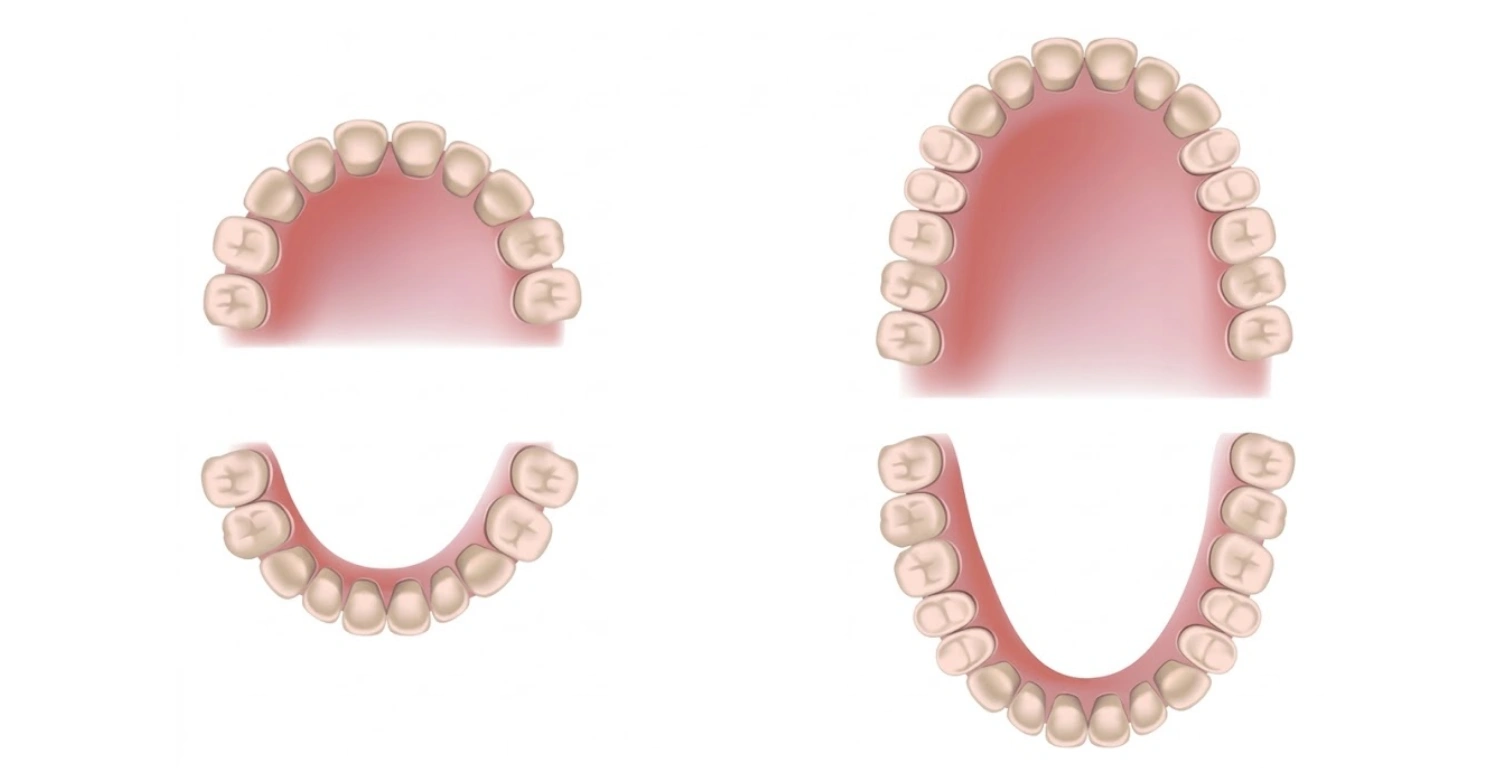
Tooth Development and the Different Dentition Stages
Tooth development moves through distinct dentition stages, each relevant to Milk teeth vs adult teeth care. Recognizing these stages helps parents understand what to expect and when to seek professional advice, rather than relying on rigid comparisons between children.
Primary Dentition
Primary dentition is the stage when a child's mouth contains mostly primary teeth. Eruption typically follows a general pattern, though timing varies between children. Some children develop teeth earlier, others later, and both can be entirely normal. Understanding Milk teeth vs adult teeth during this stage means focusing on healthy eruption rather than exact dates. Parents should observe general progress and consult a dentist if development seems significantly delayed or inconsistent with typical patterns for primary teeth.
Mixed Dentition
Mixed dentition describes the period when primary and permanent teeth are present together in the mouth. This stage is important for monitoring tooth eruption, spacing, crowding, bite development, and jaw growth. It is often when parents first notice visible differences in baby teeth vs adult teeth, as adult teeth emerge alongside remaining milk teeth.
Permanent Dentition
Permanent dentition marks the transition toward a predominantly adult set of teeth. Once most children's teeth have been replaced, regular dental examinations remain essential. Even after all permanent teeth have erupted, ongoing care prevents decay, gum problems, and alignment issues. This stage completes the baby teeth vs permanent teeth journey, but it does not end the need for professional monitoring.
When Should Parents Expect Teeth to Erupt?
Primary teeth generally begin erupting around six months, with most appearing by age three. Permanent teeth typically start emerging around age six, continuing into the early teenage years. Eruption timing varies significantly between children, so slight differences are usually normal. In Milk teeth vs adult teeth discussions, timing awareness helps parents avoid unnecessary worry.
Tips for Patients
Brush children's teeth twice daily with age-appropriate fluoride toothpaste
Supervise brushing until manual control develops
Clean between teeth where appropriate
Limit frequent sugary foods and drinks
Encourage water as the main drink between meals
Avoid leaving dental pain untreated
Attend regular dental examinations
Monitor newly erupted permanent teeth
Watch for crowding or unusual positioning
Don't pull out baby teeth unnecessarily
Ask about fluoride or sealants
Common mistakes: assuming milk teeth don't matter, delaying treatment, forcing loose teeth out, ignoring swelling, and comparing eruption timelines rigidly between children.
Why Do Baby Teeth Fall Out?
Baby teeth fall out through a natural process called exfoliation. As a permanent tooth develops beneath it, it gradually causes resorption of the primary tooth's root. Over time, this makes the primary tooth loose until it eventually falls out on its own. Parents should generally avoid forcing a loose tooth out before it is ready. When a permanent tooth erupts while a baby tooth remains in place, a dentist should assess the situation.
What Happens If a Baby Tooth Is Lost Too Early?
Premature tooth loss often results from extensive decay or dental trauma. Consequences can include loss of space, drifting of neighbouring teeth, and eruption problems for the permanent successor. In some cases, this leads to orthodontic complications later on. Within baby teeth vs permanent teeth care, early loss is treated seriously rather than dismissed. A dentist may recommend monitoring or space management to protect the developing permanent tooth's path, helping prevent crowding or misalignment as the child's dentition continues to change.
Common Dental Problems Affecting Children's Teeth
Tooth Decay in Primary Teeth
Children's teeth can be particularly vulnerable to dental caries. Frequent sugar exposure, poor brushing habits, night-time feeding, and plaque accumulation are common contributing factors. Untreated decay should never be dismissed simply because the tooth will eventually fall out, since infection and pain can still affect a child's comfort and development. In Milk teeth vs adult teeth care, treating decay in primary teeth protects both current comfort and the healthy eruption of permanent teeth. Early intervention prevents complications that could otherwise affect the child's broader oral health.
Dental Trauma
Children commonly experience injuries to their teeth from falls, sports, or accidents. After a dental injury, parents should stay calm and seek professional evaluation promptly. Significant trauma to primary or permanent teeth should never be assessed at home alone. Professional evaluation helps determine whether the tooth can be preserved, requires treatment, or needs monitoring.
Crowding and Eruption Problems
The shift from primary to permanent teeth can reveal spacing or eruption concerns that weren't visible earlier. Early assessment during this transition often simplifies future treatment planning. Identifying crowding while a child is still developing allows for more conservative management options. In baby teeth vs permanent teeth evaluations, catching these issues early can reduce the need for more extensive orthodontic treatment later.
How Are Baby Teeth and Permanent Teeth Treated?
Preventive Dental Care
Preventive care includes professional dental examinations, fluoride advice, dental sealants where appropriate, professional cleaning when indicated, and oral hygiene education. These measures apply to both primary teeth and permanent teeth. In Milk teeth vs adult teeth care, prevention is prioritized over treatment whenever possible. Consistent preventive visits help dentists track dentition stages and catch early signs of decay or crowding. Establishing these habits early supports healthier permanent teeth as the child grows into adolescence and adulthood.
Treatment for Tooth Decay
Treatment for decay depends on its severity, ranging from monitoring to restorative care that preserves healthy tooth structure. The right approach considers the child's age, tooth condition, symptoms, and overall dental development. In Milk teeth vs adult teeth treatment planning, dentists aim to protect the tooth's function until natural exfoliation or, for permanent teeth, for the long term.
Managing Premature Tooth Loss
In some cases of premature tooth loss, observation is sufficient if the permanent successor is expected soon. In other cases, space maintainers may be recommended to preserve room for the incoming tooth. The need for intervention depends on the specific tooth involved, its eruption stage, and expected timing of the permanent tooth.
Orthodontic Assessment
Orthodontic evaluation may be justified when eruption or alignment concerns arise during dentition stages. Not every spacing or crowding issue requires immediate orthodontic treatment, however. Some conditions resolve naturally as permanent teeth continue erupting. A proper assessment considers the child's full Milk teeth vs adult teeth picture, including remaining primary teeth, erupting permanent teeth, and jaw development. This individualized approach avoids unnecessary intervention while ensuring genuine concerns are addressed at the appropriate time.
Milk teeth vs adult teeth: Before and After Expectations
Dental treatment in children focuses primarily on health, function, development, and prevention rather than appearance alone. After treating decay or trauma, outcomes should be realistic: successful treatment doesn't necessarily mean perfectly aligned teeth right away. A child's smile naturally changes as permanent teeth continue to erupt over several years. Regular monitoring helps dentists assess whether baby teeth vs permanent teeth development is progressing normally.
How Professional Dental Technology Supports Tooth Development Monitoring
Digital Dental Assessment
Modern diagnostic tools help dentists evaluate tooth development and eruption patterns with greater accuracy. Clinical examination remains central, supported by dental imaging when clinically indicated. These tools assist in tracking Milk teeth vs adult teeth transitions across dentition stages. Digital assessment can reveal issues not visible through examination alone, such as unerupted teeth or early crowding. This supports more informed decisions about when monitoring is sufficient and when treatment should begin for developing primary or permanent teeth.
Digital Treatment Planning
Digital records help track changes in a child's dentition over time, offering a clearer picture of baby teeth vs permanent teeth progress across multiple visits. X-rays and advanced imaging should only be used when clinically justified, particularly in children, to limit unnecessary exposure. When appropriate, digital planning supports more accurate treatment decisions for decay, crowding, or eruption concerns, helping dentists tailor care to each child's individual dental development rather than relying on generalized assumptions.
When Should Parents Take Their Child to the Dentist?
The first dental visit should happen early in childhood, not only after a problem develops. Regular preventive examinations allow dentists to track Milk teeth vs adult teeth development consistently over time. Appointment frequency depends on the child's individual oral-health risk, including decay history and eruption patterns. Parents should seek professional advice whenever they notice unusual symptoms or changes in their child's teeth. Early, consistent dental visits support healthier outcomes throughout every stage of a child's changing dentition.
What We Notice Clinically
Dr. Rifat Alsaman, Head of the Medical Team at Vitrin Clinic and a cosmetic dentist, offers the clinical voice in this section. From a clinical perspective, parents should focus on the health and development of children's teeth rather than assuming milk teeth don't require treatment. Dr. Rifat Alsaman evaluates tooth eruption, decay, premature tooth loss, alignment, oral hygiene, and the relationship between primary and permanent teeth. In baby teeth vs permanent teeth care, early identification of problems is emphasized over waiting for symptoms to worsen.
Dr. Rifat Alsaman on Primary Teeth
Dr. Rifat Alsaman highlights the clinical importance of maintaining primary teeth until their natural exfoliation whenever possible. Healthy primary teeth support normal chewing, clear speech, and preservation of space for permanent teeth. This perspective reinforces why baby teeth vs adult teeth care shouldn't neglect the primary stage. Protecting milk teeth from unnecessary early loss helps ensure a smoother transition into mixed dentition, reducing the likelihood of crowding or alignment issues once permanent teeth begin to erupt.
Clinical Note
Clinical note: The eruption and loss of children's teeth do not always follow an identical timetable. Individual variation is common. However, significant pain, swelling, extensive decay, premature tooth loss, delayed eruption, or a permanent tooth appearing in an unusual position should be assessed by a dentist. These signs matter more in baby teeth vs permanent teeth monitoring than strict adherence to average eruption charts, since every child's dental development follows its own pace.
When Should Parents Seek a Dental Examination?
Parents should seek a dental examination for: persistent toothache, facial or gum swelling, broken or traumatized teeth, severe sensitivity, visible cavities, a baby tooth remaining while the permanent tooth has erupted, significant changes in eruption patterns, or difficulty eating or sleeping due to dental discomfort.
Why Choose Vitrin Clinic for Professional Dental Care?
Vitrin Clinic approaches every case with an individualized dental assessment rather than applying the same treatment to every patient. This patient-focused approach shapes diagnosis, treatment planning, and follow-up for children navigating Milk teeth vs adult teeth transitions. Modern dental technology supports care where clinically appropriate. Professional guidance from Dr. Rifat Alsaman, Head of the Medical Team at Vitrin Clinic and a cosmetic dentist, reinforces the clinic's clinical expertise. Parents are encouraged to seek a personalized assessment rather than relying solely on general eruption charts or online information.
Book a Professional Dental Consultation
Parents with concerns about their child's primary teeth, permanent teeth, eruption, decay, or alignment are encouraged to arrange an assessment at Vitrin Clinic. Booking a consultation allows for a detailed discussion of a child's dental development and an individualized treatment plan. Understanding baby teeth vs permanent teeth care today helps protect a healthier permanent smile tomorrow. Vitrin Clinic supports parents through every dentition stage, from early primary teeth to a fully established set of permanent teeth.
References:
FAQs
Dr. Rifat Alsaman has more than 5 years of clinical experience in dentistry and currently serves as the Head of the Medical Team at Vitrin Clinic. He is dedicated to providing exceptional patient care, overseeing treatment planning, and ensuring the highest clinical standards across the team. His expertise, attention to detail, and commitment to continuous professional development have helped countless patients achieve healthier, more confident smiles.

.webp&w=3840&q=75)


