
Many patients wonder, can an endodontist extract a tooth, especially when faced with a tooth that seems beyond repair. While endodontists are renowned for their expertise in saving natural teeth through root canal therapy, their skills go far beyond just treating the inner structures of a tooth. At Vitrin Clinic, our specialists are not only trained in advanced endodontic procedures but also possess the surgical expertise required to safely perform tooth extractions. They understand the surrounding bone, gums, and tissues, allowing them to manage complex dental removals with precision. So, when preservation is no longer an option, you can trust that an endodontist can extract a tooth safely and effectively, providing care tailored to your oral health needs.
Can an Endodontist Extract a Tooth
Endodontists serve as the "guardians of teeth," focusing on diagnosing and treating complex causes of tooth pain. Their role in modern dentistry is centered on preservation, utilizing advanced technology to perform intricate root canals. However, a common question arises: Is a root canal specialist able to remove a tooth if the root canal fails or the damage is too extensive? While their first instinct is to save the tooth, they are fully equipped to perform extractions to protect your overall oral health and prepare for implants.
Who is an Endodontist?
An endodontist is a dentist with two or more years of advanced specialty training beyond dental school. They focus exclusively on the dental pulp and the tissues surrounding the roots of the teeth. At Vitrin Clinic, these specialists use high-tech tools like surgical microscopes to see deep inside the canal system. Because they are experts in pain management and internal tooth anatomy, they are uniquely qualified to determine if a tooth is salvageable or if it requires a professional extraction.
Difference Between Endodontists and General Dentists in Tooth Extraction
The primary difference lies in specialization and frequency. While general dentists perform a wide range of services, endodontists focus strictly on the "inside" of the tooth. When considering whether an endodontist can extract a tooth, it is important to note that they often handle more complex cases involving cracked roots or failed previous treatments. While a general dentist might handle a simple pull, an endodontist at Vitrin Clinic brings a specialized surgical perspective to extractions that involve intricate root structures.
Common Patient Concerns About Tooth Extraction
Many patients feel anxiety when told a tooth cannot be saved. The concern is often twofold: the physical discomfort of the procedure and the long-term impact on their smile. At Vitrin Clinic, we address these worries by providing clear communication. Patients often ask us if an endodontist can extract a tooth with minimal pain. Our goal is to ensure that every patient feels informed and comfortable, understanding that extraction is sometimes the only way to stop a spreading infection.
When Patients Wonder: Can an Endodontist Pull a Tooth?
It is a frequent inquiry in our office: can an endodontist pull a tooth? This question usually stems from a patient who was referred for a root canal but discovered the tooth was fractured. Since the endodontist is already treating the area, it is often more convenient and efficient for them to perform the extraction. At Vitrin Clinic, we confirm that our specialists are highly capable of pulling teeth, ensuring a seamless transition from a "save" attempt to a necessary removal.
Fears and Misconceptions About Tooth Extraction
Common misconceptions include the idea that extractions are always excruciating or that they lead to permanent facial sagging. In reality, modern anesthesia and techniques used at Vitrin Clinic make the process virtually painless. Some believe an endodontist cannot extract a tooth without specialized surgical tools, but the truth is they use advanced instruments to preserve the surrounding bone. Understanding that extraction is a controlled, therapeutic process helps alleviate the fear of the unknown and encourages patients to seek necessary care.
Understanding Tooth Pain, Infection, and Damage
Tooth pain is often a signal that the pulp is inflamed or infected. If left untreated, this can lead to abscesses or bone loss. When damage is severe such as a vertical root fracture the question becomes, can an endodontist extract a tooth to stop the agony? At Vitrin Clinic, we evaluate the level of decay and structural integrity. If the infection has compromised the tooth's foundation, removing it becomes a vital step in restoring the health of the entire mouth.
Can Endodontists Extract Teeth? Scope and Limitations
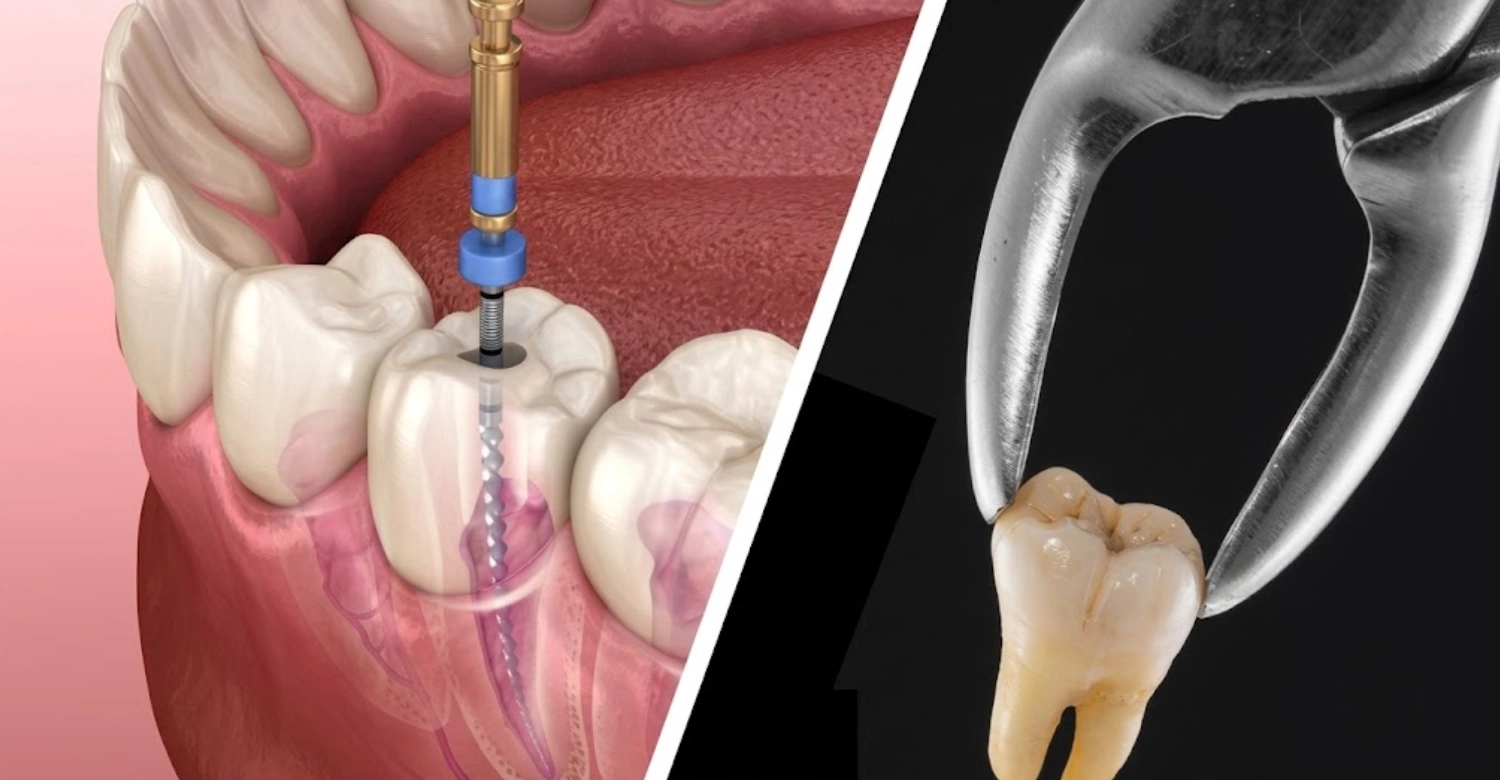
Endodontists are known as "Root Canal Specialists." Their scope includes endodontic surgery. So, can an endodontist extract a tooth? Yes, they can. However, limitations depend on the complexity. At Vitrin Clinic, our endodontists perform extractions when it is the logical next step. If a tooth is non-restorable, the endodontist can pivot to extraction. This provides immediate relief and prevents complications.
Typical Procedures Performed by Endodontists
The bread and butter of endodontics includes root canal therapy, retreatment, and apicoectomies. During these procedures, extraction may be needed. If a specialist discovers a split during an apicoectomy, they will proceed with extraction. At Vitrin Clinic, we also perform internal bleaching and trauma management. Our specialists handle any issue involving the tooth's interior, including surgical removal of problematic roots.
Situations Where Extraction is Considered
Extraction is considered when a tooth is "non-restorable." This includes deep decay below the gum line, severe periodontal disease, or a vertical fracture. Patients often ask if an endodontist can extract a tooth in these scenarios. At Vitrin Clinic, if a root canal will not have a high success rate, we recommend extraction. It is better to remove a failing tooth and replace it with an implant.
Collaboration with Oral Surgeons for Complex Cases
Endodontists are skilled, but some cases require an oral surgeon. These include impacted wisdom teeth or full-mouth reconstruction. At Vitrin Clinic, we believe in a multidisciplinary approach. If a tooth is deeply impacted, we may coordinate with an oral surgeon. This ensures the highest level of care, matching the extraction's difficulty with the appropriate specialist.
Endodontist Scope of Practice: What the AAE Says
The most authoritative source on endodontist scope of practice is the American Association of Endodontists. Their position statement confirms that extraction falls within the ADA's Definition of the Specialty of Endodontics. At Vitrin Clinic, we find this reassuring for patients. It shows that in-house extraction is a recognized, board-sanctioned part of endodontic training.
This scope underlies related concerns we cover elsewhere, such as What Is Dental Nerve Death? and Tooth Nerve Removal. If you're weighing extraction vs. saving a tooth, our Pulp Capping vs Root Canal article walks through conservative options first.
Extraction as the Exception, Not the Rule
Across the profession, endodontists do not pull teeth as a routine service. Most refer surgical extractions to an oral surgeon. Extraction remains the exception. At Vitrin Clinic, we've made in-house extraction a deliberate choice. When a patient asks if an endodontist can extract a tooth here, the answer includes both "yes" and "here's why we structured it this way."
The 5-Factor Restorability Decision Framework
When is a tooth non-restorable? At Vitrin Clinic, our specialists weigh five factors: (1) remaining healthy tooth structure above bone, (2) depth and direction of any fracture, (3) periodontal bone support, (4) the tooth's strategic value, and (5) the long-term prognosis of root canal or retreatment. This framework replaces guesswork with a clear clinical decision path.
Why In-Chair Extraction Is a Genuine Convenience Advantage
One advantage of an extraction-capable endodontist is efficiency. You are already numbed and mid-evaluation when a tooth is found non-restorable. Instead of a separate referral and second appointment, Vitrin Clinic can move straight from diagnosis to extraction. For international patients with limited time in Istanbul, this in-chair continuity is a real benefit.
Intentional Reimplantation: An Advanced Save Option
Before extraction is finalized, some cases qualify for intentional reimplantation. This advanced technique involves gently removing the tooth, treating it outside the mouth, and reinserting it into its socket. It is not appropriate for every case. However, for teeth with isolated root-end issues that cannot be reached through conventional treatment, it offers one more save attempt. At Vitrin Clinic, we evaluate this option whenever a tooth's anatomy makes it a realistic candidate.
Step-by-Step Guide: How an Endodontist Handles Tooth Extraction
At Vitrin Clinic, we follow a precise protocol to ensure patient safety. The process begins with a clear answer to the question: can an endodontist extract a tooth? Once confirmed, we move through a structured series of steps. These steps minimize trauma to the jawbone. From numbing the site to the final sutures, our specialists focus on precision. This careful handling ensures quick healing and an ideal site for future dental implants or bridges.
Initial Consultation and Diagnosis
The first step at Vitrin Clinic is a comprehensive exam. We listen to your symptoms and perform clinical tests. These tests check for sensitivity and stability. During this phase, we address the core question: Is a root canal specialist able to remove a tooth if it’s causing this much pain? We use diagnostic tests to determine if the nerve is necrotic. If the tooth cannot be saved through endodontic means, we discuss the extraction process. We ensure you understand why the removal is necessary.
Imaging and Treatment Planning
We utilize advanced Digital Radiography and 3D Cone Beam Computed Tomography (CBCT) at Vitrin Clinic. These images show the exact shape of the roots and their proximity to nerves. When planning, we ask if an endodontist can extract a tooth safely without affecting the sinus or adjacent teeth. The 3D scan provides the answer. It allows us to plan the most minimally invasive path for removal. This significantly reduces recovery time and prevents intra-operative surprises.
The Extraction Procedure Explained for Patients
During the procedure, the area is thoroughly numbed with local anesthesia. You will feel pressure, but no pain. The endodontist uses specialized instruments called elevators to gently loosen the tooth. Forceps are then used to remove it. Many patients wonder if endodontists can do extractions quickly. While we prioritize care over speed, the process is usually very efficient. At Vitrin Clinic, we focus on preserving the socket bone. This is crucial if you plan to get a dental implant later.
Post-Extraction Care and Recovery
After the tooth is removed, we provide detailed aftercare instructions at Vitrin Clinic. You will be asked to bite on gauze to help form a blood clot. This clot is essential for proper healing. Understanding the recovery process is just as important as the procedure itself. To reduce the risk of complications such as dry socket, avoid using straws, smoking, and vigorous rinsing for several days. Most patients return to normal activities within 48 to 72 hours. Complete healing may take longer depending on the complexity of the extraction and individual factors.
Benefits and Expectations of Professional Extractions
Choosing a specialist at Vitrin Clinic for your extraction ensures high technical skill. One major benefit is the focus on "atraumatic extraction." This means removing the tooth while causing the least damage to the surrounding area. When you ask if an endodontist can extract a tooth with better results, the answer lies in their surgical precision. This approach preserves more natural bone and makes future restoration much easier.
Saving Surrounding Teeth and Bone Structure
A primary goal at Vitrin Clinic is to protect the health of your remaining teeth. When a tooth is infected, that infection can spread to the jawbone and neighboring teeth. By asking if an endodontist can extract a tooth, you take the first step in stopping that spread. Our specialists use techniques that prevent the collapse of the socket. This preservation of bone structure is essential for maintaining facial aesthetics and ensuring the stability of your other teeth.
Pain Management and Minimally Invasive Techniques
Endodontists are experts in local anesthesia. At Vitrin Clinic, we make sure you are completely comfortable before we begin. Since endodontists work in microscopic spaces every day, their gentle touch translates well to extractions. If you are worried and asking if an endodontist can extract a tooth without it being a traumatic experience, our answer is yes. We use minimally invasive tools that require less force. This results in less swelling and a much faster, more comfortable healing period for our patients.
Before and After: What Patients Can Expect
Before the procedure, you may have throbbing pain or a visible abscess. After the extraction at Vitrin Clinic, that sharp, infectious pain is replaced by a dull soreness that fades quickly. Patients should expect a significant improvement in their quality of life. Once the source of infection is gone, the body begins to heal immediately. Within a few weeks, the gums close over. The site is then ready for the next step in your dental journey.
Preventive Dental Care Tips to Avoid Extractions
While we are happy to answer whether an endodontist can extract a tooth, we would much rather help you keep yours. Prevention is the cornerstone of our philosophy at Vitrin Clinic. Most extractions result from long-term neglect or untreated decay. By following a strict oral hygiene regimen and visiting us at the first sign of discomfort, you can often avoid the need for extraction entirely. Saving a natural tooth is always our first priority and the best outcome.
Daily Oral Hygiene Practices
The best way to ensure you never need an extraction is to brush twice a day with fluoride toothpaste and floss daily. Flossing removes plaque from between the teeth where a toothbrush can’t reach. This prevents deep decay that leads to root canals or extractions. At Vitrin Clinic, we also recommend using an antibacterial mouthwash. These simple habits protect the enamel and the pulp. They keep your teeth strong and your roots healthy for a lifetime.
Regular Check-Ups and Early Intervention
Routine dental visits every six months are essential. During these visits at Vitrin Clinic, we can catch small cavities before they turn into major infections. If you wait until it hurts, the damage may already be done. Early intervention, such as a small filling or a timely root canal, can save a tooth that would otherwise need to be pulled. Consistency in professional cleanings is the best insurance for your smile.
Diet, Lifestyle, and Maintaining Tooth Health
Your diet plays a massive role in dental longevity. High-sugar foods and acidic drinks erode enamel. This leaves the pulp vulnerable to bacteria. At Vitrin Clinic, we advise patients to limit sugary snacks to reduce the risk of decay. Additionally, lifestyle choices like avoiding tobacco are crucial. Smoking hinders blood flow to the gums and bone, making infections harder to fight. By making healthy choices, you minimize the chances of ever needing to know if an endodontist can extract a tooth.
Technology and Expertise: How Clinics Ensure Safe Extractions
At Vitrin Clinic, we stay at the forefront of dental technology. This is why when patients ask about extractions here, we can say yes with absolute confidence. Our facility is equipped with state-of-the-art diagnostic and surgical tools. These make extractions safer and more predictable. Technology allows us to see what the naked eye cannot. It ensures that every fragment of a damaged tooth is removed. The surrounding area is treated with the utmost care.
Advanced Imaging and Diagnostic Tools
We use 3D CBCT scanning to visualize the tooth’s position in three dimensions. This is a game-changer when determining if an endodontist can extract a tooth with curved or hooked roots. These images show us the exact location of nerves and sinuses. They provide a "map" of the extraction. At Vitrin Clinic, this high-tech approach removes the guesswork. It reduces the risk of complications and ensures the procedure is as straightforward as possible for the patient.
Minimally Invasive Extraction Techniques
Our endodontists use periotomes and other micro-surgical instruments. They disconnect the tooth from its socket with minimal pressure. This answers the concern: can endodontists do extractions without damaging the jaw? Yes, by using these refined techniques, we protect the "alveolar bone." At Vitrin Clinic, we focus on "socket preservation." This is especially important if the patient wants to replace the tooth with an implant. This delicate approach results in less post-operative swelling and a much faster recovery.
Patient Comfort and Safety Protocols
Safety is our top priority. At Vitrin Clinic, we adhere to strict sterilization protocols. We use the latest in patient monitoring technology. If you are nervous and asking about extractions while keeping you relaxed, we offer various sedation options. From local numbing to deeper sedation, we tailor the experience to your comfort level. Our team is trained to handle emergencies. This ensures that your extraction is performed in the safest environment possible.
Spotlight On Vitrin Clinic : Expert Endodontics in Action
Vitrin Clinic stands out as a leader in specialized dental care. We provide a sanctuary for patients who need expert endodontic intervention. Whether you are coming in to save a tooth or asking about extraction due to a fracture, you will receive world-class care. Our clinic is designed to be welcoming and efficient. It combines a luxury environment with the highest clinical standards. We believe that every patient deserves a specialist's touch.
Overview of Vitrin Clinic’s Approach
Our approach is patient-centric and evidence-based. We don't just treat symptoms; we treat the person. When a patient asks about extraction, we provide a full consultation. We explain all available options. We believe in transparency, discussing the pros and cons of extraction versus preservation. Our goal is to empower you to make the best decision for your long-term health.
Skilled Endodontists and Multidisciplinary Care
The team at Vitrin Clinic consists of top-tier specialists. They have mastered the art of endodontics. Because we offer multidisciplinary care, our endodontists work closely with our implantologists. So, while you may ask about extraction, we are already thinking about how to restore your smile afterward. This seamless collaboration means you don't have to jump between different clinics. Your entire treatment plan, from extraction to replacement, can be managed right here.
Patient Success Stories and Testimonials
Our patients often come to us in pain and leave with a smile. Many have shared stories of how they were worried about extraction. They found the procedure at Vitrin Clinic was much easier than they expected. Testimonials frequently highlight our staff's gentleness and clarity. These success stories reflect our commitment to excellence. They show the trust our patients place in us to handle their most complex dental needs.
What We Notice Clinically
Dr. Rifat Alsaman, Head of the Medical Team at Vitrin Clinic and a cosmetic dentist, notes that the patients who adjust best to extraction are the ones who understand it as a scope-of-practice decision. It is not a last-minute improvisation. "When I explain that extraction sits inside the recognized boundaries of endodontic training, and that we chose to offer it in-house so patients aren't shuffled between clinics mid-treatment, the anxiety drops immediately," says Dr. Rifat Alsaman. He emphasizes that atraumatic technique and socket preservation aren't optional extras. They protect a patient's ability to move straight into a dental implant without a second bone-grafting procedure later.
Dr. Rifat Alsaman also points to the endodontist vs oral surgeon extraction question as one patients raise often. He is direct about it: "If a case needs an oral surgeon's specific surgical scope, we refer it. Extraction-capable endodontics isn't about doing everything ourselves. It's about matching the right specialist to the right complexity, every time." That collaborative honesty, according to Dr. Rifat Alsaman, is what separates a trustworthy recommendation from a purely commercial one.
Conclusion
In summary, the answer to the question "Can an Endodontist Extract a Tooth" is a definitive yes. While their primary goal is always to save your natural teeth, endodontists are highly trained surgical specialists. They can perform extractions when necessary. At Vitrin Clinic, we combine this surgical expertise with advanced technology and a patient-first philosophy. If you are experiencing tooth pain or have been told a tooth cannot be saved, trust the specialists who understand the "inside" of your smile better than anyone else.
Reference:
FAQs

Dr. Rifat Alsaman has more than 5 years of clinical experience in dentistry and currently serves as the Head of the Medical Team at Vitrin Clinic. He is dedicated to providing exceptional patient care, overseeing treatment planning, and ensuring the highest clinical standards across the team. His expertise, attention to detail, and commitment to continuous professional development have helped countless patients achieve healthier, more confident smiles.


