Endodontics
October 7, 2026
Dental fiber posts and root canal treatment: When Is It Necessary?
 Dr. Rifat Alsaman
Dental fiber posts and root canal treatment are often discussed together, yet one does not always follow the other. A treated tooth may need extra support when decay or fracture has removed much of its structure. However, not every root canal-treated tooth requires a post. A fiber post is one restorative option when substantial structure is lost. The decision depends on remaining tooth structure, tooth position, functional demands, and the planned restoration. This professional guide covers fiber post placement, fiber post and core restoration, indications, benefits, alternatives, and aftercare.
Dental Fiber Posts and Root Canal Treatment: What Is the Connection?
Dental fiber posts & root canal treatment are connected by one issue: lost tooth structure. Root canal treatment removes infected pulp and seals the canals. It does not automatically make a tooth weak. Extensive decay, fractures, old restorations, and access preparation cause most structural loss. A dental post retains the core when too little tooth remains. It does not primarily strengthen the root. Four stages are distinct: root canal treatment, post placement, core buildup, and the final crown or other definitive restoration.
What Is a Dental Fiber Post?
A dental fiber post is a fiber-reinforced composite post. It contains glass or quartz fibers embedded in a resin matrix. The dentist bonds it inside the prepared root canal space with adhesive resin cement. Its elastic behavior is considered closer to dentin than some traditional rigid posts. This may help forces spread more evenly along the root. In dental fiber posts and root canal treatment, the post is never the final restoration. It simply anchors the core that supports the definitive restoration above.
What Is a Fiber Post and Core?
A fiber post and core is a two-part foundation. The post sits inside the root, while the core rebuilds the missing coronal tooth structure. Both are usually bonded together with composite resin. The core then provides the foundation for the definitive crown when a crown is indicated. However, the materials are only part of the picture. The amount of remaining natural tooth structure strongly influences prognosis. A well-made core cannot fully replace sound dentin, so preservation always comes first in restorative planning.
When Is a Fiber Post Needed After Root Canal?
So, when is a fiber post needed after root canal? It may be considered when the remaining tooth structure cannot retain the core alone. In dental fiber posts and root canal treatment, dentists evaluate several factors first. These include remaining enamel and dentin, tooth location, and occlusal forces. Existing restorations, ferrule presence, and the planned crown also matter. Root anatomy and the quality of the root canal treatment complete the assessment. A post is recommended only when these findings support it.
Why a Ferrule Matters
A ferrule is a band of sound tooth structure above the restoration margin. The crown wraps around this band like a ring around a barrel. This embrace improves resistance to functional forces during chewing. Many clinicians look for roughly 1.5 to 2 mm of healthy height. In dental fiber posts & root canal treatment, the ferrule often matters more than the post. Preserving healthy tooth structure can therefore be more important than simply placing a post. Without it, even a well-bonded restoration faces higher risk.
Do All Root Canal-Treated Teeth Need a Post?
No, they do not. Many teeth keep enough structure after treatment to hold a restoration without a post. A bonded buildup, an onlay, or a crown may be sufficient in these cases. This is common in front teeth with only a small access opening. Unnecessary post preparation removes additional dentin from the root. That loss can weaken the tooth instead of helping it. A fiber post after root canal should therefore answer a clear retention need. It should never be routine.
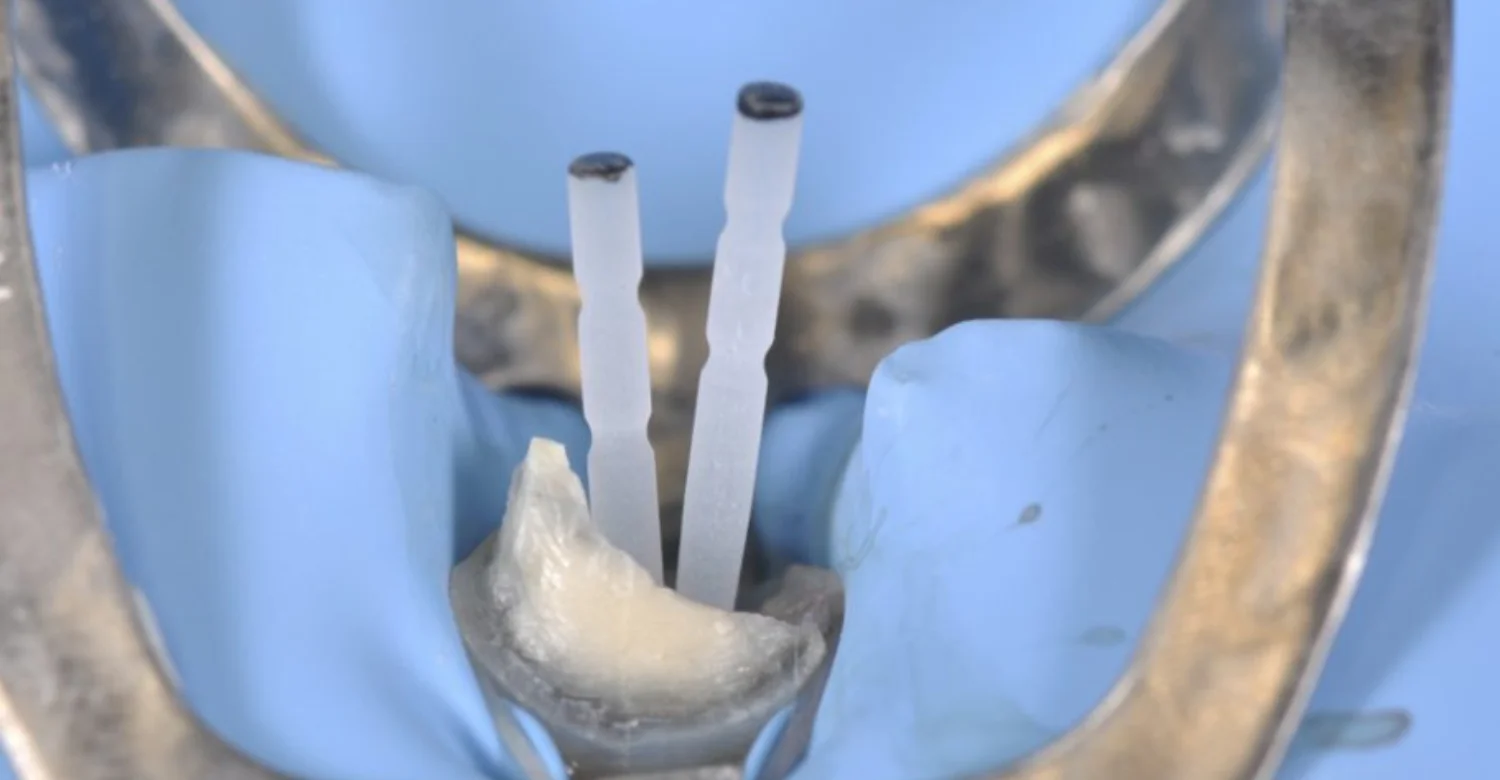
Fiber Post Placement: How Is the Procedure Performed?
Fiber post placement follows a clear clinical sequence. First, the dentist assesses the root canal-treated tooth. Next, a conservative post space is prepared inside the root. The post is then tried in, bonded, and covered with core material. Finally, the tooth is prepared for its definitive restoration. Dental fiber posts & root canal treatment should never be combined automatically. Post placement is performed only after appropriate assessment confirms it is needed. Each step aims to protect remaining dentin and maintain the canal seal.
Step 1 — Assessing the Tooth
Assessment begins with a careful clinical examination. The dentist evaluates how much sound tooth structure remains. The root canal filling is then checked for length, density, and seal. Dental X-rays are standard, and additional imaging is used when clinically indicated. The tooth is also examined for cracks, recurrent decay, and periodontal problems. In dental fiber posts and root canal treatment, this stage decides everything that follows. If the tooth is not restorable, a post will not change that outcome.
Step 2 — Preparing the Post Space
Only part of the root canal filling is removed during this step. The dentist uses controlled instruments to create a space matching the chosen post. Enough filling material must remain at the root tip. Typically, about 4 to 5 mm is preserved to maintain an adequate apical seal. This seal helps keep bacteria out of the tissues around the root. Excessive removal of root dentin increases structural risks, including perforation and fracture. Conservative preparation is therefore a core principle of safe post-space preparation.
Step 3 — Trying in and Bonding the Fiber Post
The dentist selects a post size that fits the prepared space passively. It should not require force or further dentin removal. After the try-in, the post space is cleaned and conditioned. An adhesive system is then applied to the canal walls. The post is seated with resin cement or a dual-cure core material. A curing light completes the bond. Throughout this step, careful isolation from saliva is essential. Moisture contamination can weaken the adhesive bond and shorten the life of the restoration.
Step 4 — Building the Core and Restoring the Tooth
Once the post is bonded, core material is placed around it. This composite rebuilds the missing part of the crown. The dentist then shapes the core for the definitive restoration when required. A crown is often recommended for heavily damaged posterior teeth. Back teeth carry strong chewing forces, and cuspal coverage helps protect them. Front teeth with good structure may need less. This final stage completes the fiber post restoration. Dental fiber posts and root canal treatment succeed only when the final restoration seals well.
.webp)
Fiber Post for Root Canal Tooth: What Are the Benefits?
A fiber post for root canal tooth restoration offers several potential advantages. The main benefits of fiber posts after root canal include a tooth-colored appearance and adhesive bonding. They also include favorable stress distribution and support for the definitive restoration. However, these benefits apply only to suitable cases. Dental fiber posts & root canal treatment do not suit every patient equally. Careful case selection matters more than the material. Your dentist should explain which benefits are relevant to your tooth.
Tooth-Colored Appearance
Fiber posts are white or translucent, so they blend with natural tooth color. Some metal posts can create a gray shadow beneath the restoration. This shadow may show through thin gum tissue or all-ceramic crowns. The aesthetic advantage is most relevant in visible areas, such as the front teeth. With dental fiber posts and root canal treatment, ceramic restorations can keep a natural light effect. For back teeth, appearance matters less. There, structural and functional factors usually guide the decision instead.
Bonded Restoration
Fiber posts can be adhesively integrated with restorative materials. The post, resin cement, core, and dentin are bonded into one connected unit. This bonding can improve retention and help seal the canal against leakage. However, adhesion inside a root canal is technically demanding. Moisture control, clean canal walls, and correct curing all influence the result. Clinical success therefore depends on proper case selection and technique. In dental fiber posts & root canal treatment, the bond is only as good as its execution.
Favorable Stress Distribution
The biomechanical rationale is simple. A fiber post flexes in a way that is closer to dentin. Forces may therefore spread more evenly along the root rather than concentrating at one point. When fiber post restorations fail, the failure is often repairable, such as debonding. Rigid posts are more often linked with less favorable fracture patterns. Still, fiber posts do not eliminate root fracture risk. Dental fiber posts and root canal treatment reduce certain risks only when enough sound tooth remains.
Support for the Definitive Restoration
A post helps retain the core when insufficient coronal structure remains. Without that retention, the core and crown could loosen under chewing forces. The post acts as an anchor, not as a reinforcement rod. This distinction is central to dental fiber posts & root canal treatment. The goal is restoration retention rather than simply "strengthening" the tooth. A stable core allows the crown to fit accurately and seal the margins. Good retention then supports long-term function and comfort.
Tips for Patients
Do not assume every root canal-treated tooth needs a post.
Ask your dentist why a post is recommended in your case.
Ask whether enough natural tooth structure remains without one.
Ask how much root structure will be removed.
Discuss whether a crown or another restoration is appropriate.
Brush well and clean between the teeth around the restoration.
Avoid biting very hard objects on a heavily restored tooth.
Attend regular dental examinations.
Report persistent pain, swelling, sensitivity, or looseness promptly.
Follow your dentist's instructions after fiber post placement.
Fiber Post vs Metal Post: Which Is Better?
The fiber post vs metal post question has no single answer. Each material has strengths, and the right choice depends on the tooth. Fiber posts are tooth-colored and behave more like dentin. Metal posts are more rigid and have a long clinical history. In dental fiber posts and root canal treatment, the comparison should stay clinically balanced. Remaining tooth structure usually influences the outcome more than the post material. The table below summarizes the main differences between the two options.
Feature | Fiber Post | Metal Post |
Appearance | Tooth-colored | Metallic |
Elastic behavior | More similar to dentin | Generally more rigid |
Bonding | Adhesive bonding commonly used | Depends on post/restoration system |
Esthetic restorations | Often advantageous | May affect appearance in some cases |
Case suitability | Depends on remaining structure and anatomy | Case-dependent |
Root preparation | Requires controlled preparation | Technique varies |
Why a Dentist May Choose a Fiber Post
A dentist may choose a fiber post for several reasons. Aesthetics come first in visible areas, where metal could shadow through ceramic. Restorative requirements matter too, because fiber posts bond well with composite cores. Root anatomy and remaining tooth structure also guide the choice. A canal with adequate dentin walls and a good ferrule is often suitable. Above all, material selection should be individualized. Dental fiber posts & root canal treatment work best when the plan matches the specific tooth.
Are Fiber Posts Always the Best Option?
No post material is universally superior. Fiber posts suit many cases, but not all. A tooth with very little remaining structure may need a different approach. Options can include a cast post and core, crown lengthening, or orthodontic extrusion. Sometimes, a tooth with good structure needs no post at all. In other cases, extraction and replacement may be more predictable. The remaining natural tooth structure and overall restorability are the key considerations. The material is always secondary to these factors.
Root Canal and Dental Post: What Happens If a Post Is Not Placed?
The root canal and dental post question worries many patients. A post is not automatically required after every root canal. When adequate tooth structure remains, the tooth can be restored with a bonded buildup or crown alone. Nothing is lost by skipping the post in these cases. However, a post may be necessary when the core lacks retention. Without it, the restoration could loosen or fail. In dental fiber posts & root canal treatment, the definitive restoration depends on the tooth's structural condition and function.
Clinical Note
A fiber post mainly retains a core. It does not reinforce every root canal-treated tooth.
Removing excessive root dentin for a post may compromise the tooth.
An adequate ferrule is important in restorative planning.
Root canal quality should be checked before definitive restoration.
Persistent pain, swelling, or a sinus tract should be investigated, not covered.
A suspected vertical root fracture may rule out post placement.
Dr. Rifat Alsaman, Head of the Medical Team at Vitrin Clinic and a cosmetic dentist, emphasizes individualized planning for each tooth, not a one-size-fits-all approach.
Fiber Post Restoration: What Can Patients Expect?
A fiber post restoration usually follows a predictable path. Treatment is divided into three phases: before, during, and after. Each phase has a clear purpose. Before treatment, the dentist confirms whether a post is needed at all. During treatment, the post and core are placed under controlled conditions. Afterward, the tooth is monitored and protected with a definitive restoration. Understanding dental fiber posts and root canal treatment in advance helps patients feel prepared. It also makes it easier to ask informed questions.
Before Treatment
Before treatment, the dentist performs a clinical examination and takes imaging when indicated. The existing root canal treatment is assessed for quality and signs of infection. The remaining tooth structure is then measured and evaluated. Next, the proposed restoration is discussed, including the materials and the number of visits. Most importantly, the dentist explains whether a post is actually necessary. In dental fiber posts & root canal treatment, this conversation sets realistic expectations. Patients should feel free to ask about alternatives.
During Treatment
During treatment, the tooth is isolated to keep it dry and clean. The dentist then performs controlled post-space preparation inside the root. The fiber post is fitted, checked, and bonded with resin cement. A core buildup follows, restoring the missing tooth structure. When indicated, the tooth is prepared for the final restoration in the same visit. A temporary crown may be placed while the definitive one is made. Most patients find the appointment comfortable and similar to having a filling.
After Treatment
The tooth may feel different temporarily after restorative treatment. Mild tenderness in the gum or bite usually settles within a few days. Follow the dentist's instructions regarding chewing and oral hygiene. Avoid hard foods on the tooth until the final restoration is fitted. Attend the recommended follow-up appointments so the dentist can check the result. Seek professional assessment if significant pain, swelling, mobility, or fracture occurs. Dental fiber posts and root canal treatment need ongoing care to stay successful.
How Long Does a Fiber Post and Restoration Last?
There is no universal lifespan for a fiber post. Longevity depends on many factors working together. These include remaining tooth structure, the ferrule, and the quality of bonding. Oral hygiene, occlusal forces, and tooth position also play a role. The quality of the final restoration is equally important. New decay or trauma can shorten the result at any time. Regular dental examinations help detect problems early. With dental fiber posts & root canal treatment, no honest clinician can guarantee a number of years.
When Should You See a Dentist After a Root Canal?
A root canal-treated tooth should feel comfortable once healing is complete. Some warning signs, however, require professional evaluation. These include persistent or increasing pain, swelling, or a gum pimple. Cracks, fractures, and a loose post, core, or crown also need attention. Dental fiber posts & root canal treatment can fail quietly at first. Early assessment often makes the problem easier to manage. Do not wait for symptoms to become severe. Contact your dentist as soon as something feels wrong.
Persistent or Increasing Pain
Mild tenderness after treatment is normal and usually fades within days. Pain that persists for weeks or grows stronger is different. It may point to remaining infection, a missed canal, or a high bite. It can also suggest a crack in the root. After dental fiber posts and root canal treatment, ongoing pain should never be ignored. Painkillers may mask the symptom, but they do not treat the cause. A dentist should examine the tooth and take an X-ray to investigate.
Swelling or a Gum Pimple
Swelling near a treated tooth is a clear warning sign. A small pimple on the gum, called a sinus tract, may also appear. It can release fluid and then seem to heal. However, the drainage often indicates persistent infection or another dental problem. The cause may be a leaking restoration, an untreated canal, or a root fracture. This sign needs a dental examination even when there is no pain. Facial swelling or fever requires urgent care on the same day.
Cracks or Fractures
A cracked root canal-treated tooth requires prompt assessment. Small chips in the restoration can often be repaired. Deeper cracks are more serious, because bacteria can enter along the fracture line. Signs include sharp pain on biting, a moving piece, or a deep, narrow gum pocket. Vertical root fractures usually have a poor outlook and may lead to extraction. Early diagnosis protects the surrounding bone and keeps more options open. Avoid chewing on the tooth until a dentist has examined it.
Loose Post, Core, or Crown
A loose restoration should not be ignored. Movement breaks the seal and lets bacteria and saliva leak underneath. Decay can then develop quickly, often without pain. A deboned post may also stress the root during chewing. Signs include a wobbling crown, a bad taste, or food trapping around the tooth. Do not try to glue it back at home. Early re-bonding or replacement can often save the tooth. Delay reduces that chance, so book a dental visit as soon as you notice movement.
What We Notice Clinically
Dr. Rifat Alsaman, Head of the Medical Team at Vitrin Clinic and a cosmetic dentist, emphasizes preserving natural tooth structure whenever possible. Dr. Rifat Alsaman notes that a fiber post should not be an automatic step after root canal treatment. The decision should follow an assessment of remaining structure, restorability, occlusion, and the planned final restoration. Evaluation comes first, before deciding whether a dental fiber post after root canal treatment is necessary. Preserving dentin and keeping a reliable apical seal protect the tooth long term.
Why Case Selection Matters More Than the Material Alone
The success of a restoration depends on multiple factors. Isolation keeps the field dry so the adhesive can bond. Careful post-space preparation preserves dentin and the apical seal. A sound ferrule and a well-fitting final restoration protect the tooth under load. Good oral hygiene then maintains the result. A high-quality material cannot compensate for poor case selection or inadequate technique. In dental fiber posts and root canal treatment, the right tooth and the right method matter most.
Vitrin Clinic: Individualized Restorative and Cosmetic Dental Care
Vitrin Clinic is located in Istanbul, Turkey. Every restorative plan starts with a comprehensive examination, not an automatic post recommendation. CBCT/3D imaging and intraoral scanning are used when clinically indicated. Complex cases are coordinated across restorative, endodontic, periodontal, implant, and cosmetic care. Dr. Rifat Alsaman, Head of the Medical Team at Vitrin Clinic and a cosmetic dentist, is part of the clinical team. The focus stays on realistic expectations and preserving natural tooth structure. Patients can have dental fiber posts & root canal treatment options assessed individually.
Ready to transform your smile?
Talk to our team and get a FREE treatment plan.
References:
FAQs
Dr. Rifat Alsaman has more than 5 years of clinical experience in dentistry and currently serves as the Head of the Medical Team at Vitrin Clinic. He is dedicated to providing exceptional patient care, overseeing treatment planning, and ensuring the highest clinical standards across the team. His expertise, attention to detail, and commitment to continuous professional development have helped countless patients achieve healthier, more confident smiles.


