General Dentistry
August 26, 2026
Candida auris Infection and Oral Health: What You Need to Know
 Dr. Rifat Alsaman
This part of our discussion on Candida auris Infection and Oral Health looks closer at the details. The link between Candida auris and oral health is an emerging area of interest. Candida auris can colonize patients and spread within healthcare environments. However, evidence about persistent oral colonization remains limited. Most existing research focuses on skin and other body sites instead.
A 2024 dental study investigated oral colonization specifically. It found no persistent oral mucosal colonization in its institutional experience. This distinction matters. Detecting the yeast on the body does not mean the mouth is infected. Dental professionals should avoid diagnosing oral disease based only on a history of C. auris. Instead, they should consider symptoms, medical history, exposure risks, and lab findings.
Vitrin Clinic emphasizes individualized assessment for medically complex patients. Good communication between dental and medical teams supports appropriate precautions. It also ensures proper continuity of care.
This guide expands on that foundation with a deeper look at how Candida auris behaves in healthcare settings. It examines what current research says about the mouth. Finally, it explains how a dental practice can build sound, evidence-based policies. The goal is to separate established facts from genuine uncertainties. This helps patients and clinicians make sensible decisions rather than reacting to headlines.
What Is Candida auris?
Understanding C. auris and oral health means looking at the evidence carefully. Candida auris is a type of yeast. It can cause serious infections, especially in healthcare settings. It often lives on the skin or body without causing symptoms. This state is known as colonization. In some people, however, it can enter the bloodstream or other body sites. There, it causes invasive infection.
The CDC identifies C. auris as an emerging healthcare-associated pathogen. It requires strong infection-control measures. Concerns arise because some strains resist multiple classes of antifungal medications. This limits treatment options for clinicians. People with prolonged healthcare exposure face greater risk of serious illness. Those with weakened immune systems are also vulnerable. Otherwise healthy people in the community rarely encounter it.
Importantly, carrying the yeast on the body does not mean someone has an active infection. For dental patients, this distinction prevents confusion. It separates healthcare-associated organisms from common oral Candida infections seen every day. At Vitrin Clinic, dental assessment considers the patient's full medical history alongside oral findings. Clinicians avoid treating a single lab result as the whole picture.
How Candida auris Spreads
A central question in managing fungal risks in dentistry is how clinicians should respond. Candida auris spreads through contact with colonized patients, contaminated surfaces, and medical equipment. Healthcare environments pose the highest risk. Patients often face prolonged exposure to shared equipment and clinical procedures. Furthermore, C. auris can persist on surfaces longer than expected. Studies of hospital rooms have found viable organisms on bed rails, windowsills, and mobile equipment days after patient discharge. This highlights why terminal cleaning protocols matter in outbreak control.
The CDC recommends appropriate infection-control practices for facilities managing colonized or infected patients. However, transmission does not mean every exposed person develops an infection. Colonization, individual susceptibility, and exposure intensity all influence outcomes. Two people exposed in similar circumstances may experience very different results. Dental teams should use established infection-control procedures rather than making assumptions based on a single encounter or positive test result.
Hand hygiene, environmental cleaning, and appropriate personal protective equipment remain essential. These fundamental precautions reduce spread in any clinical setting, dental or otherwise. Vitrin Clinic applies the same rigorous procedures to every patient. Staff avoid singling out those with a documented history. This prevents both complacency and unnecessary stigma.
Colonization vs. Infection
Colonization means Candida auris is present without causing active disease. Infection means it is actively producing illness and clinical symptoms. This distinction is vital because colonized patients often appear completely healthy. They may not know they carry the yeast. The CDC explains that colonized people can carry C. auris without symptoms. However, they may develop an infection later if their health status changes, such as during hospitalization or immune suppression.
Colonization also impacts infection prevention because transmission can occur without obvious illness. This explains why some healthcare facilities run screening programs for asymptomatic patients. Dentists should document relevant medical information carefully. They must not assume colonization equals an oral infection. Clinical decisions should combine the patient's medical history, diagnostic evidence, and dental findings.
The same principle applies when evaluating unusual oral symptoms in medically vulnerable patients. A cautious, evidence-based approach prevents unnecessary alarm while avoiding missed clinical concerns. This balance is the foundation of every sound clinical protocol.
What is the connection between Candida auris Infection and Oral Health ?
Candida auris Infection and Oral Health connect mainly through healthcare exposure, colonization, and systemic vulnerability. C. auris can colonize the body without causing symptoms. It spreads easily in healthcare environments. However, current evidence does not establish persistent oral colonization as a routine finding.
Oral problems often occur indirectly. High-risk patients frequently experience hospitalization, immune suppression, and heavy medication use. They may also suffer from dry mouth, reduced nutrition, or difficulty maintaining oral hygiene. These factors increase susceptibility to common oral conditions, including ordinary candidiasis. Importantly, typical oral thrush is not automatically caused by C. auris.
Therefore, dentists should evaluate oral symptoms independently. They should not assume findings indicate C. auris. Patients with known colonization or infection should inform their dental team. This allows for proper infection control and medical coordination. Accurate laboratory identification remains necessary whenever C. auris is clinically suspected.
Why Colonization Matters for Dental Patients
Within the broader topic of fungal pathogens in dentistry, this distinction matters. Colonization matters because dental offices are clinical environments where infection control is essential. Furthermore, patients may have complex medical histories that raise their risk for invasive infections. The CDC recommends informing healthcare providers about known colonization before receiving care. Dental professionals can then use this information to support proper scheduling, precautions, and referrals.
This does not mean routine dental treatment must be avoided. Treatment decisions should reflect current infection status, urgency, medical stability, and local protocols. Patients should follow instructions from their treating medical team regarding isolation or screening. Vitrin Clinic incorporates these considerations into individualized care planning so necessary dental treatment is not delayed without cause.
Is There a Connection Between the Organism and Oral Health?
For readers following our analysis of fungal transmission, this is a key consideration. The link between this yeast and oral health is still under investigation. Common oral candidiasis frequently involves Candida albicans. In contrast, evidence about C. auris in the mouth remains limited. A 2024 study investigated oral colonization and found no persistent oral mucosal colonization among participants. While this does not prove oral involvement is impossible, it highlights the need for larger prospective studies before drawing broad conclusions.
Patients with serious illness may still experience oral problems. These issues often stem from hospitalization, medications, dry mouth, poor nutrition, or limited oral care. Such factors increase the risk of conventional oral candidiasis without this specific organism being responsible. At Vitrin Clinic, dentists evaluate unusual oral findings against the patient's full medical background. Oral symptoms alone cannot identify the specific Candida species present.
Oral Infection: What Would It Actually Look Like?
The relationship at the heart of oral fungal manifestations becomes clearer here. A confirmed oral infection caused by C. auris should never be assumed from ordinary thrush-like symptoms. White plaques, redness, soreness, and burning have many causes. Common oral candidiasis usually stems from Candida albicans. Identifying C. auris requires specific laboratory methods. Misidentification has historically been a concern. Standard laboratory systems were not originally designed for C. auris and can mistake it for other yeasts.
A dentist cannot determine the yeast species through visual inspection alone. Patients with persistent or unusual lesions require careful oral examination and further investigation. Medical history helps determine whether laboratory testing or specialist referral is appropriate. Patients should avoid self-treatment with antifungal medication. Unprescribed use may fail to address the actual cause and contributes to broader population-level drug resistance.
The Oral Microbiome and Its Fungal Component
This is one of the more nuanced parts of oral fungal pathology. The oral microbiome includes a fungal component known as the oral mycobiome. Candida is among the key fungi in oral microbial ecology. Research shows the oral fungal community is influenced by local and host factors. These include saliva flow, diet, smoking, and removable dental appliances. However, finding fungal DNA does not prove active disease. Molecular detection can identify organisms present in tiny amounts well below the threshold for symptoms.
Clinical interpretation requires appropriate testing methods and full patient context. The oral environment relies on saliva, mucosal barriers, immune defenses, and microbial competition. These factors influence whether microorganisms persist or cause clinical disease. Current evidence does not justify treating every oral Candida finding as an invasive infection. Dentists who understand this nuance can reassure patients appropriately.
Are These Organisms and Oral Candidiasis the Same Thing?
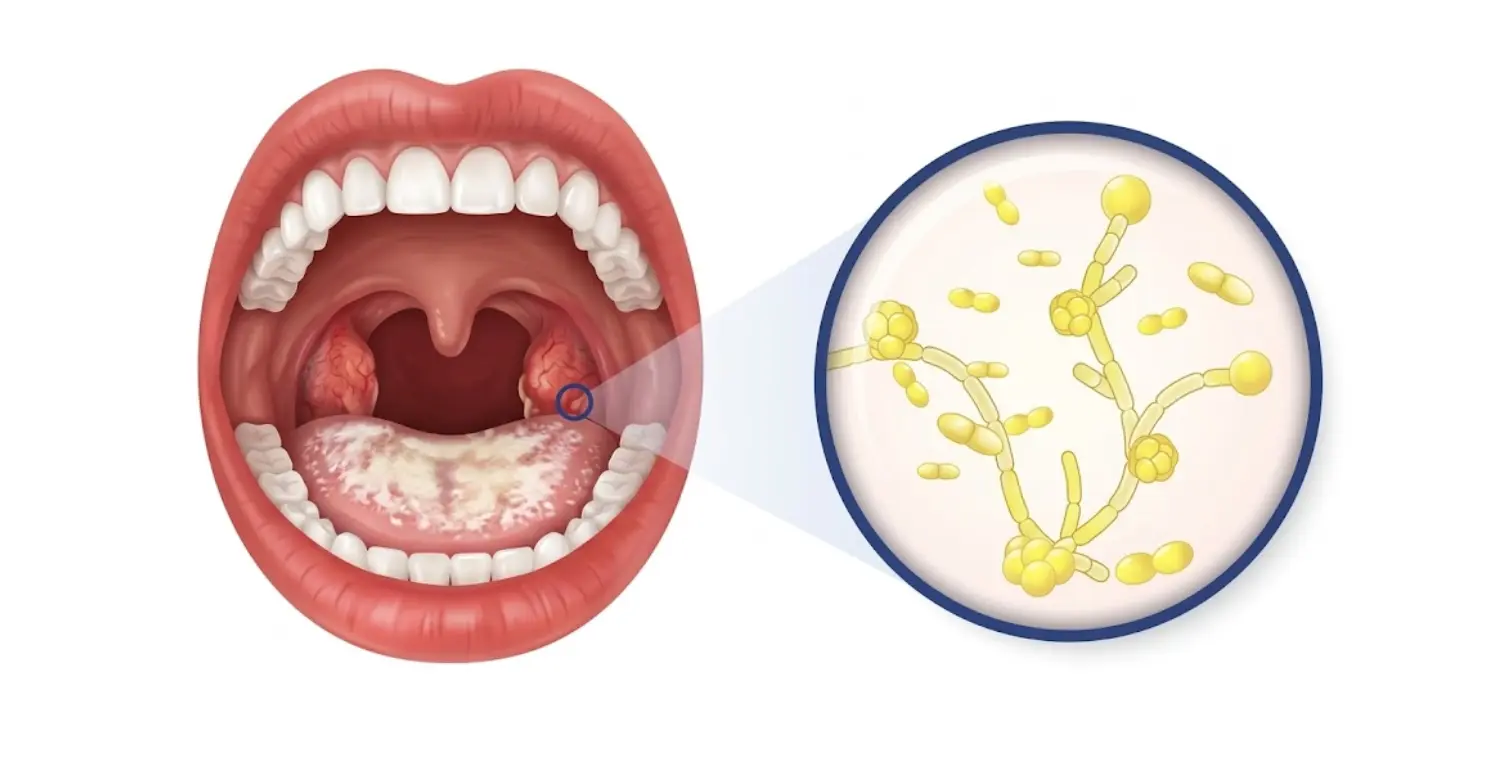
Dental teams weighing these diagnosis challenges should keep this in mind. No, they are not the same condition, although both involve Candida yeasts. Oral candidiasis, commonly called oral thrush, is most often caused by Candida albicans. Other Candida species can also cause thrush when local or systemic risk factors are present. In contrast, Candida auris is an emerging pathogen strongly tied to healthcare environments and invasive infections.
Some symptoms overlap, including oral soreness, redness, burning, and white patches. However, these findings cannot determine which Candida species is present. Laboratory identification is crucial when C. auris is suspected, especially since traditional testing methods can misidentify it. Patients should not assume ordinary oral thrush indicates a healthcare-associated infection. At Vitrin Clinic, professional examination and diagnostic guidance help distinguish common oral conditions from issues requiring specialized investigation.
Important Differences in Diagnosis
Patients researching fungal infections in dental care often ask about this. The primary diagnostic challenge is accurately identifying Candida auris rather than relying on visual appearance. Traditional laboratory techniques often struggle to detect this species. Modern methods like MALDI-TOF mass spectrometry and targeted molecular assays offer precise species-level identification. Diagnostic criteria include cultures from relevant body sites and validated laboratory evidence. Testing decisions should follow guidance from healthcare professionals and public health recommendations.
Routine testing for every patient with oral thrush is unnecessary. Instead, clinicians consider risk factors, exposure history, symptom severity, and clinical context before ordering specialized tests. Laboratory results must always be interpreted alongside the patient's symptoms and physical examination. This combined approach successfully distinguishes colonization from active infection.
Why Laboratory Identification Matters So Much
This detail is essential to a balanced view of yeast management. Laboratory identification matters because antifungal susceptibility varies widely among Candida species. C. auris is notable for its resistance to multiple antifungal classes. Some strains resist all three major drug families used for invasive yeast infections. Consequently, the CDC emphasizes accurate laboratory testing to prevent delays in infection control and targeted treatment.
Dentists generally do not manage systemic fungal infections independently. Instead, they communicate relevant oral findings to the patient's medical team, who order appropriate testing through hospital or reference laboratories. Patients should never start prescription antifungal therapy without professional evaluation. Accurate identification is essential for safe, effective care in vulnerable individuals.
Candida auris Oral Symptoms
Coverage of this clinical topic would be incomplete without this point. Current evidence is insufficient to define a unique symptom profile for confirmed oral C. auris infection. Most fungal-related oral complaints are nonspecific. They include soreness, burning, redness, altered taste, and white plaques. Because these symptoms occur in many common conditions, visual signs alone cannot confirm the underlying organism. Patients with persistent oral changes should seek a professional examination.
Medical vulnerability, recent hospitalization, and known colonization status should always be disclosed during assessment. Dentists may recommend additional testing when clinical findings justify it. Vitrin Clinic evaluates unusual oral symptoms through structured examination and individualized care planning rather than generic protocols.
Clinical Note
Context is everything when reviewing emerging oral pathogens. Current evidence does not support claims that this yeast routinely colonizes healthy oral tissues. A 2024 institutional study failed to demonstrate persistent oral mucosal colonization. Researchers emphasized that larger prospective studies are needed before drawing firm conclusions. This evidence helps temper overly broad claims found online.
Dental professionals should stay vigilant without creating unnecessary anxiety. A history of colonization elsewhere on the body should trigger clear communication rather than an automatic oral diagnosis. Unusual lesions still warrant proper examination, especially in high-risk patients. The safest approach combines clinical judgment, laboratory evidence, and strict infection control.
How Can This Organism Affect Oral Health?
This consideration rounds out the overall picture. The direct effect of C. auris on oral health remains uncertain due to limited research. A 2024 study found no persistent oral mucosal colonization in its patient cohort. However, seriously ill patients often experience oral health problems due to secondary factors. Hospitalization, medications, reduced saliva, nutritional shifts, and limited oral hygiene alter the oral environment. These factors increase susceptibility to conventional oral candidiasis.
Dry mouth is particularly problematic because saliva cleanses and protects oral tissues. Additionally, dentures can retain Candida biofilms if not cleaned properly. An oral issue occurring alongside a C. auris colonization diagnosis does not mean C. auris is the direct cause. At Vitrin Clinic, comprehensive dental exams assess teeth, gums, tissues, and appliances to identify true causes without making assumptions based on medical chart notes.
Oral Health Risks in Context
This part of our discussion looks closer at the details. The most relevant oral risks relate indirectly to systemic illness and healthcare exposure rather than C. auris itself. Severely ill patients often suffer from xerostomia, poor nutrition, and reduced self-care. Dry mouth significantly lowers natural oral clearance and antimicrobial protection. Removable appliances also offer surfaces where Candida species persist, raising the risk of standard thrush.
Patients should maintain oral hygiene whenever medically able. Care teams should actively manage dehydration, medication-related dryness, and denture cleanliness. Individualized risk assessment is far more useful than generalized assumptions about a single pathogen.
What We Notice Clinically
Understanding clinical evidence requires a careful review. The most critical step is distinguishing common oral Candida conditions from confirmed C. auris cases. A patient's known colonization status elsewhere does not establish an oral infection. Examinations must remain systematic and evidence-based. Dentists should inspect mucosal surfaces, the tongue, palate, gums, and appliances. They should also review medications, systemic health, recent hospital stays, and daily hygiene practices.
Persistent lesions may require microbiological testing or medical referral. Patients with severe systemic symptoms need prompt medical care alongside dental evaluation. This structured approach ensures patient safety while avoiding unnecessary labels for common oral conditions.
Oral Colonization: What Dentists Should Know
A central question in clinical practice is how clinicians should respond. Oral colonization by C. auris remains an emerging research topic. Current data does not support persistent oral colonization as a routine finding. A 2024 study showed no persistent colonization among participants, reinforcing the difference between skin colonization and oral presence. Carrying yeast on the skin does not mean it is present in the mouth.
Dentists should avoid diagnosing oral colonization based solely on medical history. Instead, historical data should guide infection-control planning and clinical communication. Patients with extensive healthcare exposure require extra consideration due to transmission risks in clinical environments. Laboratory testing should occur only when clinically indicated. At Vitrin Clinic, individualized assessment balances appropriate precautions with necessary dental care.
Risk in Dental Patients
This section of the infection control picture deserves close attention. Risk is highest among patients with extensive healthcare exposure and significant medical vulnerability. The CDC identifies healthcare transmission as a primary concern. Patients with recent stays in long-term care or hospitals face greater exposure. Those with weakened immune systems carry a higher risk of invasive infection.
Dental professionals should ask targeted questions when a patient's history indicates risk. Known colonization should be reported according to healthcare policies. However, routine dental care can often proceed safely once appropriate precautions are established. Urgent systemic concerns should always be directed to the medical team. Vitrin Clinic adapts treatment plans based on documented clinical needs rather than enforcing blanket restrictions.
How Dental Professionals Can Approach At-Risk Patients
Any thorough review of Candida auris Infection and Oral Health has to address this point. Dental professionals should begin with a thorough medical history review and infection-control plan. They must avoid making assumptions based on a single chart entry. Current symptoms, treatment status, healthcare exposure, and medical recommendations should be evaluated together. Patients with active systemic illness may require medical clearance before elective dental procedures. Urgent dental issues should be managed promptly based on clinical need and safety.
Communicating with infectious disease or medical teams clarifies necessary precautions. This collaborative approach supports continuity without delaying care unnecessarily. Dental teams must also follow local public health policies for suspected or confirmed cases.
Review Relevant Medical History
Within the broader topic of Candida auris Infection and Oral Health, this distinction matters. Medical history reviews should check for recent hospitalizations, long-term care stays, immune suppression, and known colonization. Medication history can reveal drugs that cause dry mouth or alter oral flora. Recent antimicrobial or antifungal treatments can also impact clinical findings. Patients should inform their dentist of relevant diagnoses, and dental staff must document key details securely.
The goal is not to restrict access to care, but to identify when extra precautions or communication are needed. Vitrin Clinic uses medical history reviews to create safe, tailored treatment plans.
Recognize Possible Oral Findings
For readers following our guide to Candida auris Infection and Oral Health, this is a key consideration. Dentists should assess oral tissues systematically rather than searching for one specific fungal appearance, and potential findings include erythema, plaques, ulceration, dryness, soreness, or prosthetic irritation. These findings are nonspecific and can have multiple causes, so a complete examination helps identify dental, periodontal, mucosal, and prosthetic contributors before any conclusion is drawn.
Persistent or unexplained findings may require additional diagnostic testing, and patients should avoid scraping lesions aggressively or using unprescribed medications while waiting for evaluation. Professional evaluation is especially important when symptoms occur alongside systemic illness, and accurate documentation can also support communication with medical providers down the line.
Follow Appropriate Infection-Control Procedures
The relationship at the heart of Candida auris Infection and Oral Health becomes clearer here. Dental teams should follow established standard precautions and applicable infection-control policies at all times, and known or suspected cases involving Candida auris may require additional precautions according to local guidance. The CDC emphasizes hand hygiene, environmental cleaning, and appropriate precautions in healthcare settings generally, and dental practices should use validated procedures for cleaning and disinfecting clinical environments between every patient.
Reusable instruments should undergo appropriate sterilization according to professional standards, and staff should receive training on relevant infection-control procedures on an ongoing basis. Consistent implementation is more important than relying on individual judgment at the moment, and Vitrin Clinic maintains infection-control protocols aligned with applicable healthcare requirements at every visit.
Coordinate With the Patient's Healthcare Team
This is one of the more nuanced parts of Candida auris Infection and Oral Health. Coordination can be valuable when a patient has an active or suspected invasive infection, and medical teams can clarify current treatment, stability, isolation requirements, and diagnostic information relevant to dental care. Dentists can communicate oral findings that may influence overall care, and this collaboration is especially important before invasive elective procedures in medically unstable patients.
It can also prevent unnecessary treatment interruptions when dental care remains appropriate despite a complex medical history. Clear communication protects both patients and healthcare professionals, and patients should provide consent and relevant information according to applicable privacy requirements. Vitrin Clinic coordinates dental planning around documented medical needs when necessary, treating this collaboration as a routine part of good care rather than an exception.
Clinical Note
Dental teams weighing Candida auris Infection and Oral Health should keep this in mind. Current research should be interpreted carefully because oral evidence for Candida auris remains limited, and a 2024 institutional study did not demonstrate persistent oral mucosal colonization. The investigators still recommended further surveillance to clarify potential oral involvement, and therefore dentists should remain informed without presenting uncertain findings as established facts.
Known colonization elsewhere on the body should not automatically become an oral diagnosis, and clinical examination and appropriate laboratory evaluation remain essential regardless of what a chart says. This evidence-based approach supports patient safety and avoids unnecessary fear, which serves everyone better than either extreme of complacency or panic.
Dental Care Considerations
Patients researching Candida auris Infection and Oral Health often ask about this. Dental care for patients carrying Candida auris should be individualized according to infection status, medical stability, and treatment needs. A positive colonization result does not automatically mean that routine dental care must be postponed, though patients with active infection or serious medical illness may require coordination with their healthcare team before treatment proceeds. The CDC emphasizes appropriate infection-control measures because the yeast can spread through contaminated surfaces and healthcare contact, and dental teams should review relevant medical information before invasive or elective procedures.
Standard precautions, hand hygiene, instrument sterilization, and environmental cleaning remain essential for every patient regardless of status. Patients should also inform their dentist about known colonization, recent hospitalization, and current antifungal treatment, and dentists can evaluate oral symptoms without assuming that every fungal-looking lesion represents this specific organism. At Vitrin Clinic, treatment planning is adapted to each patient's medical and oral-health circumstances, and close communication between dental and medical professionals supports safer, more coordinated care overall.
Oral Hygiene During and After Illness
This detail is essential to a balanced view of Candida auris Infection and Oral Health. Good oral hygiene remains important for maintaining oral comfort and reducing plaque accumulation, and patients should brush their teeth according to their dental professional's recommendations. Cleaning the tongue gently can support routine oral hygiene when comfortable, and interdental cleaning should be adapted to individual periodontal and restorative needs. Patients with dry mouth should discuss appropriate management strategies with their healthcare team, and dentures should receive appropriate cleaning and storage every day.
Oral hygiene does not guarantee prevention of acquisition or infection with any healthcare-associated organism, but it supports general oral health and may reduce complications associated with poor oral hygiene more broadly. It remains one of the simplest and most effective things a patient can control themselves.
Dental Procedures and Infection Control
Coverage of Candida auris Infection and Oral Health would be incomplete without this point. Dental procedures generate opportunities for contact with instruments, surfaces, staff, and patients, so consistent infection-control practices therefore remain essential across every appointment. Standard precautions apply to all patients, regardless of known infection status, and additional precautions may be required according to local guidance for confirmed cases.
Environmental cleaning and equipment reprocessing should follow validated protocols without exception, and dental staff should receive appropriate training and maintain clear procedures for every situation they might encounter. Patients should follow appointment instructions provided by the dental practice, and effective infection control protects patients, staff, and the wider healthcare environment as a whole.
Dentures and Removable Appliances
As with much of Candida auris Infection and Oral Health, context is everything here. Dentures can accumulate microorganisms and require consistent cleaning, and Candida species can form biofilms on prosthetic surfaces if that cleaning is neglected. Patients should follow individualized denture-cleaning instructions from their dental professional, and dentures should generally be removed when recommended and stored appropriately overnight.
Poorly fitting dentures can also irritate oral tissues and complicate mucosal health, so patients should report persistent soreness, redness, or changes beneath appliances promptly. Dental professionals can assess fit, hygiene, and tissue condition during examinations, and known colonization status may require additional infection-control considerations when handling and cleaning these appliances in a clinical setting.
When Medical Consultation May Be Appropriate
This consideration rounds out the picture of Candida auris Infection and Oral Health. Medical consultation may be appropriate when a patient has active systemic infection or significant medical instability, and it can also help clarify precautions before invasive elective dental procedures. Patients receiving complex antifungal therapy may require coordinated care between multiple specialists, and dentists should communicate concerning oral findings rather than attempting systemic management independently.
Medical teams can determine whether treatment timing should change based on the fuller clinical picture, and urgent dental infections should not be ignored because a patient has another medical diagnosis on file. Instead, dental and medical priorities should be coordinated, and Vitrin Clinic incorporates relevant medical recommendations into treatment planning as a matter of routine practice.
How Is Candida auris Identified in the Laboratory?
This part of our discussion on Candida auris Infection and Oral Health looks closer at the details. Identifying Candida auris requires laboratory testing because symptoms and visual examination cannot reliably determine the Candida species involved. This distinction is important because Candida auris can sometimes be misidentified by conventional laboratory identification systems that were not originally designed to detect it. Healthcare professionals may use culture-based methods, molecular testing, or other validated laboratory techniques for species identification, and the appropriate test depends on the specimen, clinical situation, and laboratory capabilities available.
A positive screening result can indicate colonization without proving active infection, and likewise, oral soreness, redness, burning, or white patches cannot confirm the diagnosis by themselves. The CDC recommends laboratory confirmation when Candida auris is suspected based on clinical or epidemiological circumstances, and patients with relevant healthcare exposure or unexplained symptoms should discuss testing with their healthcare provider. At Vitrin Clinic, dentists evaluate oral findings and recommend appropriate medical referral when further investigation is warranted, and accurate identification helps healthcare teams choose appropriate management and infection-control measures for each individual case.
Laboratory Testing in Practice
Understanding Candida auris Infection and Oral Health means looking at the evidence carefully. Laboratory identification may involve culture and specialized identification methods, and the CDC recognizes laboratory evidence from relevant clinical or screening specimens as the standard for confirmation. Some laboratories may use molecular or other validated methods for species identification, and the exact method depends on the specimen, laboratory capabilities, and current protocols in place at that facility.
Testing should be interpreted within the clinical context rather than in isolation, and a positive result does not automatically prove that symptoms are caused by the organism identified. Conversely, symptoms without appropriate testing cannot establish species identity either, and medical and laboratory specialists should guide complex diagnostic decisions whenever the picture is unclear.
When Should a Patient Seek Professional Evaluation?
A central question in Candida auris Infection and Oral Health is how clinicians should respond. Patients should seek professional evaluation when oral symptoms persist, worsen, or interfere with eating, and urgent assessment is particularly important when symptoms occur alongside severe systemic illness. People with recent healthcare exposure should disclose that history to their dentist, and known colonization should also be reported to healthcare professionals as a matter of course.
Patients should seek medical attention promptly for signs of serious infection, and dental professionals can evaluate local oral problems and identify findings requiring referral to a physician or specialist. Early communication can help prevent confusion between oral symptoms and systemic disease, and Vitrin Clinic provides dental assessment when oral symptoms require professional evaluation of this kind.
Oral Hygiene: What Patients Can Actually Do
This section of the Candida auris Infection and Oral Health picture deserves close attention. Good oral hygiene supports healthy teeth, gums, and oral tissues during periods of illness or medical treatment, and patients should brush regularly with fluoride toothpaste and clean between teeth according to their dentist's recommendations. Those wearing dentures should clean their appliances carefully and follow professional instructions for overnight storage, and adequate hydration can also support saliva production when fluid intake is medically appropriate.
Patients experiencing persistent dry mouth should discuss suitable management options with their healthcare team rather than ignoring the symptom. It is important to understand that good oral hygiene does not guarantee protection against acquiring this healthcare-associated organism, since transmission can occur through healthcare-associated contact and contaminated surfaces despite appropriate personal hygiene. Patients with known colonization should inform their dentist before treatment, and persistent oral soreness, unusual patches, or other unexplained changes should receive professional evaluation without delay. At Vitrin Clinic, personalized oral-hygiene guidance helps patients maintain their dental health alongside broader medical care during difficult periods.
Tips for Patients
Any thorough review of Candida auris Infection and Oral Health has to address this point. Maintain regular toothbrushing and interdental cleaning according to your dental professional's instructions, and clean removable dentures or appliances exactly as directed. Stay adequately hydrated when medically permitted, and discuss persistent dry mouth with your healthcare team rather than assuming it will resolve on its own. Avoid sharing toothbrushes, dental appliances, or personal hygiene items with anyone else, and wash your hands before and after oral-care routines when appropriate.
Tell dentists about known colonization, recent hospitalization, or relevant medical treatment before any appointment. Do not use antifungal medications without professional advice, and seek evaluation for persistent oral lesions, unexplained soreness, or significant swallowing difficulty as soon as they arise.
Clinical Note
Within the broader topic of Candida auris Infection and Oral Health, this distinction matters. Oral hygiene supports general dental health but should not be presented as a guaranteed method of preventing acquisition of Candida auris, since its primary healthcare concern involves transmission and invasive disease in vulnerable populations rather than the mouth specifically. Good oral care can nevertheless reduce plaque accumulation and support healthier oral tissues generally, and patients with dentures should pay particular attention to prosthetic hygiene as part of that effort.
Dry mouth should also be addressed because reduced saliva can increase oral fungal susceptibility of all kinds, not just from one organism. Vitrin Clinic provides individualized oral-hygiene recommendations based on dental findings, tailored to each patient's specific situation.
When Is Extra Caution Needed for Dental Patients?
For readers following our guide to Candida auris Infection and Oral Health, this is a key consideration. Extra caution may be appropriate when dental patients have known colonization, active infection, or significant healthcare exposure related to Candida auris. Patients with prolonged hospitalization or long-term healthcare facility stays may have increased exposure opportunities, and people with weakened immune systems can also face greater risks of serious infection generally.
Dental professionals should review relevant medical history before providing invasive or elective treatment, and known colonization does not automatically mean dental treatment must be cancelled or postponed. Instead, the dental team should follow applicable infection-control policies and consider the patient's current medical condition holistically. Medical consultation may be appropriate when active systemic infection or significant medical instability is present, and patients should inform their dentist about recent hospitalizations, known colonization, and current treatments. At Vitrin Clinic, individualized treatment planning helps balance necessary dental care with appropriate patient-safety measures, and clear communication between dental and medical teams reduces unnecessary delays while supporting responsible infection control throughout.
Why Dental-Medical Communication Matters So Much
The relationship at the heart of Candida auris Infection and Oral Health becomes clearer here. Dental and medical conditions can influence one another through medications, immunity, nutrition, and oral hygiene, and communication helps clinicians understand whether oral findings require additional investigation. It can also clarify whether infection-control precautions need modification for a specific patient, and patients should provide accurate information about current diagnoses and treatments whenever asked.
Dentists should communicate clinically significant findings to appropriate healthcare professionals promptly, and this collaboration can reduce duplicated testing and improve continuity of care overall. Vitrin Clinic integrates relevant medical information into comprehensive dental treatment planning as standard practice.
How Can Dental Teams Reduce Transmission Risk?
This is one of the more nuanced parts of Candida auris Infection and Oral Health. Dental teams can reduce transmission risks by consistently applying established infection-control practices during every patient encounter, not just those flagged as high risk. Hand hygiene should be performed appropriately before and after patient contact and after removing gloves, and dental instruments require proper cleaning, sterilization, and reprocessing according to established clinical protocols.
Frequently touched surfaces should receive appropriate environmental cleaning and disinfection between patients, and the CDC recommends infection-control measures because Candida auris can persist on surfaces and spread within healthcare environments. Patients with known or suspected colonization may require additional precautions based on current local guidance, and dental teams should also maintain clear procedures for personal protective equipment and environmental management. Staff training is essential because consistent implementation helps reduce healthcare-associated transmission over time, and patients should not be stigmatized because colonization does not necessarily mean active infection. At Vitrin Clinic, patient safety remains central to dental treatment and infection-control planning at every step.
Infection-Control Fundamentals
Dental teams weighing Candida auris Infection and Oral Health should keep this in mind. Dental teams should consistently apply standard infection-control precautions with every single patient, and hand hygiene remains one of the most important measures for reducing healthcare-associated transmission of any pathogen. Instrument sterilization, environmental cleaning, and appropriate protective equipment are also essential components of a safe practice, and the CDC recommends contact precautions and environmental measures for healthcare management of Candida auris specifically.
Dental practices should follow applicable national and local requirements at all times, and staff training should be continuous rather than limited to outbreak situations that may never occur at a given practice. Clear procedures reduce reliance on individual interpretation in the moment, and patient safety should remain the primary objective guiding every decision.
Clinical Note
Patients researching Candida auris Infection and Oral Health often ask about this. The key infection-control lesson is consistency rather than fear, and Candida auris can persist in healthcare environments and spread between patients if procedures lapse. Therefore, healthcare facilities need reliable environmental and hand-hygiene procedures applied without exception. Dental practices should follow applicable guidance for confirmed or suspected cases, and patients should not be stigmatized because colonization does not mean active illness.
Appropriate precautions protect everyone while allowing necessary care to continue uninterrupted, which is ultimately the point of any well-designed infection-control program.
Why Choose Vitrin Clinic for Comprehensive Oral Care?
This detail is essential to a balanced view of Candida auris Infection and Oral Health. Vitrin Clinic focuses on comprehensive dental assessment, individualized treatment planning, and patient-centered oral healthcare for every patient who walks through the door. Every dental evaluation considers teeth, gums, oral tissues, existing restorations, and the patient's broader medical circumstances, and this approach becomes especially valuable for patients with complex healthcare histories or unusual oral symptoms.
Rather than assuming that every oral lesion has the same cause, dentists evaluate clinical findings systematically and thoughtfully. Patients can receive guidance about preventive care, oral hygiene, restorative treatment, and appropriate follow-up tailored to their individual needs. When medical conditions influence dental treatment, communication with the patient's healthcare team supports safer planning throughout the process. Vitrin Clinic also emphasizes clear explanations, helping patients understand their oral condition and available treatment options in plain language.
Coverage of Candida auris Infection and Oral Health would be incomplete without this point. For patients concerned about fungal infections generally, professional assessment can help distinguish common oral conditions from findings requiring further investigation. A personalized approach supports appropriate dental care without creating unnecessary anxiety around emerging infections, and the goal throughout is to maintain healthy teeth, gums, and oral tissues while prioritizing patient safety above all else.
Vitrin Clinic's Approach to Oral Health and Patient Safety
Vitrin Clinic's approach combines comprehensive dental assessment with individualized treatment planning and consistent patient-safety practices at every stage. Oral examinations assess teeth, gums, mucosal tissues, tongue, restorations, and removable dental appliances, and medical history also provides important context when patients have complex healthcare needs or recent hospitalization.
As with much of Candida auris Infection and Oral Health, context is everything here. This information helps dental professionals determine whether additional precautions or medical coordination may be appropriate for a given case. Strong infection-control practices remain essential in every dental setting, regardless of a patient's known infection status, and when a colonization or infection concern is suspected or confirmed, applicable healthcare and infection-control guidance should guide clinical decisions. Patients should communicate relevant diagnoses, medications, and healthcare recommendations before dental treatment begins, and Vitrin Clinic adapts treatment planning according to individual oral findings and documented medical circumstances. This patient-centered approach supports preventive care while avoiding assumptions based solely on infection history, and the overall goal is safe, evidence-informed dental care that supports long-term oral health for every patient.
What Does Current Research Tell Us?
Current research provides an important reason to avoid overstating the oral connection, and a 2024 study specifically investigated whether Candida auris colonizes the oral cavity. The study reported no persistent oral mucosal colonization within its retrospective institutional population, and the researchers emphasized that larger prospective studies are still needed before firmer conclusions can be reached.
This represents an important evidence gap for dentists and oral-health researchers alike, and by comparison, oral colonization and candidiasis caused by Candida albicans are well established in the literature. Therefore, general Candida information should not automatically be transferred to this newer, healthcare-associated species. Future studies may clarify whether specific medically vulnerable populations have different oral risks than the general population, and until stronger evidence becomes available, clinical claims should remain appropriately cautious rather than overreaching.
Final Thoughts
The relationship between Candida auris Infection and Oral Health is more complex than ordinary oral thrush, and current research does not establish persistent oral colonization as a routine finding. However, medically vulnerable patients can experience oral problems during serious illness for reasons unrelated to this specific pathogen. Healthcare exposure, immune status, medications, xerostomia, and prosthetic use can independently influence oral health. Patients should avoid assuming every oral lesion represents Candida auris. Professional examination remains important when symptoms persist or appear unusual. Laboratory identification may be necessary when Candida auris is clinically suspected. Dental and medical professionals should communicate when infection status affects treatment planning. Vitrin Clinic supports comprehensive oral assessment while emphasizing individualized patient safety throughout the process.
Key Takeaways for Patients
Candida auris Infection and Oral Health remains an evolving area of clinical research. Candida auris can cause serious infections, but colonization does not necessarily mean active disease is present. It is strongly associated with healthcare transmission and medically vulnerable populations rather than the general community. Current evidence about persistent oral colonization remains limited. A 2024 study found no persistent oral mucosal colonization in its institutional experience. Common oral thrush is usually associated with Candida albicans rather than this healthcare-associated species. Oral symptoms alone cannot identify the Candida species responsible. Patients should disclose known colonization and relevant healthcare exposure to dentists. Good oral hygiene supports oral health but does not guarantee prevention. Professional evaluation remains recommended for persistent or concerning oral symptoms.
Reference
FAQs
Dr. Rifat Alsaman has more than 5 years of clinical experience in dentistry and currently serves as the Head of the Medical Team at Vitrin Clinic. He is dedicated to providing exceptional patient care, overseeing treatment planning, and ensuring the highest clinical standards across the team. His expertise, attention to detail, and commitment to continuous professional development have helped countless patients achieve healthier, more confident smiles.


.webp&w=3840&q=75)

