Oral Dentistry
October 7, 2025
Endodontist vs Dentist: 5 Surprising Facts That Could Save Your Tooth!
 Dr. Rifat Alsaman
What Does “Endodontist vs Dentist” Mean in Dental Care?
The most straightforward way to frame the debate of Endodontist vs dentist is to view it as the difference between a general practitioner and a specialist. A general Dentist is your primary care provider for all things oral health, offering a wide range of services from cleanings to crowns. An Endodontist, on the other hand, is a focused specialist whose practice is concentrated almost entirely on the dental pulp (the soft tissue inside the tooth) and the tissue surrounding the root of a tooth. Their expertise is deep, not broad, making them the authoritative figure when the problem lies inside the tooth.
Why This Matters
Endodontic Treatment plays a vital role in preserving natural teeth that would otherwise require extraction due to deep decay, infection, or dental trauma. Saving a natural tooth helps maintain proper chewing function, jawbone health, and overall oral alignment. Modern endodontic techniques have made treatment more comfortable, predictable, and successful than ever before. Understanding when Endodontic Treatment is needed allows patients to seek care early, reducing the risk of severe infection, prolonged pain, and more complex dental procedures in the future.
How Does General Dentistry Differ From Endodontics?
General dentistry is comprehensive and preventative, aiming to keep your entire mouth healthy and functional. Endodontics is a specific field of dentistry that deals exclusively with diagnosing and treating issues of the pulp, such as deep infections or trauma. This means the scope of practice is fundamentally different. While a general Dentist handles procedures like fillings, scaling, and cosmetic work, an Endodontist focuses on complex procedures like root canal therapy, saving teeth that might otherwise be lost. This specialization is the very essence of the difference between a dentist and an endodontist.
Why Is This Distinction Important for Patients in Turkey?
For international patients traveling to places like Turkey for dental care, understanding the distinction between an Endodontist vs dentist is critically important. Clinics in medical tourism hubs often offer both, but for complex or challenging root canal cases, choosing an Endodontist ensures you are getting a specialist who is often better equipped with advanced technology. Since many patients travel for specialized or complex work, knowing the Main difference Between Endodontists & Dentists ensures optimal treatment planning and success, justifying the cost and effort of traveling.
How Does This Impact Your Dental Health Journey?
The distinction impacts your dental journey by determining the complexity of the cases each professional handles. If you have a simple cavity, you go to a Dentist. If you have severe, undiagnosed pain or a tooth that has previously failed root canal treatment, a specialized Endodontist is usually the better choice. Recognizing when to transition from general care to specialist care is key to long-term oral health and is the core consideration when comparing an Endodontist vs dentist. Experiencing discomfort? Find the path to immediate and lasting tooth pain relief
What Are the Key Roles of a General Dentist?
A general Dentist acts as the quarterback of your dental team. They are responsible for your overall oral hygiene, identifying problems, and performing necessary foundational treatments. Their expertise is broad, encompassing many fields of dentistry.
What Common Treatments Do Dentists Provide Daily?
The daily routine of a general Dentist is wide-ranging. It includes:
Routine check-ups and cleanings.
Filling cavities.
Placing and repairing crowns, bridges, and veneers.
Performing simple extractions.
Providing restorative procedures.
While many general dentists are trained to perform a Dentist root canal, particularly on straightforward, single-rooted teeth, they frequently refer molar cases or complex anatomy to a specialist. The comparison of Endodontist vs dentist centers on the depth of experience in these specialized procedures.
How Do Dentists Help With Preventive Care?
Preventive care is a general Dentist’s forte. They teach patients proper brushing techniques, recommend fluoride and sealants, and monitor the overall health of the gums and soft tissues. They are the primary source for early detection of issues, spotting signs of decay, gum disease, or trauma before they become severe, and initiating the conversation about when an Endodontist or Dentist should be involved.
Witness a remarkable change in a veteran quarterback’s appearance by exploring the Joe Flacco teeth transformation
Common Clinical Patterns We See
One of the most common patterns we observe is patients arriving after weeks or even months of intermittent tooth pain. Many also experience prolonged sensitivity to hot or cold foods, discomfort when biting, or swelling around the affected tooth. We also treat numerous cases involving cracked teeth, failed previous root canals, and dental injuries that require specialized endodontic care to prevent tooth loss.
What Makes an Endodontist Different From a Dentist?
An Endodontist is a dentist who has completed two to three additional years of specialized training focused entirely on the pulp and root. They are experts in pain diagnosis and treatment that involves the inner part of the tooth. When discussing the comparison of Endodontist vs dentist, the critical factor is this advanced education and focused practice.
How Do Endodontists Specialize in Root Canal Treatments?
The specialization is evident in the types of cases they handle. An Endodontist routinely manages complex cases: teeth with narrow or curved canals, previously treated teeth that need retreatment, or teeth that have been damaged by trauma. Their practice is honed to navigate the microscopic complexities of the root system with precision. The comparison between Endodontist vs dentist root canal ability is often a matter of skill and experience developed through treating thousands of these intricate cases.
What Advanced Techniques Do Endodontists Use?
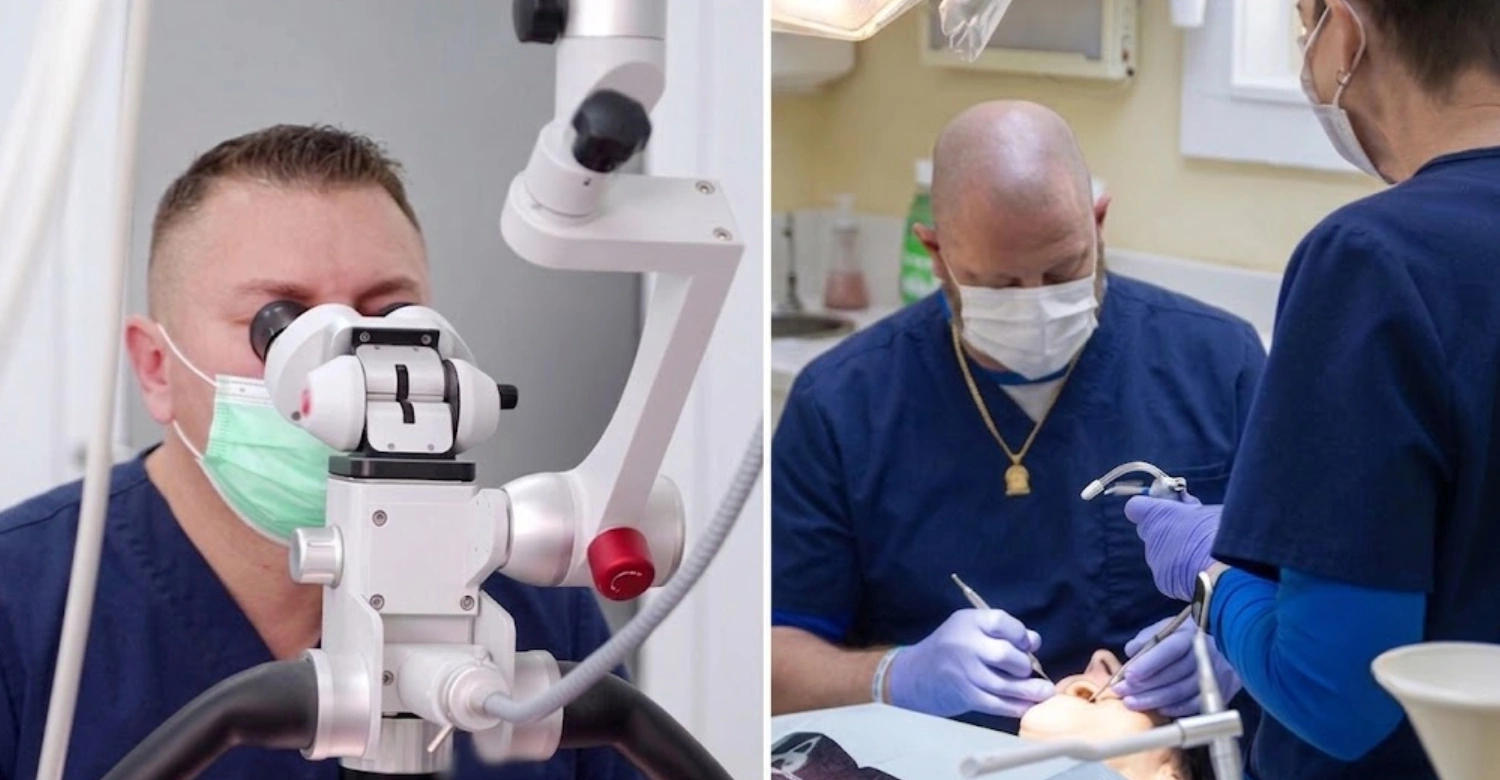
Endodontist specialists often use tools and techniques that are less common in general dental practice, such as the dental operating microscope for magnification and enhanced illumination, and Cone Beam Computed Tomography (CBCT) for 3D imaging. These tools are crucial for successfully completing complex procedures and further highlight the Main difference Between Endodontists & Dentists.
Latest Technology Used for Endodontic Treatment
Modern Endodontic Treatment benefits from advanced technologies that improve accuracy, efficiency, and patient comfort. These include cone beam computed tomography (CBCT), dental operating microscopes, nickel-titanium rotary instruments, electronic apex locators, ultrasonic irrigation systems, and digital radiography. Together, these technologies help clinicians diagnose complex conditions, clean root canals more effectively, and achieve more predictable long-term outcomes.
Why Might You Need an Endodontist Instead of a Dentist?
You might need an Endodontist instead of a general Dentist when the issue involves the tooth’s pulp or root canals, which require specialized care. Endodontists receive advanced training beyond dental school, focusing exclusively on diagnosing and treating complex root canal problems. They use microscopes, CBCT scans, and ultrasonic tools to locate hidden canals, remove infections, and increase treatment success. Choosing an Endodontist ensures the highest chance of saving your natural tooth while minimizing pain and complications.
Who Is a Good Candidate?
Patients with infected, inflamed, or damaged dental pulp are generally good candidates for Endodontic Treatment. Common reasons include deep tooth decay, cracked teeth, repeated dental procedures on the same tooth, severe trauma, or dental abscesses. A comprehensive clinical examination and diagnostic imaging help determine whether the tooth can be successfully preserved through endodontic therapy or whether another treatment option is more appropriate.
What Are the Signs You Need Root Canal Therapy?
Knowing the symptoms can help you decide when the specialized knowledge of an Endodontist is required. The most common indicators of a pulp problem include:
Severe pain upon chewing or biting.
Prolonged sensitivity to hot or cold temperatures, even after the source of the heat or cold has been removed.
Discoloration (darkening) of the tooth.
Swelling and tenderness in the surrounding gums.
These signs suggest the need for root canal therapy, and they are the initial clues that an Endodontist vs dentist consultation is necessary.
Appreciate the enduring, authentic charm of a Hollywood legend by looking at Jeff Bridges’ natural teeth
How Do Tooth Pain Symptoms Point to Endodontic Problems?
The type of pain is diagnostic. A quick, sharp response to cold often indicates a cavity or surface issue a general Dentist can handle. However, lingering pain, throbbing, or spontaneous pain that wakes you up at night points strongly to irreversible pulp damage, an issue that requires the specific expertise of an Endodontist. This type of diagnosis helps clarify How does an endodontist determine if you need a root canal? by performing specific tests on the tooth’s response to stimuli.
What Happens if Root Canal Issues Are Ignored?
Ignoring signs of pulp infection can lead to an abscess (a pocket of pus) at the root tip, which causes localized bone destruction. If left untreated, the infection can spread to other areas of the body, leading to serious systemic health issues. This potential complication underscores why the choice of an experienced professional is crucial in the Endodontist vs dentist comparison.
Alternatives to Endodontic Treatment
The primary alternative to Endodontic Treatment is tooth extraction followed by replacement with a dental implant, bridge, or removable partial denture. While these options can restore function, preserving the natural tooth is generally preferred whenever it is clinically possible. Your dentist will evaluate the condition of the tooth and discuss the most appropriate treatment based on your oral health and long-term goals.
Why Early Diagnosis Makes a Difference
Early diagnosis significantly improves the success of Endodontic Treatment by allowing infection to be treated before extensive damage develops. Detecting pulp inflammation in its early stages often simplifies treatment, reduces discomfort, and increases the likelihood of preserving healthy surrounding tissues. Prompt care can also prevent abscess formation and reduce the need for more invasive surgical procedures.
Recognizing the Signs: When to Seek Specialized Care
While a general dentist is your go-to for routine exams, certain symptoms signal that an infection has reached the inner nerve tissue, requiring the immediate attention of an endodontist. Recognizing these signs early can mean the difference between saving or losing a tooth.
You should request a specialist referral if you experience:
Lingering Temperature Sensitivity: Pain or discomfort from hot or cold foods that persists long after the stimulus is removed.
Spontaneous or Radiating Pain: Sharp, throbbing pain that strikes without warning or radiates to your jaw, ear, or temple.
Tenderness to Touch: Severe pain when chewing, biting down, or touching the affected tooth.
Swelling and Discoloration: Swelling in the gums near the painful tooth, or a noticeable darkening of the tooth itself, which indicates internal nerve damage.
When Nature Needs a Specialist: Complex cases such as highly curved root canals, calcified roots, or treating a previously failed root canal (endodontic retreatment) require a level of precision that goes beyond general dentistry. In these instances, a general dentist will partner with an endodontist to prioritize your long-term health.
Signs You May Need Endodontic Treatment
Several symptoms may indicate the need for Endodontic Treatment. Persistent tooth pain, prolonged sensitivity to heat or cold, discomfort while chewing, swelling around the gums, tooth discoloration, or recurring dental abscesses should never be ignored. Teeth that have suffered trauma or previously received unsuccessful root canal therapy may also require evaluation by an endodontic specialist. Early assessment improves treatment success and helps preserve the natural tooth.
When Should You See a Dentist First?
In almost every scenario, the general Dentist is your first point of contact. They are trained to perform a comprehensive examination, take X-rays, and assess the overall situation.
How Can Dentists Diagnose and Refer to Endodontists?
Your Dentist uses clinical examinations, X-rays, and thermal/percussion tests to diagnose the source of pain. If they detect signs of deep pulpal involvement especially in complex anatomy or in cases that look like initial treatment might fail they will not hesitate to refer you. This is the optimal collaboration, where the general practitioner acknowledges the need for a specialist. This answers the question: Why would my dentist send me to an endodontist? because they recognize that a dedicated specialist has a higher success rate for your specific condition.
What Dental Conditions Do Not Require an Endodontist?
Conditions that are not pulp-related generally do not require an Endodontist. These include routine cleanings, simple fillings, minor gum issues, and cosmetic treatments. However, if your dentist vs endodontist decision involves complex surgical tooth removal, your Dentist might refer you to an Endodontist vs oral surgeon, depending on whether the removal is related to the root tip (Endodontist) or to the tooth socket/bone (Oral Surgeon). For complex cases, advanced solutions like endodontic surgery (apicoectomy) may be recommended
Common Mistakes to Avoid
Patients can improve the success of Endodontic Treatment by avoiding several common mistakes. Delaying treatment after symptoms appear allows infection to progress and increases the risk of complications. Ignoring follow-up appointments, postponing placement of the recommended crown, chewing hard foods immediately after treatment, or relying solely on pain medication instead of professional care can all compromise healing and reduce the long-term success of the treated tooth.
Dentist vs. Endodontic Treatment
General dentists provide comprehensive oral healthcare, while Endodontic Treatment focuses specifically on diagnosing and treating diseases affecting the dental pulp and root canal system. Many general dentists perform routine root canals, but complex infections, retreatments, traumatic injuries, and surgical cases are often referred to endodontic specialists who receive advanced training and use specialized equipment.
Comparison Table
General Dentist | Endodontic Specialist |
Routine dental care | Advanced pulp and root canal care |
Fillings and crowns | Complex root canal procedures |
Preventive dentistry | Retreatment and endodontic surgery |
General diagnosis | Specialized diagnosis of tooth pain |
Routine imaging | CBCT and dental microscope technology |
Which Option Is Right for You?
A general dentist is the right choice for routine dental examinations, preventive care, and common restorative treatments. However, if you experience persistent tooth pain, a failed root canal, severe infection, or dental trauma, your dentist may recommend referral for specialized Endodontic Treatment to improve the chances of saving your natural tooth.
How Do Training and Qualifications Differ Between Endodontists and Dentists?
Both Endodontists and Dentists earn a dental degree, but their training paths diverge after graduation. An Endodontist completes an additional 2–3 years of advanced residency focused on diagnosing and treating root canal and pulp-related issues. This specialized education covers complex procedures, use of microscopes, CBCT imaging, and advanced retreatment techniques. The main difference between Endodontists & Dentists lies in this extra expertise, allowing Endodontists to handle cases that general dentists may refer out.
What Education Does a General Dentist Complete?
A general Dentist completes a four-year dental school program after earning a bachelor’s degree. This education provides a comprehensive foundation in all aspects of oral health: anatomy, periodontics (gums), prosthodontics (restorations), and endodontics (pulp care). Upon graduation, the Dentist is licensed to practice independently. While capable, the depth of experience is necessarily limited by the breadth of the curriculum.
What Additional Training Does an Endodontist Receive?
After completing dental school, an Endodontist must be accepted into a post-graduate residency program accredited by the relevant dental board (in the US, the ADA; in Turkey, the Ministry of Health). This is a focused, rigorous clinical and didactic program.
How Many Years Does It Take to Become an Endodontist?
It takes an Endodontist an additional two to three years of full-time, dedicated training beyond dental school. During this period, they perform hundreds of supervised, complex root canal treatments, surgeries, and trauma interventions. This intense focus transforms the general practitioner into an expert specialist, making the comparison of Endodontist vs dentist one of specialized expertise forged by time and clinical volume.
How Does Specialization Improve Patient Care?
The specialized training means an Endodontist has seen every complication possible, from blocked canals to fractured instruments. Their dedicated focus allows them to develop highly refined motor skills and diagnostic judgment. For a patient facing a complex issue, choosing an Endodontist means accessing this superior level of experience, often leading to a much higher Endodontist vs dentist root canal success rate, especially when comparing a general dentist vs specialist for root canal.
To preserve a natural, healthy smile like his, learn about our affordable root canal treatment in Turkey
How Do Treatments Differ Between Endodontists and Dentists?
While both Endodontists and Dentists can perform basic root canal treatments, their approach and scope of care differ greatly. General dentists handle routine procedures like cleanings, fillings, crowns, and simple root canals. Endodontists focus exclusively on complex root canal therapy, retreatments, apicoectomies, and managing severe infections or hidden canals. Their use of advanced technology such as dental microscopes, CBCT scans, and ultrasonic instruments enables more precise and successful outcomes for challenging cases.
What to Expect During the Procedure
Understanding each step of Endodontic Treatment helps reduce anxiety and allows patients to feel more confident before their appointment.
Before Treatment
Before treatment begins, your dentist or endodontist performs a thorough examination, reviews your symptoms, and takes digital X-rays or CBCT scans when necessary. Local anesthesia is administered to ensure maximum comfort throughout the procedure.
During Treatment
During Endodontic Treatment, the infected or inflamed pulp is carefully removed from inside the tooth. The root canals are cleaned, disinfected, shaped, and sealed with a biocompatible filling material to prevent future bacterial contamination.
After Treatment
After treatment, mild tenderness may occur for several days as surrounding tissues heal. Most patients return to normal daily activities within 24 hours. A permanent crown or restoration is often recommended to strengthen the treated tooth and restore full function.
What General Treatments Do Dentists Commonly Offer?
A general Dentist is highly skilled in routine and restorative care. Their treatments are aimed at preserving the structure and health of the teeth and gums. They perform procedures such as:
Placing composite or amalgam fillings.
Performing dental extractions when necessary.
Fitting and cementation of crowns and bridges.
Cosmetic procedures like bonding and teeth whitening.
While many can perform a basic Dentist root canal, particularly on front teeth, they typically do not have the volume of complex cases required to maintain peak expertise in this narrow field.
What Specialized Procedures Are Performed by Endodontists?
An Endodontist specializes in preserving the natural tooth through treatments concerning the pulp. While root canal therapy is their bread and butter, do endodontists do anything besides root canals? Yes, their scope includes:
Apicoectomy: A surgical procedure to remove the infected tip of the root and seal the canal from below.
Root Canal Retreatment: Carefully removing previous filling material to clean and reseal a failed root canal.
Pulp Capping: Procedures designed to preserve the living pulp when it has been exposed by trauma or decay.
Endodontic Microsurgery: Using highly advanced, microscopic techniques to address issues that cannot be solved with traditional non-surgical means.
When considering a complex case, the deep knowledge of an Endodontist is essential for determining How does an endodontist determine if you need a root canal? and executing the specialized treatment plan. The goal is to save the tooth, and the expertise of an Endodontist maximizes the chances of success.
How Does Modern Technology Support Endodontic Care?
Modern Endodontist practices are heavily reliant on technology. The use of dental operating microscopes, ultrasonic instruments, and flexible nickel-titanium files allows for unparalleled precision. This equipment is often the main differentiator in the Endodontist vs dentist comparison when tackling extremely fine or curved root canals. This level of technological investment is a major reason why Endodontist specialists charge higher fees but deliver exceptional results.
Common Myths About Endodontic Treatment
Many myths continue to discourage patients from seeking Endodontic Treatment. One common misconception is that root canal therapy is extremely painful, when modern anesthesia makes the procedure comparable to receiving a dental filling. Another myth suggests that tooth extraction is always a better solution, although preserving a natural tooth is usually the preferred long-term option. Some people also believe antibiotics alone can eliminate tooth infections, but infected pulp tissue generally requires professional endodontic treatment rather than medication alone.
Why Is Root Canal Retreatment Best Handled by an Endodontist?
Root canal retreatment is inherently more complex than the initial procedure because it involves navigating through obstacles like posts, fractured instruments, and calcified canals. This demanding process requires the specialist skills honed over years of focused practice. The success of a retreatment relies heavily on the expert execution of the Endodontist, making the choice between a general Dentist and an Endodontist clear in these challenging situations. If a previous root canal fails, learn about your available retreatment options
Recovery and Aftercare
Most patients recover quickly following Endodontic Treatment, with only mild tenderness lasting a few days. Taking prescribed medications as directed, maintaining excellent oral hygiene, and avoiding hard foods until the tooth is fully restored support proper healing. Regular follow-up appointments allow your dentist to monitor recovery and ensure the treated tooth remains healthy and functional for years to come.
Before and After Results
Before Endodontic Treatment, patients often experience persistent pain, sensitivity, swelling, or difficulty chewing. After successful treatment and final restoration, these symptoms usually resolve, allowing the tooth to function normally again. With proper oral hygiene, regular dental check-ups, and a well-fitted crown when indicated, many treated teeth remain healthy and functional for many years.
Evidence-Based Facts About Endodontic Treatment
Clinical research consistently demonstrates that Endodontic Treatment has a high long-term success rate when performed using modern techniques and followed by an appropriate permanent restoration. Preserving the natural tooth helps maintain normal chewing function, supports jawbone health, and often provides better long-term outcomes than extraction followed by tooth replacement. Early diagnosis and proper maintenance further increase the likelihood of successful treatment.
How Do Endodontist vs Dentist Costs Compare in Turkey?
In Turkey, both Endodontists and Dentists offer treatment at prices far lower than in Europe or the US, making dental tourism highly attractive. However, an Endodontist typically charges higher fees than a general dentist because of their specialized training, advanced technology, and complex procedures like retreatments or apicoectomies. Despite the higher cost, patients often find endodontic care in Turkey still 50–70% cheaper than in Western countries. The slight price difference is usually worth it for difficult cases where the success rate and long-term tooth preservation are priorities.
Treatment Cost
The cost of Endodontic Treatment varies depending on factors such as the tooth involved, the complexity of the case, whether retreatment is required, and the need for additional procedures like a dental crown. Molars generally cost more to treat than front teeth because of their more complex root canal anatomy. A detailed clinical examination allows your dentist to provide an accurate treatment plan and personalized cost estimate.
What Affects the Cost of Root Canal Treatments in Turkey?
The price of any treatment in Turkey is often significantly lower than in Western countries due to favorable exchange rates and lower operational costs. For root canal treatments, the price is generally determined by:
Tooth Location: Molars (multi-rooted) cost more than incisors (single-rooted).
Complexity: Retreatment or procedures involving the removal of a fractured instrument will increase the Endodontist vs dentist cost.
Technology Used: Treatment performed under a dental microscope or with CBCT guidance will cost more than a traditional approach.
How Does the Price of General Dentistry Differ From Endodontics?
A general dentistry procedure, like a simple filling or a basic crown, is naturally less expensive than an endodontic procedure. When comparing Endodontist vs Dentist cost for a simple, single-rooted root canal, the general Dentist may be cheaper. However, the fee for an Endodontist reflects the years of specialized training and the dedicated equipment they employ. For complex cases, paying the higher Endodontist fee is considered an investment in saving the tooth, which ultimately is cheaper than extraction and an implant.
Why Is Turkey a Popular Destination for Affordable Endodontics?
Turkey has become a leading destination because it offers the opportunity to receive specialized care from a highly trained Endodontist at a fraction of the cost found in their home countries. Many Turkish clinics boast state-of-the-art facilities and experienced specialists, delivering world-class results for a highly favorable Endodontist vs dentist cost. The value proposition for specialized procedures is exceptionally high.
How Does Cost Compare to Europe and the US?
The cost of seeing an Endodontist for a root canal in Turkey might be comparable to what a patient in the US or Europe would pay a general Dentist for a straightforward case, or potentially even less. This significant saving, combined with high-quality care, makes the decision to choose an Endodontist in Turkey for a complex procedure a smart financial and clinical choice.
How Long Do the Results Last?
When performed correctly and followed by a durable final restoration, Endodontic Treatment can last for decades and, in many cases, for the patient's lifetime. Long-term success depends on maintaining good oral hygiene, attending regular dental check-ups, avoiding habits such as teeth grinding without protection, and addressing any new dental problems promptly.
How Does Patient Experience Differ Between Endodontists and Dentists?
The patient experience with an Endodontist typically involves a more specialized and focused visit compared to a general Dentist. Endodontists are trained to manage patients in acute pain, using advanced anesthesia techniques and precision tools to ensure maximum comfort during complex root canal procedures. Appointments are often longer but fewer, aiming to complete treatment efficiently and reduce the need for multiple visits. In contrast, dentists provide a broader range of routine care, where visits may feel more general and preventive rather than emergency-focused. Know what to expect. Get a step-by-step breakdown of the canal procedure details
Benefits of Endodontic Treatment
The primary benefit of Endodontic Treatment is preserving your natural tooth while eliminating infection and relieving pain. Keeping the original tooth helps maintain normal bite function, protects neighboring teeth from shifting, and preserves the jawbone. Compared with extraction, successful endodontic therapy often requires fewer long-term restorative procedures and allows patients to continue using their natural teeth with confidence.
What Pain Management Techniques Are Used by Each Specialist?
A general Dentist typically uses standard local anesthesia for fillings and simple procedures. An Endodontist, frequently dealing with highly inflamed and painful teeth, is a master of localized anesthesia. They use specialized techniques to achieve profound numbness, even in the presence of acute infection, making the actual procedure virtually painless. Furthermore, in cases where patients have high anxiety, the specialist Endodontist may be more likely to offer various forms of sedation to ensure comfort throughout the procedure, especially since Do endodontists do anything besides root canals? includes complex surgeries.
How Do Recovery Times Differ After Treatment?
Recovery from routine general dentistry, such as a filling, is nearly immediate. Recovery after an endodontic treatment is also relatively quick a few days of mild soreness but the tooth itself needs protection. The final step after treatment by an Endodontist is the permanent restoration by the general Dentist. Endodontists fill a tooth after a root canal with a temporary restoration, but the permanent crown placement is crucial to prevent leakage and fracture.
What Comfort Options Do Endodontists Provide for Patients?
Beyond pain management, Endodontist practices are often designed for efficiency and minimizing chair time for complex procedures. The use of a dental microscope means the work is faster and more precise, reducing the overall time needed to complete the treatment. This focus on precision and speed significantly enhances the patient experience, particularly when comparing the time and precision of a general dentist vs specialist for root canal.
How Do Dentists Ensure Long-Term Oral Health?
After the Endodontist successfully treats the internal part of the tooth, the Dentist steps back in to complete the process. This involves placing a definitive, protective restoration, usually a crown. This long-term seal is critical. If the tooth is not properly restored, it can fracture or become re-infected, negating the specialized work of the Endodontist. Thus, the successful outcome depends on the smooth transition and cooperation between the Endodontist vs dentist.
How Do Endodontists and Dentists Work Together?
Endodontists and Dentists often collaborate to provide seamless, comprehensive care for patients. A dentist typically performs the initial diagnosis and routine treatments, referring complex root canal or retreatment cases to an endodontist for specialized care. After the endodontist completes the procedure, the patient returns to the dentist for the final restoration, such as a crown, to protect the tooth. This partnership ensures patients receive both advanced treatment and ongoing preventive care for long-term dental health.
Don’t let pain stop you. Discover effective solutions with our comprehensive root canal treatment guide
Why Do Dentists Refer Patients to Endodontists?
General dentists refer patients to an Endodontist for three primary reasons: complexity (molars, curved roots), previous treatment failure (retreatment), or trauma. They recognize that their patient’s prognosis is highest when the tooth is handled by the specialist. This is the professional courtesy and standard of care that dictates Why would my dentist send me to an endodontist? because they prioritize the patient’s best interest over performing the procedure themselves.
How Can Endodontists Support General Dentistry Treatments?
An Endodontist often serves as a consultant, helping the general Dentist determine the true vitality of a tooth before a major restorative procedure like a bridge or crown. This is part of the integrated care model, where the endodontic specialist provides the foundational diagnosis necessary for the general Dentist to proceed with complex restorative work.
How Do Team Approaches Improve Dental Outcomes?
A seamless team approach, where the Dentist accurately diagnoses and refers, the Endodontist performs the precise internal treatment, and the Dentist restores the tooth, significantly improves long-term dental outcomes. This is the model of expert integration, where the patient benefits from both the broad expertise of the general practitioner and the deep specialization of the Endodontist.
Why Is Collaboration Key for Complex Dental Cases?
For cases like retreatment, managing dental trauma, or patients with complicated medical histories, collaboration is non-negotiable. The combined expertise of an Endodontist vs dentist means all aspects of the patient’s care, from diagnosing the internal issue to planning the final external restoration, are managed by specialists in their respective fields.
Seeking specialized care? Explore our advanced and affordable endodontic services in Turkey
How Should Patients in Turkey Decide Between an Endodontist vs Dentist?
Patients in Turkey should base their choice between an Endodontist vs Dentist on the complexity of the case and the desired outcome. For routine checkups, fillings, and simple root canals, a qualified dentist is usually sufficient. However, if the tooth has a severe infection, failed root canal, hidden canals, or requires retreatment, an endodontist with advanced training and technology offers the best chance of success. Dental tourists should also consider the clinic’s equipment, specialist availability, and transparent treatment plans to ensure top-quality care.
What Factors Should You Consider Before Choosing?
The deciding factor is the complexity of your case.
Simple, Primary Root Canal (Front Tooth): A highly experienced general Dentist may suffice, often with a lower Endodontist vs dentist cost.
Molars, Retreatment, Trauma, or Undiagnosed Pain: Always opt for an Endodontist.
Required Technology: Ensure the provider whether it is an Endodontist or Dentist uses a dental microscope and CBCT for your case.
When comparing a general dentist vs specialist for root canal, the specialist’s training and focused practice offer a better guarantee of success for challenging procedures.
Risks and Possible Complications
Although Endodontic Treatment is considered highly successful, every dental procedure carries some potential risks. These may include temporary post-treatment discomfort, persistent infection, missed accessory canals, instrument separation, or the need for retreatment if bacteria re-enter the tooth. Choosing an experienced clinician and following all aftercare recommendations significantly reduces the likelihood of complications and supports long-term success.
How Do Online Reviews and Clinic Reputations Help?
In Turkey, reputation is paramount. Look for clinics that specifically highlight their endodontic specialists and their use of advanced technology. Patient reviews often mention the comfort and success rates of root canal procedures, which can be invaluable when making the choice of an Endodontist vs dentist for internal tooth issues.
Why Is Choosing the Right Clinic in Turkey Crucial?
When traveling for care, the clinic acts as your entire care network. Choosing a reputable clinic ensures you have access to both a highly skilled Endodontist for the root canal and a professional general Dentist who will immediately and properly place the final crown. This integrated approach is essential for preventing complications.
Seeking specialized care? Explore our advanced and affordable endodontic services in Turkey
How Does Patient Education Empower Better Decisions?
Understanding the Main difference Between Endodontists & Dentists empowers you to advocate for the best possible care. By knowing the factors that suggest complex anatomy or prior failure, you can confidently discuss your options and choose the specialist best equipped to save your tooth.
The choice between an Endodontist vs dentist is a pivotal moment in your dental care journey, one that should be guided by the complexity of your need and the goal of long-term success. By understanding the distinct expertise of each professional, you empower yourself to choose the best path forward, ensuring your natural tooth is saved by the most qualified hands.
Contact us today for your Free Consultation and discover how we can help restore your dental health and preserve your natural smile.
When Should You Contact Your Dentist?
You should contact your dentist immediately if you experience severe or worsening pain, persistent swelling, fever, difficulty biting, or signs of infection after Endodontic Treatment. While mild discomfort during the first few days is expected, symptoms that continue or worsen may require additional evaluation to ensure proper healing and address any underlying complications promptly.
What We Notice at Vitrin Clinic
At Vitrin Clinic, we frequently see patients who delay treatment because they assume tooth pain will disappear on its own. In many cases, temporary relief occurs because the dental pulp has lost its vitality, while the infection continues to spread silently. Our specialists focus on accurate diagnosis using advanced imaging and clinical evaluation to determine whether Endodontic Treatment is the best option for preserving the natural tooth.
Dr. Rifat Alsaman's Clinical Perspective
According to Dr. Rifat Alsaman, one of the most common misconceptions is that tooth pain must be severe before treatment becomes necessary. In reality, some teeth with advanced pulp disease cause only mild discomfort or no symptoms at all. Careful clinical examination and modern diagnostic imaging are essential for identifying hidden infections early. Dr. Alsaman emphasizes that timely Endodontic Treatment offers patients the best opportunity to preserve their natural teeth while avoiding unnecessary extractions whenever possible.
The Vitrin Clinic Edge: Advanced Technology & Global Patient Care
At Vitrin Clinic, we bridge the gap between general dentistry and advanced endodontics under one roof. Our approach combines specialized medical expertise with a patient-first environment, ensuring your natural smile is preserved comfortably and predictably.
State-of-the-Art Endodontic Technology
We continuously invest in modern clinical tools that elevate the success rate of complex root treatments. Our endodontic team utilizes:
Dental Operating Microscopes: Providing high-magnification visualization to locate hidden or auxiliary canals that standard X-rays might miss.
3D Cone-Beam CT Imaging (CBCT): Offering high-resolution, three-dimensional views of your tooth's anatomy for flawless diagnosis and treatment planning.
Rotary Instrumentation: Ensuring faster, quieter, and significantly more efficient root canal preparation, which translates to less time in the dental chair for you.
Seamless Care for International Patients
As a premier destination for dental tourism in Turkey, Vitrin Clinic provides comprehensive support for international patients seeking world-class endodontic care. We remove the stress of travel by offering end-to-end services, including multilingual support, travel and accommodation coordination, and detailed post-treatment follow-up care. Whether you need a routine filling or a complex microsurgical apicoectomy, our coordinated team ensures distance is never a barrier to a healthy, pain-free smile.
Why Patients Choose Vitrin Clinic for Endodontic Treatment
Patients choose Vitrin Clinic for Endodontic Treatment because of our commitment to accurate diagnosis, conservative tooth preservation, and personalized care. Our team utilizes advanced diagnostic imaging, modern endodontic technology, and evidence-based treatment protocols to provide predictable outcomes. Every treatment plan is tailored to the patient's individual needs, with the goal of preserving natural teeth whenever possible while ensuring a comfortable and supportive treatment experience.
Tips to Maintain Your Results
Maintaining the results of Endodontic Treatment begins with brushing twice daily using fluoride toothpaste, flossing every day, and attending routine dental examinations. Wearing a night guard if you grind your teeth, avoiding chewing hard objects such as ice, and having the recommended permanent restoration placed promptly all help protect the treated tooth and maximize its long-term success.
Final Thoughts
Endodontic Treatment is one of the most effective ways to relieve dental pain, eliminate infection, and preserve natural teeth that might otherwise be lost. Advances in technology and modern treatment techniques have made the procedure safer, more comfortable, and highly predictable. Seeking professional care at the earliest signs of tooth pain or infection significantly improves treatment outcomes and helps protect your oral health for years to come.
Reference
Endodontic Treatment is a dental procedure focused on treating problems inside the tooth, including infection, inflammation, or damage affecting the dental pulp and root canal system. It helps relieve pain, remove infection, and preserve the natural tooth when extraction might otherwise be required. The following references provide more information about endodontic treatment, root canal procedures, benefits, indications, and clinical outcomes:
FAQs
Dr. Rifat Alsaman has more than 5 years of clinical experience in dentistry and currently serves as the Head of the Medical Team at Vitrin Clinic. He is dedicated to providing exceptional patient care, overseeing treatment planning, and ensuring the highest clinical standards across the team. His expertise, attention to detail, and commitment to continuous professional development have helped countless patients achieve healthier, more confident smiles.


