Hollywood Smile
October 7, 2026
DIY Homemade Teeth Whitening Strips and Enamel Damage: Are They Safe?
 Dr. Rifat Alsaman
DIY homemade teeth whitening strips and enamel damage is a growing concern as more people try homemade teeth whitening to save money. DIY whitening strips look simple, but uncontrolled ingredients can weaken enamel and trigger sensitivity. The safest choice is professional whitening at a dental clinic, especially Vitrin Clinic.
What Are DIY Homemade Teeth Whitening Strips?
To understand DIY homemade teeth whitening strips and enamel damage, you first need to know what these strips are. Homemade whitening strips are thin films or tapes coated with kitchen ingredients or diluted bleaching agents. People apply them at home, without dental supervision, to lighten tooth stains.
What Is DIY Teeth Whitening?
DIY teeth whitening is any attempt to brighten teeth at home using self-made mixtures or unregulated products. Popular methods include fruit pastes, baking soda, charcoal, and peroxide solutions. Concerns about enamel damage from homemade whitening often start here, because these methods have no measured concentrations and no professional oversight.
How Do Homemade Teeth Whitening Methods Work?
Homemade teeth whitening works in two main ways: abrasion and chemical bleaching. Abrasive ingredients scrub away surface stains. Peroxide-based mixtures release oxygen that breaks down stain molecules inside the enamel. Both approaches can remove discoloration, but without controlled strength and timing they can also wear down or weaken the protective enamel layer.
What Ingredients Are Commonly Used in Homemade Whitening Strips?
Common ingredients in homemade whitening strips include hydrogen peroxide, baking soda, lemon juice, apple cider vinegar, activated charcoal, strawberries, and coconut oil. Some people combine several of them in one paste. The risk to enamel is highest when acidic and abrasive ingredients are mixed together in the same strip.
How Are DIY Whitening Strips Different From Professional Whitening?
DIY whitening strips rely on guesswork. Their concentration is unknown, their coverage is uneven, and they offer no gum protection. Professional whitening uses tested gels and protective barriers, with timing set by a dentist after an examination. That control is why dental clinics, particularly Vitrin Clinic, achieve brighter results with fewer side effects.
Can DIY Homemade Teeth Whitening Strips Damage Enamel?
Yes, they can. Approved products are generally safe when used correctly, but homemade teeth whitening strips damage enamel far more easily. DIY homemade teeth whitening strips and enamel damage are linked in three ways: acidic mixtures dissolve minerals, abrasive pastes wear enamel down, and strong peroxide is often left on for too long.
How Can Whitening Strips Affect Tooth Enamel?
Many people ask: can whitening strips damage enamel? Whitening agents pass through enamel to reach stains, which temporarily increases its porosity and causes slight mineral loss. When approved products are used correctly, enamel usually recovers. With homemade versions, the risk of enamel damage rises, because uncontrolled acidity and strength can cause lasting surface changes.
Do Whitening Strips Damage Enamel Permanently?
So, do whitening strips damage enamel permanently? Properly formulated strips used as directed rarely cause permanent harm. However, DIY homemade teeth whitening strips and enamel damage can become permanent when acidic ingredients erode the enamel again and again. Lost enamel does not grow back, so erosion caused by homemade mixtures cannot be reversed naturally.
Can Whitening Strips Cause Teeth Whitening Enamel Damage?
Teeth whitening enamel damage can occur when strips are misused, overused, or homemade. Signs include chalky white spots, translucent edges, rough surfaces, and increased sensitivity. When homemade strips are the cause, the problem usually comes from strong concentrations, acidic additives, or strips left on far longer than recommended.
What Happens When DIY Whitening Strips Are Used Too Frequently?
Using DIY whitening strips too often gives enamel no time to recover between sessions. Repeated exposure can lead to persistent sensitivity, gum irritation, uneven color, and a thinner, more translucent appearance. Overuse is one of the most common causes of whitening-related enamel damage that dentists see.
Clinical Note
Clinically, DIY homemade teeth whitening strips and enamel damage depend on five factors: ingredients, concentration, acidity, contact time, and frequency of use. Homemade mixtures are hard to control safely for several reasons. Measurements are imprecise, ingredients react unpredictably, pH is rarely checked, and strips do not stay evenly in place, so gums and enamel are exposed inconsistently.
.webp)
Note : All images used are for editorial and illustrative purposes only and may not originate from the original news provider or associated company.
What Are the Side Effects of DIY Whitening Strips?
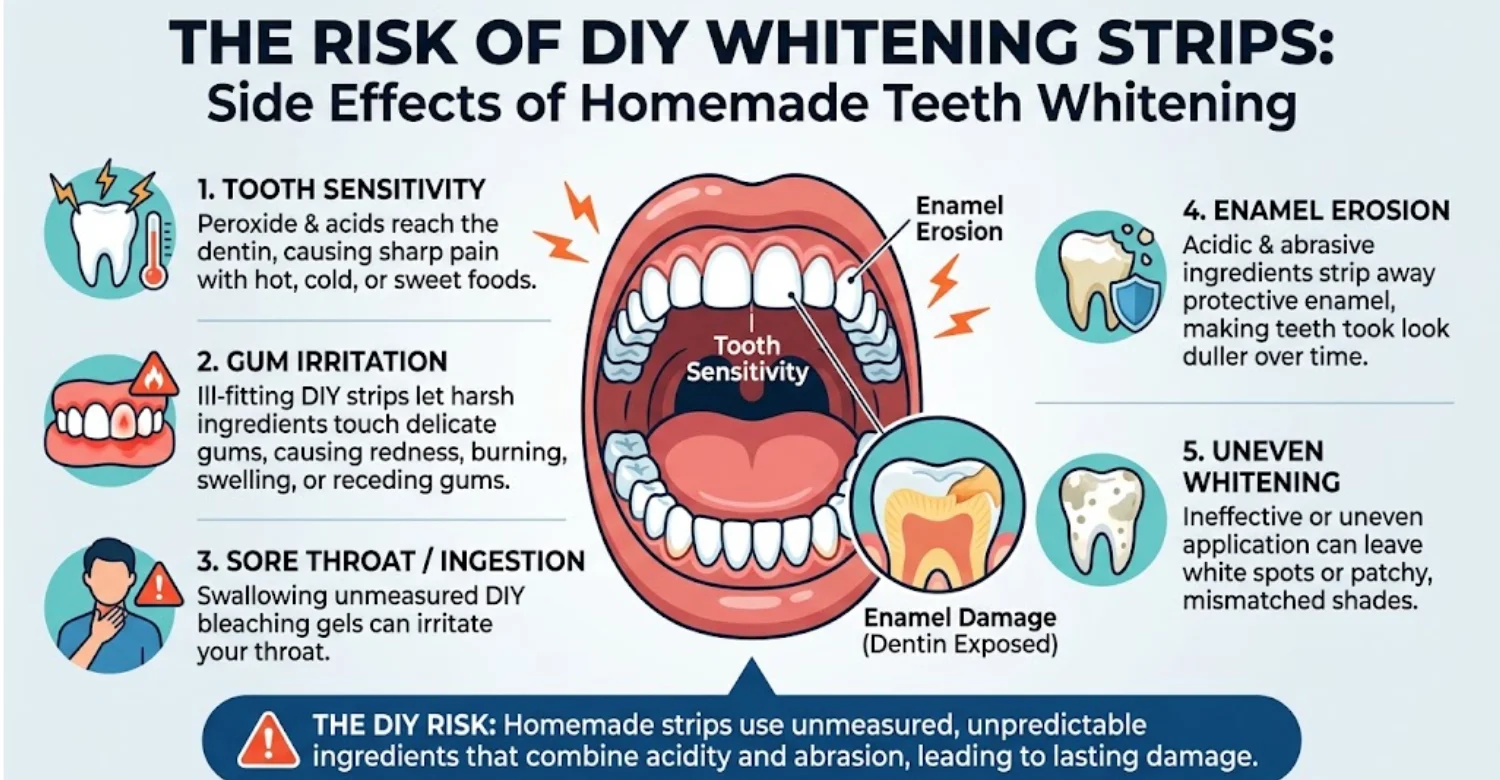
Teeth whitening strips side effects range from mild to serious, and homemade versions carry higher risks. Understanding DIY homemade teeth whitening strips and enamel damage means recognizing the warning signs early. These include sensitivity, gum burning, white spots, an uneven shade, and enamel erosion that can make teeth look duller over time.
Can DIY Whitening Strips Cause Tooth Sensitivity?
Yes. Teeth whitening sensitivity is the most frequently reported problem with DIY whitening strips. Peroxide and acids can reach the dentin beneath the enamel and irritate the tooth's nerve. This causes sharp pain with cold, hot, or sweet foods. Sensitivity caused by homemade strips may also last longer than usual.
What Are the Most Common Teeth Whitening Strips Side Effects?
The most common teeth whitening strips side effects include tooth sensitivity, gum irritation or whitening of the gums, a sore throat if gel is swallowed, uneven whitening, and temporary white spots. With homemade products, these effects are often stronger and last longer, because the ingredients are unmeasured and unpredictable.
Can DIY Whitening Irritate the Gums?
Absolutely. DIY whitening strips are rarely cut to fit the teeth, so bleaching agents and acids touch the delicate gum tissue. This can cause redness, burning, swelling, or temporary white patches. Repeated irritation may lead to gum tenderness and recession, which adds soft-tissue problems to the risks of homemade teeth whitening.
Why Can Homemade Whitening Make Teeth More Sensitive?
Homemade whitening often combines acidity with abrasion. Together they strip enamel and open tiny dentin tubules that lead to the nerve. Once these channels are exposed, temperature changes and sugar trigger pain. This is why homemade whitening often leads to lasting sensitivity rather than brief discomfort.
Tips for the Patients
To limit DIY homemade teeth whitening strips and enamel damage, follow these practical tips:
Avoid excessive or repeated whitening. Give your enamel time to recover, and never go beyond the recommended number of sessions.
Stop whitening if significant sensitivity or gum irritation develops. Pain is a warning sign, not something to push through.
Seek a professional dental assessment when symptoms persist. A dental team, such as the one at Vitrin Clinic, can identify the cause and treat it properly.
What Ingredients Can Cause Enamel Damage in Homemade Teeth Whitening?
Not all ingredients carry the same risk. The main causes of DIY homemade teeth whitening strips and enamel damage are acids, abrasives, and overly strong peroxide. Each harms enamel in a different way: acids dissolve it, abrasives scrape it, and high-strength bleach can dehydrate and weaken its structure when misused.
Can Acidic Ingredients Damage Tooth Enamel?
Yes. Enamel starts to dissolve in acidic conditions, roughly below pH 5.5. Lemon juice, vinegar, and strawberries are far more acidic than that. Homemade whitening strips hold these ingredients against the teeth, which prolongs acid contact. That makes DIY homemade teeth whitening strips and enamel damage a real and irreversible risk.
Is Baking Soda Safe for Whitening Teeth?
Baking soda is mildly abrasive and is found in many approved toothpastes, so occasional gentle use is generally considered low risk. Problems start when it is scrubbed aggressively or used daily in concentrated form. Mixing it with lemon juice or vinegar is worse still, because it adds acid erosion to abrasion and speeds up enamel wear.
Can Hydrogen Peroxide Damage Enamel When Misused?
Hydrogen peroxide is the active ingredient in most whitening products, and it works well when properly formulated. Misuse is the problem: unknown strengths, extended application times, or several applications a day. These can increase sensitivity, irritate the gums, and affect the enamel surface. Peroxide misuse is a central factor in enamel problems caused by homemade strips.
Why Does the Concentration of a Whitening Ingredient Matter?
Concentration determines how strongly an ingredient acts on enamel and gums. If it is too weak, nothing changes. If it is too strong, sensitivity, burns, and enamel changes become likely. Homemade recipes cannot measure strength accurately, which is why concentration errors are behind many cases of damage from home whitening.
Acidic DIY Whitening Ingredients
Acidic DIY teeth whitening ingredients include lemon and lime juice, apple cider vinegar, strawberries, and orange peel. They can make teeth look brighter for a short time by etching the surface, but they are actually removing enamel. Over time, repeated acid exposure leaves teeth thinner and more sensitive. They also look more yellow as the dentin shows through.
Abrasive Ingredients and Enamel Wear
Abrasive ingredients such as activated charcoal, salt, and coarse baking soda pastes scrub stains away mechanically. Overuse grinds away enamel and roughens the surface, so teeth stain faster afterward. Abrasion combined with acids multiplies the harm, a pattern dentists often see in patients who whiten at home.
Ready to transform your smile?
Talk to our team and get a personal FREE treatment plan.
DIY Teeth Whitening vs Professional Teeth Whitening: What Is Safer?
Professional whitening is clearly safer. When you weigh DIY homemade teeth whitening strips and enamel damage against professional care, professional care wins on every point. A dentist examines your teeth, selects a suitable product, protects your gums, and monitors your results. Dental clinics, especially Vitrin Clinic, offer the safest route to a brighter smile.
How Does Professional Whitening Differ From Homemade Whitening?
Professional whitening starts with an examination, a cleaning, and a shade assessment. The dentist then applies a regulated gel with gum barriers and controlled timing, or provides custom trays for home use. Homemade whitening skips all of these steps. Patients are left unaware of cavities, cracks, or thin enamel that whitening could make worse.
Why Is Ingredient Concentration Important?
In a professional setting, the concentration is matched to each patient's enamel condition, sensitivity, and goals. Higher strengths are used only under supervision, with protective measures in place. Without this control, enamel damage becomes more likely, because the strength and exposure time are simply guessed.
How Can Dentists Reduce the Risk of Sensitivity?
Dentists reduce teeth whitening sensitivity by choosing appropriate concentrations, shortening and spacing sessions, and applying desensitizing agents containing potassium nitrate or fluoride before and after whitening. They also isolate the gums and recommend a sensitivity toothpaste. At Vitrin Clinic, each plan is adjusted to the patient's comfort and enamel condition.
Which Option Is Better for Existing Enamel Damage?
If enamel is already thin or eroded, avoid DIY methods entirely. A dentist can decide whether whitening is safe for you or whether alternatives would work better, such as bonding, veneers, or remineralization therapy. For anyone already dealing with whitening-related enamel damage, a professional assessment should come first.
What Should You Do If DIY Whitening Causes Enamel Damage or Sensitivity?
If you experience DIY homemade teeth whitening strips and enamel damage, act early. Stop the treatment, switch to gentle oral care, and book a dental examination. Acting promptly helps protect your remaining enamel and relieve sensitivity. It also prevents further problems before they become harder and more costly to treat.
Should You Stop Using Whitening Strips?
Yes. Stop using whitening strips immediately if you notice pain, gum burning, white patches, or rough enamel. If you continue despite these symptoms, temporary sensitivity can turn into lasting damage. Let your teeth rest, and do not restart any whitening until a dentist has examined your teeth and approved it.
How Can Tooth Sensitivity Be Managed?
Teeth whitening sensitivity can often be managed with a toothpaste containing potassium nitrate or stannous fluoride, a soft-bristled brush, and lukewarm drinks. Avoid acidic foods and beverages while your teeth recover. If discomfort persists, a dentist can apply a professional fluoride varnish or desensitizing agents for faster, longer-lasting relief.
When Should You See a Dentist?
See a dentist if sensitivity lasts more than a few days, the pain is severe, your gums stay irritated, or you notice white spots, translucency, or rough surfaces on your teeth. These signs suggest that the enamel damage may have progressed and needs professional evaluation and treatment.
Can Damaged Enamel Repair Itself?
Enamel cannot grow back once it is lost. Early mineral loss, however, can be partly strengthened through remineralization, which uses fluoride, calcium, and phosphate from saliva and dental products. Deeper erosion or wear needs professional treatment, such as bonding or veneers, to restore both protection and appearance.
Clinical Note
Enamel is not living tissue, so it cannot regenerate the way skin or bone does. When patients present with enamel damage after homemade whitening, dentists first examine the teeth to find the source of the sensitivity. It may come from whitening, enamel wear, exposed dentin, decay, cracks, or gum recession. Treatment is then chosen based on the actual cause.
How Can You Whiten Your Teeth Without Damaging Enamel?
You can get a brighter smile without harming your teeth by choosing safe, evidence-based methods. Avoiding DIY homemade teeth whitening strips and enamel damage starts with approved products, careful instructions, good oral hygiene, and professional guidance. The safest and most effective option is still whitening at a dental clinic like Vitrin Clinic.
Follow Evidence-Based Whitening Instructions
Use only tested whitening products, and follow their instructions on application time, frequency, and treatment length. Evidence-based products have known concentrations and safety data. Avoid internet recipes that promise fast results. They rarely take enamel health into account and often cause sensitivity or gum irritation.
Avoid Overusing Whitening Products
More whitening does not mean whiter teeth. Overuse causes sensitivity, gum irritation, and a translucent, bluish look at the edges of the teeth. Space your treatments as directed, and avoid using strips, whitening toothpastes, and rinses all at once. Moderation is one of the simplest ways to prevent teeth whitening enamel damage.
Maintain Good Oral Hygiene
Brush twice a day with fluoride toothpaste, floss daily, and get regular professional cleanings. Good hygiene removes surface stains naturally, keeps enamel strong, and helps whitening results last longer. Cutting back on coffee, tea, red wine, and tobacco also reduces new staining and the need to whiten again.
Address Existing Dental Problems Before Whitening
Treat cavities, cracked teeth, worn enamel, and gum disease before whitening. Bleaching agents can enter decayed or cracked areas and cause severe pain. Fixing these problems first prevents complications and gives more even whitening results. That is why a dental check-up should always come before any whitening treatment.
Choose Professional Guidance When Necessary
Professional guidance is essential if you have sensitive teeth, existing enamel wear, restorations, or uneven discoloration. A dentist can recommend the most suitable method and help you avoid the risks of homemade whitening. Vitrin Clinic provides personalized whitening plans built around each patient's dental health.
Tips for the Patients
Use whitening products according to their instructions. Never extend the application time or the number of sessions.
Do not combine multiple whitening methods. Stacking strips, pastes, and rinses multiplies the risk to your enamel.
Avoid acidic and highly abrasive homemade mixtures. Lemon, vinegar, and charcoal pastes erode and wear enamel.
Have persistent sensitivity evaluated before continuing whitening. A dental team, such as the one at Vitrin Clinic, can find the cause first.
How Can Vitrin Clinic Help With Safe Teeth Whitening?
For patients worried about DIY homemade teeth whitening strips and enamel damage, Vitrin Clinic offers a safe, professional alternative. Every treatment begins with a full assessment and follows a plan tailored to your enamel, your sensitivity level, and the shade you want. The result is a visibly brighter smile, achieved comfortably.
.webp)
.webp)
.jpg)
Why Choose Vitrin Clinic for Professional Teeth Whitening?
Vitrin Clinic combines cosmetic dental expertise with a careful, patient-centered approach. Instead of a one-size-fits-all treatment, the team assesses each smile, protects gums and enamel during whitening, and guides you through aftercare. Choosing a dental clinic, and Vitrin Clinic in particular, is the most reliable way to brighten your teeth safely.
How Does Vitrin Clinic Evaluate Your Teeth Before Whitening?
Before whitening, Vitrin Clinic examines your teeth and gums. The team checks for cavities, cracks, enamel wear, and existing restorations, and records your current shade. Any problems are treated first. This assessment identifies the right whitening method and concentration, which reduces sensitivity and gives predictable, even results.
How Can Vitrin Clinic Help Reduce Whitening Sensitivity?
Vitrin Clinic reduces teeth whitening sensitivity by choosing suitable concentrations, isolating the gums, controlling contact time, and using desensitizing treatments before and after whitening. Patients also receive aftercare advice, such as which sensitivity toothpaste to use and which foods to avoid. This keeps whitening comfortable from the first session to the final result.
What Does Vitrin Clinic's Medical Team Recommend About DIY Teeth Whitening?
The Head of the Medical Team at Vitrin Clinic, a cosmetic dentist, advises against uncontrolled DIY teeth whitening. Unknown concentrations, acidic ingredients, and excessive use can increase sensitivity and enamel-related problems. Instead, Vitrin Clinic offers a safer, individualized approach, with every whitening plan matched to the patient's teeth and goals.
What We Notice Clinically
At Vitrin Clinic, we regularly see patients affected by DIY homemade teeth whitening strips and enamel damage. Common findings include eroded tooth edges, chalky spots, gum irritation, and persistent sensitivity after excessive whitening. Our Head of the Medical Team, a cosmetic dentist, notes that uncontrolled home methods often cause problems that later need restorative care.
Resource:
https://pmc.ncbi.nlm.nih.gov/articles/PMC10024105/
https://impressions.manipal.edu/open-access-archive/9775/
https://operative-dentistry.kglmeridian.com/view/journals/odnt/37/5/article-p518.xml
FAQs
Dr. Rifat Alsaman has more than 5 years of clinical experience in dentistry and currently serves as the Head of the Medical Team at Vitrin Clinic. He is dedicated to providing exceptional patient care, overseeing treatment planning, and ensuring the highest clinical standards across the team. His expertise, attention to detail, and commitment to continuous professional development have helped countless patients achieve healthier, more confident smiles.


