
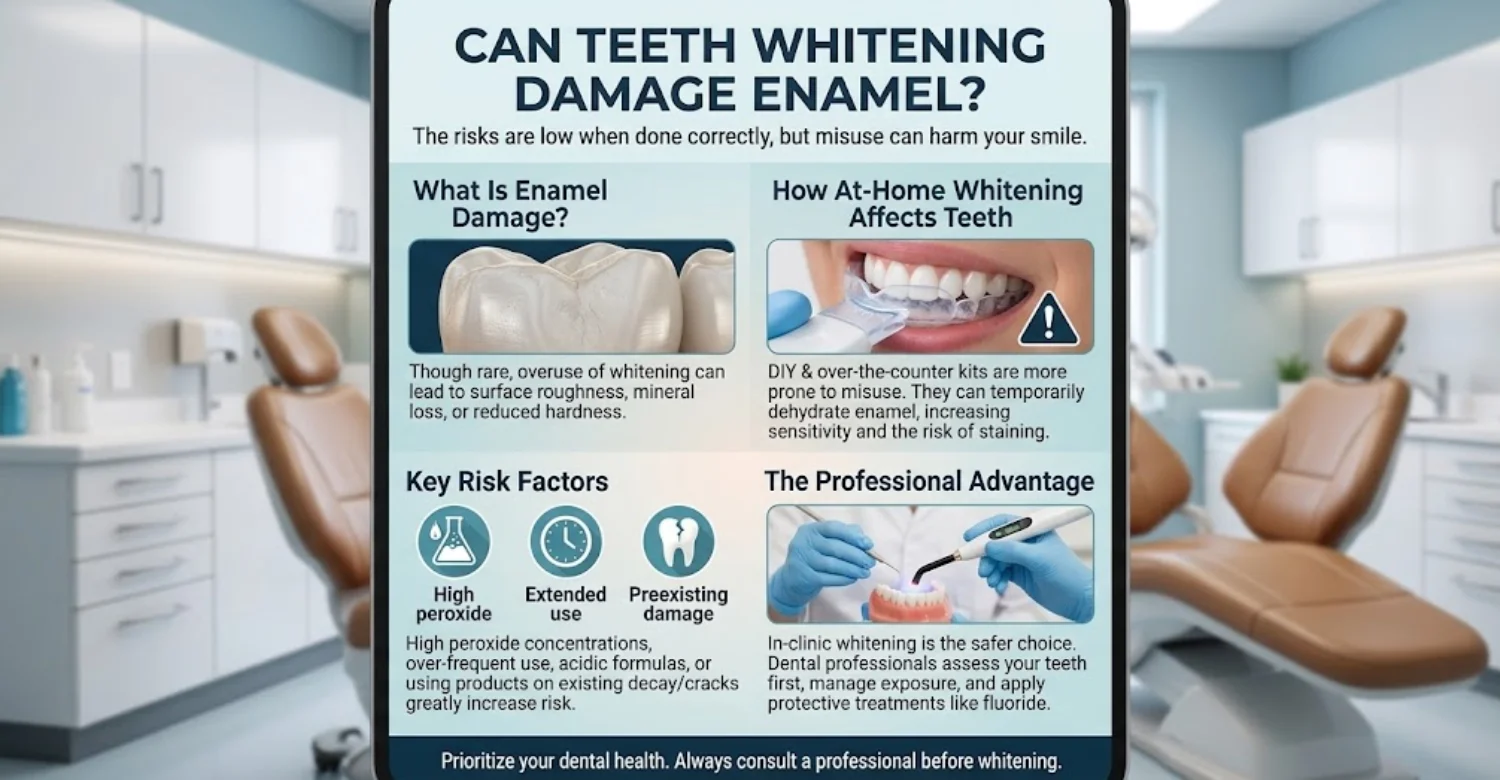
Does at home teeth whitening damage enamel? When used as directed, most at-home products do not cause lasting enamel damage. However, overuse or whitening over dental problems can increase sensitivity and irritation. That is why in-clinic whitening is usually the better choice, especially at Vitrin Clinic, where every step is professionally controlled.
What Is At Home Teeth Whitening and How Does It Work?
At-home teeth whitening uses peroxide-based products to lighten tooth color without a dental visit. Before starting, many people ask: does at home teeth whitening damage enamel? It depends on product strength and how carefully you use it. In-clinic whitening, especially at Vitrin Clinic, removes this guesswork with professional supervision.
What Is At Home Teeth Whitening?
At-home whitening refers to products you apply yourself, such as strips, gels, trays, pens, and toothpastes, usually containing hydrogen or carbamide peroxide. They are convenient and affordable, but they lack professional monitoring. In-clinic whitening, particularly at Vitrin Clinic, offers more predictable results with better protection for your teeth and gums.
How Do Whitening Strips and Home Whitening Products Work?
Strips and gels hold a peroxide agent against the teeth for a set time, releasing oxygen molecules that break down stains. If you are worried about your enamel during this process, correct contact times limit exposure. At Vitrin Clinic, in-clinic whitening controls exposure precisely for safer results.
How Whitening Agents Affect Tooth Color
Peroxide breaks large pigmented molecules inside the tooth into smaller, less visible ones, lightening the color without removing tooth structure. Results depend on concentration, contact time, and your natural shade. In-clinic whitening is generally better than at-home use because Vitrin Clinic dentists adjust these factors to suit your teeth.
The Difference Between Surface Stains and Deeper Discoloration
Surface stains from coffee, tea, and tobacco usually respond well to whitening. Deeper discoloration from aging, trauma, medications, or fluoride responds less predictably, and restorations do not whiten at all. In-clinic whitening at Vitrin Clinic is the better option here, since the team identifies your stain type and chooses the right treatment.
Clinical Note
Whitening does not automatically mean enamel damage. With correct use, effects on healthy enamel are minimal. Excessive or inappropriate use, however, can increase sensitivity and gum irritation. In-clinic whitening, especially at Vitrin Clinic, is safer because treatment is never excessive or unsupervised.
Does At Home Teeth Whitening Damage Enamel?
Can teeth whitening damage enamel? Properly used products rarely cause permanent harm. Still, does at home teeth whitening damage enamel when misused? It can, especially with overuse or weakened teeth. This is why in-clinic whitening is better than at-home whitening, with Vitrin Clinic offering careful, professionally managed treatment.
How Common Is Enamel Damage From Whitening?
Serious enamel damage is uncommon when products are used as directed, though peroxide may cause minor, usually temporary, surface mineral loss. The risk rises with high concentrations, long exposure, acidic products, or repeated courses. In-clinic whitening at Vitrin Clinic is the better choice because dentists control every one of these factors.
What Is Teeth Whitening Enamel Damage?
Teeth whitening enamel damage means changes to the tooth's outer layer, such as roughness, mineral loss, or reduced hardness. Do at-home products cause this kind of damage? Rarely, and usually through misuse. In-clinic whitening, especially at Vitrin Clinic, lowers this risk further through professional monitoring.
How At Home Whitening May Affect Enamel
At-home whitening may temporarily dehydrate enamel, making teeth more sensitive and prone to staining for a short time. Acidic products can soften enamel further. These effects are usually mild and reversible. In-clinic whitening at Vitrin Clinic is better because the team can apply protective treatments, such as fluoride, alongside whitening.
When Does At Home Teeth Whitening Damage Enamel More Easily?
The risk rises with high peroxide concentrations, extended wear, frequent whitening, acidic formulas, and combining products. Thin enamel, cracks, decay, or gum recession also matter. Considering these helps you judge your own level of risk. In-clinic whitening at Vitrin Clinic is better because these factors are checked first.
Tips for the Patients
Following simple precautions lowers the risk considerably, though in-clinic whitening at Vitrin Clinic remains the better, safer option. If you whiten at home:
Follow the product instructions carefully.
Do not use whitening products more frequently than recommended.
Avoid combining several whitening products without professional advice.
Stop whitening if significant sensitivity or irritation develops.
Do Whitening Strips Damage Enamel?
Do whitening strips damage enamel? Strips are popular, and when used as directed they are considered low risk. As with the broader question, does at home teeth whitening damage enamel, the outcome depends on strength, frequency, and tooth health. In-clinic whitening, especially at Vitrin Clinic, is better than strips for safety and results.
Do Whitening Strips Damage Teeth?
Do whitening strips damage teeth? On healthy teeth, correct use rarely causes lasting harm. Problems come from long wear, frequent use, or applying strips over cavities, cracks, or exposed roots. In-clinic whitening at Vitrin Clinic is better because these problems are identified and treated before whitening starts.
Are Whitening Strips Harmful to Enamel?
Strips have relatively low peroxide levels and are generally safe for healthy enamel when used as directed, though overuse may cause temporary softening or roughness. So, do strips harm enamel when used correctly? Usually not, but in-clinic whitening at Vitrin Clinic offers more protection.
Are Whitening Strips Safe?
Are whitening strips safe? For most healthy adults, yes, when used as labeled. They may not suit people with decay, gum disease, sensitivity, or many restorations. Pregnant women and young teens should seek advice first. In-clinic whitening at Vitrin Clinic is a better, more tailored option.
How Whitening Strips May Affect Tooth Sensitivity
Strips can cause teeth whitening sensitivity as peroxide briefly irritates the tooth's nerve. It usually fades within days, and shorter wear or a sensitivity toothpaste helps. In-clinic whitening is better here too: at Vitrin Clinic, the team uses desensitizing measures to keep treatment comfortable.
Clinical Note
Temporary sensitivity and permanent enamel damage are different. Sensitivity is common and reversible, while permanent damage is rare and linked to misuse. When judging whether whitening has harmed your teeth, remember that discomfort alone is not damage. Still, in-clinic whitening at Vitrin Clinic is better for minimizing both.
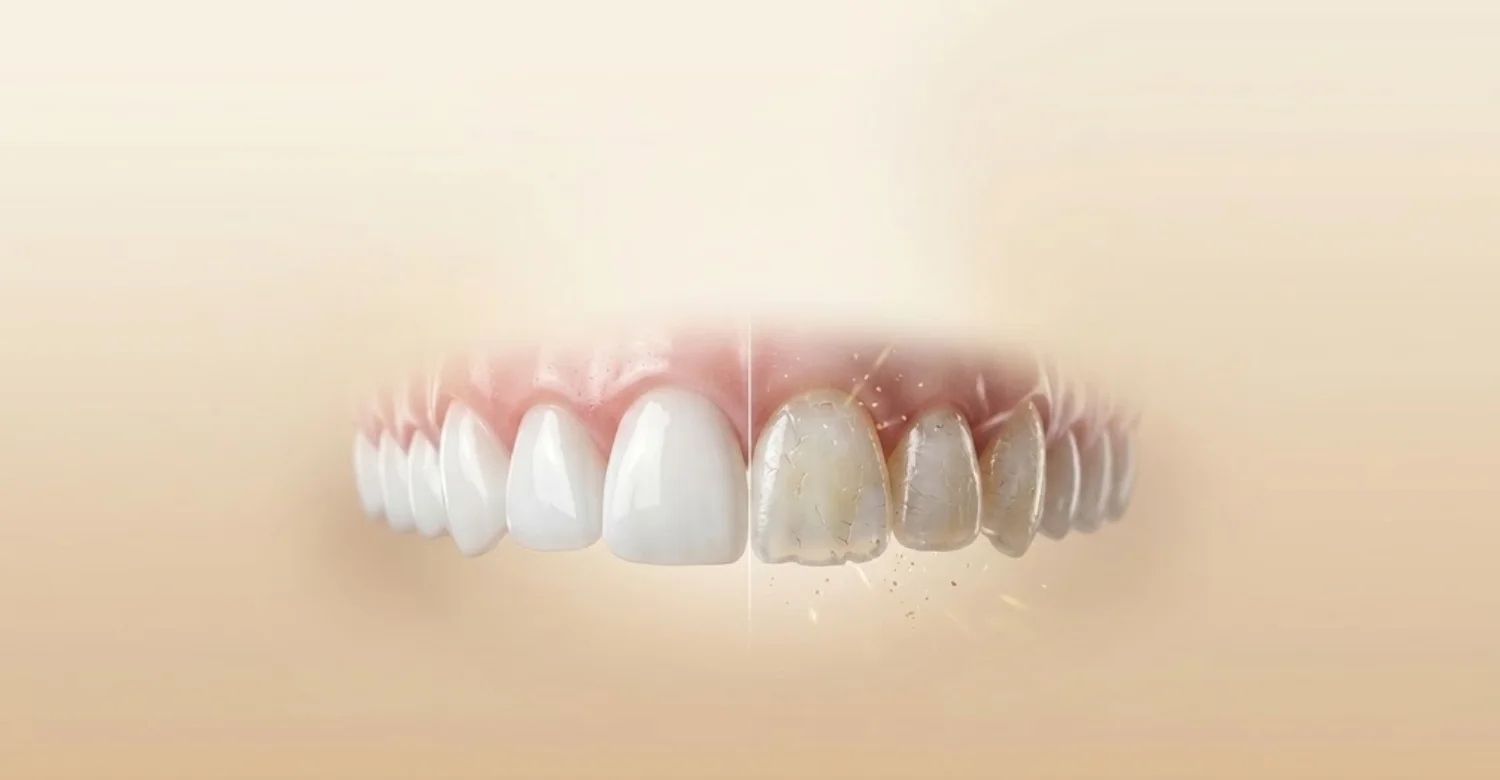
Note - All images used are for editorial and illustrative purposes only and may not originate from the original news provider or associated company.
What Are the Side Effects of At Home Teeth Whitening?
At home teeth whitening side effects are usually mild and temporary, mainly sensitivity and gum irritation. Many people researching does at home teeth whitening damage enamel are actually experiencing these effects. In-clinic whitening is better at preventing them, especially at Vitrin Clinic, where the gums are shielded and sessions are monitored.
At Home Teeth Whitening Side Effects
Common at home teeth whitening side effects include sensitivity, gum irritation, white spots, and uneven results. Swallowing gel may upset the throat or stomach. With correct use, the enamel itself is usually unaffected, but in-clinic whitening at Vitrin Clinic causes fewer problems.
Whitening Strips Side Effects
Whitening strips side effects include sensitivity, gum irritation where strips touch soft tissue, and blotchy whitening, especially with a poor fit. Careful trimming and correct wear times help. In-clinic whitening at Vitrin Clinic is better because the gel is applied precisely and the gums are protected.
Teeth Whitening Sensitivity
Teeth whitening sensitivity is the most common complaint. It feels like brief twinges with hot or cold foods, as peroxide irritates the nerve. Does sensitivity mean your enamel is damaged? Not necessarily. In-clinic whitening at Vitrin Clinic helps manage sensitivity better than at-home products.
Gum Irritation
Gum irritation happens when gel touches soft tissue, causing redness, burning, or white patches, especially with poorly fitted strips or trays. It usually resolves within days. In-clinic whitening is better because Vitrin Clinic places a protective barrier over the gums before applying any whitening gel.
Tooth Discomfort After Whitening
Some people feel a dull ache after whitening, which usually settles within 24 to 48 hours. Persistent pain may signal a crack or cavity that needs evaluation. In-clinic whitening at Vitrin Clinic is the better route, since these problems are found beforehand, reducing the chance of pain afterward.
Tips for the Patients
Most at-home side effects are manageable, but choosing in-clinic whitening at Vitrin Clinic is the best way to avoid them. If you whiten at home:
Use products according to their directions.
Avoid whitening immediately before consuming highly acidic foods and drinks.
Use a toothpaste formulated for sensitive teeth if appropriate.
Consult a dental professional if sensitivity persists.
Ready to transform your smile?
Talk to our team and get a personal FREE treatment plan.
What Are the Risks of At Home Teeth Whitening?
At home teeth whitening risks are mostly linked to how products are used. Overuse, frequent application, and untreated dental problems raise the chance of complications. Anyone asking does at home teeth whitening damage enamel should know these risks, and that in-clinic whitening, especially at Vitrin Clinic, is the better alternative.
At Home Teeth Whitening Risks
The main at home teeth whitening risks include prolonged sensitivity, gum irritation, enamel softening, uneven color, and mismatched restorations. Whitening may also mask decay or gum disease, and online products may be unreliable. In-clinic whitening at Vitrin Clinic is better because it uses trusted materials after a full examination.
Overusing Whitening Products
Overuse means wearing products too long, adding extra gel, or chasing an unnatural shade. With overuse, the risk of enamel softening, sensitivity, or a chalky look increases. In-clinic whitening at Vitrin Clinic prevents overuse because dentists decide when the results are enough.
Using Whitening Products Too Frequently
Repeating courses too often leaves enamel little time to recover, keeping teeth sensitive and gums irritated. Most people need only occasional touch-ups. In-clinic whitening is better than frequent at-home use, and Vitrin Clinic can set a safe touch-up schedule suited to your teeth.
Whitening Products and Existing Dental Problems
Whitening over cavities, cracks, worn enamel, exposed roots, or leaking fillings lets peroxide reach sensitive tissue, causing pain. In these cases, both the enamel and the tooth beneath are more vulnerable. In-clinic whitening at Vitrin Clinic is better because these problems are treated first.
Clinical Note
Whitening cannot correct every type of discoloration. Stains from trauma, medications, fluorosis, or decay may need other treatments, and restorations will not whiten. Treating underlying problems first is often necessary. This is another reason in-clinic whitening at Vitrin Clinic is better than at-home whitening: diagnosis comes before treatment.
How Can You Reduce the Risk of Enamel Damage During At Home Whitening?
You can reduce enamel risks by choosing suitable products, following directions, and spacing out treatments. If you keep asking, does at home teeth whitening damage enamel, these habits help. However, the most effective protection is choosing in-clinic whitening, especially at Vitrin Clinic, over unsupervised at-home products.
Choose Appropriate Whitening Products
Choose reputable products with clear ingredients and regulated peroxide levels, and avoid acidic formulas and unverified online items. The right product generally lowers the risk to your enamel. Even so, in-clinic whitening at Vitrin Clinic is better, using professional-grade materials applied safely.
Follow Recommended Application Times
Follow the stated application time, and never sleep in strips unless they are designed for overnight use. Longer wear increases peroxide exposure without guaranteeing whiter teeth. In-clinic whitening at Vitrin Clinic is better because timing is managed by professionals, not left to guesswork.
Avoid Excessive Whitening
Avoid whitening beyond a natural shade, as pushing further brings more side effects than results. Excessive whitening may also harm your enamel. In-clinic whitening at Vitrin Clinic is better because dentists help you reach a natural, healthy shade safely.
Manage Teeth Whitening Sensitivity
Use a toothpaste with potassium nitrate or stannous fluoride before and during treatment, shorten sessions, and avoid very hot, cold, or acidic foods. Stop if sensitivity becomes significant. In-clinic whitening at Vitrin Clinic is better at managing teeth whitening sensitivity with professional desensitizing care.
Maintain Good Oral Hygiene
Brush twice daily with fluoride toothpaste, floss daily, attend regular checkups, and limit coffee, tea, and red wine to maintain results. Good hygiene supports healthy enamel. Combined with in-clinic whitening at Vitrin Clinic, it gives better, longer-lasting results than at-home whitening alone.
Clinical Note
Responsible use and professional guidance reduce unnecessary risks. The Vitrin Clinic dental team favors controlled whitening to protect enamel. Under such supervision, the risk to enamel is much lower, which is why in-clinic whitening at Vitrin Clinic is the better choice.
When Should You Avoid At Home Teeth Whitening?
At-home whitening is not suitable for everyone. Sensitivity, decay, worn enamel, gum disease, and severe discoloration are all reasons to pause. For these people, does at home teeth whitening damage enamel more easily? Often yes. In-clinic whitening at Vitrin Clinic is a better, safer choice for them.
Existing Tooth Sensitivity
Whitening usually intensifies existing sensitivity, which may signal exposed dentin, receding gums, or worn enamel. Have the cause identified first. In-clinic whitening is better than at-home whitening for sensitive teeth, as Vitrin Clinic adjusts the treatment and applies desensitizing care.
Cavities and Untreated Tooth Decay
Whitening over cavities lets peroxide reach the pulp, causing sharp pain. The risk to enamel and deeper layers is real here, so cavities must be filled first. In-clinic whitening at Vitrin Clinic is better because decay is detected and treated beforehand.
Damaged or Worn Enamel
Thin or cracked enamel lets peroxide reach the dentin quickly, causing sensitivity, and worn enamel can look yellow in ways whitening cannot fix. In-clinic whitening at Vitrin Clinic is better than at-home options here, as the team assesses whether whitening or another treatment suits your teeth.
Gum Irritation or Gum Disease
Swollen, bleeding, or receding gums react strongly to whitening gel, and exposed roots are very sensitive. Gum disease should be treated first. In-clinic whitening at Vitrin Clinic is better because the gums are examined, treated, and protected before any whitening begins.
Severe Tooth Discoloration
Severe stains from trauma, antibiotics, fluorosis, or a dead tooth rarely respond to at-home products, and stronger use only raises the risks. Aggressive use can also harm enamel. In-clinic whitening at Vitrin Clinic, or bonding, is the better option.
Tips for the Patients
Whitening should brighten a healthy smile, not hide problems that need treatment. In-clinic whitening at Vitrin Clinic is the better path, but if you whiten at home:
Have concerning symptoms evaluated before starting a whitening routine.
Do not use whitening products to mask pain or untreated dental problems.
Seek professional advice if whitening repeatedly causes significant sensitivity.
How Can Vitrin Clinic Help With Safe Teeth Whitening?
Vitrin Clinic helps patients whiten safely through careful assessment and professional treatment, and in-clinic whitening is better than unsupervised home products. If you are unsure, does at home teeth whitening damage enamel in your case, the Vitrin Clinic team can examine your teeth and recommend the safest approach.
.jpg)
.jpg)
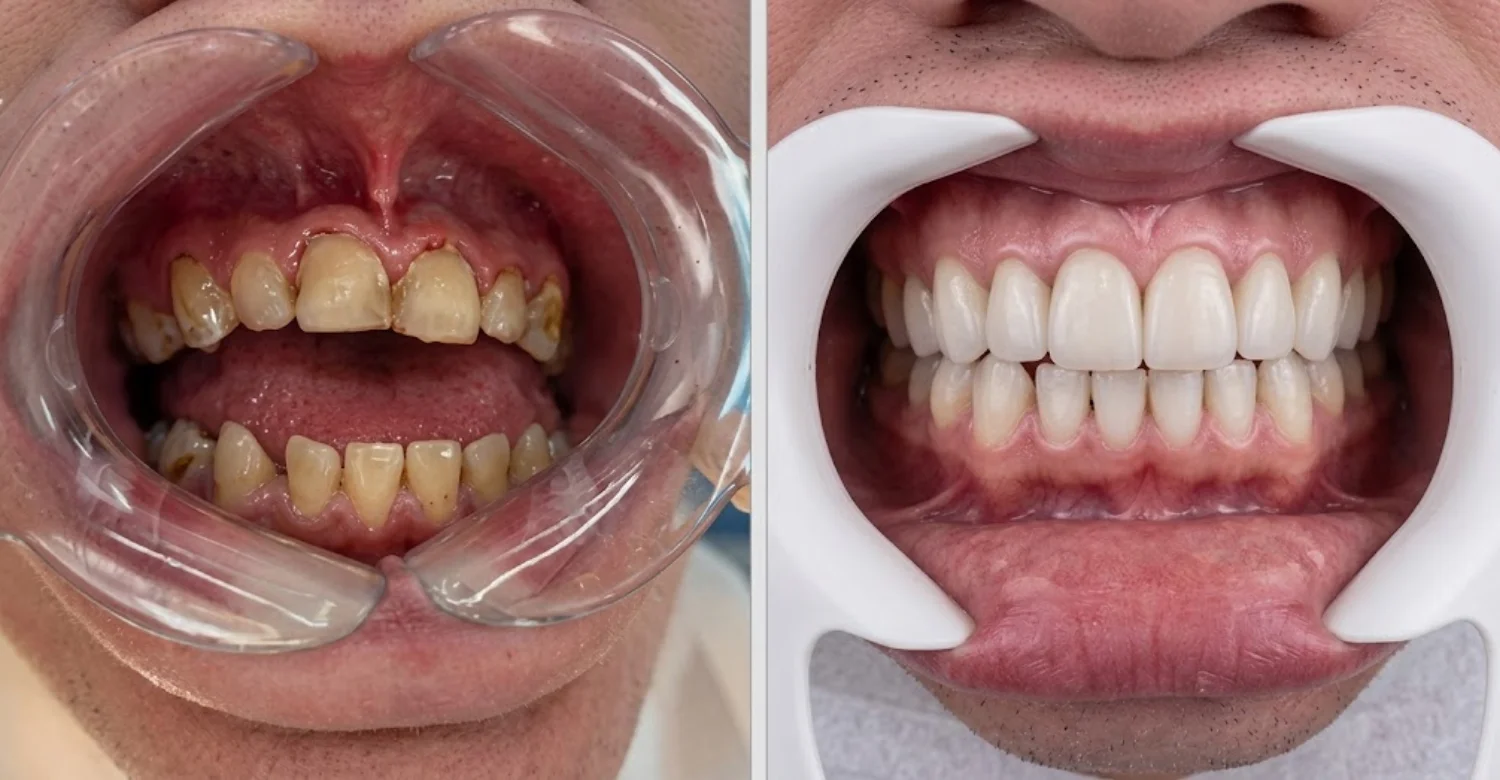
Professional Assessment Before Teeth Whitening
Before whitening, the Vitrin Clinic team examines your teeth and gums for decay, cracks, worn enamel, gum disease, and restorations, and identifies your stain type. This assessment is a key reason in-clinic whitening is better than at-home whitening: treatment is planned around your real needs.
Identifying Enamel and Sensitivity Concerns
The team evaluates enamel thickness, erosion, gum recession, and your sensitivity history. This evaluation shows how vulnerable your enamel is to whitening. At-home products cannot do this, which is why in-clinic whitening at Vitrin Clinic is the better, safer option.
Choosing an Appropriate Whitening Approach
In-clinic whitening is often the better option, especially at Vitrin Clinic. There, the gums are protected, concentrations are carefully controlled, and results are monitored throughout treatment. When at-home whitening suits you, the team can provide a supervised system with custom-fitted trays. Stubborn stains may need alternatives such as bonding or veneers.
Professional Guidance for Long-Term Whitening
Vitrin Clinic guides you on safe touch-ups, stain prevention, and oral hygiene, while regular checkups monitor your enamel and gum health. This ongoing care makes in-clinic whitening better than at-home whitening, helping you keep your results longer without overuse.
Tips for the Patients
In-clinic whitening at Vitrin Clinic gives the best results when you share your full history with the team:
Discuss your whitening history with the Vitrin Clinic dental team.
Mention any previous sensitivity or enamel concerns.
Follow the individualized whitening instructions provided by the dental team.
Resource:
https://pubmed.ncbi.nlm.nih.gov/30562408/
https://www.ada.org/resources/ada-library/oral-health-topics/whitening
FAQs

Dr. Rifat Alsaman has more than 5 years of clinical experience in dentistry and currently serves as the Head of the Medical Team at Vitrin Clinic. He is dedicated to providing exceptional patient care, overseeing treatment planning, and ensuring the highest clinical standards across the team. His expertise, attention to detail, and commitment to continuous professional development have helped countless patients achieve healthier, more confident smiles.


