Endodontics
June 3, 2026
What Are Endodontic Tools and How Are They Used in Root Canal Treatment?
 Dr. Rifat Alsaman
Endodontic tools are specialized instruments used by dentists to perform root canal treatments with precision and efficiency. Unlike standard dental instruments, these tools are designed to access the tooth's pulp chamber and remove infected tissue. They also shape canals and seal them to prevent further infection. Using high-quality endodontic tools is crucial to ensure patient comfort, reduce procedure time, and achieve successful outcomes. Modern endodontic tools combine manual and electronic innovations. These include rotary files, electronic apex locators, ultrasonic units, and specialized obturators. Clinics such as Vitrin Clinic invest in these advanced tools to deliver high-standard care. Understanding the types and applications of endodontic tools helps both dentists and patients. It shows why these instruments matter for long-term dental health.
What Are Endodontic Tools?
Endodontic tools are instruments specifically designed for performing procedures within the tooth's pulp system. These tools help dentists clean, shape, and fill the intricate canals of a tooth during a root canal procedure. Standard dental instruments cannot reach the narrow and curved canals efficiently. This makes endodontic tools essential. They include manual instruments, like hand files and reamers. They also include electronic or rotary devices that improve precision and reduce treatment time. These tools are not only crucial for successful outcomes; they also enhance patient comfort. Investing in quality endodontic tools ensures that procedures are performed safely. This reduces risks of complications like missed canals or reinfections.
Types of Endodontic Tools
Endodontic tools come in various forms, each designed to address specific aspects of root canal treatment. They can be categorized as hand instruments, rotary instruments, irrigation tools, obturators, and advanced electronic devices. Hand files allow precise manual cleaning of canals, while rotary files improve speed and consistency. Irrigation tools ensure proper disinfection. Obturators and pluggers aid in sealing the canals after cleaning. Choosing the right combination of these tools is essential for an effective procedure. Modern dentistry emphasizes combining traditional manual skills with advanced tools for optimal treatment outcomes. High-quality endodontic tools improve procedural accuracy and patient satisfaction. They also reduce post-treatment complications.
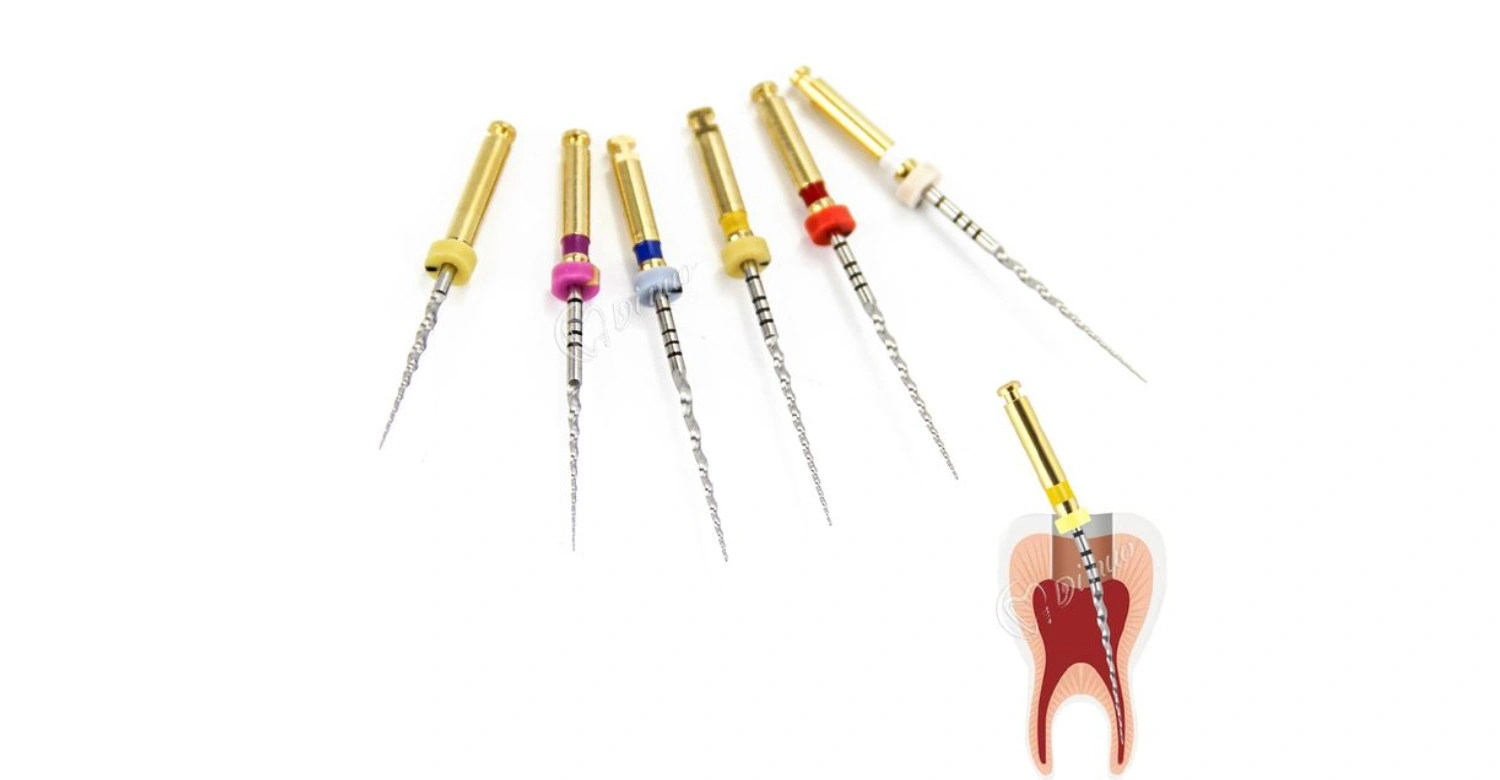
Hand Files and Reamers
Hand files and reamers are the most fundamental endodontic tools. Dentists use them to clean and shape the canals of a tooth manually. These instruments come in different sizes and tapers, allowing dentists to navigate the complex anatomy of root canals. Hand files are typically made from stainless steel or nickel-titanium, offering flexibility and durability. They are used with a push-pull or rotary motion. This action removes infected tissue, smooths canal walls, and prepares the canal for filling. Despite the rise of rotary instruments, hand files remain essential, particularly in challenging cases with curved or narrow canals. Proper use of these tools ensures complete debridement, reducing the risk of reinfection and improving long-term outcomes.
Rotary Files
Rotary files are mechanical endodontic tools that rotate at high speeds. They clean and shape root canals more efficiently than manual files. These instruments are usually made from nickel-titanium alloys, which provide superior flexibility and strength. Rotary files reduce procedural time, minimize operator fatigue, and provide consistent canal shaping. They are often used in combination with hand files to ensure complete debridement. Rotary files can also reach areas that are difficult for manual instruments, improving overall treatment quality. Dentists must select the appropriate size and taper of rotary files based on the canal anatomy. High-quality rotary files, integrated with modern endodontic equipment, enhance precision and improve patient outcomes during root canal treatments.
Endodontic Irrigation Tools
Endodontic irrigation tools are critical for cleaning and disinfecting root canals during treatment. These tools deliver solutions such as sodium hypochlorite, chlorhexidine, or EDTA to flush out debris, bacteria, and necrotic tissue. Proper irrigation reduces the risk of infection and ensures better canal disinfection. It also prepares the canal walls for filling. Irrigation can be performed manually with syringes or with automated systems that provide controlled pressure and volume. Advanced irrigation devices, such as ultrasonic-assisted irrigators, enhance penetration and efficiency. Using high-quality endodontic irrigation tools improves the success rate of root canal procedures. It also helps maintain long-term oral health by removing bacteria and debris from even the most challenging canal anatomies.
Obturators and Pluggers
Obturators and pluggers are specialized endodontic tools used to fill and seal root canals after cleaning and shaping. Obturators are typically used with gutta-percha or other filling materials, allowing for complete and homogenous canal obturation. Pluggers help compress the filling material to ensure tight sealing and prevent microleakage. Proper use of these tools is crucial to prevent reinfection and ensure long-term success of root canal treatments. Modern obturation tools, combined with advanced endodontic materials, improve efficiency and provide predictable outcomes. Clinicians rely on high-quality obturators and pluggers to achieve precise canal filling. This ensures patient comfort and reduces post-treatment complications.
Endodontic Products for Modern Dentistry
Modern dentistry integrates advanced endodontic products that improve precision, efficiency, and patient outcomes. These products include electronic apex locators, ultrasonic units, and magnification tools that assist dentists during root canal treatments. By using these devices, clinicians can accurately determine canal lengths and remove debris. This lets treatment be performed in a minimally invasive manner. High-quality endodontic products reduce procedural errors, save time, and enhance patient comfort. Clinics like Vitrin Clinic invest in such technology to maintain high standards in dental care. Incorporating these tools into daily practice is essential for delivering effective and safe root canal treatments in modern endodontics.
Electronic Apex Locators
Electronic apex locators are essential endodontic tools that help determine the precise length of a root canal. These devices use electrical resistance measurements to locate the apex accurately. This ensures that cleaning and filling are done to the correct depth. Accurate canal length determination prevents over- or under-filling, reducing the risk of post-treatment complications. Apex locators are especially valuable in complex cases where X-rays alone may not provide sufficient information. Combining electronic apex locators with other high-quality endodontic tools improves the precision and efficiency of root canal treatments. Clinics like Vitrin Clinic use apex locators as part of their advanced endodontics protocols to ensure optimal outcomes.
Ultrasonic Units
Ultrasonic units are advanced endodontic tools that utilize high-frequency vibrations for cleaning, shaping, and removing debris from root canals. They are particularly effective in removing calcifications, broken instruments, and biofilm from complex canal anatomies. Ultrasonic units can also enhance irrigation efficiency by activating disinfecting solutions within the canal system. These tools increase treatment precision and reduce procedural time. Dentists using ultrasonic units in combination with hand and rotary files can achieve superior cleaning and shaping results. Modern clinics like Vitrin Clinic rely on ultrasonic technology as part of their endodontic equipment. This technology helps deliver safe, efficient, and high-quality root canal care.
Magnification Tools
Magnification tools, including dental loupes and operating microscopes, are indispensable endodontic tools that enhance visibility during root canal procedures. They allow dentists to identify intricate canal structures, detect fractures, and ensure precise instrument placement. Magnification improves accuracy, reduces the risk of missed canals, and enhances overall treatment outcomes. When used alongside rotary files, apex locators, and ultrasonic units, magnification tools contribute to safer, more efficient procedures. High-quality magnification equipment is a hallmark of modern endodontic practice. Clinics like Vitrin Clinic integrate these tools to provide top-tier care. Proper magnification ensures better diagnosis, treatment precision, and patient satisfaction.
Essential Endodontic Supplies Every Clinic Needs
Every dental clinic performing root canal treatments must have essential endodontic supplies. These include hand files, rotary files, irrigation syringes, obturators, pluggers, apex locators, ultrasonic units, and magnification tools. High-quality supplies ensure treatment accuracy, patient safety, and long-term success. Clinics should also maintain a range of sizes and types of files, along with sterilization and storage equipment. Investing in advanced endodontic tools improves treatment outcomes and reduces complications. Regularly updating and maintaining these tools is vital for clinic efficiency. Well-equipped clinics like Vitrin Clinic ensure they have all necessary supplies for exceptional root canal care. They combine traditional techniques with modern endodontic innovations.
Endodontic Tools at Vitrin Clinic
Vitrin Clinic prioritizes using high-quality endodontic tools to deliver precise, safe, and comfortable root canal treatments. By integrating modern instruments and technology, the clinic ensures predictable outcomes and high patient satisfaction. Vitrin Clinic invests in advanced rotary files, hand files, ultrasonic units, electronic apex locators, magnification tools, and obturation systems. Every instrument is carefully selected for durability, precision, and safety. The clinic also follows strict sterilization and maintenance protocols to ensure optimal hygiene. By combining expert skill with high-quality endodontic tools, Vitrin Clinic sets a benchmark for modern endodontic care. This makes root canal treatments efficient, reliable, and minimally invasive.
High-Quality Instruments
High-quality endodontic instruments are essential for successful root canal treatment. Vitrin Clinic ensures all hand files, rotary files, obturators, and pluggers meet international standards. These instruments provide flexibility, precision, and durability, allowing dentists to navigate complex canals effectively. Using high-quality instruments reduces treatment time and enhances patient comfort. Clinics investing in superior tools can achieve predictable outcomes, minimize procedural errors, and maintain high standards of care. Regular inspection and maintenance of these instruments further ensure their longevity and safety. Patients at Vitrin Clinic benefit from state-of-the-art instruments combined with expert care. This makes every root canal procedure precise and efficient.
Advanced Endodontics Equipment
Advanced endodontic equipment, such as ultrasonic units, apex locators, and magnification tools, enhances the quality of root canal treatments. Vitrin Clinic integrates these tools to ensure accuracy, efficiency, and patient safety. Ultrasonic units improve canal cleaning, apex locators provide precise measurements, and magnification tools enhance visibility of intricate canal structures. Together, this equipment allows dentists to perform minimally invasive procedures while maintaining high success rates. Investing in advanced endodontics equipment is essential for clinics aiming to deliver modern, high-quality care. At Vitrin Clinic, combining advanced tools with skilled practitioners ensures optimal results for every patient undergoing root canal treatment.
How to Choose the Right Endodontic Tools
Choosing the right endodontic tools involves evaluating instrument quality, type, durability, and compatibility with existing clinic equipment. Dentists must consider hand files, rotary files, obturators, irrigation systems, and advanced electronic tools. The decision should factor in treatment complexity, canal anatomy, and procedural efficiency. Investing in reliable brands and tools designed for precision enhances procedural outcomes. Clinics should balance cost with quality, prioritizing instruments that improve accuracy, reduce complications, and increase patient satisfaction. Training on proper use is equally important to maximize the benefits of each tool. Selecting the right endodontic tools ensures successful root canal treatments and long-term oral health for patients.
Maintaining Endodontic Tools
Maintaining endodontic tools is critical for ensuring safety, durability, and consistent performance. Proper sterilization, inspection, and timely replacement prevent cross-contamination and procedural complications. Clinics must adhere to manufacturer guidelines for cleaning, sterilizing, and storing instruments. Regular maintenance also extends tool lifespan, reducing operational costs. High-quality endodontic tools, when properly maintained, provide accurate and safe performance during root canal treatments. Clinics like Vitrin Clinic prioritize meticulous maintenance to uphold hygiene standards and protect patients. This ensures every procedure is performed with reliable instruments. Well-maintained tools are essential for both patient safety and procedural efficiency.
Sterilization and Safety
Sterilization of endodontic tools is essential to prevent infection and maintain a safe clinical environment. Autoclaves, chemical disinfectants, and proper storage protocols ensure instruments are free from bacteria and contaminants. Hand files, rotary files, and irrigation devices must be thoroughly sterilized after each use. Strict adherence to sterilization procedures enhances patient safety and maintains regulatory compliance. Clinics like Vitrin Clinic invest in advanced sterilization equipment and follow stringent protocols to safeguard patients and staff. Proper sterilization also preserves instrument longevity and performance. This makes it a cornerstone of effective endodontic practice.
Regular Inspection and Replacement
Regular inspection and timely replacement of endodontic tools are crucial for safe and effective root canal treatments. Tools can wear, bend, or fracture over time, affecting procedural outcomes. Clinics should routinely check hand files, rotary files, obturators, and electronic instruments for signs of wear or damage. Replacement of worn or damaged instruments prevents procedural errors, ensures patient safety, and maintains treatment quality. High-quality tools inspected regularly provide reliable performance and reduce treatment complications. At Vitrin Clinic, strict inspection and replacement protocols ensure every instrument is safe and precise. Every instrument is ready for optimal performance in root canal procedures.
Technical Standardization and Classification of Endodontic Instruments
Behind every hand file, rotary system, and obturation instrument is a set of international standardization guidelines. These guidelines define exact dimensions, tolerances, and markings. This standardization allows dentists anywhere in the world to select a compatible instrument size with confidence, regardless of manufacturer. Understanding this framework helps explain why endodontic tools look and perform the way they do. It also shows why consistency in taper and sizing directly affects the safety and predictability of canal shaping.
International Standards for Instrument Taper, Sizing, and Color Coding
Endodontic hand and rotary files follow international standardization guidelines. Each instrument is assigned a numeric size, based on the diameter at the tip. It also gets a taper value, which is the rate at which the file widens along its working length. These specifications are paired with a universal color-coding system. This lets a dentist identify a file's size at a glance without measuring it. Consistent taper and sizing standards reduce the risk of using an incompatible or mismatched instrument mid-procedure. They also support safer canal negotiation. This makes it easier to move between different brands of files while maintaining a predictable shaping sequence.
Specific Design Components of a Dental File (Core Diameter, Rake Angle, and Helical Flutes)
A dental file's performance is shaped by details most patients never see. The core diameter and rake angle of the cutting edges determine how efficiently the instrument removes dentin. They also affect how much flexibility and resistance to fracture the file retains. Files with a more aggressive rake angle cut faster but may be less forgiving in curved canals. A more neutral or negative rake angle instead favors control and safety.
Alongside this, the helical flute and variable taper design of a file influence how debris is transported out of the canal during instrumentation. They also affect how evenly stress is distributed along the instrument's length. Together, these engineering choices are what separate a well-designed endodontic file from a purely functional one. When evaluating a new file system, clinicians often look closely at core diameter and rake angle specifications first. They then look at how the helical flute and variable taper design behaves under clinical conditions.
Diagnostic and Isolation Instruments in Endodontic Therapy
Before any canal is cleaned or shaped, a dentist relies on a separate category of instruments. These are dedicated to diagnosis and field isolation. These tools do not touch the canal system directly. They are still just as essential to a safe and successful outcome as any file or irrigation device.
The Critical Role of Rubber Dam Isolation and Protection Systems
Rubber dam isolation tools create a clean, saliva-free, and sterile working field around the tooth being treated. By isolating the tooth, these systems reduce the risk of bacterial contamination entering the canal system during treatment. They also protect the patient's airway from accidentally swallowing or inhaling small instruments, irrigation solutions, or debris. Rubber dam isolation is considered a standard of care in modern endodontics. Its consistent use is one of the simplest ways a clinic can improve safety. It also improves the biological success of root canal therapy. For this reason, rubber dam isolation tools are a non-negotiable part of the setup for nearly every root canal procedure.
Diagnostic Percussion and Electric Pulp Testing Instruments
Accurate diagnosis is the foundation of appropriate treatment planning. Diagnostic pulp testing devices include percussion instruments and electric pulp testers. They help dentists assess the health and vitality of the tooth's nerve before deciding whether root canal therapy is necessary. Percussion testing evaluates sensitivity around the supporting structures of the tooth. Electric pulp testing devices apply a small, controlled stimulus to gauge how the nerve responds. Used together with patient history and radiographs, these diagnostic instruments allow for a more precise and individualized treatment plan.
Specialized Access Preparation and Pre-Shaping Tools
Once a tooth is diagnosed and isolated, the dentist must gain safe, straight-line access to the canal system. A dedicated set of instruments exists specifically for this preparatory stage, distinct from the files used later for canal shaping.
Gates-Glidden Drills and Largo Reamers for Coronal Flaring
Gates Glidden and Largo drills widen and flare the upper, or coronal, portion of the root canal. This creates a smoother, more direct pathway for subsequent instrumentation. Their rounded, non-cutting tips are designed to follow the existing canal shape rather than cut new anatomy. This minimizes the risk of unwanted removal of tooth structure. Proper coronal flaring with these instruments improves irrigant flow and reduces stress on smaller shaping files. It also makes it easier for a dentist to negotiate curved or narrow canals further down the root. Because of this, Gates Glidden and Largo drills are typically among the first instruments used once canal access is established.
Endodontic Burs and Microinstruments for Access Cavity Creation
Creating the initial access cavity requires precision instruments. These instruments remove tooth structure without damaging the pulp chamber floor or canal orifices. Specialized endodontic burs, along with microinstruments used under magnification, allow dentists to locate canal entrances that may be calcified, narrow, or unusually positioned. The use of microinstruments in endodontics is especially valuable in complex or previously treated teeth. Fine control and enhanced visibility are needed there to avoid complications such as perforation. As magnification technology improves, microinstruments used in endodontic practice are becoming increasingly refined. This supports more conservative access cavity designs.
Advanced Manual File Classifications and Material Science
Manual hand instrumentation remains a core skill in endodontics. Understanding the differences between file types and the metals they are made from helps explain why dentists often use several instrument types within a single procedure.
K-Type vs. Hedstrom (H-Type) Hand Files (Kinematic Differences)
The comparison of K-file vs. Hedstrom H-file design highlights two very different approaches to manual canal shaping. K-files are manufactured with a twisted, square or triangular cross-section. They are typically used with a watch-winding or push-pull motion, making them effective for both cutting and canal negotiation. Hedstrom (H-type) files, by contrast, have sharply angled, spiral-cut flutes that cut almost exclusively on the withdrawal stroke. This makes them efficient for enlarging and smoothing canal walls but less forgiving if rotated.
Alongside these, barbed broaches and rasps serve a different purpose entirely. They are primarily used to remove intact pulp tissue or retrieve cotton and paper points from the canal. They are not used to shape dentin. Selecting the right instrument for the right motion is fundamental to safe manual instrumentation. This K-file vs. Hedstrom H-file distinction is one of the first things taught in manual endodontic technique, alongside the specific role of barbed broaches and rasps.
Stainless Steel vs. Flexible Nickel-Titanium (NiTi) Metal Alloys
Instrument material has a major impact on flexibility, cutting behavior, and resistance to fracture. Stainless steel files are rigid, cost-effective, and well suited to straight or moderately curved canals. However, they are more prone to permanent deformation. Nickel-titanium (NiTi) files offer superior flexibility and can navigate severely curved canals with reduced risk of canal transportation. Advances in the surface treatment of NiTi files, such as thermal and electropolishing processes, have further improved fatigue resistance and cutting efficiency. This extends the safe clinical lifespan of these instruments and reduces the risk of unexpected fracture during use. As manufacturing techniques continue to evolve, ongoing improvements in NiTi surface treatment remain one of the most active areas of research in endodontic instrument design.
Evolution of Engine-Driven Instrumentation Systems
The shift from purely manual instrumentation to engine-driven systems has been one of the most significant developments in modern endodontics. It has improved both efficiency and consistency in canal shaping.
Continuous Rotation vs. Reciprocating Handpieces and Motors
Reciprocating handpieces and motors move the file back and forth through alternating clockwise and counter-clockwise angles, rather than rotating continuously in one direction. This motion is designed to reduce the cyclical fatigue that contributes to instrument separation. It allows certain engine-driven reciprocating instruments to safely shape canals using a single file in many cases. Continuous rotation systems, by comparison, turn the file steadily in one direction. They are often paired with multiple sequential files of increasing taper. Each approach has its own advantages. The choice between them often depends on canal anatomy, operator preference, and the specific instrument system in use. Many clinics now stock both continuous rotary systems and engine-driven reciprocating instruments. This lets the dentist adapt the shaping strategy to each individual canal.
Engine-Driven Self-Adjusting and Three-Dimensionally Adjusting Files
Beyond conventional rotary and reciprocating systems, more adaptive technologies have been developed. These better match the irregular, non-round shape of natural root canals. The self-adjusting file (SAF) system, for example, uses a compressible, hollow lattice structure. It conforms to the canal's actual cross-section rather than cutting it into a uniform round shape, while continuously irrigating during shaping. These three-dimensionally adjusting instruments aim to preserve more of the tooth's natural structure. They still achieve thorough cleaning and disinfection of the canal walls. Because it adapts to canal shape rather than forcing a round preparation, the SAF approach is often discussed as a more conservative alternative to conventional rotary shaping.
Specialized Tools for Root Canal Obstruction and Broken Instrument Removal
Occasionally, a canal may be blocked by calcification, a previous filling material, or a separated instrument fragment. Broken instrument removal devices include specialized ultrasonic tips, trephine burs, and extraction systems. These allow dentists to safely bypass or retrieve obstructions without unnecessarily sacrificing healthy tooth structure. These procedures require a high level of skill and often magnification. The goal is always to preserve as much of the natural tooth as possible while restoring a clear, negotiable pathway. Because separated instruments can be difficult to reach, broken instrument removal devices are typically used only after less invasive bypass techniques have been attempted.
Post-Endodontic Restoration Instruments and Temporary Core Materials
Root canal therapy does not end once the canal is filled. Post-endodontic restoration tools include post and core systems, temporary filling materials, and build-up instruments. These are used to restore the strength and function of the tooth after treatment. Because an endodontically treated tooth can be more brittle than a healthy one, selecting the right restorative approach plays a major role in the tooth's long-term survival. This may mean a temporary core material while awaiting a permanent crown, or a bonded post system for structural support. Investing in a reliable set of post-endodontic restoration tools matters as much to a case's success as the instruments used to clean and shape the canal itself.
Endodontic Care at Vitrin Clinic
At Vitrin Clinic, endodontic treatment is approached as a precise, instrument-driven process rather than a one-size-fits-all procedure. From diagnostic pulp testing devices used at the very first visit, through rubber dam isolation, canal shaping, and final restoration, every stage follows a structured protocol. This protocol is designed around patient safety and long-term tooth preservation. Vitrin Clinic maintains its endodontic instrumentation according to international standardization guidelines. This ensures that files, drills, and rotary systems are properly matched, inspected, and sterilized before every procedure.
What We Notice Clinically
"In our day-to-day practice at Vitrin Clinic, the difference between a straightforward root canal and a complicated one almost always comes down to how carefully the case was assessed before we ever picked up a file," says Dr. Rifat Alsaman, Head of the Medical Team at Vitrin Clinic and a cosmetic dentist. Dr. Rifat Alsaman notes that patients often assume all root canal tools are interchangeable. In reality, the choice between a hand file, a reciprocating system, or a more adaptive instrument like the self-adjusting file depends heavily on the individual canal anatomy seen on imaging. According to Dr. Rifat Alsaman, the clinics that get the best long-term results treat instrument selection as part of the diagnosis, not as an afterthought.
Clinical Note
Patients frequently ask why a root canal that looks simple on an X-ray can still take longer than expected. The answer almost always comes back to the endodontic tools involved, not the diagnosis itself. Canal curvature, calcification, and narrow lateral branches are rarely fully visible until instrumentation actually begins. This is why the sequence of instruments matters as much as the instruments themselves. A stepwise approach is favored over rushing straight to a single file size. It starts with Gates Glidden and Largo drills for coronal flaring, followed by diagnostic testing and hand files, and only then finer rotary or reciprocating systems.
Each endodontic tool in that sequence is selected to prepare the canal for the next. Skipping a step, or forcing an oversized instrument too early, is one of the most common causes of a procedure taking longer than planned. Taking this extra time with the right endodontic tools at each stage generally reduces the likelihood of complications later in treatment.
Tips for the Patients
Ask your dentist which endodontic tools they plan to use for your specific tooth. Find out why that choice, manual hand files, rotary systems, or reciprocating instruments, fits your canal anatomy.
Don't be concerned if isolation with a rubber dam is used during your procedure. It's one of the standard endodontic tools for infection control, not a sign of a complicated case.
If a tooth has been treated before, mention this clearly. Retreatment often calls for different endodontic tools, such as broken instrument removal devices, than a first-time procedure.
Ask whether diagnostic pulp testing devices were used to confirm the diagnosis before treatment. This step helps ensure the right endodontic tools and approach are chosen from the start.
Follow your dentist's guidance on temporary versus permanent restoration timing after treatment. Delaying a permanent crown or filling longer than advised can undo the benefit of the endodontic tools used to save the tooth.
Report any lingering sensitivity to biting or temperature after treatment. This can help your dentist determine whether further evaluation with specialized endodontic tools is needed.
References:
Endodontic tools are fundamental to achieving safe, efficient, and predictable root canal treatment. Continuous innovations keep improving precision and preserving tooth structure. As highlighted in the referenced review, selecting rotary instruments requires careful consideration of alloy properties, design, and mechanical behavior. This optimizes clinical outcomes. Ongoing advances in endodontic technology continue to enhance treatment success while supporting more conservative and patient-centered care.
https://pmc.ncbi.nlm.nih.gov/articles/PMC9230915/
https://pmc.ncbi.nlm.nih.gov/articles/PMC6210497/
https://pmc.ncbi.nlm.nih.gov/articles/PMC4688451/
https://pmc.ncbi.nlm.nih.gov/articles/PMC8351959/
https://pubmed.ncbi.nlm.nih.gov/30365608/
FAQs
Dr. Rifat Alsaman has more than 5 years of clinical experience in dentistry and currently serves as the Head of the Medical Team at Vitrin Clinic. He is dedicated to providing exceptional patient care, overseeing treatment planning, and ensuring the highest clinical standards across the team. His expertise, attention to detail, and commitment to continuous professional development have helped countless patients achieve healthier, more confident smiles.


