Dental Implant
September 28, 2026
Flexible Partial Dentures vs Metal: Which Option Is Right for You?
 Dr. Rifat Alsaman
Choosing a removable partial denture involves more than selecting a material. The design must match your missing teeth, supporting tissues, bite, and daily needs. Flexible partial dentures usually emphasize discreet appearance and material flexibility. Metal frameworks emphasize rigidity, mechanical support, and controlled denture movement. Neither option suits every mouth, so the debate over flexible partial dentures vs metal always needs a clinical answer. At Vitrin Clinic, treatment planning begins with an individualized assessment rather than material preference alone.
What Are Flexible Partial Dentures and Metal Partial Dentures?
Both are removable prostheses that replace selected missing teeth. They can restore appearance, speech, and some chewing function. Their frameworks differ in rigidity, thickness, clasp design, and tissue contact. The correct design depends on the remaining teeth and the shape of each gap. Understanding each type first makes the later comparison much easier to follow.
What Are Flexible Partial Dentures?
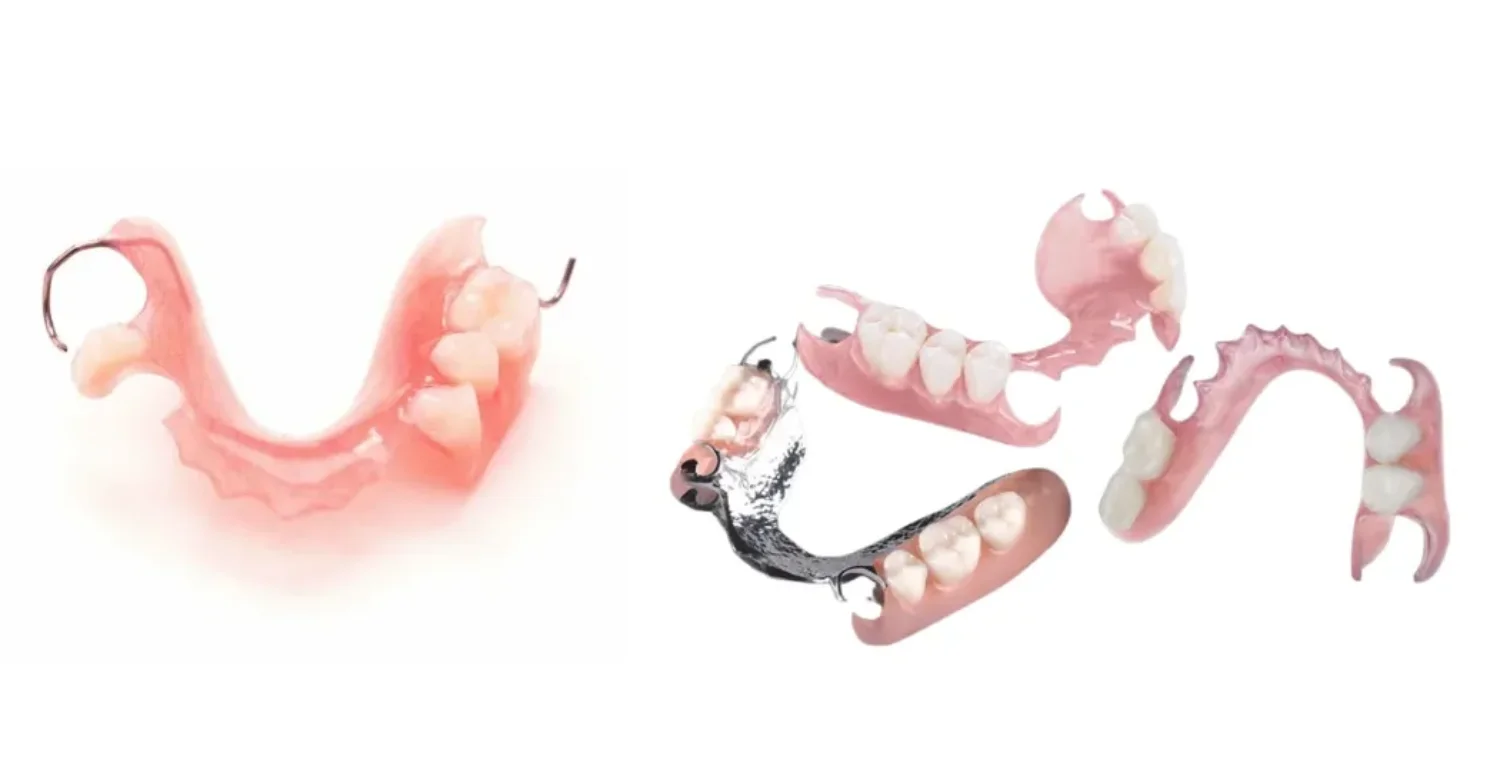
Flexible partial dentures use thermoplastic resin instead of a cast-metal framework. Common materials include nylon-based and polyamide-type thermoplastics. Their gum-colored bases and clasps can blend with natural tissues. This flexibility eases insertion and removal, but it also changes how chewing forces transfer. A flexible design is therefore not automatically right for every missing-tooth pattern. Many patients first hear about them through brand names such as Valplast.
What Are Metal Partial Dentures?
Metal partial dentures contain a rigid cast framework, usually made from cobalt-chromium alloy. The framework connects rests, clasps, and connectors that control denture movement. Acrylic bases and artificial teeth are attached to this framework. Its rigidity is valuable when precise support and stability are required. Long-term results still depend on design, hygiene, and maintenance. They are often called cobalt-chrome or cast partial dentures in clinics.
How a Cast Metal Framework Supports a Partial Denture
A cast framework transfers chewing forces through planned components. Occlusal rests direct forces toward suitable supporting teeth. Major connectors join both sides of the denture, while minor connectors link rests and clasps. Clasps resist displacement and hold the denture in place. Classic design principles always place diagnosis before choosing these components. Each component has a specific job, and together they limit unwanted movement.
Common Materials Used in Flexible Dentures
Flexible dentures commonly use polyamide and other injection-molded thermoplastic resins. The exact material varies between laboratories and manufacturers. Some are more translucent or flexible than others. These properties influence color, surface behavior, and repair options. Patients should ask which material will be used and whether it can be modified later. Knowing the material also helps any future dentist who needs to repair it.
How Are Flexible and Metal Partial Dentures Different?
The principal difference is framework rigidity. When patients weigh flexible partial dentures vs metal, they are really comparing flexibility against planned mechanical control. Appearance can favor flexible materials when visible metal is undesirable. Support can favor metal in more demanding cases. A well-designed prosthesis usually outperforms a poorly designed one, whatever the material.
Read about Lipodystrophy and Dental Health
Flexible Partial Dentures vs Metal: What Are the Main Differences?
The comparison covers comfort, appearance, stability, function, durability, repairs, hygiene, and thickness. A systematic review found removable partial denture satisfaction rates between 50% and 81%. Those figures do not identify one universal winner. The sections below explain each factor briefly.
Comfort and Flexibility
Flexible dentures can feel less rigid during insertion and removal. Some patients report favorable comfort with thermoplastic designs. A randomized crossover trial compared thermoplastic and metal clasp-retained dentures directly. However, comfort depends on fit and design, not flexibility alone. Excess movement during chewing can become uncomfortable with either material. Patients should judge comfort after several days of wear, not only at fitting.
Appearance and Visibility
Appearance is a major reason patients consider flexible dentures. Their gum-colored clasps can blend with oral tissues. Metal clasps may show around certain front teeth, depending on tooth position and smile line. Denture thickness and tooth arrangement also affect appearance. A digital or physical preview can help explain the proposed result. Photographs of your own smile can help the dentist plan clasp positions.
Stability and Retention
Stability means resisting rocking, while retention means resisting removal. For flexible partial dentures vs metal, this is often the deciding clinical difference. Rigid frameworks keep rests, connectors, and clasps in fixed relationships. Flexible materials rely more on tissue engagement and clasp flexibility. Research shows different stress patterns between the two designs. Clinical design remains essential regardless of which material is chosen.
Chewing and Speaking
Both types can improve oral function after an adaptation period. Speech and chewing may feel different at first. Small food portions and chewing on both sides reduce denture tipping. Speech usually improves with practice as the tongue adapts. NHS guidance notes that early speech changes and extra saliva are common. Most patients feel noticeably more confident within the first few weeks.
Durability and Expected Service Life
Durability depends on material, design, fabrication, loading, hygiene, and maintenance. Metal frameworks are valued for rigidity and structural strength. Flexible materials can perform well but may be harder to repair. One recent meta-analysis reported 95.1% five-year survival for cast-clasp dentures. This is not a guaranteed lifespan for any individual patient. Good daily care usually extends the useful life of either type.
Repairs, Adjustments, and Relining
Most removable dentures need small adjustments after delivery. Rigid metal frameworks allow several established adjustment procedures. Some flexible materials have more limited repair and relining options. The repair question in flexible partial dentures vs metal is easy to overlook. Patients should ask about repair pathways before treatment starts. A denture that looks attractive may become inconvenient if repairs are difficult.
Cleaning and Oral Hygiene
Both types require daily cleaning. Plaque and food collect around clasps, connectors, and tissue-contact areas. The remaining natural teeth and gums need equal attention. Reviews emphasize hygiene as essential to removable prosthesis success. The denture should generally be removed during sleep, and regular reviews catch developing problems. Good cleaning habits protect both the prosthesis and the teeth that support it.
Weight and Thickness
Metal frameworks achieve rigidity with relatively thin components. This helps when oral space is limited. Flexible dentures may need different thicknesses to function well. A thinner prosthesis is not automatically more comfortable, because pressure distribution still matters. Thickness is best judged during a clinical evaluation, not from photographs. The shape of the palate and gaps also influences the final design.
What Are the Advantages and Disadvantages of Flexible Partial Dentures?
Flexible dentures offer real cosmetic advantages and some practical limitations. Understanding both sides of flexible partial dentures vs metal helps set realistic expectations. Aesthetic benefits matter most when visible metal would concern the patient. Functional needs may still point toward a different framework.
Potential Benefits of Flexible Partial Dentures
Flexible dentures provide a metal-free appearance that can be less noticeable when smiling. Their flexibility can ease insertion. A pilot study found higher one-year satisfaction with flexible dentures than cast-metal ones. That study involved only 22 participants, so it cannot be generalized. The benefit is greatest when aesthetics drive treatment expectations.
Potential Limitations of Flexible Partial Dentures
Flexibility reduces the rigidity available for demanding support requirements. Some designs are harder to adjust, repair, or add teeth to later. Tissue-supported areas may move under chewing forces. Cleaning around flexible clasps also needs careful technique. A dentist should confirm suitability after examining the remaining teeth. These limitations do not rule flexible dentures out, but they deserve honest discussion.
When Flexibility May Affect Denture Stability
Flexible materials move differently from rigid metal frameworks. This becomes more noticeable in free-end cases, where no tooth stands behind the gap. The gum tissue compresses under chewing pressure, allowing the base to move. Flexibility should therefore be weighed against support needs. Aesthetic advantages should never replace functional assessment.
Why Repairability Should Be Discussed Before Treatment
Repairs often become necessary after years of normal use. Teeth may need adding after further tooth loss, or clasps may need modification. Laboratories differ in how easily they handle flexible materials. Patients should ask whether repairs can be done locally. This matters especially for international patients traveling for treatment.
Who May Benefit From a Flexible Partial Denture?
A flexible partial denture may suit patients with strong aesthetic priorities. It is worth considering when visible metal clasps are a major concern. The bite and supporting tissues still determine suitability. Patients should also understand future maintenance requirements. The final recommendation should reflect both appearance and function. It can also suit patients who have reacted poorly to metal components before.
Understand the symptoms of Malocclusion of the Teeth
What Are the Advantages and Disadvantages of Metal Partial Dentures?
Metal partial dentures emphasize mechanical support and rigid framework design. They remain widely used for many partially edentulous patients. Their advantages must be balanced against appearance concerns. In the flexible partial dentures vs metal decision, metal usually wins on control rather than looks.
Potential Benefits of Metal Partial Dentures
Metal frameworks provide rigidity for planned support and retention. Rests and connectors can be built with predictable geometry. Frameworks can also be thin compared with bulkier materials. Long-term evidence supports good survival for cast-clasp dentures. Modern digital workflows can fabricate metal frameworks with clinically acceptable fit. The main benefit is not the metal itself but the control a good design provides.
Potential Limitations of Metal Partial Dentures
Visible metal components can concern patients with high cosmetic expectations. Some clasp positions show during smiling. Some patients also simply prefer metal-free treatment. Metal frameworks may require minor preparation of supporting teeth. This preparation should be explained clearly before fabrication begins. However, careful design can hide many metal components from normal view.
When Visible Metal Clasps May Be a Cosmetic Concern
Visible clasps become noticeable mainly around front teeth. Visibility depends on clasp location, tooth shape, smile line, and color contrast. Patients should raise these concerns before impressions or scanning. The dentist can explain whether alternative clasp placement is possible. The least visible design is not always the most functional one.
When Metal Framework Design Can Improve Support and Stability
A rigid framework keeps support and retention components working together. This is especially useful when the denture must resist rotation. Healthy remaining teeth can provide important support. A systematic design approach prioritizes support, stability, and retention. Metal is valuable here, but it never guarantees stability by itself.
Learn how to fix Craze Lines
Are Flexible Dentures Better Than Metal Dentures for Everyday Use?
Everyday performance depends on anatomy and prosthesis design. Research reports satisfaction differences between flexible and metal designs. However, satisfaction does not measure every mechanical outcome. Stability, comfort, cleaning, and replacing several teeth are considered separately below.
Which Type Is More Stable During Chewing?
Rigid metal frameworks usually provide stronger mechanical control during chewing. This matters when the denture relies on remaining teeth for support. Flexible dentures follow tissue contours but may move under load. On stability, flexible partial dentures vs metal usually favors metal. Free-end cases need particularly careful control of movement.
Which Type Is More Comfortable for Long-Term Wear?
Comfort is highly individual. Some patients prefer the flexibility and appearance of thermoplastic materials. Others prefer the thin, rigid feel of a metal framework. Comfort also depends on pressure distribution and denture thickness. A well-fitting design usually matters more than material preference. Trying a design during a clinical try-in gives the most reliable impression.
Which Type Is Easier to Keep Clean?
Neither design is automatically easy to clean. Food collects around clasps, connectors, and tissue-contact areas. Studies report plaque-related challenges around supporting teeth. Patients must clean both the denture and their mouth consistently. The dentist can demonstrate effective brushing and cleaning methods. Regular professional cleaning also helps manage areas that are hard to reach.
Which Type Is More Suitable for Replacing Several Missing Teeth?
Several missing teeth increase the importance of support and stability. A rigid framework is often useful for long spans. A flexible design can still suit selected cases. For multiple gaps, flexible partial dentures vs metal depends on gap location as much as number. The dentist must evaluate abutment teeth and supporting tissues.
Does the Location of the Missing Teeth Change the Choice?
Yes, location strongly influences denture design. Front gaps create aesthetic concerns, while back gaps create functional ones. Free-end spaces need special attention because gum support allows movement. The opposing teeth and bite also influence loading. Material choice should therefore follow a careful look at tooth position.
Front Teeth and Cosmetic Considerations
Front-tooth replacement makes visibility especially important. Flexible materials can reduce the visual presence of metal clasps. Tooth shape, shade, gum appearance, and smile line still matter. For front teeth, flexible partial dentures vs metal often leans toward flexible designs. Aesthetic choices must still respect functional requirements. Photographic previews can help set realistic expectations before fabrication.
Back Teeth and Functional Considerations
Back teeth carry most chewing forces. A denture that shifts during chewing quickly becomes frustrating. Rigid frameworks often provide useful control in posterior cases. Gum and bone support must also be assessed. Other options, such as implants, may suit some patients better. The final choice for back teeth always requires individual evaluation.
Discover treatments for Enamel Hypoplasia
Flexible Partial Dentures vs Metal for Different Patient Needs
Different priorities lead to different choices. Some patients prioritize appearance and dislike visible metal. Others value stability, rigidity, or easy maintenance. No material addresses every situation equally well. Matching the material to your main priority usually produces the most satisfying result.
Flexible Partial Dentures for Cosmetic Concerns
A flexible denture directly addresses concerns about visible metal. Its tissue-colored material blends with surrounding gums. However, tooth arrangement, shade, and thickness also shape appearance. Patients should review the planned look before fabrication. A cosmetic benefit should not override an unfavorable mechanical design.
Metal Partial Dentures for Stability and Support
Metal partial dentures provide a rigid foundation for mechanical components. Rests give vertical support from suitable teeth, and clasps resist displacement. Major connectors coordinate both sides of the prosthesis. This makes rigid frameworks useful in complex cases. Material and design must always work together. The design should account for the shape of each gap and the bite.
Flexible Dentures When Visible Clasps Are a Concern
Patients with highly visible front clasp areas may prefer flexible dentures. This can give a less conspicuous result in selected cases. The dentist should still check whether retention will be predictable. Material properties vary between products and laboratories. Patients should also ask how future repairs would be handled.
Metal Dentures When Long-Term Structural Support Is Important
Rigid frameworks provide controlled support over prolonged use. Recent evidence reports strong five-year survival for cast-clasp dentures. For long-term structure, flexible partial dentures vs metal generally favors metal. Hygiene, tooth health, and maintenance remain essential. The final decision rests on a full oral examination.
What Happens When Only One or Two Teeth Are Missing?
Small gaps have several replacement options. A small flexible partial can provide a discreet removable solution. A metal design offers stronger mechanical control. A fixed bridge or implant may also be suitable. Patients should compare tooth preparation, surgery, maintenance, and cost. The dental examination shows which of these choices are realistic for you.
Find out how CT Scans Detect Medication-Related Osteonecrosis of the Jaw
Are Flexible Partial Dentures Temporary or Permanent?
The word "flexible" does not automatically mean "temporary." Likewise, a metal framework does not guarantee lifetime use. Longevity depends on design, material, oral conditions, and care. The dentist should state whether a denture is interim or definitive. Knowing this in advance helps patients budget for future treatment stages.
Temporary Dentures vs Permanent Dentures
Temporary dentures help during changing clinical circumstances, such as healing. Definitive dentures are designed for long-term use after full evaluation. The distinction depends on treatment goals, not simply material. A thermoplastic denture can sometimes serve long term. Patients should ask what role their prosthesis is expected to play. Future changes in the mouth should always be part of the plan.
Immediate Dentures vs Permanent Dentures
Immediate dentures are fitted soon after tooth extraction. They restore appearance and function while the gums heal. Their fit often changes as bone and gums remodel. A definitive denture may follow after healing and reassessment. This distinction also affects cost and future planning. Patients should ask whether their immediate denture will later be replaced.
Can a Flexible Denture Be Used as a Long-Term Prosthesis?
Yes, in selected cases. Suitability depends on design and clinical requirements. Repairability and adjustment options should be considered first. Evidence on flexible materials is less comprehensive than for metal systems. On long-term evidence, flexible partial dentures vs metal favors metal, though regular reviews matter for both. Research also uses different materials and study designs, which complicates conclusions.
When Might an Interim Denture Be Recommended?
An interim denture may help after extraction or during healing. It can also bridge the gap while implants are planned. Dentists sometimes use it while stabilizing remaining teeth. It should not be expected to perform like a definitive prosthesis. Its intended duration and replacement cost should be clear.
Healing After Tooth Extraction
Extraction changes the gum and bone that support the denture. These tissues remodel during healing. That remodeling can loosen an immediate prosthesis. Adjustments, relining, or replacement may follow. Regular follow-up appointments help monitor these changes.
Changes in the Gum and Bone During Healing
The extraction socket gradually reshapes as bone and gums heal. A denture that first fits well may later loosen. This usually reflects normal anatomy, not poor fabrication. Regular reassessment shows when adjustment is needed. Final treatment should be planned around the healing stage.
Read about Vitamin B1 Deficiency and Tooth Damage
Flexible Partial Dentures vs Metal: What Does Research Show?
Studies compare flexible, thermoplastic, acrylic, and metal systems. However, they often use different materials, designs, and patient groups. This makes direct comparison difficult. Current evidence supports individualized planning rather than a universal material choice. Reading the evidence carefully helps patients avoid overconfident marketing claims.
What Does the Evidence Say About Flexible Denture Retention?
Retention depends on anatomy, clasp design, material, and insertion path. Flexible clasps engage undercuts while looking natural. Finite element research shows different stress distribution in flexible and cast-metal designs. That same study reported higher satisfaction with flexible dentures. Its small sample means findings need clinical context.
What Does Research Say About Metal Partial Denture Frameworks?
Metal frameworks remain strongly supported in removable prosthodontics. Recent evidence reports good clinical survival for cast-clasp designs. A systematic review found acceptable fit for both digital and conventional frameworks. On published evidence, flexible partial dentures vs metal is clearly weighted toward metal. Design, however, remains central to performance.
What Do Studies Say About Patient Satisfaction and Comfort?
A systematic review of 35 studies reported satisfaction between 50% and 81%. Appearance, pain, cleanliness, gap location, and denture type all influenced results. One study found higher satisfaction with flexible dentures after one year. These findings suggest flexible designs suit some patients. They do not prove universal superiority. Individual anatomy and functional needs remain essential to the decision.
What Are the Evidence Gaps Around Flexible Dentures?
Flexible dentures include many different thermoplastic materials. Studies rarely use the same material or design. Sample sizes are often small, and follow-up periods vary. Many studies measure satisfaction rather than survival or biomechanics. Better long-term trials would clarify flexible partial dentures vs metal outcomes. Until then, decisions should combine available evidence with careful clinical assessment.
What We Notice Clinically
Clinical decisions involve priorities research cannot fully capture. Patients value appearance, comfort, cost, and maintenance differently. Dentists must turn those priorities into a safe design. The same material can behave differently in different mouths. The observations below reflect patterns seen during everyday prosthetic planning.
Why Patients Often Choose Flexible Dentures for Appearance
Patients quickly notice how removable teeth look. Visible metal clasps near front teeth are a common worry. Flexible materials reduce that metallic appearance. However, gum-colored material does not guarantee invisibility. A realistic preview helps manage expectations. Shade, thickness, and tooth arrangement all influence how natural the result looks.
Why Dentists Consider Support, Stability, and Denture Design
Dentists must manage chewing forces and denture movement. Support limits movement toward the gums. Stability limits sideways and rotational movement. Retention limits lifting away from the teeth. These principles guide every framework and clasp design. The final prosthesis must meet functional and biological requirements together.
Why the Number and Position of Missing Teeth Matter
Two patients can lose the same number of teeth yet need different designs. A short gap between teeth behaves differently from a free-end space. Front gaps raise different demands from back gaps. The condition of neighboring teeth changes available support. The whole dentition must be considered. For this reason, flexible partial dentures vs metal cannot be decided by counting teeth.
.jpg)
.jpg)
.jpg)
Why a Flexible Denture Is Not Automatically the Best Choice Because It Has No Metal
Metal-free appearance does not automatically mean better function. Every denture still needs support and retention. Some cases clearly benefit from rigid framework components. Choosing flexible partial dentures vs metal from photographs alone is risky. Material should follow clinical needs, not replace them.
Why “More Comfortable” and “More Stable” Are Not Always the Same Thing
A flexible prosthesis may feel softer when inserted. Yet movement during chewing can reduce its comfort. A rigid framework may feel firmer but stay stable during function. Patients should separate insertion comfort from chewing comfort. Fitting should test the denture during normal jaw movements.
Common Misconceptions About Flexible and Metal Dentures
Some believe flexible dentures never move. Others assume metal dentures are always uncomfortable. Some think flexible dentures always last longer. These ideas oversimplify flexible partial dentures vs metal. Both systems succeed when properly selected, fitted, and maintained. Both can also cause problems when poorly fitted or neglected.
Clinical Note
Dr. Rifat Alsaman, Head of the Medical Team at Vitrin Clinic, emphasizes individualized assessment. The review considers tooth condition, gum health, bite, gap position, and prosthetic needs. Digital diagnostics may support planning when clinically appropriate. The aim is not to pick a material automatically. It is to build a suitable tooth-replacement strategy.
How Does a Dentist Decide Between Flexible and Metal Partial Dentures?
The decision starts with the remaining teeth, gums, bite, and gaps. The proposed denture must fit that anatomy and its functional demands. Patient preferences are then weighed against clinical requirements. This avoids choices based only on appearance or advertising. In practice, flexible partial dentures vs metal is settled only after this full assessment.
What Does the Dental Examination Assess?
The examination identifies everything that affects support and design. The dentist reviews remaining teeth, soft tissues, and the bite. Gaps are measured, and undercuts and insertion paths may be assessed. The plan should cover immediate replacement and future maintenance. The main areas are described below.
Remaining Teeth and Their Condition
Supporting teeth are checked for restorations, decay, and mobility. Weak teeth may need treatment before carrying a denture. Tooth position determines where clasps and rests can sit. Healthy teeth contribute valuable support. Poorly supported teeth may call for a different strategy. Preserving these teeth is the first goal of any partial denture plan.
Gum and Supporting-Tissue Health
Healthy gums provide a better foundation for removable dentures. Inflamed tissues are more vulnerable to pressure and plaque. Gum disease can also loosen supporting teeth. The dentist may recommend periodontal care before fabrication. Good hygiene remains part of treatment afterwards. The final design should minimize unnecessary pressure on sensitive tissue.
Bite and Occlusion
The bite determines how chewing forces reach the denture. Unfavorable contacts increase movement and pressure. Artificial teeth must fit a planned bite relationship. This applies equally to flexible and metal designs. No material can compensate for a poor bite scheme. Worn or tilted opposing teeth may also need attention before fabrication.
Available Space and Tooth Position
Available space decides where artificial teeth and components can fit. Neighboring teeth may limit clasp placement. Tongue position and palate shape influence connector design and thickness. Front gaps need aesthetic adjustments, while back gaps need functional support. Digital planning can help visualize the space.
Shape of the Edentulous Area
Gaps differ in length and tissue support. Bounded spaces have teeth on both sides. Free-end spaces lack a tooth behind them and can move under pressure. This affects framework choice and impression technique. Correct classification supports a more predictable design.
Are Dental X-Rays Needed Before a Partial Denture?
X-rays are used when they add useful clinical information. They show roots, bone levels, and supporting teeth. Not every patient needs the same imaging. CBCT provides three-dimensional detail when clinically indicated. Imaging supports, but never replaces, a direct clinical examination. The dentist decides which imaging is appropriate for each patient.
When Might Digital Scanning Help With Denture Planning?
Intraoral scanning captures detailed surface anatomy for digital models. It can improve communication with the dental laboratory. Reviews found acceptable fit for digital and conventional metal frameworks. Some studies also report higher satisfaction with digital workflows. Scanning is chosen according to each case's needs.
Why Denture Design Matters as Much as the Material
The same material performs differently with different designs. A flexible base can be stable or unstable depending on anatomy. A metal framework can also fail when poorly designed. Support, retention, connectors, rests, and bite must work together. Patients should judge the proposed design, not just the material name. Design also determines how easily the denture and teeth can be cleaned.
What Are the Possible Side Effects and Problems With Partial Dentures?
New dentures usually need an adjustment period. Mild soreness, extra saliva, and speech changes are common early on. These usually improve as patients adapt. Persistent problems need professional review. Knowing what is normal helps patients recognize what is not.
Common Early Adjustment Problems
New dentures can feel bulky or unusual at first. Inserting and removing them takes practice. Speech, saliva, and chewing may all change temporarily. These experiences rarely mean treatment has failed. A scheduled review corrects pressure areas and fit concerns. Most patients adapt steadily through regular wear and practice.
Soreness or Pressure Areas
Small sore spots are common during early wear. They appear where the denture presses on soft tissue. A dentist can find and relieve these pressure points. Patients should never grind or cut the denture themselves. Persistent ulcers need professional assessment. A well-fitting denture should not cause ongoing significant pain.
Increased Saliva
Extra saliva often follows a new denture. The mouth initially treats the prosthesis as a foreign object. Salivary flow usually settles within days as adaptation occurs. Swallowing normally and continuing to wear the denture helps. Unusual or persistent symptoms should be reported.
Speech Changes
A new denture changes tongue movement and airflow. Certain sounds may be affected at first. Reading aloud is a useful way to practice. Most patients improve steadily. Persistent difficulty may point to a fit or thickness problem that a dentist can adjust. Patients should never try to reshape the denture themselves.
Difficulty Adapting to Chewing
Chewing with a new denture needs coordination. Start with soft foods cut into small pieces. Chew on both sides to reduce tipping. Avoid hard or sticky foods early on. Persistent chewing problems may signal a bite or stability issue.
Potential Problems With Poorly Fitting Dentures
Poor fit causes repeated pressure and movement. The denture may irritate gums and trap food. Movement also disrupts chewing and speech. Long-term studies stress protecting remaining teeth and gums. Fit should be checked whenever symptoms change. Regular reviews identify these issues before they become serious.
Gum Irritation
Repeated denture movement irritates gum tissue. Persistent redness or soreness should not be ignored. Causes include pressure, movement, poor hygiene, or inaccurate fit. A dentist can inspect the area and adjust the denture. Continuous irritation always needs evaluation.
Movement During Eating or Speaking
A loose denture shifts during chewing or talking. This can be uncomfortable and embarrassing. Retention depends on anatomy and design. A sudden change may mean damage or tissue changes. Have it checked rather than modifying it at home.
Food Trapping and Hygiene Challenges
Food easily becomes trapped around denture components. Areas near supporting teeth need careful cleaning. Plaque build-up is a known concern with removable dentures. Remove the denture to clean it and your natural teeth. Regular reviews can identify hard-to-clean areas. Interdental brushes can help clean around clasps and supporting teeth.
When Should Denture Problems Be Checked by a Dentist?
Seek a review for persistent pain, bleeding, ulcers, or sudden looseness. Major chewing or speech problems also need attention. A cracked or broken denture requires professional assessment. Never use household glue or make permanent adjustments yourself. Early evaluation often prevents bigger problems.
How Can You Relieve Denture Discomfort Safely?
Mild discomfort is normal during adaptation. Follow your dentist's wearing and cleaning instructions. Simple habits make the early weeks easier. Severe or persistent pain needs professional evaluation. The steps below help most patients through the first weeks.
What Can Patients Do for Mild Adjustment Discomfort?
Wear the denture as instructed. Choose softer foods and smaller portions. Chew slowly on both sides and practice speaking regularly. Clean the denture and gums carefully, and never force it into place. Attend every scheduled adjustment appointment. Most mild sore spots can be corrected quickly by the dentist.
Note : All images used are for editorial and illustrative purposes only and may not originate from the original news provider or associated company.
Why Should Patients Avoid Adjusting or Trimming the Denture Themselves?
Home adjustments can permanently damage the prosthesis. Removing material may reduce retention or stability. Bending a clasp changes how forces are distributed. Uncontrolled trimming can leave sharp edges. Bring the denture to the clinic so pressure areas are corrected properly.
When Does Persistent Pain Require Professional Assessment?
Persistent pain should never simply be tolerated. It may come from pressure, movement, the bite, or tissue disease. Bleeding and lasting ulcers also need examination. Patients may need to reduce wear until they are seen. Do not assume discomfort will resolve on its own.
What Should You Do If the Denture Suddenly Becomes Loose?
Sudden looseness may mean the denture is damaged or distorted. Changes in supporting teeth or gums can also affect fit. Stop wearing it if it causes injury. Avoid using adhesive as a substitute for evaluation. A dentist can decide between adjustment and replacement.
Flexible Partial Dentures vs Metal Cost: Turkey vs USA vs UK
Prices vary widely between countries and clinics. There is no single worldwide average for a partial denture. Material, laboratory quality, case complexity, and extra treatment all affect cost. The figures below are planning estimates, not quotes. Currency changes and clinic policies can also shift these figures over time.
What Is the Average Cost of Partial Dentures in Turkey?
Turkey has no single private-market price for partial dentures. One Istanbul clinic lists a cast-framework partial denture at 20,000 TL for 2026. Another Turkish clinic lists a cast-metal-reinforced denture at 27,230 TL. Flexible denture fees vary with material and laboratory workflow. Always request a written plan listing what is included. International packages may also include consultations and travel coordination.
What Is the Average Cost of Partial Dentures in the USA?
U.S. prices differ considerably by material and location. CareCredit's published data list an average flexible nylon partial at $1,761. The same source lists an average metal partial at $2,229. For U.S. patients, flexible partial dentures vs metal is roughly a $470 average difference. Insurance and extra procedures change final costs. Always compare complete treatment fees, not headline denture prices.
What Is the Average Cost of Partial Dentures in the UK?
UK prices differ between NHS and private treatment. NHS England places dentures within Band 3, listed at $332.10 from April 2026. One London clinic lists flexible dentures from $895 and cobalt-chrome from $1,395. Another UK clinic lists flexible Valplast at $850 and cobalt chrome at $950. These are provider prices, not national averages.
Flexible Partial Dentures vs Metal Cost Comparison
The figures below follow the planning ranges specified for this article.
Country | Approximate partial-denture cost |
Turkey | 350–438 |
USA | 1,120–1,680 |
UK | 980–1,470 |
These are approximate planning values, not guaranteed quotes. Exchange rates also shift international comparisons. Always confirm whether a price covers one arch or the complete treatment.
Does a Higher Denture Cost Always Mean Better Quality?
A higher price does not automatically mean better quality. Quality depends on diagnosis, design, materials, laboratory work, and clinical skill. A low quote may exclude important services. A higher quote may include diagnostics or follow-up care. Compare what each package actually contains. A written treatment plan makes this comparison much easier.
What Factors Affect Denture Cost vs Quality?
Material, framework design, and the number of missing teeth all affect price. Additional treatment may be needed before the denture. International patients also face travel costs. Aftercare influences long-term value. Ask for itemized pricing wherever possible. Each factor is explained briefly below.
Material and Framework Design
Thermoplastic and cast-metal systems need different laboratory processes. Cobalt-chromium frameworks require casting or digital metal fabrication. Complex clasp or connector designs add technical time. Material cost alone does not decide quality. Ask which material and manufacturing method are proposed.
Laboratory and Manufacturing Techniques
Laboratory skill strongly affects fit and finish. Digital workflows use scanning, computer design, and advanced manufacturing. Traditional workflows remain clinically reliable. Reviews report acceptable fit for both digital and conventional frameworks. Ask which laboratory will make your denture.
Dentist and Laboratory Expertise
Successful dentures need close dentist and laboratory coordination. The dentist designs the prosthesis clinically. The laboratory turns that design into a precise appliance. Poor communication can compromise fit and function. Ask whether post-insertion adjustments are included.
Number of Missing Teeth
More missing teeth usually mean a more complex design. Longer gaps create extra stability challenges. Cross-arch components may be required. Yet location and supporting teeth matter as much as number. A full examination is needed before a final quote.
Additional Dental Treatment
Some patients need treatment before receiving a denture. This may include gum care, fillings, crowns, or extractions. Supporting teeth may need restoring first. These procedures raise the total cost. Ask whether quotes include preliminary treatment and imaging.
What Should Patients Ask About Before Comparing Denture Quotes?
Ask whether the price covers one arch or both. Confirm the material, and whether scans and laboratory fees are included. Ask about adjustments, follow-up, repairs, and future additions. Check whether supporting teeth need treatment first. International patients should ask about care after returning home. Clear answers make quotes from different clinics easier to compare fairly.
Flexible Partial Dentures vs Metal in Turkey
Turkey offers many removable denture options through private clinics. Planning should still follow an individual clinical assessment. Price differences reflect materials, laboratories, expertise, and included services. Compare full treatment plans rather than advertisements. Many international patients combine treatment with a short planned stay in Istanbul.
What Should Patients Know About Flexible Partial Dentures in Turkey?
Flexible partial dentures are available through selected Turkish clinics and laboratories. Materials and methods differ between providers. Confirm the exact thermoplastic material and its repair options. International patients should receive a clear plan before traveling. Vitrin Clinic discusses these options during an individualized consultation.
What Can Affect Flexible Partial Dentures vs Metal Cost in Turkey?
Material, design, laboratory process, and case complexity all affect cost. The number of teeth replaced changes laboratory work. Preliminary treatment and digital diagnostics may be billed separately. International packages may include accommodation and transfers. The final price should follow a clinical assessment.
Flexible Partial Dentures vs Metal in Istanbul: What Should Patients Compare?
Compare material, design, laboratory standards, and the clinical assessment. Also compare adjustment policies and aftercare. A lower price may reflect a narrower package. A higher price may include diagnostics and follow-up. A detailed written plan reduces uncertainty. International patients should compare the entire pathway, from records to aftercare.
Flexible Partial Dentures vs Metal in Istanbul: What Should an International Patient Ask?
International patients should ask practical questions before traveling. Confirm the examination process and include diagnostics. Ask how long fabrication takes and whether adjustments are included. Clarify follow-up and emergency contact after returning home. Clear answers make responsible comparison possible.
Is the Dental Examination Included?
The treatment proposal should describe the examination clearly. It may include clinical inspection, bite analysis, and diagnostic records. Extra imaging may be recommended when appropriate. Ask whether the assessment is part of the quoted price. A denture should never be made from appearance alone.
Are Digital Diagnostics Included When Clinically Appropriate?
Digital X-rays, CBCT, and intraoral scanning support selected cases. Not every patient needs all of them. Imaging should match diagnostic needs. Digital workflows can achieve clinically acceptable framework fit. Confirm which diagnostics are included and why each is recommended.
Does the Price Include Laboratory and Adjustment Costs?
Confirm whether laboratory charges are included. Ask whether post-insertion adjustments cost extra. Repair costs may also differ by material. These differences make similar-looking quotes hard to compare. An itemized written proposal solves this problem.
What Follow-Up Care Is Available?
Dentures often need early follow-up after fitting. The dentist checks pressure points and adaptation. International patients should ask whether remote guidance is available. They should also know where to find local care. Aftercare is part of successful treatment. The plan should explain both expected reviews and emergency arrangements.
Are There Alternatives to Flexible and Metal Partial Dentures?
Partial dentures are only one way to replace teeth. Alternatives include acrylic dentures, bridges, and implants. The best option depends on oral health and treatment goals. Each needs a clinical assessment before selection. The main alternatives are summarized below.
Acrylic Partial Dentures
Acrylic partial dentures use an acrylic base with artificial teeth. They are often interim or lower-cost options. They are usually bulkier than cast-metal frameworks. Acrylic can be easier to modify in some situations. Ask whether a proposed acrylic denture is temporary or definitive. They can be useful during healing or while other treatment is completed.
Implant-Supported Dentures
Implant-supported dentures use implants to improve support and retention. They can move less than conventional removable designs. However, they need adequate bone, surgery, and healing time. Costs are usually higher than conventional partial dentures. A dentist can assess whether implants suit you.
Dental Bridges
A bridge replaces missing teeth with fixed restorations. Traditional bridges use neighboring teeth as supports. They never need daily removal. However, supporting teeth usually need preparation. Long gaps or weak teeth can make bridges unsuitable. A dentist should compare bridges with removable and implant options.
Dental Implants
An implant replaces the root of a missing tooth. It can support a single crown without relying on neighboring teeth. Surgery and healing are required. Bone procedures are sometimes needed first. Implants are not always the simplest choice for every patient. Patients should compare total treatment time, cost, and maintenance.
Zirconia Dentures vs Acrylic
Zirconia and acrylic serve different purposes. Zirconia is a ceramic widely used in fixed restorations. Acrylic is commonly used for removable denture bases and teeth. They should not be treated as interchangeable categories. The dentist should explain why the material is appropriate.
Why Zirconia and Acrylic Should Not Be Treated as Direct Equivalents to Every Flexible or Metal RPD
Each system has different designs and indications. A cast-metal denture uses a framework with mechanical components. A flexible denture uses a thermoplastic base with flexible retention. Zirconia is mainly used in fixed restorations. Flexible partial dentures vs metal is a separate comparison from zirconia vs acrylic.
How Does the Patient's Oral Condition Affect the Available Alternatives?
Oral health can widen or narrow the options. Weak teeth may not support a bridge or denture. Gum disease may need treatment first. Bone anatomy affects implant feasibility. Alternatives should always be selected after diagnosis. A material comparison alone cannot determine what is suitable.
How Can Patients Reduce Problems With Partial Dentures?
Good maintenance protects both the denture and your mouth. Daily cleaning is essential. Removing dentures at night supports gum health. Regular reviews catch problems early. Protecting the denture from drops and heat also prevents avoidable damage.
How Should Flexible or Metal Dentures Be Cleaned?
Remove the denture before cleaning it. Use a denture cleaner suited to the material. Avoid harsh household cleaners and abrasive toothpaste. Brush natural teeth separately, and clean gums and tongue gently. For cleaning, flexible partial dentures vs metal differ, so follow material-specific instructions.
Should Dentures Be Removed at Night?
Most guidelines recommend removing dentures during sleep. This gives the gums time to recover. The American Dental Association advises nightly removal. Cambridge University Hospitals gives the same advice. Store the denture as your dentist instructs. Some materials need specific storage conditions, such as keeping them moist.
How Should Patients Care for the Remaining Natural Teeth?
Remaining teeth need careful daily cleaning. Supporting teeth carry extra load from the denture. Studies report higher decay risk around some supporting teeth. Brush twice daily with fluoride toothpaste and clean between teeth. Your dentist may suggest extra preventive care. Healthy remaining teeth mean better long-term denture support.
How Often Should Dentures and Supporting Teeth Be Checked?
Review intervals depend on your oral health. Patients with gum or restorative concerns may need more frequent checks. Reviews assess denture fit and tissue health. The ADA advises regular examinations rather than waiting for pain. Your dentist will set a suitable schedule.
What Should Patients Avoid Doing With Their Dentures?
Avoid boiling water unless the manufacturer recommends it. Avoid harsh household cleaners. Never cut, bend, or reshape clasps yourself. Avoid sleeping in dentures unless instructed. Stop wearing a damaged denture that injures your mouth.
Tips for Patients
The best decision comes from comparing complete clinical plans. Understand the material, design, maintenance, cost, and alternatives. This prevents surprises after treatment. International patients also need clear travel and follow-up information. The practical tips below help patients prepare for consultation and treatment.
Questions to Ask Before Choosing Flexible or Metal Dentures
Ask why the dentist recommends a particular design. Ask where support and retention will come from. Ask which parts will be visible. Ask about longevity, repairs, and future additions. These questions turn flexible partial dentures vs metal into a proper clinical discussion.
What Records Should Patients Bring to a Dental Consultation?
Bring recent dental X-rays if available. Include details of previous restorations, extractions, and dentures. List your medications and any implant records. International patients should bring previous dental reports. The dentist may still request updated imaging. Digital copies make sharing records between clinics much simpler.
How to Compare Denture Treatment Plans Rather Than Prices Alone
Compare material and framework design first. Then compare diagnostics, laboratory services, adjustments, and aftercare. Check whether quotes cover one arch or both. Consider the experience of the dentist and laboratory. Written plans make comparison more objective. A small price difference may hide a very different treatment package.
What International Patients Should Confirm Before Traveling for Denture Treatment
Confirm appointment timing before booking travel. Ask how many visits are expected. Check what diagnostics and adjustments are included. Ask how aftercare works after returning home. Keep copies of all treatment records. Clear communication reduces practical uncertainty for everyone involved.
Flexible and Metal Partial Dentures at Vitrin Clinic
At Vitrin Clinic, partial tooth replacement starts with individualized assessment. The team reviews remaining teeth, gums, bites, gaps, and goals. Flexible partial dentures vs metal is discussed according to clinical suitability. Digital tools support diagnosis when appropriate. The aim is to match the design to each patient's needs.
How Vitrin Clinic Assesses Missing Teeth Before Treatment Planning
Assessment begins with the remaining teeth and gaps. The team reviews tooth condition and gum health. The bite and available space are also evaluated. Aesthetic concerns are discussed when front teeth are involved. Removable and fixed options can then be compared fairly. Here, flexible partial dentures vs metal is weighed against each patient's real anatomy.
How Digital X-Rays, CBCT, and 3D Intraoral Scanning May Support Assessment When Clinically Appropriate
Digital X-rays help evaluate teeth and supporting bones. CBCT adds three-dimensional detail when clinically justified. 3D intraoral scanning captures precise surface anatomy. These tools support diagnosis and laboratory communication. The team selects only the diagnostics each case requires.
How Treatment Planning Considers Tooth Position, Bite, Gum Health, and Prosthetic Requirements
A denture must work within your existing mouth. Tooth position guides clasp and tooth placement. The bite shapes functional loading, and gum health affects support. These factors are assessed together rather than separately. The plan then explains its reasoning clearly.
How Patients Can Discuss Removable and Fixed Tooth-Replacement Options With the Dental Team
Share your priorities before choosing a prosthesis. These may include appearance, comfort, stability, time, and maintenance. The dentist explains which options meet those needs. Fixed and removable options should be compared objectively. Costs and follow-up should also be discussed.
Relevant Denture, Implant, Crown, or Tooth-Replacement Treatment Page
Partial dentures are one of several tooth-replacement options available at Vitrin Clinic. Patients comparing dentures, implants, crowns, or bridges can review each treatment in one place. Each page explains the procedure, suitable candidates, and what to expect during treatment. Reading these pages before your consultation helps you prepare focused questions. Explore all treatment options .
How Vitrin Clinic Supports Your Treatment Journey
Vitrin Clinic combines clinical assessment with coordinated planning. The goal is a clear path from diagnosis to treatment. International patients receive support with scheduling and coordination. The pathway covers diagnostics, planning, prosthetics, and aftercare.
Initial Consultation and Clinical Assessment
The process begins with reviewing missing and remaining teeth. The dentist evaluates gum health, bite, and supporting structures. Your priorities are discussed openly. Suitable removable and fixed options are then considered. The consultation also shows whether more diagnostics are needed. The final proposal reflects your anatomy and personal goals.
Digital Diagnostics When Clinically Appropriate
Digital diagnostics support efficient, accurate assessment. Digital X-rays evaluate selected dental structures. CBCT provides three-dimensional information for specific indications. 3D scanning supports digital impressions and laboratory communication. Not every patient needs the same workflow.
Personalized Treatment Planning
Personalized planning considers tooth position, tissues, bite, and prosthetic needs. It also reflects appearance and personal preferences. Flexible partial dentures vs metal is compared when both are clinically possible. The plan outlines treatment stages, costs, and aftercare. This helps patients understand the pathway. It also supports shared, informed decision-making.
Coordination Between Diagnosis, Prosthetic Planning, and Treatment
Successful denture care links clinical and laboratory stages. The dentist sets the design requirements. The laboratory manufactures the prosthesis to match them. Adjustments may follow after fitting. Patients should know who manages each stage.
Treatment Preparation for International Patients
International patients need clear scheduling before travel. The clinic coordinates consultation and treatment appointments. Share previous dental records when available. Diagnostic imaging can be planned in advance. Travel plans should allow time for reviews or adjustments. A written schedule helps organize the whole journey.
Follow-Up and Aftercare Planning
Aftercare identifies pressure areas and adaptation problems. The dentist checks speech, chewing, retention, and tissue response. Early adjustments are often needed. Regular reviews also protect supporting teeth. International patients should understand how follow-up is arranged. Good aftercare addresses both immediate comfort and long-term oral health.
When Should You See a Dentist About a Partial Denture?
Most denture problems are easier to manage early. Do not ignore persistent pain or sudden changes in fit. A professional review shows whether the denture or tissues need attention. Routine reviews matter even without symptoms. The signs below indicate when a visit should not wait.
Warning Signs That Should Not Be Ignored
Watch for persistent pain, bleeding gums, or sudden looseness. Ongoing chewing or speech difficulty also needs review. A cracked denture may need repair or replacement. Never make irreversible adjustments yourself. Early review often simplifies treatment.
Persistent Pain or Significant Soreness
Mild early soreness is normal during adaptation. Persistent or severe pain is not. The dentist checks pressure areas, the bite, and supporting tissues. Treatment may involve adjustment or replacement. Ongoing injury should never be accepted as normal.
Bleeding or Ongoing Gum Irritation
Bleeding may signal inflammation around the denture or teeth. Plaque build-up and excess pressure are common causes. The dentist should identify the source first. Remaining teeth need particular attention. Denture adjustment alone rarely solves persistent bleeding. Evidence shows decay and gum monitoring remain important for denture wearers.
A Denture That Becomes Suddenly Loose
Sudden looseness may follow damage or tissue changes. Changes in supporting teeth can also reduce retention. Do not bend clasps or trim the base at home. The dentist can test retention and tissue contact. Adjustment or replacement can then be planned.
Difficulty Eating or Speaking That Does Not Improve
Some early difficulty is expected. Lasting problems may indicate instability or a bite issue. Speech trouble may relate to denture shape or thickness. A dentist can assess and adjust these factors. Nobody should struggle with a denture indefinitely.
Damage or Fracture of the Denture
A cracked denture may be unsafe to wear. Sharp edges can injure the mouth, and broken clasps reduce retention. Some materials can be repaired, while others need replacement. Here, flexible partial dentures vs metal can differ in repair options. Professional repair is always safer than household glue.
When a Routine Denture Review Is Appropriate
Routine reviews monitor the denture and remaining teeth. The dentist checks fit, gums, and bites. Supporting teeth are examined for decay and gum disease. The denture can be cleaned or adjusted if needed. Attend reviews even when everything feels comfortable. Review frequency depends on your individual risks.
Key Takeaways
The choice depends on individual clinical circumstances. Appearance, stability, comfort, durability, hygiene, repairs, and cost all matter. Material should follow design requirements. Patient preference counts once suitability is established. In short, flexible partial dentures vs metal is a clinical decision first and a preference second.
Flexible Partial Dentures vs Metal: The Main Decision Factors
The main factors are support, retention, stability, appearance, and maintenance. Flexible dentures reduce visible metal. Metal frameworks provide stronger rigid support in many cases. Both need adaptation and ongoing care. Satisfaction varies, so anatomy and expectations decide.
What Patients Should Consider Before Treatment
Consider where teeth are missing and how many. Consider the health of remaining teeth and gums. Think about whether visible metal bothers you. Compare repairability, maintenance, and total cost. Ask about fixed and implant alternatives too. Never choose a material from appearance alone.
Relief and Practical Medical/Dental Tips
Expect a short adaptation period. Start with soft foods and practice speaking. Clean the denture and natural teeth daily. Remove the denture at night unless told otherwise. Never make home adjustments, and seek help if discomfort persists.
Possible Side Effects and Adjustment Problems
Early soreness, extra saliva, and speech changes are common. Chewing may feel unfamiliar at first. Poor fit can cause irritation, movement, and food trapping. Most issues improve with adjustment and care. Persistent symptoms need professional evaluation.
Warning Signs That Need Professional Evaluation
Persistent pain and ongoing bleeding need attention. Sudden looseness may indicate a fit problem. Lasting chewing or speech difficulty should be assessed. A fractured denture may need repair. Early treatment prevents problems from worsening.
Why a Personalized Dental Assessment Matters
Denture treatment depends on individual anatomy. The same material performs differently between patients. Remaining teeth offer different levels of support. The bite and gum ridge also affect movement. A customized plan addresses these differences. Material selection is only one step within the larger design.
The Bottom Line on Flexible Partial Dentures vs Metal
Each option has genuine advantages. Flexible designs address concerns about visible metal. Metal frameworks provide rigid support where function demands it. Neither is right for everyone. A professional consultation settles flexible partial dentures vs metal for your specific mouth.
At Vitrin Clinic
At Vitrin Clinic, partial tooth replacement is planned around your oral condition. The team reviews missing teeth, remaining teeth, gums, bite, and prosthetic needs. Digital X-rays, CBCT, and 3D intraoral scanning support assessment when clinically appropriate. Dr. Rifat Alsaman, Head of the Medical Team, emphasizes individualized care. International patients receive coordinated consultation and planning. For treatment information, visit https://vitrinclinic.com/treatments
Reference
FAQs
Dr. Rifat Alsaman has more than 5 years of clinical experience in dentistry and currently serves as the Head of the Medical Team at Vitrin Clinic. He is dedicated to providing exceptional patient care, overseeing treatment planning, and ensuring the highest clinical standards across the team. His expertise, attention to detail, and commitment to continuous professional development have helped countless patients achieve healthier, more confident smiles.


