Dental Bridge
October 15, 2026
Why Does Food Get Stuck Under a Dental Bridge and How Can You Stop It?
 Dr. Rifat Alsaman
Why does food get stuck under a dental bridge so often? The answer usually lies in the small space beneath the false tooth. Bridges are reliable, with about 89% still in place after 10 years in one major review. Yet only about 71% stayed completely free of complications. When you feel food get stuck under a dental bridge, the cause is usually fixable. This guide covers causes, safe cleaning, warning signs, and costs in the US, UK, and Turkey.
At a glance
Main causes: A wide pontic gap, poor contour, gum recession, bite changes, or a loose bridge.
Safest home fix: Super floss, a floss threader, or a water flosser on a low setting.
See a dentist if: Trapping happens after most meals, or you notice odor, bleeding, swelling, or looseness.
Replacement cost: About 2,000–5,000 in the US, 1,800–3,000 in the UK, and 650–2,100 in Turkey.
Ready to transform your smile?
Talk to our team and get a personal FREE treatment plan.
What Should You Do When Food Gets Stuck Under a Dental Bridge?
If you feel food get stuck under a dental bridge, stay calm and clean gently. Most trapped food comes out with the right tool and a little patience. Rinse first, then use a floss threader, super floss, or water flosser. Avoid sharp or improvised objects that can scratch the gum or loosen the bridge. If food stays trapped or the area hurts, book a dental check. Acting within a day helps prevent the plaque buildup that inflames the gums.
How to Remove Trapped Food Safely at Home
If you notice food getting stuck under a dental bridge, swish warm water firmly for 30 seconds. This loosens soft debris before you use any tool. Next, thread super floss or a floss threader under the false tooth. Slide the floss gently from side to side along the underside of the pontic. Then hug each supporting tooth and move the floss up and down. A water flosser on a low setting can flush out remaining particles. Finish by brushing the gumline with a soft brush. Once practiced, this routine usually takes under five minutes. If you feel resistance, stop rather than forcing anything.
Immediate Relief for Food Stuck Between a Dental Bridge and Gums
Trapped food presses on the gum and can feel sore within hours. Remove the debris first, since relief rarely comes while it stays there. Then rinse with warm saltwater, using half a teaspoon of salt in a cup of water. Hold the rinse near the bridge for about 30 seconds. A cold compress on the cheek can ease throbbing for 10 to 15 minutes. Over-the-counter pain relief may help if it suits your health. Mild soreness often settles within one to two days once the area is clean.
What to Do If Food Will Not Come Out From Under the Bridge
Sometimes you feel food get stuck under a dental bridge so firmly that rinsing fails. Seeds, husks, and fibrous meat are the usual culprits. Try one more gentle round with a water flosser aimed at the gap. Change the angle rather than increasing the pressure. If nothing shifts after a few attempts, stop and leave it. Repeated forcing can tear the gum and push debris deeper. Your dentist can remove it in minutes with proper instruments. Ask for an appointment within 24 to 48 hours if swelling, pain, or a bad taste develops.
What You Should Never Use to Remove Food From Under a Dental Bridge
Never use pins, needles, paper clips, knife tips, or forceful toothpicks. These can scratch porcelain, injure the gum, or break the cement seal. Avoid fingernails too, because they carry bacteria into the tissue. Do not snap regular floss down hard between the bridge and gum. Do not pry the bridge with any object to make room. A loosened bridge can let bacteria leak under the crowns. That leakage is one route to hidden decay on the supporting teeth. Improvised tools can also push debris deeper and make food get stuck under a dental bridge again.
.jpg)
.jpg)
.jpg)
.jpg)
.jpg)
.jpg)
Why Does Food Get Stuck Under a Dental Bridge?
You may see food get stuck under a dental bridge when debris builds faster than you clean it. The cause may be the bridge design, the fit, the gums, or the bite. In many cases, two or more of these factors combine. One 10-year review found loss of retention in 6.4% of bridges. Gum changes and wear also develop gradually after placement. Understanding the cause matters, because the right solution depends on it.
A Gap Between the Pontic and the Gum
The pontic is the false tooth that fills the space of a missing tooth. It sits on or near the gum ridge rather than inside the bone. A small clearance is often planned so the area can be cleaned. When that clearance is wider than intended, food slips in easily. This wider space is the most common thing that makes food get stuck under a dental bridge. Soft foods like bread and rice tend to pack into these gaps. Fibrous foods like meat and leafy greens wedge in more firmly.
Poorly Contoured or Poorly Fitting Dental Bridge Restorations
A bridge that is too bulky, too flat, or open at the edges creates ledges. These ledges make food get stuck under a dental bridge and make flossing difficult. An overhanging crown margin can catch particles right at the gumline. Open contacts with neighboring teeth also let food wedge in sideways. Even a fraction of a millimeter of misfit can matter. Over time, these spots collect plaque that a toothbrush cannot reach. Correcting the contour often helps more than any new cleaning tool.
Gum Recession and Changes in Gum Tissue
After a tooth is removed, the bone and gum beneath it slowly shrink. Much of this change happens in the first months after extraction. If a bridge was placed early, a gap can appear as the ridge settles. Gum disease also causes recession around the supporting teeth. In the US, about 42% of adults over 30 have some form of periodontitis. That figure rises to nearly 60% among adults aged 65 and older. Recession explains why many patients feel food get stuck under a dental bridge years after fitting.
Changes in Bite, Chewing Patterns, or Tooth Position
Teeth can drift slowly, especially when other teeth are lost or restored. A shift in the opposing tooth can drive food into the bridge area. Grinding or clenching can wear the bridge and change its contacts. New fillings or crowns nearby may alter how food moves while chewing. Chewing mostly on one side increases the load on that bridge. These small changes add up over years, not days. A bite check often reveals why trapping started suddenly.
Damaged Cement, Loose Crowns, or a Failing Bridge
Bridges are held by dental cement on the supporting teeth. When cement washes out, the bridge may rock slightly while chewing. That movement can suddenly let food get stuck under a dental bridge. Loss of retention affected about 6.4% of bridges over 10 years in one review. Decay under a crown can also loosen the seal from inside. A chipped porcelain edge or cracked framework may create new traps. Any looseness is a reason to see a dentist promptly.
Why Food Collects Under a Fixed Dental Bridge After Eating
Chewing pushes food toward the gums, especially at the edges of the pontic. Saliva and tongue movement normally clear most of it within minutes. Under a fixed bridge, however, the tongue cannot reach the underside. Floss cannot pass down between the joined teeth from above either. That is why you see food get stuck under a dental bridge unless you clean from below. Sticky and fibrous foods resist natural clearing the most. A quick rinse after meals helps, but threading under the bridge completes the job.
Is a Gap Under a Dental Bridge Normal?
A small, cleanable space under a bridge can be normal and intentional. A gap that traps food every meal, smells, or keeps growing is not. The difference lies in design, size, and how easily you can clean it. Dentists choose pontic shapes based on location, appearance, and gum shape. This section explains what is expected and what deserves attention.
Understanding the Space Beneath a Dental Bridge Pontic
Every pontic has a relationship with the gum ridge beneath it. Some touch the gum lightly, while others float above it on purpose. A light, smooth contact helps appearance in the front of the mouth. A raised design helps cleaning in the back, where appearance matters less. Either way, the underside should be smooth, convex, and highly polished. Rough or concave surfaces hold plaque far more readily. The goal is a space you can clean, not one that collects food.
The Difference Between a Hygienic Space and a Problematic Gap
A hygienic space is planned, even, and easy to reach with floss or brushes. Some back-to-tooth designs leave around 3 millimeters of clearance for this purpose. Food may pass through, but it also rinses out easily. A problematic gap is uneven, narrow at the opening, or wider at the back. Food enters easily but cannot escape, so it packs and ferments. Patients often notice odor or soreness with this kind of gap. Your dentist can tell which type you have in a short exam.
How the Shape of the Pontic Affects Food Trapping
Pontic designs include ovate, modified ridge lap, conical, and sanitary types. An ovate pontic sits in a shallow gum depression and looks very natural. A modified ridge lap touches only the cheek side of the ridge. A sanitary or hygienic pontic stays clear of the gum entirely. The older full ridge lap design covers the ridge and traps food readily. That design makes food get stuck under a dental bridge far more often. The right shape balances appearance, comfort, and cleaning access.
When a Dental Bridge Gap May Indicate a Fitting Problem
A gap may signal a fitting problem if it appeared soon after placement. It may also signal one if it has widened over months. Food trapping at the crown edges, not just under the pontic, is another clue. A rocking sensation, a new click, or a change in bite deserves attention. Floss that shreds or catches suggests a rough margin or overhang. These signs do not always mean replacement. They do mean the bridge should be examined rather than ignored.
What Are the Symptoms of Food Trapped Under a Dental Bridge?
When you feel food get stuck under a dental bridge, symptoms usually appear quickly. Pressure, odor, taste changes, and gum tenderness are the common signs. Some people feel it immediately, while others notice only a smell later. Symptoms can be occasional or constant after every meal. Recognizing the pattern helps you decide whether better cleaning is enough. It also helps you describe the problem clearly to your dentist.
Feeling Food Stuck Beneath the False Tooth
The most common sign is a feeling of pressure under the false tooth. Some patients describe it as a fullness or a wedge in the gum. The tongue may keep returning to the area after meals. The sensation often eases right after cleaning, which confirms the cause. If pressure remains after cleaning, inflammation may be present. Persistent pressure can also signal a loose bridge or an infection. Note when the feeling starts and what foods trigger it.
Bad Smell From Food Stuck Under a Dental Bridge
Trapped food breaks down quickly as bacteria digest it. This process releases volatile sulfur compounds, including hydrogen sulfide and methyl mercaptan. These gases create a rotten-egg or musty odor. Research suggests about 85 to 90% of bad breath starts in the mouth itself. Floss that smells after passing under the bridge is a strong clue. Cleaning usually removes the odor within a day. If the smell returns daily, the gap or gum health needs evaluation.
Bad Taste, Gum Tenderness, or Bleeding Around the Bridge
A sour or metallic taste near the bridge often comes from decaying food. Tender gums suggest the tissue is reacting to bacteria and pressure. Bleeding when you floss or brush is a sign of gum inflammation. Healthy gums usually do not bleed with gentle cleaning. Many people stop cleaning when they see blood, which worsens the problem. Gentle, consistent cleaning often reduces bleeding within one to two weeks. Bleeding that persists beyond that needs a dental check.
Gum Swelling and Persistent Food Accumulation
Swollen, shiny, or red gum under the pontic signals ongoing irritation. Food that collects after every meal keeps the tissue inflamed. The gum may puff up and fill part of the gap temporarily. This makes cleaning harder and traps even more debris. A localized swelling with throbbing pain may indicate an abscess. Swelling that spreads to the cheek or jaw is more urgent. Seek dental care quickly if swelling increases rather than settles.
Tooth Sensitivity or Pain Near the Supporting Teeth
The teeth holding the bridge can become sensitive to cold, sweets, or biting. This may signal decay starting at the crown margins. It may also reflect gum recession exposing the root surface. Pain on biting can suggest a loose bridge or a cracked supporting tooth. Lingering pain after hot drinks may point to nerve inflammation. In one review, decay caused bridge loss in 2.6% of cases over 10 years. Early sensitivity is easier and cheaper to treat than advanced decay.
How to Tell Whether Food Trapping Is Occasional or Persistent
Some meals occasionally make food get stuck under a dental bridge. Popcorn, seeds, and stringy meat are typical examples. These cases clear easily and cause no lasting symptoms. Persistent trapping happens after most meals, regardless of food type. It often comes with odor, bleeding, or tenderness. Try keeping a simple log for one week. Record each meal, whether food is trapped, and any symptoms. Trapping after more than half of meals suggests a structural cause worth assessing.
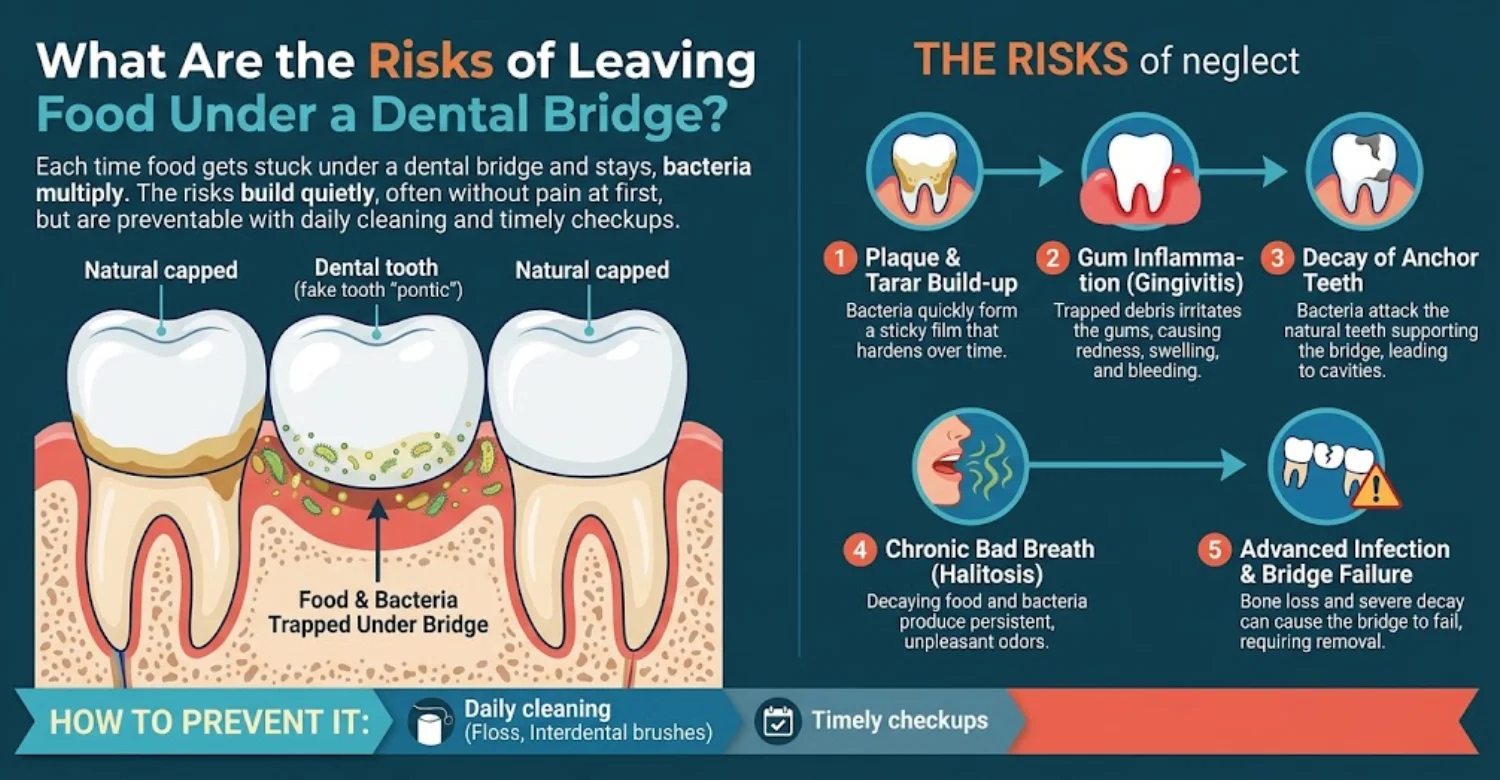
Plaque Buildup and Gum Inflammation
Plaque is a sticky film of bacteria that forms on teeth and restorations. Trapped food gives these bacteria a steady supply of sugar. Classic research showed gingivitis develops within 10 to 21 days without cleaning. Under a bridge, the same process can concentrate in one small spot. Inflamed gums bleed, swell, and pull away from the bridge edges. Left untreated, gingivitis can progress to periodontitis. Daily cleaning under the pontic interrupts this cycle early.
Increased Risk of Tooth Decay Around Supporting Teeth
The supporting teeth carry crowns, but the crown edges remain vulnerable. Bacteria near trapped food produce acids that dissolve tooth structure at the margin. Decay can spread under the crown without visible signs. By the time pain appears, the damage may be extensive. Reviews of fixed bridges list decay among the leading biological complications. Treating it may require a new crown, a root canal, or a new bridge. Early detection with X-rays keeps treatment smaller.
Gum Recession and Changes in the Tissue Beneath the Pontic
Chronic inflammation slowly destroys the fibers that hold gum tissue in place. As the gum recedes, the gap under the bridge widens. A wider gap traps more food, which worsens the inflammation. This creates a cycle that is hard to break with cleaning alone. The tissue under the pontic may also become red and ulcerated. These changes can affect both comfort and appearance. Treating inflammation early helps preserve the gum contour.
How Persistent Food Trapping Can Affect Oral Hygiene and Breath
Persistent trapping makes even a careful routine feel ineffective. Patients often brush harder, which can damage gums without reaching the debris. Bad breath may become noticeable to others, affecting confidence. Many people start avoiding certain foods to limit trapping. Some avoid smiling or close conversation because of odor worries. These effects are real, even when the dental cause is small. Addressing the gap often improves quality of life quickly.
Can Trapped Food Cause an Infection Around a Dental Bridge?
Yes, if you often feel food get stuck under a dental bridge, infection can follow. Bacteria can invade inflamed tissue and form a pocket of pus. Decay under a crown can also reach the nerve and cause a tooth abscess. Warning signs include throbbing pain, swelling, a bad taste, and fever. An infection near a bridge will not resolve with home care alone. It needs dental assessment, cleaning, and sometimes drainage or root canal treatment. Seek care within 24 hours if you notice these signs.
Ready to transform your smile?
Talk to our team and get a personal FREE treatment plan.
How to Clean Under a Dental Bridge
If you often notice food get stuck under a dental bridge, the right tools matter most. Cleaning underneath takes about two extra minutes each day. Regular floss alone cannot pass under joined teeth from above. You need a way to reach underneath, then clean each side. The best tool depends on gap size, dexterity, and gum health. Many people combine two tools for the best results.
How to Use a Floss Threader Under a Fixed Dental Bridge
A floss threader is a flexible plastic loop, similar to a sewing needle. Pull about 45 centimeters of floss through the loop. Push the stiff end gently under the pontic from the cheek side. Pull it through until the floss sits beneath the false tooth. Slide the floss back and forth along the underside of the pontic. Then curve it around each supporting tooth and move it up and down. Remove the floss and repeat for any other bridge areas.
How to Clean Under a Dental Bridge With Super Floss
Super floss combines three parts: a stiff end, a spongy section, and regular floss. The stiff end threads under the bridge without a separate tool. The spongy section expands to clean wider spaces under the pontic. The regular floss section cleans tight contacts along the supporting teeth. Pull the spongy part gently back and forth beneath the false tooth. Use a fresh piece each time to avoid spreading bacteria. Many patients find super floss faster than a threader.
Can a Water Flosser Remove Food From Under a Dental Bridge?
Yes, when you feel food get stuck under a dental bridge, a water flosser flushes it well. Aim the tip at the gap and trace slowly along the gumline. Start on the lowest pressure and increase only if comfortable. In one orthodontic study, water flossing reduced bleeding 26% more than string floss. That study was linked to a device maker, so results deserve some caution. Water flossers work best alongside, not instead of, mechanical cleaning. They suit people with limited hand dexterity especially well.
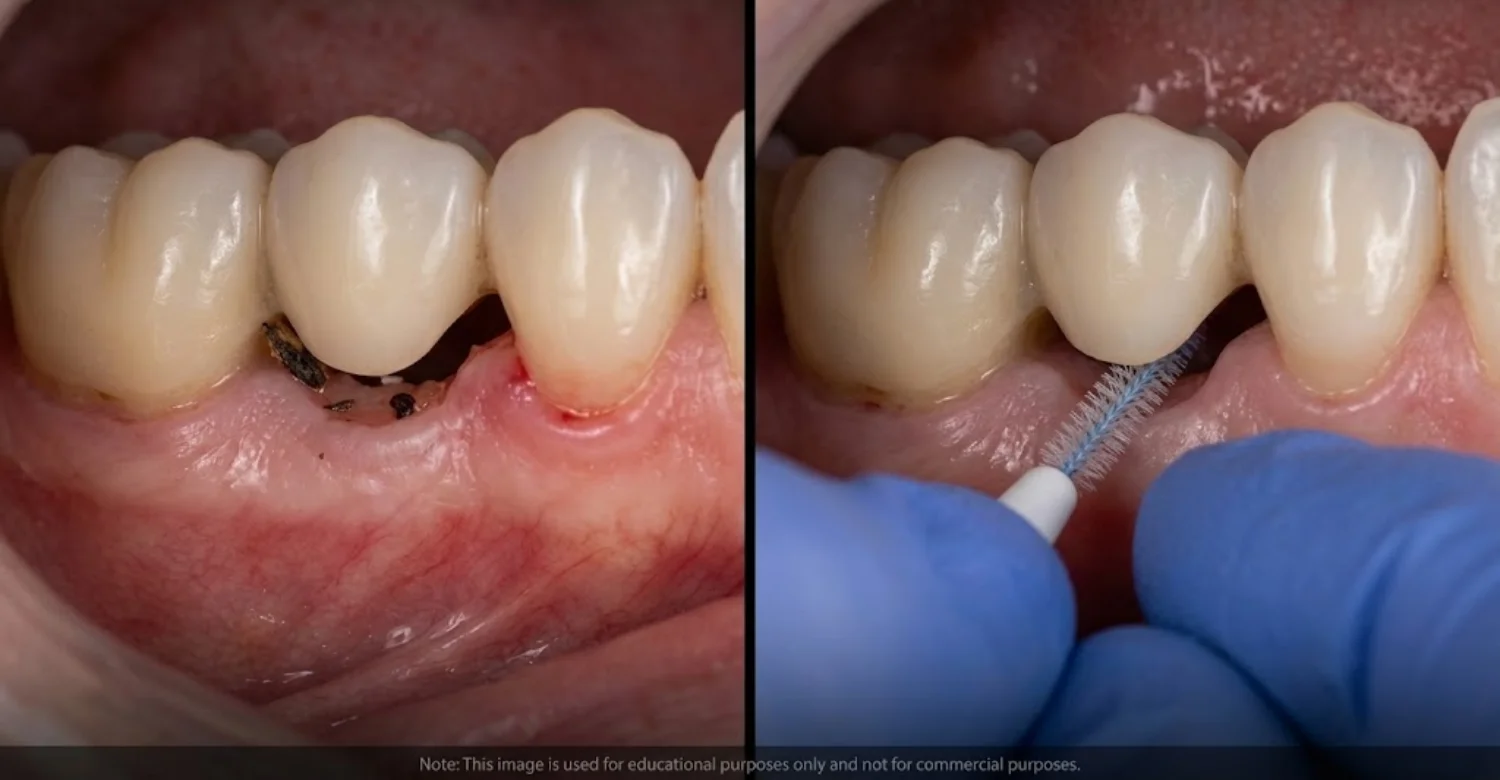
Using an Interdental Brush Safely Around the Bridge
Interdental brushes are small, cone or cylinder-shaped brushes on a handle. They clean the sides of supporting teeth and wider spaces under the pontic. Choose a size that fits snugly without forcing or bending the wire. Insert gently and move back and forth a few times. Rinse the brush after use and replace it when bristles splay. A dentist or hygienist can measure the correct size for you. The wrong size can damage gums or miss plaque entirely.
How to Brush the Supporting Teeth and Gumline
Use a soft-bristled brush and fluoride toothpaste twice daily. Angle the bristles 45 degrees toward the gumline. Use small circular motions along the crown margins and pontic edges. Spend extra time where the bridge meets the gum. An electric brush with a small round head can help some people. Brush for two minutes in total, as dental associations widely recommend. Avoid hard scrubbing, which can cause recession around the bridge.
Should You Use Mouthwash for Food Trapped Under a Dental Bridge?
Mouthwash can support your routine but cannot remove trapped food alone. It can reduce bacteria and freshen breath for a few hours. Some rinses also help calm mild gum inflammation. However, mouthwash does not dislodge wedged debris under a pontic. Use it after cleaning, not instead of cleaning. Choosing the right product also matters for sensitive gums.
Choosing a Mouthwash Without Irritating the Gums
Alcohol-free mouthwashes are gentler on inflamed or sensitive gums. Fluoride rinses add protection for the crown margins of supporting teeth. Cetylpyridinium chloride rinses can reduce plaque with fewer side effects. Chlorhexidine is effective but is usually advised for short periods only. With prolonged use, it can stain teeth and restorations and alter taste. Ask your dentist which rinse suits your gums and bridge material. Avoid any rinse that burns or leaves your mouth dry.
Why Mouthwash Cannot Replace Mechanical Cleaning
Plaque forms a sticky biofilm that liquids struggle to penetrate. Food packed under a pontic acts like a physical barrier. Rinsing may wash the surface but leave the core untouched. Only floss, brushes, or water jets physically break up this material. Research consistently shows rinses work best as an add-on to mechanical cleaning. Think of mouthwash as the finishing step, never the main one. Your floss or brush does the real work.
Note : All images used are for editorial and illustrative purposes only and may not originate from the original news provider or associated company.
What We Notice Clinically
Patients who feel food get stuck under a dental bridge make up many of our visits. Many patients assume the bridge is failing when it is not. Others assume the problem is normal when it needs attention. The pattern of trapping often tells us more than the gap size. Here is what we look for when patients describe this problem.
Why the Location and Shape of the Gap Matter
Gaps in the back of the mouth handle heavy chewing forces. Food is driven into them more often than into front gaps. Gaps near the cheek tend to trap fibrous foods. Gaps on the tongue side often collect softer debris. A gap wider at the back than the front traps food easily. Location and shape guide whether we adjust, repair, or redesign. Two gaps of similar size can need very different solutions.
Distinguishing Normal Pontic Clearance From an Unwanted Gap
Normal clearance is smooth, even, and easy to clean with threaded floss. We check whether floss passes freely and whether the tissue looks healthy. Unwanted gaps show inflammation, food residue, or uneven contours. We also compare the current fit with records from placement when available. A gap that changed over time suggests gum or bone changes. A gap that existed from day one suggests a design issue. That distinction shapes the treatment plan.
Why Repeated Food Trapping May Require More Than Better Cleaning
Better cleaning helps many patients, but not all of them. If the bridge has an overhang, cleaning cannot remove the ledge. If the cement has failed, cleaning cannot reseal the crown. If decay is present, it needs treatment rather than flossing. We see patients who clean carefully yet still trap food daily. For them, the solution lies in the bridge itself. Recognizing this early avoids months of frustration.
Common Patient Misconceptions About Dental Bridge Gaps
One common belief is that any gap means a bad bridge. Another is that letting food get stuck under a dental bridge is harmless if painless. Some patients think mouthwash alone keeps the area clean. Others worry that flossing under a bridge will loosen it. Proper flossing does not loosen a well-cemented bridge. Pain is usually a late sign, not an early one, in dental problems. Clearing up these myths helps patients act sooner.
Clinical Note : Dr. Rifat Alsaman
Many patients who feel food get stuck under a dental bridge call it a minor annoyance. In my experience, the pattern matters more than the gap itself. A gap that traps food occasionally usually responds to better cleaning. A gap that traps food after every meal usually has a structural cause. I always check the margins, the pontic contour, and the gum health together. I also ask when the problem started, because timing reveals a lot. Early assessment often allows a simple adjustment instead of full replacement.
How Is the Cause of Food Trapping Under a Dental Bridge Diagnosed?
Finding what makes food get stuck under a dental bridge starts with a careful exam. Dentists combine a visual check, gentle probing, bite tests, and often X-rays. The aim is to find why food is trapped, not just where. Each step rules causes in or out. A full assessment usually fits into a single appointment. The findings then guide a treatment plan matched to the real problem.
Dental Examination of the Bridge and Surrounding Gums
The dentist begins by looking closely at the bridge and gums. Magnification and good lighting help reveal small gaps and margins. They check for food residue, plaque, redness, and swelling. They test whether the bridge moves under gentle pressure. They also look for chips, cracks, or worn porcelain. Floss is passed under the pontic to see how it behaves. These simple checks often point to the main cause quickly.
Checking the Pontic-to-Gum Relationship and Bridge Margins
The dentist assesses how the underside of the pontic meets the gum. They look for gaps, pressure points, and rough or concave surfaces. A fine instrument checks the crown edges for steps or openings. Overhangs and open margins are common food traps at the gumline. Contacts with neighboring teeth are tested with floss. A contact that is too loose lets food wedge in sideways. These details explain why some bridges trap food and others do not.
Assessing the Supporting Teeth for Decay or Damage
The supporting teeth carry the entire load of the bridge. The dentist checks them for decay, cracks, and sensitivity. Tapping and biting tests can reveal nerve or crack problems. Cold tests show whether the nerve responds normally. Soft or sticky margins suggest decay under the crown edge. Any damage here affects the long-term outlook of the bridge. Healthy abutments are essential before any adjustment or replacement.
Evaluating Gum Recession, Plaque, and Periodontal Health
A periodontal probe measures the depth of the gum pockets around supporting teeth. Healthy pockets usually measure 1 to 3 millimeters. Deeper pockets suggest gum disease and possible bone loss. Bleeding on probing indicates active inflammation. The dentist also records recession and plaque levels. These findings show whether gum treatment must come first. A bridge cannot stay healthy on unhealthy gums.
When Dental X-Rays Are Needed
X-rays show what the eye cannot see beneath crowns and gums. They reveal decay under crown margins and bone levels around abutments. They also show infections at the root tips. Bitewing and periapical X-rays are the most common types for bridges. Modern digital X-rays use very low radiation doses. Your dentist will recommend them based on symptoms and history. They are especially important when pain or swelling is present.
When Additional Imaging May Be Appropriate
Sometimes standard X-rays do not give enough information. Cone beam CT, or CBCT, provides a three-dimensional view of the bone. It can help assess bone loss, cracks, or complex infections. It is also useful when an implant is considered instead of a new bridge. CBCT involves a higher dose than standard dental X-rays. It is used only when the benefit clearly justifies it. Digital intraoral scans can also record the gap in precise detail.
How Can You Stop Food Getting Under a Dental Bridge?
Preventing what makes food get stuck under a dental bridge starts with the cause, not the gap. Some patients need only better tools and techniques. Others need an adjustment, a repair, or a new bridge design. Gum or decay treatment may come first in some cases. The following options move from simplest to most involved.
Improving Daily Cleaning Techniques
Better technique helps many patients who occasionally feel food get stuck under a dental bridge. Clean under the bridge at least once daily, ideally at night. Use super floss, a threader, or a water flosser consistently. Add interdental brushes for wider spaces around supporting teeth. Rinse vigorously with water after meals that tend to trap. Ask your hygienist to watch your technique and correct it. Small changes in angle and pressure make a big difference.
Adjusting the Bridge Contour When Clinically Appropriate
Sometimes the underside or edges of the pontic can be reshaped. The dentist may smooth a rough surface or refine a bulky contour. Polishing makes the surface less likely to hold plaque. In some cases, material can be added to close a small gap. These adjustments are usually quick and do not require removal. They work best when the bridge is otherwise sound. Your dentist will explain whether adjustment is realistic for your bridge.
Repairing or Replacing a Poorly Fitting Dental Bridge
A loose bridge may be removed, cleaned, and recemented if the teeth are healthy. Chipped porcelain can sometimes be repaired directly in the mouth. If margins are open or decay is present, replacement is often needed. Replacement allows a better fit and a more cleanable pontic design. One review found about 71% of bridges stayed complication-free over 10 years. The remaining share often needed some form of repair or redo. Your dentist should weigh repair against replacement honestly.
Treating Gum Disease or Decay Around Supporting Teeth
Gum disease needs treatment before any bridge work can last. Deep cleaning removes plaque and tartar from below the gumline. Decay on supporting teeth is treated to stop further damage. Sometimes this means removing the bridge to reach the problem. Root canal treatment may be needed if decay reaches the nerve. Once the foundation is healthy, the bridge can be adjusted or replaced. Skipping this step risks early failure of new work.
When a New Bridge Design May Help Reduce Food Trapping
A new bridge can use a pontic shape that suits your gum ridge better. Digital scanning helps design precise contours and margins. Materials like zirconia allow strong, smooth, highly polished surfaces. The dentist may choose an ovate, modified ridge lap, or hygienic design. In some cases, gum grafting improves the ridge before the new bridge. An implant may be considered as an alternative in suitable cases. The right design makes cleaning easier for years.
Why Treatment Depends on the Cause Rather Than the Gap Alone
Two patients with similar gaps can need completely different care. One may need only a water flosser and better technique. Another may need decay treatment and a new bridge. Treating the gap without finding the cause often leads to recurrence. That is why diagnosis comes before any recommendation. Ask your dentist to explain the cause in plain terms. A clear cause leads to a clear and lasting plan.
Relief, Medical Tips, and Side Effects to Consider
Home relief can ease discomfort when you feel food get stuck under a dental bridge. However, every remedy has limits, and some carry side effects. The goal is comfort without masking a problem that needs treatment. Use these tips as short-term support, not a long-term solution. If symptoms persist beyond a few days, see your dentist.
Safe Ways to Relieve Gum Discomfort After Food Gets Trapped
Remove the food first, using gentle threaded floss or a water flosser. Rinse with warm water or saltwater to soothe the tissue. Apply a cold compress to the cheek for 10 to 15 minutes. Avoid very hot, spicy, or acidic foods for a day. Chew on the other side while the gum settles. Keep cleaning gently, even if the area bleeds slightly. Minor soreness often improves within 48 hours.
Warm Saltwater Rinses: Potential Benefits and Limitations
Saltwater rinses can soothe irritated gums and loosen surface debris. Mix about half a teaspoon of salt into a cup of warm water. Swish gently for 30 seconds, then spit, up to three times daily. The rinse is inexpensive, safe for most people, and easy to use. However, it does not kill all bacteria or remove packed food. It also cannot close a gap or fix a loose bridge. People on salt-restricted diets should ask their doctor first.
Pain Relief Options and When Medication May Be Appropriate
Over-the-counter pain relievers like ibuprofen or paracetamol may ease short-term discomfort. Follow the package directions and never exceed the stated dose. Ibuprofen may not suit people with stomach ulcers, kidney disease, or some types of asthma. Check with a pharmacist if you take other medicines. Never place aspirin directly on the gum, because it can burn the tissue. Pain relief treats symptoms, not the underlying cause. Pain needing medication for more than two days deserves a dental assessment.
Possible Side Effects of Frequent or Improper Mouthwash Use
Using strong mouthwash too often can irritate the gums and mouth lining. Alcohol-based rinses may cause dryness, which can worsen bad breath. Chlorhexidine can stain teeth and restorations brown with prolonged use. It may also change taste temporarily and increase tartar buildup. Mouthwash should never be swallowed, especially by children. Overuse may disturb the natural balance of oral bacteria. Follow your dentist's advice on product choice and duration.
Risks of Forcing Floss or Interdental Brushes Under a Bridge
Forcing floss can cut the gum and cause bleeding or recession. A brush that is too large can bend, scratch, or tear tissue. Repeated trauma may create a cleft or permanent gum loss. Tools forced past rough margins can also fray, snag, or break. In rare cases, forcing can stress an already loose bridge. Use gentle pressure and the correct size at all times. If tools will not pass easily, ask your dentist why.
Why You Should Not Use Antibiotics Without Dental Assessment
Antibiotics do not remove trapped food or close a gap. They also do not cure decay under a crown. Leftover or borrowed antibiotics can mask an infection temporarily. Misuse adds to antibiotic resistance, a growing global health threat. One US study found about 81% of antibiotics prescribed before dental visits were unnecessary. Dentists usually treat the source first, such as cleaning or drainage. Antibiotics are reserved for spreading infection or specific medical needs.
Why Home Remedies Cannot Correct a Structural Bridge Gap
Home remedies can clean and soothe, but they cannot reshape a bridge. Clove oil or herbal rinses may ease discomfort briefly. None of them can close a gap, seal a margin, or recement a crown. Relying on remedies too long can let decay or gum disease progress. A structural problem needs a structural solution from a dentist. Use home care to stay comfortable until your appointment. Then let diagnosis guide the real fix.
.jpg)
.jpg)
.jpg)
When Should You See a Dentist About Food Getting Stuck Under a Dental Bridge?
See a dentist if you often feel food get stuck under a dental bridge, or it hurts. Occasional trapping that clears easily can wait for your routine checkup. Persistent trapping, odor, bleeding, looseness, or swelling should not wait. UK NICE guidance sets adult checkup intervals between 3 and 24 months, based on risk. Some signs need same-day or emergency care. Knowing the difference protects both your bridge and your health.
When Repeated Food Trapping Requires a Dental Appointment
Book an appointment if you feel food gets stuck under a dental bridge after most meals for a week. Also book if cleaning tools no longer pass easily under the bridge. A new gap, or one that seems larger, deserves a check. Trapping that began after other dental work should be reviewed too. The appointment is usually routine rather than urgent. Bring notes on when trapping happens and which foods cause it. That information speeds up diagnosis.
Warning Signs of a Loose or Damaged Bridge
A bridge that moves, clicks, or feels different when biting may be loose. A sudden bad taste near the crowns can signal cement failure. Visible chips, cracks, or dark lines at the margins need attention. Sensitivity in a supporting tooth may indicate leakage or decay. Avoid chewing hard or sticky foods on a loose bridge. Keep any piece that breaks off and bring it to your appointment. Prompt recementation may save a bridge that would otherwise fail.
Persistent Bad Breath, Bleeding, or Gum Swelling
Bad breath that returns daily despite cleaning is a warning sign. Bleeding that continues beyond two weeks of gentle care needs evaluation. Gum swelling around the bridge suggests ongoing inflammation or infection. These signs may reflect gum disease, decay, or a poor fit. They rarely improve on their own once established. A dental cleaning and exam can identify the cause quickly. Early care often keeps treatment simple and affordable.
Severe Pain, Pus, or Increasing Facial Swelling
Severe throbbing pain often means infection has reached the nerve or gum. Pus, a pimple on the gum, or a salty taste suggests an abscess. Facial swelling that increases over hours needs urgent dental care. Fever or feeling unwell alongside dental pain is also concerning. Contact your dentist the same day or use an urgent dental service. In the UK, NHS 111 can direct you to urgent care. Do not wait for these symptoms to settle on their own.
When Facial Swelling or Difficulty Breathing Requires Emergency Care
Go to an emergency department immediately if swelling affects breathing or swallowing. Swelling spreading to the eye, neck, or floor of the mouth is dangerous. Difficulty opening the mouth or a high fever also needs urgent help. These signs may indicate a spreading infection that can become life-threatening. Call 911 in the US, 999 in the UK, or 112 in Turkey. Do not drive yourself if you feel very unwell.
Ready to transform your smile?
Talk to our team and get a personal FREE treatment plan.
How Can You Prevent Food From Collecting Under a Fixed Dental Bridge?
Prevention combines daily habits, the right tools, smart food choices, and regular checkups. A few minutes each day protects years of investment in your bridge. Well-maintained bridges often last 10 to 15 years or longer. Consistency matters more than any single product. These habits keep the space under your bridge clean and healthy.
Daily Cleaning Habits for Long-Term Bridge Maintenance
Brush twice daily for two minutes with fluoride toothpaste. Clean under the bridge at least once daily with super floss or a threader. Use a water flosser or interdental brush for extra coverage. Rinse with water after meals, especially sticky or fibrous ones. Replace your toothbrush or brush head every three months. Clean your tongue to reduce odor-causing bacteria. Make bridge cleaning part of your bedtime routine so it sticks.
Choosing Suitable Flossing and Interdental Cleaning Tools
The best tool is the one you will use every day. Super floss suits most bridges and requires no extra gadgets. Floss threaders are cheap and work with your usual floss. Water flossers suit people with limited dexterity or wider gaps. Interdental brushes clean the sides of supporting teeth very effectively. Ask your hygienist to recommend sizes and demonstrate each tool. Combining two tools often gives the most thorough clean.
Foods That May Be Difficult to Clean From Under a Bridge
Fibrous meats, such as steak and pulled beef, often wedge under pontics. Popcorn husks, seeds, and nuts can lodge firmly in small gaps. Leafy greens and stringy vegetables tend to wrap around bridge edges. Soft bread and rice can pack into wider spaces. Sticky sweets like caramel cling to margins and feed bacteria. These are the meals most likely to make food get stuck under a dental bridge. You do not need to avoid them, just clean soon after eating.
Routine Dental Checkups and Professional Cleaning
Regular checkups let your dentist spot problems before they become painful. Professional cleaning removes tartar that home tools cannot. Your hygienist can also clean under the bridge with special instruments. X-rays at set intervals help detect hidden decay under crowns. Many bridge wearers benefit from a visit about every six months. Your dentist will set an interval that matches your risk. Keep these visits even when nothing hurts.
Why Early Assessment of Changing Gaps Matters
Gaps rarely stay the same once they start changing. Early assessment can catch a loose bridge before decay sets in. It can also detect gum inflammation while it is still reversible. Small adjustments are simpler and cheaper than full replacement. Waiting often turns a minor fix into a major procedure. Note any change in how food traps or how floss passes. Report it at your next visit, or sooner if symptoms appear.
What Is the Average Cost to Repair or Replace a Dental Bridge in the US, UK, and Turkey?
The cost to repair or replace a dental bridge depends on the damage, restorative material, number of units, and location. Recementation is generally less expensive than repairing or replacing the entire bridge. Additional procedures, such as root canal treatment or gum therapy, can increase the total. The figures below are indicative planning ranges for a conventional three-unit bridge, not fixed quotes.
Average Dental Bridge Repair and Replacement Cost in the United States
In the United States, dental bridge treatment costs vary by region, clinic, material, and clinical complexity. A conventional three-unit bridge replacement typically costs 2,000–5,000. Minor repairs are generally less expensive, while extensive damage or problems affecting supporting teeth can require additional treatment.
Average Dental Bridge Treatment Costs in the US
Dental Bridge Treatment | Estimated Cost | Planning Midpoint |
Bridge recementation | 100–400 | $250 |
Minor bridge repair | 200–800 | $500 |
Three-unit bridge replacement | 2,000–5,000 | $3,500 |
Molar root canal treatment, if needed | 1,000–1,600 | $1,300 |
Cost of Bridge Recementation, Minor Repair, and Full Replacement
Recementation may be suitable when a bridge becomes loose but remains structurally sound and its supporting teeth are healthy. Minor repairs may address localized damage, while extensive fractures, decay, or poor fit can make replacement necessary.
Dental Bridge Treatment | Estimated Cost in the US |
Bridge recementation | 100–400 |
Minor repair or porcelain repair | 200–800 |
Three-unit bridge replacement | 2,000–5,000 |
Additional root canal treatment | 1,000–1,600 per molar |
These prices are estimates and may exclude examination fees, diagnostic imaging, temporary restorations, and additional work on supporting teeth. Your dentist should confirm whether repair is appropriate before recommending replacement.
Factors Affecting Dental Bridge Treatment Costs in the US
Several factors influence the final dental bridge treatment cost. Geographic location can make a considerable difference, with some major metropolitan areas charging more than smaller communities. Zirconia and other all-ceramic bridges may cost more than certain metal-ceramic alternatives.
The number of bridge units, laboratory fees, and the condition of supporting teeth also affect pricing. Root canal treatment, posts, core build-ups, extractions, and gum therapy can increase the total. Dental insurance may cover part of eligible restorative treatment, but annual benefit limits, waiting periods, and policy exclusions can leave substantial out-of-pocket expenses.
Average Dental Bridge Repair and Replacement Cost in the United Kingdom
In the United Kingdom, private dental bridge prices vary by region, provider, material, and the extent of the necessary repair. A three-unit bridge replacement typically costs approximately $1,350–$2,300, equivalent to around 1,800–3,000 using an illustrative currency conversion. NHS treatment has a different charging structure and depends on eligibility and clinical necessity.
Private Dental Bridge Repair and Replacement Costs
Private treatment may offer more flexibility in material selection and appointment scheduling. The final price depends on whether the bridge needs recementation, a limited repair, or complete replacement.
Private Dental Bridge Treatment | Estimated Cost in the UK |
Bridge recementation | $80–$250 |
Minor bridge repair | A few hundred pounds; varies by case |
Three-unit bridge replacement | $1,350–$2,300 |
Approximate replacement cost in USD | 1,800–3,000 |
Prices in London and other expensive areas may be higher than those in other regions. Premium ceramics, additional laboratory work, consultations, and X-rays may also increase the total. Request a written estimate that identifies any separately charged procedures.
NHS Eligibility and Relevant Dental Treatment Charges
NHS dental charges differ across England, Wales, and Scotland. In England, a clinically necessary bridge may fall under Band 3. In Wales, eligible bridge treatment is included in the relevant crown and bridge care package. Scotland uses a percentage-based charging structure subject to a maximum per course of treatment.
UK Nation | Relevant NHS Charge | Important Details |
England | $332.10 — Band 3 | Includes clinically necessary bridges within the NHS course of treatment |
Wales | $140.44 — crown, bridge, inlay, onlay and veneer care package | Covers up to a three-unit bridge; temporary restorations and laboratory charges are excluded |
Scotland | 80% of treatment costs, capped at $384 per course | Eligible patients may receive free treatment |
These charges apply to the relevant NHS treatment arrangements, not private dental fees. Charges and eligibility should be checked before treatment because exemptions and included services differ by nation. In England, Band 3 costs $332.10 from 1 April 2026. The Welsh crown and bridge package costs $140.44 from April 2026. Scottish patient contributions remain capped at $384 per course of treatment.
Average Dental Bridge Repair and Replacement Cost in Turkey
Turkey offers lower indicative prices for many dental bridge treatments than the United States and United Kingdom. A conventional three-unit bridge replacement typically costs 650–2,100. However, prices vary according to the clinic, bridge material, laboratory work, and the condition of the supporting teeth.
Typical Costs for Bridge Adjustment, Repair, and Replacement
The least expensive option may be recementation when the existing bridge is suitable for continued use. Minor repairs depend on the material and extent of damage, while replacement requires a new restoration and may involve additional treatment.
Dental Bridge Treatment | Estimated Cost in Turkey |
Bridge recementation | Varies by clinic and clinical findings |
Minor bridge repair | Varies by damage and material |
Three-unit bridge replacement | 650–2,100 |
Zirconia bridges may cost more than some metal-ceramic alternatives. Additional procedures, such as root canal treatment, gum therapy, or replacement of a damaged supporting tooth, may increase the final price. Patients should also confirm whether consultations, imaging, temporary restorations, and follow-up visits are included.
Factors Affecting Dental Bridge Treatment Costs in Turkey
The total cost depends on the clinic's location, the dentist's experience, the bridge material, and the complexity of treatment. Laboratory arrangements and digital scanning may also affect pricing.
A bridge supported by teeth requiring root canal treatment or core build-ups may cost more than a straightforward replacement. Gum disease should be assessed and managed when necessary. International patients should include travel, accommodation, additional appointments, and follow-up arrangements in their overall budget. Comparing itemized treatment plans is more useful than relying on advertised starting prices.
Dental Bridge Cost Comparison: US vs UK vs Turkey
The following table compares indicative costs for a conventional three-unit bridge. UK private fees are shown in both pounds and approximate US dollars.
Treatment | United States | United Kingdom (Private) | Turkey |
Recementation | 100–400 | $80–$250 | Varies by clinic |
Minor repair | 200–800 | A few hundred pounds | Varies by case |
Three-unit bridge replacement | 2,000–5,000 | $1,350–$2,300 | 650–2,100 |
Approximate replacement cost in USD | 2,000–5,000 | 1,800–3,000 | 650–2,100 |
All prices are illustrative estimates, not guaranteed treatment fees. Currency conversions are approximate and may change.
Using the midpoints of the stated replacement ranges, Turkey's estimated price is approximately 61% lower than the US midpoint and 43% lower than the UK midpoint. These comparisons do not guarantee individual savings. Travel expenses, accommodation, aftercare, and any additional procedures should be considered before deciding where to receive treatment.
What Factors Determine the Final Treatment Cost?
The final dental bridge treatment cost depends on the diagnosis and the procedures required to restore the bridge safely. A simple recementation may be sufficient in one case, while another may require a new bridge and treatment of the supporting teeth. Understanding the main cost factors helps patients evaluate quotes and avoid unexpected charges.
Number of Bridge Units and Choice of Material
The number of units directly affects the amount of restorative and laboratory work required. A conventional three-unit bridge usually includes two supporting crowns and one replacement tooth, called a pontic. A longer bridge may require more material and additional planning.
Zirconia, metal-ceramic, and other all-ceramic materials have different costs and properties. The best choice depends on the bridge location, bite forces, aesthetic requirements, and suitability of the supporting teeth. Material selection should balance appearance, strength, and clinical needs rather than price alone.
Whether Supporting Teeth Need Root Canal Treatment or Other Care
Supporting teeth must be assessed before a bridge is repaired or replaced. If decay or damage affects the pulp, root canal treatment may be necessary. A post and core build-up may also be required when insufficient tooth structure remains to support a crown.
These procedures add to the total treatment cost. If a supporting tooth cannot be restored predictably, the dentist may discuss alternative options, including a different bridge design or an implant-supported restoration. The treatment plan should explain the condition of each supporting tooth and the reasons for any additional procedure.
Whether Gum Treatment or Additional Diagnostic Imaging Is Required
Gum health is important for the long-term maintenance of dental bridges. Patients with gum inflammation or periodontal disease may need professional cleaning or more extensive periodontal treatment before restorative work begins.
Diagnostic imaging helps assess supporting teeth and surrounding structures. Conventional dental X-rays may be sufficient for many cases, while additional imaging is recommended only when clinically indicated. Digital scans may be included in the restorative fee or charged separately. Patients should confirm which diagnostic services are necessary and whether they are included in the quote.
Whether the Existing Bridge Can Be Repaired or Must Be Replaced
Repair is often less expensive than replacement when the existing bridge remains suitable for continued use. Recementation may work when the bridge is intact and the cause of loosening has been addressed. Limited damage may also be repairable, depending on the material and location.
Replacement may be necessary when the bridge is fractured extensively, fits poorly, or has decay affecting its supporting teeth. Simply recementing a bridge without treating the underlying problem can lead to further complications. The dentist should explain the diagnosis, why the proposed approach is appropriate, and the expected maintenance requirements.
What to Confirm in an Itemized Treatment Quote
An itemized quote should identify the treatment planned, the number of bridge units, the material, and all associated fees. It should also clarify whether the price includes examinations, X-rays, digital scans, temporary restorations, and laboratory costs.
Ask whether root canal treatment, core build-ups, extractions, and gum therapy are included or charged separately. Confirm the arrangements for adjustments, repairs, follow-up appointments, and any applicable guarantees. For treatment abroad, clarify who will manage complications after returning home and whether additional visits may be needed.
How Vitrin Clinic Evaluates and Treats Food Trapping Under Dental Bridges
At Vitrin Clinic, we find out what makes food get stuck under a dental bridge. Our approach starts with careful diagnosis before any recommendation. We assess the bridge, the gums, and the supporting teeth together. Then we explain the options clearly, from simple adjustments to replacement. The aim is a comfortable, cleanable bridge that lasts.
Evaluating Food Trapping Around Existing Dental Bridges
We begin by listening to how and when food traps. We ask which foods cause problems and when symptoms began. Then we examine the bridge closely under magnification. We check how floss passes beneath the pontic and around the crowns. We look for residue, inflammation, and rough or open margins. This first step often reveals the main reason quickly. It also guides which further tests are worthwhile.
Assessing Gum Health, Bridge Fit, and Supporting Teeth
Our dentists measure gum pockets and check for bleeding and recession. We test the bridge for movement and examine its margins carefully. We assess supporting teeth for decay, cracks, and nerve health. X-rays are taken when clinically indicated to see beneath crowns. Bite analysis shows whether chewing forces contribute to the problem. Together, these findings give a full picture of your bridge. Nothing is recommended until the cause is clear.
Personalized Recommendations for Bridge Adjustment, Repair, or Replacement
Every recommendation is tailored to your diagnosis and goals. If cleaning technique is the issue, we coach you on tools and methods. If the contour is the issue, we may adjust or polish the bridge. If the cement has failed, recementation may be possible. If decay or poor fit is present, we discuss replacement. We explain the pros, cons, and costs of each option. You decide with full information.
Considering Zirconia or Porcelain Restorations When Clinically Suitable
When a new bridge is needed, material choice affects comfort and hygiene. Zirconia offers high strength and a smooth, polishable surface. Porcelain options provide excellent appearance, especially for front teeth. We select materials based on your bite, gum shape, and aesthetic needs. Digital design helps shape a pontic that is easier to clean. We do not recommend a material simply because it is premium. Clinical suitability always comes first.
Understanding Treatment Options Before Committing to a New Bridge
Replacing a bridge is a significant decision with long-term effects. We make sure you understand every option before committing. Alternatives may include repair, implants, or gum treatment first. We explain expected lifespan, maintenance needs, and total costs. You receive a clear, itemized plan in writing. Questions are welcome at every stage. Feeling confident in your choice is part of good care.
How Vitrin Clinic Supports Your Treatment Journey
Treatment involves more than a single appointment. We support you from first contact to long-term follow-up. This matters especially for patients traveling from abroad. Clear communication and planning reduce stress and uncertainty. Here is how the journey usually works.
Initial Consultation and Review of Dental Concerns
Your journey begins with a consultation about your concerns. You can share symptoms, photos, and any recent X-rays in advance. We review your dental history and previous bridge work. This helps us understand the problem before you arrive. We then explain what an in-person examination will involve. You can ask questions about timing, costs, and options. The consultation helps you decide whether treatment feels right for you.
Clinical Assessment and Digital Diagnostics When Indicated
In the clinic, we perform a full examination of your bridge and gums. Digital X-rays are taken when needed to assess hidden decay or bone. Intraoral scans may record the bridge and gap in precise detail. CBCT imaging is reserved for cases where it changes the plan. Each test has a clear purpose and is explained beforehand. We avoid unnecessary imaging and radiation. The results form the basis of your treatment plan.
Individualized Treatment Planning Based on Oral Health
Your plan reflects your gum health, supporting teeth, bite, and goals. We may recommend gum treatment or decay care before bridge work. The plan sets out each step, its purpose, and its cost. We also estimate the number of visits and the time required. Options are presented side by side for easy comparison. You can take time to consider before deciding. The plan adapts if new findings arise during treatment.
Coordinating Appointments for International Patients
For patients traveling from abroad, we plan visits efficiently. We aim to group appointments to reduce the number of trips. Our team explains how many days you may need to stay. We share guidance on scheduling around flights and recovery. Clear communication before travel helps avoid surprises. Plans are confirmed only after clinical assessment. Some cases may need a second visit for final fitting.
Follow-Up Guidance and Long-Term Bridge Care
After treatment, we provide clear instructions for cleaning and care. We show you how to use floss threaders, super floss, or water flossers. We explain which symptoms should prompt a call. Remote follow-up helps international patients share concerns after returning home. We also recommend regular checkups with a local dentist. Long-term care protects your bridge and the teeth that support it. Our goal is lasting comfort, not just a successful fitting.
Ready to transform your smile?
Talk to our team and get a personal FREE treatment plan.
Key Takeaways
Many people feel food gets stuck under a dental bridge, but it is not always normal. The cause, not the gap size alone, decides the right solution. These takeaways summarize the most important points from this guide.
The Main Causes of Food Getting Stuck Under a Dental Bridge
The main causes include a wide pontic gap, poor contour, and gum recession. Bite changes, worn cement, and loose crowns also contribute. Decay at the crown edges can create new traps. Many cases involve more than one cause at once. About 42% of US adults over 30 have periodontitis, which can widen gaps. Identifying the cause is the first step to lasting relief.
The Safest Ways to Remove Trapped Food and Maintain Oral Hygiene
Use super floss, a floss threader, or a water flosser under the bridge. Add interdental brushes for wider spaces and the sides of supporting teeth. Brush twice daily with a soft brush and fluoride toothpaste. Rinse with water or saltwater to loosen debris and soothe gums. Never use pins, knives, or forceful toothpicks. Clean under the bridge at least once every day.
Why Persistent Gaps, Odor, Pain, or Bleeding Need Assessment
Persistent symptoms usually signal a problem that cleaning alone cannot fix. Odor suggests bacteria are breaking down trapped food. Bleeding and swelling indicate gum inflammation. Pain or sensitivity may point to decay or a loose bridge. These signs often start small and worsen gradually. Early assessment keeps treatment simpler and less costly.
When Bridge Adjustment, Repair, or Replacement May Be Necessary
Adjustment helps when the contour is rough or slightly bulky. Recementation helps when the bridge is loose but the teeth are healthy. Repair may fix chips or small defects. Replacement is often needed for open margins, decay, or poor design. About 89% of bridges survive 10 years, but complications are common. Your dentist should recommend the least invasive option that works.
Why Individualized Diagnosis Matters More Than the Size of the Gap Alone
Two similar gaps can have very different causes and solutions. Diagnosis considers gum health, bridge fit, supporting teeth, and bite. A small gap with decay needs more care than a large clean space. Treating the gap without the cause risks repeated problems. A personalized assessment leads to a plan that lasts. Your plan should be built around your own findings.
At Vitrin Clinic
At Vitrin Clinic, we help patients understand the cause of food getting stuck under a dental bridge and explore suitable dental bridge and implant treatment options. We begin with a careful examination of the bridge, gums, and supporting teeth. Digital diagnostics are used when clinically appropriate to support accurate treatment planning. Depending on the findings, treatment may involve bridge adjustment, replacement, or an implant-supported restoration. Our team supports local and international patients with coordinated planning and follow-up care. If food frequently gets trapped under your bridge, book a consultation to identify the cause and receive a personalized treatment plan.
Sources
FAQs
Dr. Rifat Alsaman has more than 5 years of clinical experience in dentistry and currently serves as the Head of the Medical Team at Vitrin Clinic. He is dedicated to providing exceptional patient care, overseeing treatment planning, and ensuring the highest clinical standards across the team. His expertise, attention to detail, and commitment to continuous professional development have helped countless patients achieve healthier, more confident smiles.


