Dental Bridge
October 21, 2026
What Is a Flipper Tooth? Cost, Pros and Cons, and Temporary Replacement Options
 Dr. Rifat Alsaman

A missing tooth can change how you smile, speak, and eat within a single day. A flipper tooth is one of the fastest, most affordable ways to fill that gap. This guide explains what a dental flipper is, how much it costs, and how it compares with other options. You will also find cleaning steps, comfort tips, and warning signs that need a dentist's attention.
Ready to transform your smile?
Talk to our team and get a personal FREE treatment plan.
What Is a Flipper Tooth and How Does It Work?
A dental flipper is a removable acrylic plate that carries one or more artificial teeth. The American College of Prosthodontists reports that about 178 million Americans are missing at least one tooth. A flipper is designed to restore appearance quickly, not to replace a tooth permanently.
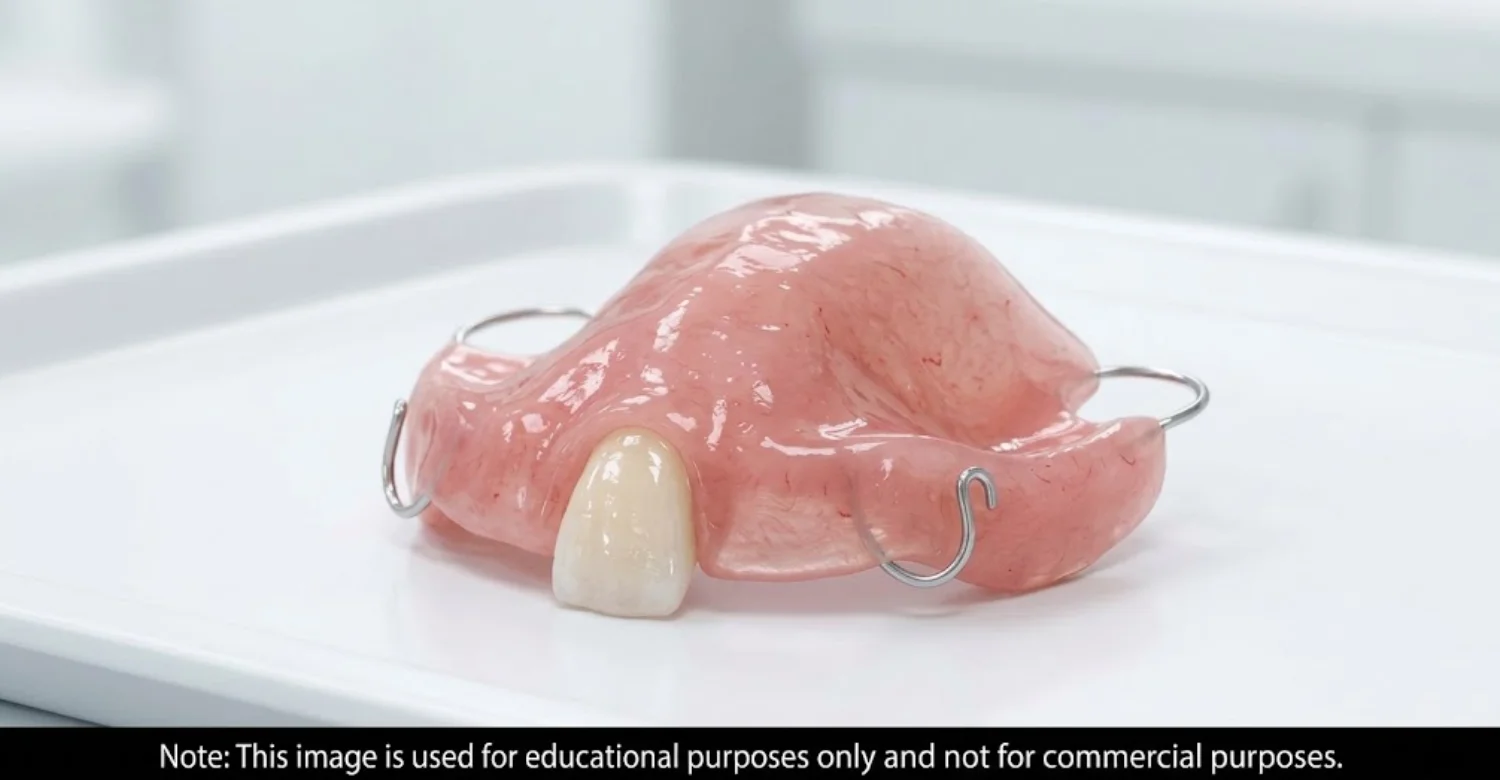
What a dental flipper looks like and what it is made of
A dental flipper looks like a thin, gum-colored retainer with a tooth attached at the gap. The base is usually pink acrylic resin shaped to follow your palate or lower gum line. The whole appliance is light, and most single-tooth versions weigh only a few grams.
How a flipper replaces one or more missing teeth
The flipper sits in the space left by the missing tooth and fills it with an artificial crown. The acrylic base spreads pressure across the gums and palate instead of loading one area. You remove it for cleaning and insert it again by pressing it gently into position.
Who may benefit from a temporary flipper tooth replacement?
A flipper may suit people who need a quick, low-cost way to close a visible gap. Common candidates include patients waiting for a dental implant to heal or integrate with bone. Your dentist will confirm suitability after checking your teeth, gums, and bite.
Is a flipper tooth a temporary or permanent solution?
A flipper is designed as a temporary solution in most cases. It bridges the time between tooth loss and a definitive restoration such as an implant or bridge. Healing after an extraction can take six weeks to over six months.
What is the difference between a dental flipper and a removable partial denture?
A dental flipper is a simple, lightweight, and usually temporary type of removable partial denture. A conventional partial denture is often built on a cast metal framework for strength and long-term stability. Your dentist will choose between them based on how long you need the replacement.
.jpg)
.jpg)
.jpg)
.jpg)
Why Might You Need a Flipper Tooth?
People choose a flipper when a gap appears suddenly or when the final restoration needs time. According to NIDCR data, adults aged 20 to 64 have an average of 25.5 remaining teeth out of 32.
Missing a tooth after extraction
Teeth are often extracted because of deep decay, a cracked root, advanced gum disease, or failed root canal treatment. After extraction, the gap is visible immediately, especially if it is near the front of the mouth. The CDC reports that adults aged 50 to 64 have, on average, 3.8 teeth missing due to disease.
Replacing a front tooth after an accident or dental injury
Dental trauma is far more common than many people realize. A large review estimated that more than one billion living people have experienced a traumatic dental injury. The same review found that 15.2% of people have injured a permanent tooth. A flipper also gives the dentist time to assess the bone before planning an implant.
Wearing a temporary tooth while waiting for a dental implant
Dental implant treatment is often completed in stages over several months. After the implant is placed, the bone needs time to bond with the implant surface. A flipper covers the gap during this time without pressing on the healing site. Implants have a high success rate, with one review reporting about 96.4% survival at 10 years.
Replacing a missing tooth while gums heal
The gums and jawbone change shape after a tooth is removed. One prospective study found that the ridge width shrank by about 50% within 12 months after single-tooth extraction. A flipper fills this healing window, and your dentist can reline it as the gums change.
Maintaining the appearance of your smile during restorative treatment
Some treatment plans involve several steps, such as bone grafting, gum therapy, or orthodontic movement. Each step can add weeks or months before the final tooth is placed. The appliance is a practical bridge between treatment stages.
What Does a Flipper Tooth Look Like Before and After Treatment?
A well-made flipper can make a gap almost unnoticeable in normal conversation. The sections below explain what to expect.
Flipper tooth before and after: What changes can you expect?
Before treatment, a missing tooth leaves a dark space that draws attention when you smile or speak. The lip may fold slightly inward over the gap, and some sounds may whistle. After fitting, the artificial tooth fills the space and restores the line of your smile. Most patients notice the biggest change in confidence rather than in function.
How natural does a single-tooth flipper look?
A single-tooth flipper can look very natural from a normal speaking distance. The artificial tooth is chosen to match the size, shade, and shape of your neighboring teeth. A careful shade match and good laboratory work make the biggest difference.
Can a flipper tooth match your natural tooth color and gum appearance?
Yes, in most cases the tooth color can be matched closely using a dental shade guide. The dentist compares several shades against your teeth in natural light before ordering the appliance. Whiten your teeth before the shade is chosen, because acrylic does not respond to whitening products.
What factors affect the fit and appearance of a dental flipper?
The fit and appearance depend on design choices and on how your mouth heals. A good result needs an accurate impression or digital scan, careful shade selection, and skilled laboratory work. The three main factors are explained below.
Tooth shape, shade, and position
The artificial tooth must match the width, length, and curve of the tooth it replaces. Even a small difference in angle can make it stand out in photos. The tooth also needs to sit at the correct height so it does not catch your bite.
Acrylic base design and visible clasps
The base should be thin enough to feel comfortable but thick enough to resist cracking. Clasps improve grip, but metal clasps near the front can be visible when you smile. Your dentist will balance stability against aesthetics for your case.
Gum healing and changes in the fit
After an extraction, the gums shrink and reshape for several months. A flipper that fits perfectly on day one may loosen or leave a small gap later. A reline or adjustment can restore the fit without making a completely new appliance.
What We Notice Clinically
In daily practice, patients usually ask about flippers when a visible tooth is lost or about to be removed. The sections below share patterns we often see and the misunderstandings worth correcting early.
Why patients often choose a flipper for a missing front tooth
Front teeth play a major role in first impressions, so even a short gap feels urgent. A flipper can usually be ready faster and at lower cost than fixed options. Many patients see it as a safe pause while they decide on an implant or bridge.
Why a temporary tooth replacement must fit the mouth properly
A poor fit can turn a helpful appliance into a source of sore spots and inflammation. If the acrylic presses on one area, it can irritate the gums and slow healing. Small adjustments often make a large difference in comfort.
The difference between cosmetic tooth replacement and restoring chewing function
A flipper mainly restores appearance, while an implant or bridge restores both appearance and chewing strength. The acrylic tooth is supported by soft tissue rather than bone or strong neighboring teeth. This is why most dentists plan a definitive replacement later.
Common misconceptions about flipper teeth
Some patients assume that a removable tooth solves every problem caused by tooth loss. Others believe that low cost means a dental visit is unnecessary. The three most common misunderstandings are explained below.
A flipper is not the same as a dental implant
An implant is a titanium or zirconia post placed in the jawbone that supports a fixed crown. A flipper is a removable plate that rests on the gums. Their stability, lifespan, and cost are very different.
A removable tooth does not prevent every consequence of tooth loss
A flipper fills the gap visually, but it does not stimulate the jawbone like a natural root. Bone loss can continue beneath the appliance over time. Neighboring teeth may also drift if the appliance is worn irregularly.
A low-cost temporary replacement still requires professional assessment
Mail-order kits and home-molded teeth may look tempting because they are cheap. However, they cannot check for infection, bone problems, or bite issues. Homemade temporary teeth are generally meant for a few hours to a day, not for weeks.
Clinical Note: Dr. Rifat Alsaman's Perspective on Temporary Tooth Replacement
At Vitrin Clinic, temporary tooth replacement is treated as part of a full restorative plan. The goal is to protect appearance today without limiting the best long-term option tomorrow. The note below summarizes the clinical approach followed by our medical team.
Dr. Rifat Alsaman, Head of the Medical Team at Vitrin Clinic and cosmetic dentist, on assessing fit, appearance, oral health, and long-term replacement goals
Dr. Rifat Alsaman stresses that a temporary tooth should look natural, fit securely, and stay comfortable during daily wear. He reviews the gums, bite, and bone before recommending any removable appliance. He also explains to patients how long the temporary phase is likely to last.
Why the cause of tooth loss and the condition of surrounding teeth and gums matter before choosing a flipper
The reason a tooth was lost often shapes the next steps. Tooth loss from gum disease may require periodontal treatment before any appliance is fitted. Trauma cases may involve cracked neighboring teeth or bone damage that needs imaging. Addressing these issues first helps the temporary tooth succeed.
Ready to transform your smile?
Talk to our team and get a personal FREE treatment plan.
What Are the Pros and Cons of a Dental Flipper?
A dental flipper has clear advantages for short-term use, but it also has real limitations. The table of pros and cons below is followed by detailed explanations.
Advantages | Disadvantages |
Lower initial cost than fixed options | Less stable when biting and chewing |
Fast to make and fit | Can cause pressure spots or gum irritation |
No drilling of neighboring teeth | Needs daily cleaning and periodic adjustment |
Removable for cleaning | Less durable as a long-term solution |
Advantages of a dental flipper
The main advantages of a flipper are cost, speed, and flexibility. It does not commit you to a permanent treatment path. The key benefits are described below.
Removable design and relatively low initial cost
A flipper costs far less upfront than an implant or bridge. In the US, it is often quoted between $300 and $700, compared with several thousand dollars for an implant. No healthy tooth structure is removed to fit it.
Temporary improvement in smile appearance
A flipper closes a visible gap within days in many cases. This helps patients continue working, studying, and socializing without feeling self-conscious. For front teeth, this cosmetic benefit is often the deciding factor.
Potential usefulness during healing or implant planning
A flipper is ideal for the months when the extraction site or implant is healing. It can be relieved underneath to avoid pressing on healing tissues. It also previews tooth shape, which can guide decisions for the final crown.
Disadvantages of a dental flipper
The same features that make a flipper simple also limit its strength and stability. It is supported by soft tissue, which moves and changes over time. The main drawbacks are explained below.
Less stability and chewing strength than many fixed restorations
A flipper is not anchored to bone or cemented to teeth. It can lift or rock during chewing, especially with sticky foods. Fixed options such as implants and bridges handle normal chewing forces far better.
Possible movement, pressure points, or gum irritation
Acrylic resting on the gums can create sore spots if the fit is uneven. Movement during speech or eating can rub the tissues. Regular cleaning and timely adjustments reduce these risks considerably.
Need for cleaning, adjustments, and possible repairs
A flipper must be cleaned every day, like natural teeth. As the gums shrink, it may need relining to stay secure. Each repair or reline can add cost and require a visit.
Limited suitability as a long-term replacement in some cases
Thin acrylic can weaken, stain, and wear over months of use. Bone loss continues beneath the appliance because nothing stimulates the jaw. For these reasons, dentists usually plan a definitive restoration.
Is a dental flipper comfortable to wear?
Most patients find a dental flipper comfortable once they adapt, which usually takes a few days to two weeks. At first, the acrylic may feel bulky against the palate or tongue. If one spot stays sore, your dentist can smooth it in a short visit.
Can a flipper tooth affect speech or eating?
Yes, a flipper can affect both speech and eating during the first days. Acrylic over the palate can change how your tongue forms "s" and "th" sounds. Reading aloud helps most people adapt within one to two weeks. Avoid biting directly into hard foods with the artificial tooth.
Is a flipper tooth suitable for everyone?
A flipper is not suitable for everyone, and an exam is needed to confirm it. People with active gum disease or untreated decay may need treatment first. Heavy grinding, a strong gag reflex, or limited bite space can also rule it out. In these cases, your dentist may suggest an Essix retainer, a partial denture, or another option.
How Much Does a Flipper Tooth Cost Without Insurance?
The cost of a flipper is usually lower than most other tooth replacement options. The figures below are planning estimates, not fixed quotes.
What is the average cost of a flipper tooth in the US, UK, and Turkey?
The table below summarizes typical planning costs for a single-tooth acrylic flipper. Figures are indicative and should be confirmed with a written quote. UK private partial dentures generally range from $200 to $2,000 depending on materials, with flippers at the lower end.
Location | Indicative average planning cost | Important qualification |
US | Around $500 | A planning estimate within a commonly reported 300–700 range |
UK | Around $300 | A planning estimate within a reported $250–$350 private range |
Turkey | Requires local price verification | Obtain current written quotes for a comparable single-tooth acrylic flipper |
What factors affect the cost of a flipper tooth?
Several factors shape the final price you pay for a flipper. The appliance itself is only part of the cost. The main cost drivers are explained below.
One missing tooth versus multiple missing teeth
A single-tooth flipper is usually the least expensive design. Each additional tooth adds material, laboratory time, and design complexity. Larger appliances may also need more fitting adjustments.
Acrylic design, materials, and laboratory fees
Standard pink acrylic is the most affordable base material. Flexible nylon bases or premium resin teeth cost more but may look and feel better. Higher-quality work often lasts longer and fits more accurately.
Consultation, impressions or digital scans, and fitting appointments
Most clinics charge for the initial consultation and examination. Impressions or digital scans are needed to make the appliance accurately. Ask which visits are included before you agree.
Extractions, adjustments, repairs, and replacement fees
If a tooth must be removed first, the extraction is usually billed separately. Adjustments may be free for a set period and charged afterward. A lost or broken appliance may need to be remade completely.
Does dental insurance cover a temporary flipper tooth?
Many dental insurance plans cover part of the cost of a flipper as a removable prosthesis. Coverage depends on your plan, waiting periods, and annual maximum benefits. Request a pre-treatment estimate from your insurer to avoid unexpected out-of-pocket costs.
How can you compare dental flipper prices without insurance?
Start by requesting written quotes from at least two or three clinics. Make sure each quote describes the same type of appliance and the same number of teeth. A slightly higher quote with more included care may cost less overall.
What should a written flipper tooth quote include?
A clear written quote should list every part of the treatment and its price. It should name the appliance type, material, and number of replacement teeth. Any optional procedures should be shown separately from the essential treatment.
Is the cheapest flipper tooth always the best option?
The cheapest option is not always the best value. A poorly fitting appliance can cause sore gums, trap food, and need frequent repairs. Value depends on fit, durability, and support, not price alone.
How Is a Flipper Tooth Diagnosed, Designed, and Fitted?
A flipper is planned through examination, records, laboratory design, and a fitting visit. The steps are explained below.
What does a dentist check before recommending a flipper?
Before recommending a flipper, your dentist examines your mouth as a whole. The goal is to confirm that the appliance will be safe, stable, and comfortable. The three main checks are described below.
Condition of the extraction site and healing tissues
The dentist checks for swelling, infection, or bone fragments at the site. Healing tissues must tolerate light contact from the acrylic. Fitting may be delayed until early healing is complete to protect the socket.
Health of the remaining teeth and gums
Neighboring teeth must be healthy enough to support clasps if they are used. Decay, loose teeth, or gum disease are treated before or alongside the appliance. X-rays may be taken to check hidden problems.
Bite, available space, and stability of the proposed appliance
The dentist assesses how your upper and lower teeth meet. There must be enough space for the artificial tooth without hitting the opposing teeth. Stability is planned through clasps, base extension, or both.
How is a dental flipper made?
The process begins with an impression or digital scan of your upper and lower teeth. The dentist records the shade of your neighboring teeth and notes any special design requests. Some laboratories can complete a simple flipper in one to two days.
What happens during the fitting appointment?
At the fitting appointment, the dentist places the flipper and checks how it seats. They look for pressure spots, rocking, and gaps around the base. The dentist will also explain cleaning, wearing time, and what to do if soreness appears.
How long does it take to get a flipper tooth?
The timeline usually ranges from a few days to about two weeks. It depends on laboratory speed, the complexity of the design, and your healing needs. Your dentist will give you a personalized schedule after the examination.
When might an immediate flipper be appropriate after extraction?
An immediate flipper is made before the tooth is removed and fitted the same day or soon after. It is often chosen for front teeth, where a visible gap would affect work or daily life. Some guidance suggests avoiding wear for about 24 hours after extraction, but your dentist's instructions come first.
Why might a dentist recommend an adjustment or a different appliance?
A dentist may recommend an adjustment if the flipper causes soreness, rocks, or affects your bite. Adjustments are common as the gums heal and change shape. The recommendation always depends on comfort, stability, and long-term goals.
.jpg)
.jpg)
.jpg)
What Are the Best Temporary Tooth Replacement Options?
Several temporary options can replace a missing tooth while you plan a definitive solution. The comparison below can help you discuss options with your dentist.
Option | Typical use | Main strength | Main limitation |
Acrylic flipper | Short-term, one or few teeth | Fast and affordable | Less stable when chewing |
Flexible partial denture | Medium-term | Comfortable, no metal clasps | Harder to adjust or reline |
Essix retainer with tooth | Short-term, limited bite space | Clear and discreet | Not for eating with |
Cast metal partial denture | Long-term | Durable and stable | Higher cost, longer to make |
Which temporary tooth replacement is best for one missing tooth?
For one missing tooth, the best temporary option is often an acrylic flipper or an Essix retainer. The flipper is sturdier for daily wear and can usually be worn while eating soft foods. The goal is protection, appearance, and comfort until the final restoration.
Single-tooth flipper versus other removable tooth replacements
A single-tooth flipper is one of several removable choices. Each option uses a different material and design to hold the replacement tooth. The main alternatives are described below.
Acrylic removable partial denture
An acrylic partial denture is similar to a flipper but may be larger and thicker. It can replace several teeth across the arch. It is generally less durable than metal-framework dentures.
Flexible partial denture
A flexible denture is made from nylon-based resin that bends slightly. It grips the gums without metal clasps, which improves appearance. However, it can be harder to reline or repair.
Essix retainer with a replacement tooth
An Essix retainer is a clear plastic tray with a tooth-colored filler at the gap. It is thin, discreet, and fast to make. It is not designed for eating, and it can wear quickly.
Temporary tooth attached to an orthodontic or restorative appliance, when appropriate
During orthodontic treatment, a replacement tooth can be added to a retainer or brace wire. This keeps the gap filled while teeth are being moved. Your dentist will decide if this suits your treatment plan.
Flipper tooth versus dental implant
A flipper and an implant serve different purposes and timelines. The flipper is a quick, removable, temporary solution. The comparison below explains their main differences.
Factor | Dental flipper | Dental implant |
Type | Removable acrylic appliance | Fixed post in the jawbone with a crown |
Typical US cost | About 300–700 | Several thousand dollars per tooth |
Treatment time | Days to two weeks | Usually three to six months or more |
Stability | Moderate, rests on gums | High, anchored in bone |
Expected lifespan | Months to a few years | Around 96% survival at 10 years |
Differences in cost, treatment time, stability, and maintenance
A flipper costs a fraction of an implant and is ready within days. An implant takes months because the bone must integrate with the post. Flippers need daily removal and cleaning, while implants are brushed like natural teeth.
When a flipper may be appropriate while waiting for an implant
A flipper is often used during the healing period after implant placement. It is also useful while a bone graft matures before the implant. This keeps your smile complete throughout treatment.
Why implants require assessment of bone, gums, and overall oral health
An implant needs enough healthy bone to support it securely. Gum disease, smoking, and uncontrolled diabetes can raise the risk of failure. This assessment decides whether grafting is needed first.
Flipper tooth versus dental bridge
A flipper and a dental bridge both replace missing teeth, but they work very differently. A bridge is fixed in place, while a flipper is removable. The key differences are explained below.
Removable versus fixed tooth replacement
A bridge is cemented onto the teeth on either side of the gap. It cannot be removed at home, and it feels more like natural teeth. The bridge offers better chewing strength and stability.
Effect on neighboring teeth and long-term treatment planning
A traditional bridge requires reshaping the neighboring teeth to hold crowns. This is irreversible and suits teeth that already have large fillings. A flipper leaves neighboring teeth untouched and keeps future options open, including an implant.
How do you choose the right replacement for a missing tooth?
Choosing the right replacement means balancing cost, appearance, health, and long-term goals. There is rarely one answer that suits every patient. The main factors to consider are listed below.
Budget and insurance coverage
Consider both the upfront cost and the long-term cost of maintenance. A flipper is cheaper now but may need replacement later. Check what your insurance covers before deciding.
Location of the missing tooth and cosmetic requirements
Front teeth require excellent appearance, so shade matching and gum design matter most. Back teeth need strength for chewing more than perfect aesthetics. A back gap may benefit more from a fixed solution.
Oral health, healing time, and expected duration of use
Healthy gums and bones widen your choices. If healing will take months, a temporary tooth fills the gap meanwhile. Expected duration helps decide which temporary design fits best.
Personal preferences and long-term restorative goals
Some patients prefer a fixed tooth they never remove. Others are comfortable with a removable option for longer periods. Share your preferences openly so your dentist can plan accordingly.
How Long Can You Wear a Dental Flipper?
A dental flipper is usually worn for a few months up to about a year. The sections below explain daily wear, sleep, eating, and when to seek repairs.
How long does a flipper tooth typically last?
With good care, a flipper commonly lasts from several months to a few years. Its lifespan depends on how carefully it is handled and cleaned. Your dentist should check it at every routine visit.
Can you wear a flipper tooth every day?
Yes, a flipper is designed to be worn during the day. Most patients wear it from morning until bedtime. If the appliance causes pain, remove it and contact your clinic.
Can you sleep with a flipper tooth in your mouth?
Most dentists recommend removing a flipper at night unless they advise otherwise. Sleeping without the appliance allows the gums to rest and receive normal saliva flow. advises keeping removable dentures moist overnight so they hold their shape.
Can you eat with a flipper tooth?
You can eat with a flipper, but it requires care. The appliance is less stable than natural teeth, implants, or bridges. The tips below explain which foods to choose and avoid.
Foods to start with while adapting
Begin with soft foods such as yogurt, eggs, pasta, soups, and mashed vegetables. Cut food into small pieces and chew on the back teeth. Gradually add firmer foods as your comfort improves.
Hard, sticky, and chewy foods that may dislodge or damage the appliance
Avoid nuts, hard candy, ice, and crusty bread while wearing the flipper. Sticky foods such as caramel and chewing gum can pull it loose. Biting into apples or corn on the cob with the replacement tooth risks breaking it.
Can a flipper tooth be worn while gums heal after extraction?
Yes, a flipper is often worn while the gums heal, but timing must follow your dentist's instructions. The acrylic should not press heavily on the fresh socket. As healing progresses over six weeks to six months, adjustments keep the appliance comfortable.
When should a flipper be adjusted, repaired, or replaced?
A flipper should be adjusted if it rocks, feels loose, or causes sore spots. Repair is needed when the acrylic cracks or the artificial tooth chips. Early adjustments are quicker and cheaper than full replacement.
How often should you clean a dental flipper?
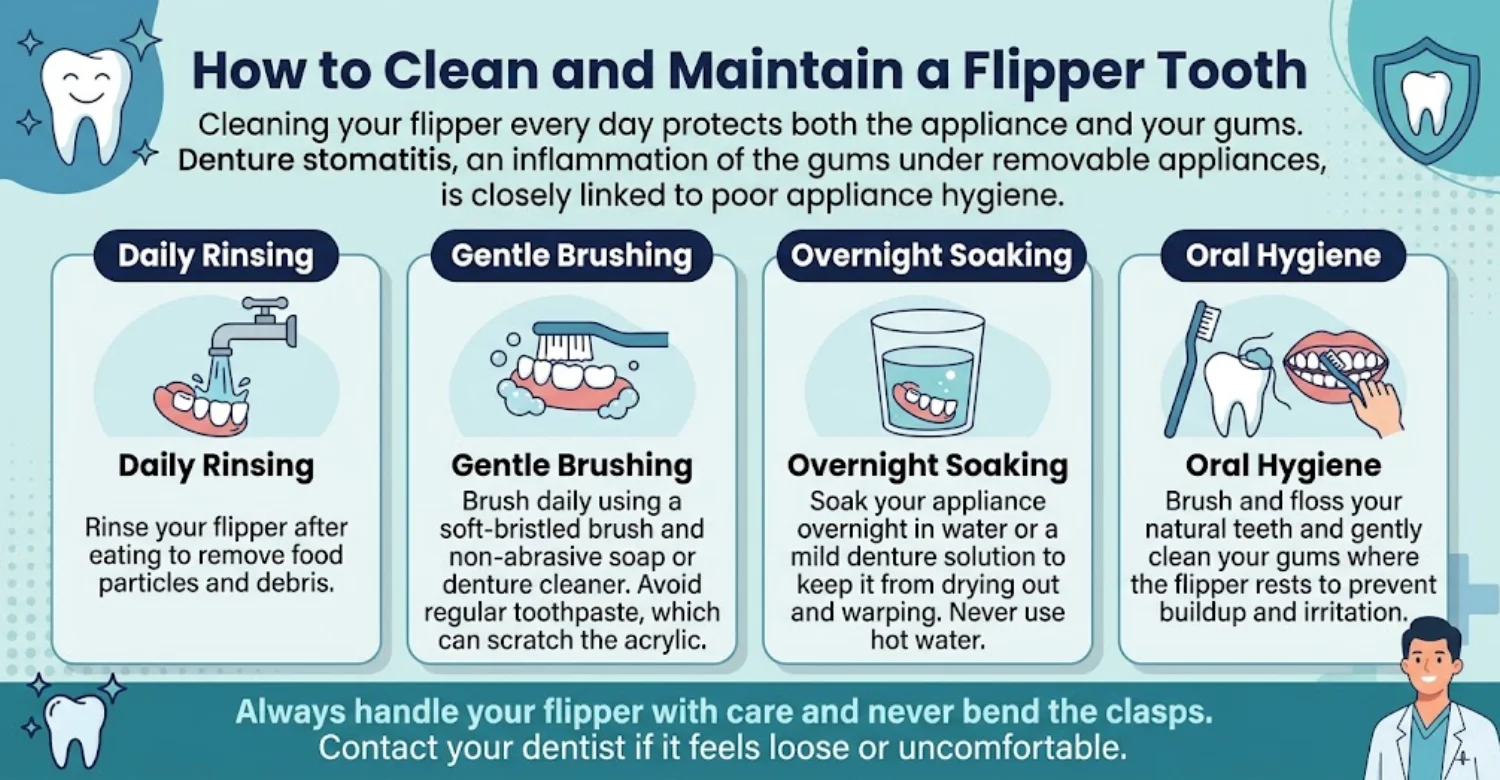
Clean your dental flipper at least once a day with a thorough brushing. Rinse it after every meal to remove loose food particles. Consistent daily care also helps the acrylic look fresh for longer.
Step-by-step instructions for cleaning a flipper tooth
Cleaning a flipper takes only a few minutes when done correctly. Work over a towel or a sink filled with water to cushion it if dropped. Your dentist may add specific instructions for your appliance.
Remove the appliance carefully as instructed by your dentist
Use your fingertips to release the appliance gently, following the technique you practiced at fitting. Avoid pulling on clasps with force, as this can bend them. Handle it carefully over a soft surface.
Brush gently with a suitable denture brush and nonabrasive cleanser
Use a soft denture brush and a mild, nonabrasive cleanser. Brush all surfaces, including the side that touches your gums. Avoid hard scrubbing that can scratch the acrylic.
Rinse thoroughly before reinserting
Rinse the appliance well with cool or lukewarm water. This removes cleanser residue, which should not be swallowed. Reinsert it only when your mouth is also clean.
Store it in an appropriate container or solution when not in use
Store the flipper in a labeled case with water or a soaking solution. Keeping it moist prevents the acrylic from drying out and warping. Never wrap it in tissue, as it is easily thrown away.
Which cleaning products are safe for a dental flipper?
Safe products include mild denture cleansers, soaking tablets approved for acrylic, and gentle unscented soap. A soft denture brush or soft toothbrush works well for daily cleaning. Ask your dentist to recommend a product for your specific appliance.
Can toothpaste, hot water, or household bleach damage a flipper?
Yes, all three can damage a flipper. Regular and whitening toothpastes can be abrasive and leave fine scratches that trap stains and bacteria. warns that hot or boiling water can warp removable dentures. Bleach-containing products can weaken acrylic and change its color.
How can you prevent odor, staining, and plaque buildup?
Clean the appliance daily and rinse it after every meal. Soak it overnight in a suitable cleansing solution. If odor or staining persists, ask your dentist about professional cleaning.
Why are regular dental checkups important for removable appliances?
Regular checkups allow your dentist to examine the gums beneath the appliance. Early signs of irritation or infection can be treated before they worsen. Most patients benefit from a review every six months, or sooner if problems appear.
Ready to transform your smile?
Talk to our team and get a personal FREE treatment plan.
Relief and Medical Tips for Flipper Tooth Discomfort
Mild discomfort is common during the first days of wearing a flipper. The sections below explain simple relief steps and warning signs.
What can help relieve mild discomfort while adjusting to a flipper?
Mild soreness and pressure usually improve within a few days to two weeks. A few simple habits can make this adjustment period easier. The most helpful steps are described below.
Follow your dentist's instructions for insertion, removal, and wearing time
Insert and remove the appliance using the method you were shown. Wear it for the time your dentist recommends, especially after extraction. Do not force the appliance into place.
Choose soft foods temporarily if chewing is uncomfortable
Soft foods reduce pressure on sore gums and the appliance. Choose soups, eggs, yogurt, and soft vegetables for the first days. Return to normal foods as comfort improves.
Maintain gentle oral hygiene around the appliance and healing tissues
Keep your mouth clean even when it feels sore. Brush natural teeth gently and rinse with warm salt water if your dentist approves. Good hygiene supports faster healing and comfort.
Arrange a professional adjustment if the appliance rubs or presses on the gums
A sore spot that lasts more than a few days usually means the acrylic needs adjustment. Your dentist can identify pressure points and smooth them in minutes. Do not wait for ulcers to develop.
What should you avoid when a flipper tooth feels uncomfortable?
Some quick fixes can damage the appliance or harm your mouth. Home repairs and forced fitting may turn a small problem into a serious one. Contact your dentist instead.
Do not bend, trim, or repair the appliance yourself
Bending clasps can weaken them or put harmful pressure on teeth. Trimming acrylic at home can create sharp edges and ruin the fit. Leave changes to your dental team.
Do not use household glue or unapproved repair materials
Household glues can contain chemicals that are toxic when placed in the mouth. They can also create rough or uneven surfaces that irritate the gums. Bring broken pieces to your dentist.
Do not force a loose or painful flipper into position
Forcing the appliance can bruise the gums and stress neighboring teeth. It may also crack the acrylic or bend clasps. Remove it and book an assessment.
Do not rely on adhesive to compensate for a poorly fitting appliance
Adhesives may help briefly, but they do not fix an underlying fit problem. Heavy adhesive use can trap bacteria beneath the base. A reline or new appliance is the proper solution.
What are the possible side effects of wearing a flipper tooth?
Most side effects are mild and temporary when the appliance fits well. Some develop because of poor fit or inadequate cleaning. The common side effects are listed below.
Temporary speech changes or increased saliva
New appliances can briefly change how certain sounds are formed. Increased saliva is the mouth's normal response to a new object. Reading aloud can speed up adaptation.
Pressure spots, soreness, or gum irritation
Pressure spots develop where the acrylic presses on the gums. They may cause tenderness, redness, or small ulcers. Persistent soreness should always be checked.
Plaque accumulation, odor, or inflammation if cleaning is inadequate
Plaque builds on acrylic surfaces if cleaning is skipped. This can cause bad breath and red, inflamed gums under the base. Daily cleaning and nightly removal reduce the risk.
Damage to the appliance or irritation from an unstable fit
A loose appliance can rub the gums and cheeks during movement. It may also crack under uneven forces. Stop wearing a damaged appliance until it is repaired.
Which symptoms require urgent dental attention?
Some symptoms suggest infection, injury, or a serious fit problem. These should not be managed at home. Seek emergency care when breathing or swallowing is affected.
Persistent or worsening pain, swelling, or bleeding
Pain that increases instead of improving is not normal. Swelling of the gums, face, or jaw may indicate infection. Contact your dentist the same day.
Pus, fever, or other signs of possible infection
Pus, a bad taste, or fever may suggest an infection at the extraction site or under the appliance. Infections need professional diagnosis and treatment. Remove the appliance and seek care.
A broken appliance causing injury or a sudden change in fit
A cracked or broken flipper can have sharp edges that cut the tongue or cheeks. A sudden change in fit may mean a tooth has moved or the appliance is damaged. Stop wearing it and bring all the pieces to your appointment.
Difficulty swallowing or breathing, which requires emergency medical care
If you swallow or inhale part of the appliance, seek emergency medical help immediately. Difficulty breathing or swallowing can also signal a serious infection. Call emergency services or go to the nearest emergency department.
When should you stop wearing a flipper and contact your dentist?
Stop wearing the flipper if it causes sharp pain, cuts, or ulcers. You should also stop if it no longer seats properly or feels loose. Your dentist will advise whether it can be adjusted, repaired, or remade.
Why should you not ignore persistent sores beneath a removable appliance?
A sore that lasts more than two weeks needs professional evaluation. Persistent pressure can damage the gums and the bone beneath them. Ignoring a sore can make treatment longer and more complicated.

What should you ask your dentist before choosing a flipper?
Ask whether a flipper is the best temporary option for your specific case. Request an estimate of how long you will need to wear it. Check how many adjustments are included and what repairs cost. Finally, ask what symptoms should prompt you to contact the clinic.
How should you prepare for a fitting appointment?
Brush and floss your teeth thoroughly before the appointment. Bring a list of any discomfort or concerns from your previous visit. Bring a storage case if one has not been provided.
What information should you provide about an upcoming extraction or implant?
Tell your dentist the planned date of any extraction or implant surgery. Share your full medical history, medications, and allergies. This information helps the dentist time and design the appliance correctly.
How can you protect your natural teeth and gums while wearing a flipper?
Brush your natural teeth twice daily with fluoride toothpaste. Clean carefully around teeth that support clasps, as plaque gathers there. These habits protect the teeth you will rely on for future restorations.
How should you plan for a permanent tooth replacement?
Discuss permanent options early, even while the flipper is being made. Your dentist can plan the implant, bridge, or partial denture alongside healing. A clear plan prevents the temporary tooth from becoming an accidental long-term solution.
What should international patients clarify before arranging dental treatment abroad?
Ask how many visits are needed and how long you must stay in the country. Confirm whether the quote includes the temporary appliance, extractions, and follow-up adjustments. Clarify aftercare support and communication channels before you travel.
At Vitrin Clinic: Assessing Your Temporary Tooth Replacement Options
At Vitrin Clinic, we assess every missing tooth in the context of your overall oral health. The sections below explain how we evaluate and guide each patient.
How Vitrin Clinic evaluates a missing tooth before recommending treatment
Our evaluation looks beyond the gap itself. We consider your teeth, gums, bone, bite, and treatment goals. The main steps are explained below.
Examination of teeth, gums, and surrounding oral tissues
We check the health of neighboring teeth and the condition of your gums. Signs of decay, gum disease, or infection are noted and treated. This forms the foundation for safe treatment planning.
Digital X-rays or other imaging when clinically indicated
Digital X-rays help reveal bone levels, root condition, and hidden infection. Three-dimensional imaging may be recommended when implant planning is likely. It helps us measure bone before choosing the final restoration.
Assessment of the missing tooth's position, bite, and restorative needs
We assess how your upper and lower teeth meet around the gap. The position of the missing tooth shapes both cosmetic and functional priorities. This guides our choice of temporary and definitive solutions.
How does the Vitrin Clinic help patients compare temporary and definitive replacements?
We explain each option clearly, including its benefits, limits, and expected timeline. Patients receive guidance on how temporary and definitive treatments connect. The main definitive options are described below.
Dental implant treatment when clinically suitable
Implants are recommended when bone, gum health, and general health allow. They provide a fixed, natural-feeling tooth with excellent long-term survival. We explain each stage before treatment begins.
Dental crowns and bridges when indicated
A bridge may suit patients whose neighboring teeth already need crowns. Crowns can also restore damaged teeth near the gap. This helps patients weigh fixed solutions against implants.
Personalized restorative planning based on oral health and patient preferences
Every plan reflects your oral health, budget, and personal preferences. We explain realistic outcomes and timelines for each option. The final plan is agreed together, not imposed.
What should patients understand before requesting a treatment plan?
A treatment plan is based on an individual clinical assessment. Online prices and general advice cannot replace an examination. These points are summarized below.
A flipper may be an interim solution rather than the final restoration
In most cases, a flipper is designed to protect your appearance during healing. It is not intended to replace the strength and stability of a fixed tooth. Your plan should show when the definitive restoration will follow.
Treatment recommendations and costs depend on individual clinical findings
Two patients with the same gap may need very different treatment. Bone levels, gum health, and bite all influence the plan. A full examination is required for an accurate estimate.
Written estimates should distinguish the proposed treatment from optional procedures and additional fees
Your estimate should list essential treatment separately from optional extras. Fees for imaging, extractions, grafting, and adjustments should be clear. Ask us to explain any item you do not understand.
Which related Vitrin Clinic resources may help patients?
Patients often want to learn more about the treatments that follow a temporary tooth. Our related guides explain each option in more detail. The main topics are listed below.






How Vitrin Clinic Supports Your Treatment Journey
Our team supports patients from the first question to long-term aftercare. The journey is outlined below.
Initial consultation and review of the patient's dental concerns
The journey begins with a conversation about your concerns and goals. We ask how the tooth was lost, how long the gap has existed, and what bothers you most. The consultation sets the foundation for a clear and personalized plan.
Clinical assessment and appropriate diagnostic planning
Next, we examine your teeth, gums, bite, and surrounding tissues. Imaging is used when it is clinically indicated. Diagnostic planning links the temporary appliance with the final restoration, protecting future options.
Personalized recommendations based on temporary and long-term treatment needs
We recommend a temporary option that suits your healing time, bite, and appearance needs. We also outline suitable definitive options such as implants, bridges, or dentures. Our goal is a plan that fits both your mouth and your life.
Digital records and communication for international patients, when appropriate
International patients can share photos, X-rays, and records before traveling. This allows preliminary planning and a more accurate visit schedule. Communication channels remain open for questions after you return home.
Coordinating appointments and explaining expected treatment stages
We coordinate appointments to match healing times and laboratory schedules. Each stage, from extraction to final restoration, is explained in advance. Clear coordination keeps treatment efficient and predictable.
Follow-up guidance for appliance comfort, oral hygiene, and future restorative care
After fitting, we provide written instructions for wearing, cleaning, and storing your appliance. Follow-up visits allow adjustments for comfort and fit. Ongoing support helps protect your long-term oral health.
Ready to transform your smile?
Talk to our team and get a personal FREE treatment plan.
Key Takeaways
A flipper can be a practical, affordable way to manage a missing tooth for a limited time. Its success depends on proper assessment, good fit, and daily care. The points below summarize the most important lessons from this guide.
What to remember about flipper teeth
Flippers are useful, but they work best as part of a clear restorative plan. Keep these key facts in mind when discussing options with your dentist. The summary is listed below.
A flipper is a removable, usually acrylic, temporary tooth replacement
It rests on the gums and fills a gap quickly at relatively low cost. It is designed mainly for appearance, not heavy chewing.
Suitability depends on oral health, fit, tooth position, and treatment goals
A dental examination confirms whether a flipper is safe and stable for you. Gum disease, decay, or limited space may require another option.
Cost comparisons should include fitting, adjustments, repairs, and follow-up
The appliance price is only part of the total cost. Compare written quotes that list every visit and possible repair fee.
Good hygiene and professional fit checks help reduce avoidable complications
Daily cleaning, nightly removal, and regular checkups protect your gums. Early adjustments prevent sore spots from becoming ulcers.
Persistent pain, swelling, sores, or signs of infection warrant professional evaluation
Do not ignore symptoms that last or worsen. Remove the appliance and contact your dentist promptly.
A dentist can help determine whether a flipper, bridge, implant, or another option best meets the patient's needs
Every mouth is different, so the best choice depends on individual findings. A personalized plan balances appearance, function, cost, and long-term health.
How Vitrin Clinic Helps You Plan Your Next Tooth Replacement
If you are missing a tooth or expecting an extraction, planning early gives you more choices. Our team assesses your teeth, gums, and bone before dental bridge treatment . You will receive clear options and a written estimate that separates essential treatment from optional procedures. International patients can share records in advance for preliminary planning. Contact Vitrin Clinic to arrange a consultation and discuss the best next step for your smile.
Reference
FAQs
Dr. Rifat Alsaman has more than 5 years of clinical experience in dentistry and currently serves as the Head of the Medical Team at Vitrin Clinic. He is dedicated to providing exceptional patient care, overseeing treatment planning, and ensuring the highest clinical standards across the team. His expertise, attention to detail, and commitment to continuous professional development have helped countless patients achieve healthier, more confident smiles.


