Dental Bridge
September 28, 2026
Traditional Bridge vs Cantilever Bridge: Which Dental Bridge May Suit Your Smile?
 Dr. Rifat Alsaman
Traditional bridge vs cantilever bridge is a common comparison for people replacing one missing tooth. Both are fixed options. Both can restore your smile and chewing. However, they are supported in different ways. That difference affects comfort, cleaning, and long-term stability. This guide explains how each design works, when each may be considered, and what affects cost and timing. It also covers aftercare. The goal is simple: to help you ask better questions during your dental consultation at Vitrin Clinic.
Introduction: Traditional Bridge vs Cantilever Bridge - What Are You Actually Comparing?
Traditional bridge vs. cantilever bridge decisions start with one question: how will the replacement tooth be supported? Both are fixed bridges that replace a missing tooth. Perhaps you are thinking, "I have one missing tooth, but I am not sure which type of bridge my dentist is recommending." That is normal. The main decision factors include:
Number and position of missing teeth
Condition of the neighboring teeth
Available tooth support
Bite forces
Gum and bone health
Appearance and functional demands
Long-term maintenance
Cost
Neither design suits everyone. A clinical examination comes first. Dr. Rifat Alsaman, Head of the Medical Team and cosmetic dentist at Vitrin Clinic, considers the supporting teeth and your bite before discussing any bridge design.
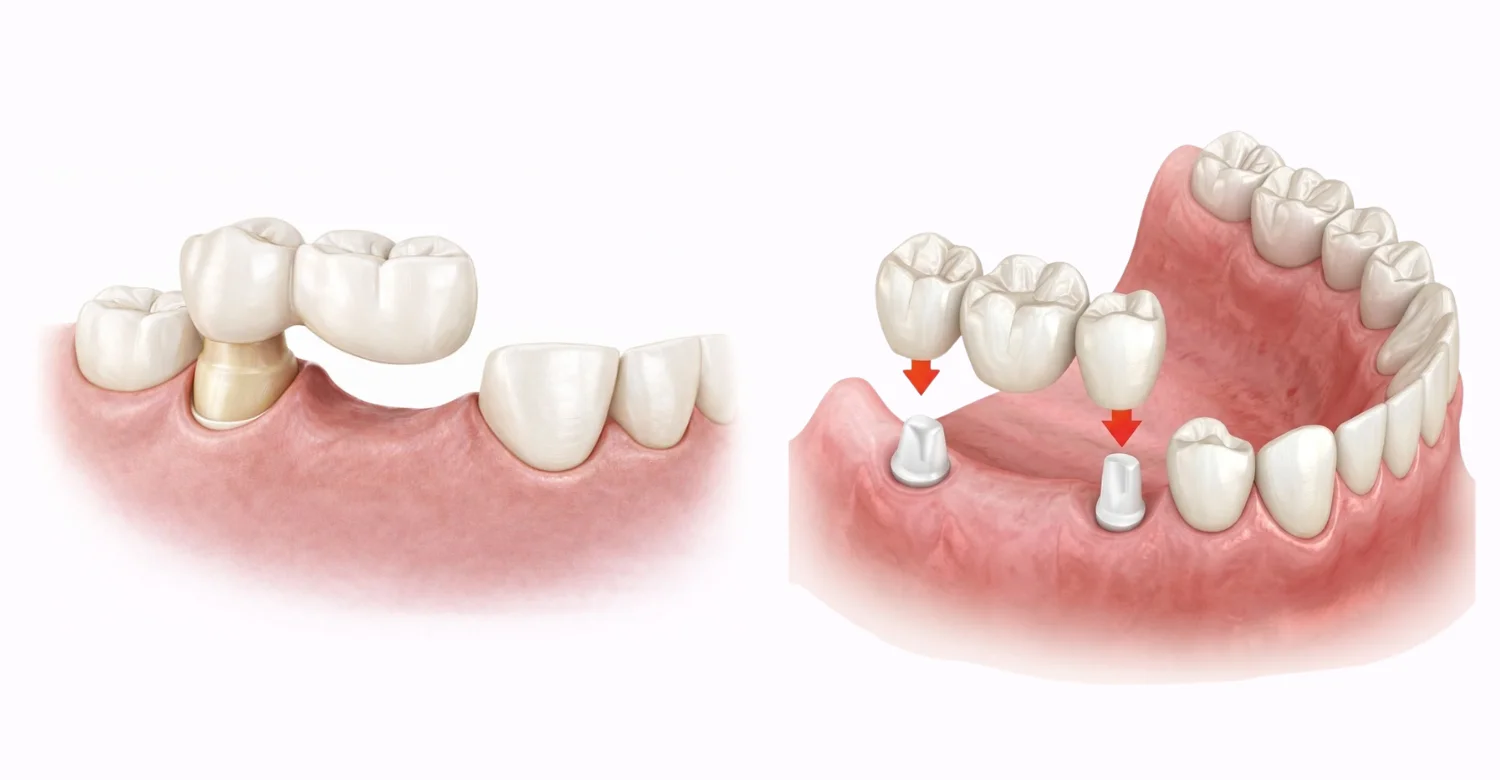
Traditional Bridge vs Cantilever Bridge: What Is the Difference?
Traditional bridge vs. cantilever bridge comes down to support. A traditional bridge generally uses supporting teeth on both sides of the gap. A cantilever bridge is supported from one side only. Two terms help here. Abutment teeth are the teeth that support the bridge. The pontic is the artificial tooth that fills the space. When patients search cantilever bridge vs traditional bridge, they are really asking how chewing forces travel. Support design matters because it shapes stability over many years.
How Does a Traditional Dental Bridge Work?
A traditional bridge connects to teeth on both sides of the missing-tooth space. Crowns or other retainers are placed on these abutment teeth. The pontic sits between them. Because support comes from both sides, chewing forces can be shared more evenly. However, the supporting teeth must be healthy enough to carry extra load. They usually need to be reshaped. If those teeth are healthy and unrestored, this preparation may be seen as a drawback. Your dentist will weigh this carefully.
How Does a Cantilever Dental Bridge Work?
In a cantilever design, the replacement tooth is attached to support on one side only. This can be useful when there is no suitable tooth on the other side of the gap. Because of this, the location of the missing tooth matters greatly. So does the direction of biting forces. A cantilever design may not suit areas exposed to heavy chewing. When comparing a cantilever dental bridge vs conventional bridge, think of a shelf held from one wall rather than two.
Cantilever vs Fixed Bridge - Are They Actually Different?
Many patients search cantilever vs fixed bridge as if these were rival treatments. They are not always opposites. A "fixed bridge" simply means a bridge that is attached to your teeth rather than removable. A cantilever bridge is usually cemented in place, so it is itself a type of fixed bridge. Traditional bridges are fixed too. During consultations, you may hear several terms. Ask your dentist to explain which design they mean, how it is supported, and why.
Learn How to Stop Acid Erosion on Teeth
Which Type of Dental Bridge Could Be Suitable for Your Missing Tooth?
Choosing a bridge depends more on anatomy and function than on preference. In traditional bridge vs cantilever bridge planning, your dentist looks at several factors:
Location of the missing tooth
Number of missing teeth
Strength and health of neighboring teeth
Bite pattern
Gum condition
Existing restorations
Oral hygiene
Esthetic requirements
Each factor can shift the recommendation. A design that works well in one mouth may not suit another. This is why two patients with similar gaps may receive different advice.
When Might a Traditional Bridge Be Considered?
A traditional bridge may be considered when healthy supporting teeth exist on both sides of the gap. Balanced support can help share chewing forces. This may be helpful where bite pressure is significant. Traditional bridges may be considered for certain front or back spaces. Still, this depends on your bite and the condition of each tooth. The design is not universally appropriate. If the neighboring teeth are sound and unrestored, your dentist may also discuss whether reshaping them is worthwhile.
When Might a Cantilever Bridge Be Considered?
A cantilever bridge may be considered when suitable support exists on only one side of the gap. Tooth position matters a lot. So does bite pressure. Forces pass through a single supporting structure, which is why careful assessment is essential. Clinical suitability may differ between front and back teeth. Front teeth usually face lighter chewing loads. Back teeth often handle heavier forces. In traditional bridge vs cantilever bridge decisions, this difference can guide which option is safer.
What If the Teeth Next to the Gap Are Not Healthy?
The supporting teeth carry the bridge, so their health matters. Weakened, heavily restored, mobile, or damaged teeth may change the plan. Gum disease can reduce support. Decay or fractures can weaken structure. Sometimes too little tooth remains to hold a retainer securely. In these cases, treating the supporting teeth may need to come first. If a tooth cannot reliably work as an abutment, a bridge may not be the right solution. Other replacement options may then be discussed.
Tips for Patients
Before any traditional bridge vs cantilever bridge decision, these practical steps can help:
Ask which teeth will support your bridge and why they are suitable.
Tell your dentist if you grind or clench your teeth, even if you do not notice it every night.
Ask how you should clean underneath the bridge before leaving your appointment.
Do not ignore bleeding or persistent gum irritation around the supporting teeth.
Understand the link in Sinonasal Disease and Dental HealthAsk what imaging or bite assessment is needed before choosing between bridge designs.
Traditional Bridge vs Cantilever Bridge: Benefits and Limitations
There is no single winner in traditional bridge vs cantilever bridge comparisons. Each design has strengths. Each also has limits. The advantages depend on your anatomy and functional needs. A benefit in one situation may become a weakness in another. For example, one-sided support can be helpful when only one tooth is available. Yet it may be risky under heavy bite forces. The sections below offer a balanced view. Use them to guide your conversation with your dentist, not replace it.
Potential Benefits of a Traditional Bridge
A traditional bridge offers several potential benefits when the case suits it:
Fixed replacement rather than a removable appliance
Can restore the appearance of a missing tooth
Can help restore chewing function
Uses support from teeth on both sides of the gap
May provide a stable option when the supporting teeth are suitable
Many patients also appreciate that it feels closer to natural teeth than a denture. Speech and confidence often improve once they adapt.
Potential Limitations of a Traditional Bridge
A traditional bridge also has limitations to consider:
Supporting teeth may require preparation
More than one neighboring tooth may be involved
The supporting teeth must tolerate additional functional demands
Cleaning beneath and around the bridge requires consistent oral hygiene
Future problems affecting an abutment tooth can affect the bridge
These points do not rule the design out. They simply mean the supporting teeth need careful selection and ongoing care. Regular checkups help catch problems early.
Potential Benefits of a Cantilever Bridge
A cantilever bridge may offer these potential benefits:
May require support from only one side
Can be considered when a suitable supporting tooth exists on one side of the gap
May offer a fixed replacement in selected situations
Can avoid relying on a tooth that is absent or unsuitable on the opposite side
In some front-tooth cases, fewer teeth may need preparation. This can appeal to patients who want to preserve healthy tooth structure where possible.
Potential Limitations of a Cantilever Bridge
A cantilever bridge also has limitations:
Forces may be concentrated on the supporting side
The supporting tooth must be carefully assessed
Heavy biting forces may make the design less suitable in certain locations
Bite habits such as bruxism (teeth grinding) may influence treatment planning
Long-term maintenance depends heavily on the health of the supporting tooth and surrounding tissues
This is why cantilever designs are usually chosen selectively, after a careful look at your bite.
Check the effects of Secondhand Smoke and Tooth Enamel Development
What Happens Before You Get a Dental Bridge?
Planning comes before treatment. Your dentist first checks whether a bridge is suitable, then which design fits. In traditional bridge vs. cantilever bridge planning, assessment may include:
Clinical examination
Gum assessment
Bite assessment
Evaluation of neighboring teeth
Dental X-rays or 3D imaging when indicated
Digital scans when useful for planning
Imaging is not automatically required in every case. It is used when it adds useful information. Every plan should reflect your individual findings.
How Your Bite Can Affect the Bridge Design
Your bite determines how much force the bridge must handle. Dentists assess how your teeth meet and how you chew. The location of the missing tooth matters here. Back teeth usually take heavier loads than front teeth. Heavy biting forces can place extra stress on a cantilever design, because the load passes through one side. Grinding or clenching also needs discussion. These habits can overload a restoration over time. Mention them, even if you only suspect them.
How the Supporting Teeth Are Evaluated
Each supporting tooth is checked in detail. The assessment may include:
Tooth structure
Existing fillings or crowns
Mobility
Gum support
Decay
Root condition where relevant
A tooth can look healthy on the outside yet have hidden problems. Old fillings may leak. Roots may show changes only on X-rays. This is why further assessment is sometimes needed before any tooth is trusted to carry a bridge. Strong abutments protect your investment.
What We Notice Clinically
Bridge selection is not simply a choice between two products. Dr. Rifat Alsaman, Head of the Medical Team and cosmetic dentist at Vitrin Clinic, emphasizes evaluating the supporting teeth, bite, gum health, and location of the missing tooth before choosing a design. A technically possible bridge may not always be the most appropriate option for a patient's specific bite. Preserving healthy supporting teeth matters. So does predictable function. In traditional bridge vs cantilever bridge decisions, examination findings should guide the recommendation, not cost alone.
Clinical Note
A missing tooth can affect more than appearance. It may change chewing, trap food, and make cleaning harder. Nearby teeth can also drift or tilt into the space. These effects vary with the location of the gap and how long it has been there. Dr. Rifat Alsaman, Head of the Medical Team and cosmetic dentist at Vitrin Clinic, recommends considering the whole area, not only the empty space. Gum health should be addressed first when needed. If neither bridge design offers suitable support, alternative replacement options may be discussed.
Traditional Bridge vs Cantilever Bridge: What Can You Expect After Treatment?
After a traditional bridge vs cantilever bridge decision is made and treatment is complete, expectations should stay realistic. Most people need a short adjustment period. Your bite may feel different at first. Mild sensitivity can occur, depending on the supporting teeth and the treatment involved. This usually settles, but persistent symptoms should be checked. Your bridge should also be monitored during routine dental visits. No dentist can promise a specific lifespan or outcome, yet good care improves the odds.
What Should Your New Bridge Feel Like?
Your new bridge may feel unfamiliar for the first few days. Your tongue may notice the new shape. Speaking and chewing usually adapt quickly. Start with softer foods if that feels more comfortable. However, some signs should not be ignored. Contact your dentist if the bridge feels too high, seems to move, or causes ongoing discomfort. Persistent bite interference can strain the supporting teeth. A simple adjustment often solves the problem. Professional review is always better than waiting.
How Will Your Smile Look After a Bridge?
Appearance depends on several factors. These include tooth position, material, shade, gum contours, and the surrounding teeth. A well-planned bridge can blend naturally with your smile. However, expectations should be realistic rather than aiming for a "perfect" result. Front-tooth cases need extra attention. Symmetry, shade matching, and the way the pontic meets the gum all affect the final look. Discussing shade and shape before treatment helps align your expectations with what is achievable.
How Much Does a Cantilever Bridge Cost?
There is no single universal cantilever bridge cost. Prices vary from case to case. Factors that can influence cost include:
Bridge material
Number of teeth involved
Complexity of the case
Condition of supporting teeth
Preliminary treatments
Diagnostic imaging when indicated
Laboratory work
Temporary restorations where required
A cheaper initial quote may not include everything. Extra treatment may be added later. Always ask what each quote includes. An accurate estimate requires an individualized assessment.
Is a Cantilever Bridge Always Less Expensive Than a Traditional Bridge?
Not always. A cantilever bridge may involve fewer supporting teeth, but that alone does not decide the final price. Preparation, laboratory work, imaging, and restorative needs all play a role. Material choice also matters. In traditional bridge vs cantilever bridge comparisons, treatment complexity often changes the estimate more than the design itself. A simple traditional bridge may cost less than a complex cantilever case. Neither design is automatically cheaper. Your assessment will show the real figure.
Compare treatments in Professional Teeth Whitening vs Whitening Strips
How Long Does a Traditional or Cantilever Bridge Take?
Treatment time varies with preparation and laboratory needs. For both options in traditional bridge vs. cantilever bridge planning, typical stages include:
Consultation and assessment
Tooth preparation when required
Digital impression or conventional impression
Temporary restoration when appropriate
Laboratory fabrication
Final fitting and bite adjustment
Some cases need gum or restorative treatment before the bridge can be placed. This adds time. For that reason, there is no universal number of days. Your dentist will outline your personal timeline.
How Long Can a Dental Bridge Last?
There is no guaranteed lifespan for any bridge. Longevity depends on oral hygiene, bite forces, supporting-tooth health, bridge design, and regular monitoring. Habits such as teeth grinding can shorten the life of a restoration. They may also cause chips or loosening. Whatever your traditional bridge vs cantilever bridge choice, the bridge and its supporting teeth both need care. If an abutment tooth develops decay, the whole bridge may be affected. Routine examinations help detect small problems early.
Explore the difference between Hollywood Smile vs Veneers
How to Care for Your Dental Bridge
Bridge care protects both the restoration and the supporting teeth. A good routine includes:
Brushing twice daily
Cleaning around the gumline
Cleaning beneath the replacement tooth
Floss threaders or suitable interdental aids
Regular dental examinations
Managing grinding or clenching when identified
These steps apply to both designs in traditional bridge vs. cantilever bridge choices. Consistency matters more than intensity. A few extra minutes each day can protect your bridge for years.
Cleaning Under a Fixed Bridge
Food and plaque can collect under the pontic, where a toothbrush cannot easily reach. Specialized aids can help. Floss threaders, super floss, interdental brushes, and water flossers are common choices. Your dentist can show you which suits your bridge. Clean gently but thoroughly. Poor cleaning may raise the risk of gum inflammation or decay around the supporting teeth. That can weaken the bridge's foundation. Ask for a demonstration before leaving your fitting appointment.
Prevention: How to Protect Your Supporting Teeth
Your bridge is only as strong as the teeth that carry it. Protecting them should be a daily priority. Key habits include:
Consistent oral hygiene
Professional dental checkups
Managing gum disease
Limiting frequent sugar exposure
Addressing grinding or clenching
Avoiding habits that could overload the restoration, such as chewing ice or opening packages with your teeth
Prevention supports your natural teeth as well as the bridge. Healthy abutments mean a more reliable restoration.
See what works best for you with Fixed Retainers vs Removable Retainers
Dental Care at Vitrin Clinic
At Vitrin Clinic,Dental Bridge treatmentlanning follows a structured approach. It can include:
Clinical examination
Gum assessment
Bite evaluation
Digital scanning when indicated
Dental imaging when clinically appropriate
Individualized restorative planning
Dr. Rifat Alsaman, Head of the Medical Team and cosmetic dentist at Vitrin Clinic, can assess how the missing tooth, supporting teeth, bite, and overall smile relate. Recommendations depend on individual findings. If you are considering a dental bridge, you are welcome to arrange a consultation to discuss your options.
.jpg)
Takeaway: Choosing Between a Traditional and Cantilever Bridge
The central point in traditional bridge vs. cantilever bridge decisions is support. A traditional bridge usually relies on teeth on both sides. A cantilever bridge relies on one side. The right choice depends on your supporting teeth, bite, the location of the gap, and long-term maintenance. Cost and treatment time also vary with complexity. Neither design is right for everyone. Your next step is clear. Arrange a professional dental assessment before deciding which bridge design to pursue.
Ready to transform your smile?
Talk to our team and get a FREE treatment plan.
References:
FAQs
Dr. Rifat Alsaman has more than 5 years of clinical experience in dentistry and currently serves as the Head of the Medical Team at Vitrin Clinic. He is dedicated to providing exceptional patient care, overseeing treatment planning, and ensuring the highest clinical standards across the team. His expertise, attention to detail, and commitment to continuous professional development have helped countless patients achieve healthier, more confident smiles.


