Dental Bridge
September 23, 2026
What Is the Difference Between a Dental Bridge vs Flipper?
 Dr. Rifat Alsaman
Losing a tooth affects how you chew, speak, and smile, so many patients look for a replacement soon after an extraction. When comparing a dental bridge vs flipper, the two options differ considerably. A dental bridge is fixed in place and designed for long-term use, while a flipper is a removable and usually temporary appliance. They also differ in stability, durability, appearance, and cost. Understanding these differences helps you discuss the right option with your dentist and plan treatment that fits your needs.
What Is a Dental Bridge vs Flipper?
The dental bridge vs flipper question starts with understanding what each restoration is. Both replace missing teeth with artificial ones, but they are built, worn, and cared for in very different ways. Once you know how each one works, their strengths and limitations are much easier to compare.
What Is a Dental Bridge?
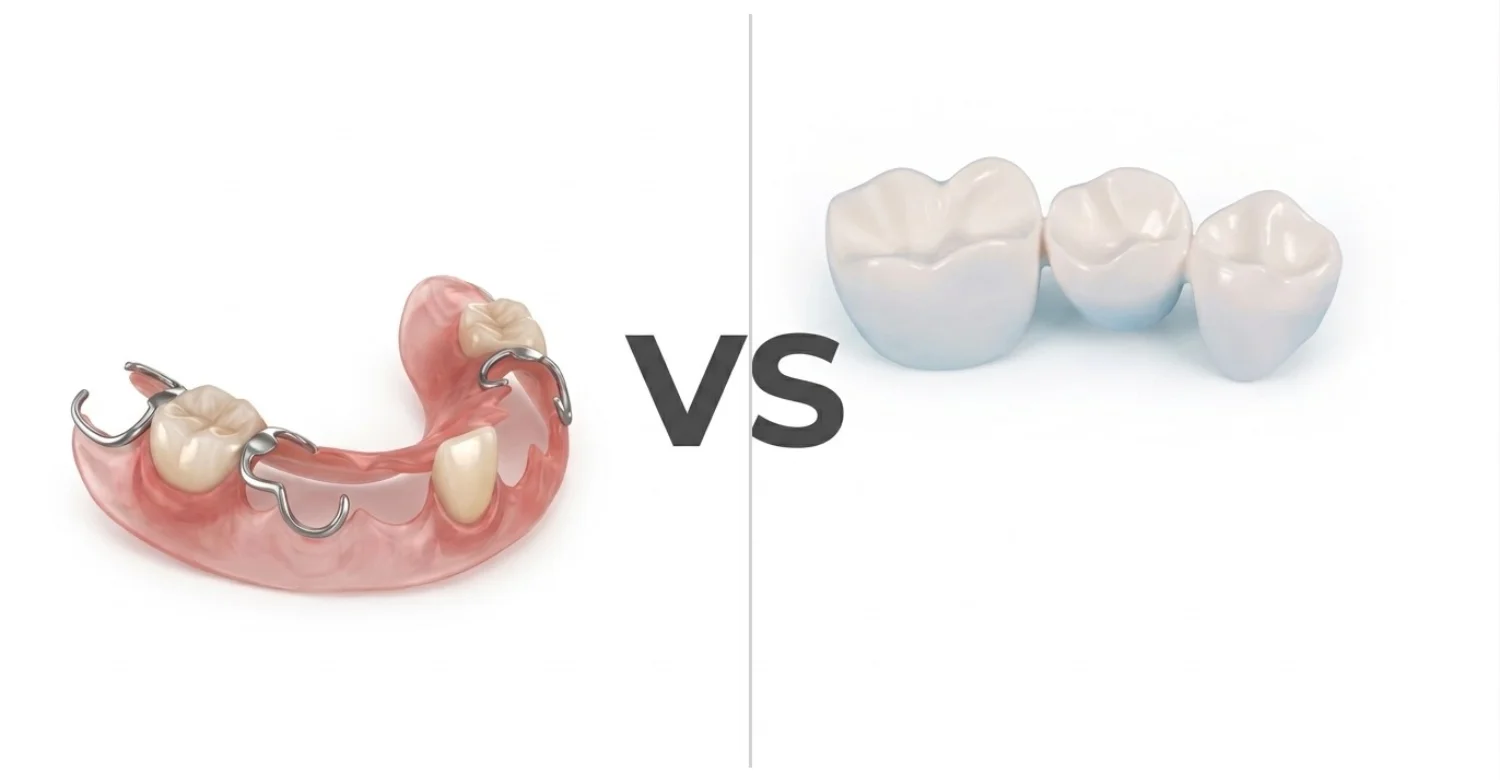
A dental bridge is a fixed restoration that replaces one or more missing teeth. An artificial tooth, called a pontic, is attached to supporting teeth or implants on either side of the gap. Common types include traditional, cantilever, resin-bonded (Maryland), and implant-supported bridges. Once a bridge is cemented, the patient cannot remove it.
What Is a Flipper Tooth?
A flipper tooth is a removable partial denture, usually made of acrylic, that holds one or more artificial teeth. It rests on the gums and palate or clips onto nearby teeth, and patients take it out for cleaning. Flippers are commonly used as temporary or transitional restorations during healing or while definitive treatment is being planned.
Flipper Tooth vs Dental Bridge: Key Differences
The flipper tooth vs dental bridge comparison comes down to a few practical points. A flipper is removable, while a bridge is fixed. A bridge usually feels more stable and natural, supports chewing and speaking better, and is cleaned in the mouth like natural teeth. A flipper has to be taken out for cleaning and is usually worn for a shorter time. These are the core dental bridge vs flipper differences.
Causes of the Condition
Before choosing a restoration, it helps to understand why teeth are lost in the first place. The cause of tooth loss affects the condition of the gums, bone, and neighboring teeth. All of these influence which restoration will work best and how successful any replacement will be in the long term.
What Causes Tooth Loss?
Teeth are most often lost to severe decay or to gum disease, which destroys the tissues and bone that support them. Dental trauma, tooth fractures, and severe infection can also make extraction necessary. Some people are born without certain teeth, a condition called congenital absence. Others need extractions for orthodontic or other reasons.
Why Does Missing a Tooth Require Replacement?
A gap can change how you chew and may let neighboring teeth drift or tilt into the empty space. Missing front teeth can affect your speech and the appearance of your smile. Over time, the jawbone in that area may also shrink. Replacing the tooth early helps prevent these changes, whichever option suits you.
Find out more about sialadenitis and salivary gland inflammation
Problems Caused by the Condition
A missing tooth is more than a cosmetic concern. It can affect function, comfort, and confidence, and the problems often grow over time. These effects are why dentists encourage timely replacement, and why the dental bridge vs flipper decision deserves careful thought rather than delay.
What Problems Can a Missing Tooth Cause?
A missing tooth can make chewing harder and change how the upper and lower teeth meet, which alters the bite. Neighboring teeth may move into the gap. Some patients have difficulty speaking clearly, especially when front teeth are missing. Changes in the appearance of the smile can also reduce confidence in social and work situations.
What Happens If a Missing Tooth Is Not Replaced?
Without a replacement, the surrounding teeth can gradually tilt, drift, or over-erupt, which makes chewing and cleaning more difficult. These changes may also shrink the space available for a future restoration and make later treatment more complicated. Dealing with the gap early keeps more options open, whatever type of replacement you choose.
Note : All images used are for editorial and illustrative purposes only and may not originate from the original news provider or associated company.
Discover the possible causes of loss of taste
Dental Bridge vs Temporary Tooth: Which Is Different?
Many patients search for dental bridge vs temporary tooth because they are not sure whether their restoration is meant to last. In the dental bridge vs flipper comparison, the flipper usually plays the temporary role, and the bridge is intended as the long-term solution.
Is a Flipper a Temporary Tooth?
In most cases, yes. Flippers are typically used as temporary appliances to fill a gap for a set period. That might be while the gums and bone heal after an extraction, while an implant integrates with the jawbone, or while a permanent bridge is being made. They act as transitional treatment until a definitive restoration is placed.
Is a Dental Bridge a Permanent Solution?
A dental bridge is designed for long-term use, but "permanent" does not mean it will last for life. With good care, many bridges last for many years. Decay in the supporting teeth, gum disease, teeth grinding, poor hygiene, and wear of the materials can all shorten a bridge's lifespan. Durability is one of the biggest differences between the two options.
Learn what can cause a yellow tongue
Flipper vs Permanent Bridge
Weighing a flipper vs permanent bridge means looking honestly at the advantages and disadvantages of each, because neither option is right for everyone. Seeing their strengths and limitations side by side makes the dental bridge vs flipper choice clearer and helps you set realistic expectations.
Advantages of a Flipper
A flipper is removable, so it is easy to take out for cleaning. It is usually simpler to make than a bridge and can give you a quick cosmetic replacement, often soon after an extraction. It is also commonly used during transitional treatment, while the mouth heals or a long-term restoration is planned.
Disadvantages of a Flipper
A flipper can move while you eat or speak, which some patients find distracting. It has to be removed and cleaned regularly. Because it is not fixed, it usually gives you less stability when chewing. Some patients also find it bulkier and less natural-feeling than their own teeth or a fixed restoration.
Advantages of a Dental Bridge
A dental bridge is fixed in place, so it does not shift during meals or conversation. It is more stable, restores both appearance and chewing function, and feels closer to natural teeth. Bridges are designed for longer-term use, which makes them a reliable option for many patients whose supporting teeth are healthy.
Disadvantages of a Dental Bridge
A traditional bridge often requires reshaping the supporting teeth so they can hold crowns. The initial cost is higher in many cases. The area under the pontic needs careful cleaning to prevent decay and gum problems. A bridge may also need repair or replacement eventually. These limits are worth weighing before you decide.
Flipper vs Bridge Cost
Flipper vs bridge cost is often one of the first questions patients ask. The price of each depends on the materials, the number of teeth, and the treatment required. Looking at what drives these costs puts the dental bridge vs flipper comparison in a realistic financial context.
What Affects Flipper Cost?
The cost of a flipper depends on how many teeth it replaces, the material used, and the dental laboratory's fees. More complex designs, such as those with clasps or special fittings, may cost more. Any dental procedures needed beforehand, such as extractions or treatment of neighboring teeth, also add to the overall cost.
What Affects Dental Bridge Cost?
The cost of a bridge depends on the number of missing teeth, the type of bridge, and the material, such as porcelain, zirconia, or metal-ceramic. The condition of the supporting teeth also matters, since they may need a root canal, fillings, or gum treatment first. Implant-supported bridges usually add surgical costs.
Is a Flipper Cheaper Than a Dental Bridge?
In general, a flipper costs less upfront than a dental bridge, but the initial price should not be the only thing you consider. A flipper is usually temporary and may need replacing, while a bridge is a longer-term investment. Weighing short-term savings against long-term value gives a fairer picture of the real cost difference.
Patient's Perspective
Patients experience each restoration differently in daily life, and comfort, appearance, and confidence all shape how satisfied they are. Knowing how each option feels helps you set realistic expectations and makes the decision more personal and practical.
What Does a Flipper Feel Like?
Because it is removable, a flipper can feel noticeable at first and may move slightly when you eat or speak. Most patients go through an adjustment period of a few days to a few weeks. Your speech may sound a little different at first. It is best to avoid hard or sticky foods, which can damage the appliance or loosen it.
What Does a Dental Bridge Feel Like?
A dental bridge is fixed, so it stays stable during normal chewing and speaking. Some patients notice mild sensitivity or a slightly different bite right after it is placed, and this usually settles quickly. A proper fit is essential. If a bridge feels high or uncomfortable, the dentist should check and adjust it.
What Do Patients Usually Consider?
Patients usually weigh comfort, appearance, stability, and cost. They also consider how long treatment will take and how long the restoration should last. Some want a quick, affordable solution, while others want a fixed, long-term result. Talking openly about these priorities helps the dental team guide the dental bridge vs flipper choice.
Explore salivary gland stones and their symptoms
Doctor's Perspective
From a clinical point of view, the right restoration depends on the health of the mouth as much as on the patient's preferences. A thorough evaluation lets the dentist recommend the option that best balances function, appearance, and longevity for each patient.
How Is the Missing Tooth Evaluated?
The dentist examines the gap and the neighboring teeth, checks the health of the gums, and evaluates the bite. X-rays help assess the condition of the bone. The dentist also considers your oral hygiene habits and the number and location of missing teeth, because all of these affect which restoration will succeed.
How Does a Dentist Choose Between a Flipper and Bridge?
The choice depends on whether the goal is temporary or long-term, how healthy the supporting teeth are, what you need functionally, and what you expect cosmetically. Your preferences and budget are part of the discussion too. When comparing a flipper vs permanent bridge, the dentist balances all these factors to make a clear recommendation.
When Is It Serious and Requires a Checkup?
Most patients adapt well to either restoration, but some symptoms need professional attention. Knowing the warning signs protects your oral health, and they apply equally to both restorations.
When Should You See a Dentist?
See a dentist if you have persistent pain, swelling, pus or drainage, fever, or significant bleeding. Difficulty chewing, a loose or damaged restoration, or gum irritation that does not settle also needs evaluation. Early checkups stop small problems from becoming serious, whichever option you chose.
When Is Urgent Dental Care Needed?
Seek urgent care immediately for severe facial swelling, difficulty breathing or swallowing, an infection that is getting worse quickly, or heavy bleeding that does not stop with pressure. These signs can mean a spreading infection or another serious complication, and they need prompt medical or dental treatment.
Discover how the salivary glands work
When the Patient Should Rest
Rest is usually needed because of the procedures around tooth replacement rather than the restoration itself. Extractions and oral surgery may need a short recovery period, but wearing a flipper or having a bridge day to day does not. This is a useful practical point in the dental bridge vs flipper discussion.
When Is Rest Recommended After Tooth Replacement?
Rest is often recommended after a tooth extraction or oral surgery, including implant placement, and during the first recovery period after other dental procedures. If discomfort temporarily gets in the way of your normal activities, taking it easy for a day or two helps. Your dentist will tell you how much rest your specific treatment needs.
Does Wearing a Flipper Require Bed Rest?
No. Wearing a flipper generally does not require bed rest. If the appliance causes gum irritation or sore spots, taking it out for short periods and asking your dentist for an adjustment is usually enough. Any rest you need is usually for healing after an extraction, and that applies to either restoration.
Rest Tips
Good recovery habits help a new restoration settle comfortably and protect the healing tissues. These tips apply whether you are getting used to a new flipper or recovering after bridge preparation, so they are useful for either option.
How Can Patients Support Recovery?
Follow your dentist's post-treatment instructions, and avoid strenuous activity when advised. Choose softer foods when needed, and avoid chewing directly on a treated area. Keep brushing gently, and clean removable appliances properly every day. Contact the dental team if your symptoms get worse. These habits support healing whichever restoration you have.
Find out what can cause a white tongue
About Vitrin Clinic
Vitrin Clinic helps patients replace missing teeth with restorations that suit their oral health, goals, and budget. For patients weighing a dental bridge vs flipper, the clinic's team carries out a detailed evaluation and explains each option clearly before treatment begins.
What We Notice Clinically
Dr. Rifat Alsaman, Head of the Medical Team at Vitrin Clinic and a Cosmetic Dentist, explains that a removable flipper and a fixed bridge serve different purposes. In his experience, evaluating the supporting teeth and gums is essential. Individualized planning is key to making the right dental bridge vs flipper decision.
Clinical Note
Flippers and dental bridges have different indications. A flipper is commonly a temporary or transitional appliance, used during healing or while treatment is being planned. A bridge is generally a fixed, long-term restoration. The right choice depends on the condition of the mouth and the patient's treatment goals.
Tips for the Patients
Have any missing tooth evaluated promptly, and ask whether the restoration your dentist recommends is temporary or long-term. Keep up good oral hygiene, clean removable appliances as instructed, and follow all professional instructions. Report persistent pain, swelling, or irritation to your dental team so problems can be treated early.
Learn more about tongue bumps and possible causes
Resource:
https://pubmed.ncbi.nlm.nih.gov/31425605/
https://pubmed.ncbi.nlm.nih.gov/26929489/
https://pubmed.ncbi.nlm.nih.gov/41669595/
FAQs
Dr. Rifat Alsaman has more than 5 years of clinical experience in dentistry and currently serves as the Head of the Medical Team at Vitrin Clinic. He is dedicated to providing exceptional patient care, overseeing treatment planning, and ensuring the highest clinical standards across the team. His expertise, attention to detail, and commitment to continuous professional development have helped countless patients achieve healthier, more confident smiles.


