General Dentistry
September 30, 2026
What Causes Habitual Jaw Clenching and Tooth Wear?
 Dr. Rifat Alsaman
Habitual Jaw Clenching and Tooth Wear are closely linked. Stress, concentration, sleep-related bruxism, and ingrained jaw tension keep the teeth pressed together for long periods. Over time, this constant force wears down enamel, flattens tooth surfaces, and strains the jaw muscles. Understanding the causes of teeth clenching is the first step toward protecting your smile.
What Is Habitual Jaw Clenching?
Habitual jaw clenching is the repeated, often unconscious act of pressing the upper and lower teeth together with force. When the habit persists, jaw strain and enamel loss develop together. The teeth and jaw muscles endure pressure far beyond what normal chewing and speaking require, and this can continue unnoticed for months.
What Does Teeth Clenching Mean?
Teeth clenching means holding the teeth tightly together. Jaw clenching describes the tensed muscles behind that action. Teeth grinding is different because the teeth slide from side to side. Chronic teeth clenching often goes unnoticed for years. Clenching teeth at night happens during sleep, while teeth clenching during the day usually occurs during focus or stress.
Clinical Note
Jaw clenching may happen consciously, such as during physical effort or anger. It may also happen unconsciously, during work or sleep. In both cases, persistent pressure can affect the teeth, the jaw muscles, and surrounding structures. This is why clenching should be assessed early rather than dismissed as a harmless habit.
How Does Habitual Jaw Clenching Cause Tooth Wear?
Tooth enamel is the hardest tissue in the body, yet it cannot regenerate once it is lost. The link between Habitual Jaw Clenching and Tooth Wear is mechanical. Repeated force on the same surfaces slowly breaks down enamel. The damage accumulates silently until changes in shape, sensitivity, or appearance become obvious.
How Teeth Clenching Affects the Enamel
Each episode of clenching loads the biting surfaces with pressure. When sideways movement is added, enamel wear from teeth grinding and clenching gradually removes tooth structure. As enamel thins, the softer dentin beneath it is exposed. Repeated mechanical stress then makes the teeth more vulnerable to further wear, microcracks, and sensitivity to temperature.
Tips for the Patients
Check your jaw several times a day and notice whether your teeth are touching. Avoid intentionally holding them tightly together; the healthy resting position is lips closed and teeth slightly apart. If you notice flattened edges or unexplained tooth wear, discuss it with a dentist. Early advice on this habit prevents bigger problems.
Discover how Peri-Implant Bone Loss is Detected
What Are the Effects of Teeth Grinding and Clenching on Teeth?
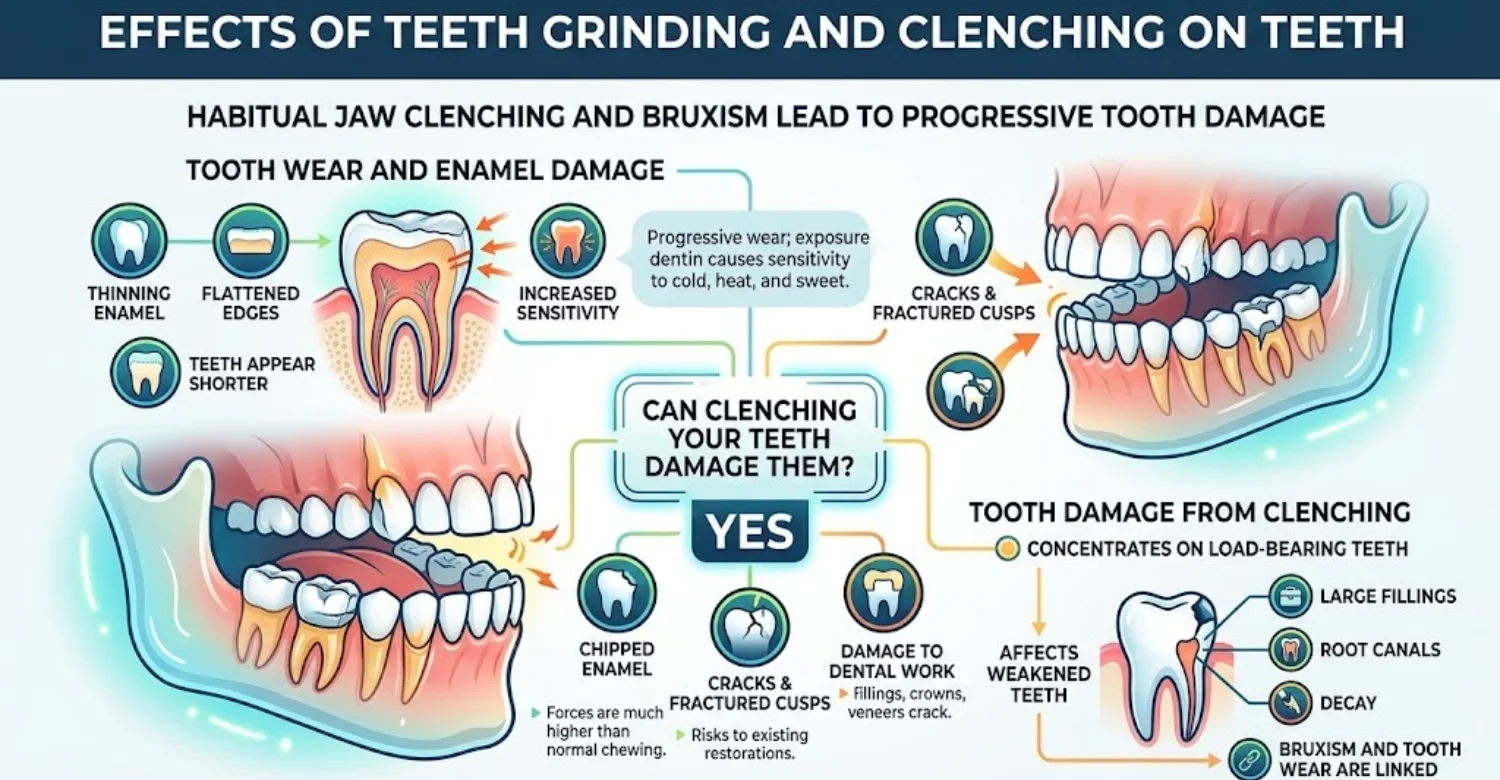
The effects of teeth grinding on teeth range from mild surface wear to fractures that need restoration. Teeth grinding and tooth wear progress together, and clenching adds a constant vertical load. Recognizing how clenching affects enamel, tooth shape, and existing dental work helps patients act before damage becomes extensive.
Tooth Wear and Enamel Damage
Tooth wear from clenching is progressive. Enamel thins first, then the edges flatten, and teeth may start to look shorter or more uniform. As protective enamel disappears, dentin exposure increases sensitivity to cold, heat, and sweet foods. These changes rarely reverse on their own and usually continue without professional intervention.
Can Clenching Your Teeth Damage Them?
Yes. The answer to "can clenching your teeth damage them" depends on force and frequency. Excessive teeth clenching generates forces much higher than normal chewing, which can chip enamel, create cracks, and even fracture cusps. Existing fillings, crowns, and veneers are also at risk, because constant pressure may crack or wear them sooner than expected.
Tooth Damage From Clenching
Tooth damage from clenching concentrates on the teeth that meet first or bear the most load. Teeth already weakened by large fillings, decay, or root canal treatment are more likely to crack. Bruxism and tooth wear are closely linked, so jaw clenching and tooth damage often appear together in the same patient.
Clinical Note
Tooth damage varies according to the intensity, frequency, and duration of clenching. Someone who clenches lightly during stressful moments may show little change, while nightly bruxism can cause rapid wear. Existing dental problems increase vulnerability to mechanical stress, which is why clenching-related wear is evaluated individually for each patient.
What Causes Teeth Clenching?
The causes of teeth clenching rarely come down to a single factor. Emotional, behavioral, sleep-related, and dental influences often overlap. This is why Habitual Jaw Clenching and Tooth Wear can look different from one person to another. Identifying your personal triggers makes it easier to choose the right management strategy.
Common Causes of Teeth Clenching
Stress and emotional tension are the most common triggers. Other causes include habitual jaw tension, concentration-related daytime clenching, and sleep-related bruxism. Lifestyle factors such as caffeine, alcohol, smoking, and poor sleep may contribute, as can certain medications, bite problems, or sleep disorders. Each of these can sustain the habit and the resulting wear over time.
Teeth Clenching During the Day
Teeth clenching during the day is usually unconscious. Many people clench while working at a computer, concentrating, lifting, or driving in traffic. Learning to recognize when the jaw is unnecessarily tense is key. Daytime habits can damage enamel just as much as nighttime episodes do.
Clenching Teeth at Night
Clenching teeth at night is a form of sleep-related bruxism. Because it happens during sleep, most people don't realize they do it until a partner hears grinding or a dentist notices wear. Common signs on waking include jaw soreness, dull headaches, tired facial muscles, and teeth that feel sensitive or tender.
Check out the connection between X-linked Hypophosphatemia and Dental Damage
Can Teeth Clenching Cause Jaw Pain?
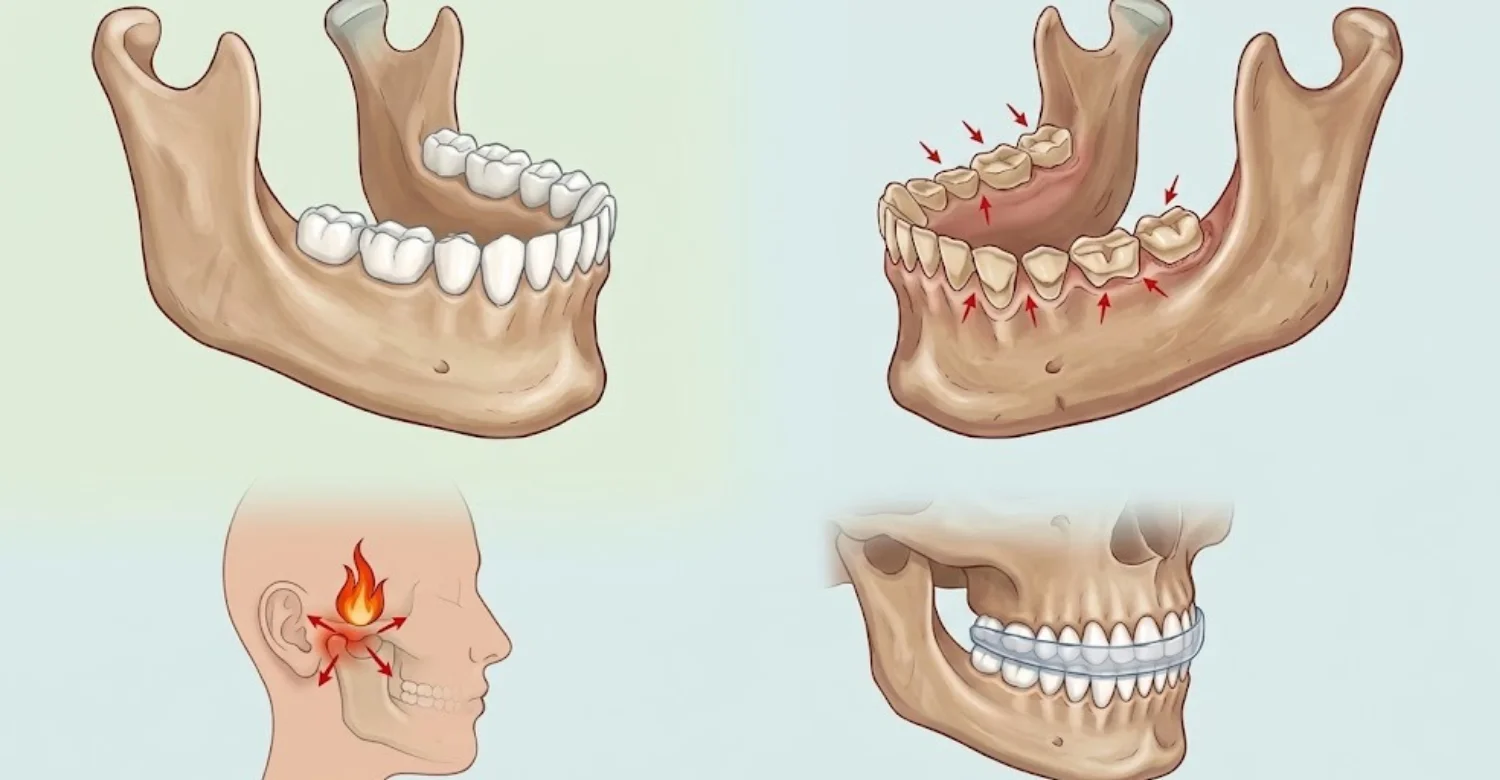
Yes. Teeth clenching and jaw pain are strongly connected, because the chewing muscles stay contracted far longer than they should. Alongside dental damage, Habitual Jaw Clenching and Tooth Wear often bring muscle fatigue, stiffness, and discomfort. This discomfort can spread to the temples, face, and neck and affect daily comfort.
Teeth Clenching and Jaw Pain
Prolonged muscle activity overworks the masseter and temporalis muscles, which leads to aching and tenderness. Jaw tension and teeth clenching feed each other: tense muscles encourage clenching, and clenching increases tension. Many people notice morning jaw soreness or facial muscle fatigue, especially after nights of clenching they were unaware of.
Other Symptoms Associated With Jaw Clenching
Beyond jaw pain, people who clench regularly may experience tension headaches, particularly around the temples. General facial discomfort and tooth sensitivity are also common. Other signs include jaw stiffness, limited mouth opening, and difficulty relaxing the jaw. These symptoms often rise and fall with stress levels and sleep quality.
Tips for the Patients
Become aware of unnecessary jaw tension throughout the day. Keep the jaw relaxed when you are not eating or speaking, with the teeth slightly apart and the tongue resting gently on the palate. If jaw pain persists, seek a professional evaluation, because untreated clenching and the wear it causes can worsen gradually.
How Can You Tell if You Are Clenching Your Teeth?
Many people discover that they clench only after damage appears. Paying attention to your teeth, jaw, and morning symptoms can reveal the habit early. The signs of Habitual Jaw Clenching and Tooth Wear are often subtle at first, but they become clearer once you know what to look for.
Signs of Teeth Clenching
Common signs include flattened or shortened teeth, increased tooth wear, and sensitivity to cold or sweet foods. You may also notice jaw soreness, headaches, or tired, tense jaw muscles. Cracked or chipped teeth without an obvious injury are warning signs of clenching that deserve a dental check.
Daytime vs. Nighttime Teeth Clenching
Daytime clenching can be conscious or unconscious. You may catch yourself doing it during focus or stress, and jaw fatigue may build as the day goes on. Nighttime clenching is always unconscious, and its signs usually appear after sleeping, such as morning jaw stiffness, headaches, or tooth sensitivity. Both forms contribute to progressive enamel loss.
Note : All images used are for editorial and illustrative purposes only and may not originate from the original news provider or associated company.
Explore the facts on Tirzepatide Dental Side Effects
How to Stop Clenching Your Teeth?
Learning how to stop clenching your teeth combines self-awareness with professional care. Daytime clenching often responds to habit correction and stress management. Nighttime clenching usually needs a dental assessment. Managing Habitual Jaw Clenching and Tooth Wear early protects your remaining enamel and reduces jaw discomfort over the long term.
How to Reduce Daytime Teeth Clenching
Start by becoming aware of the habit; reminders on your phone or desk can help. Practice keeping the jaw relaxed, with lips together and teeth apart, and avoid unnecessary tooth-to-tooth contact. Address stress through breaks, exercise, or relaxation techniques. Follow your dentist's recommendations to keep clenching and its effects under control.
Managing Nighttime Clenching
Suspected nighttime bruxism needs a professional assessment, since you cannot control habits during sleep. The dentist evaluates your tooth wear and jaw symptoms. When it is clinically appropriate, they may recommend a custom dental appliance to protect the teeth. Monitoring changes over time shows whether the wear is stabilizing.
Clinical Note
Treatment depends on the cause, severity, symptoms, and extent of tooth damage, so there is no single solution for everyone. A dental evaluation is important whenever clenching causes persistent pain or visible tooth wear. Early care for clenching-related wear is simpler and more conservative.
Ready to transform your smile?
Talk to our team and get a personal FREE treatment plan.
How Is Tooth Wear From Clenching Diagnosed?
Diagnosis relies on a careful dental examination combined with a review of your symptoms and habits. The dentist looks at the pattern of wear, the condition of the jaw, and your bite. This confirms whether Habitual Jaw Clenching and Tooth Wear are the cause and helps rule out other factors.
Dental Examination
The dentist visually assesses tooth surfaces for flattened edges, shiny wear facets, and enamel loss. Teeth are checked for cracks, chips, and fracture lines, sometimes with magnification or a special light. Existing fillings and crowns are also examined for wear or damage, since restorations often reveal early signs of clenching and grinding forces.
Bite and Jaw Assessment
The dentist evaluates how your teeth meet, examines the jaw muscles for tenderness or enlargement, and identifies areas receiving excessive pressure. A review of your symptoms and daily habits completes the picture. Together, these steps help confirm the diagnosis and guide a treatment plan suited to your needs.
What Problems Can Happen if Chronic Teeth Clenching Is Ignored?
Ignoring chronic teeth clenching allows damage to build up quietly. What starts as mild sensitivity can progress to broken teeth, failed restorations, and ongoing jaw discomfort. Left untreated, Habitual Jaw Clenching and Tooth Wear often require more extensive and costly treatment than early prevention would have needed.
Progressive Tooth Wear
Without intervention, enamel loss continues and the teeth become progressively shorter or flatter. This can change the appearance of your smile and the way your teeth meet. As more dentin is exposed, sensitivity usually increases, which makes everyday eating and drinking uncomfortable for people who clench regularly.
Tooth Damage and Fractures
Constant force can cause chips, cracks, and, in severe cases, fractures that extend deep into the tooth. Teeth already weakened by fillings or decay are most at risk. Existing restorations may crack, loosen, or wear out early, which can lead to repeated repairs and potentially more complex treatment later.
Jaw-Related Problems
Ongoing clenching keeps the jaw muscles under strain. This can lead to persistent tension, muscle discomfort, and recurring jaw pain and stiffness. Some people find it hard to open the mouth fully or feel discomfort when chewing. At this stage, the problem affects daily comfort as well as dental health.
Clinical Note
The severity of complications depends on how long and how intensely a person has been clenching, as well as their overall dental condition. Strong teeth may tolerate years of mild clenching, while weakened teeth can fracture quickly. Regular checkups help track changes before they become serious problems.
Understand the details of Folate Deficiency and Oral Health
How Does Vitrin Clinic Approach Habitual Jaw Clenching and Tooth Wear?
At Vitrin Clinic, care begins with understanding why the wear is happening, not only repairing what is visible. Our team combines a careful examination, a review of your symptoms, and personalized planning to manage Habitual Jaw Clenching and Tooth Wear. The aim is to protect healthy tooth structure while restoring comfort, function, and appearance.
.jpg)
.jpg)
.jpg)
.jpg)
.jpg)
Evaluation at Vitrin Clinic
Your visit starts with a dental examination to assess tooth wear and possible damage. This is followed by an evaluation of jaw discomfort and clenching symptoms. We identify the areas that need preventive or restorative attention. We then build a personalized treatment plan based on your dental condition and daily habits.
What We Notice Clinically
Early identification of excessive tooth wear can help prevent further structural damage. Dr. Rifat Alsaman, Head of the Medical Team at Vitrin Clinic and a cosmetic dentist, focuses on understanding the cause and extent of tooth wear before choosing the appropriate dental approach. Repairing worn teeth without addressing the underlying habit rarely delivers lasting results.
Treatment Options at Vitrin Clinic
Depending on your needs, treatment may include preventive dental care, management of tooth sensitivity, and protective approaches when clinically indicated. Significantly damaged teeth may need restorative treatment. Cosmetic rehabilitation can rebuild tooth shape and appearance when clenching has changed the look of your smile.
Tips for the Patients
Do not ignore progressive tooth wear, even when it causes no pain. Seek an evaluation if you frequently clench your teeth. Follow the recommended follow-up schedule, and protect your remaining healthy tooth structure. Small steps taken early make the biggest difference in managing Habitual Jaw Clenching and Tooth Wear.
Learn more about Tooth Autotransplantation in Young Patients
Resource:
https://pubmed.ncbi.nlm.nih.gov/?term=Bruxism+defined+and+graded+an+international+consensus
https://pubmed.ncbi.nlm.nih.gov/29926505/
https://pubmed.ncbi.nlm.nih.gov/?term=Bruxism+is+mainly+regulated+centrally+not+peripherally
FAQs
Dr. Rifat Alsaman has more than 5 years of clinical experience in dentistry and currently serves as the Head of the Medical Team at Vitrin Clinic. He is dedicated to providing exceptional patient care, overseeing treatment planning, and ensuring the highest clinical standards across the team. His expertise, attention to detail, and commitment to continuous professional development have helped countless patients achieve healthier, more confident smiles.


