
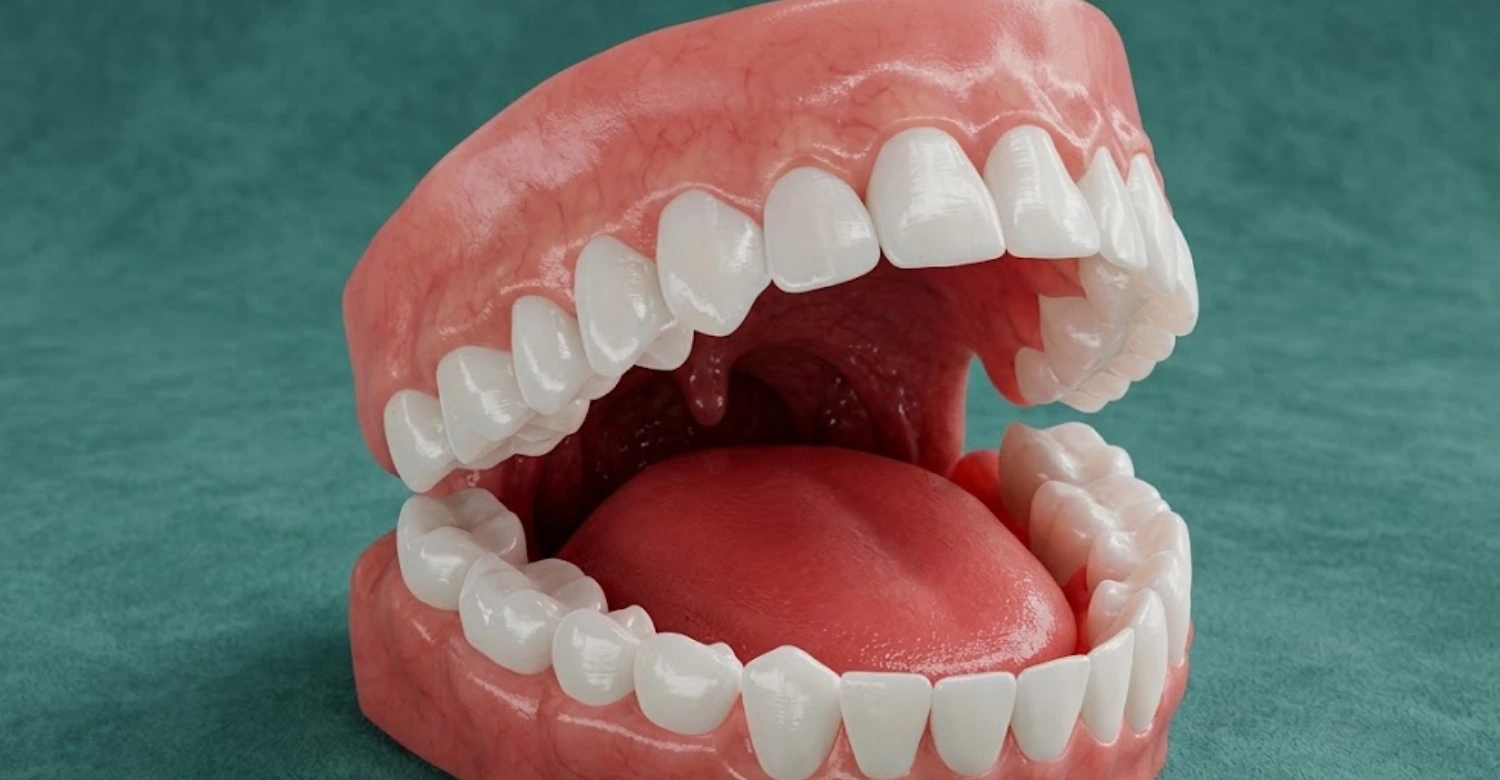
How Many Teeth Do Adults Have? Most adults have 32 permanent teeth when all four wisdom teeth are present. These teeth include incisors, canines, premolars, and molars. Each type has a specific role in biting, tearing, crushing, or grinding food. However, not every adult has 32 visible or functional teeth. Wisdom teeth may never develop, remain impacted, or be removed because of crowding. Some adults also lose teeth because of decay, gum disease, trauma, or other dental problems. According to the American Dental Association, a complete permanent dentition normally contains 32 teeth. The upper jaw contains 16 teeth, while the lower jaw contains 16 teeth. Vitrin Clinic evaluates tooth number, alignment, gum health, and overall oral function during dental examinations. Knowing this helps patients understand normal dental development and recognize possible changes.
How Many Adult Teeth Do Humans Have?
How Many Teeth Do Adults Have depends on whether wisdom teeth are included. A complete adult dentition contains 32 permanent teeth. Sixteen teeth are positioned in the upper jaw, and 16 are positioned in the lower jaw. Each jaw contains four incisors, two canines, four premolars, and six molars. The final three molars on each side include the wisdom teeth. However, many adults have fewer than 32 teeth naturally or because of dental treatment. Wisdom teeth are commonly removed when they cause pain, infection, crowding, or other complications. Some people develop fewer wisdom teeth or none at all. Dental examinations can determine which permanent teeth are present. This total provides a useful baseline for evaluating individual dental health.
How Many Adult Teeth Do Humans Have Including Wisdom Teeth?
When wisdom teeth are included, the normal adult tooth count is 32. This number represents the complete permanent dentition in a typical adult. The 32 teeth are divided equally between the upper and lower jaws. Each jaw normally contains eight incisors and canines combined, four premolars, and six molars. The last molars are commonly called wisdom teeth. Wisdom teeth usually develop later than the other permanent teeth. They may erupt during the late teenage years or early adulthood. However, eruption patterns differ considerably between individuals. Some wisdom teeth remain partially erupted or impacted beneath the gums. Others never develop. Therefore, having fewer than 32 teeth does not automatically indicate a dental problem, and this number should always be considered alongside individual development and dental history.
How Many Teeth Do Adults Have Without Wisdom Teeth?
How Many Teeth Do Adults Have without wisdom teeth is usually 28. Four wisdom teeth account for the difference between 28 and 32 permanent teeth. These teeth include eight incisors, four canines, eight premolars, and eight non-wisdom molars. Many adults have 28 functional teeth because their wisdom teeth were removed. Others naturally have fewer wisdom teeth because those teeth never developed. Having 28 teeth can therefore be completely normal. Wisdom tooth removal does not mean the mouth becomes incomplete in its essential chewing function. The remaining teeth can provide effective biting and grinding when they are healthy and properly positioned. Vitrin Clinic can assess tooth distribution using clinical examination and dental imaging. This total varies naturally depending on wisdom tooth development, previous treatment, and tooth loss.
How Many Permanent Teeth Do Adults Have?
How Many Teeth Do Adults Have Permanently is generally 32 when all wisdom teeth develop. Permanent teeth gradually replace the primary teeth that children have during early development. Most permanent teeth erupt between childhood and early adulthood. Their timing varies according to the individual tooth and developmental pattern. Permanent teeth are designed to remain throughout life when adequately maintained. They have different shapes because they perform different functions during chewing. Incisors cut food, canines tear food, premolars crush food, and molars grind food. Maintaining these teeth requires daily plaque control and professional dental care. Tooth loss can alter chewing, speech, and bite relationships. Therefore, the number of permanent teeth matters, but tooth health and function matter equally, and understanding this total helps explain the normal permanent dentition.
What Are Permanent Teeth?
Permanent teeth are the second set of teeth that develop after primary teeth, and their number is closely connected with the question of adult tooth count. They gradually replace baby teeth during childhood and adolescence. Most adults eventually develop up to 32 permanent teeth. These teeth include incisors, canines, premolars, and molars. Unlike primary teeth, permanent teeth are intended to serve throughout adulthood. Their enamel provides a strong protective surface against everyday chewing forces. Beneath the enamel, dentin supports the tooth structure and surrounds the dental pulp. The pulp contains nerves and blood vessels that support the living tissues inside the tooth. Proper brushing, interdental cleaning, fluoride exposure, and professional examinations help protect permanent teeth, and this total can be understood by examining the complete permanent dentition.
How Are the 32 Adult Teeth Distributed?
The adult tooth total becomes clearer when the 32 teeth are divided by type. A complete permanent dentition contains eight incisors, four canines, eight premolars, and twelve molars. The twelve molars include four wisdom teeth when all develop. Each jaw contains four incisors, two canines, four premolars, and six molars. This symmetrical arrangement supports balanced chewing across both sides of the mouth. The front teeth primarily handle cutting and tearing. The back teeth provide stronger surfaces for crushing and grinding food. Dental professionals evaluate this distribution when assessing missing, impacted, displaced, or damaged teeth. Tooth counts can also help identify developmental differences, and this figure therefore reflects a carefully organized dental arrangement rather than simply a numerical total.
Incisors
How Many Teeth Do Adults Have includes eight permanent incisors in a complete dentition. Four incisors are located in the upper jaw, and four are located in the lower jaw. They occupy the front portion of the mouth. Incisors have relatively thin edges designed primarily for cutting food. They also contribute significantly to speech and smile appearance. The upper central incisors are usually prominent during smiling. Their shape and position can influence overall facial and dental aesthetics. Incisors may become damaged through trauma, grinding, decay, or excessive biting forces. Maintaining their enamel helps preserve their appearance and function. Dentists examine incisors for cracks, wear, cavities, and changes in alignment. This total includes the important role of these eight front teeth.
Canines
The adult tooth count includes four permanent canines in a complete adult dentition. Two canines are located in the upper jaw, and two are located in the lower jaw. Canines sit between the incisors and premolars. Their pointed shape helps them tear food during chewing. They also contribute to guiding the jaw during certain movements. Upper canines often have long roots that provide substantial support within the jawbone. Because of their position, canines can strongly influence the appearance of the smile. Impacted upper canines are relatively common and may require orthodontic management. Dentists monitor canine development and eruption during routine examinations. Healthy canines contribute to efficient chewing and stable dental relationships, and this total therefore includes four teeth with important functional and structural roles.
Premolars
How Many Teeth Do Adults Have includes eight permanent premolars when the complete dentition is present. Four premolars are positioned in the upper jaw, and four are positioned in the lower jaw. Premolars sit between the canines and molars. Their broader chewing surfaces allow them to crush and break down food. Premolars are sometimes called bicuspids because many have two prominent cusps. They replace primary molars during normal dental development. Their position makes them important for both appearance and chewing efficiency. Premolars can develop cavities because their grooves may retain plaque and food particles. Dentists may recommend preventive treatments for susceptible chewing surfaces. This number includes these eight transitional teeth between the front and back regions.
Molars
The adult tooth total includes twelve molars when all four wisdom teeth are present. Six molars are located in the upper jaw, and six are located in the lower jaw. The first and second molars normally provide major chewing surfaces. Wisdom teeth are the third molars and develop later. Molars have broad surfaces with multiple cusps designed for grinding food. Their size allows them to withstand substantial chewing forces. However, their grooves and position can make plaque removal challenging. Wisdom teeth can also become impacted because the jaw may not provide enough space. Regular dental imaging can help evaluate molar development and positioning, and this total therefore reaches 32 when the complete set of twelve molars is included.
How Many Top Teeth Do Adults Have?
How Many Teeth Do Adults Have in the upper jaw is normally 16. These teeth are positioned within the maxilla and form the upper dental arch. The upper arch contains four incisors, two canines, four premolars, and six molars. Together, these teeth interact with the lower teeth during biting and chewing. The upper teeth also influence speech, facial appearance, and smile proportions. Their positions can change because of tooth loss, orthodontic movement, gum disease, or other conditions. Maintaining healthy upper teeth requires the same preventive approach used for the lower teeth. Dental professionals evaluate their alignment, gum support, enamel condition, and bite relationships. This count becomes 16 in the upper jaw when the complete permanent dentition is present.
How Many Teeth Are in the Upper Jaw?
How Many Teeth Do Adults Have in the upper jaw is typically 16. The upper jaw contains four incisors, two canines, four premolars, and six molars. These teeth form the upper dental arch and interact with the lower dental arch. Upper incisors help cut food, while canines assist with tearing. Premolars and molars perform progressively stronger crushing and grinding functions. Wisdom teeth are included among the six molars when they develop. Not every adult has all 16 upper teeth. Missing teeth, previous extractions, congenital absence, and impacted wisdom teeth can change the number. Dentists can confirm the exact tooth count through clinical examination and radiographic imaging, since this figure depends on the individual's complete dental history and developmental pattern.
What Do the Upper Teeth Do?
The number of upper teeth matters because each upper tooth contributes to coordinated oral function. Upper incisors primarily cut food against their lower counterparts. Canines assist with tearing and help guide certain jaw movements. Premolars and molars provide broad surfaces for crushing and grinding. Upper teeth also contribute to pronunciation by interacting with the tongue and lower teeth. Their position affects smile appearance and facial proportions. Healthy upper teeth depend on stable supporting gums and jawbone. Plaque accumulation can increase the risk of cavities and gum inflammation. Regular dental care helps preserve both function and appearance, giving useful context for understanding how the upper dental arch works as a coordinated system.
How Many Bottom Teeth Do Adults Have?
How Many Teeth Do Adults Have in the lower jaw is normally 16. The lower dental arch contains four incisors, two canines, four premolars, and six molars. These teeth are positioned within the mandible and work closely with the upper teeth. Lower incisors contribute to cutting food and certain speech sounds. Canines assist with tearing and jaw guidance. Premolars and molars provide important crushing and grinding surfaces. The lower jaw moves during chewing, allowing the teeth to meet repeatedly with the upper arch. Tooth loss can change these relationships and affect chewing efficiency. Dental examinations evaluate both arches together rather than considering individual teeth alone. This total is therefore normally 16 in the lower jaw and 32 overall with complete dentition.
How Many Teeth Are in the Lower Jaw?
The tooth count in the lower jaw is generally 16 with a complete permanent dentition. These teeth include four incisors, two canines, four premolars, and six molars. The lower incisors occupy the center front of the mandibular arch. Canines sit beside the incisors and connect the front and back tooth groups. Premolars follow the canines, while molars occupy the posterior region. The four wisdom teeth account for the final molars when fully developed. However, individual adults may have fewer teeth because of extraction, congenital absence, or tooth loss. Dental imaging can reveal unerupted or impacted teeth that are not visible clinically, so this number should be determined from both visible teeth and dental records when necessary.
How Do Upper and Lower Teeth Work Together?
Adult tooth count is important because chewing depends on interaction between both dental arches. Upper and lower teeth meet through coordinated movements of the jaw. Incisors generally cut food during forward biting movements. Canines help guide certain lateral jaw movements. Premolars and molars crush and grind food during chewing. Each tooth has opposing or neighboring relationships that contribute to efficient function. A missing tooth can alter forces on nearby teeth and change the bite. Severe tooth loss may reduce chewing efficiency and affect dietary choices. Dentists evaluate these relationships when planning restorations, implants, bridges, or orthodontic treatment, providing the numerical foundation while proper contact between those teeth supports functional oral health.
Clinical Note
Tooth count should not be used as the only indicator of oral health. A person can have 32 teeth while experiencing cavities, gum disease, enamel wear, or other problems. Conversely, someone with 28 teeth may have excellent oral function and healthy gums. Clinical assessment considers tooth condition, periodontal support, bite, alignment, and symptoms. Dentists may use panoramic or intraoral radiographs when hidden teeth require evaluation. Statistics consistently show that tooth loss becomes more common with increasing age. However, tooth loss is not considered an unavoidable part of aging. Preventive dental care can help adults retain natural teeth for many years. Vitrin Clinic emphasizes individualized assessment rather than judging dental health solely by tooth count, which remains a starting point for evaluation, not a complete diagnosis.
How Many Teeth Do Kids Have vs Adults?
How Many Teeth Do Adults Have differs substantially from the number found in young children. Children normally develop 20 primary teeth. Adults generally develop up to 32 permanent teeth. Primary teeth include incisors, canines, and molars, but they do not include premolars. Permanent premolars eventually replace the primary molars. The transition from primary to permanent teeth occurs gradually rather than all at once. Children begin losing primary teeth as permanent teeth develop beneath them. Most permanent teeth erupt during childhood and adolescence. Wisdom teeth develop later and may never erupt. Understanding these developmental stages helps parents recognize normal changes, since this comparison reflects the final stage of a longer dental development process.
How Many Teeth Do Children Have?
Adult tooth count compared with children shows a clear developmental difference. Children normally have 20 primary teeth by approximately three years of age. The primary dentition contains ten teeth in the upper jaw and ten in the lower jaw. Each arch has four incisors, two canines, and four molars. Primary teeth are smaller and lighter than permanent teeth. They help children chew food and develop normal speech patterns. They also maintain space for developing permanent teeth. Premature loss of a primary tooth can sometimes affect the position of neighboring teeth. Pediatric dental examinations help monitor eruption and development. This number becomes relevant as children gradually transition from their 20 primary teeth toward their permanent dentition.
When Do Children Get Their Permanent Teeth?
The adult tooth count develops through a gradual eruption process beginning during early childhood. The first permanent molars and incisors commonly appear around six years of age. Additional permanent teeth continue erupting throughout childhood and adolescence. Premolars and canines generally emerge after the early permanent teeth. Second molars usually erupt later during adolescence. Wisdom teeth may develop and erupt during the late teenage years or early adulthood. Timing can vary considerably between individuals. Delayed or unusual eruptions may require professional evaluation. Dental X-rays can help determine whether unerupted teeth are developing normally, and this total is ultimately determined by the completion of permanent tooth development.
What Is the Difference Between Baby Teeth and Adult Teeth?
Adult tooth count differs from children because permanent teeth replace the smaller primary dentition. Primary teeth usually total 20, while complete permanent dentition can contain 32 teeth. Permanent teeth generally have thicker enamel and larger structures. Primary teeth have thinner enamel and smaller dimensions. Children also lack premolars because these teeth develop only in the permanent dentition. Primary teeth help preserve space for permanent successors. They also support chewing, speech, and normal jaw development. Permanent teeth are designed to remain much longer. However, both sets require effective oral hygiene and professional care, and this comparison reflects differences in tooth number, structure, development, and long-term function.
Why Do Some Adults Have Fewer Than 32 Teeth?
How Many Teeth Do Adults Have can be lower than 32 for several reasons. Wisdom teeth may have been removed because of impaction, infection, or inadequate space. Some permanent teeth may never develop because of congenital absence. Other teeth can be lost because of advanced decay, gum disease, trauma, or severe structural damage. Dental treatment may intentionally remove teeth before orthodontic treatment. Tooth loss patterns vary substantially among adults. Research consistently associates increasing age with greater numbers of missing natural teeth. However, modern preventive dentistry can reduce avoidable tooth loss. Dentists consider the cause of missing teeth when developing treatment plans. Vitrin Clinic can assess remaining teeth and recommend appropriate restorative options, since this total varies according to development, treatment history, and oral health.
Wisdom Teeth Removal
The remaining tooth count may become 28 after four wisdom teeth are removed. Wisdom teeth are the third molars and are the final permanent teeth to develop. They can become impacted when insufficient space prevents normal eruptions. Impacted wisdom teeth may contribute to pain, inflammation, infection, or damage to neighboring structures. Dentists do not automatically remove every wisdom tooth. The decision depends on clinical findings, symptoms, position, and potential future problems. Some wisdom teeth erupt normally and remain healthy throughout life. Others require extraction because maintaining them creates greater risks. Dental imaging helps evaluate their position and surrounding anatomy. After wisdom tooth removal, the resulting total of 28 can still represent a healthy functional dentition.
Missing Permanent Teeth
Adult tooth count can be lower when permanent teeth fail to develop. Congenital absence means a permanent tooth does not form during development. This condition can affect individual teeth or several teeth. Some missing teeth may remain unnoticed when another tooth occupies the space. Dental imaging can help identify missing or unerupted permanent teeth. Treatment depends on the patient's age, tooth position, bite, and overall dental condition. Options can include orthodontic space closure, bridges, implants, or other restorative approaches. Dentists consider both function and aesthetics when planning treatment. Missing teeth should be evaluated rather than assumed to be normal, since this total depends partly on whether all permanent tooth buds developed successfully.
Tooth Loss From Decay or Gum Disease
How Many Teeth Do Adults Have may decrease because of preventable dental diseases. Untreated tooth decay can progressively destroy enamel, dentin, and deeper tooth structures. Severe damage may eventually make extraction necessary. Advanced gum disease can damage the tissues and bone supporting teeth. Tooth mobility can develop when supporting structures are significantly compromised. Tobacco exposure, inadequate plaque control, diabetes, and other factors can influence periodontal risk. Regular dental care can identify disease before extensive damage develops. Restorative treatment may save teeth that would otherwise require extraction. Vitrin Clinic focuses on diagnosis and individualized treatment planning for compromised teeth, and this total can remain stable when adults protect their teeth and supporting tissues.
What We Notice Clinically
How Many Teeth Do Adults Have is one of the first details dentists document during comprehensive examinations. Clinicians also record missing, restored, decayed, mobile, impacted, and unerupted teeth. Tooth count alone cannot determine whether a mouth is healthy. A patient with 28 teeth may have excellent function after planned wisdom tooth removal. Another patient with 32 teeth may require extensive treatment because of decay or gum disease. Clinical assessment therefore focuses on both quantity and quality. Bite relationships, periodontal health, tooth wear, and restoration conditions also matter. Dr. Rifat Alsaman emphasizes evaluating the complete oral environment before recommending treatment, since this figure provides useful information, but clinical context determines its significance.
Can Adults Have More or Fewer Than 32 Teeth?
How Many Teeth Do Adults Have can vary above or below the typical complete count. Most adults with a complete permanent dentition have up to 32 teeth. Some adults have 28 because wisdom teeth were removed or never developed. Others have fewer because of congenital absence, decay, periodontal disease, trauma, or extraction. A small number of people develop extra teeth called supernumerary teeth. These additional teeth can sometimes interfere with eruption or alignment. Dental imaging may identify extra teeth that are not visible during routine examination. Tooth number should therefore be assessed individually rather than assumed. Vitrin Clinic can evaluate unusual tooth counts through examination and appropriate imaging. This total has a typical answer, but natural variation is possible.
Is It Normal to Have 28 Teeth?
It can reasonably be normal to have 28 teeth when wisdom teeth are absent. Twenty-eight teeth are often present after the four third molars have been removed. Some adults naturally develop only 28 permanent teeth because wisdom teeth never form. A 28-tooth dentition can provide effective chewing and normal oral function. The important factors include tooth health, alignment, gum support, and bite stability. Dentists do not consider the absence of wisdom teeth automatically unhealthy. In fact, removing problematic wisdom teeth can prevent certain complications. Adults should still maintain all remaining teeth carefully. This tooth count is therefore not a measure of dental health by itself.
Can Adults Have Fewer Than 28 Teeth?
The adult tooth total can fall below 28 when other permanent teeth are missing. Tooth loss can result from decay, gum disease, trauma, congenital absence, or extraction. Multiple missing teeth can affect chewing and may allow neighboring teeth to shift. The extent of impact depends on which teeth are missing and how many remain. Some people function comfortably with fewer teeth, while others experience noticeable chewing limitations. Dentists evaluate the remaining teeth and supporting structures before recommending replacement. Dental implants, bridges, and partial dentures can restore missing teeth in appropriate cases. Preventive care remains the best strategy for preserving natural teeth, since this number ultimately depends on individual dental development and lifetime oral health.
Can Adults Have More Than 32 Teeth?
How Many Teeth Do Adults Have can occasionally exceed 32 because some people develop supernumerary teeth. Supernumerary teeth are additional teeth beyond the normal permanent dentition. They can appear in different regions of the mouth. Some remain impacted and cause no symptoms. Others can interfere with normal eruption, spacing, or alignment. Extra teeth are often discovered through dental imaging. Treatment depends on their position, size, function, and effect on surrounding structures. Dentists may monitor harmless extra teeth or recommend removal when complications are likely. Orthodontic treatment may sometimes be required after removal, and this figure therefore has a typical maximum, but developmental variations can produce additional teeth.
How Many Teeth Do Average Adults Have?
How Many Teeth Do Adults Have on average depends on age and dental history. A complete permanent dentition contains 32 teeth when all wisdom teeth are present. Many adults have fewer because wisdom teeth were removed or never developed. Tooth loss from dental disease can further reduce the number. Population studies consistently show that adults tend to retain fewer natural teeth as they age. However, tooth retention has improved in many populations because preventive dentistry and restorative treatment have advanced. Age alone does not determine how many teeth an individual should have. Dentists consider previous extractions, congenital conditions, disease history, and current oral health. This average total should therefore be viewed as a typical anatomical number rather than an expectation for every adult.
Is 32 Teeth the Normal Adult Number?
How Many Teeth Do Adults Have normally reaches 32 in a complete permanent dentition. This number includes the four wisdom teeth. The 32 teeth are divided into eight incisors, four canines, eight premolars, and twelve molars. However, wisdom teeth frequently create exceptions to this complete count. Some adults have fewer teeth because their wisdom teeth were removed. Others naturally develop fewer wisdom teeth. Therefore, 32 represents the standard complete count rather than a requirement for every healthy adult. Dental professionals evaluate whether missing teeth have functional or pathological consequences, and this total should always be interpreted according to individual circumstances.
Does Age Affect the Number of Teeth Adults Have?
How Many Teeth Do Adults Have can change throughout life because teeth may be lost over time. Older adults are statistically more likely to have experienced tooth loss than younger adults. However, aging itself does not directly require teeth to fall out. Tooth loss is usually associated with disease, trauma, treatment, or other factors. Improved prevention and restorative dentistry have helped many people retain natural teeth into older adulthood. Regular examinations allow dentists to identify cavities and periodontal problems earlier. Good daily hygiene also reduces the risk of preventable tooth loss, so this total depends more on dental history than chronological age alone.
Dr. Rifat Alsaman's Clinical Opinion
Adult tooth count should be considered alongside function, stability, and oral health. Dr. Rifat Alsaman emphasizes that tooth count alone cannot define a healthy smile. A patient may have fewer than 32 teeth and still have excellent chewing function. Conversely, complete dentition can still contain significant disease. Clinical evaluation should identify missing teeth, damaged structures, gum problems, and bite issues. Treatment decisions should address the patient's specific needs rather than simply restoring a numerical tooth count. At Vitrin Clinic, individualized assessment supports treatment planning based on functional and aesthetic goals, so this number is an important starting question, but not the final measure of dental health.
What Happens When an Adult Loses a Tooth?
How Many Teeth Do Adults Have can decrease after tooth loss, but the consequences depend on the missing tooth. A single missing tooth can affect neighboring teeth and the opposing tooth. Nearby teeth may gradually tilt or shift into the empty space. The opposing tooth may also move because its normal contact has changed. These changes can influence chewing and bite relationships. Tooth loss can also reduce stimulation of the underlying jawbone. Dentists may recommend replacing a missing tooth when appropriate. Common options include implants, bridges, and partial dentures. The best solution depends on bone health, gum condition, neighboring teeth, medical considerations, and patient preferences, since every tooth contributes to the overall dental system.
Can One Missing Tooth Affect Other Teeth?
The remaining tooth count can influence how remaining teeth distribute chewing forces. Losing one tooth creates a space that may allow neighboring teeth to move. The opposing tooth can also migrate toward the empty area. These changes may create food-trapping areas or alter the bite. A missing posterior tooth can reduce chewing efficiency on one side. A missing front tooth can affect appearance and speech more noticeably. The effects vary depending on the location and duration of tooth loss. Dentists evaluate these changes during examinations and treatment planning. Replacing a tooth may help restore function and maintain dental relationships, which is relevant when considering the consequences of tooth loss.
How Can Missing Teeth Be Replaced?
How Many Teeth Do Adults Have can be restored through several replacement options when teeth are missing. Dental implants replace individual missing teeth using an implant-supported restoration. Bridges use neighboring teeth or implants to support a replacement tooth. Partial dentures can replace multiple missing teeth using a removable appliance. Treatment selection depends on bone volume, gum health, remaining teeth, bite, and patient preferences. Dentists also consider long-term maintenance and expected function. A comprehensive examination is essential before selecting an option. Digital imaging may help assess bone and anatomical structures. Vitrin Clinic provides treatment planning based on each patient's dental condition and goals, helping determine whether tooth replacement may be appropriate.
Dental Implants
How Many Teeth Do Adults Have can be restored after tooth loss with dental implants in suitable patients. An implant is placed within the jawbone and supports a dental restoration. Implants can replace one tooth or multiple teeth depending on the treatment plan. They do not require reducing adjacent healthy teeth for support. Adequate bone and healthy surrounding tissues are important considerations. Some patients may need additional procedures before implant placement. Proper hygiene and professional maintenance remain essential after treatment. Implant treatment involves several stages and requires appropriate healing time. Dentists assess bone quality, gum health, bite, and overall dental needs before treatment, so tooth count can therefore be restored functionally without necessarily relying on removable appliances.
Dental Bridges
Tooth count can be restored with dental bridges when one or more teeth are missing. A bridge uses supporting structures to hold a replacement tooth in position. Traditional bridges commonly rely on prepared neighboring teeth. Implant-supported bridges can reduce dependence on natural neighboring teeth. Bridges can improve chewing function and help restore the appearance of a smile. Proper cleaning beneath and around the bridge is essential. Dentists evaluate supporting teeth before recommending this treatment. Gum health and bite forces can influence the long-term prognosis. Vitrin Clinic can assess whether a bridge is appropriate for an individual patient's dental situation, which is relevant when planning restoration of missing spaces.
Partial Dentures
How Many Teeth Do Adults Have can be affected significantly when multiple teeth are missing. Partial dentures provide a removable option for replacing several missing teeth. They can restore chewing ability and improve dental appearance. Depending on their design, partial dentures may use natural teeth for support and stability. Proper fit is important for comfort and function. Patients should remove and clean removable dentures according to professional instructions. The remaining natural teeth also require careful brushing and interdental cleaning. Dentists periodically evaluate denture fit because oral structures can change over time. This total helps dentists determine the extent of tooth replacement required.
Clinical Note
How Many Teeth Do Adults Have becomes clinically important when assessing tooth loss and replacement needs. Dentists consider the number, location, and condition of remaining teeth. They also evaluate gum support, bone levels, bite relationships, and oral hygiene. A single missing tooth does not always require immediate replacement. However, delaying treatment may allow neighboring teeth to shift in some situations. Multiple missing teeth can have greater effects on chewing and dental stability. Treatment should therefore be individualized rather than based solely on tooth count. At Vitrin Clinic, comprehensive evaluation can help determine whether implants, bridges, dentures, or monitoring are appropriate, and this context supports developing a personalized treatment plan.
Tips for Patients to Keep Adult Teeth Healthy
How Many Teeth Do Adults Have throughout adulthood depends partly on long-term preventive care. Daily plaque control helps reduce the risk of cavities and gum disease. Brushing twice daily with fluoride toothpaste is widely recommended for most adults. Cleaning between teeth helps remove plaque from areas a toothbrush cannot reach effectively. Limiting frequent exposure to sugary foods and drinks can reduce cavity risk. Protective equipment can reduce dental trauma during certain sports. Regular dental examinations allow problems to be identified before they become extensive. Warning signs such as persistent pain, bleeding gums, swelling, or loose teeth require professional assessment. Vitrin Clinic encourages personalized preventive strategies based on individual risk factors. This number later in life can reflect years of preventive habits.
Brush and Floss Regularly
Keeping a healthy tooth count depends partly on maintaining the teeth that have successfully developed. Brush twice daily using fluoride toothpaste unless a dentist recommends otherwise. Use gentle movements to clean the outer, inner, and chewing surfaces. Interdental cleaning removes plaque between teeth and beneath certain gumline areas. Dental floss, interdental brushes, or water flossers may be suitable depending on individual needs. Brushing too aggressively can contribute to gum irritation and enamel wear. Replacing worn toothbrushes helps maintain effective cleaning. Patients with braces, implants, bridges, or dentures may require customized hygiene methods, and this total can remain stable when adults consistently protect their natural teeth.
Protect Your Teeth From Damage
The adult tooth total can decrease after preventable dental trauma. Mouthguards can reduce the risk of dental injuries during contact sports. Avoiding habits such as chewing ice or hard non-food objects can also protect tooth structures. Teeth should not be used as tools for opening packages or cutting materials. Bruxism can contribute to tooth wear, cracks, and muscle discomfort. Dentists may recommend protective appliances for patients with significant grinding. Acidic drinks and frequent acid exposure can contribute to enamel erosion. Balanced dietary habits can help reduce unnecessary enamel challenges. This total later in life may depend partly on preventing avoidable structural damage.
Schedule Regular Dental Checkups
Tooth count should be documented during routine dental examinations. Regular visits allow dentists to monitor tooth condition and supporting tissues. Professional examinations can identify early cavities, gum inflammation, enamel wear, and other changes. Dental X-rays may be recommended when hidden structures require evaluation. Visit frequency should depend on individual oral health risk. Patients with periodontal disease or extensive dental treatment may need more frequent monitoring. Early treatment can often be less complex than treating advanced disease. Vitrin Clinic provides comprehensive dental assessments designed around individual patient needs, and this total can remain stable when potential problems are identified and managed early.
Know the Warning Signs
The number of teeth an adult keeps can change when dental problems remain untreated. Persistent tooth pain should receive professional attention rather than prolonged self-treatment. Bleeding gums can indicate inflammation and should not be routinely ignored. Swelling may indicate infection or another dental problem requiring assessment. Tooth mobility can signal compromised supporting tissues or trauma. Sudden sensitivity may occur because of decay, cracks, recession, or other causes. Changes in bite can also indicate shifting teeth or structural problems. Early professional evaluation can prevent minor problems from becoming more complex, helping protect the adult tooth count by responding promptly to warning signs.
Why Choose Vitrin Clinic for Your Dental Care?
How Many Teeth Do Adults Have is only one part of a complete dental assessment at Vitrin Clinic. The clinic focuses on understanding each patient's individual dental condition. Examinations can evaluate tooth health, gum condition, bite, alignment, and missing teeth. Treatment recommendations should reflect clinical findings rather than a one-size-fits-all approach. Patients may require preventive, restorative, cosmetic, orthodontic, or implant-based care. A coordinated treatment plan can help patients understand their available options. Vitrin Clinic combines modern dental technology with individualized treatment planning. The goal is to preserve healthy natural teeth whenever appropriate. This starting question provides a simple starting point for discussing broader oral health needs.
Personalized Dental Assessment
How Many Teeth Do Adults Have can be determined accurately through a comprehensive dental assessment. Dentists examine visible teeth and evaluate the surrounding gums and supporting structures. Imaging may be used to identify impacted, unerupted, or missing teeth. The assessment can also identify cavities, restorations, cracks, tooth wear, and periodontal concerns. Each patient's dental history provides additional context for interpreting the findings. Vitrin Clinic uses individualized assessment to support appropriate treatment planning. Patients can discuss concerns about missing teeth, wisdom teeth, bite changes, or dental symptoms, so this total is answered alongside broader questions about function and oral health.
Comprehensive Treatment Planning
Adult tooth count can influence treatment planning when teeth are missing or compromised. Dentists evaluate which teeth are healthy and which require treatment. They consider long-term function rather than focusing only on immediate appearance. Treatment may involve preventive care, restorations, orthodontics, implants, bridges, or other solutions. Digital imaging can support diagnosis and treatment planning when clinically appropriate. Vitrin Clinic develops treatment recommendations according to individual dental findings and patient goals. Patients can discuss different treatment options and understand their potential benefits and limitations, and this total helps establish the starting point for personalized dental planning.
Modern Dental Care at Vitrin Clinic
How Many Teeth Do Adults Have can change because of disease, trauma, developmental differences, or dental treatment. Modern dentistry offers several approaches for preserving or replacing compromised teeth. Preventive care aims to reduce the likelihood of future tooth loss. Restorative dentistry repairs damaged structures and restores function. Implant dentistry can replace missing teeth when appropriate. Comprehensive examinations help determine which approach best fits the patient's needs. Vitrin Clinic provides modern dental services with attention to function, aesthetics, and long-term oral health. Treatment decisions should always follow professional assessment. This total is therefore connected to the broader goal of maintaining a healthy, functional dentition.
Preventive and Restorative Dental Care
Tooth count can remain stable when preventive and restorative needs are addressed early. Preventive care includes professional examinations, hygiene support, fluoride use, and personalized oral hygiene guidance. Restorative care can repair teeth affected by decay, fractures, or structural damage. Common restorations include fillings, crowns, and other tooth-supported treatments. The appropriate restoration depends on the amount of remaining healthy tooth structure. Early intervention may preserve teeth that could otherwise deteriorate significantly. Vitrin Clinic provides individualized care based on clinical findings and patient needs, so this total can be protected by combining prevention with timely restorative treatment.
Advanced Solutions for Missing Teeth
How Many Teeth Do Adults Have becomes particularly important when multiple teeth are missing. Modern dentistry offers implants, bridges, partial dentures, and implant-supported restorations. Each option has different requirements and maintenance considerations. Dental implants may provide fixed replacement for suitable candidates. Bridges can restore missing spaces using natural teeth or implants for support. Partial dentures offer removable replacement for multiple missing teeth. Dentists evaluate bone levels, gum health, bite, and remaining teeth before selecting an approach. Vitrin Clinic can develop personalized treatment plans for different patterns of tooth loss, which helps determine the scope of potential tooth replacement.
Conclusion : how many teeth do adults have ?
Understanding it helps explain normal dental anatomy and tooth development. Most adults can have up to 32 permanent teeth when all wisdom teeth develop. However, having 28 teeth is also common after wisdom tooth removal or natural absence. Adults may have fewer teeth because of decay, gum disease, trauma, congenital absence, or extraction. Tooth count alone does not determine oral health or chewing ability. Healthy gums, strong teeth, proper alignment, and functional bite relationships are equally important. Regular brushing, interdental cleaning, dental checkups, and timely treatment can help preserve natural teeth. Vitrin Clinic focuses on personalized dental assessments and treatment plans based on individual needs. Knowing How Many Teeth Do Adults Have provides a useful foundation for understanding your smile and protecting your long-term oral health.
Reference
FAQs

Dr. Rifat Alsaman has more than 5 years of clinical experience in dentistry and currently serves as the Head of the Medical Team at Vitrin Clinic. He is dedicated to providing exceptional patient care, overseeing treatment planning, and ensuring the highest clinical standards across the team. His expertise, attention to detail, and commitment to continuous professional development have helped countless patients achieve healthier, more confident smiles.

.webp&w=3840&q=75)


