General Dentistry
September 15, 2026
How Many Times Are You Supposed to Chew Your Food?
 Dr. Rifat Alsaman
There is no universal number of chews that every person should follow. How Many Times Are You Supposed to Chew Your Food depends on texture, bite size, dental health, saliva, and individual chewing ability. Older advice sometimes suggested chewing every bite around 20 or 30 times. Modern guidance focuses more on chewing comfortably until food becomes soft enough to swallow safely. Chewing breaks food into smaller particles and mixes it with saliva. This supports the early stages of digestion and prepares food for swallowing. Hard foods usually require more chewing than soft foods. Large bites also require more chewing than small bites. People with missing teeth, dental pain, or jaw problems may chew differently. The goal should therefore be effective chewing rather than reaching an arbitrary number. Vitrin Clinic emphasizes individualized oral assessment when chewing becomes uncomfortable or difficult.
How Many Times Are You Supposed to Chew Your Food Before Swallowing?
Most people do not need to count every chew before swallowing. A practical target is to chew until the food feels adequately broken down and comfortable to swallow. Hard, fibrous, or dry foods may need considerably more chewing. Soft foods may require fewer chewing cycles because their structure breaks down easily. The exact number can change between bites during the same meal. Research on mastication also shows substantial differences between people and foods. Therefore, a fixed number cannot accurately describe healthy chewing for everyone. Eating slowly can encourage more complete chewing without requiring constant counting. You should also avoid swallowing unusually large pieces that remain difficult to manage. If chewing consistently causes pain or fatigue, dental assessment may identify an underlying problem. Comfortable, efficient chewing is more useful than following a strict numerical rule.
Is There a Correct Number of Times to Chew Each Bite?
There is no scientifically established number that applies to every bite of food. The often-repeated recommendation of 20 or 30 chews is better viewed as a behavioral reminder. It is not a universal medical requirement. Different foods have different structures and require different mechanical processing. A crisp vegetable may require substantially more chewing than yogurt. Meat can also require more chewing because its fibers resist breakdown. A small bite generally becomes manageable sooner than a large bite. Dental conditions can further change chewing efficiency. People with healthy natural teeth may process food differently from people wearing dentures. Jaw muscle function also varies between individuals. Instead of counting rigidly, focus on whether the food has become soft and manageable. If food remains tough, dry, or difficult to swallow, continue chewing before swallowing.
What Happens When You Chew Your Food Properly?
Effective chewing mechanically reduces food into smaller particles. Smaller particles provide more surface area for saliva and digestive processes. Saliva also begins the digestive process through enzymes that act on certain carbohydrates. Chewing prepares food for easier swallowing and supports coordinated movement through the mouth. Thorough mastication can also encourage people to eat more slowly. Eating more slowly may influence meal duration and feelings of fullness. However, chewing alone should not be considered a treatment for digestive disease or obesity. Proper chewing also reduces the need to swallow unusually large food pieces. People with healthy oral function can usually adapt their chewing naturally. Problems arise when pain, missing teeth, jaw limitations, or swallowing difficulties interfere with normal mastication. If chewing becomes consistently difficult, professional evaluation is appropriate. Proper eating begins with recognizing that chewing needs vary between meals.
How Many Times Should You Chew a Bite of Food?
A bite should generally be chewed until its texture becomes comfortable for swallowing. This may involve fewer chewing cycles for soft foods and more cycles for tough foods. Counting can help some people slow down during rushed meals. However, counting should not become an unnecessary source of anxiety. Food consistency remains more important than reaching a predetermined number. A small piece of ripe banana may require very little chewing. A piece of steak may require considerably more mechanical breakdown. Nuts, raw vegetables, and dense bread can also require additional chewing. Your dental condition influences how efficiently you can perform this process. If chewing one side feels easier, there may be a dental or jaw-related reason. Persistent difficulty should be assessed rather than managed by simply increasing chewing time.
Do Soft Foods Need Less Chewing?
Soft foods usually require less chewing because their structure breaks down more easily. Examples include yogurt, cooked vegetables, mashed potatoes, ripe fruit, and soft rice. However, “soft” does not mean that food should always be swallowed immediately. Even soft foods should be controlled in the mouth before swallowing. Chewing helps mix food with saliva and supports proper bolus formation. Very soft foods may need only a few chewing movements. Dense soft foods can still require additional manipulation. Individual chewing ability also changes the amount of work required. People recovering from dental procedures may temporarily prefer softer foods. Patients should follow their dentist’s dietary instructions after treatment. If even soft foods are difficult to chew, swallow, or control, professional evaluation may be appropriate. Necessary chewing effort depends mainly on texture, bite size, and comfortable swallowing.
Should You Chew Food Until It Is Completely Smooth?
Food does not need to become completely smooth before every swallow. The appropriate endpoint depends on the food's texture and your ability to swallow safely. Some foods naturally remain slightly textured after adequate chewing. Trying to eliminate every small particle can unnecessarily prolong meals. The more useful goal is to create a manageable food bolus. It should feel sufficiently softened and easy to control. Hard fragments should not remain uncomfortable or difficult to swallow. People with swallowing disorders may have different dietary requirements. They should follow recommendations from qualified healthcare professionals. Healthy adults can usually judge readiness through texture and comfort. If food repeatedly feels stuck after swallowing, medical or dental assessment may be warranted.
How Many Times Do You Have to Chew Your Food?
The number of chewing movements depends on the food, bite size, teeth, jaw muscles, and saliva. Therefore, there is no universal chewing count. Some foods may become manageable quickly, while others require considerably more mastication. Counting can be useful as a temporary mindfulness technique. It can encourage slower eating and discourage unusually large bites. However, it should not replace attention to texture and swallowing comfort. People with dental restorations, missing teeth, or jaw problems may need different chewing patterns. Research on mastication commonly measures chewing cycles because chewing behavior varies significantly across foods and individuals. This variability makes a single recommendation difficult to apply universally. A practical approach is to chew until the bite has reached a comfortable swallowing consistency. Learning proper oral care can encourage mindful eating instead of rigid counting.
Why Does the Number of Chews Vary?
Chewing varies because foods have different physical properties. Fibrous vegetables, meat, nuts, and dense bread generally resist mechanical breakdown. Cooked vegetables, yogurt, and other soft foods usually require less effort. Bite size also influences chewing requirements. A larger bite contains more material that must be mechanically processed. Dental health can change how effectively the teeth break food apart. Missing molars can particularly affect grinding efficiency. Jaw muscle strength and coordination can also influence chewing patterns. Saliva helps moisten food and contributes to bolus formation. Age may affect oral motor function and dental status. These factors make a fixed chewing target impractical. Instead, chewing should be adjusted naturally according to the food and personal oral function.
How Does Food Texture Affect Chewing?
Texture is one of the strongest influences on chewing behavior. Hard foods require greater mechanical force than soft foods. Fibrous foods can also require repeated chewing before their structure breaks down. Sticky foods may require different movements because they adhere to teeth and oral surfaces. Dry foods may need more saliva and manipulation before comfortable swallowing. Moist foods can often form a cohesive bolus more easily. Food temperature can also influence sensory perception and chewing behavior. A varied diet therefore naturally produces different chewing patterns. This explains why comparing chewing counts between foods can be misleading. Instead of asking whether every bite receives the same number of chews, consider whether each bite becomes manageable. This approach reflects the natural variability of human mastication. Understanding oral mechanics helps explain why different foods require different chewing patterns.
How Does Bite Size Affect the Number of Chews?
Larger bites generally require more chewing because more food must be mechanically processed. Large pieces may also be harder to control inside the mouth. Taking smaller bites can therefore make chewing more efficient. Smaller portions allow saliva to mix more effectively with food. They can also make swallowing more comfortable for many people. Very large bites may encourage hurried chewing or premature swallowing. This is particularly relevant when eating tough foods. Cutting food into manageable pieces can reduce the mechanical workload. Smaller bites may also help people slow down naturally during meals. There is no required bite size for every person. However, portions should be comfortable to control without excessive jaw effort.
How Many Times Are You Supposed to Chew Your Food for Better Digestion?
Chewing supports digestion by mechanically breaking food apart and mixing it with saliva. However, more chewing does not automatically mean better digestion for everyone. The digestive system continues processing food after swallowing. Stomach acid, pancreatic enzymes, bile, and intestinal processes perform most later digestive work. Thorough mastication can make food particles smaller before they reach the stomach. This may support efficient handling of the swallowed food bolus. Eating slowly can also increase awareness of meal pace and satiety. However, chewing more cannot treat conditions such as reflux, inflammatory bowel disease, or food intolerance. Persistent digestive symptoms should be assessed medically. For everyday eating, the practical goal is adequate chewing rather than achieving a specific numerical target. Questions about digestion are best answered by considering the food itself.
Does Chewing More Help Digestion?
Chewing more can improve the mechanical breakdown of food. It also increases contact between food and saliva. Saliva contains enzymes that begin carbohydrate digestion in the mouth. Chewing can therefore contribute to the early digestive process. However, digestion involves multiple organs and cannot be optimized simply by increasing chewing indefinitely. The stomach and small intestine perform extensive chemical digestion after swallowing. Excessive chewing may also make meals unnecessarily long without providing additional meaningful benefit. The useful approach is to chew sufficiently for comfortable swallowing. People who regularly experience bloating or abdominal pain should not assume inadequate chewing is the only cause. Digestive symptoms can have many causes. Professional evaluation is appropriate when symptoms are persistent, severe, or worsening.
What Is the Connection Between Chewing and Saliva?
Chewing stimulates saliva production and distributes saliva throughout the food. Saliva helps lubricate food and supports formation of a cohesive bolus. It also contains enzymes involved in the initial digestion of starches. Adequate moisture makes many foods easier to control and swallow. Dry foods can therefore require more chewing and salivary mixing. Saliva production differs between individuals and can change with medications, hydration, age, and health conditions. Reduced saliva may make chewing and swallowing uncomfortable. People experiencing persistent dry mouth should discuss the problem with a healthcare professional. Drinking adequate fluids can support normal hydration, although it does not replace treatment for underlying causes. Good oral hygiene is also important because saliva contributes to the natural oral environment. Chewing habits should not become a strict rule for every bite.
Can Chewing Your Food More Thoroughly Reduce Digestive Discomfort?
Thorough chewing may reduce discomfort for some people by improving food breakdown before swallowing. Smaller food particles may be easier to manage within the digestive system. Slower eating can also reduce the tendency to consume very large portions quickly. However, evidence does not support chewing as a universal solution for digestive discomfort. Symptoms can result from reflux, intolerance, constipation, infection, medication effects, or other conditions. Therefore, persistent symptoms should not automatically be blamed on inadequate chewing. Paying attention to meal speed and portion size can still be useful. People should also notice whether particular foods repeatedly trigger symptoms. A food diary may help identify patterns before discussing them with a healthcare professional. Chewing should support healthy eating rather than become a restrictive ritual.
Clinical Note
Clinical assessment should focus on chewing function rather than a universal chewing number. Dentists evaluate teeth, restorations, occlusion, periodontal health, and jaw function. These factors can influence how efficiently food is processed. Pain during chewing may indicate decay, cracked teeth, infection, periodontal disease, or bite problems. Missing posterior teeth can also reduce grinding efficiency. Jaw joint or muscle problems may cause fatigue during prolonged chewing. Patients should report persistent pain, clicking, locking, or significant chewing limitations. Swallowing difficulty requires appropriate medical assessment because it can involve structures beyond the teeth. A dental examination can identify oral contributors to chewing problems. Vitrin Clinic uses digital diagnostic technologies to support individualized assessment when dental problems affect oral function. Healthy chewing habits make eating more about comfort than counting.
How Many Times to Chew Food to Lose Weight?
There is no proven chewing number that guarantees weight loss. Some studies suggest that slower eating and increased chewing may influence satiety and meal intake. However, body weight depends on overall energy intake, expenditure, dietary composition, activity, sleep, and many other factors. Counting every chew can become unnecessarily rigid. A more practical strategy is taking smaller bites and eating at a comfortable pace. Slower meals may provide more opportunity to notice fullness. Eating without distractions can also improve awareness of portion size. Chewing should therefore be considered part of mindful eating rather than a standalone weight-loss treatment. People with weight-management concerns should focus on sustainable dietary and lifestyle habits. Professional nutritional guidance can be useful when appropriate.
Can Chewing Food More Help You Lose Weight?
Chewing more may indirectly support weight management by encouraging slower eating. Slower meals can give people more time to recognize developing fullness. Some research has associated faster eating with higher energy intake. However, association does not prove that increasing chewing alone causes weight loss. A person can chew extensively while still consuming more calories than needed. Food quality, portions, activity, sleep, and overall dietary patterns remain important. Counting chews should therefore not replace evidence-based weight-management strategies. A simple approach is to take smaller bites and avoid rushing through meals. Put utensils down occasionally and notice whether you remain hungry. These habits can encourage more deliberate eating without creating unnecessary rules. Mindfulness can encourage smaller bites and a slower eating pace.
Does Eating Slowly Make You Feel Fuller?
Eating slowly may help some people recognize fullness before consuming excessive amounts. Satiety signals involve communication between the digestive system and the brain. These processes do not occur instantly when a meal begins. A slower eating pace provides more time for these signals to develop. However, individual responses vary considerably. Meal composition also affects fullness. Protein, fiber, fat, and food volume can influence satiety differently. Chewing is only one part of eating. Eating slowly should therefore be viewed as a behavioral strategy rather than a guaranteed weight-loss method. People should still consider overall nutrition and portion sizes. If eating behavior becomes stressful or restrictive, professional support may be beneficial.
Is Counting Chews an Effective Weight-Loss Strategy?
Counting chews can remind people to slow down during meals. However, it is not an established standalone weight-loss treatment. A fixed chewing target does not account for differences between foods. It also does not directly control calorie intake or nutritional quality. Some people may find counting helpful for mindful eating. Others may find it distracting or stressful. A flexible approach is generally more practical. Chew until the food is appropriately broken down, then swallow comfortably. Focus on hunger, fullness, portion size, and food quality. Sustainable weight management usually requires broader lifestyle changes. If weight concerns are significant, individualized nutritional advice is more appropriate than relying on chewing counts. Chew counts may change when foods become harder, drier, or more fibrous.
Dr. Rifat Alsaman’s Clinical Perspective
Dr. Rifat Alsaman, Head of the Medical Team at Vitrin Clinic and cosmetic dentist, emphasizes functional comfort rather than arbitrary chewing numbers. Chewing should feel controlled, comfortable, and appropriate for the food being eaten. Persistent discomfort may indicate an oral problem that deserves examination. Missing teeth can affect chewing patterns and may encourage people to favor one side. Damaged teeth can also make certain foods uncomfortable. Treatment should therefore address the underlying dental issue rather than simply encouraging more chewing. A comprehensive dental assessment can evaluate teeth, gums, bite relationships, and jaw function. Patients should also avoid assuming that chewing more will solve digestive or weight-related problems. Oral function and general health should be considered together. People often seek advice when improving digestion or eating habits.
How Many Times Do You Need to Chew Your Food Before Swallowing?
Food is generally ready to swallow when it has been sufficiently broken down and feels comfortable to control. There is no universal number that guarantees readiness. Texture provides a better practical indicator than counting alone. Tough pieces should receive additional chewing before swallowing. Large bites may also need more processing. Saliva should have mixed with the food enough to create a manageable bolus. People should avoid swallowing when food remains unusually hard or difficult to control. Eating slowly can make this process easier. Children, older adults, and people with swallowing disorders may require additional precautions. Anyone experiencing frequent choking, coughing, or food sticking should seek professional assessment. Safe swallowing is more important than reaching a specific chewing number.
How Do You Know When Food Is Ready to Swallow?
Food is generally ready when it feels adequately softened and cohesive. You should be able to control it comfortably with your tongue. Excessively large or hard pieces should be chewed further. Dry food may need additional chewing because it requires more salivary mixing. The exact texture varies according to what you are eating. There is no requirement that food become completely liquid. Comfortable control is the more useful indicator. People should also avoid swallowing when they are distracted or rushing. Sitting upright and concentrating on eating can support safer swallowing. Persistent coughing or choking during meals should not be ignored. Such symptoms can require assessment by an appropriate healthcare professional. Necessary mastication varies naturally because human chewing patterns differ between individuals.
What Happens If You Swallow Food Without Chewing Enough?
Swallowing poorly chewed food can make the swallowing process less comfortable. Larger pieces may be more difficult to control inside the mouth and throat. Tough food can also remain difficult to swallow after leaving the mouth. Eating quickly may increase the likelihood of swallowing inadequately processed bites. However, occasional rapid eating does not necessarily cause harm in healthy adults. The greater concern is persistent difficulty with chewing or swallowing. Recurrent choking, coughing, pain, or food sticking should be professionally assessed. Dental problems can contribute to poor chewing, while swallowing disorders can have other causes. Do not attempt to solve persistent swallowing problems simply by chewing excessively.
Why Large Bites May Require More Chewing
Large bites contain more material that must be mechanically processed. They may therefore require additional chewing before becoming manageable. Large pieces can also be harder to position between the teeth. This can increase the effort required from the tongue and jaw muscles. Smaller bites usually allow better control and easier mixing with saliva. Cutting dense foods into smaller pieces can be particularly helpful. This approach may benefit people with dental restorations or reduced chewing efficiency. It can also help children and older adults who have different oral motor abilities. Smaller bites do not eliminate the need for proper chewing. They simply make the mechanical process more manageable. Food preparation can influence chewing dynamics during an ordinary meal.
How Many Times Should You Chew Different Types of Food?
Different foods require different amounts of mastication. There is no reliable number that applies equally to meat, vegetables, nuts, rice, and bread. Hardness, fiber content, moisture, particle size, and preparation method all influence chewing. Raw vegetables can require more chewing than cooked vegetables. Meat can vary substantially depending on the cut and cooking method. Nuts are dense and may require extensive grinding. Soft rice may require comparatively little mechanical processing. These differences explain why chewing counts should remain flexible. Instead of counting every movement, evaluate whether each bite has become manageable. People with dental limitations may also need to modify food preparation. Cutting, cooking, or softening foods can make eating more comfortable.
How Many Times Should You Chew Meat?
Meat usually requires more chewing than many soft foods. The exact amount depends on the cut, cooking method, and bite size. Tougher meat contains fibers that resist mechanical breakdown. Smaller pieces can make chewing easier. Cooking methods that tenderize meat may also reduce the required effort. Chew until the meat feels sufficiently broken down and comfortable to swallow. There is no universal number for every piece of meat. People with missing molars may find tough meat particularly challenging. Persistent difficulty chewing meat may indicate reduced grinding function. Dental assessment can determine whether tooth loss, pain, or restorations contribute to the problem. Avoid swallowing large, tough pieces simply to finish a meal quickly. Your teeth and jaw function can influence how effectively you chew comfortably.
How Many Times Should You Chew Vegetables?
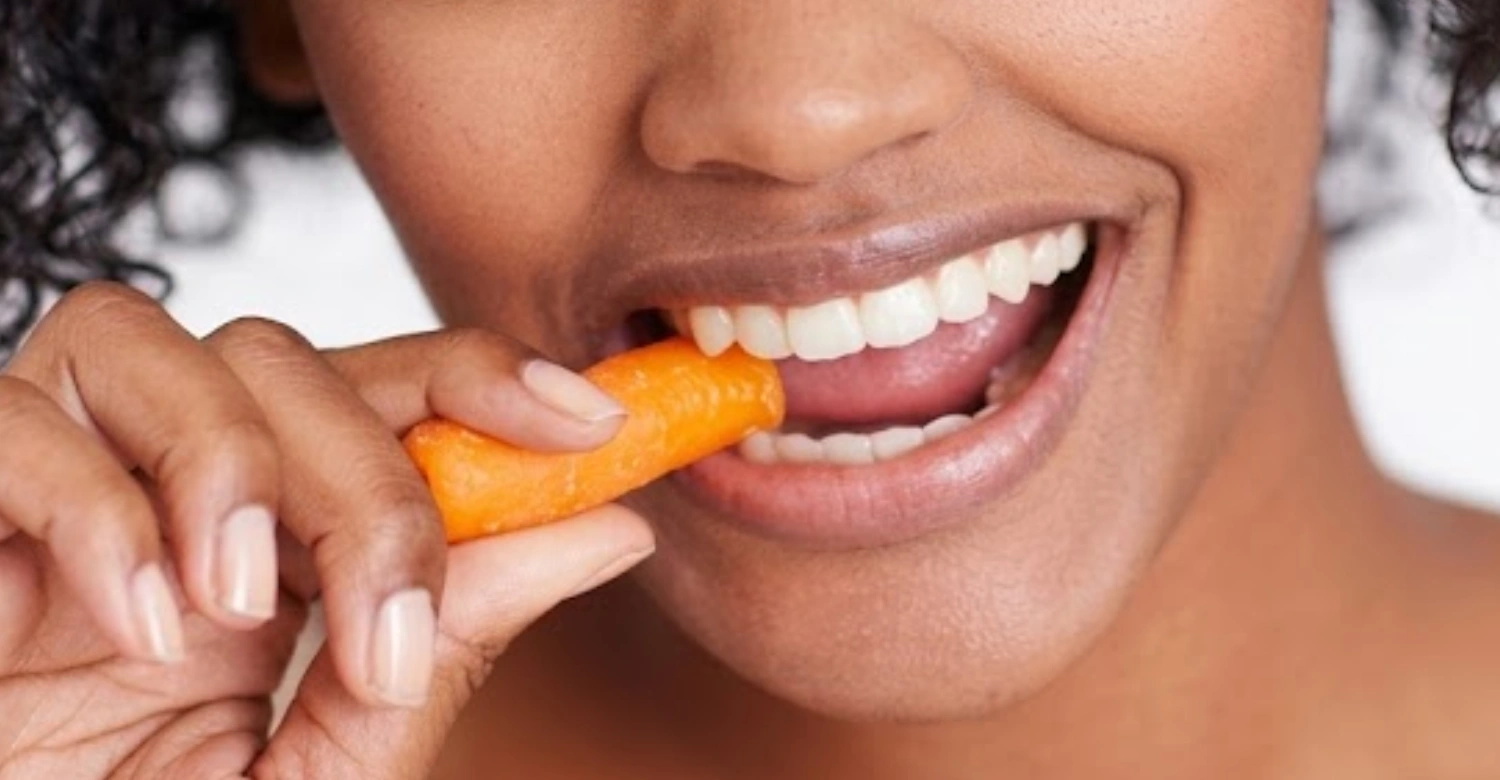
Vegetables vary greatly in texture and therefore require different amounts of chewing. Raw carrots are firmer than cooked carrots, for example. Leafy vegetables can also vary according to their structure and preparation. Cooking usually softens plant tissues and can reduce mechanical resistance. Fibrous vegetables may still require extensive chewing. Smaller pieces can make vegetables easier to manage. Chew until the food becomes comfortable and sufficiently broken down. There is no universal number for every vegetable or preparation method. Eating a variety of vegetables supports dietary quality regardless of chewing count. People with dental limitations can choose cooked or finely prepared vegetables when necessary.
How Many Times Should You Chew Nuts and Seeds?
Nuts and seeds are dense foods that generally require substantial chewing. Their firmness makes effective grinding particularly important. Larger pieces may require additional chewing compared with finely chopped nuts. People with dental pain should avoid forcing themselves to chew hard foods. Grinding nuts can place considerable demands on posterior teeth. Patients with cracked teeth or recent dental treatment may need temporary dietary modifications. Nuts can also pose choking risks for some young children. Appropriate preparation and age-specific guidance are important. There is no universal number of chews for nuts or seeds. The food should be adequately broken down before swallowing. Saliva also affects How Many Times Are You Supposed to Chew Your Food before swallowing becomes comfortable.
How Many Times Should You Chew Bread, Rice, and Soft Foods?
Bread and rice vary considerably in texture. Fresh soft bread may require relatively little chewing. Dense, dry, or crusty bread can require considerably more. Cooked rice is usually easier to process because moisture softens the grains. Sticky rice may behave differently from loose cooked rice. Soft foods should still be controlled before swallowing. Saliva helps combine food into a manageable bolus. People should avoid swallowing unusually large portions of bread or rice. This is particularly important when eating quickly. There is no universal chewing count for these foods. Texture and swallowing comfort provide more useful guidance.
What Factors Determine How Many Times You Should Chew Your Food?
Chewing frequency depends on several interacting factors. Food texture is one of the most important influences. Bite size also changes the amount of mechanical processing required. Dental health can determine how efficiently teeth grind food. Jaw muscle function affects chewing strength and endurance. Saliva helps lubricate and bind food during mastication. Age can influence teeth, muscles, coordination, and oral sensation. Dentures, crowns, implants, and orthodontic appliances can also change chewing patterns. These variables explain why a fixed chewing prescription is inappropriate for most healthy adults. Instead, chewing should adapt naturally to the food and individual oral function. Persistent changes in chewing ability deserve professional attention. Understanding How Many Times Are You Supposed to Chew Your Food is especially useful when evaluating chewing difficulties.
Food Texture and Consistency
Food texture strongly influences chewing requirements. Hard foods generally require more mechanical force. Fibrous foods may require repeated chewing before becoming manageable. Moist foods can often be processed more easily. Dry foods may require more salivary mixing. Sticky foods may require additional oral manipulation. Food preparation can therefore change chewing demands significantly. Cooking, chopping, blending, or softening can make difficult foods easier to manage. People recovering from dental procedures may temporarily require softer foods. The appropriate diet should depend on the specific dental procedure and professional instructions. Texture is therefore a more useful guide than a universal chewing count.
Bite Size
Bite size influences both chewing effort and swallowing control. Larger bites contain more material that needs mechanical breakdown. They may also be more difficult to position correctly between the teeth. Smaller bites can improve control and allow better mixing with saliva. They may also encourage slower eating. Cutting food into manageable portions is particularly useful for dense foods. People with reduced chewing ability can benefit from adjusting portion size. There is no single ideal bite size for everyone. The practical goal is a bite that can be comfortably controlled without excessive effort. Smaller bites are not a substitute for treating dental problems. How Many Times Are You Supposed to Chew Your Food can differ substantially between soft foods and tougher foods.
Dental Health
Healthy teeth are important for efficient chewing. Decay, cracks, gum disease, tooth sensitivity, and missing teeth can change chewing patterns. People may avoid certain foods or favor one side of the mouth. These adaptations can become noticeable during meals. Pain can also cause people to chew less effectively. Missing molars can reduce grinding capacity because posterior teeth provide substantial chewing surfaces. Dental restorations should ideally support comfortable function. Regular dental examinations can identify problems before they significantly affect eating. Good oral hygiene also helps protect the structures involved in mastication. Persistent chewing discomfort should be evaluated rather than ignored.
Jaw Muscle Function
Chewing depends on coordinated activity from the jaw muscles and other oral structures. Muscle strength, endurance, coordination, and pain can influence chewing performance. Temporomandibular disorders may cause discomfort during prolonged chewing. Some people may notice fatigue when eating tough foods. Others may develop headaches or jaw soreness. These symptoms should not automatically be attributed to eating too quickly. Dental or medical assessment can help identify the underlying cause. Treatment depends on the specific diagnosis. Resting the jaw and avoiding excessive chewing may sometimes be appropriate. Professional advice is preferable when symptoms persist. Smaller portions can make How Many Times Are You Supposed to Chew Your Food easier to manage naturally.
Saliva Production
Saliva lubricates food and supports formation of a cohesive bolus. It also contains enzymes that begin certain digestive processes. Reduced saliva can make dry foods harder to manage. Dry mouth may result from medications, dehydration, medical conditions, or other factors. Persistent dryness can also increase oral discomfort and dental risk. Drinking fluids can support hydration but may not correct the underlying cause. People with chronic dry mouth should discuss symptoms with a healthcare professional. Saliva substitutes or other treatments may sometimes be recommended. Adequate saliva supports comfortable chewing and swallowing.
Note : All images used are for editorial and illustrative purposes only and may not originate from the original news provider or associated company.
Age and Oral Function
Chewing ability can change throughout life. Children develop chewing skills as their dentition and oral motor coordination mature. Adults may experience changes caused by dental disease, restorations, tooth loss, or jaw problems. Older adults can have additional challenges involving teeth, dentures, saliva, muscles, and coordination. These changes can influence food choices and chewing patterns. Age alone does not determine how effectively someone can chew. Individual oral health is more informative. Appropriate dental care can help preserve chewing function throughout life. Significant changes in eating ability deserve assessment regardless of age. How Many Times Are You Supposed to Chew Your Food depends on the amount of food placed in the mouth.
Clinical Note
A clinical evaluation should consider the complete chewing system. Dentists assess teeth, gums, restorations, bite relationships, and oral tissues. Jaw movement and symptoms can also provide useful information. If chewing becomes painful, inefficient, or noticeably different, the cause should be investigated. Patients should not compensate indefinitely by chewing only on one side. Persistent one-sided chewing can indicate discomfort or reduced function. A personalized assessment can identify whether dental treatment may improve oral function. Vitrin Clinic uses digital diagnostic technologies to support treatment planning for appropriate patients. The goal is not simply to increase chewing efficiency. The broader goal is comfortable, stable, and functional oral health.
What We Notice Clinically
Dental problems can change how people chew long before they seek treatment. Patients may begin favoring one side after developing tooth sensitivity or pain. Others may avoid hard foods because chewing becomes uncomfortable. Missing teeth can reduce the available surfaces for grinding. Damaged restorations may also alter bite contact. These changes can affect food choices and meal patterns. Patients sometimes compensate without realizing their chewing behavior has changed. Clinical examination can identify whether dental factors contribute to these adaptations. Early treatment may prevent minor problems from becoming larger functional limitations. Chewing ability should therefore be considered when evaluating overall dental health. Comfortable eating is an important part of successful oral rehabilitation. Dental discomfort can change How Many Times Are You Supposed to Chew Your Food and where chewing occurs.
How Dental Problems Can Affect Chewing
Tooth decay can cause sensitivity during chewing. Cracked teeth may produce sharp pain when pressure is applied. Gum disease can affect supporting tissues around teeth. Missing teeth can reduce available chewing surfaces. Poorly fitting dental restorations can also interfere with comfortable biting. These problems may cause patients to change chewing patterns. Some people begin chewing exclusively on the opposite side. Others avoid certain foods completely. A dental examination can identify structural or inflammatory causes. Treatment should address the underlying problem rather than simply changing eating habits. Maintaining regular dental care helps protect chewing function over time.
How Missing Teeth Can Change Chewing Patterns
Missing teeth can change how force is distributed during chewing. The remaining teeth may receive different loads. People may also favor areas with more comfortable contact. Posterior tooth loss can particularly affect grinding of dense foods. Some patients compensate by taking smaller bites or choosing softer foods. Dental implants, bridges, or dentures may restore missing tooth function when clinically appropriate. Treatment decisions depend on bone levels, gum health, general health, bite relationships, and individual goals. Digital imaging can help assess anatomical conditions before treatment. Patients should receive an individualized plan rather than assuming one replacement option is suitable for everyone. How Many Times Are You Supposed to Chew Your Food should be guided by texture rather than an arbitrary target.
When Difficulty Chewing May Need Dental Assessment
Difficulty chewing deserves dental assessment when it persists or worsens. Pain, sensitivity, swelling, broken teeth, and missing teeth can all interfere with mastication. Jaw clicking accompanied by pain may also warrant evaluation. Patients should seek prompt care when chewing becomes suddenly difficult. Difficulty swallowing, repeated choking, or food sticking requires appropriate medical evaluation. Dental assessment can identify oral causes contributing to chewing limitations. Early diagnosis can sometimes prevent further deterioration. People should not rely on simply chewing more aggressively. Excessive force may worsen pain in certain dental conditions. Professional evaluation provides a safer path to identifying the cause.
Dr. Rifat Alsaman’s Clinical Opinion
Dr. Rifat Alsaman, Head of the Medical Team at Vitrin Clinic and cosmetic dentist, considers comfortable mastication an important part of functional dentistry. He emphasizes that chewing patterns should be evaluated individually. A patient with missing teeth may have different needs from someone with healthy natural dentition. Tooth position, bite relationships, restorations, and jaw function all influence chewing. Digital diagnostics can help clinicians understand these factors more accurately. Treatment should address the underlying cause rather than prescribing an arbitrary chewing count. Patients should also communicate pain, fatigue, or changes in eating ability. A functional approach can support both oral health and everyday quality of life. Patients may wonder How Many Times Are You Supposed to Chew Your Food when dental problems change eating patterns.
Tips for Patients
Good chewing habits do not require constant counting. Focus instead on smaller bites, appropriate meal speed, and comfortable swallowing. Avoid rushing through meals whenever possible. Pay attention to food texture and modify preparation when needed. Maintaining oral hygiene helps protect the teeth and supporting tissues involved in chewing. Dental pain should not be ignored because it can alter eating patterns. Missing teeth should be assessed when they affect everyday function. People should also seek professional help when chewing or swallowing becomes difficult. These habits support comfortable eating without turning meals into a numerical exercise. The objective is efficient oral function and safe swallowing.
Take Smaller Bites
Smaller bites are easier to control inside the mouth. They generally require less mechanical work per individual bite. Smaller portions also allow saliva to mix more effectively with food. This can make chewing and swallowing more comfortable. Dense foods can particularly benefit from being cut into manageable pieces. Smaller bites may also help people slow down naturally. Avoid filling the mouth with more food before the previous bite is ready. This simple habit can improve awareness during meals. People with dental limitations may find smaller bites especially useful. However, persistent chewing problems still require professional assessment. How Many Times Are You Supposed to Chew Your Food is not identical for meat, vegetables, bread, rice, or nuts.
Chew Until Food Is Comfortable to Swallow
Use texture and comfort as practical indicators of readiness. Food should be sufficiently broken down for controlled swallowing. Tough pieces should receive additional chewing. You do not need to make every bite completely smooth. The appropriate texture depends on the food. Very dry foods may need more salivary mixing. Large pieces should be reduced before swallowing. Avoid swallowing simply because a predetermined chewing number has been reached. Your mouth provides useful sensory feedback during normal eating. If swallowing remains difficult despite appropriate chewing, seek professional assessment.
Slow Down During Meals
Slowing down gives you more time to chew and recognize fullness. It can also reduce the tendency to swallow large pieces quickly. Eating slowly does not require counting every chewing movement. Instead, create enough time to process each bite comfortably. Put utensils down occasionally if meals are consistently rushed. Avoid eating while distracted when possible. People often eat faster when multitasking or under time pressure. Building more time into meals can support more deliberate eating. Slower eating is a behavioral strategy rather than a guaranteed health intervention. Individual results naturally vary. Individual oral function determines How Many Times Are You Supposed to Chew Your Food in many everyday situations.
Avoid Eating While Rushing
Rushing can lead to larger bites and incomplete chewing. It may also reduce attention to food texture and swallowing comfort. Eating quickly can make meals feel less controlled. Try to sit down and create enough time for the meal. Avoid swallowing a new bite before the previous one has been comfortably processed. Smaller portions can help when time is limited. Preparing food in manageable pieces can also reduce chewing demands. If rushing is unavoidable, choose foods that are easier to manage. Persistent swallowing problems should never be attributed simply to eating too quickly.
Pay Attention to Food Texture
Texture provides useful information about how much chewing a food needs. Hard, dry, and fibrous foods usually require more mechanical processing. Soft or moist foods often require less. Preparation methods can substantially change food texture. Cooking, chopping, shredding, or softening can make difficult foods easier to eat. People with temporary dental limitations may benefit from appropriate dietary modifications. However, dietary changes should follow professional instructions after dental procedures. Paying attention to texture can make meals more comfortable. It also reduces the temptation to follow a rigid chewing number. How Many Times Are You Supposed to Chew Your Food may increase when a bite is unusually large or tough.
Maintain Good Oral Hygiene
Healthy teeth and gums support effective chewing. Brush twice daily with fluoride toothpaste and clean between teeth regularly. Regular dental examinations can identify problems before they significantly affect function. Oral hygiene reduces the risk of common dental diseases. It also helps preserve natural chewing surfaces. People with dental restorations should follow their dentist's maintenance recommendations. Persistent bad breath, bleeding gums, sensitivity, or tooth pain deserves attention. Oral health affects more than appearance. It contributes to eating, speaking, and everyday comfort.
Address Dental Pain or Missing Teeth
Dental pain should not be ignored during meals. Pain can cause people to favor one side or avoid certain foods. Missing teeth can also change chewing patterns and food choices. A dental assessment can determine whether restoration or replacement is appropriate. Options may include fillings, crowns, bridges, dentures, or implants. The correct choice depends on the individual clinical situation. Digital imaging can help evaluate bone and surrounding structures. Treating the underlying problem may improve comfort more effectively than changing chewing habits. Patients should discuss available options with a qualified dental professional. Good oral health can support comfortable chewing when considering How Many Times Are You Supposed to Chew Your Food.
Seek Help if Chewing or Swallowing Becomes Difficult
Persistent chewing difficulty deserves professional attention. Warning signs include pain, swelling, repeated choking, coughing, food sticking, or sudden changes. Dental problems can cause some symptoms, while swallowing disorders can have different causes. A dentist can assess teeth, gums, restorations, and oral function. Medical or speech-swallowing assessment may be needed for swallowing-specific concerns. Do not assume that simply chewing more will solve persistent symptoms. Early assessment can help identify the underlying issue. Prompt attention is especially important when symptoms develop suddenly or worsen quickly. How Many Times Are You Supposed to Chew Your Food becomes easier to judge when you pay attention to texture.
How Can Vitrin Clinic Help With Chewing and Oral Function?
Vitrin Clinic can evaluate dental factors that may affect comfortable chewing. The assessment can consider tooth condition, missing teeth, bite relationships, and restorative needs. Digital technologies can support more detailed diagnosis and treatment planning. The clinic's international patient workflow is designed around coordinated dental care. Individual treatment depends on clinical findings rather than a predetermined package. Patients can discuss concerns about chewing, missing teeth, dental pain, or oral function during consultation. Treatment options may include restorative and implant dentistry when clinically appropriate. A personalized plan helps connect dental treatment with functional goals. The objective is to improve oral health while supporting comfortable everyday use.
Digital Dental Examination and Diagnosis
Digital dental assessment can help clinicians document oral conditions efficiently. Dentists can examine teeth, gums, restorations, bite relationships, and areas requiring treatment. Digital records can support communication between clinical team members. They may also help patients understand their treatment needs. Diagnosis should always be based on clinical examination and appropriate imaging. Technology supports clinical judgment rather than replacing it. At Vitrin Clinic, digital workflows can contribute to individualized treatment planning. The exact diagnostic approach depends on the patient's condition. Patients should receive recommendations based on their specific oral findings. People can use How Many Times Are You Supposed to Chew Your Food as a mindful eating question.
CBCT and Digital X-Rays
CBCT imaging can provide three-dimensional information about dental and maxillofacial structures. Digital X-rays provide detailed views appropriate for many routine dental assessments. The correct imaging method depends on the clinical question. CBCT should not be used unnecessarily because imaging decisions should follow clinical indications. For implant planning, three-dimensional information can be particularly valuable. It can help clinicians evaluate bone dimensions and anatomical structures. Digital imaging can also support treatment communication and planning. Vitrin Clinic incorporates digital diagnostic technologies when clinically appropriate. Imaging results should always be interpreted by qualified dental professionals.
3D Intraoral Scanning
A 3D intraoral scanner captures detailed digital information about the surfaces inside the mouth. Digital impressions can support restorative and prosthetic workflows. They may also improve communication between dentists and dental laboratories. The technology can be useful when planning crowns, restorations, and other treatments. Digital scans can provide a visual representation of tooth positions and surfaces. At Vitrin Clinic, digital scanning contributes to modern treatment workflows. The appropriate technology depends on the patient's treatment requirements. Scanning does not replace clinical examination. It works as one component of comprehensive digital dentistry. How Many Times Are You Supposed to Chew Your Food has no single answer that fits every person or meal.
Personalized Digital Treatment Planning
Digital treatment planning combines clinical findings with appropriate diagnostic information. It can help clinicians visualize treatment stages and coordinate restorative procedures. For complex cases, planning may involve multiple treatment phases. Missing teeth, damaged teeth, and bite considerations can all influence the plan. A personalized approach is particularly important for patients traveling internationally. Treatment plans should consider clinical needs rather than focusing only on speed or appearance. Vitrin Clinic uses digital workflows to support individualized treatment planning. Patients can discuss goals, timelines, and available treatment options before proceeding. Final recommendations depend on clinical examination.
Can Dental Treatment at Vitrin Clinic Improve Comfortable Chewing?
Dental treatment can improve chewing when an underlying dental problem limits oral function. Missing teeth, damaged teeth, and extensive tooth wear can affect food processing. Appropriate restorative treatment may restore useful chewing surfaces. However, treatment does not guarantee identical chewing performance for every patient. Outcomes depend on bone, gums, remaining teeth, bite relationships, and overall health. Vitrin Clinic evaluates individual cases before recommending treatment. Digital diagnostics can support planning for restorative and implant procedures. Patients should understand that cosmetic goals and functional goals are related but distinct. A successful treatment plan should consider both when appropriate. Long-term maintenance is also important after treatment. Understanding How Many Times Are You Supposed to Chew Your Food can help patients recognize normal chewing variability.
Dental Implants for Missing Teeth
Dental implants can replace missing tooth roots and support restorations. They may help restore chewing function when appropriate clinical conditions are present. Implant treatment requires assessment of bone, gums, bite, and overall oral health. CBCT imaging can support evaluation of available bone and important anatomical structures. Treatment may involve implant placement followed by an abutment and crown. Some patients require additional procedures before implant placement. Healing and treatment timelines vary between individuals. Good oral hygiene and regular follow-up remain important after treatment. Vitrin Clinic offers individualized implant planning based on clinical findings.
Crowns for Damaged Teeth
Crowns can restore severely damaged teeth when sufficient supporting structure remains. They cover the prepared tooth and can restore shape and function. Crown material may include zirconia, porcelain, or other appropriate materials. The choice depends on location, functional demands, aesthetics, and clinical considerations. A crown does not automatically solve every chewing problem. The underlying tooth and supporting tissues must be assessed first. Proper bite adjustment is also important for comfortable function. Vitrin Clinic uses digital workflows to support restorative planning. Patients should receive recommendations based on their individual dental condition. How Many Times Are You Supposed to Chew Your Food should also account for dental restorations and missing teeth.
Full-Mouth Rehabilitation
Full-mouth rehabilitation may be considered when multiple teeth require coordinated treatment. The treatment can involve combinations of crowns, implants, periodontal care, and other procedures. Complex rehabilitation requires careful diagnosis and sequencing. Bite relationships become especially important when multiple teeth are restored. Digital planning can help coordinate different stages of treatment. Treatment duration varies according to procedures and healing requirements. Patients should receive a personalized plan before committing to treatment. At Vitrin Clinic, complex cases can be evaluated using digital diagnostic technologies. The focus should remain on oral health, function, durability, and appropriate aesthetics.
Digital Treatment Planning
Digital planning can improve coordination across complex restorative cases. Digital scans and radiographic information can be integrated into the treatment workflow. This may help clinicians visualize implant positions and restorative requirements. Digital planning can also improve communication between clinical and laboratory teams. However, digital technology does not eliminate the need for clinical judgment. Physical examination remains essential. Treatment should be modified when clinical findings require a different approach. Vitrin Clinic combines digital workflows with individualized clinical assessment. This approach can support efficient planning for international patients. Food consistency remains important when deciding How Many Times Are You Supposed to Chew Your Food before swallowing.
Dr. Rifat Alsaman’s Clinical Perspective
Dr. Rifat Alsaman emphasizes that dental treatment should support both function and long-term oral health. Chewing ability should be considered when planning restorations or replacing missing teeth. A visually attractive restoration should also function appropriately within the patient's bite. Digital planning can support this balance by providing detailed information before treatment. Patients should discuss their eating habits, discomfort, missing teeth, and functional concerns. Treatment should be based on diagnosis rather than assumptions about chewing numbers. Each patient's anatomy and dental condition are different. A personalized plan can therefore provide a more appropriate clinical pathway.
Dental Treatment Costs in the USA, UK, and Turkey
Dental costs vary widely depending on treatment type, materials, clinical complexity, and provider. For a single dental implant, September 2026 Bookimed data lists approximately $593 as the average in Türkiye. The same source lists starting prices around $2,700 in the UK and $3,200 in the USA. For All-on-4 treatment, Bookimed reports an average of about $4,750 in Türkiye. Its listed starting prices are approximately $20,000 in the UK and $25,000 in the USA. These figures should be treated as market references rather than guaranteed clinic prices. In England, NHS dental charges are different because eligible treatment follows official bands. From April 2026, NHS England charges are £27.90, £76.60, or £332.10. Private treatment can cost substantially more. How Many Times Are You Supposed to Chew Your Food can change with age, oral health, and chewing ability.
Treatment | Turkey | UK | USA |
Single dental implant | Average ~$593 | From ~$2,700 | From ~$3,200 |
All-on-4 | Average ~$4,750 | From ~$20,000 | From ~$25,000 |
Zygomatic All-on-4 | From ~$6,962 | From ~$22,000 | From ~$25,000 |
These international figures are useful for comparison, but individual quotations can differ significantly.
Conclusion About How Many Times Are You Supposed to Chew Your Food
There is no universal chewing number that every person needs to follow. Food texture, bite size, dental health, saliva, jaw function, and age all influence chewing. A practical approach is to chew until the food becomes comfortably manageable for swallowing. Counting can sometimes encourage slower eating, but it is not medically required. Chewing more does not automatically improve digestion or cause weight loss. Persistent chewing difficulty may indicate dental disease, tooth loss, jaw problems, or another condition. Dental assessment can identify problems affecting oral function. Maintaining healthy teeth and gums supports effective chewing throughout life. Vitrin Clinic uses digital diagnostic and treatment-planning technologies when appropriate for patients requiring restorative or implant care. The priority should always be comfortable, effective, and safe oral function.
Reference
FAQs
Dr. Rifat Alsaman has more than 5 years of clinical experience in dentistry and currently serves as the Head of the Medical Team at Vitrin Clinic. He is dedicated to providing exceptional patient care, overseeing treatment planning, and ensuring the highest clinical standards across the team. His expertise, attention to detail, and commitment to continuous professional development have helped countless patients achieve healthier, more confident smiles.


