General Dentistry
October 5, 2026
Ignoring Tooth Sensitivity and Progressive Tooth Wear: Causes, Risks, and Treatment
 Dr. Rifat Alsaman
Ignoring tooth sensitivity and progressive tooth wear may seem harmless when discomfort comes and goes. However, both conditions can quietly worsen over time. Tooth sensitivity often signals tooth enamel wear, enamel erosion, or exposed roots. Understanding the causes, risks, and treatment options helps you protect your smile. Acting early stops minor symptoms from becoming lasting damage.
What Does Ignoring Tooth Sensitivity Mean?
Ignoring tooth sensitivity and progressive tooth wear means treating repeated discomfort as normal. Instead, it is worth asking why it happens. Recognizing what sensitivity is, how it shows up, and when it matters is the first step toward protecting your teeth.
Understanding Tooth Sensitivity
Tooth sensitivity is a short, sharp discomfort felt when teeth meet cold, heat, sweetness, acidity, or even air. It usually happens when the protective enamel thins or gums recede, exposing dentin. Dentin contains tiny tubules that carry stimuli toward the nerve. This explains why sensitive teeth react so quickly to everyday triggers.
Common Signs of Sensitive Teeth
Common signs of sensitive teeth include a sudden twinge when drinking cold water. Others include discomfort with hot coffee or a sharp sting after sweet or acidic foods. Some people notice pain while brushing or breathing in cold air. Avoiding chewing on one side can also signal sensitivity that deserves attention.
Why Persistent Tooth Sensitivity Should Not Be Ignored
Ignoring tooth sensitivity and progressive tooth wear allows the underlying problem to continue unchecked. Persistent sensitivity often points to ongoing enamel loss, gum recession, or dentin exposure. These changes rarely reverse on their own. Addressing the cause early usually means simpler care and less discomfort. It also better protects the natural tooth structure.
Short-Term Sensitivity vs. Progressive Dental Problems
Short-term sensitivity may follow teeth whitening, a recent filling, or a cleaning. It typically fades within days or weeks. Progressive dental problems behave differently. The discomfort lasts longer, appears more often, or spreads to more teeth. When sensitivity steadily increases instead of settling, it may reflect continuing tooth enamel wear.
When Tooth Sensitivity May Require Dental Evaluation
Tooth sensitivity may require dental evaluation when it lasts more than a few weeks. The same applies if it affects several teeth or worsens over time. Visible changes such as thinning edges, notches near the gumline, or chips also warrant a visit. A dentist can determine whether the sensitivity reflects enamel loss, recession, or another dental problem.
Read about how to relieve throbbing tooth pain
What Causes Tooth Sensitivity and Progressive Tooth Wear?
Ignoring tooth sensitivity and progressive tooth wear is easier when the causes seem unclear. In reality, most cases share a few common sources. These gradually weaken enamel or expose the sensitive dentin beneath it.
Tooth Sensitivity Causes
The most common tooth sensitivity causes include enamel erosion, aggressive brushing, and teeth grinding. Gum recession, cracked teeth, and worn fillings are also frequent causes. Acidic foods and drinks play a major role too. Often, several tooth wear causes work together. That is why identifying each habit matters before choosing a long-term solution.
Tooth Enamel Wear and Enamel Erosion
Tooth enamel wear is the gradual loss of the hard outer layer. It happens through friction, grinding, or chemical attack. Enamel erosion specifically refers to loss caused by acids dissolving enamel minerals. Because enamel contains no living cells, it cannot regenerate once lost. Ignoring tooth sensitivity and progressive tooth wear lets this loss continue quietly.
Acidic Foods and Drinks
Many acidic foods and drinks can soften enamel. Examples include citrus fruits, soft drinks, sports drinks, energy drinks, wine, vinegar-based dressings, and some fruit juices. Sipping them slowly or throughout the day extends acid contact. Over time, repeated exposure weakens the enamel surface. This makes acid one of the leading tooth wear causes.
Aggressive Tooth Brushing
Brushing too hard or using a hard-bristled toothbrush can wear enamel and push gums back. This is especially common near the gumline. Horizontal scrubbing motions and highly abrasive toothpastes add to the damage. This mechanical wear often creates small notches near the gums. These notches expose dentin and cause sensitive teeth that react to cold and touch.
Teeth Grinding and Jaw Clenching
Teeth grinding and jaw clenching, also called bruxism, place heavy forces on the biting surfaces. Many people grind during sleep without realizing it. Over time, this flattens teeth, causes small fractures, and thins enamel. Ignoring tooth sensitivity and progressive tooth wear linked to grinding can lead to shortened teeth. It may also cause jaw discomfort.
Frequent Exposure to Acidic Substances
Acid exposure is not limited to diet. Acid reflux, frequent vomiting, and some medications can bring stomach acid into contact with teeth. Stomach acid is stronger than most dietary acids. Dry mouth also reduces saliva, the body's natural acid buffer. These internal sources often produce enamel erosion on inner tooth surfaces.
Gum Recession and Exposed Tooth Roots
Gum recession exposes tooth roots, which lack enamel. Roots are covered only by a thin layer of cementum. Once exposed, roots react quickly to temperature and touch. Recession may result from gum disease, aggressive brushing, genetics, or aging. Ignoring tooth sensitivity and progressive tooth wear near the gumline can leave roots increasingly vulnerable.

Note - All images used are for editorial and illustrative purposes only. They may not originate from the original news provider or associated company.
Understand the causes and treatment for gum pockets treatment
How Are Tooth Sensitivity and Tooth Wear Connected?
Tooth sensitivity and tooth wear are closely linked. Ignoring tooth sensitivity and progressive tooth wear allows one problem to feed the other. Understanding this connection explains why symptoms often intensify gradually.
How Enamel Loss Can Increase Tooth Sensitivity
Enamel acts as an insulating shield over the dentin. As tooth enamel wear progresses, that shield becomes thinner and less effective. Hot, cold, sweet, and acidic stimuli then reach the dentin more easily. The result is increasing tooth sensitivity. Even foods and drinks that once caused no discomfort can start to hurt.
How Progressive Tooth Wear Exposes Dentin
Progressive tooth wear removes enamel layer by layer from biting edges, chewing surfaces, and gumline areas. Once the enamel wears through, dentin becomes exposed. Dentin is softer and wears faster than enamel, so exposure can accelerate further damage. Ignoring tooth sensitivity and progressive tooth wear at this stage speeds deterioration.
Why Sensitivity Can Become More Persistent Over Time
Early sensitivity may appear only occasionally. As more dentin is exposed, the discomfort can become more frequent and longer lasting. Open dentin tubules allow stimuli to travel to the nerve repeatedly. Without addressing the cause, sensitive teeth may react to everyday activities. These include drinking water, brushing, or even breathing.
Clinical Note
Clinically, sensitivity and wear are evaluated together. Treating one without the other rarely gives lasting relief. Ignoring tooth sensitivity and progressive tooth wear often lets the underlying cause keep acting. That cause may be acid, grinding, or brushing habits. Effective care combines symptom relief with correcting the habits driving enamel loss.
Explore options and fit for a bottom denture
What Happens If You Ignore Tooth Sensitivity?
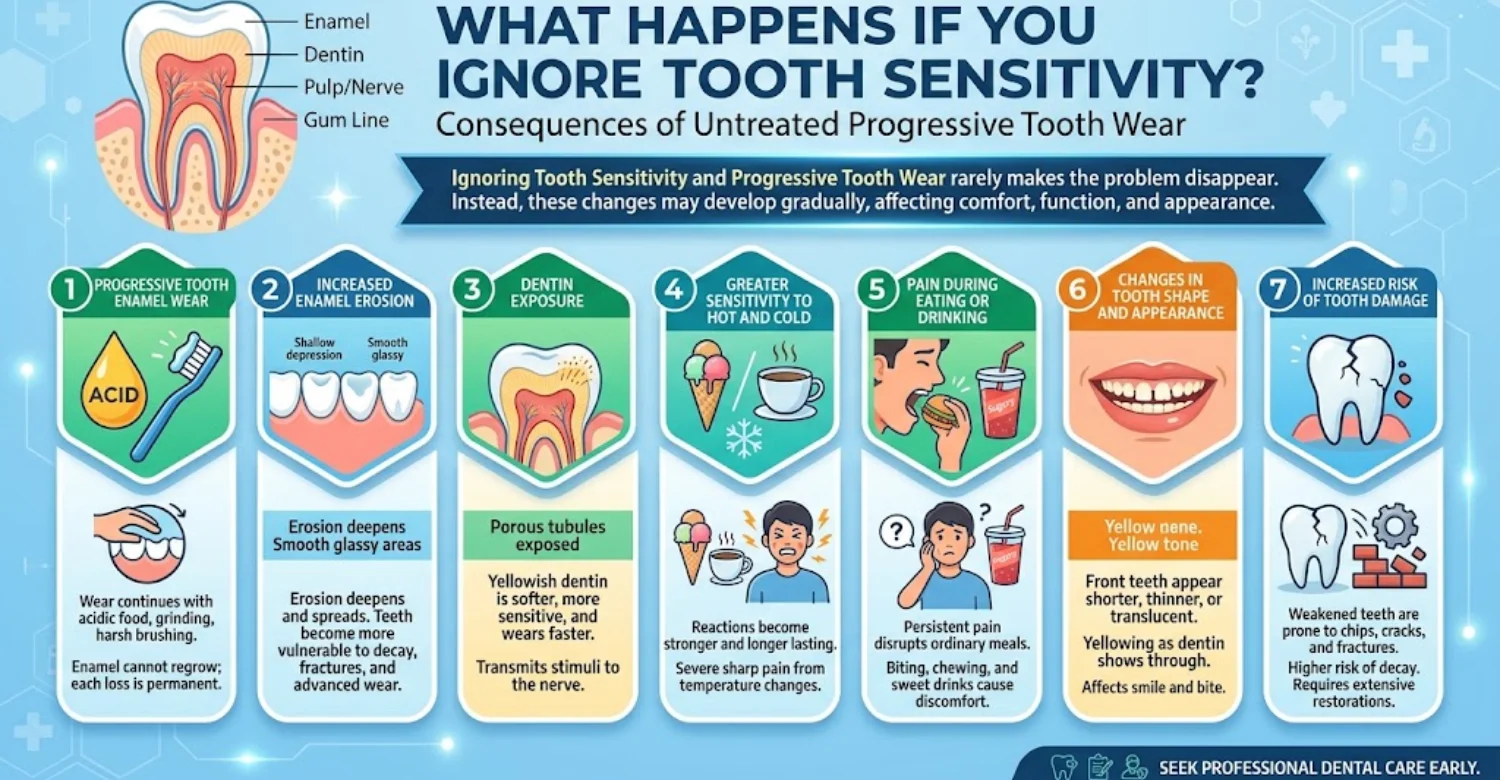
Ignoring tooth sensitivity and progressive tooth wear rarely makes the problem disappear. Instead, the following changes may develop gradually. They can affect comfort, function, and appearance.
Progressive Tooth Enamel Wear
When the causes remain unaddressed, tooth enamel wear continues. Every acidic drink, grinding episode, or harsh brushing session adds to it. Because enamel cannot regrow, each loss is permanent. Over months or years, the damage becomes visible and harder to restore. Ignoring tooth sensitivity and progressive tooth wear allows this steady decline.
Increased Enamel Erosion
Untreated enamel erosion tends to deepen and spread across more tooth surfaces. Teeth may develop shallow depressions, smooth glassy areas, or cupped chewing surfaces. As erosion advances, protective enamel thins further. Teeth then become more vulnerable to decay, fractures, and wear. This makes enamel erosion treatment more involved later.
Dentin Exposure
Once enamel wears through, the yellowish dentin underneath becomes exposed. Dentin is softer, more porous, and more sensitive than enamel. Exposed dentin wears faster, stains more easily, and transmits stimuli to the nerve. Ignoring tooth sensitivity and progressive tooth wear at this stage increases discomfort. It also raises the risk of further structural damage.
Greater Sensitivity to Hot and Cold
As more dentin is exposed, reactions to temperature can become stronger and longer lasting. A cold drink or hot meal may trigger sharp pain that previously felt mild. Many people begin avoiding certain foods or drinking through one side of the mouth. This signals that sensitive teeth need professional assessment.
Pain During Eating or Drinking
Persistent sensitivity can make ordinary meals uncomfortable. Biting, chewing, or sipping cold and sweet drinks may cause sharp pain. Over time, this can change eating habits and reduce enjoyment of food. Ignoring tooth sensitivity and progressive tooth wear at this point may let damage reach deeper layers.
Changes in Tooth Shape and Appearance
Progressive wear can change how teeth look. Front teeth may appear shorter, thinner, or translucent at the edges. Back teeth may flatten. Yellowing can occur as dentin shows through thinning enamel. These changes may affect smile appearance and bite balance. They usually require restorative treatment to correct.
Increased Risk of Tooth Damage
Weakened, worn teeth are more prone to chips, cracks, and fractures. This is especially true under chewing or grinding forces. Thin enamel also offers less protection against decay. Ignoring tooth sensitivity and progressive tooth wear can lead to more extensive restorations. Early care helps preserve natural tooth structure.
Tips for the Patients
Do not assume sensitivity is normal if it keeps returning. Note which foods, drinks, or activities trigger discomfort, and share these details with your dentist. Switch to a soft-bristled toothbrush and use toothpaste for sensitive teeth. Limit acidic drinks while you arrange an evaluation to identify the cause.
What Are the Symptoms of Progressive Tooth Wear?
Ignoring tooth sensitivity and progressive tooth wear is common because early symptoms are subtle. Recognizing these signs helps you seek care before the damage becomes extensive.
Increased Tooth Sensitivity
Rising tooth sensitivity is often the earliest symptom of progressive wear. Discomfort may start with cold drinks and gradually extend to hot foods, sweets, or brushing. Sensitivity that becomes more frequent or affects more teeth suggests enamel is thinning. It also signals that dentin is becoming exposed and needs evaluation.
Short, Sharp Pain
Sensitivity from exposed dentin typically causes short, sharp pain. It appears suddenly with a trigger and fades once the trigger is removed. This differs from lingering or throbbing pain, which may indicate nerve involvement. Ignoring tooth sensitivity and progressive tooth wear when sharp pain recurs lets the exposure continue.
Tooth Discoloration
As enamel thins, the naturally yellow dentin beneath shows through more clearly. This makes teeth look darker or more yellow. Edges of front teeth may appear translucent or grayish. Exposed dentin also absorbs stains from coffee, tea, and other foods more easily. As a result, discoloration often accompanies advancing tooth enamel wear.
Flattened or Shortened Teeth
Grinding, clenching, and erosion can gradually flatten chewing surfaces and shorten front teeth. Canines may lose their pointed tips, and the smile may look older or less even. Ignoring tooth sensitivity and progressive tooth wear can let these changes affect bite function. Over time, facial appearance may change as well.
Small Cracks, Chips, or Rough Edges
Weakened enamel is more likely to develop fine cracks, small chips, or rough edges. These are most common on front teeth. You may feel sharp areas with your tongue. These defects can trap plaque, increase sensitivity, and progress to larger fractures. They should be checked rather than left alone.
Increased Sensitivity to Sweet or Acidic Foods
Sweet and acidic foods can trigger discomfort when dentin is exposed. They draw fluid through the dentin tubules and irritate the nerve. If candy, fruit, or soft drinks cause a sharp sting, enamel erosion may be the reason. Ignoring tooth sensitivity and progressive tooth wear can intensify this reaction.
Learn about different types of partial dentures
How Is Tooth Sensitivity and Tooth Wear Diagnosed?
Diagnosis focuses on the source of discomfort, the extent of damage, and the habits behind it. A careful assessment prevents ignoring tooth sensitivity and progressive tooth wear until restoration becomes complex.
Dental Examination
A dental examination begins with a discussion of symptoms, triggers, diet, and brushing habits. Your medical history, including reflux or dry mouth, is also reviewed. The dentist then examines each tooth, the gums, and the bite. Gentle air or cold tests may help locate sensitive teeth. These tests also help rule out decay, cracks, or leaking fillings.
Checking for Enamel Loss
The dentist looks for signs of enamel loss, such as smooth glossy surfaces and thin translucent edges. Cupping on chewing surfaces and notches near the gumline are other signs. The pattern and location of wear provide clues about its cause. Recording the severity also helps track whether tooth enamel wear progresses over time.
Identifying Exposed Dentin
Exposed dentin often appears yellowish. It may be found on worn biting surfaces or exposed roots. The dentist checks these areas for sensitivity and assesses how much protective structure remains. Ignoring tooth sensitivity and progressive tooth wear when dentin is visible can speed up wear. It can also make discomfort more frequent.
Evaluating Bite and Tooth Wear Patterns
Evaluating how upper and lower teeth meet helps reveal grinding, clenching, or uneven bite forces. Flat, matching wear facets often suggest grinding. Rounded, hollow areas typically indicate erosion. Understanding these patterns helps the dentist separate different tooth wear causes. Treatment can then target the actual source of damage.
Identifying Possible Underlying Causes
Identifying underlying causes may involve reviewing diet, drinking habits, brushing technique, stress, and sleep. Conditions such as acid reflux or dry mouth are also considered. Sometimes referral to a physician is recommended. Correcting these factors is essential. Repairing teeth while ignoring tooth sensitivity and progressive tooth wear triggers may lead to recurring damage.
Clinical Note
An accurate diagnosis is the foundation of lasting treatment. Two patients with similar sensitivity may have very different causes. One may suffer from acidic drinks, while another grinds at night. Treating the symptom without identifying the cause often brings only temporary relief. That is why a thorough history and examination guide every recommendation.
How Is Tooth Sensitivity Treated?
Tooth sensitivity treatment depends on the cause and severity. Ignoring tooth sensitivity and progressive tooth wear limits options. Early care, on the other hand, often allows simple, conservative solutions.
Tooth Sensitivity Treatment Options
Tooth sensitivity treatment options range from desensitizing toothpaste and professional fluoride to bonding. Restorations and gum procedures are also available. Mild cases often respond to home care and in-office varnishes. Advanced wear may need restorative work. The dentist chooses based on remaining enamel, where dentin is exposed, and what caused it.
Desensitizing Toothpaste
Desensitizing toothpaste contains ingredients such as potassium nitrate or stannous fluoride. These calm nerve responses or block dentin tubules. It usually requires several weeks of consistent use to show results. Applying a small amount to sensitive areas before bed can help. It eases symptoms but does not reverse lost enamel.
Fluoride Treatments
Professional fluoride treatments, such as in-clinic fluoride varnish, strengthen weakened enamel. They also reduce sensitivity by helping block exposed dentin. Fluoride makes enamel more resistant to acid attacks. Dentists may also recommend prescription-strength fluoride toothpaste for home use. This forms part of enamel erosion treatment and prevention.
Dental Bonding for Exposed Areas
Dental bonding uses tooth-colored composite resin to cover exposed dentin. It can also repair worn notches near the gumline or small eroded areas. It seals sensitive surfaces, protects them from further wear, and improves appearance. Bonding is conservative and often completed in one visit. It is useful before ignoring tooth sensitivity and progressive tooth wear causes larger damage.
Restorative Treatment for Significant Tooth Wear
When wear is significant, onlays, veneers, or crowns may be needed. They rebuild lost structure, protect weakened teeth, and restore bite height. These treatments relieve sensitivity and improve function and appearance. Careful planning is essential, especially when many teeth are worn. The goal is a stable, comfortable bite.
Treating Gum Recession When Necessary
When sensitivity comes from exposed roots, treating gum recession may help. Options include managing gum disease, correcting brushing habits, and bonding over exposed root surfaces. In suitable cases, gum grafting can cover exposed roots. Ignoring tooth sensitivity and progressive tooth wear at the gumline can allow recession to progress.
Ready to transform your smile?
Talk to our team and get a personal FREE treatment plan.
How Can You Stop Tooth Sensitivity From Getting Worse?
Learning how to stop tooth sensitivity from getting worse starts with daily habits. Ignoring tooth sensitivity and progressive tooth wear is risky. Simple changes can reduce further damage.
How to Stop Tooth Sensitivity at Home
Knowing how to stop tooth sensitivity at home involves protecting enamel and calming exposed dentin. Use toothpaste for sensitive teeth, brush gently, and limit acidic foods. Avoid very hot or cold extremes when possible. Home care reduces symptoms, but persistent discomfort still needs a dental evaluation.
Use a Soft-Bristled Toothbrush
A soft-bristled toothbrush cleans effectively without scratching enamel or pushing gums back. Hard bristles increase abrasion, especially near the gumline where enamel is thinnest. Replace your toothbrush every three to four months, or sooner if bristles fray. An electric toothbrush with a pressure sensor can also help prevent excessive force.
Avoid Aggressive Brushing
Brush with gentle circular motions instead of hard horizontal scrubbing. Hold the brush lightly. Brushing for two minutes twice daily is enough. Pressing harder does not clean better and may wear enamel and gums. Ignoring tooth sensitivity and progressive tooth wear caused by brushing habits can create notches near the gums.
Choose Fluoride Toothpaste
Fluoride toothpaste strengthens enamel and helps it resist acid. Choose a low-abrasion formula, and consider one designed for sensitive teeth. After brushing, spit out excess toothpaste without rinsing heavily. This keeps fluoride on the teeth longer. Using it consistently twice daily is one of the simplest ways to protect enamel.
Reduce Acidic Food and Drink Exposure
Reduce how often you consume acidic foods and drinks. Avoid sipping them throughout the day. Enjoy them with meals, use a straw for acidic beverages, and choose water between meals. Continuing frequent acid exposure while ignoring tooth sensitivity and progressive tooth wear allows enamel erosion to advance.
Maintain Good Oral Hygiene
Good oral hygiene keeps gums healthy and reduces the risk of decay and recession. Brush twice daily and clean between teeth once a day with floss or interdental brushes. Attend regular cleanings as well. Healthy gums protect tooth roots. Plaque control also helps prevent problems that make sensitive teeth worse.
Address Teeth Grinding and Jaw Clenching
If you grind or clench, a custom night guard can protect teeth during sleep. Managing stress, limiting caffeine, and noticing daytime clenching also help. Ignoring tooth sensitivity and progressive tooth wear linked to grinding can lead to flattened or cracked teeth. These teeth may eventually require restorative treatment.
Tips for the Patients
Keep a simple diary of foods, drinks, and activities that trigger sensitivity. Wait before brushing after acidic meals, and rinse with water instead. Use desensitizing toothpaste consistently for several weeks. If you wake with jaw soreness or headaches, mention possible grinding at your next visit. Your dentist can then assess it.
Find relief and remedies for an ache in mouth
How Can You Prevent Enamel Erosion and Progressive Tooth Wear?
Prevention protects the enamel you have, since lost enamel cannot regrow. Ignoring tooth sensitivity and progressive tooth wear is far costlier than adopting protective habits early.
How to Prevent Enamel Erosion
Knowing how to prevent enamel erosion starts with reducing acid contact. Strengthen enamel with fluoride and protect teeth from mechanical wear. Combine mindful eating and drinking habits with gentle brushing and regular dental checkups. Managing conditions such as acid reflux or dry mouth is also important for long-term protection.
Limit Acidic Foods and Beverages
Limit soft drinks, energy drinks, citrus juices, and other acidic beverages. Avoid holding or swishing them in your mouth. Consuming acidic foods with meals reduces exposure because saliva flow increases while eating. Ignoring tooth sensitivity and progressive tooth wear while drinking acidic beverages often accelerates enamel loss.
Avoid Brushing Immediately After Acidic Exposure
Acids temporarily soften enamel, making it more vulnerable to abrasion. Brushing right after acidic foods, drinks, or reflux episodes can remove softened enamel. Waiting about 30 to 60 minutes allows saliva to neutralize acids. This also helps enamel reharden. Rinsing with water first is a safer immediate step.
Drink Water After Acidic Foods and Drinks
Drinking or rinsing with water after acidic foods and drinks helps wash away acids. It also restores a more neutral mouth environment. Chewing sugar-free gum can stimulate saliva, the natural defense against acid. Ignoring tooth sensitivity and progressive tooth wear is less likely when these habits become routine.
Maintain Regular Dental Checkups
Regular dental checkups allow early detection of enamel erosion, gum recession, and grinding damage. Problems can be caught before symptoms become severe. Dentists can track wear over time, apply fluoride, and recommend changes tailored to your habits. Most people benefit from checkups every six months, though some need more frequent monitoring.
Treat Tooth Sensitivity Early
Treating tooth sensitivity early often means simpler, more conservative care. This may include fluoride, desensitizing agents, or minor bonding. Waiting allows wear to deepen, which may require more complex restorations. Ignoring tooth sensitivity and progressive tooth wear removes the chance for minimal treatment. Early action protects natural tooth structure.
When Should You See a Dentist for Tooth Sensitivity?
Some signs mean home care is no longer enough. Ignoring tooth sensitivity and progressive tooth wear in these situations may allow preventable damage. A timely visit can stop it.
Sensitivity That Persists or Gets Worse
See a dentist if sensitivity lasts longer than a few weeks despite desensitizing toothpaste. The same applies if it becomes stronger, more frequent, or spreads to more teeth. Persistent symptoms suggest ongoing enamel loss, recession, or another problem. These require professional diagnosis rather than continued self-management at home.
Pain That Occurs Without a Clear Trigger
Pain that appears spontaneously, lingers, throbs, or wakes you at night is different from typical sensitivity. It may indicate decay, a cracked tooth, or nerve inflammation. Ignoring tooth sensitivity and progressive tooth wear in this case can delay treatment of a serious problem.
Sensitivity Accompanied by Tooth Damage
Sensitivity combined with visible chips, cracks, broken fillings, or rough edges needs prompt attention. Damaged areas expose deeper tooth layers and may worsen quickly under chewing forces. Early repair can prevent fractures from extending. It also protects the tooth from decay or more extensive treatment later.
Sudden Changes in Tooth Appearance
Sudden changes such as new translucency, yellowing, shortening, or uneven edges may indicate accelerated wear. These changes deserve evaluation even without pain. Ignoring tooth sensitivity and progressive tooth wear when appearance changes quickly can be risky. Underlying causes, such as reflux or grinding, may continue damaging enamel.
Difficulty Eating or Drinking Due to Sensitivity
You may avoid certain foods, chew on one side, or struggle with cold or hot drinks. If so, sensitivity is affecting your daily life. This level of discomfort warrants a dental visit. Professional tooth sensitivity treatment can often restore comfort. It can help you enjoy normal eating and drinking again.
Discover the signs to help answer should I get a root canal?
How Can Vitrin Clinic Help With Tooth Sensitivity and Progressive Tooth Wear?
At Vitrin Clinic, we help patients avoid ignoring tooth sensitivity and progressive tooth wear. We combine careful diagnosis with personalized, conservative treatment and practical prevention guidance.
.jpg)
.jpg)
.jpg)
.jpg)
Comprehensive Evaluation at Vitrin Clinic
At Vitrin Clinic, a comprehensive evaluation reviews your symptoms, diet, brushing habits, and medical history. This is followed by a detailed examination of teeth, gums, and bite. We assess enamel thickness, exposed dentin, and wear patterns. This gives us the full picture before recommending any tooth sensitivity treatment or restorative care.
Identifying the Cause of Tooth Sensitivity
Our team focuses on identifying the specific tooth sensitivity causes in each patient. These may include acidic habits, grinding, brushing technique, recession, or a combination. Pinpointing the cause allows treatment that lasts. Ignoring tooth sensitivity and progressive tooth wear without understanding its origin often leads to recurring discomfort. It may also cause further enamel loss.
Treatment Planning for Enamel Wear and Erosion
Vitrin Clinic creates treatment plans tailored to the severity of tooth enamel wear and erosion. Plans may combine fluoride therapy, bonding, restorations, and habit correction. For extensive wear, we plan carefully to restore tooth shape and bite. Each plan explains options clearly so patients can make informed decisions.
Personalized Tooth Sensitivity Treatment
Every patient receives personalized tooth sensitivity treatment based on symptoms, examination findings, and goals. Mild cases may need desensitizing products and professional fluoride. Others benefit from bonding or gum-related care. At Vitrin Clinic, we prioritize conservative solutions that relieve discomfort. Our aim is to preserve as much natural tooth structure as possible.
Restorative Options for Progressive Tooth Wear
For advanced wear, restorative options at Vitrin Clinic include composite bonding, veneers, onlays, or crowns. These rebuild lost structure and protect weakened teeth. Ignoring tooth sensitivity and progressive tooth wear can increase the extent of restoration needed. Early assessment helps keep treatment simpler and more conservative.
Preventive Guidance for Protecting Tooth Enamel
Prevention is part of every treatment plan at Vitrin Clinic. We provide guidance on how to prevent enamel erosion and on gentle brushing technique. We also advise on toothpaste selection, dietary habits, and protection against grinding. Regular follow-up visits allow us to monitor enamel and detect changes early. We then adjust recommendations as your needs evolve.
What We Notice Clinically
Dr. Rifat Alsaman is Head of the Medical Team at Vitrin Clinic and a cosmetic dentist. He notes that many patients delay care because sensitivity seems minor. "Ignoring tooth sensitivity and progressive tooth wear often means enamel loss is already visible at the first visit. Persistent sensitivity and visible wear should be evaluated early. Early findings usually allow simpler, more conservative treatment."
Tips for the Patients
Between dental visits, brush gently with a soft-bristled toothbrush and fluoride toothpaste. Use desensitizing toothpaste if needed, and limit acidic drinks to mealtimes. Rinse with water after acidic foods, and wait before brushing. Wear your night guard if prescribed. Report any new sensitivity or tooth changes promptly.
Understand potential reasons if you have a tooth hurts no cavity
Resource:
https://link.springer.com/article/10.1007/s00784-015-1511-7
https://pubmed.ncbi.nlm.nih.gov/12662460/
https://linkinghub.elsevier.com/retrieve/pii/S000281771460372X
FAQs
Dr. Rifat Alsaman has more than 5 years of clinical experience in dentistry and currently serves as the Head of the Medical Team at Vitrin Clinic. He is dedicated to providing exceptional patient care, overseeing treatment planning, and ensuring the highest clinical standards across the team. His expertise, attention to detail, and commitment to continuous professional development have helped countless patients achieve healthier, more confident smiles.


