General Dentistry
October 5, 2026
Leprosy and Oral Health: What Oral Symptoms Should You Know About?
 Dr. Rifat Alsaman
Leprosy and oral health are linked more closely than many patients expect. Leprosy, also called Hansen's disease, is a chronic infectious disease. It mainly affects the skin and peripheral nerves, yet oral findings may also appear. These signs are easily overlooked when patients are managing broader complications. This guide explains possible oral manifestations, when a dental assessment is appropriate, and how disease-related findings differ from common dental conditions. Leprosy does not cause every dental problem. Early professional assessment helps manage discomfort, hygiene difficulties, periodontal concerns, and other complications.
Leprosy and Oral Health: How Can the Disease Affect the Mouth?
Leprosy and oral health connect through nerves, sensation, and daily hygiene. The disease can damage peripheral nerves, which may change how the face, lips, and hands feel and function. Some patients develop oral manifestations of leprosy, but many never do. Findings vary with the type, severity, duration, and treatment status of the disease. Other problems arise indirectly. Reduced sensation, weak or numb hands, and general ill health can all make cleaning the teeth harder. Each patient therefore needs an individual assessment.
Why Oral Symptoms May Be Missed
Reduced sensation changes how patients perceive pain or irritation. A sore spot that would normally hurt may go unnoticed for weeks. Early leprosy mouth symptoms can also be subtle. A small patch or mild swelling is easily mistaken for a routine dental problem. Patients often focus on skin and nerve care first, so the mouth receives less attention. This is why regular dental examinations remain central to leprosy and oral health. A dentist can spot changes that the patient cannot feel or see at home.
What Are the Common Leprosy Oral Symptoms?
Leprosy oral symptoms are not universal. Many patients, especially those treated early, never notice any change in the mouth. When symptoms do occur, they tend to appear in more advanced or long-standing disease. They may include unusual patches or nodules, altered sensation, dryness, discomfort, and gum problems. None of these signs is unique to leprosy. Understanding leprosy and oral health means knowing what to watch for without assuming the cause. The sections below describe each group of symptoms in practical terms.
Oral Lesions and Changes in the Oral Tissues
Leprosy oral lesions are uncommon today, largely because treatment usually begins early. When they occur, they may appear as persistent patches, small nodules, swelling, or areas of ulceration. The palate, tongue, lips, and gums are the sites most often described. Any tissue change that lasts longer than two weeks deserves an examination. Similar findings have many other causes, including trauma, infection, and other mucosal conditions. Appearance alone cannot confirm the cause. Only a professional diagnosis can establish what a lesion really is.
Changes in Oral Sensation
Leprosy affects peripheral nerves, and this can influence sensation in the face, lips, and mouth. Some patients describe numbness, tingling, or a reduced ability to feel heat, cold, or touch. Altered sensation matters because pain is a warning signal. Without it, a patient may not notice a sharp tooth edge, a burn from hot food, or a bitten cheek. Minor injuries can then persist or worsen quietly. Any new change in sensation should be reported to both the dentist and the medical team.
Dry Mouth and Oral Discomfort
Dry mouth can have several contributors. Nasal blockage may lead to mouth breathing, which dries the oral tissues. Some medications and general ill health can also reduce saliva flow. Saliva matters more than most people realize. It washes away food debris, neutralizes acids, and protects the teeth and gums. When saliva is reduced, plaque accumulates faster and the risk of caries and gum problems rises. Patients may also notice burning, soreness, or difficulty chewing dry foods. Persistent dryness deserves a dental review.
Gum and Periodontal Concerns
The link between leprosy and gum disease is mostly indirect. Periodontal disease is caused by plaque and bacterial biofilm, not by leprosy itself. However, hand impairment, reduced sensation, and limited access to care can make plaque control harder. Gum inflammation may then develop more easily. Rarely, gum tissue changes relate to the systemic disease itself. The two situations look similar but need different management. Bleeding, swollen, or receding gums should therefore be assessed properly rather than automatically attributed to leprosy.
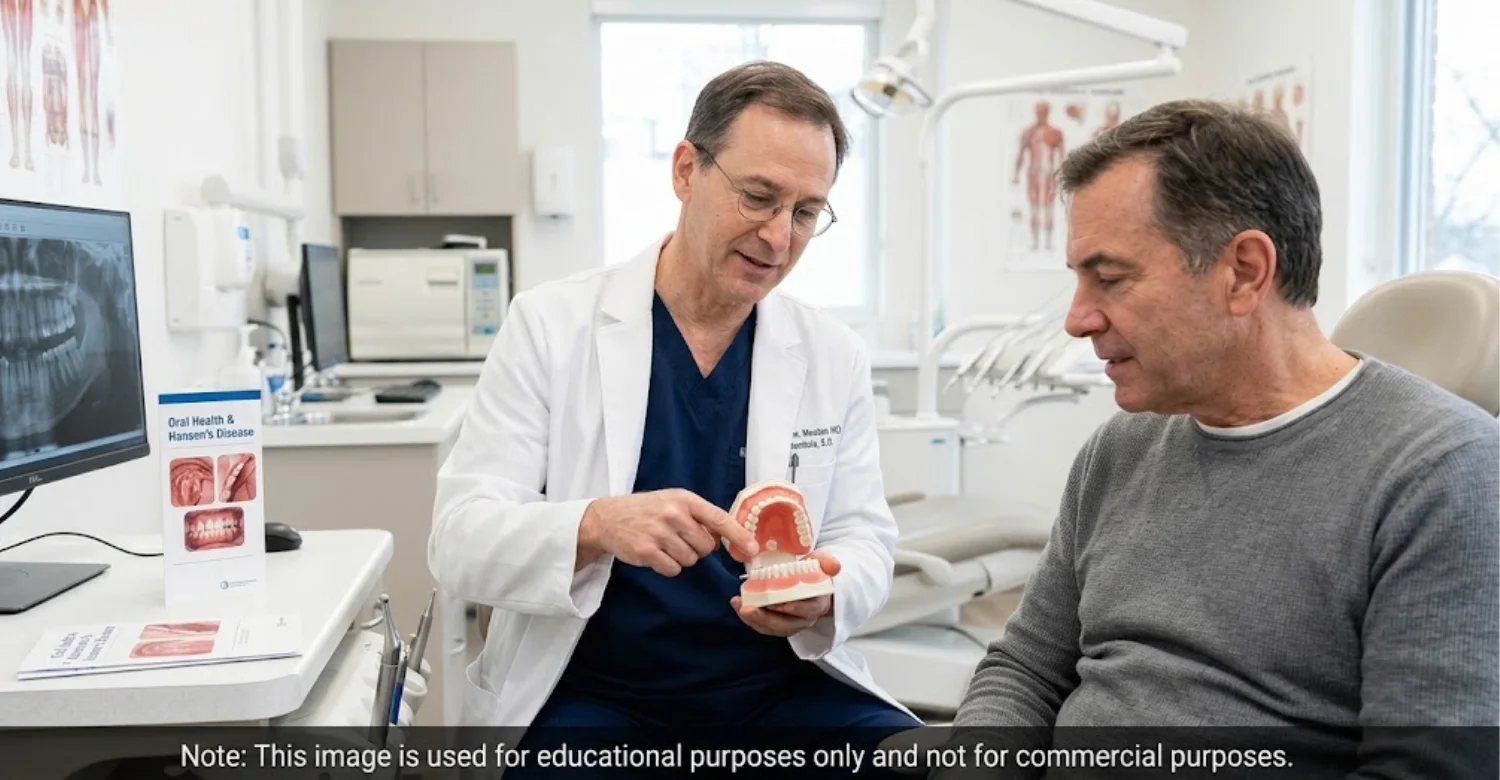
Note: All images used are for editorial and illustrative purposes only and may not originate from the original news provider or associated company.
Learn how to detect a tooth infection on x-ray
What Are the Oral Manifestations of Leprosy?
In practical dental terms, oral manifestations of leprosy are changes in the mouth linked to the disease itself. They are distinct from ordinary plaque-related problems. A thorough examination for leprosy and oral health covers several areas:
Oral mucosa
Gingiva
Palate
Tongue
Salivary function
Teeth and supporting tissues
Changes may involve color, texture, thickness, or sensation. Findings differ considerably between patients. Some show clear tissue changes, while others show none at all. A structured examination ensures nothing is missed.
How Oral Manifestations Can Differ Between Patients
Oral findings depend on how the disease presents and how early treatment began. Patients with limited disease and prompt therapy often have a completely healthy mouth. Those with long-standing, untreated disease face a higher chance of tissue involvement. It also helps to separate two groups. Active disease-related findings reflect the infection itself. Long-term complications, such as wear, decay, or gum problems, often develop later through indirect pathways. No single clinical pattern fits everyone. Individualized assessment is therefore essential for every patient.
Tips for Patients
Good daily habits protect leprosy and dental health together. These simple steps help:
Brush consistently with fluoride toothpaste.
Clean between the teeth daily with floss or interdental brushes, where appropriate.
Attend regular dental examinations.
Never ignore persistent oral lesions.
Report new changes in oral sensation.
Do not delay treatment for bleeding gums or tooth problems.
Follow your prescribed medical treatment for leprosy.
Tell your dentist about current medications and medical care.
Avoid self-treating unexplained oral lesions.
Ask how often professional periodontal monitoring is appropriate.
What Dental Problems Can Be Associated With Leprosy?
Many patients search for dental problems caused by leprosy, but the phrase can mislead. Not every dental problem in a person with leprosy is directly caused by the disease. Most leprosy and oral health problems develop through indirect pathways. Altered sensation hides early warning signs. Hand impairment makes brushing difficult. Salivary changes weaken natural protection. Difficulty accessing dental care delays treatment. Together, these factors allow ordinary conditions to progress further than they otherwise would. The cause must be identified before treatment begins.
Tooth Decay and Plaque Accumulation
Tooth decay starts with plaque. When plaque is not removed thoroughly, bacteria produce acids that dissolve enamel and create cavities. Most leprosy effects on teeth arise this way, through inadequate plaque control rather than direct damage. Patients with altered oral sensation may not feel early sensitivity, so cavities can deepen silently. They often benefit from additional preventive support. In leprosy and oral health care, this may include more frequent check-ups, professional cleaning, fluoride applications, and adapted brushing tools. Prevention is simpler than treating advanced decay.
Gum Inflammation and Periodontal Disease
Gingivitis is gum inflammation caused by plaque along the gumline. It is reversible with good cleaning. Periodontitis is a deeper condition that damages the bone and ligament supporting the teeth. Common contributors include poor plaque control, smoking, diabetes, and genetic susceptibility. Systemic health and oral hygiene both influence periodontal stability. A patient with reduced hand function or limited dental access carries a higher risk. Regular monitoring helps detect pocketing or bone loss early. Early care protects the teeth and keeps treatment simpler.
Tooth Wear, Trauma, and Unnoticed Oral Injury
Altered sensation can make minor trauma far less noticeable. A patient may bite the lip or cheek repeatedly without feeling it. A broken filling or sharp tooth edge can rub the tongue for weeks. Hot food and drinks may burn tissue that cannot sense temperature properly. Grinding or clenching can also wear teeth without obvious discomfort. For this reason, areas that repeatedly become irritated should be inspected carefully. A dentist can smooth sharp edges, repair damaged teeth, and identify the source of injury.
Find out why no exercise after dental implant
What Are the Possible Oral Complications of Leprosy?
The oral complications of leprosy fall into two groups. The first involves active oral manifestations linked to the disease itself. The second includes problems that develop because of altered sensation or difficulty maintaining oral health. These include untreated decay, advanced gum disease, repeated trauma, and tooth loss. With leprosy and oral health, the distinction matters because each group needs different care. Persistent oral changes should never be self-diagnosed. Guessing the cause can delay proper treatment and allow a manageable problem to progress.
When an Oral Change Needs Professional Assessment
Some changes should always prompt a dental visit. Seek assessment if you notice any of the following:
Persistent ulceration
Unexplained swelling
New oral lesions
Persistent bleeding
Significant changes in sensation
Unusual tissue color or texture
Tooth mobility or unexplained discomfort
As a general guide, any change lasting longer than two weeks deserves attention. Do not wait for pain, because reduced sensation may mask it. An early examination is quick and often reassuring. It also allows prompt treatment when something needs care.
What We Notice Clinically
Dr. Rifat Alsaman, Head of the Medical Team at Vitrin Clinic and a cosmetic dentist, emphasizes comprehensive assessment before treatment. In his view, unusual oral findings belong in their broader clinical context. They should not be immediately attributed to leprosy. He differentiates:
Leprosy-related oral manifestations
Periodontal disease
Dental caries
Traumatic lesions
Medication-related oral changes
Other oral mucosal conditions
Dr. Rifat Alsaman notes that treatment depends on the underlying cause, not simply on a systemic diagnosis. For leprosy and oral health, Dr. Rifat Alsaman recommends individualized planning and coordination with the patient's medical team when disease is active or complex.
Discover all about endosteal implants
How Are Leprosy-Related Oral Problems Diagnosed?
Diagnosis begins with a detailed medical and dental history. The dentist asks about the existing diagnosis, medications, symptoms, and current medical management. A clinical examination follows, covering the teeth, gums, mucosa, tongue, palate, and other oral structures. Dental X-rays or other imaging may be used when decay, bone loss, or infection is suspected. A suspicious lesion may need further investigation or referral. In leprosy and oral health care, diagnosis is never based on appearance alone. Every finding is interpreted alongside the patient's overall health.
What Does a Dental Examination Look For?
A complete dental examination is systematic. The dentist checks for:
Plaque and calculus
Gingival inflammation
Periodontal pockets
Caries
Tooth mobility
Oral lesions
Tissue changes
Signs of trauma
Changes in sensation
Each finding is recorded so that later visits can be compared accurately. Gum measurements show whether periodontal disease is present. Gentle sensation tests reveal areas the patient may not feel. Photographs may document tissue changes over time. Together, these steps build a clear picture of oral health.
See the risks and timeline of smoking after tooth extraction
How Are Oral Health Problems Managed in Patients With Leprosy?
Management depends on the specific dental or oral condition diagnosed. There is no universal treatment for all patients with leprosy. One patient may need only preventive care, while another needs periodontal therapy or restorative work. Medical control of active disease and good oral care are complementary. Each supports the other. In leprosy and oral health management, the dentist plans treatment around the patient's medical status and comfort. Care usually begins with the simplest, most conservative steps and progresses only when needed.
Professional Dental Cleaning and Periodontal Care
Professional cleaning removes plaque and hardened calculus that brushing cannot reach. Scaling cleans above and below the gumline. When gingivitis is present, this alone often restores gum health. Periodontitis may require deeper cleaning of the root surfaces and regular maintenance visits. After appropriate care, patients usually notice less bleeding, reduced swelling, and fresher breath. Gums become firmer and more comfortable. Results also depend on daily home care. For leprosy and oral health, the dental team can recommend tools that suit limited hand function.
Restorative Dental Treatment
Restorative treatment repairs teeth damaged by decay, wear, or trauma. Small cavities are treated with fillings. Larger defects may need inlays, onlays, or crowns. A tooth with infected pulp may require root canal treatment before it is restored. Repairing teeth early has clear benefits. It removes sharp edges that injure soft tissue, restores comfortable chewing, and makes cleaning easier. It also helps prevent further deterioration and possible tooth loss. Each restoration is chosen according to the tooth's condition and the patient's needs.
Treatment of Persistent Oral Lesions
Persistent or suspicious lesions require proper evaluation before any treatment. The dentist first looks for obvious causes, such as a sharp tooth or an ill-fitting denture. If the cause is removed and the lesion heals, no further action is needed. A lesion that persists may require referral to a specialist or a biopsy. This approach is safer than treating every lesion empirically. Creams or mouthwashes used without a diagnosis can mask important signs. The medical team should be informed when findings may relate to systemic disease.
Advanced Dental Treatment When Necessary
Some patients need more extensive care. Crowns, bridges, implants, or cosmetic treatments may be considered when appropriate. However, these procedures should never be the first step. Overall oral and periodontal health must be evaluated beforehand. Active gum disease, untreated decay, and unexplained lesions should be resolved first. Medical stability also matters, particularly before surgical procedures. Healing capacity, medications, and sensation are all reviewed. When the foundations are healthy, advanced treatment can be planned with greater confidence and more predictable results.
What Can Patients Expect Before and After Dental Treatment?
Patients can expect a clear, staged process. Nothing is rushed, and each step is explained in advance. Assessment comes first, followed by a written plan that matches the diagnosis. Treatment then proceeds in a logical order, usually starting with hygiene and urgent problems. Follow-up visits confirm that healing is progressing well. For leprosy and oral health, this structure is especially valuable. It ensures that medical factors are considered at every stage. The two sections below outline what happens before and after care.
Before Treatment
Before treatment, the dental team completes several steps:
A comprehensive dental and periodontal assessment.
Identification of any active oral disease.
A review of relevant medical history and medications.
Individualized treatment planning.
Imaging is taken only when clinically useful. The dentist explains the findings in plain language and discusses the available options. Patients are encouraged to ask questions and share concerns. When necessary, the dentist contacts the medical team before proceeding. This preparation reduces surprises and helps treatment run smoothly.
After Treatment
After treatment, most patients notice meaningful improvements:
Improved oral hygiene and gum health once periodontal disease is controlled.
Restoration of damaged teeth where appropriate.
Better chewing comfort and oral function.
Continued monitoring where oral lesions or altered sensation are present.
Results vary according to the underlying condition and the patient's overall health. Some improvements appear within days, while others take months. Regular maintenance visits protect the outcome. Consistent home care remains the most important factor in long-term success.
Learn about the anatomy and health of the dental pulp
Clinical Note
Leprosy and oral health should be considered together, but not every oral problem is caused by leprosy. Oral findings can have multiple causes. A persistent lesion, an unexplained tissue change, or a significant alteration in sensation deserves professional assessment. Communication between the dentist and the medical team is encouraged whenever necessary. Individualized diagnosis is particularly important before invasive, restorative, periodontal, or cosmetic procedures. This article offers general information only. It does not replace an examination by a qualified dental or medical professional.
How Can Dental Technology Support Oral Care for Patients With Complex Medical Conditions?
Modern diagnostics support accurate treatment planning. Digital intraoral imaging and clinical photography record tissue changes and allow comparison over time. Dental X-rays reveal decay and bone levels. CBCT or 3D imaging may be used when clinically indicated, such as before implant placement. Digital planning helps design restorative procedures precisely. In leprosy and oral health care, these tools add valuable detail. However, technology supports clinical judgment rather than replacing examination and diagnosis. Vitrin Clinic combines these tools with a multidisciplinary approach where appropriate.
Explore types and benefits of dental prosthesis
Why Choose Vitrin Clinic for Comprehensive Dental Care?
Vitrin Clinic in Istanbul, Turkey provides comprehensive dental care built on careful diagnosis. Gum and oral health are assessed before major restorative or cosmetic procedures when clinically indicated. Treatment plans are individualized, never identical for every patient. Diagnostics include CBCT/3D imaging and intraoral scanning when appropriate. Periodontal, restorative, implant, and cosmetic care are coordinated as required. The team is led by Dr. Rifat Alsaman, Head of the Medical Team at Vitrin Clinic and a cosmetic dentist. For leprosy and oral health concerns, planning reflects each patient's medical and dental circumstances.
.jpg)
.jpg)
.jpg)
.jpg)
Ready to transform your smile?
Talk to our team and get a FREE treatment plan.
References:
FAQs
Dr. Rifat Alsaman has more than 5 years of clinical experience in dentistry and currently serves as the Head of the Medical Team at Vitrin Clinic. He is dedicated to providing exceptional patient care, overseeing treatment planning, and ensuring the highest clinical standards across the team. His expertise, attention to detail, and commitment to continuous professional development have helped countless patients achieve healthier, more confident smiles.


