Dental Implant
October 5, 2026
Subperiosteal Implants and Fixed Bridges: Can They Provide Fixed Teeth With Severe Bone Loss?
 Dr. Rifat Alsaman
Severe jawbone loss can make conventional implant treatment far more difficult. Some patients simply have too little bone for standard implant placement. For these patients, a custom subperiosteal approach may provide another treatment pathway. The framework rests over the jawbone instead of entering it. It can connect with prosthetic components designed for fixed replacement teeth. Subperiosteal Implants and Fixed Bridges may be considered in carefully selected cases. They can sometimes reduce the need for extensive bone augmentation. However, they are not automatically the best choice for every patient. Modern evidence looks promising, especially with custom CAD/CAM systems. However, long-term evidence remains more limited than conventional implant evidence.
A 2026 meta-analysis reported strong short-term survival. It also highlighted soft-tissue exposure as an important long-term concern. At Vitrin Clinic, individualized assessment can help identify suitable treatment options.
What Are Subperiosteal Implants and Fixed Bridges?
A subperiosteal restoration combines a custom framework with a carefully planned prosthetic design. The framework is adapted to the external surface of the jawbone. Posts or abutments extend through the gum for prosthetic attachment. A fixed bridge can then connect securely to these prosthetic components. The restoration may replace several teeth or a complete dental arch. Its design depends on the patient's anatomy and remaining dentition. Subperiosteal Implants and Fixed Bridges become more relevant when available bone is severely reduced. The evidence remains developing, however. Patients should receive individualized risk and benefit discussions before treatment.
What Is a Subperiosteal Implant?
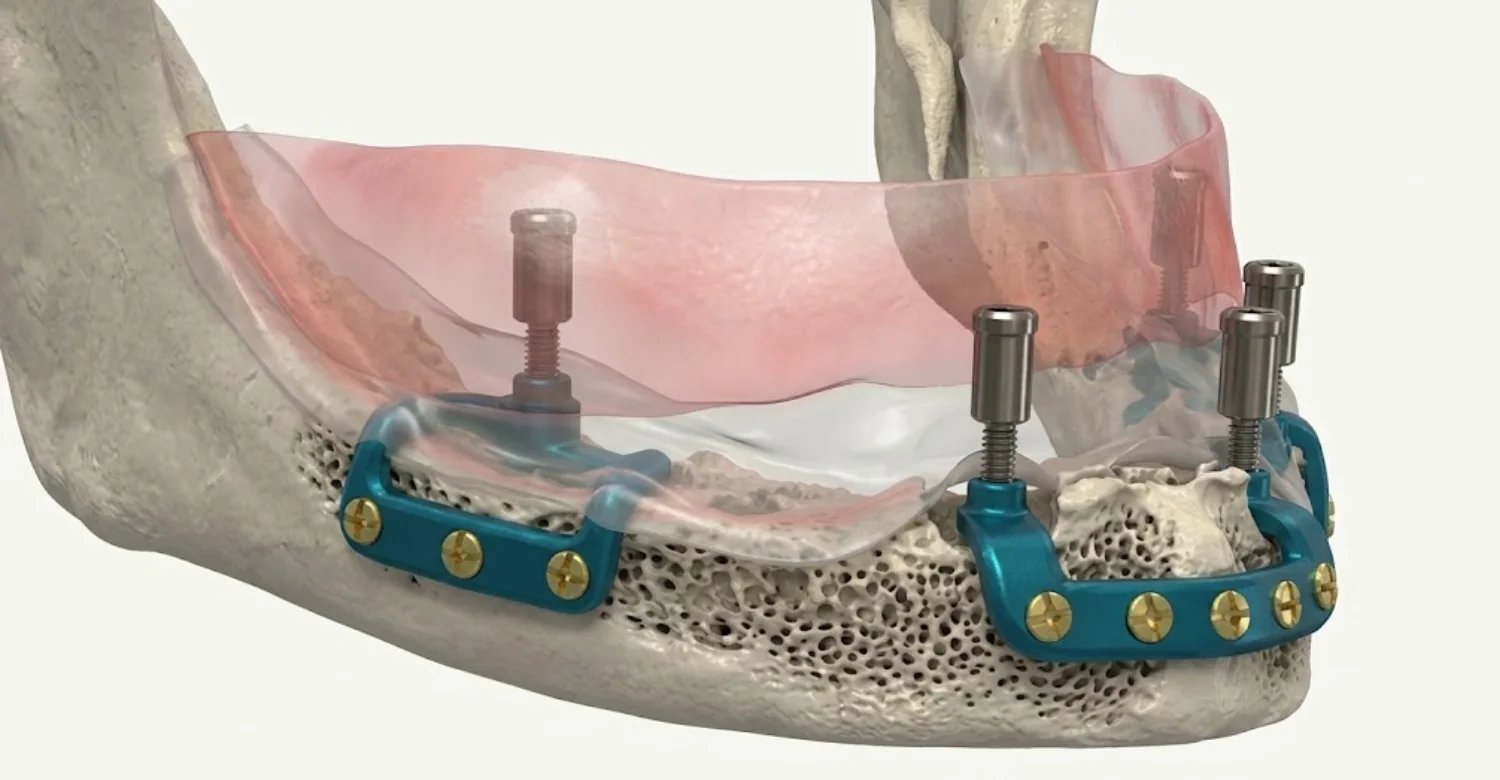
A subperiosteal implant is a custom dental framework. It sits on top of the jawbone and beneath the soft tissues. Unlike an endosteal implant, it does not rely on deep bone insertion. Modern versions are often digitally designed around the patient's individual anatomy. Titanium is commonly used for these custom frameworks. Manufacturing can involve computer-aided design and additive production techniques. The framework includes planned extensions for prosthetic connection. These extensions may support crowns, bridges, or full-arch prostheses. Suitability should never be determined from bone loss alone. Soft tissues, bite, medical history, and prosthetic goals also matter.
What Is a Fixed Dental Bridge?
A fixed dental bridge replaces missing teeth with a non-removable restoration. It is attached to supporting teeth or implant-based components. Patients generally cannot remove it themselves at home. A bridge can restore several missing teeth within one treatment area. It can also be designed as a complete full-arch prosthesis. The restoration contains artificial teeth connected within a single structure. Its final appearance depends on shape, shade, spacing, and gum design. Within Subperiosteal Implants and Fixed Bridges, the bridge attaches to planned framework abutments. At Vitrin Clinic, prosthetic planning can be coordinated with digital diagnostics. This helps the clinical team assess function and appearance together.
How Do Subperiosteal Implants Support a Fixed Bridge?
The support mechanism begins with the custom framework. The framework contacts selected areas of the jawbone surface. Mechanical stability comes from anatomical adaptation and secure fixation. Prosthetic components then extend through the gum tissue. These components provide connection points for the fixed restoration. The bridge therefore does not depend on traditional implant bodies. Instead, it uses the customized framework as its supporting foundation. Poor adaptation can increase stress and biological complications. Digital planning is therefore central to modern Subperiosteal Implants and Fixed Bridges workflows. Statistics and insight: recent literature reports high short-term survival. A coordinated surgical and prosthetic plan supports better long-term function.
The Role of the Custom Framework
The framework acts as the structural foundation of the whole restoration. It is designed from the patient's three-dimensional anatomy. Its shape follows the available supporting bone surfaces. Custom design allows planned positioning of prosthetic emergence points. It can also account for nerves, sinuses, and other anatomical structures. The framework must fit accurately before the prosthesis is finalized. A passive fit reduces unwanted mechanical stress. It can also support predictable prosthetic positioning. Statistics and insight: consensus literature identifies passive framework fit as mandatory. The design must reflect individual anatomy and restorative requirements.
How the Framework Transfers Chewing Forces
Chewing creates pressure across the prosthetic teeth. Those forces travel through the bridge into the supporting framework. The framework then distributes forces across available anatomical support areas. This differs from conventional implants placed inside alveolar bone. Traditional implants transfer loads through osseointegrated implant bodies. Framework geometry therefore becomes extremely important. Cantilevers, bridge length, occlusal contacts, and abutment positions all matter. A balanced prosthetic design can reduce excessive localized loading. The dental team must consider both static and functional forces. Digital simulation can help identify practical prosthetic positions before surgery.
How Is This Different From a Traditional Endosteal Implant?
Traditional endosteal implants are inserted into prepared bone. They depend on sufficient bone volume and quality for placement. Subperiosteal frameworks sit over the jawbone surface instead. They use patient-specific anatomy and mechanical fixation differently. The surgical objectives are therefore not identical. Custom frameworks may sometimes avoid extensive augmentation in selected cases. That does not make grafting unnecessary for every patient. Statistics and insight: modern reviews describe these devices as salvage options. Their evidence remains more limited than evidence for established endosteal systems. The goal should be the safest predictable restoration for that anatomy.
Read about how to relieve throbbing tooth pain
Who May Be a Candidate for Subperiosteal Implants and Fixed Teeth?
Candidates often have advanced ridge atrophy. Some have insufficient bone for conventional implant placement. Others may not be ideal candidates for extensive reconstruction. A candidate assessment for Subperiosteal Implants and Fixed Bridges includes multiple factors. These include bone anatomy, soft-tissue health, occlusion, and prosthetic goals. Statistics and insight: recent reviews include patients with severe maxillary and mandibular atrophy. Evidence suggests promising outcomes in carefully selected cases. However, candidacy cannot be established from photographs alone. A clinical examination and suitable imaging are necessary. Honest discussion of expectations is also part of candidate selection.
Subperiosteal Implants for Severe Bone Loss
Severe bone loss can reduce available implant anchorage. Vertical height may become insufficient for conventional implant placement. Horizontal width may also become extremely narrow. A custom framework can use the residual bone surface differently. This may create prosthetic support without deep implant insertion. Such treatment can be considered after conventional alternatives are evaluated. Statistics and insight: a 2024 systematic review reported 97.8% implants in function. Its weighted mean follow-up was about 21 months. These results are encouraging but do not establish universal long-term success. Study designs and treatment protocols remain heterogeneous.
Subperiosteal Implants for an Atrophic Jaw
An atrophic jaw has lost substantial alveolar bone volume. The condition may develop after prolonged tooth loss. Advanced periodontal disease can also contribute to severe resorption. An atrophic ridge may complicate conventional implant positioning. There may be inadequate width, height, or both. A custom subperiosteal framework can follow available anatomical contours. Its design can accommodate unusual ridge shapes. Subperiosteal Implants and Fixed Bridges may suit carefully selected edentulous patients. Statistics and insight: modern digital reviews involve hundreds of implants. Averages cannot predict the outcome for a specific jaw.
Subperiosteal Implants for Patients With Low Bone Density
Low bone density is different from low bone volume. Density relates to internal bone quality. Volume describes how much bone physically remains. A patient can have adequate volume but reduced density. Another patient can have severe resorption with relatively dense residual bone. Subperiosteal treatment still requires careful assessment of bone quality. The framework depends on anatomical support and reliable fixation. Generalized skeletal conditions may require additional medical evaluation. Medication history can also influence surgical planning. CBCT findings should be interpreted alongside the clinical examination.
When Conventional Dental Implants May Not Provide Adequate Support
Conventional implants need suitable bone for stable placement. Advanced resorption can limit implant diameter or length. Certain anatomical structures can further restrict available implant positions. The sinus and mandibular nerve require careful consideration. Bone grafting can sometimes create adequate implant sites. In these situations, Subperiosteal Implants and Fixed Bridges may enter the discussion. The most aggressive treatment is not always the best treatment. The FDA notes that dental implants can involve surgical and mechanical complications. These include infection, loosening, and functional problems. Patient selection therefore remains essential for any implant-based treatment.
Why Some Patients Consider Subperiosteal Implants Without Bone Grafting
Severe resorption can make graft-based treatment lengthy and demanding. Some patients also prefer to avoid additional augmentation procedures. A custom framework may sometimes use the existing jaw anatomy directly. This can reduce dependence on building substantial new bone volume. For this reason, Subperiosteal Implants and Fixed Bridges attract interest from many atrophic patients. However, avoiding grafting does not mean avoiding surgery. Framework placement still requires careful surgical preparation. Statistics and insight: consensus reviews describe possible lower morbidity. Avoiding grafting should never become the only treatment goal.
When Avoiding Bone Grafting May Be Considered
Graft-free treatment may be considered when residual anatomy allows stable framework positioning. The framework must have adequate bone contact and fixation. It may also appeal to patients seeking fewer augmentation procedures. Treatment time can sometimes be simplified this way. The indication remains highly case-specific, however. A surgical team must assess anatomy carefully before recommending this path. Some patients may still benefit from augmentation. The correct question is whether grafting improves overall treatment predictability. Patients should receive a clear explanation of each alternative.
Why Bone Grafting Is Not Automatically Unnecessary
Subperiosteal treatment is not a universal replacement for augmentation. Some patients may achieve better outcomes with reconstructed bone. Bone grafting can create conventional implant opportunities. Those implants have extensive evidence across many clinical applications. The comparison should include treatment duration and surgical burden. A graft-based plan may provide better prosthetic positioning in certain cases. Another patient may benefit more from Subperiosteal Implants and Fixed Bridges instead. A balanced comparison protects patients from one-sided treatment choices.
What We Notice Clinically
Advanced jawbone atrophy can present in several different patterns. Some patients have complete tooth loss in one or both arches. Others retain compromised teeth with limited strategic value. The clinical picture can be more complex than the radiograph suggests. Soft tissues may be thin, mobile, scarred, or inflamed. Occlusion can also change after prolonged tooth loss. Vertical dimensions may be noticeably altered. When Subperiosteal Implants and Fixed Bridges are discussed, these observations shape the plan. At Vitrin Clinic, treatment planning can combine clinical and digital assessments. This approach supports more individualized decisions for every patient.
Common Patient Patterns Seen With Advanced Jawbone Atrophy
Patients with severe atrophy often report prolonged tooth loss. Some have worn removable dentures for many years. Long-term edentulism can change ridge shape significantly. The available implant bed may become narrow or shallow. Other patients experienced extensive periodontal bone loss. Previous trauma or surgery can also create difficult anatomy. Many patients have old prostheses with poor retention. Statistics and insight: modern systematic reviews include many severely atrophic cases. However, study populations remain small compared with conventional implant research. This evidence gap should remain part of the patient discussion.
Important Distinction Between Low Bone Volume and Low Bone Density
Bone volume describes the physical dimensions of available bone. Bone density describes structural characteristics within that volume. Severe resorption usually creates a volume problem. Some patients can also have compromised density. The two findings influence treatment in different ways. A framework may follow available surfaces when vertical volume is limited. Bone quality still affects surgical handling and healing. The final plan should combine imaging with examination. One measurement cannot describe the complete implant environment.
Why Severe Bone Loss Does Not Automatically Mean One Treatment Is Appropriate
Severe atrophy creates a difficult treatment problem. It does not determine a single universal solution. Patients may have several possible pathways available. These include custom frameworks, tilted implants, zygomatic concepts, or augmentation. Subperiosteal Implants and Fixed Bridges represent only one of these pathways. The best option depends on anatomy and treatment objectives. Operator experience can also influence feasibility. Prosthetic requirements may change the surgical plan. The final recommendation should explain why alternatives were rejected.
Common Misconceptions About Subperiosteal Implants and Fixed Teeth
One misconception is that this treatment suits every severe atrophy case. It does not. Another misconception is that remaining bone no longer matters. Residual bone anatomy remains central to framework support. Graft-free treatment may be possible in selected situations. It is not guaranteed for every patient. Statistics and insight: modern reviews report exposure and dehiscence among important complications. Patients should understand both advantages and limitations of Subperiosteal Implants and Fixed Bridges. Good candidacy depends on detailed planning rather than marketing claims.
Factors That Can Change the Recommended Treatment Approach
The jawbone is only one part of the decision. The gum tissues, bite, remaining teeth, and prosthetic space also matter. Smoking can influence implant outcomes and healing. Recent evidence associates smoking with higher early implant failure risk. Active periodontal disease should also be addressed beforehand. The final plan should consider these factors before surgery. Each factor may shift the recommendation toward or away from a framework.
Clinical Note
A fixed restoration should be planned from both surgical and prosthetic perspectives. The framework cannot be considered separately from the bridge. Both elements form one connected system. The emergence profile must allow practical daily cleaning. The occlusion should avoid unnecessary overload. Modern literature identifies exposure as a recurring complication. Clear aftercare instructions can support smoother recovery. Regular follow-up also helps detect problems early.
Dr. Rifat Alsaman’s Perspective on Assessing Fixed-Bridge Support
Clinical perspective: Dr. Rifat Alsaman emphasizes individualized assessment before fixed rehabilitation. Bone volume should never be reviewed in isolation. The soft tissues, bite, and prosthetic space deserve equal attention. A fixed bridge must be stable and hygienically maintainable. CBCT data can clarify the available anatomical support. Digital planning can then connect surgical design with prosthetic goals. Patients should also understand alternative options before choosing Subperiosteal Implants and Fixed Bridges. At Vitrin Clinic, the planning process can be tailored to each case. The objective is a decision based on anatomy and clinical priorities.
Understand the causes and treatment for gum pockets treatment
How Are Subperiosteal Implants Diagnosed and Planned?
Diagnosis begins with a comprehensive dental examination. The clinician reviews missing teeth, remaining teeth, gums, and occlusion. Imaging then provides three-dimensional anatomical information. CBCT is especially useful for implant site assessment. Digital impressions may support prosthetic planning. They can be merged with imaging during virtual treatment design. A consensus report emphasizes thorough digital planning and passive fit. Planning for Subperiosteal Implants and Fixed Bridges should also consider future maintenance. A complete plan should include alternatives and expected risks. That makes the consent process more meaningful and transparent.
Clinical Examination Before Implant Planning
The examination should review the entire month. The dentist assesses teeth, gums, mucosa, and functional relationships. Remaining teeth should be evaluated for strategic value. Hopeless teeth may need treatment or extraction. Periodontal inflammation should be identified early. Active infection can affect treatment timing. The bite should be evaluated carefully. A careful examination establishes the clinical context for imaging. It also helps identify issues that photographs cannot show.
Why CBCT Imaging Is Important
CBCT provides cross-sectional views of jaw anatomy. It can show bone contours more clearly than two-dimensional imaging. The American Academy of Oral and Maxillofacial Radiology recommends cross-sectional imaging for implant site assessment. For custom frameworks, three-dimensional data are particularly valuable. The digital model can guide patient-specific framework design. Radiation exposure should be considered for every scan. The scan is only one part of diagnosis. It must be interpreted alongside the physical examination.
Assessing the Jawbone, Soft Tissues, Bite, and Remaining Teeth
Bone anatomy determines where the framework can gain support. Soft-tissue quality affects healing and coverage. The bite affects load distribution across the restoration. Remaining teeth may influence the prosthetic design. A patient with inflamed gums may need periodontal treatment first. Another patient may need extraction of compromised teeth. The prosthetic space should accommodate cleansable contours. A complete assessment creates a more realistic restorative plan. It also reduces reliance on assumptions from imaging alone.
How Digital Planning Helps Design a Custom Framework
Digital workflows begin with patient-specific anatomical data. CBCT produces the underlying three-dimensional model. Digital impressions add information about teeth and soft tissues. These datasets support virtual restorative planning. The framework is then designed around available support areas. Abutment positions are planned for the intended prosthesis. Modern workflows may use CAD software and additive manufacturing. The final device must correspond closely with the planned anatomy.
What Dentists Look for Before Recommending a Fixed Bridge
Dentists consider whether adequate support can be created. They also assess whether the prosthesis can remain cleanable. Occlusal forces must be manageable over time. Bridge length and emergence profile require careful analysis. The patient's ability to maintain oral hygiene is important. Statistics and insight: mechanical complications have been reported alongside biological complications. The goal is not simply attaching teeth. The goal is supporting a sustainable long-term oral rehabilitation.
When Additional Medical or Dental Evaluation May Be Needed
Additional assessment depends on the patient's medical history. Complex medical conditions may influence surgical planning. A medication review can identify potential healing considerations. Previous head and neck treatment may also affect tissue quality. Active dental infections should usually be addressed first. Recent evidence links smoking with increased implant failure risk. The treating clinician decides which additional assessments are necessary.
Explore options and fit for a bottom denture
Subperiosteal Implants
Traditional Dental Implants
Traditional endosteal implants remain the most common implant treatment. They are placed inside the jawbone. Custom subperiosteal frameworks use surface anatomy differently. The choice depends heavily on available bone and anatomy. Neither approach should automatically be described as superior. Subperiosteal Implants and Fixed Bridges have a smaller modern evidence base. Statistics and insight: a 2026 meta-analysis found 97.8% pooled survival within three years. Short-term success does not equal lifetime success. Patients should weigh both evidence of strength and personal anatomy.
Subperiosteal Implants vs Endosteal Implants
Endosteal implants are inserted into the prepared bone. They can support single crowns, bridges, or full-arch restorations. Subperiosteal frameworks sit over the bone surface. They are custom-shaped for the patient's anatomy. The two systems therefore have different anchorage mechanisms. Subperiosteal designs may be considered when conventional anchorage is difficult. Their evidence base remains smaller, especially for long-term outcomes. The decision should reflect individual anatomy and patient goals.
Bone Requirements
Endosteal implants require adequate bone for placement and stability. Bone deficiencies can limit implant size or location. Subperiosteal frameworks use the outer surface of the jaw. This makes them relevant in severe atrophy cases. However, very limited usable anatomy does not guarantee suitability. Framework fixation still requires an appropriate anatomical foundation. Clinical examination adds information about soft-tissue conditions.
Bone Grafting Considerations
Bone grafting can increase available bone for conventional implants. It may also improve implant positioning in certain cases. The disadvantages can include additional surgery and recovery. A custom framework may sometimes avoid extensive augmentation. This can be appealing in carefully selected patients. However, graft-free treatment is not always superior. Patients should consider morbidity, time, cost, and maintenance together.
Surgical Approach and Treatment Planning
Surgical planning must match the framework design. The team should understand the three-dimensional bone anatomy. The surgical plan should also protect nearby anatomical structures. Soft-tissue access and closure require careful consideration. Digital planning connects imaging with prosthetic objectives. Contingency planning becomes useful when anatomy is complex.
Fixed Bridge Support
The bridge attaches to planned abutment components. The framework provides the supporting foundation beneath it. The prosthetic design must balance function and hygiene. Long spans can increase mechanical demands. Cantilever extension should be carefully controlled. Occlusal contacts should be planned conservatively when appropriate. The restoration must also allow professional cleaning. The bridge design should be finalized alongside the framework. Separating the two decisions can create avoidable problems.
Potential Advantages and Limitations of Each Option
Conventional implants offer extensive clinical experience and broad applications. Their main limitation can be inadequate bone availability. Custom frameworks may provide another path in severe atrophy. Their limitations include biological and technical complications. The evidence also differs between treatment options. Patients considering Subperiosteal Implants and Fixed Bridges should compare complexity with expected durability. Good planning reduces risk but does not eliminate it.
When Other Advanced Implant Options May Be Considered
Some patients may benefit from alternative advanced techniques. The decision depends on anatomy and clinical objectives. Possible options include tilted full-arch implants. Zygomatic implants may also be considered for selected maxillary cases. Bone augmentation can create conventional implant sites. The treatment should be selected for the patient. It should not be selected solely for marketing appeal.
All-on-4 and All-on-6
All-on-4 and All-on-6 use multiple endosteal implants. They commonly support full-arch fixed prostheses. Tilted implants can help use available anterior or posterior bone strategically. The approach remains dependent on adequate implant anchorage. Severe atrophy may make these approaches difficult in some patients. The best approach depends on the remaining bone distribution.
Zygomatic Implants
Zygomatic implants anchor in the zygomatic bone. They are primarily considered for severe maxillary bone deficiency. They can provide support without posterior maxillary bone augmentation. Not every patient with severe maxillary atrophy needs zygomatic implants. Patient anatomy and prosthetic goals determine whether they are appropriate.
Bone Augmentation Procedures
Bone augmentation aims to increase implant-supporting bone. Different grafting approaches address different anatomical deficiencies. The procedure may require a staged treatment pathway. Healing periods can extend the overall treatment timeline. Grafting can create more conventional implant options. It can also increase surgical complexity. The choice should remain individualized.
Learn about different types of partial dentures
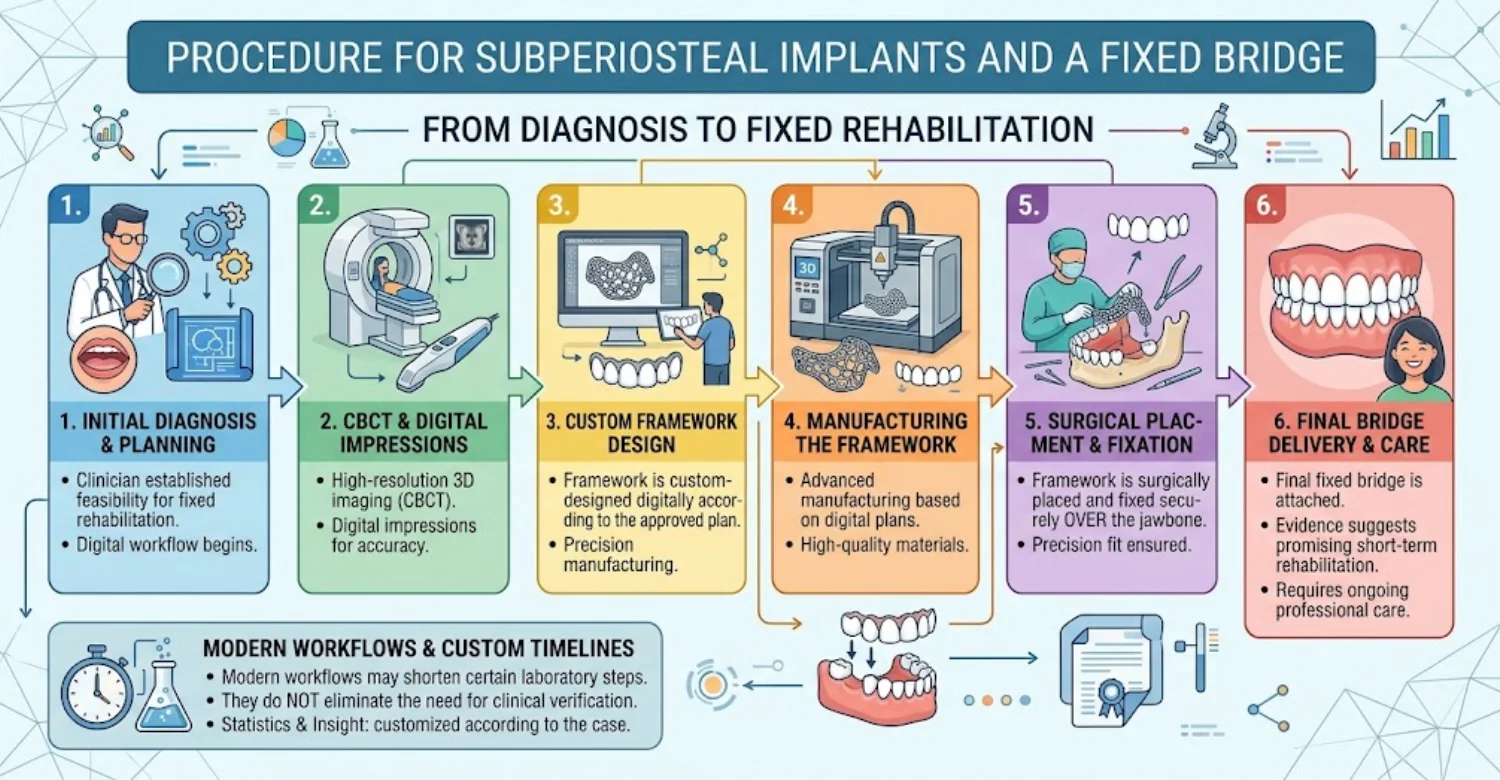
Initial Consultation and Treatment Assessment
The first visit focuses on diagnosis rather than immediate treatment. The clinician reviews the patient's dental history. Existing imaging can be assessed when suitable. New imaging may be required for accurate planning. The team evaluates missing teeth and remaining structures. Gum health and the bite are also reviewed. The patient should understand why one approach is recommended.
CBCT Scan and Digital Impressions
CBCT provides three-dimensional anatomical information. Digital impressions record dental and prosthetic relationships. The datasets may be combined during digital planning. This helps coordinate surgery with restoration design. The framework can then be modeled around the available anatomy. The AAOMR identifies CBCT as the preferred cross-sectional imaging method for implant planning. Digital accuracy should complement clinical judgment, not replace it.
Custom Framework Design and Fabrication
Framework design starts with the patient's anatomy. The engineering process identifies suitable supporting surfaces. Abutment positions are planned around prosthetic needs. Potential interference with anatomical structures is considered. Computer-aided manufacturing can reproduce complex custom geometries. A highly customized device cannot be planned from generic measurements. Three-dimensional patient data are central to the process.
Surgical Placement of the Subperiosteal Framework
The surgical team exposes the planned supporting anatomy. The framework is positioned against the bone surface. Fixation is then achieved according to the specific design. The abutments pass through planned soft-tissue sites. Statistics and insight: exposure and dehiscence are among the most frequently reported biological problems. Postoperative instructions should be provided before discharge.
Connecting the Framework to the Fixed Prosthesis
The framework provides the prosthetic connection points. These may receive temporary or definitive components. The bridge is then secured according to the selected system. Occlusion must be checked carefully. The restoration should not create excessive pressure during function. The bite should feel balanced across the arch. The prosthesis should also allow effective cleaning. Minor adjustments may be required before final delivery.
Temporary vs Final Fixed Teeth
Temporary teeth can protect the treatment area during healing. They may also help evaluate aesthetics and function. The final prosthesis can then be designed using clinical feedback. Changes can be made to contour, shade, and occlusion. Immediate loading is not appropriate for every case. Patients should not judge treatment speed as the main success factor.
How Many Teeth Can a Subperiosteal-Supported Bridge Replace?
A bridge can replace multiple adjacent teeth. It can also support a complete dental arch in selected cases. The number depends on available framework support. The underlying framework must support the planned span safely. Subperiosteal Implants and Fixed Bridges can therefore range from partial to full-arch designs. The final tooth count is not predetermined. Bite forces, opposing teeth, and hygiene access all influence the final span.
Fixed Full-Arch Bridges With Subperiosteal Implants
A full-arch restoration replaces most or all teeth in an arch. It can be considered for advanced edentulous atrophy. The framework is designed to support the complete prosthetic structure. Its geometry follows the available jaw anatomy. Statistics and insight: modern reviews include full-arch rehabilitation in severely atrophic jaws. Long-term biological maintenance remains critical.
When a Full-Arch Restoration May Be Considered
Full-arch treatment may suit patients with extensive tooth loss. It may also be considered when remaining teeth have poor prognosis. The clinician assesses whether fixed rehabilitation is practical. The final decision should consider oral function and maintenance. Aesthetic preferences also influence prosthetic design.
How a Fixed Full-Arch Bridge Is Supported
The framework provides the structural foundation. Prosthetic components emerge through selected areas of the gum. The bridge connects to those components. Its internal structure distributes forces through the supporting framework. The number of support points varies by design. So does the overall framework shape. Professional maintenance remains essential.
Upper Jaw vs Lower Jaw Considerations
The maxilla and mandible have different anatomical characteristics. Their cortical structures and soft-tissue relationships differ. The upper jaw may present sinus-related constraints. The lower jaw requires attention to the mandibular canal. Clinical planning should not simply transfer one arch design to another. Each framework requires separate anatomical assessment.
Fixed Bridge Materials and Prosthetic Design
Fixed bridges can use several restorative materials. Material selection depends on function, aesthetics, and available space. Common options include zirconia and porcelain-based solutions. Acrylic or composite materials may also be used in selected designs. The internal structure should match the framework connection system. At Vitrin Clinic, prosthetic planning can incorporate functional and aesthetic goals together.
Functional and Aesthetic Treatment Planning
A successful restoration should look natural and function comfortably. Tooth proportions should match the patient's facial features. The clinician should assess the smile line and lip support. Speech can also be affected by tooth position. Statistics and insight: mechanical complications have been reported in modern reviews. Digital previews may help patients understand proposed changes.
What Are the Benefits and Limitations?
The main potential benefit is alternative support in severe atrophy. Customization allows the framework to follow individual anatomy. However, the limitations of Subperiosteal Implants and Fixed Bridges remain significant. Soft-tissue exposure is one of the better-documented concerns. Long-term evidence is also less mature. Statistics and insight: a 2026 meta-analysis reported 97.8% survival within three years. Overall pooled survival dropped to 92.4% with longer follow-up included. Survival alone does not represent complete clinical success. Maintenance and complications must also be considered.
Potential Benefits for Patients With Advanced Bone Loss
Severe atrophy can limit conventional implant placement. A custom framework can sometimes use residual anatomy more efficiently. This may create a route toward fixed rehabilitation. It can also reduce reliance on major augmentation in selected patients. The treatment can be highly individualized. The framework is designed specifically for the patient's jaw. The evidence should be explained honestly.
Potential Benefit of Avoiding Extensive Bone Grafting in Selected Cases
Avoiding grafting may reduce the number of surgical stages. It can also reduce the burden of augmentation recovery. The final treatment may be more direct for selected patients. Soft-tissue exposure remains an important potential complication. Patients should compare the total treatment burden. That comparison should include surgery, recovery, and maintenance.
Fixed Rather Than Removable Tooth Replacement
A fixed restoration remains attached during daily activities. Patients do not normally remove it themselves. This can be attractive for patients who dislike removable dentures. Chewing and speech may feel more stable for some patients. However, fixed does not mean maintenance-free. Cleaning underneath the prosthesis is essential. Preference alone cannot determine candidacy.
Customization to Individual Jaw Anatomy
Each framework is built around patient-specific anatomy. This is one of the main differences from older standardized concepts. Digital models can represent complex ridge contours. The design can also include prosthetic emergence positions. Patient-specific planning may improve framework adaptation. Clinical verification remains necessary before definitive placement.
Limitations and Case-Specific Considerations
Modern evidence is promising but limited. Soft-tissue exposure can compromise long-term outcomes. Subperiosteal Implants and Fixed Bridges require experienced surgical and prosthetic coordination. Not every center offers this workflow. Patients should ask about clinician experience and published outcomes. They should also ask how complications are managed.
Why Long-Term Maintenance and Follow-Up Matter
Maintenance begins after treatment is completed. Patients need daily home care and periodic professional reviews. The clinician should monitor soft tissues and prosthetic components. The bridge should also be checked for mechanical changes. The EFP recommends structured supportive peri-implant care. Scheduled follow-up can identify problems before they become severe. That is particularly important after complex implant rehabilitation.
Find relief and remedies for an ache in mouth
Side Effects, Risks, and Possible Complications
Surgical discomfort is expected after implant procedures. Swelling may also occur during early healing. More significant complications can involve soft tissues or infection. Framework exposure is a recognized concern in modern reports. Mechanical issues can affect the bridge or framework. Statistics and insight: one scoping review found biological and mechanical complications. Patients considering Subperiosteal Implants and Fixed Bridges should receive personalized risk information. Knowing the warning signs in advance helps patients act quickly.
Pain, Swelling, and Temporary Discomfort After Surgery
Pain and swelling can occur after oral surgery. Symptoms are often strongest during the initial recovery period. Cold compresses may help reduce early swelling. Patients should follow the surgical team's instructions carefully. Persistent pain should not be dismissed as normal healing. Statistics and insight: recent systematic review data reported postoperative pain and swelling. The clinician should explain expected symptom patterns before discharge.
Soft-Tissue Irritation and Inflammation
Soft tissues surround the framework and prosthetic emergence points. Irritation can occur when tissues experience pressure or friction. Poor hygiene can also encourage inflammation. Excessive prosthetic contour may make cleaning more difficult. Patients should report persistent redness or tenderness. The dental team may need to adjust the prosthesis. Regular professional reviews should remain part of the treatment plan.
Framework Exposure Through the Gum
Framework exposure means part of the device becomes visible. Exposure may increase plaque accumulation and local irritation. Statistics and insight: partial exposure occurred in 25.6% of implants in one systematic review. Other reviews have reported different exposure rates. Exposure should be assessed promptly. The clinician must determine whether monitoring or intervention is needed.
Infection and Other Surgical Complications
Infection can affect soft tissues or deeper structures. Risk depends on surgical and patient-related factors. Delayed healing can also create complications. Smoking is one modifiable factor associated with poorer implant outcomes. The FDA lists infection, tissue injury, loosening, and functional problems among implant risks. Any unexpected postoperative change should be assessed clinically.
Problems With the Fixed Bridge or Prosthetic Components
The fixed bridge can develop mechanical complications. Statistics and insight: recent FPR data reported mechanical complications in 7.44% of cases. These figures come from limited and heterogeneous evidence. They should not be interpreted as individual risk estimates. Prompt review can help identify the cause. Some problems may be corrected without replacing the entire restoration.
Factors That May Increase Complication Risk
Smoking may increase implant failure risk. Recent meta-analysis data associate smoking with early failure. Poor oral hygiene can increase inflammatory risk. Untreated periodontal disease is another concern. Bruxism can increase mechanical forces on the prosthesis. Good planning can reduce risk. It cannot eliminate every biological or mechanical complication.
When a Complication Requires Prompt Professional Assessment
Seek assessment when pain becomes stronger instead of improving. Increasing swelling can also signal a problem. Fever, pus, foul taste, or spreading redness need attention. Visible framework exposure should also be reported. Bridge looseness is not something to ignore. Sudden bite changes may indicate a prosthetic problem. Patients should know whom to contact before surgery.
Relief and Medical Tips After Subperiosteal Implant Surgery
Recovery instructions should come directly from the treating team. Individual surgical details can change aftercare recommendations. Patients usually need a soft diet initially. They should avoid unnecessary pressure on the treatment area. Oral hygiene continues, but technique may need modification. The surgical team may recommend specific cleaning products. Patients should never add medicines without checking interactions. Careful recovery habits help protect the investment in fixed teeth.
Safe Ways to Manage Expected Postoperative Discomfort
Use only medication recommended by your dental team. Follow the prescribed dose and timing carefully. Cold compresses can reduce early swelling. Keep the head elevated when resting if advised. Severe pain should be reported promptly. Rest and hydration can also support a more comfortable recovery.
Oral Hygiene During Early Healing
Oral hygiene remains important after implant surgery. However, surgical areas may need gentle cleaning initially. The clinician may recommend specialized brushes or rinses. Patients should avoid disturbing healing tissues. The prosthesis can create additional cleaning challenges. Interdental brushes may be useful when clinically appropriate. Structured maintenance is important throughout implant care.
Eating and Chewing After Surgery
A soft diet is commonly recommended during early healing. The exact duration depends on the surgical plan. Patients should avoid hard or sticky foods initially. Chewing directly on healing tissues may cause irritation. Do not accelerate loading because symptoms seem minimal. The final dietary plan should follow the surgeon's instructions.
What Patients Should Avoid During Initial Recovery
Smoking should be avoided during healing. Evidence consistently links smoking with poorer implant outcomes. Alcohol may interfere with some medications. Ask the treatment team about specific restrictions. Patients should also avoid manipulating the surgical area. Follow the clinic's activity restrictions carefully.
Medication Questions to Discuss With the Dental Team
Tell the dentist about every medication you take. Include supplements and over-the-counter products. Ask which pain reliever is recommended. Ask when each medication should be taken. Confirm whether prescribed antibiotics are necessary. Antibiotics should not be started without clinical indication. Clear medication instructions can reduce avoidable recovery problems.
When Pain or Swelling Is No Longer Typical
Expected discomfort should generally improve with time. Worsening symptoms require reassessment. Rapidly increasing swelling should be reported. Fever or drainage can suggest infection. Pain that suddenly increases after initial improvement deserves attention. Urgent symptoms may require immediate care.
Note : All images used are for editorial and illustrative purposes only and may not originate from the original news provider or associated company.
Discover the signs to help answer should I get a root canal?
Recovery and Aftercare
Recovery varies according to surgery and prosthetic loading. Patients should expect several stages of follow-up. Early visits assess wound healing and soft-tissue condition. Later visits evaluate prosthetic function and hygiene. The final bridge may be delivered after healing or verification. The timing depends on the clinical plan. Modern literature emphasizes ongoing maintenance for Subperiosteal Implants and Fixed Bridges. Following instructions can help protect the treatment result.
What to Expect During the First Few Days
Mild to moderate discomfort can occur after surgery. Swelling may increase before it begins to decrease. The surgical team will provide specific instructions. These may cover diet, hygiene, medications, and activity. Patients should monitor symptoms carefully. Travel plans should allow enough time for clinical review.
Soft-Tissue Healing and Follow-Up Visits
Soft tissues need time to adapt around prosthetic components. Early follow-up checks tissue stability and healing. The clinician can identify pressure points or irritation. Minor adjustments may improve comfort and hygiene. Follow-up timing varies by surgical technique. Regular assessment remains essential for complex implant rehabilitation.
When Can Patients Return to Normal Eating?
The answer depends on healing and prosthetic loading. Some cases require longer dietary restrictions than others. Patients should follow the surgeon's specific advice. Comfort alone does not confirm biological readiness. The clinician may check occlusion before recommending unrestricted eating.
When Is the Final Fixed Bridge Delivered?
The timing depends on the treatment protocol. Some patients receive temporary fixed teeth first. Others may receive a definitive prosthesis after clinical verification. Healing and soft-tissue conditions influence the decision. There is no single universal timeline for every patient.
Long-Term Cleaning and Maintenance of a Fixed Bridge
Fixed restorations require daily cleaning. Patients should clean around every accessible prosthetic surface. Special floss threaders or interdental brushes may help. The EFP recommends supportive care with regular tissue assessment. Current literature notes that dedicated maintenance protocols remain limited. This makes individualized follow-up especially important.
What Can Patients Do to Reduce the Risk of Problems?
Risk reduction starts before surgery. Good oral hygiene should be established early. Active periodontal disease should be controlled. Smoking should be discussed and ideally stopped. The prosthesis should be protected from excessive forces. Statistics and insight: smoking has been associated with significantly higher implant failure risk. Patients with Subperiosteal Implants and Fixed Bridges should view maintenance as part of treatment. It is not an optional final step. Small daily habits can strongly influence long-term outcomes.
Maintaining Excellent Oral Hygiene
Brush the natural teeth and prosthetic surfaces daily. Clean around the bridge according to clinical instructions. Interdental cleaning can remove plaque from difficult areas. Professional hygiene can address deposits that home care misses. The prosthesis should be cleaned without damaging soft tissues. Consistency matters more than complicated products.
Managing Gum Disease and Existing Dental Infections
Active gum disease should be assessed before implant treatment. Existing infections may require treatment first. Inflammation can complicate surgical healing. The EFP recommends prevention and management of peri-implant disease. A healthy oral environment supports better long-term care.
Avoiding Smoking and Other Modifiable Risk Factors
Smoking is a significant modifiable implant risk factor. Recent evidence associates smoking with early implant failure. Another 2026 review also found reduced survival among cigarette smokers. Patients should discuss cessation support before surgery. Poor hygiene habits should be corrected before rehabilitation.
Attending Scheduled Clinical and Imaging Follow-Ups
Follow-up helps detect tissue and prosthetic changes. The clinician can identify problems before they become advanced. Imaging is not required at every visit. It should be used when clinically indicated. The schedule should reflect the patient's clinical risk.
Protecting the Fixed Bridge From Excessive Forces
Avoid biting hard objects with the restoration. Do not use teeth to open packages. Patients with bruxism may need additional protection. A custom occlusal appliance may be considered. The bite should be reviewed when symptoms change. Bridge length and cantilevers should be carefully planned.
.jpg)
.jpg)
.jpg)
.jpg)
.jpg)
.jpg)
When Should You See a Dentist or Implant Specialist?
Evaluation is appropriate when tooth loss is advanced. It is also appropriate when implants cannot be placed conventionally. A specialist can compare several advanced treatment pathways. The assessment should include imaging and prosthetic planning. Pain, swelling, exposure, or bridge movement may require review. Prompt assessment improves the chance of appropriate intervention.
Signs That Severe Bone Loss May Need Advanced Implant Evaluation
Very mobile dentures can suggest severe ridge resorption. Long-standing tooth loss can also reduce available bone. A previous implant assessment may have identified insufficient bone. Repeated bone graft failure may require another opinion. Severe functional limitations should also be evaluated. Alternative approaches may then be compared.
Warning Signs After Surgery
Worsening pain is an important warning sign. Rapid swelling may also indicate a complication. Persistent drainage or foul odor should be assessed. Exposed framework should be reported promptly. Patients should not wait until symptoms become severe. Early review is usually safer.
Persistent or Worsening Pain
Pain should generally trend toward improvement. Increasing pain requires reassessment. Pain with swelling can indicate infection. Sudden severe pain may indicate another complication. Patients should contact the clinical team promptly. Self-treatment should not replace examination.
Increasing Swelling or Signs of Infection
Rapid swelling can require urgent assessment. Fever may indicate infection. Pus, drainage, or a bad taste are also concerning. Difficulty swallowing or breathing requires emergency care. Do not wait for the next scheduled appointment. Seek professional advice immediately.
Gum Breakdown or Framework Exposure
A visible framework should be assessed promptly. Tissue breakdown may create additional hygiene problems. The clinician can determine the severity of exposure. Exposure is a recognized complication in published modern reviews. Early evaluation is preferable to delayed assessment.
Looseness or Changes in the Fixed Bridge
Any sudden bridge movement should be reported. Do not continue chewing heavily on a loose restoration. The dental team should identify the cause. Some mechanical problems can be repaired. Others may require more extensive intervention.
When Emergency Dental or Medical Care May Be Necessary
Emergency care may be needed for severe swelling. Breathing or swallowing difficulties are urgent symptoms. Uncontrolled bleeding also requires immediate attention. Severe allergic reactions require emergency medical treatment. Do not postpone an assessment because symptoms seem manageable.
Understand potential reasons if you have a tooth hurts no cavity
Average Cost of Subperiosteal Implants and Fixed Bridges
Treatment costs vary widely by country and case complexity. Published prices may also differ by inclusion criteria. Planning ranges should be presented as estimates. They should never be described as guaranteed treatment quotes. International patients comparing Subperiosteal Implants and Fixed Bridges should review complete packages. Accommodation and transportation may or may not be included. Price alone does not establish treatment quality. Value depends on planning, materials, aftercare, and long-term support.
Average Cost in the United States: About 25,000–50,000 Per Arch
A planning reference for the United States is approximately 25,000–50,000 per arch. This range should be treated as an estimate rather than a fixed fee. Complex anatomy can increase surgical and manufacturing costs. Advanced prosthetic materials can also affect the total. Patients should ask whether imaging and follow-up are included.
Average Cost in the United Kingdom: About $15,000–$25,000 Per Arch
A planning range is approximately $15,000–$25,000 per arch. Actual pricing can vary between providers. Private specialist treatment may involve significant laboratory costs. Complex digital manufacturing can also increase fees. Patients should ask whether temporary and definitive bridges are included. The complete treatment scope should always be compared.
Average Cost in Turkey: Published 2026 Ranges Vary by Case and Package
Turkey often has different pricing structures for international dental patients. Published online prices for Subperiosteal Implants and Fixed Bridges should be treated cautiously. They may not represent a patient-specific treatment plan. Statistics and insight: subperiosteal evidence does not establish one universal treatment protocol. At Vitrin Clinic, final treatment planning should follow individual assessment. A clinical evaluation is more useful than a generic online price.
What Can Change the Final Treatment Cost?
Several components can affect the final treatment price. The framework itself is a major factor. Surgical complexity can also change the fee. Prosthetic material and design affect laboratory costs. Aftercare and follow-up policies should be reviewed. International coordination may also affect package pricing.
CBCT and Digital Treatment Planning
CBCT imaging may form part of advanced implant assessment. Digital planning can add laboratory and software-related costs. The AAOMR supports cross-sectional imaging for implant assessment. Patients should ask whether imaging is included in the package.
Custom Framework Design and Manufacturing
A patient-specific framework requires specialized design and production. Its manufacturing cost depends on the system and material. Patients should ask about framework quality control. They should also ask which laboratory produces the device.
Surgical Fees and Anesthesia
Surgical complexity can affect overall treatment cost. Anesthesia requirements may also differ between patients. The package should clarify whether surgical facility costs are included. Patients should also ask about postoperative reviews. Written cost terms can reduce misunderstandings.
Temporary and Final Fixed Bridge Materials
Temporary and final restorations may use different materials. Each material has different laboratory and repair characteristics. Patients should ask what material is being proposed. They should also ask whether laboratory fabrication is included.
Additional Dental Procedures and Aftercare
Extractions may be required before framework placement. Periodontal treatment may also be necessary. Temporary dentures or restorations can add costs. Complication management may create additional expenses. A clear aftercare policy is especially important after travel.
Why International Patients Should Compare What Is Included in the Quote
Two quotes can have the same headline price. Their actual treatment scope can still differ greatly. One package may include imaging and temporary teeth. Another may charge those components separately. A complete quote for Subperiosteal Implants and Fixed Bridges should identify exclusions. At Vitrin Clinic, treatment coordination can help international patients understand each stage.
Cost Comparison: Subperiosteal vs Traditional Implant-Based Full-Arch Treatment
Traditional implant treatment may require fewer or more components. Bone grafting can substantially change the total cost. A cheaper procedure is not always less complex. A more expensive option is not automatically more suitable. Patients should compare the total treatment burden. That includes surgical stages, recovery, maintenance, and future repairs.
Ready to transform your smile?
Talk to our team and get a personal FREE treatment plan.
Tips for Patients Considering Subperiosteal Implants
Start with diagnosis rather than price. Ask how severe the bone loss actually is. Request clear information about alternative treatments. Ask why conventional implants are unsuitable if they are excluded. Understand the framework design and maintenance needs. Discuss smoking, bruxism, and periodontal health openly. These factors can affect outcomes with Subperiosteal Implants and Fixed Bridges. Writing questions down beforehand helps patients use consultation time well.
Questions to Ask About Your Bone Condition
How severe is my bone atrophy? Is the problem volume, density, or both? Which anatomical areas can support the framework? Are my sinuses or nerves relevant to planning? Could conventional implants still work for me? Would augmentation improve my options? What alternatives are realistic for my anatomy? These questions help patients understand the treatment decision.
Questions to Ask About the Framework and Fixed Bridge
What material will the framework use? How will its fit be verified? How many prosthetic support points are planned? Which bridge material is recommended? How will I clean beneath the restoration? What happens if the bridge fractures? What happens if the framework becomes exposed? Knowing these answers can improve preparedness.
Questions to Ask About Risks, Maintenance, and Follow-Up
What complications are most relevant to my case? How often will I need professional maintenance? Who handles complications after I return home? Which symptoms require immediate contact? Will follow-up imaging be necessary? What is the long-term maintenance plan? Clear instructions are especially important for international travel.
What to Prepare Before an International Dental Consultation
Bring previous dental scans when available. Include panoramic radiographs and CBCT files if possible. Prepare a complete medication list. Also describe prior dental surgeries. Share information about smoking and oral hygiene habits. A clear history can improve the initial treatment discussion.
Why a Personalized Treatment Plan Matters More Than an Online Price
Online prices cannot evaluate bone anatomy. They also cannot measure soft-tissue conditions. A generic package may not match your actual needs. The treatment plan should explain the clinical reasoning. It should also outline alternatives and expected maintenance. A personalized quote for Subperiosteal Implants and Fixed Bridges is therefore more meaningful. It connects cost with the exact treatment being proposed.
Learn how to care for swollen gum from wisdom tooth
Subperiosteal Implant and Fixed Bridge Planning at Vitrin Clinic
At Vitrin Clinic, advanced implant planning can begin with individualized assessment. The team can review bone anatomy and prosthetic requirements. Digital diagnostics may support three-dimensional treatment planning. CBCT and scanning can help define anatomy and restoration goals. The strategy for Subperiosteal Implants and Fixed Bridges should reflect each specific case. Every recommendation should rest on clinical findings rather than assumptions.
Individualized Assessment for Severe Jawbone Atrophy
Severe atrophy requires more than a simple implant consultation. The clinician must understand remaining bone and tissue anatomy. Remaining teeth should also be assessed. Gum health can influence treatment timing. Vitrin Clinic can structure the assessment around individual treatment needs. The final recommendation should follow clinical findings.
CBCT and Digital Diagnostics for Treatment Planning
CBCT can provide three-dimensional anatomical information. Digital scans can complement that information. Combining datasets may support custom framework planning. It can also improve prosthetic communication. Not every patient needs identical diagnostic testing. Modern reviews emphasize its role in custom framework design.
Custom Subperiosteal Implant and Fixed-Bridge Planning
Each framework should be designed for the individual jaw. The intended bridge should be planned at the same time. Framework contours must respect available bone surfaces. Passive adaptation is a critical planning objective for Subperiosteal Implants and Fixed Bridges.
Evaluating Bone, Gum Tissue, Bite, and Prosthetic Requirements
Bone provides the anatomical foundation. Gum tissues provide the biological environment. The bite determines how forces reach the restoration. Ignoring one component can create avoidable problems. The assessment should also consider hygiene access. A beautiful restoration still needs practical maintenance.
Treatment Options Considered According to Individual Anatomy
Not every patient requires a custom surface framework. Some patients may remain suitable for conventional implants. Others may benefit from All-on-4, All-on-6, or zygomatic approaches. Bone augmentation may also be reasonable. A personalized recommendation is more meaningful than a fixed package.
Internal Link Opportunity: Subperiosteal Implants Treatment Page
Use this section as an internal SEO bridge. Suggested anchor: Subperiosteal Implants Treatment. The link should lead readers to detailed treatment information. It can reinforce topical relevance within the Vitrin Clinic website. Avoid repeating identical anchors excessively across the site.
Internal Link Opportunities: Relevant Implant and Full-Arch Treatment Pages
Link this article to relevant implant treatment pages. Useful destinations can include full-arch implant services. Additional links can cover dental implants and advanced reconstruction. Avoid generic anchors such as "click here." The goal is useful navigation rather than forced keyword placement.
Clinical Note
Fixed rehabilitation should begin with anatomy and diagnosis. The prosthetic objective should then guide the framework design. The modern evidence for Subperiosteal Implants and Fixed Bridges remains encouraging but incomplete. Long-term complications remain an important research question.
Dr. Rifat Alsaman’s Perspective on Personalized Treatment Planning
Clinical perspective: Dr. Rifat Alsaman stresses that complex implant cases require individualized planning. The framework should be designed around the patient's anatomy. The bridge should be designed around function and hygiene. Digital diagnostics can connect these two planning stages. At Vitrin Clinic, treatment discussions can focus on the complete patient journey.
How Vitrin Clinic Supports Your Treatment Journey
Complex dental treatment requires organization as well as clinical expertise. International patients may need several appointments. Treatment coordination can help organize each stage. Digital records can also support communication before travel. Patients should understand the planned treatment before arriving. Patients receiving Subperiosteal Implants and Fixed Bridges benefit from this structured support. A well-organized journey lets patients focus on healing.
Pre-Treatment Consultation and Case Review
The consultation begins by reviewing the dental situation. Existing records can help establish an initial clinical picture. Additional imaging may then be requested when necessary. The patient should understand the proposed treatment sequence.
Digital Diagnostics and Treatment Coordination
Digital diagnostics can streamline communication between clinical teams. CBCT and scans may support patient-specific planning. Treatment coordinators can help organize appointments. They can also help clarify preparation requirements. Coordination supports logistics without replacing professional assessment.
Personalized Treatment Scheduling for International Patients
International patients may require multiple appointments. Scheduling should account for surgery and follow-up requirements. Vitrin Clinic can coordinate appointment planning around the treatment pathway. Patients should receive clear information before travel.
Coordination of Appointments, Transportation, and Accommodation
International dental care can involve multiple logistical steps. Coordinated planning can make the journey easier to manage. Transportation arrangements may connect airport, hotel, and clinic visits. Clinical decisions remain guided by the dental team.
Post-Treatment Follow-Up and Aftercare Support
Aftercare begins immediately following surgery. Patients should receive clear instructions before leaving the clinic. Follow-up visits can assess healing and prosthetic function. Long-term maintenance should continue with a dental professional.
Key Takeaways
Severe bone loss can make conventional implant placement challenging. Subperiosteal Implants and Fixed Bridges may provide another treatment pathway. Modern digital workflows can improve custom planning. However, long-term evidence remains less established than conventional implant evidence. Statistics and insight: a 2026 meta-analysis found strong short-term survival. It also identified soft-tissue exposure as a major long-term issue. Patients should consider risk, maintenance, cost, and alternatives together.
How Subperiosteal Implants Can Support Fixed Teeth
A custom framework rests over the jawbone surface. The fixed restoration attaches to abutments extending through the gum. The framework distributes functional forces across the supporting anatomy. The design can therefore provide a fixed prosthetic pathway. Its predictability depends on precise planning and clinical maintenance.
Who May Benefit From This Treatment Approach
Potential candidates often have severe jawbone atrophy. Some may have limited options for conventional implant placement. Patients who wish to avoid extensive augmentation may also inquire. However, avoidance of grafting is not itself an indication. A specialist evaluation should confirm candidacy for Subperiosteal Implants and Fixed Bridges.
Why CBCT-Based Individual Assessment Is Essential
CBCT provides three-dimensional anatomical information. This information can support implant and framework planning. The AAOMR recommends cross-sectional imaging for implant site assessment. Custom frameworks depend particularly on accurate anatomical data. A scan alone cannot establish treatment suitability.
Important Risks, Side Effects, and Warning Signs
Postoperative discomfort and swelling may occur. Soft-tissue exposure is an important reported biological complication. Infection and mechanical problems can also occur. Worsening pain, swelling, exposure, or bridge looseness requires evaluation. Emergency symptoms need urgent medical attention.
Why Treatment Cost Should Be Compared With the Full Scope of Care
Price should include the entire treatment pathway. Patients should compare imaging, surgery, framework fabrication, and prosthetics. Temporary restorations may affect the total price. A complete quote for Subperiosteal Implants and Fixed Bridges beats a headline figure.
At Vitrin Clinic
Vitrin Clinic focuses on individualized dental implant treatment planning. Complex implant cases benefit from detailed diagnostics and coordinated care. The planning process can consider bone anatomy and prosthetic objectives. Digital technologies may support treatment visualization and coordination. International patients can also receive assistance with scheduling and logistics. Patients exploring Subperiosteal Implants and Fixed Bridges can start with a case review. Treatment decisions should remain based on professional clinical assessment.
Reference
FAQs
Dr. Rifat Alsaman has more than 5 years of clinical experience in dentistry and currently serves as the Head of the Medical Team at Vitrin Clinic. He is dedicated to providing exceptional patient care, overseeing treatment planning, and ensuring the highest clinical standards across the team. His expertise, attention to detail, and commitment to continuous professional development have helped countless patients achieve healthier, more confident smiles.


