
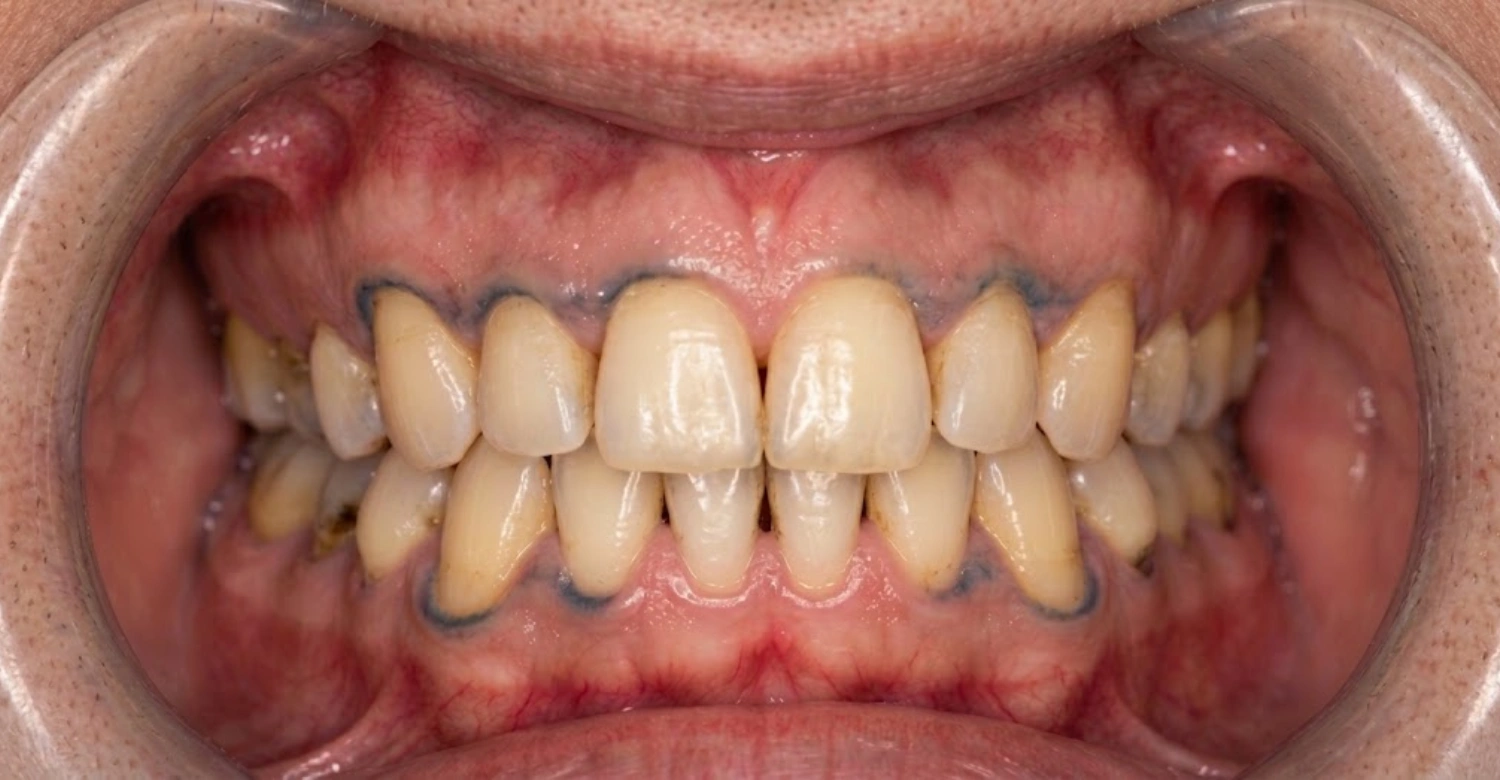
A lead poisoning teeth line is more precisely known as Burton's line. It is a thin blue-black to blue-purple band. It can appear along the gum margin in people with chronic lead exposure. It does not stain the tooth itself. Instead, it forms on the gum tissue right at the tooth-gum junction. This sign has been documented in medical literature for well over a century. Yet it is not present in every case of chronic lead poisoning. It appears in roughly half to two-thirds of affected individuals. A similar-looking line can also appear from other causes, such as bismuth exposure. Because of this, the presence of this line alone is not enough to confirm lead toxicity. This guide explains what a lead poisoning teeth line looks like and why it forms. It also covers what other oral symptoms may accompany it, and how it should be properly diagnosed and managed.
What Is a Lead Poisoning Teeth Line?
A lead poisoning teeth line refers to a distinct discoloration that appears along the gumline in cases of chronic lead exposure. It is not a change to the teeth themselves. Understanding its features and appearance can help distinguish it from other, unrelated causes of gum discoloration.
Lead Line on Gums
A lead line on gums appears as a narrow, blue-black or blue-purple band. It runs along the edge of the gum tissue, closest to the base of the teeth. It typically becomes visible within about a week of significant lead exposure. It is most often seen near the upper canine teeth, though it can appear elsewhere along the gumline as well.
Burton's Line Lead Poisoning
Burton's line lead poisoning refers to this same gum discoloration. It is named after physician Henry Burton, who first documented it in 1840. He described a narrow, leaden-blue line, about a twentieth of an inch wide. It borders the gum margins around two or more teeth, while the surrounding gum tissue appears otherwise normal.
Blue Line on Gums Lead Poisoning
A blue line on gums lead poisoning describes the visual appearance most patients and clinicians notice first. It is a stippled, dark blue discoloration sitting just beneath the surface of the gum tissue. This appears at the tooth-gum junction, rather than on the visible surface of the tooth enamel.
Why Can Lead Exposure Cause a Line on the Gums?
Lead exposure can cause a line on the gums because of a chemical reaction. Circulating lead in the bloodstream reacts with sulfide ions naturally produced by oral bacteria. This reaction forms deposits of lead sulfide. These deposits settle in the gum tissue near the tooth-gum junction, producing the characteristic dark discoloration.
How Lead Can Affect Oral Tissues
Beyond forming a visible line, lead exposure can affect oral tissues in other ways. It can contribute to gum inflammation and altered tissue coloring. In some cases, it may also change the structures supporting the teeth, particularly with prolonged or high levels of exposure.
Factors That May Influence the Appearance of a Gum Line
Several factors can influence the visibility of a gum line related to lead exposure. These include the duration and level of exposure, individual oral bacteria activity, and existing gum health. Inflamed or diseased gum tissue may make the discoloration easier or harder to detect.
Clinical Note
A visible line along the gums can have different causes. Its appearance alone should not be considered proof of lead poisoning. Proper medical and dental evaluation is important when lead exposure is suspected.
Lead Poisoning Teeth and Oral Health
Lead poisoning teeth and oral health concerns extend beyond the well-known lead poisoning teeth line. Chronic exposure can influence overall oral tissue health in several ways. Recognizing these broader effects helps put the gum line in proper context, as one possible sign among several.
Lead Poisoning Teeth
Lead poisoning teeth changes are generally indirect, since lead itself does not stain the enamel. Instead, chronic exposure can affect the surrounding gum and bone tissue. This may in turn influence the appearance and health of the teeth over time.
Lead Toxicity Teeth
Lead toxicity teeth effects are more closely tied to how lead accumulates in the body over time. This includes accumulation within bone tissue. It can affect the structures that support the teeth rather than the enamel surface itself.
Lead Poisoning Gums
Lead poisoning gums are the primary site where visible changes occur. This includes the lead poisoning teeth line at the gum margin. It can also involve general discoloration or inflammation in more significant cases of chronic exposure.
Lead Poisoning and Oral Health
Lead poisoning and oral health are connected in an important way. The mouth can serve as an early, visible indicator of internal lead accumulation. This makes dental awareness a useful complement to medical evaluation when exposure is suspected.
Possible Effects on Teeth and Gums
Possible effects include gum discoloration and altered gum tissue appearance. In some cases, changes to the supporting bone structure can occur too. This is particularly true with prolonged, high-level exposure to lead.
Oral Changes Associated With Lead Exposure
Oral changes associated with lead exposure can include the gum line itself. General gum tenderness or inflammation may also occur. Occasionally, some patients with significant lead levels report a metallic taste.
Tips for the Patients
Patients concerned about lead exposure should discuss both their exposure history and oral symptoms with an appropriate healthcare professional. Maintaining regular dental examinations can help identify changes affecting the teeth and gums.
Note : All images used are for editorial and illustrative purposes only and may not originate from the original news provider or associated company.
Lead Poisoning Dental Symptoms
Lead poisoning dental symptoms can vary depending on the level and duration of exposure. A 2024 case series involving petroleum refinery workers in Iraq documented gingival darkening consistent with a lead poisoning teeth line. This appeared alongside systemic symptoms such as fatigue, headaches, abdominal pain, and neurological issues. Blood lead levels in these individuals ranged from 30 to 43 micrograms per deciliter, well above the normal threshold of under 10.
Common Lead Poisoning Dental Symptoms
Common lead poisoning dental symptoms include the lead poisoning teeth line, gum tenderness, and in some cases a metallic taste. These symptoms typically appear alongside broader systemic signs. They are rarely seen in isolation.
Lead Poisoning Mouth Symptoms
Lead poisoning mouth symptoms can extend beyond the gums. They may include dryness and a persistent unusual taste. Occasional irritation of the soft tissue inside the mouth can also occur, particularly with significant or prolonged exposure.
How Lead Exposure May Affect the Mouth
Lead exposure may affect the mouth in several ways. It can alter the color and health of the gum tissue. It may also contribute to a metallic taste and, in more severe or prolonged cases, affect the tissues that support the teeth.
Changes in the Gums
Changes in the gums can include the visible blue-black line and general discoloration. Tenderness or mild inflammation may also appear. This depends on how much lead has accumulated and for how long.
Changes Affecting the Teeth
Changes affecting the teeth are typically indirect. They arise from effects on the surrounding gum and bone tissue. Lead does not typically deposit directly within the tooth enamel.
Other Oral Symptoms
Other oral symptoms occasionally reported include a persistent metallic taste and dry mouth. Mild irritation of the oral soft tissue can also occur. This is particularly seen in workplace-related lead exposure cases.
Clinical Note
Oral findings can vary depending on the level and duration of exposure. Dental symptoms should be evaluated alongside other signs of possible lead toxicity. They should not be considered in isolation.
How Does Lead Exposure Affect Teeth and Gums?
Lead exposure effects on teeth and gums depend heavily on the level and duration of contact with lead. Low-level exposure may produce no visible oral changes at all. Chronic, higher-level exposure is more likely to produce a recognizable lead poisoning teeth line and related symptoms.
Lead Exposure Teeth and Gums
Lead exposure teeth and gums changes are most often seen in chronic occupational or environmental exposure. They are less common with brief, low-level contact. This is why the gum line is more closely associated with long-term rather than short-term exposure.
Effects of Lead on Gum Health
Effects of lead on gum health can include discoloration and tenderness. In some cases, there may be increased susceptibility to gum inflammation. This happens because the tissue absorbing lead sulfide deposits may become more reactive to irritation.
Effects of Lead Exposure on Teeth
Effects of lead exposure on teeth are generally limited to indirect changes. These occur through the supporting bone and gum tissue. Lead does not typically bind directly to the hard structure of tooth enamel.
Gum Changes
Gum changes linked to lead exposure range from the lead poisoning teeth line to more general discoloration or tenderness. The extent depends on individual factors and how much exposure has occurred.
Tooth Development and Oral Health
Tooth development and oral health can be affected in children exposed to lead during critical growth periods. Lead can interfere with normal bone and tissue development. This development is relevant to healthy tooth support.
Why Early Evaluation Matters
Early evaluation matters because identifying lead exposure sooner allows treatment to begin sooner. This is before more significant oral or systemic effects develop. Prompt assessment also helps distinguish a lead-related gum line from other unrelated causes of discoloration. This ensures the person receives correct medical and dental care without unnecessary delay.
Tips for the Patients
Do not rely on a gum line alone to determine whether lead exposure has occurred. Seek appropriate testing when there is a known or suspected source of lead exposure.
What Causes a Lead Line on the Gums?
A lead line on the gums, often called a lead poisoning teeth line, develops through a specific chemical process. It is not simply lead staining the tissue. Understanding how and why it forms helps explain why the line appears where it does. It also explains why it is not seen in every case of lead exposure.
How a Lead Line Can Develop
A lead line can develop when circulating lead reacts with sulfide compounds. These compounds are produced by bacteria naturally present in the mouth. This reaction forms lead sulfide, which deposits in the gum tissue at the tooth-gum junction. This creates the visible dark line associated with chronic exposure.
Why the Gum Line May Appear Blue or Dark
The gum line may appear blue or dark for a specific chemical reason. Lead sulfide, the compound formed when lead reacts with bacterial sulfide, has a characteristically dark, blue-black color. This pigment settles just beneath the surface of the gum tissue. This is why the discoloration often looks stippled or slightly uneven rather than perfectly smooth.
Is a Lead Line Always Caused by Lead Poisoning?
No, a lead poisoning teeth line is not always caused by lead poisoning. It appears in an estimated 50 to 70 percent of chronic cases. This means its absence does not rule out exposure. A similar-looking discoloration, known as a bismuth line, can also occur from certain bismuth-containing medications. These are far less toxic than lead.
Other Possible Causes of Gum Discoloration
Other possible causes of gum discoloration include bismuth exposure from certain medications. Unrelated dental or gum conditions can also be a cause. This is why any visible line should be evaluated rather than assumed to indicate lead poisoning.
Why Professional Evaluation Is Important
Professional evaluation is important because several conditions can produce a similar-looking gum discoloration. Only a proper clinical and laboratory assessment can confirm whether lead exposure is the actual cause. Relying on appearance alone risks missing true lead toxicity. It also risks wrongly attributing an unrelated condition to lead exposure.
Clinical Note
A dark or bluish gum line is not specific to lead exposure. A dental examination can help determine whether the discoloration is associated with an oral condition. It can also determine whether it requires further medical investigation.
How Is Lead Poisoning Diagnosed?
Diagnosing lead poisoning involves more than examining the gums. The visible lead poisoning teeth line is only one supportive clue. Several diagnostic steps are used together to confirm chronic lead exposure.
Medical Evaluation for Lead Exposure
Medical evaluation for lead exposure typically begins with a review of possible exposure sources and occupational history. Reported symptoms are also reviewed. This is followed by targeted testing to confirm or rule out elevated lead levels in the body.
Blood Lead Testing
Blood lead testing remains the definitive way to confirm lead exposure, since it directly measures circulating lead levels. In the previously mentioned case series of refinery workers, blood lead levels ranged from 30 to 43 micrograms per deciliter. This compares with a normal threshold of under 10.
Dental Examination
A dental examination can help identify a lead poisoning teeth line or other oral changes. These findings may support a suspicion of lead exposure. It is used alongside, not instead of, medical testing.
Evaluating the Teeth and Gums
Evaluating the teeth and gums involves checking for the characteristic blue-black line and general gum health. Any other oral changes are also noted. These findings might point toward or away from lead-related causes.
Reviewing Symptoms and Exposure History
Reviewing symptoms and exposure history includes asking about occupational or environmental sources of lead. Systemic symptoms are also reviewed. These include fatigue, abdominal pain, or neurological changes that often accompany chronic exposure.
When Additional Testing May Be Needed
Additional testing may be needed when blood lead levels are elevated. It may also be needed when symptoms strongly suggest lead toxicity. This can include further blood work, imaging, or referral to a specialist for more detailed evaluation.
Tips for the Patients
If lead poisoning is suspected, testing should be based on professional medical evaluation rather than oral appearance alone. Tell your healthcare and dental providers about any known or suspected lead exposure.
Can Lead Poisoning Cause Permanent Damage to Teeth?
Whether lead poisoning causes permanent damage to teeth depends on several factors. These include the level, duration, and timing of exposure. It also depends on how quickly the source of exposure is identified and addressed.
Potential Long-Term Effects of Lead Exposure
Potential long-term effects of lead exposure can include changes to bone density. These changes can affect the structures that support the teeth. Lasting discoloration of the gum tissue may also occur in cases of prolonged, high-level exposure.
Lead Toxicity and Tooth Development
Lead toxicity and tooth development are particularly relevant in children. Lead exposure during developmental years can interfere with normal growth. This includes the bone and tissue that support healthy tooth formation.
Can Oral Changes Improve After Exposure Is Addressed?
Yes, oral changes can often improve after the source of lead exposure is addressed. This improvement follows once blood lead levels return to normal. The lead poisoning teeth line itself may fade over time. The pace and extent of improvement can depend on how long and how severely a person was exposed.
Factors That May Affect Recovery
Factors that may affect recovery include the total duration of exposure. The peak blood lead level reached also matters. How promptly the exposure source was removed and treatment began plays a role too.
Importance of Early Assessment
Early assessment is important for better outcomes. Addressing lead exposure sooner generally leads to a better outlook for both oral changes and overall health. This reduces the risk of longer-lasting effects.
Clinical Note
The potential long-term effects depend on factors such as the level, duration, and timing of lead exposure. Existing dental damage may require separate dental treatment even after the exposure has been addressed.
How Can You Protect Your Teeth and Gums From Lead Exposure?
Protecting the teeth and gums from lead exposure involves two things. One is reducing contact with lead sources. The other is maintaining consistent oral healthcare that supports early detection of a lead poisoning teeth line.
Reducing Exposure to Lead
Reducing exposure to lead starts with identifying known sources. These include certain older paints, contaminated water, or specific occupational settings. Prevention is the most effective way to avoid related oral and systemic effects.
Maintaining Good Oral Hygiene
Maintaining good oral hygiene supports overall gum health. This may make it easier to notice new or unusual changes, including a gum line, at an earlier stage.
Regular Dental Checkups
Regular dental checkups allow a dentist to monitor the health and appearance of the gums over time. This increases the chances that a lead poisoning teeth line or other unusual changes are noticed and addressed promptly.
Brushing and Flossing
Brushing and flossing consistently helps maintain healthy gum tissue. This supports early detection of any unusual discoloration or changes that might otherwise go unnoticed.
Professional Dental Cleanings
Professional dental cleanings help remove buildup. This buildup can otherwise mask or be mistaken for other forms of gum discoloration. Removing it supports a clearer view of the gum tissue during checkups.
Monitoring Changes in the Gums
Monitoring changes in the gums over time helps in two ways. It can be done personally or during dental visits. It ensures that new discoloration or symptoms are identified and evaluated as early as possible.
Tips for the Patients
Address the source of suspected lead exposure with the appropriate healthcare or environmental professional. Continue routine dental care to monitor your teeth and gums. Report unusual oral changes to your dentist.
How Can Vitrin Clinic Help With Oral Changes Related to Lead Exposure?
Vitrin Clinic focuses on evaluating oral changes carefully. It does not assume a visible lead poisoning teeth line automatically confirms lead poisoning. Accurate assessment requires looking at the full picture of a patient's oral health.
Dental Evaluation for Lead-Related Oral Changes
Dental evaluation for lead-related oral changes at Vitrin Clinic involves a thorough review of the gums, teeth, and any reported symptoms. This helps determine whether findings such as a lead poisoning teeth line are consistent with lead exposure or another oral condition.
Comprehensive Examination of Teeth and Gums
A comprehensive examination of teeth and gums allows the clinical team to assess overall oral health. It also helps identify any discoloration, inflammation, or other changes that may warrant further discussion or referral.
Personalized Dental Care
Personalized dental care at Vitrin Clinic is based on each patient's specific oral findings and history. It does not apply a one-size-fits-all approach to unusual gum changes.
Why Identifying the Cause of Oral Changes Matters
Identifying the cause of oral changes matters because a lead poisoning teeth line or discoloration can stem from several different sources, not just lead exposure. Correctly identifying the underlying cause ensures the patient receives appropriate care. This may involve dental treatment, referral for medical testing, or ongoing monitoring.
What We Notice Clinically
At Vitrin Clinic, the focus is on carefully evaluating changes affecting the teeth and gums. The team does not assume that a visible gum line is automatically caused by lead exposure. Dr. Rifat Alsaman, Head of the Medical team at Vitrin Clinic and a cosmetics dentist, emphasizes examining the overall oral condition. He stresses identifying the possible cause of unusual gum discoloration or dental changes. Dr. Rifat Alsaman explains that a complete dental assessment can help distinguish visible oral changes from conditions that may require further medical evaluation. Vitrin Clinic provides personalized dental assessment and treatment planning according to each patient's oral health needs.
Clinical Note
Vitrin Clinic can evaluate the condition of the teeth and gums. It can then determine the appropriate dental care based on the patient's individual needs. Suspected lead poisoning itself requires appropriate medical testing and management.
About Vitrin Clinic
Vitrin Clinic offers dental treatment aimed at the oral changes that can accompany lead exposure. It does not treat lead poisoning itself, which remains a medical condition requiring blood testing and management by a physician. Depending on what the examination reveals, treatment may include professional cleaning and gum therapy. This addresses inflammation or tenderness around a lead poisoning teeth line. It may also include cosmetic dental treatment to improve the appearance of discolored gum tissue once any underlying exposure has been addressed. Restorative dental care is available for teeth affected indirectly through gum or bone changes. Every treatment plan is personalized to the patient's specific findings rather than applied as a single standard protocol.
Resource:
https://pmc.ncbi.nlm.nih.gov/articles/PMC11162749/
FAQs

Dr. Rifat Alsaman has more than 5 years of clinical experience in dentistry and currently serves as the Head of the Medical Team at Vitrin Clinic. He is dedicated to providing exceptional patient care, overseeing treatment planning, and ensuring the highest clinical standards across the team. His expertise, attention to detail, and commitment to continuous professional development have helped countless patients achieve healthier, more confident smiles.


.webp&w=3840&q=75)

