General Dentistry
October 13, 2026
Medicine for Sensitive Teeth: What Helps Relieve Tooth Sensitivity?
 Dr. Rifat Alsaman
Medicine for Sensitive Teeth depends on the cause. Paracetamol may temporarily relieve pain. It cannot repair enamel, seal exposed dentin, remove decay, drain an abscess, or treat a cracked tooth. Tooth sensitivity can result from enamel wear, gum recession, decay, a fracture, or a recent dental procedure. The safest plan combines appropriate short-term relief with diagnosis when symptoms persist. Follow the product label and ask a pharmacist or clinician when personal circumstances could affect safe use.
What Is the Best Medicine for Sensitive Teeth?
There is no single medicine that treats every cause of sensitivity. Paracetamol may provide temporary pain relief when used according to the product label and professional advice. However, classic sensitivity triggered briefly by cold or sweet foods often responds better to dental care designed for the cause. A dentist may recommend desensitizing toothpaste or an in-office treatment after examining the tooth. Do not use pain relief to postpone assessment of severe, persistent, or worsening symptoms.
How Does Sensitive Teeth Medication Help Relieve Discomfort?
Paracetamol changes how the body experiences pain, so it may help temporarily when sensitivity is painful. It does not repair enamel or stop the cause of exposed dentin. Medicine for Sensitive Teeth should therefore be understood as symptom relief, not a cure. Use only the dose and interval stated on your specific product label. Age, weight, formulation, health conditions, and other medicines can change what is appropriate. Ask a pharmacist or clinician if you are unsure.
What Is the Difference Between Tooth Sensitivity Relief and Treating Its Underlying Cause?
Pain relief may make discomfort easier to manage, but it cannot correct the dental problem. A worn surface may need preventive care, while decay may require a filling. A crack or inflamed dental pulp may need more involved treatment. Pain relief cannot remove decay, repair a fracture, drain an abscess, or reverse gum recession. If pain keeps returning, arrange a dental examination rather than repeatedly relying on temporary relief.
Ready to transform your smile?
Talk to our team and get a personal FREE treatment plan.
What Causes Tooth Sensitivity?
Tooth sensitivity occurs when stimuli reach nerve-rich tissue through exposed or irritated tooth structures. The outer enamel protects the crown, while the root has a different protective covering. Beneath these layers, dentin contains microscopic tubules that can transmit stimuli toward the inner tooth. Sensitivity may be brief, but persistent or localized pain can indicate another problem.
How Does Enamel Erosion Lead to Sensitive Teeth?
Enamel erosion occurs when acids gradually soften and remove the tooth's outer protective layer. Frequent acidic drinks, reflux, and repeated acid exposure can contribute. Once dentin becomes exposed, cold, heat, touch, or sweet foods may trigger discomfort. Pain relief may ease discomfort temporarily, but it cannot rebuild enamel that has been lost. Reduce frequent acid exposure and ask a dentist how to protect affected surfaces. Avoid brushing immediately after an acidic drink because softened enamel may be more vulnerable to abrasion.
Can Gum Recession Expose Sensitive Tooth Roots?
Yes. Receding gums can expose root surfaces that lack the same enamel covering as the crown. These areas may react to cold drinks, brushing, or touch. Causes include gum disease, aggressive brushing, and individual tissue anatomy. Pain relief may temporarily lessen discomfort, but it cannot restore lost gum tissue. A dentist can assess gum health and recommend suitable cleaning methods. Some patients need periodontal treatment or another procedure to protect an exposed root.
Can Tooth Decay, Cracked Teeth, or Worn Dental Restorations Cause Sensitivity?
Yes. Decay, fractures, and worn or leaking restorations can expose dentin or irritate the tooth's inner tissue. Pain may occur with sweets, temperature changes, chewing, or releasing a bite. One tooth that hurts repeatedly deserves particular attention. Pain relief may mask discomfort without treating decay or a crack. A dentist may use examination, testing, and dental imaging when appropriate. Treatment could involve a filling, restoration repair, or more extensive care based on the findings.
Why Do Teeth Become Sensitive to Hot, Cold, Sweet, or Acidic Foods?
Temperature changes and certain foods can stimulate exposed dentin. Its microscopic channels can transmit fluid movement toward the inner tooth, triggering a brief pain response. Acidic foods may also contribute to enamel wear over time. Pain that stops quickly after removing the trigger can fit ordinary dentin sensitivity, but it is not diagnostic. Lingering, spontaneous, or escalating pain needs dental assessment. Temporary pain relief may help, but the pattern and duration of symptoms help guide diagnosis.
How Does Tooth Sensitivity Medicine Work?
Paracetamol acts on pain processing in the body and may reduce the sensation of toothache temporarily. It does not seal dentin tubules or treat the source of sensitivity. Dental products work differently: some reduce stimulus transmission, while professional treatments may protect exposed surfaces. The correct approach depends on whether the cause is dentin sensitivity, decay, a fracture, gum disease, or pulp inflammation. Use pain relief only as directed and seek dental care for persistent symptoms.
How Can Desensitizing Treatments Reduce Pain Signals?
Desensitizing toothpaste is designed to reduce the way exposed dentin responds to everyday triggers. It generally needs repeated use as directed rather than providing instant, guaranteed relief. Paracetamol works differently because it temporarily changes pain perception. Pain relief should not replace a product specifically formulated for sensitivity when that product suits the diagnosis. Ask a dentist or pharmacist if symptoms persist, if irritation develops, or if you are unsure which product is suitable.
How Can Professional Enamel-Protective Treatments Help?
A dentist may apply a professional surface treatment to protect vulnerable areas or reduce sensitivity. The choice depends on the tooth's condition and whether enamel loss, exposed dentin, or another problem is present. Such treatments cannot restore severely damaged tooth structure by themselves. Pain relief may help temporarily, while professional care targets dental finding. Ask what the procedure is intended to achieve and whether follow-up is required.
When Is Professional Dental Sensitivity Treatment More Appropriate Than Home Care?
Professional care is appropriate when sensitivity is persistent, localized, severe, or associated with biting pain. An examination is also important when symptoms begin after an injury or dental procedure. Home care may help uncomplicated sensitivity, but it cannot reliably distinguish it from decay or pulp inflammation. Temporary relief may help while you arrange an appointment. Do not delay urgent assessment for swelling, fever, facial swelling, or difficulty swallowing.
What Are the Most Effective Treatments for Sensitive Teeth?
The most effective treatment is the one that addresses the diagnosed cause. Mild dentin sensitivity may improve with desensitizing toothpaste and gentler oral care. Exposed roots may need professional protection, while decay or a damaged restoration may require repair. A cracked tooth or inflamed pulp may require more extensive treatment. Pain relief can temporarily reduce discomfort, but treatment decisions should follow examination. Do not assume every temperature-sensitive tooth needs a filling, or that every sensitive tooth can be managed at home.
How Can Sensitive Teeth Toothpaste Help Reduce Discomfort?
Desensitizing toothpaste may reduce the response of exposed dentin to cold, touch, and other triggers. Use it consistently according to its label, since improvement may take repeated applications. Choose a product intended for sensitivity and avoid aggressive scrubbing. Pain relief may help with temporary pain, but toothpaste is usually more targeted for ongoing dentin hypersensitivity. Stop using a product and seek advice if it causes irritation or unusual symptoms. Persistent pain still needs evaluation.
When Can Professional Enamel-Protective Treatments Help With Tooth Sensitivity?
Professional surface treatments may help when enamel is vulnerable or dentin is exposed. A dentist selects the appropriate option after checking the teeth and gums. The treatment may need to be combined with changes to brushing or diet. Pain relief can temporarily ease discomfort, but professional treatment aims to reduce the trigger. Ask how long any expected benefit may last and whether repeat visits are needed. No treatment should be promised to eliminate every case of sensitivity.
How Can Dentists Treat Exposed Dentin and Sensitive Tooth Roots?
Dentists may recommend a professional coating, bonding material, or another protective procedure for selected exposed areas. They also address contributors such as plaque, gum disease, or excessive brushing pressure. The best choice depends on the size and location of the exposed surface. Pain relief does not cover exposed dentin or restore lost gum tissue. A dentist can explain benefits, limitations, costs, and cleaning requirements before treatment.
When Might Dental Bonding, Fillings, or Gum Treatment Be Necessary?
Bonding or a filling may be appropriate when a defect, cavity, or damaged restoration causes sensitivity. Gum treatment may be considered when recession or periodontal disease contributes. A crack or deeper inflammation may need a different plan. Pain relief should not be used as a substitute for repairing a structural problem. A clinical examination helps establish whether a procedure is necessary and whether more than one treatment stage is likely.
Which Sensitive Tooth Treatment Is Appropriate for Different Causes?
Brief, widespread sensitivity may respond to desensitizing toothpaste and improved brushing technique. A cavity usually needs restorative care, while gum disease needs periodontal assessment. A fracture, lingering pain, or spontaneous throbbing may require prompt investigation. Pain relief may reduce discomfort briefly, but it cannot identify the cause. Ask the dentist to explain the diagnosis, proposed treatment, alternatives, and expected follow-up. Avoid choosing a treatment only because another person had similar symptoms.
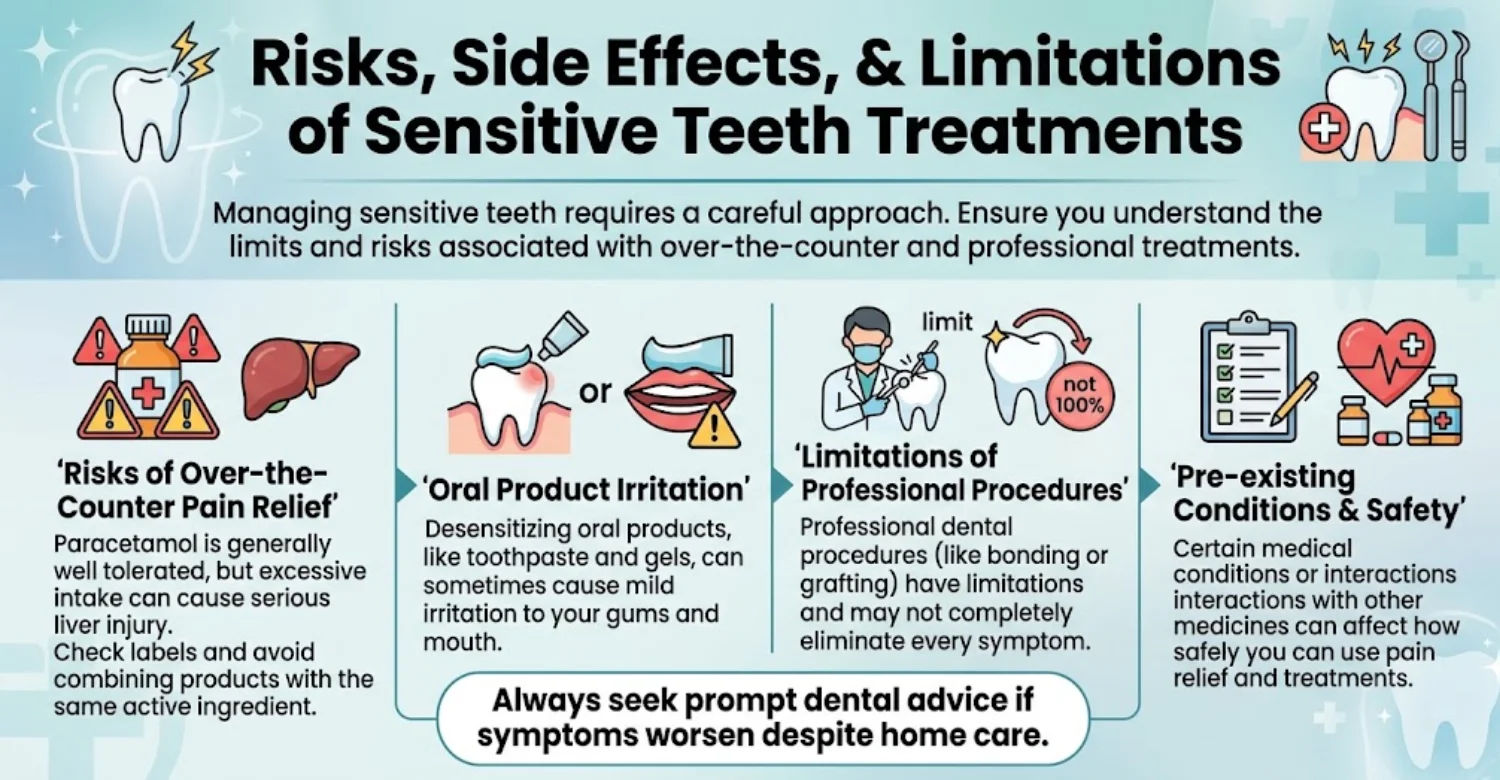
Can Desensitizing Products Cause Irritation or Other Unwanted Effects?
Some oral-care products can irritate the gums, tongue, or lining of the mouth. Stop using a product if irritation develops and ask a dentist or pharmacist for advice. Follow package instructions and avoid applying products in unapproved ways. Paracetamol has a different risk profile and should only be taken as directed. Not every pain-relief product is suitable for every person. Seek urgent help for signs of a severe allergic reaction, including breathing difficulty or swelling of the throat.
Who Should Seek Professional Advice Before Using Tooth Sensitivity Products?
Ask a healthcare professional before using paracetamol if you have liver or kidney problems. Also ask about low body weight, heavy alcohol use, or complex medical needs. Check first during pregnancy or breastfeeding, even though paracetamol is commonly used in these circumstances when appropriate. Children need a product and dose suitable for their age and weight. Medicine for Sensitive Teeth should not be selected without checking the label and relevant warnings. A pharmacist can help review other medicines and possible duplicate ingredients.
Why Might Tooth Sensitivity Persist Despite Using Desensitizing Toothpaste?
Symptoms may persist because the cause has not been identified or because the product needs more time. A cavity, crack, gum problem, or inflamed pulp will not necessarily improve with desensitizing toothpaste alone. Incorrect brushing or frequent acid exposure can also keep triggering symptoms. Pain relief may temporarily dull pain without correcting these causes. If symptoms persist, worsen, or affect one particular tooth, arrange a dental examination instead of changing products repeatedly.
Can Repeated Whitening or Abrasive Oral Care Products Worsen Sensitivity?
Yes. Some whitening procedures can cause temporary sensitivity, while abrasive products and forceful brushing may contribute to surface wear. The risk depends on the product and how it is used. Pause nonessential whitening if sensitivity develops and seek advice before restarting. Temporary pain relief may help, but it will not prevent repeated irritation from an unsuitable routine.
How Can You Get Sensitive Teeth Relief at Home?
Home care can reduce common triggers while you arrange assessment when needed. Use a soft-bristled brush, clean gently, and choose a toothpaste intended for sensitivity. Reduce frequent exposure to acidic drinks and avoid extremely hot or cold foods during a flare. Paracetamol may temporarily ease pain when appropriate and used according to its label. Home care should not delay examination for severe or persistent symptoms. It cannot repair cavities, drain infections, or stabilize a cracked tooth.
Which Daily Oral Hygiene Habits Help Reduce Tooth Sensitivity?
Brush twice daily with a soft-bristled toothbrush and clean between teeth each day. Use gentle pressure and a toothpaste suitable for daily oral care. Avoid repeatedly scrubbing a sensitive area because excessive force can worsen gum recession. Rinse with water after acidic food or drink, and wait before brushing. Temporary pain relief may help with discomfort, but consistent habits reduce some preventable triggers. Seek personalized advice if sensitivity continues.
How Can Patients Adjust Their Brushing Technique to Protect Enamel and Gums?
Hold the brush gently and use short, controlled movements instead of forceful horizontal scrubbing. Clean along the gumline without pressing the bristles hard into the tissues. Replace a worn toothbrush and ask a dentist to demonstrate technique if uncertain. Pain relief cannot reverse enamel loss caused by abrasion. Correcting brushing habits helps prevent further damage, although existing recession may need separate treatment.
Which Foods and Drinks Should Patients Limit When Teeth Are Sensitive?
Limit frequent acidic drinks, sour sweets, and repeated sugary snacks. Very cold or hot foods may trigger pain during a flare. Choose less acidic options and drink water after consuming acidic items. Do not hold acidic drinks in your mouth or sip them continuously over long periods. Temporary pain relief may relieve discomfort, but dietary changes can reduce repeated exposure. A dentist can help identify triggers without unnecessarily restricting a balanced diet.
Can Avoiding Acidic Foods and Drinks Help Prevent Further Enamel Erosion?
Yes. Reducing how often teeth encounter acids can help lower ongoing erosion risk. Acidic foods need not always be eliminated, but repeated sipping or grazing can increase exposure. Rinse with water afterward and avoid brushing immediately while enamel may be softened. Pain relief cannot rebuild enamel already lost through erosion. Ask a dentist about possible causes, including dietary acids or reflux, if erosion is suspected.
What Medical Tips Can Help Manage Tooth Sensitivity Safely?
Use paracetamol only according to the label for your specific formulation. Do not exceed the stated dose or take overlapping products containing the same ingredient. Ask a pharmacist or clinician if you have liver or kidney problems, drink heavily, are pregnant, or breastfeed. Children require age- and weight-appropriate instructions. Pain relief is not a diagnosis. If you take too much, seek immediate professional medical advice even if you feel well, because early symptoms may be absent.
What Is the Difference Between Home Remedies and Professional Dental Sensitivity Treatment?
Home care may reduce triggers and help mild sensitivity, but it cannot diagnose every cause. A dentist can assess enamel, gums, restorations, cracks, and signs of deeper inflammation. Treatment then targets the finding rather than the symptom alone. Temporary pain relief may help while professional care addresses the cause. Do not apply household chemicals or unverified substances to teeth. Seek urgent help if swelling spreads or breathing or swallowing becomes difficult.
When Is Home Care Enough to Manage Mild Tooth Sensitivity?
Home care may be reasonable for mild, brief sensitivity affecting several teeth after a clear trigger. Use appropriate toothpaste, gentle brushing, and reduced acid exposure. Monitor whether the discomfort improves rather than simply tolerating recurring pain. Temporary pain relief may help briefly when paracetamol is suitable. Arrange a dental visit if sensitivity persists, localizes to one tooth, worsens, or begins without a trigger.
How Does Professional Treatment Address the Cause of Tooth Sensitivity?
The dentist examines the tooth and surrounding gums, then considers tests or imaging when indicated. A protective treatment may suit exposed dentin, while decay may require a filling. Gum disease, cracks, or pulp inflammation need different management. Pain relief cannot distinguish these conditions. A clear diagnosis helps avoid unnecessary treatment and reduces the chance of overlooking a more serious problem.
Why Can Temporary Relief Fail to Resolve Tooth Decay or a Cracked Tooth?
Pain relief changes the experience of discomfort but does not rebuild damaged tissue. Decay can progress, and a crack may allow further irritation or bacterial entry. An abscess can require drainage and treatment of the infected source. Pain relief cannot remove decay, seal a crack, or drain an abscess. Arrange assessment when pain returns, persists, or worsens, even if medicine temporarily helps.
.jpg)
.jpg)
.jpg)
.jpg)
When Should You See a Dentist for Sensitive Teeth?
Arrange a dental examination when sensitivity is persistent, severe, localized, or getting worse. Biting pain, spontaneous throbbing, a broken tooth, or lingering temperature pain may need prompt assessment. Contact a dentist promptly for swelling, fever, pus, or a bad taste with increasing pain. Temporary pain relief should never delay needed dental care. Seek emergency medical attention for rapidly spreading facial or neck swelling, breathing difficulty, or swallowing difficulty.
Which Symptoms May Indicate a More Serious Dental Problem?
Severe or persistent pain, spontaneous throbbing, biting pain, or a visible crack can indicate a deeper problem. Swelling, fever, pus, or tender glands may suggest infection. Pain that lingers after a trigger also deserves assessment. Pain relief may make symptoms less noticeable without stopping the underlying condition. Contact a dentist when these symptoms appear, and seek emergency care if swelling affects breathing or swallowing.
When Does Persistent or Localized Tooth Sensitivity Require an Examination?
Book an examination if one tooth repeatedly hurts or symptoms continue despite careful home care. Also seek advice if pain interrupts sleep or occurs without an obvious trigger. The dentist may check for decay, cracks, gum recession, or pulp inflammation. Pain relief does not replace diagnostic testing. Prompt assessment can clarify whether preventive care, a restoration, or more extensive treatment is needed.
Why Do Swelling, Fever, or Severe Worsening Pain Require Prompt Assessment?
Swelling, fever, pus, or worsening pain may indicate a dental infection or another complication. Contact a dentist urgently rather than relying on pain relief alone. Facial or neck swelling that spreads rapidly needs emergency assessment. Difficulty breathing or swallowing is an emergency. Pain relief cannot treat an abscess or prevent infection from spreading. Do not use leftover medicines or attempt to drain swelling yourself.
What Should Patients Expect During a Dental Examination for Tooth Sensitivity?
The dentist will ask when pain occurs, how long it lasts, and which triggers provoke it. They may inspect the teeth, gums, restorations, and bite, then perform sensitivity tests. Dental X-rays may be useful when decay, infection, or another hidden problem is suspected. Medicine for Sensitive Teeth may be discussed for temporary symptom control, but treatment depends on the diagnosis. Ask the dentist to explain findings, options, likely costs, and follow-up.
Note : All images used are for editorial and illustrative purposes only and may not originate from the original news provider or associated company.
Dental Treatment Costs in the United States, United Kingdom, and Turkey
These are 2026 price estimates, not guaranteed quotes. UK and US figures come from published guides. Turkey prices come from one Istanbul clinic. Abscess care varies because drainage, root canal treatment, or extraction may be needed.
Procedure | United States | United Kingdom | Turkey |
Exam and X-ray | 200–400 bundled exam/X-rays/cleaning | $50–$120 exam; $15–$35 X-ray | $33 exam; $20–$39 X-ray |
Filling | 180–450 | $90–$250 | $60–$90 |
Root canal | 700–2,100 | $300–$1,000 | $60–$210 by canal and retreatment |
Extraction | 150–350 simple | $100–$250 simple | $26–$180 by complexity |
Abscess care | Variable; priced by procedure | Variable; priced by procedure | Variable; priced by procedure |
Final fees depend on tooth location, complexity, imaging, infection severity, and specialist care. UK NHS charges differ from private fees.
Ready to transform your smile?
Talk to our team and get a personal FREE treatment plan.
What We Notice Clinically About Tooth Sensitivity
Sensitivity is a symptom, not a diagnosis. Similar complaints can come from exposed dentin, decay, a fracture, gum disease, or inflammation inside the tooth. Pain history and examination findings help distinguish these possibilities. Temporary pain relief may help, but selecting treatment before identifying the cause can miss the real problem. The dentist considers symptom duration, location, triggers, examination findings, and imaging when appropriate.
Why Does Sensitivity to Cold Not Always Mean a Cavity?
Cold sensitivity can occur when gum recession exposes root dentin or enamel wears away. Recent dental treatment and some whitening procedures can also cause temporary sensitivity. A cavity is only one possible explanation. Temporary pain relief may help, but symptoms alone cannot confirm or exclude decay. Examination is particularly important when pain lingers, affects one tooth, or occurs spontaneously.
How Can Dentists Distinguish Dentin Hypersensitivity From Pulp Inflammation?
Dentin hypersensitivity often causes brief pain after cold, touch, or air exposure. Pulp inflammation may cause lingering, spontaneous, throbbing, or night-time pain, although symptoms vary. Dentists use history, clinical testing, and imaging when indicated. Medicine for Sensitive Teeth cannot reliably distinguish these conditions. Seek an examination when pain is persistent, severe, or difficult to localize.
Clinical Note: Dr. Rifat Alsaman on Identifying the Cause of Tooth Sensitivity
A clinically responsible approach starts by identifying why the tooth hurts. Paracetamol may offer temporary relief, but treatment should follow the examination findings. Patients should describe triggers, duration, recent dental work, and any swelling or fever. Vitrin Clinic should provide individualized recommendations based on clinical assessment rather than assuming every sensitive tooth has the same cause. This section is an editorial summary, not a direct quotation from Dr. Rifat Alsaman.
Vitrin Clinic Perspective: Personalized Treatment for Sensitive Teeth
At the Vitrin Clinic, the appropriate response to sensitivity begins with assessing the likely cause. Clinical examination and digital dental X-rays may support diagnosis when appropriate. Care can differ substantially between exposed dentin, decay, a cracked tooth, gum disease, and suspected infection. Medicine for Sensitive Teeth may be discussed for temporary pain relief, subject to individual safety considerations. Treatment estimates should explain what is included and what may cost extra. International patients should also ask about appointment timing, follow-up, and how urgent concerns can be handled after travelling home.
How Does Clinical Assessment Help Identify the Source of Tooth Sensitivity?
Clinical assessment helps determine whether symptoms relate to enamel wear, exposed roots, decay, a crack, or deeper inflammation. The dentist reviews the pain pattern and checks the teeth, gums, and existing restorations. Temporary pain relief may help, but diagnosis guides the next step. Patients should receive an explanation of findings and reasonable treatment choices before agreeing to care.
When May Dental X-Rays or Other Diagnostic Tests Be Needed?
Dental X-rays may help identify decay, changes near a root, or problems not visible during inspection. They are selected when the expected diagnostic benefit justifies their use. Additional tests may help assess tooth vitality or a suspected crack. Temporary pain relief cannot replace these assessments. The dentist should explain why a test is needed and how its result could change treatment.
How Is a Personalized Sensitive Tooth Treatment Plan Developed?
The plan should match the diagnosis, symptom severity, health history, and patient preferences. Mild dentin sensitivity may need preventive guidance, while decay or a fracture may require restorative treatment. Infection can require urgent source control. Temporary pain relief may be considered when suitable. The clinician should explain alternatives, risks, estimated costs, and follow-up responsibilities clearly.
When Might Restorative Treatment or Gum Care Be Recommended?
A filling or bonding procedure may be recommended for decay or a defect that exposes dentin. Gum care may be necessary when inflammation or recession contributes to symptoms. Cracks and deeper pulp problems require separate evaluation. Pain relief does not repair these conditions. The recommended procedure should be justified by examination findings, with its likely benefits and limitations explained.
How Can Follow-Up Care Help Patients Manage Recurring Sensitivity?
Follow-up helps determine whether symptoms have improved and whether the original diagnosis remains appropriate. The dentist can check oral hygiene, exposed surfaces, restorations, and gum condition. Recurring pain may indicate unresolved or new problems. Temporary pain relief may temporarily ease symptoms, but recurrent discomfort deserves review. International patients should agree on follow-up arrangements before completing travel.







Key Takeaways: Medicine for Sensitive Teeth and Long-Term Relief
Paracetamol may temporarily reduce dental pain, but it does not treat the source of tooth sensitivity. Desensitizing toothpaste and professional care may help selected cases. Persistent, localized, or worsening pain needs dental assessment. Safe medicine use means following the product label and checking personal risk factors. An overdose requires immediate professional advice, even without symptoms.
Which Treatments May Help Relieve Tooth Sensitivity?
Desensitizing toothpaste and professional protective treatments can help some cases of exposed dentin. Decay, damaged restorations, gum disease, and cracks may require specific dental treatment. Medicine for Sensitive Teeth may provide temporary pain relief if paracetamol is appropriate. The right option depends on the diagnosis rather than the symptom alone.
Why Is Identifying the Underlying Cause Essential?
Identifying the cause prevents temporary relief from hiding a problem that needs treatment. A dentist can distinguish routine dentin sensitivity from decay, a crack, or infection. Medicine for Sensitive Teeth is not a substitute for diagnosis. Treatment should address the cause and include appropriate follow-up.
Which Symptoms Should Prompt Professional Dental Assessment?
Seek assessment for persistent pain, localized sensitivity, biting pain, or symptoms that worsen. Swelling, fever, pus, or spontaneous throbbing needs prompt advice. Difficulty breathing or swallowing requires emergency care. Medicine for Sensitive Teeth cannot treat spreading infection or replace urgent intervention.
Medical Disclaimer
This article provides general information and does not replace an examination, diagnosis, or individualized medical advice. Paracetamol should be used only according to the product label and appropriate professional guidance. Dose suitability depends on formulation, age, weight, health conditions, and other medicines. People with liver or kidney problems, heavy alcohol use, pregnancy, or breastfeeding should seek individualized advice. If an overdose may have occurred, contact emergency medical services or a poison-information service immediately, even without symptoms. Seek urgent dental care for worsening pain, swelling, fever, or pus. Breathing or swallowing difficulty requires emergency medical attention.
Reference
FAQs
Dr. Rifat Alsaman has more than 5 years of clinical experience in dentistry and currently serves as the Head of the Medical Team at Vitrin Clinic. He is dedicated to providing exceptional patient care, overseeing treatment planning, and ensuring the highest clinical standards across the team. His expertise, attention to detail, and commitment to continuous professional development have helped countless patients achieve healthier, more confident smiles.


.webp&w=3840&q=75)


