General Dentistry
October 15, 2026
What Medicine Should You Take After Wisdom Tooth Removal?
 Dr. Rifat Alsaman
Many patients ask what medicine should you take after wisdom tooth removal. The safest answer starts with your dentist's instructions. For most people, recovery involves short-term pain relief, careful wound care, and watching for warning signs. Pain-relief medicine is widely used for mild to moderate pain after an extraction. It can ease discomfort for a few hours at a time. It cannot heal the socket, treat an infection, or fix the cause of new pain. This guide explains how pain relief is used, its limits, and its risks. It also covers antibiotics, dry socket, home care, warning signs, and typical treatment costs.
.jpg)
.jpg)
.jpg)
.jpg)
.jpg)
What Medicine Is Used After Wisdom Tooth Removal?
Pain relief is the medicine most patients use after wisdom tooth removal. NHS guidance lists common over-the-counter painkillers as suitable after the procedure. Your dentist may recommend a specific pain-relief option, depending on your health and the surgery. Antibiotics are not routine and are prescribed only when clinically justified. So, which medication to take after wisdom tooth removal in your own case? That depends on your dentist's assessment, your medical history, and the other medicines you take. The sections below explain each factor in turn.
How Medication Helps Manage Pain, Swelling, and Post-Extraction Discomfort
Medication helps by reducing how strongly you feel pain while the tissues heal. Pain relievers work mainly on pain, and some also lower a high temperature. Not all of them reduce swelling well. Swelling is better managed with cold compresses, rest, and keeping your head raised. Effective pain relief may make eating, sleeping, and speaking more comfortable. It will not stop bleeding or reduce bruising. Sensible medication combined with good aftercare usually gives the most comfortable recovery.
Pain Medicine After Wisdom Tooth Removal: What Patients Should Know
Pain-relief medicines come as tablets, capsules, liquids, and other forms, and strengths differ between products. Each product has its own dose, minimum gap between doses, and daily maximum. Adults with low body weight may need a lower dose. Children need a child product dosed by age and weight. Never assume one product's dose applies to another. Always check the label and follow your dentist or pharmacist. The right answer to choosing the right pain relief after an extraction is always individual.
Medication After Wisdom Tooth Surgery: Factors That Influence Treatment Choices
Several factors shape which pain relief your dentist recommends. These include the difficulty of the extraction, your age, and your body weight. Liver or kidney disease, heavy alcohol use, and allergies also matter. Pregnancy and breastfeeding can change which options are suitable. Other prescribed treatments may interact with pain relief. Your dentist weighs these factors before advising post-extraction medication choices. Bring a full list of your medicines and supplements to your appointment.
Ready to transform your smile?
Talk to our team and get a personal FREE treatment plan.
How Does Medicine After Wisdom Tooth Removal Work?
Pain medicine works by reducing pain while the socket begins to heal. Different pain relievers act on pain signals in different ways. Some act mainly in the brain and spinal cord. They can lower pain, but they do not close the wound. Healing depends on the blood clot, your immune response, and new tissue growth. Understanding which pain relief is appropriate for your case is easier when you see medication as support. It helps you cope while your body does the repair work.
How Pain Relief Supports the Early Recovery Period
Pain relief makes the first days after surgery more manageable. NHS guidance says pain and swelling usually start improving after one or two days. During this time, controlled pain helps you eat soft foods and drink enough fluids. It also helps you sleep, which supports recovery. Taking doses at the intervals on the label helps avoid sharp peaks of pain. Many patients wonder how to choose the right pain medication before the numbness fades. Ask your dentist whether to take a first dose before the anaesthetic wears off.
Why Medication Cannot Replace Proper Wound Healing
Medication cannot replace the natural healing of the extraction site. After removal, a blood clot forms over the socket and helps it heal. New gum tissue and bone gradually replace this clot over the following weeks. No tablet can speed up this process. If the clot is lost, pain can return even when medicine is taken correctly. That is why aftercare matters as much as deciding what medicine should you take after wisdom tooth removal. Protecting the clot is the foundation of a smooth recovery.
How the Complexity of Wisdom Tooth Extraction Affects Recovery
Extraction complexity strongly affects how much pain you feel afterwards. A fully erupted tooth may come out quickly with little disturbance to the gum. An impacted tooth may need a gum incision, a widened socket, or cutting into pieces. These steps create more tissue trauma and often more swelling. NHS guidance notes some people need one to three days off work after difficult removal. Because of this, proper post-operative medication use may differ after surgical extraction. Your dentist will tailor advice to the procedure you actually had.
What Are the Benefits and Limitations of Wisdom Tooth Recovery Medication?
Recovery medication offers real comfort, but it has clear limits. Its main benefit is reducing pain enough for normal daily activities. Its main limitation is that it treats symptoms, not causes. Pain relief cannot remove an infection, drain an abscess, or replace a lost blood clot. It also cannot treat decay in a neighbouring tooth. When you consider which medication is best for your recovery, keep both sides in mind. Medication helps you recover comfortably, while a dentist must assess problems it cannot solve.
How Medication May Reduce Pain and Improve Daily Comfort
Correctly used pain relief may reduce pain enough to make eating, talking, and resting easier. Steady pain control can also help you keep up gentle oral hygiene. Many people find it works best when doses are taken at correctly spaced intervals. Common pain relievers rarely cause side effects when taken as directed. Some can be taken with or without food, so check your label. These qualities explain why pain relief is commonly recommended after dental procedures. Your dentist will confirm which option suits you.
What Medication Can and Cannot Do for Post-Extraction Symptoms
Medication can ease pain, but it cannot treat every symptom after an extraction. Pain relief can reduce aching, and some products lower a raised temperature. It cannot stop bleeding, which needs firm pressure with clean gauze or cloth. It cannot treat a dry socket, which usually needs the dentist to clean the area. It cannot cure an infection, which may need drainage or other clinical care. When symptoms persist, the real question becomes what is causing them. Only a dental examination can answer that.
Why Individual Responses to Pain Relief Can Vary
People respond to the same pain relief in different ways. Pain sensitivity, anxiety, sleep, and past experiences all shape how pain feels. The difficulty of the extraction also changes pain intensity. Body weight and health conditions affect how medicine is processed. Some people find one pain reliever enough on its own. Others need a different plan from their dentist. This is why no single answer fits everyone asking which medication to take after wisdom tooth removal. If pain relief seems weak, contact your dentist rather than adjusting doses yourself.
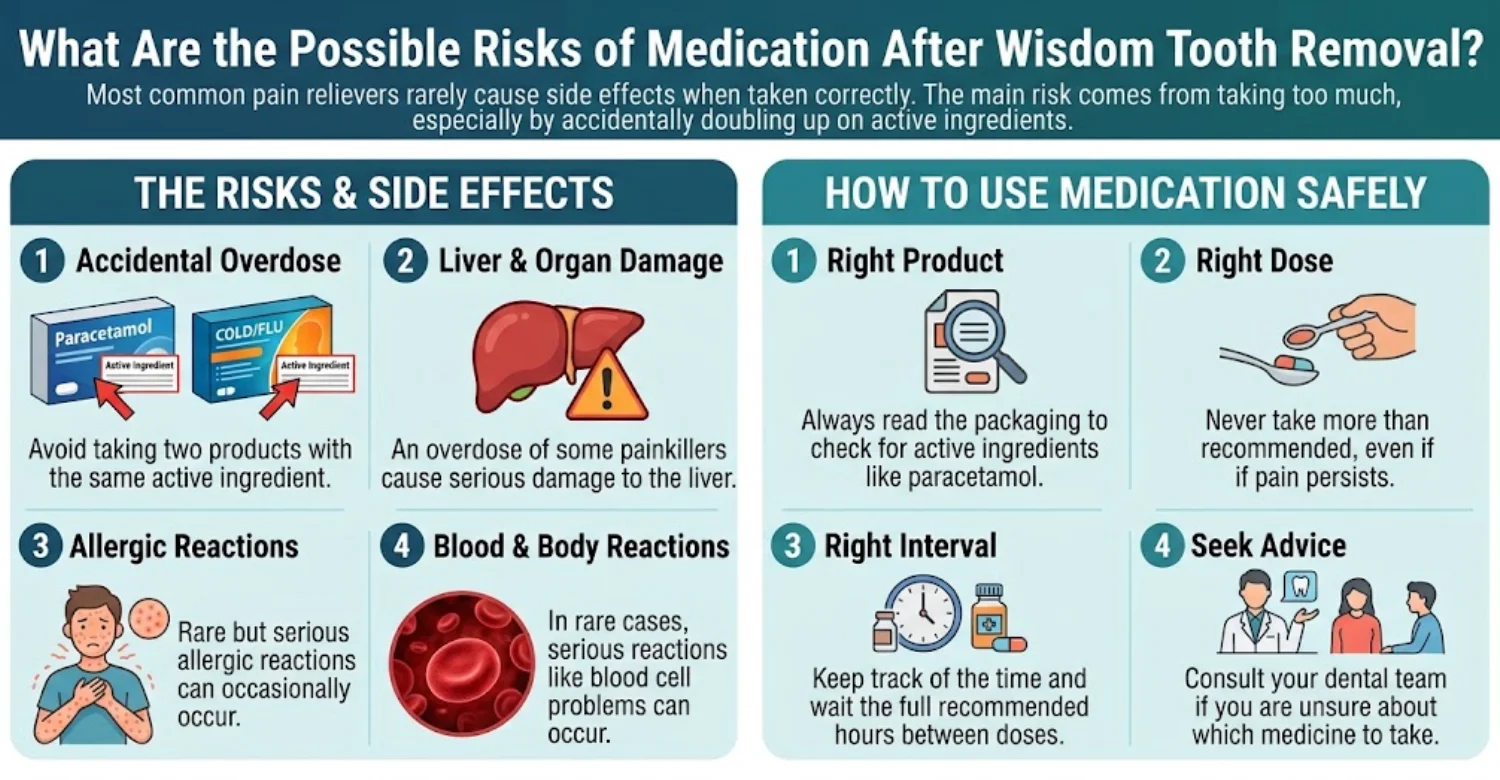
Common Side Effects Patients Should Recognize
Side effects from common pain relievers are uncommon at recommended doses, but serious reactions need prompt action. A severe allergic reaction may cause a swollen throat or tongue, an itchy raised rash, or breathing difficulty. Breathing difficulty is an emergency, so call emergency services straight away. Liver problems may cause nausea or yellowing of the skin or eyes. Easy bruising or nosebleeds can signal a blood cell problem. Contact a doctor or pharmacist promptly if these appear. Mild jaw stiffness, however, is a normal recovery symptom.
Who May Need Additional Medication Safety Precautions?
Some people need extra care before taking any pain relief. These include people with liver or kidney conditions. People who are dependent on alcohol, or who binge drink, also need advice first. Adults with low body weight may need a lower dose. Pregnancy and breastfeeding limit which pain relievers are suitable. Check with your midwife, doctor, or pharmacist before taking anything. Children and older adults need individual dosing. For these groups, post-extraction medication choices should be agreed with a clinician.
How Existing Medical Conditions and Other Medicines Affect Safety
Existing conditions and other medicines can change how safely you use pain relief. Many cold and flu remedies already contain pain-relief ingredients. Taking them alongside painkiller tablets can lead to an accidental overdose. Some blood-thinning, anti-sickness, and antibiotic treatments may also interact. Liver or kidney disease can reduce your ability to process some medicines. Ask a pharmacist to check your full medicine list, including herbal products. This check is a key part of deciding which pain relief is appropriate for your case.
Why Following the Dentist's Instructions Matters
Your dentist's instructions are based on your specific procedure and health. They may cover pain relief timing, rinsing, diet, and activity. Following them lowers the risk of bleeding, dry socket, and infection. Instructions also tell you when to call the clinic. Labels give general guidance, while your dentist knows the details of your surgery. If the two seem to conflict, ask before taking anything. Clear instructions are the most reliable answer to how to choose the right pain medication.
Ready to transform your smile?
Talk to our team and get a personal FREE treatment plan.
Are Antibiotics Needed After Wisdom Tooth Removal?
Antibiotics are not needed after every wisdom tooth removal. A 2021 Cochrane review found they may reduce infection after impacted wisdom tooth surgery. However, the evidence was rated low certainty. About 19 people would need antibiotics to prevent one infection. Unnecessary use also adds to antibiotic resistance. For this reason, dentists decide case by case. Antibiotics are a separate question from proper post-operative medication use for pain.
When Antibiotics After Wisdom Tooth Removal May Be Appropriate
Antibiotics may be appropriate when infection is present or the risk is unusually high. Signs of spreading infection, such as fever and increasing facial swelling, may need them. Patients with certain medical conditions or weakened immunity may need special precautions. A dentist may also consider them after particularly complex surgery. The decision is clinical, not automatic. Antibiotics are often combined with local care, such as cleaning or draining the area. If you are unsure which medication is best for your recovery, ask whether antibiotics apply to you.
Why Antibiotics Are Not Routinely Necessary for Every Extraction
Most healthy patients heal well without antibiotics. The Cochrane trials mostly involved healthy people having impacted wisdom teeth removed. Their findings may not apply to every extraction. Antibiotics can cause side effects, including stomach upset and allergic reactions. Overuse also helps resistant bacteria spread. Good aftercare protects most sockets from infection. So, for many patients, what medicine should you take after wisdom tooth removal does not include antibiotics at all.
Signs of a Possible Infection After Wisdom Tooth Surgery
Infection usually shows as symptoms that worsen instead of improve. NHS guidance highlights pain with a bad taste, a high temperature, or feeling unwell. Pus from the socket is another warning sign. Swelling that increases after the first few days can also suggest infection. Swollen, tender glands under the jaw may appear. These signs need prompt dental assessment. Pain relief can lower a temperature and temporarily hide a fever.
Why Antibiotics Must Be Used Only Under Professional Guidance
Antibiotics must be prescribed by a qualified clinician after an assessment. The right choice depends on the infection, your allergies, and your other medicines. Leftover or borrowed antibiotics may be the wrong type or dose. Taking them without need can encourage resistance. Antibiotics also cannot drain pus or clean a socket by themselves. Take any prescribed course exactly as directed. Never self-treat a suspected infection at home.
How Can You Relieve Pain After Wisdom Tooth Removal?
You can relieve pain by combining correct medication with careful home care. Take pain relief only as directed on the label or by your dentist. Eat soft foods until chewing feels comfortable. Rest and keep your head raised during the first days. Use cold compresses to help with swelling. Avoid smoking, alcohol, and very hot drinks. These steps work together, so what medicine should you take after wisdom tooth removal is only one part of recovery.
Safe Ways to Manage Discomfort During the First 24–72 Hours
The first 24 to 72 hours usually bring the most discomfort. Keep gauze pressure on the site if your dentist advises it. If bleeding restarts, press a clean cloth on the area for at least 10 minutes. Take pain relief at correctly spaced intervals. Rest with your head supported on extra pillows. Avoid forceful rinsing or spitting on the first day. Plan what medicine should you take after wisdom tooth removal before your appointment, so supplies are ready at home.
How Cold Compresses May Help Reduce Swelling
Cold compresses may help limit swelling in the first day or two. Wrap an ice pack or cold pack in a thin cloth. Hold it against the cheek for about 15 to 20 minutes. Then remove it for a similar break before repeating. Never place ice directly on the skin. Cold is mainly useful early, while swelling is still building. Follow your own dentist's advice on timing and frequency.
Which Foods and Drinks Are Suitable During Early Recovery?
Soft, cool, or lukewarm foods are best during early recovery. Good choices include yoghurt, cooled soup, mashed potatoes, scrambled eggs, and smooth porridge. Drink plenty of water. NHS guidance advises avoiding hard or crunchy foods and foods like nuts or seeds. It also advises avoiding alcohol and very hot drinks. Regular meals help you keep your energy up. Check your label to see whether your pain relief should be taken with food.
How Rest and Gentle Oral Hygiene Support Healing
Rest and gentle cleaning both support healing. Avoid strenuous exercise for the first few days, as it may encourage bleeding. Brush your other teeth carefully, avoiding the extraction site. After the first day, rinse gently with warm salt water or mouthwash if your dentist advises it. Let the liquid fall from your mouth instead of spitting hard. A clean mouth lowers the risk of infection. Sleep and rest also help your body manage the healing process.
What to Avoid to Protect the Blood Clot and Extraction Site
Protecting the blood clot is the most important aftercare goal. Avoid smoking, which NHS guidance says can increase infection risk. Avoid using straws, because suction may disturb the clot. Do not poke the socket with your tongue, fingers, or objects. Avoid vigorous rinsing on the first day. Do not drink alcohol, which may increase bleeding. These steps help reduce the chance of dry socket.
Note : All images used are for editorial and illustrative purposes only and may not originate from the original news provider or associated company.
How Long Do You Need Medication After Wisdom Tooth Extraction?
Most people need pain relief for only a few days. Pain and swelling usually start improving after one or two days. Some soreness and stiffness can last up to two weeks. Do not use over-the-counter pain relief longer than the label allows unless a doctor advises it. Your dentist may give a different plan for your situation. If you still need pain relief beyond the expected period, get checked. Duration matters as much as what medicine should you take after wisdom tooth removal.
What to Expect During the First 24 Hours
The first 24 hours focus on clot formation and bleeding control. Numbness from the local anaesthetic usually wears off within a few hours. Some blood-stained saliva is normal. Pain often increases as the numbness fades. Do not drive for 48 hours after a general anaesthetic, or 24 hours after a sedative injection. Eat soft foods only once feeling returns, to avoid biting your cheek. Take pain relief exactly as planned during this period.
How Symptoms Typically Change Over the First Week
Symptoms usually peak early and then improve gradually. Swelling often peaks around the second or third day. Bruising on the cheek may appear and then fade. Jaw stiffness can make opening the mouth harder for several days. By the end of the first week, most people notice steady improvement. Many need less pain relief as the days pass. If pain increases instead, contact your dentist.
What to Do if Pain Persists or Worsens Despite Following Instructions
Contact your dentist if pain persists or worsens despite following instructions. NHS guidance advises urgent help when severe pain or swelling worsens and painkillers do not help. Do not increase your dose or add extra products. Worsening pain may signal dry socket, infection, or another problem. Note when the pain started and what makes it worse. Persistent pain changes the question from what medicine should you take after wisdom tooth removal to what needs treating.
Why Recovery Time Varies Between Simple and Surgical Extractions
Recovery time varies because surgical extractions disturb more tissue. A simple extraction removes a visible tooth with minimal cutting. A surgical extraction may involve cutting the gum, widening the socket, and placing stitches. Impacted teeth often need this approach. Surgical cases usually bring more swelling, more stiffness, and a longer need for pain relief. Age and general health also influence healing speed. For this reason, what medicine should you take after wisdom tooth removal can change with the type of extraction.
What Is the Difference Between ?
Normal Recovery Pain
Dry Socket
Normal pain gradually improves, while dry socket pain usually worsens after a few days. Normal discomfort tends to ease after the first two or three days. Dry socket pain typically appears a few days after the extraction and becomes severe. An NHS trust leaflet says it usually happens 3 to 5 days afterwards. It may respond poorly to usual pain relief. Dry socket needs dental treatment, not simply a new answer to what medicine should you take after wisdom tooth removal.
Common Symptoms During Normal Healing
Normal healing includes mild to moderate pain that steadily improves. You may notice swelling, cheek bruising, and a stiff jaw. Chewing and swallowing may feel uncomfortable for a while. Slight bleeding or pink saliva is common on the first day. Dissolvable stitches may loosen as they break down. NHS guidance says these effects can last up to two weeks. They are expected parts of recovery.
What Is Dry Socket, and How Can It Affect Pain Relief?
Dry socket is a painful condition where the blood clot does not form properly or is lost early. Symptoms include throbbing pain, bad breath, a bad taste, and an empty-looking socket. Bone may be visible where the clot should be. The pain can feel like toothache and may spread toward the ear. Usual pain relief may help only partly. Dentists usually treat it by gently cleaning the socket. Risk is higher in smokers and after complicated extractions. In dry socket, what medicine should you take after wisdom tooth removal matters less than prompt dental care.
How to Recognize Signs of Infection or Delayed Healing
Infection and delayed healing show through worsening or lingering symptoms. Warning signs include pus, a foul taste, fever, and increasing swelling. Feeling generally unwell is also important. Delayed healing may appear as a socket that stays painful beyond two weeks. Numbness or tingling of the lip, chin, or tongue should also be reported. NHS guidance notes nerve effects usually improve but can last weeks or months. These signs need a clinical assessment.
When Persistent Pain Requires Professional Evaluation
Persistent pain needs evaluation when it does not follow the expected pattern. See a dentist if pain worsens after the first few days. Seek advice if pain lasts beyond two weeks or disturbs sleep despite correct medicine use. Pain with swelling, fever, or a bad taste also needs prompt review. A dentist can examine the socket and may take an X-ray if needed. This helps identify retained fragments, infection, or other causes.
What Should You Know Before Taking Medication After Wisdom Tooth Removal?
Before taking any medication, know your product, your dose, and your health risks. Read the full label and leaflet. Check the strength in each tablet or millilitre. Confirm the minimum time between doses and the daily maximum. Check whether any other medicine you take contains the same active ingredient. Tell your dentist about allergies and health conditions. These checks make what medicine should you take after wisdom tooth removal an informed, safer decision.
How to Follow Your Dentist's Instructions Safely
Follow your dentist's instructions by writing them down and setting reminders. Note the time of each dose to avoid taking doses too close together. Use the measuring spoon or syringe supplied with liquid products. Avoid mixing advice from different sources without checking with a professional. Ask your questions before you leave the clinic. Keep the clinic's contact number easy to find. Clear records turn general advice into a safe daily routine.
Why You Should Disclose Allergies, Medical Conditions, and Current Medicines
Disclosing your full health history helps your dentist recommend medicine safely. Mention any previous reaction to pain relievers or other medicines. Include liver, kidney, heart, and bleeding disorders. Report pregnancy, breastfeeding, and alcohol use honestly. List every prescription, over-the-counter product, herbal remedy, and supplement. Some products contain pain-relief ingredients without making it obvious on the front of the pack. Others may interact with blood-thinning or other prescribed treatments.
What to Do if You Miss a Dose or Experience a Suspected Side Effect
Pain relief after an extraction is usually taken when needed rather than on a fixed schedule. If you forget a dose, take one when you need it, provided the minimum gap has passed. Never take two doses together to catch up. If you suspect a side effect, stop and contact a pharmacist or doctor. Seek emergency help for breathing difficulty or a swollen face or throat. In the UK, side effects can be reported through the Yellow Card scheme. Tell your dentist about any reaction before your next dose.
Why You Should Not Increase Doses or Combine Products Without Professional Advice
Increasing doses or combining products can cause accidental overdose. Many combination products already contain common pain-relief ingredients. Taking two of them together can exceed the daily limit. NHS guidance warns that too much of some painkillers can damage the liver. Damage can develop before any symptoms appear. If you have taken more than the label allows, get urgent medical advice immediately, even if you feel well. In the UK, contact NHS 111; elsewhere, use your local emergency service. Take the packet and any remaining medicine with you. Stronger pain is a reason to call your dentist, not to change doses yourself.
When Should You Contact a Dentist After Wisdom Tooth Removal?
Contact a dentist when symptoms worsen instead of improving. This includes severe or increasing pain, worsening swelling, or bleeding that will not stop. A bad taste with fever or feeling unwell also needs attention. Persistent numbness should be reported. Some situations need emergency medical care instead. Knowing when to call matters as much as knowing what medicine should you take after wisdom tooth removal.
Persistent or Increasing Pain and Swelling
Pain and swelling should gradually ease after the first two or three days. Contact your dentist if they become severe or keep increasing. Also call if painkillers stop helping. Swelling that spreads toward the eye, neck, or under the jaw needs urgent review. Worsening difficulty opening your mouth is another warning sign. Do not wait for a planned follow-up if symptoms escalate.
Fever, Pus, or Other Signs of Possible Infection
Fever, pus, or a foul taste can signal infection. A high temperature with feeling unwell needs prompt dental or medical advice. Pus may appear as yellow or white fluid from the socket. Swollen, tender glands under the jaw can accompany infection. Some pain relievers can lower a temperature and hide early warning signs. If possible, check your temperature before taking a dose. Infection needs assessment, not just stronger pain relief.
Bleeding That Does Not Stop With Recommended Measures
Bleeding that does not stop needs urgent advice. First, sit upright and bite on a clean folded cloth or gauze. NHS guidance advises pressing for at least 10 minutes. Avoid rinsing, spitting, or hot drinks while bleeding. If bleeding continues, contact your dentist or an urgent care service. People taking blood-thinning treatments should mention this when they call. Do not take extra medicine to try to stop bleeding.
When Difficulty Swallowing or Breathing Requires Emergency Care
Difficulty swallowing or breathing requires emergency care immediately. Call your local emergency number or go to the nearest emergency department. Rapidly spreading swelling of the face, floor of the mouth, or neck is also an emergency. These signs can point to a serious spreading infection or an allergic reaction. Do not drive yourself. Do not wait for a dental appointment. Fast medical assessment is the priority.
.jpg)
.jpg)
.jpg)
.jpg)
What We Notice Clinically
In clinical practice, recovery patterns vary widely between patients. Two people can have similar extractions yet report very different pain. Most improve steadily within the first week. A smaller group returns with pain that has changed in character. In those cases, an examination usually explains the change. These observations shape how we answer what medicine should you take after wisdom tooth removal. We avoid one-size-fits-all advice.
Why Pain Levels Differ After Wisdom Tooth Extraction
Pain levels differ because each extraction and each patient is different. Tooth position, root shape, and surrounding bone affect surgical difficulty. Longer procedures often mean more soreness afterwards. Infection around the tooth before surgery can also increase discomfort. Personal factors, such as anxiety and sleep, change how pain is felt. Smoking raises the risk of complications. These differences explain why recovery plans are personal.
How Extraction Complexity and Individual Health Affect Recovery
Extraction complexity and general health together shape recovery speed. Complex surgery leaves a larger wound that needs longer to heal. Some medical conditions can slow healing or raise infection risk. Certain medicines affect bleeding or immunity. Age can also influence how quickly tissues recover. We therefore review your health history before giving aftercare advice. This helps set realistic expectations for each patient.
Why Increasing Pain Should Not Automatically Be Managed With More Medication
Increasing pain is a signal to investigate, not just to medicate. Normal post-extraction pain improves over time. Pain that rises after initially settling often has a cause. Dry socket, infection, and trapped food are common examples. More medicine may mask these problems while they progress. Higher doses also raise the risk of overdose. When pain increases, an examination answers more than any change to what medicine should you take after wisdom tooth removal.
Clinical Note: Dr. Rifat Alsama: on Post-Extraction Assessment
Dr. Rifat Alsaman leads the medical team at Vitrin Clinic in Istanbul. His team's approach to post-extraction care puts assessment before adjustment. When a patient reports worsening pain, the socket is examined first. The team checks for clot loss, infection, and trapped debris. Imaging is used when the examination suggests it is needed. The aim is to treat the cause while keeping medication simple and safe. In this approach, what medicine should you take after wisdom tooth removal follows diagnosis, not the reverse.
Tips for Patients Recovering From Wisdom Tooth Removal
Simple preparation and steady habits make recovery easier. Plan your first days before the appointment. Keep the site clean without disturbing it. Manage swelling and keep track of your symptoms. Know when to book a follow-up. The tips below cover each step. They help you use what medicine should you take after wisdom tooth removal as one part of a wider plan.
How to Prepare for the First Day After Extraction
Prepare by arranging support, food, and supplies before surgery. Ask someone to take you home, especially after sedation or a general anaesthetic. Stock soft foods and plenty of water. Buy pain relief in advance and check its strength. Have clean gauze, extra pillows, and a cold pack ready. Clear your schedule for at least a day. Confirm your pain-relief plan with your dentist before the procedure.
How to Keep the Extraction Site Clean Without Disturbing Healing
Keep the site clean by brushing nearby teeth gently and rinsing carefully. On the first day, avoid rinsing to protect the clot. After that, use warm salt water or a mouthwash your dentist recommends. Tilt your head gently and let the liquid fall out. Use a soft toothbrush and avoid the socket edges. Use an irrigation syringe only if your dentist provides one and explains how. Clean, undisturbed healing lowers the chance of complications.
How to Manage Swelling and Discomfort at Home
Manage swelling with cold compresses, rest, and head elevation. Use cold packs mainly in the first day or two, with breaks between sessions. Sleep with your head slightly raised. Avoid heavy exercise and long periods of bending. Take pain relief only within the label's spacing and daily limit. Eat regular soft meals to keep your energy up. These measures support the plan your dentist has set.
How to Track Symptoms and Possible Medication Side Effects
Track symptoms with a simple daily note. Score your pain from 0 to 10 each morning and evening. Write down each dose and the time you took it. Note swelling, bleeding, temperature, and any unusual taste. Record rashes, nausea, or other possible side effects. A clear trend helps your dentist judge whether healing is normal. It also shows whether your current pain-relief plan is working.
When to Arrange a Follow-Up Appointment
Arrange a follow-up if your dentist requests one or if symptoms do not settle. Some dentists schedule a review after complex surgery or stitches. Book sooner if pain returns or swelling increases. Request a review if numbness persists. A follow-up lets the dentist check the socket and the healing gum. It is also a good time to raise any concerns about your medication.
At Vitrin Clinic: Personalized Wisdom Tooth Removal and Recovery Guidance
At Vitrin Clinic in Istanbul, recovery guidance starts with an individual assessment. The clinic is licensed by the Turkish Ministry of Health. Our team reviews your tooth position, health history, and current medicines. We explain the planned procedure, expected recovery, and possible risks. Advice on what medicine should you take after wisdom tooth removal is given in writing. We aim to give clear, realistic information without promising specific outcomes.
Assessing the Extraction Site and Identifying the Cause of Persistent Symptoms
Identifying the cause of symptoms comes before choosing any treatment. Persistent pain can come from dry socket, infection, retained fragments, or a neighbouring tooth. Each cause needs different care. A clinical examination checks the socket, gums, and surrounding teeth. Digital dental X-rays may be used when the examination suggests a hidden problem. They can show bone, roots, and nearby structures. The diagnosis then guides the next step.
Providing Individualized Post-Extraction Care Instructions
Post-extraction instructions are adjusted to each patient. They reflect the type of extraction, your health, and your other medicines. We explain pain-relief timing, daily limits, and products not to combine. We also cover diet, cleaning, and activity. Instructions include warning signs and how to contact the clinic. Patients receive the plan in writing, so nothing depends on memory.
Explaining When Further Dental Treatment May Be Necessary
Further treatment may be needed when symptoms point to a dental cause. A dry socket may need cleaning and a soothing dressing. An infection may need drainage or other clinical care. A neighbouring tooth with decay may need a filling or root canal treatment. In some cases, referral to a specialist is appropriate. We explain each option, its purpose, and its estimated cost before starting. Treating the cause, rather than adding medicine, is what resolves these problems.
Supporting Safe Recovery and Follow-Up for International Patients
International patients need a recovery plan that fits their travel schedule. We suggest allowing time in Istanbul for an early review before travelling home. Written estimates separate consultation, imaging, treatment, and follow-up costs. Patients receive aftercare instructions to take home. With your consent, we can share records with your local dentist. Before you leave, confirm how to reach the clinic if symptoms change. This supports continuity of care after you return.
Typical Dental Treatment Costs in the US, UK, and Turkey
These are published estimates, not treatment quotes.
Treatment | US (USD, uninsured) | UK (GBP, NHS England) | Turkey (EUR, private) |
Exam and X-rays | 75–200 | $27.90 (Band 1) | Often free with treatment |
Filling | 90–450 | $76.60 (Band 2) | From $43 |
Root canal | 700–1,800 | $76.60 (Band 2) | $69–$400 |
Extraction | Up to $800 if surgical | $76.60 (Band 2) | $26–$69 |
Abscess treatment | Varies | $27.90 urgent care | Not reliably published |
Abscess costs depend on drainage, root canal, or extraction. Tooth location, complexity, infection severity, extra imaging, and specialist care raise costs. UK private fees vary.






Key Takeaways about Medicine Should You Take After Wisdom Tooth Removal
Key Points About Medication, Pain Relief, and Recovery
Pain relief is commonly recommended for short-term pain after extraction.
Follow the label and your dentist for dose, spacing, and daily limits.
Never combine products that contain the same active ingredient.
Antibiotics are not routine and need a professional decision.
Cold compresses, soft foods, and clot protection support healing.
Pain should improve within days, so worsening pain needs a check.
The safest answer to what medicine should you take after wisdom tooth removal is personal.
Why Professional Guidance Matters When Symptoms Persist
Professional guidance matters because persistent symptoms usually have a treatable cause. Medication can hide warning signs while a problem develops. A dentist can examine the socket and identify dry socket, infection, or retained fragments. Early assessment often means simpler treatment. It also avoids the risks of rising doses. If symptoms persist, ask again what medicine should you take after wisdom tooth removal, and what else is needed.
Ready to transform your smile?
Talk to our team and get a personal FREE treatment plan.
Medical Disclaimer
This article is for general information only. It does not replace advice from your dentist, doctor, or pharmacist. Medicine doses depend on the product, your age, weight, health, and other medicines. Always read the label and follow professional instructions. If you suspect an overdose, seek urgent medical help immediately, even without symptoms. For breathing or swallowing difficulty, call emergency services. Personal advice on what medicine should you take after wisdom tooth removal must come from a qualified clinician.
Sources
FAQs
Dr. Rifat Alsaman has more than 5 years of clinical experience in dentistry and currently serves as the Head of the Medical Team at Vitrin Clinic. He is dedicated to providing exceptional patient care, overseeing treatment planning, and ensuring the highest clinical standards across the team. His expertise, attention to detail, and commitment to continuous professional development have helped countless patients achieve healthier, more confident smiles.

.webp&w=3840&q=75)


