General Dentistry
August 10, 2026
How Sleep Affects Your Oral Health: The Connection Between Sleep and Your Teeth?
 Dr. Rifat Alsaman
Oral health and sleep are far more connected than most people realize. What happens in your mouth at night, from saliva flow to jaw muscle activity, can shape your dental health for years. Dental pain or airway issues can just as easily disrupt your rest. Understanding this two-way relationship between sleep and oral health helps explain why tired, restless nights so often show up as cavities, sore gums, or worn-down teeth. This guide walks through how oral health and sleep influence one another. It also covers what the research shows and what you can do to protect both your smile and your sleep quality.
What Is the Connection Between Oral Health and Sleep?
The link between oral health and sleep comes down to biology. Sleep is when your body repairs tissue, regulates inflammation, and restores saliva balance. When sleep is cut short or disrupted, these repair processes stall. This leaves the mouth more vulnerable to bacteria, acid, and inflammation. This is why dentists increasingly ask about sleep habits alongside brushing habits. Poor sleep and oral health problems so often appear together in the same patients.
How Does Sleep Affect Your Oral Health?
During deep sleep, saliva production naturally slows, blood flow patterns shift, and the immune system works to control bacteria buildup. If sleep is fragmented or too short, these overnight repair processes are interrupted. This allows plaque, acid, and bacteria to linger longer on the teeth and gums, which is a core reason sleep and oral health are so closely linked.
How Does Poor Sleep and Oral Health Relate to Each Other?
Poor sleep and oral health issues tend to reinforce each other in a loop. Insufficient rest weakens the body's ability to fight inflammation and repair tissue. At the same time, existing dental pain or breathing problems during sleep make it harder to get restorative rest. This creates a cycle that's difficult to break without addressing both sides.
Does Lack of Sleep Affect Your Teeth?
Yes. Lack of sleep is associated with reduced saliva flow, higher stress hormone levels, and increased likelihood of nighttime teeth grinding. All of these place extra wear and chemical stress on tooth enamel. Over time, this raises the risk of sensitivity, decay, and visible tooth damage tied to disrupted rest.
Can Sleep Deprivation Increase the Risk of Dental Problems?
Sleep deprivation is linked to elevated cortisol levels, which can intensify gum inflammation and slow tissue healing. Combined with dry mouth and grinding, this creates favorable conditions for cavities, gum disease, and jaw discomfort. Consistent, quality rest is an important part of protecting long-term dental health.
What Happens to Your Mouth While You Sleep?
While you sleep, saliva flow decreases, swallowing becomes less frequent, and the mouth's natural self-cleaning action slows dramatically. Bacteria that would normally be washed away during the day are left to interact with leftover food particles and plaque. This is part of why morning breath and a dry, film-coated mouth are so common.
How Does Sleep Affect Saliva Production and Your Teeth?
Saliva is one of the mouth's main defenses against decay, neutralizing acid and washing away bacteria. Sleep and oral health are tied together through this saliva cycle. Reduced nighttime flow means teeth spend more hours exposed to acid and bacteria, making good hygiene before bed especially important. dry mouth and periodontal disease.
Clinical Note: Reduced saliva flow during sleep lowers the mouth's natural buffering capacity. This allows acids from bacteria and leftover food to sit against enamel for longer stretches. Over repeated nights, this environment favors plaque accumulation, early tooth decay, and the bacterial buildup responsible for morning bad breath. This reinforces why consistent oral hygiene before bed matters.
How Does Sleep Deprivation Affect Your Teeth?
Sleep deprivation and teeth problems are closely connected, since inadequate rest disrupts the biological processes that protect enamel and gum tissue overnight. From increased grinding to reduced saliva and higher inflammation, chronic short sleep places measurable extra stress on the mouth. This connection between oral health and sleep is now well documented in dental research.
Recent data highlights just how significant this link is for children and adults alike. A large cohort study of over 71,000 children in Japan found that late bedtimes and short sleep duration were both consistently associated with increased cavity risk in baby teeth. 16% of children showed at least one cavity by age three. Similarly, a nationally representative U.S. survey of 5,205 adults found that people sleeping less than seven hours a night were more likely to have dental cavities. A South Korean study of over 93,220 schoolchildren linked short sleep under eight hours to significantly higher rates of both cavities and gum disease.
Can Sleep Deprivation Cause Tooth Problems?
Sleep deprivation can contribute to tooth problems indirectly through reduced saliva, increased grinding, and higher inflammation levels. These combined effects create conditions where enamel wears faster and bacteria thrive longer. This is why sleep deprivation and teeth issues so often appear together in dental checkups involving tired, overworked patients.
Does Poor Sleep Increase the Risk of Tooth Decay?
Yes, poor sleep increases decay risk primarily by reducing saliva's protective effect and by encouraging inconsistent hygiene habits. Exhausted people are more likely to skip brushing. Research from multiple countries confirms shorter sleep duration correlates with higher cavity rates, strengthening the case that oral health and sleep deserve joint attention.
Can Lack of Sleep Affect Tooth Sensitivity?
Lack of sleep can heighten tooth sensitivity, largely through increased nighttime grinding and clenching. This wears down protective enamel and exposes more sensitive layers underneath. Stress hormones released during poor sleep can also lower pain tolerance, making existing sensitivity feel more pronounced during the day.
How Can Sleep Deprivation Influence Daily Oral Hygiene?
Sleep deprivation often reduces motivation and coordination, making people more likely to rush or skip brushing and flossing. This drop in daily hygiene compounds the biological effects of poor rest. Sleep deprivation and teeth damage often stem from both physiological changes and simple lapses in nightly dental care routines.
Tips for the Patients:
Maintain a consistent sleep schedule.
Brush twice daily with fluoride toothpaste.
Clean between your teeth every day.
Stay hydrated throughout the day.
Can Poor Sleep Affect Your Gum Health?
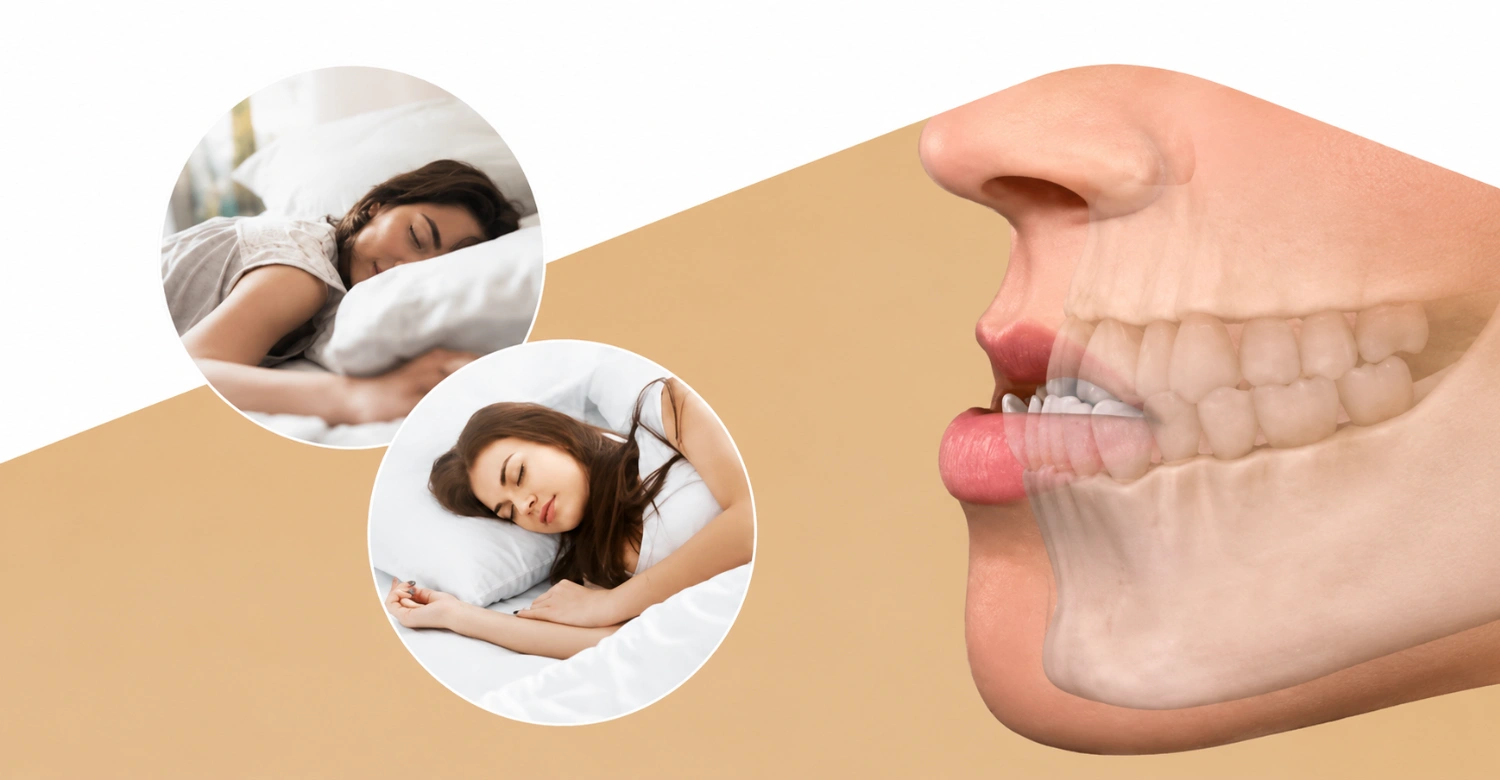
Poor sleep can affect gum health by disrupting the body's inflammatory balance, leaving gum tissue more reactive and slower to heal. This connection between sleep and gum health is backed by growing clinical evidence. Disrupted sleep, particularly sleep apnea, is linked to a measurably higher risk of gum disease. This is another clear example of how closely oral health and sleep are tied together.
A meta-analysis of ten studies covering 88,040 participants found a statistically significant association between obstructive sleep apnea and periodontitis. The odds of periodontitis were roughly 2.46 times higher among those with the sleep disorder. A separate cross-sectional study of Chinese men found an even stronger association, with obstructive sleep apnea linked to periodontitis at odds of about 3.72. This underscores how deeply oral health and sleep intersect at the gum level.
What Is the Relationship Between Sleep and Gum Health?
The relationship between sleep and gum health centers on inflammation control. Quality sleep helps regulate the immune response that keeps bacterial buildup around the gumline in check. Disrupted sleep, especially from breathing-related sleep disorders, appears to intensify gum inflammation and accelerate tissue breakdown over time.
Can Poor Sleep Increase the Risk of Gum Problems?
Poor sleep can increase gum problems by weakening the body's ability to control bacteria and inflammation at the gumline. Combined with dry mouth overnight, this creates conditions where plaque hardens faster and gums become more irritated. Early warning signs of gum disease are more likely to develop unnoticed.
Does Sleep Deprivation Affect Gum Inflammation?
Sleep deprivation is associated with elevated inflammatory markers throughout the body, including in gum tissue. This heightened inflammatory state can make gums more prone to swelling, bleeding, and sensitivity. It reinforces why dentists view oral health and sleep as a meaningful, connected factor in maintaining healthy gums over the long term.
How Can Poor Sleep Influence the Body's Inflammatory Response?
Poor sleep disrupts the balance of hormones and immune signals that normally regulate inflammation. Without adequate rest, the body struggles to control this response effectively. Gum tissue, being highly vascular and immune-sensitive, is among the areas most affected by this ongoing, low-grade inflammatory imbalance.
Why Is Good Sleep Important for Healthy Gums?
Good sleep supports the tissue repair and immune regulation gums rely on to resist bacterial buildup and recover from daily irritation. Prioritizing consistent, quality rest gives gum tissue the recovery window it needs. Sleep is a genuinely important, if often overlooked, part of a gum health routine.
Clinical Note: Sleep quality and daily oral hygiene habits work together. Persistent gum symptoms like bleeding, swelling, or tenderness that don't improve with brushing and flossing shouldn't be dismissed as simply due to tiredness. Identifying these signs early allows for more effective treatment before gum inflammation progresses further.
Can Poor Sleep Cause Teeth Grinding?
Poor sleep is strongly linked to teeth grinding, medically known as bruxism, which places significant mechanical stress on teeth and jaw joints overnight. This relationship between sleep and teeth grinding is one of the most well-studied intersections of oral health and sleep. Prevalence data shows just how common the condition is. causes of bruxism.
A systematic review and meta-analysis found that global bruxism, combining both sleep and waking forms, affects roughly 22.22% of people, with sleep bruxism alone estimated at around 21%. When measured using polysomnography, a more precise sleep-monitoring method, this figure rises to about 43%. North America shows the highest prevalence at 31%. Age also plays a role: sleep bruxism affects around 13% of young adults aged 18 to 29, dropping to just 3% in adults over 60.
What Is the Connection Between Sleep and Teeth Grinding?
The connection between sleep and teeth grinding lies in how the nervous system regulates muscle activity during different sleep stages. Bruxism episodes tend to cluster around lighter sleep stages and micro-arousals. This means disrupted, fragmented sleep can directly increase how often and how forcefully the jaw muscles clench.
Why Do People Grind Their Teeth While Sleeping?
People grind their teeth while sleeping for a mix of reasons, including stress, misaligned bite patterns, and nervous system arousals during lighter sleep stages. These arousals are more frequent when sleep is poor or fragmented. Poor sleep and oral health disruptions like bruxism often go hand in hand. stress and bruxism link
Can Sleep Deprivation Make Teeth Grinding Worse?
Sleep deprivation can worsen teeth grinding by increasing stress hormone levels and disrupting the normal sleep architecture that keeps muscle activity regulated. Chronically tired individuals often experience more frequent and intense grinding episodes. This compounds the wear on teeth already affected by other sleep deprivation and teeth related issues.
What Are the Signs of Sleep-Related Teeth Grinding?
Common signs include waking with a sore or tight jaw, dull headaches near the temples, flattened or chipped tooth edges, and increased tooth sensitivity. A partner noticing grinding sounds at night is often the first clue. This prompts many patients to bring up the issue during a routine dental visit.
How Can Teeth Grinding Affect Your Teeth and Jaw?
Over time, grinding can wear down enamel, cause visible flattening or chipping, and increase sensitivity to hot and cold. It can also strain the jaw joint, leading to soreness, clicking, or limited movement. Early identification is important for preventing more extensive, harder-to-reverse damage to teeth and jaw function. effects of bruxism on teeth.
Tips for the Patients:
Pay attention to morning jaw soreness.
Tell your dentist if someone notices you grinding your teeth.
Avoid habits that may increase jaw tension.
Seek a dental evaluation when tooth wear becomes noticeable.
How Can Sleep and Oral Health Affect Each Other?
Sleep and oral health influence one another in both directions. Poor sleep can accelerate dental problems, while dental pain, dry mouth, or grinding can just as easily fragment or shorten sleep. Recognizing this cycle is key to understanding why oral health and sleep should be treated as connected goals. Improving one side often improves the other as well.
Can Oral Health Problems Affect Sleep Quality?
Oral health problems can absolutely affect sleep quality. Discomfort, inflammation, or breathing restrictions caused by dental or jaw issues can make it harder to fall asleep or stay asleep. This is another reason oral health and sleep should be viewed as connected, rather than entirely separate areas of health.
Can Tooth Pain Make It Difficult to Sleep?
Tooth pain can make falling and staying asleep significantly more difficult, especially when pain intensifies while lying down due to increased blood flow to the head. Persistent nighttime tooth pain is often a sign that an underlying issue, such as decay or infection, needs prompt dental attention. toothache
Can Gum Problems Disrupt Sleep?
Gum problems, particularly when inflamed or infected, can cause throbbing discomfort that worsens at night and interrupts sleep. Chronic gum inflammation may also contribute to a broader inflammatory state that affects sleep quality more subtly, even without obvious pain. This reinforces the link between sleep and gum health.
How Can Teeth Grinding Affect Sleep?
Teeth grinding can fragment sleep by triggering brief arousals each time a grinding episode occurs, even if the person doesn't fully wake up. Over a full night, these repeated micro-arousals can reduce overall sleep quality. This leaves someone tired despite spending enough total hours in bed.
Clinical Note: The relationship between oral health and sleep genuinely runs both ways. Poor sleep may negatively influence oral health over time, while dental pain, gum discomfort, dry mouth, or teeth grinding can just as easily interfere with restful, uninterrupted sleep. It's worth addressing both together.
How Can You Improve Oral Health and Sleep Naturally?
Improving oral health and sleep together often starts with simple, consistent habits rather than dramatic changes. Small adjustments to hydration, bedtime routine, and evening food choices can meaningfully reduce nighttime dry mouth and ease grinding tendencies. They also support the kind of deep, restorative sleep that benefits your teeth and gums.
What Oral Hygiene Habits Should You Follow Before Bed?
Before bed, thorough brushing with fluoride toothpaste and cleaning between teeth helps remove the plaque and food particles that would otherwise sit undisturbed overnight. Rinsing with water afterward and avoiding food or sugary drinks right before sleep further reduces the acid exposure teeth face during rest. It's a simple routine that supports oral health and sleep together.
Should You Brush Your Teeth Before Sleeping?
Yes, brushing before sleeping is one of the most effective habits for protecting teeth overnight. It removes the day's plaque buildup right before the natural drop in saliva flow begins. Skipping this step allows bacteria and food debris to interact with enamel for many uninterrupted hours. night guards for bruxism
How Can You Reduce Nighttime Dry Mouth?
Reducing nighttime dry mouth involves staying hydrated during the day, avoiding excessive caffeine or alcohol close to bedtime, and addressing any mouth-breathing habits. These all contribute to a drier oral environment overnight that raises the risk of both decay and morning bad breath.
Drink Enough Water During the Day
Steady hydration throughout the day supports healthy saliva production, which carries over into more balanced moisture levels at night. Waiting until just before bed to hydrate isn't as effective. Spreading water intake evenly across the day offers better protection for both sleep and oral health.
Maintain a Consistent Bedtime Routine
A consistent bedtime routine helps regulate the body's internal clock, supporting deeper, more restorative sleep stages. Disrupted sleep is linked to increased grinding and inflammation. A stable nightly routine indirectly protects teeth and gums by improving overall sleep quality night after night.
Avoid Excessive Sugary Foods and Drinks Before Bed
Sugary foods and drinks before bed leave residue that feeds bacteria during the low-saliva overnight period, increasing decay risk. Choosing water or unsweetened options in the evening reduces this exposure. This supports the goals of protecting both oral health and sleep at the same time.
Tips for the Patients:
Brush and clean between teeth thoroughly before bed.
Sip water steadily throughout the day, not just at night.
Keep a fixed bedtime and wake time when possible.
Limit sugary snacks and drinks in the evening hours.
When Should You See a Dentist About Sleep and Oral Health?
Knowing when to seek professional help is an important part of managing oral health and sleep together, since some symptoms signal issues that home habits alone can't resolve. Persistent pain, ongoing grinding, or gum changes that don't improve are all reasons to schedule a dental evaluation.
What Oral Symptoms Should Not Be Ignored?
Persistent tooth pain, worsening sensitivity, chronic bad breath, visible tooth wear, or gums that bleed regularly should never be ignored. These signs often mean issues that will continue to progress without treatment. Because oral health and sleep are so closely connected, addressing these symptoms early typically leads to simpler, less invasive dental care.
When Should You Seek Help for Teeth Grinding?
Help for teeth grinding is worth seeking when you notice frequent jaw soreness, headaches, visible tooth wear, or if a partner regularly hears grinding sounds at night. A dental evaluation can identify the extent of wear and recommend protective measures before damage becomes more significant.
When Can Persistent Gum Problems Require Dental Evaluation?
Persistent gum problems, including ongoing swelling, bleeding, tenderness, or receding gumlines, warrant a dental evaluation. This is especially true if symptoms don't improve with consistent brushing and flossing. Left unaddressed, these signs can progress toward more advanced gum disease that's harder to reverse.
How Can Vitrin Clinic Help With Oral Health and Sleep?
Vitrin Clinic approaches oral health and sleep as connected parts of a patient's overall wellbeing, rather than treating dental symptoms in isolation. By reviewing habits, symptoms, and clinical findings together, the team works to identify whether sleep-related patterns like grinding or dry mouth are contributing to a patient's dental concerns.
Comprehensive Oral Health Assessment at Vitrin Clinic
Every evaluation at Vitrin Clinic includes a thorough review of teeth, gums, and jaw function, alongside a discussion of sleep habits and symptoms such as morning soreness or dryness. This comprehensive approach helps connect the dots between sleep and oral health for a more accurate picture of dental health.
Personalized Dental Treatment Planning
Treatment plans at Vitrin Clinic are built around each patient's specific findings, whether that involves managing grinding-related wear, addressing gum inflammation, or improving hygiene routines affected by poor sleep. This personalized approach ensures that care reflects the real, individual relationship between oral health and sleep for each patient.
Managing Tooth Wear and Other Oral Health Concerns
For patients showing signs of grinding-related wear or sensitivity, Vitrin Clinic focuses on both protecting remaining tooth structure and addressing underlying contributing factors, such as sleep-related grinding. This dual focus helps prevent further damage while supporting longer-term improvements connected to better oral health and sleep habits overall.
Cosmetic Dentistry and Smile Care at Vitrin Clinic
Beyond function, Vitrin Clinic also considers how sleep-related wear or discoloration affects the appearance of a patient's smile. Cosmetic dentistry options are offered alongside functional treatment. This lets patients restore both the health and the look of their teeth as part of one coordinated care plan.
Clinical Note: Vitrin Clinic positions itself as a dental care destination that evaluates a patient's overall oral condition, including sleep-related factors, before developing an individualized treatment approach based on their specific dental needs and long-term goals for their smile.
What We Notice Clinically: The clinical team at Vitrin Clinic focuses on maintaining healthy, functional teeth while also considering the appearance of a patient's smile. They recognize that oral health and sleep patterns often shape the wear, sensitivity, and overall condition seen during routine evaluations.
Resource:
In conclusion, oral health and sleep are closely connected, with poor sleep potentially affecting oral conditions and overall well-being. Research published in the referenced study highlights the important relationship between sleep and oral health. Healthy sleep habits should be part of comprehensive dental care. Maintaining good oral hygiene and addressing sleep-related concerns can help support healthier teeth, gums, and quality of life.
https://pmc.ncbi.nlm.nih.gov/articles/PMC4789476/
https://pmc.ncbi.nlm.nih.gov/articles/PMC8745487/
https://pmc.ncbi.nlm.nih.gov/articles/PMC12089966/
FAQs
Dr. Rifat Alsaman has more than 5 years of clinical experience in dentistry and currently serves as the Head of the Medical Team at Vitrin Clinic. He is dedicated to providing exceptional patient care, overseeing treatment planning, and ensuring the highest clinical standards across the team. His expertise, attention to detail, and commitment to continuous professional development have helped countless patients achieve healthier, more confident smiles.


