General Dentistry
October 14, 2026
What Is Oral Sedation Dentistry Medication? Benefits, Risks, and What to Expect
 Dr. Rifat Alsaman
Oral Sedation Dentistry Medication refers to prescribed medicine taken by mouth to help patients manage anxiety during dental treatment. It can promote relaxation, reduce distress, and make dental appointments more manageable. However, sedation requires appropriate patient screening, individualized medication selection, and professional monitoring.
What Is Oral Sedation Dentistry?
Oral sedation dentistry uses prescribed medication to reduce anxiety before or during dental procedures. The medicine is taken by mouth according to the dentist's instructions. Depending on the medication and dose, patients may feel relaxed, drowsy, or less aware of their surroundings.
Oral Sedation Dentistry Medication supports anxiety management but does not automatically eliminate dental pain. Dentists may still use local anesthesia to numb the treatment area. The appropriate approach depends on medical history, procedure complexity, and patient preferences.
How Oral Sedation Helps Patients Manage Dental Anxiety
Oral Sedation Dentistry Medication can help reduce anxiety associated with dental appointments. Patients may experience less tension and find it easier to remain seated during treatment.
Sedation does not remove every source of fear. Patients may remain aware of sounds, sensations, and conversations. Dentists should explain the expected effects beforehand and agree on a way to request breaks.
What Is Oral Sedation Medication, and How Does It Work?
Oral Sedation Dentistry Medication acts on the central nervous system to reduce anxiety and promote relaxation. The exact effects depend on the prescribed medicine, dose, and individual response.
Some medicines work by enhancing the effects of calming chemical signals in the brain. Onset and duration vary between products and patients. The dentist determines suitability and prescribing requirements rather than relying on a universal dose.
Patients should never take someone else's medication or increase their prescribed dose without professional instructions.
Oral Sedation vs. Local Anesthesia: What Is the Difference?
Oral Sedation Dentistry Medication reduces anxiety, while local anesthesia temporarily blocks pain signals from a specific area. These methods serve different purposes and may be combined during dental treatment.
A sedated patient can still feel pain if the treatment area is not adequately numbed. Patients should report discomfort whenever they can. Dentists can then assess whether additional pain control is necessary.
Does Oral Sedation Make You Sleep During Dental Treatment?
Oral sedation does not necessarily make patients sleep. Minimal sedation generally allows patients to remain awake and respond normally to verbal instructions.
Deeper effects may cause pronounced drowsiness or reduced responsiveness. The level depends on the medication, dose, and individual sensitivity. Oral sedation should never be assumed to provide unconsciousness or complete memory loss.
.jpg)
.jpg)
.jpg)
.jpg)
Who Can Benefit From Oral Sedation for Dental Anxiety?
Oral Sedation Dentistry Medication may benefit patients whose anxiety makes dental treatment difficult. A dentist must first assess whether sedation is appropriate and whether the practice can provide the required level of monitoring.
Patients with severe anxiety, previous distressing dental experiences, or difficulties tolerating appointments may benefit. Others may prefer less intensive anxiety-management techniques. The decision should consider medical risks, treatment needs, and informed patient consent.
Dental Anxiety, Dental Phobia, and Fear of Dental Procedures
Oral Sedation Dentistry Medication may be considered when dental fear interferes with necessary care. Dental anxiety can involve nervousness, racing thoughts, sweating, or difficulty attending appointments.
Dental phobia is more intense and may cause people to avoid treatment despite significant symptoms. Sedation can be one option, but respectful communication and psychological support may also help.
Patients Who Struggle With Longer Dental Appointments
Long procedures can be difficult for patients experiencing substantial anxiety. Oral sedation may make remaining in the dental chair more manageable.
However, sedation does not guarantee that longer appointments will feel comfortable. Dentists should consider breaks, procedure staging, and the patient's ability to tolerate treatment. Medical suitability and monitoring capacity remain essential.
Oral Sedation for Patients With a Strong Gag Reflex
A strong gag reflex can interfere with dental impressions, examinations, and some procedures. Anxiety may make this response more difficult to manage.
Sedation can sometimes reduce distress associated with treatment. However, it does not reliably eliminate the gag reflex. Dentists may also adjust positioning, breathing techniques, instruments, and appointment pacing.
When Oral Sedation May Not Be the Most Appropriate Option
Oral Sedation Dentistry Medication may be unsuitable when medication risks outweigh its expected benefits. Certain breathing disorders, unstable medical conditions, significant drug interactions, or previous adverse reactions require careful assessment.
Some patients need specialist-led sedation or treatment in a more appropriately equipped setting. Others may benefit from behavioral techniques or a different anxiety-management approach.
The dentist should explain the reasons for any recommendation and discuss reasonable alternatives.
Ready to transform your smile?
Talk to our team and get a personal FREE treatment plan.
How Effective Is Oral Sedation for Dental Treatment?
Oral sedation can reduce anxiety for selected patients, but its effectiveness varies. The outcome depends on the medicine, dose, patient's health, anxiety level, and procedure.
Sedation may improve cooperation, but it cannot guarantee that treatment will be completed. It also does not replace local anesthesia when pain control is needed.
How Oral Sedation Can Reduce Anxiety and Improve Cooperation
Oral Sedation Dentistry Medication can help some patients feel calmer during dental procedures. Reduced anxiety may make communication and cooperation easier.
Patients might still notice pressure, sounds, or movement. Some may remain anxious despite taking the prescribed medication. Dentists should monitor the patient's response and adjust the treatment plan when clinically necessary.
What Oral Sedation Can and Cannot Do for Dental Pain
Oral sedation primarily targets anxiety and relaxation. It does not reliably numb teeth, gums, or other oral tissues.
Local anesthesia may still be needed for fillings, root canals, extractions, or implant surgery. Patients should report pain promptly so the dental team can assess it. Sedation must not be used as a substitute for appropriate pain control.
Factors That Influence Sedation Effectiveness
Oral Sedation Dentistry Medication may produce different effects depending on several factors. These include medication absorption, age, body weight when relevant, medical conditions, and other medicines.
Anxiety severity and procedure duration also influence the experience. Taking medication incorrectly can increase risks without providing better anxiety control. Patients should follow their prescribed instructions exactly.
Why Individual Responses to Sedation Can Vary
People respond differently to oral sedatives. Some become relaxed with mild drowsiness, while others experience more pronounced sedation or limited anxiety relief.
Response differences can reflect metabolism, sensitivity, health conditions, and medication interactions. Previous successful sedation does not guarantee an identical response later. The dental team should review individual risks before each appointment.
What Happens Before Oral Sedation at the Dentist?
Oral Sedation Dentistry Medication requires preparation before the appointment. The dentist must assess health history, medication use, anxiety, treatment requirements, and the appropriate level of care.
Patients should receive clear instructions about eating, drinking, transportation, and recovery. Requirements vary according to the intended sedation depth, medication, and applicable clinical guidance. Never assume that preparation is identical for every patient.
How an Oral Sedation Dentist Assesses Patient Safety
Oral Sedation Dentistry Medication should only be considered after an appropriate safety assessment. The dentist reviews medical history, airway considerations, allergies, and current medication use.
The team should also assess whether the planned setting has suitable monitoring equipment and emergency procedures. More complex medical conditions may require specialist consultation. Patients should receive an explanation of the expected benefits, risks, and alternatives.
Medical History, Existing Conditions, and Current Medications
Patients must disclose their full medical history and current medication use. Relevant details include breathing problems, cardiovascular conditions, liver or kidney disease, allergies, and previous medication reactions.
Tell the dentist about prescribed treatments, nonprescription products, supplements, and recreational substances. These may affect sedation or increase adverse effects. Never stop regular medication unless the responsible clinician specifically instructs you to do so.
Why Previous Sedation Experiences Should Be Discussed
Oral Sedation Dentistry Medication may affect patients differently across appointments. Previous experiences can help the dentist understand the patient's response and identify potential risks.
Explain whether you previously experienced excessive drowsiness, poor anxiety control, nausea, or breathing difficulties. Report the medication used if known. The dentist can then consider whether a different plan or additional assessment is necessary.
What Instructions Should Patients Follow Before Dental Sedation?
Patients should follow the dental team's instructions before taking oral sedatives. These instructions may cover medication timing, meals, fluids, usual medicines, and transportation arrangements.
Do not take an extra dose because anxiety feels unusually severe. Do not combine sedatives with alcohol or unapproved substances. Contact the dental team if instructions are unclear or your health changes before treatment.
Why Fasting and Preparation Instructions Must Be Confirmed With the Dental Team
Fasting requirements depend on the planned sedation level, medication, and clinical protocol. They are not identical for every oral sedation appointment.
Follow the exact instructions provided by the treating team. Eating or drinking when prohibited may increase procedural risks. Conversely, unnecessary fasting can be inappropriate for some patients, especially those with relevant medical conditions.
Ask the dental team before making assumptions about preparation.
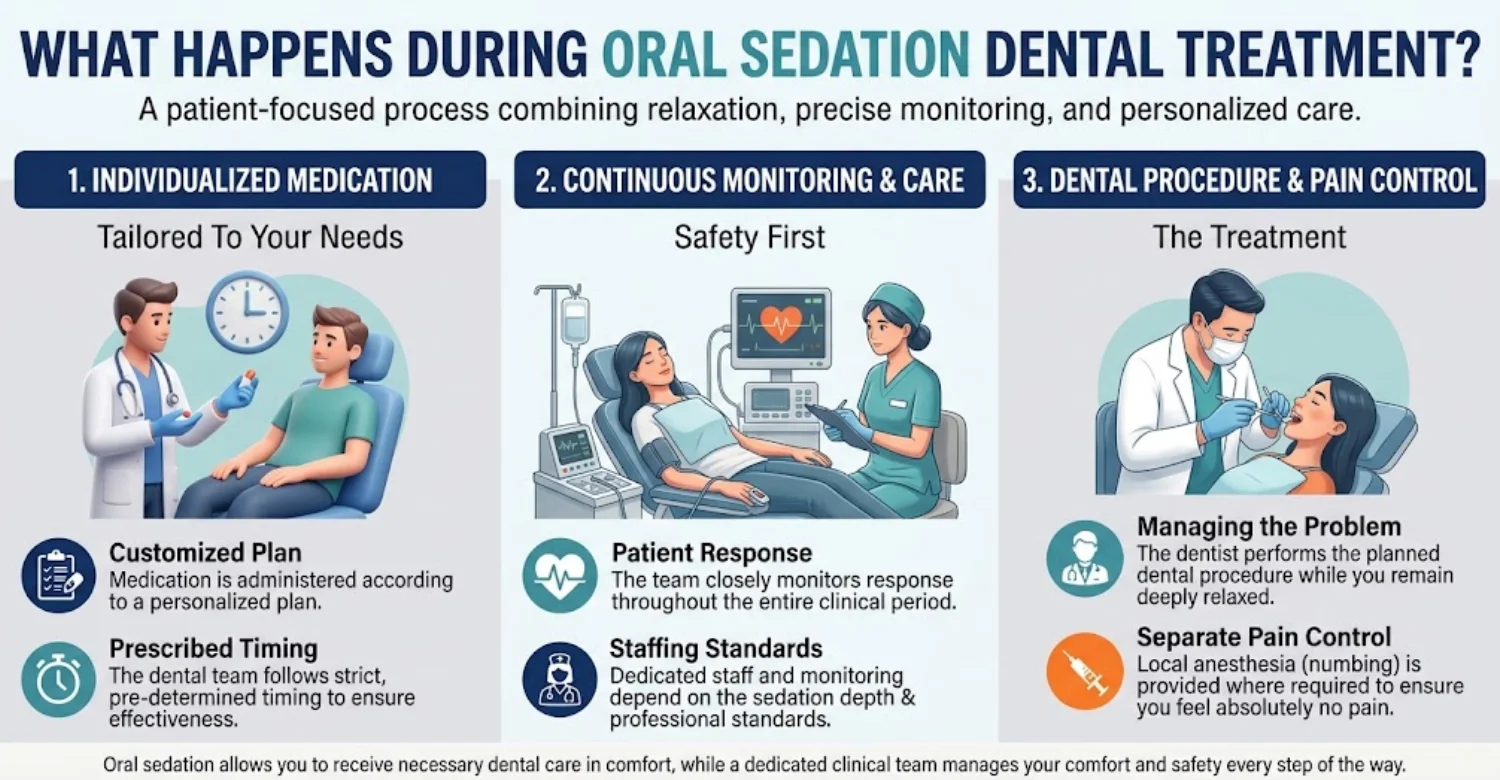
How Oral Sedation Is Planned and Monitored
Oral Sedation Dentistry Medication requires a planned approach to administration, monitoring, and recovery. The team confirms the prescribed medicine, timing, patient identity, and agreed treatment plan.
Monitoring may include alertness, breathing, oxygen levels, pulse, and blood pressure. Requirements vary with sedation depth and individual risk. Current professional guidance emphasizes evaluation, appropriate monitoring, documentation, and recovery assessment.
What Patients May Feel Before and During Treatment
Patients may feel relaxed, sleepy, less tense, or slightly detached from their surroundings. Some experience dizziness or temporary changes in concentration.
Oral Sedation Dentistry Medication does not guarantee that patients will feel nothing. They may remain aware of dental instruments, sounds, pressure, or conversation. Patients should tell the dentist about discomfort or unexpected symptoms whenever possible.
How Dentists Monitor Comfort, Responsiveness, and Vital Signs
Dental teams monitor patients according to the planned sedation level and applicable guidance. They assess responsiveness and observe breathing and circulation throughout treatment.
Monitoring may include pulse, blood pressure, and oxygen saturation. More advanced monitoring may be required for deeper sedation. Appropriate personnel and emergency equipment must be available for the level of sedation provided.
Which Dental Procedures May Be Performed With Oral Sedation?
Oral Sedation Dentistry Medication may be considered for several procedures when patient assessment supports its use. These include selected restorative treatments, endodontic procedures, extractions, and longer appointments.
The procedure alone does not determine suitability. Medical history, anxiety severity, expected duration, and monitoring requirements influence the decision. Sedation may be inappropriate in some cases, even when a procedure is routine.
Fillings and Restorative Dental Procedures
Fillings and restorative treatments may be performed with oral sedation when clinically appropriate. Sedation can help some anxious patients tolerate examination, preparation, and restoration placement.
Local anesthesia may still be necessary to control discomfort. The dentist should explain the procedure, expected sensations, and available breaks beforehand.
Root Canal Treatment and Tooth Extractions
Root canal treatment and tooth extractions may be considered alongside oral sedation. The main objective is to manage anxiety while the dentist treats the underlying dental problem.
Local anesthesia usually remains important for procedural pain control. Infection severity, surgical complexity, and medical history influence the treatment setting and sedation plan.
Dental Implants and Longer Treatment Appointments
Dental implant procedures and longer appointments may involve oral sedation for selected patients. Suitability depends on surgical complexity, health status, and the monitoring resources available.
Sedation does not make every complex procedure suitable for outpatient treatment. The dental team should discuss appointment length, recovery, transportation, and whether treatment needs to be staged.
What Happens if Sedation Does Not Provide Enough Anxiety Control?
If sedation does not adequately reduce anxiety, the dentist should reassess the patient's comfort and safety. Continuing automatically may not be appropriate.
The team may pause treatment, use additional communication techniques, or reconsider the plan. Additional medication must only be considered by a qualified clinician. Patients should never self-administer extra medicine during treatment.
What Are the Side Effects and Risks of Oral Sedation?
Oral Sedation Dentistry Medication can cause side effects and, occasionally, serious complications. Risk depends on the medicine, dosage, medical history, drug interactions, and sedation depth.
Common effects include drowsiness and impaired coordination. More serious complications can involve breathing or cardiovascular problems. Proper screening, monitoring, preparation, and recovery procedures help reduce avoidable risks.
Common Short-Term Side Effects
Oral Sedation Dentistry Medication may cause temporary drowsiness, dizziness, impaired coordination, nausea, or reduced alertness. Some patients experience dry mouth or temporary memory changes.
The type and severity of effects vary between individuals. Patients should discuss unexpected symptoms with their dental team. Significant or worsening symptoms require prompt medical assessment.
Drowsiness, Dizziness, and Reduced Alertness
Oral Sedation Dentistry Medication can cause drowsiness or dizziness after treatment. Concentration, coordination, judgment, and reaction time may remain impaired during recovery.
Patients should avoid driving and other hazardous activities until the dental team confirms the appropriate restrictions. Feeling awake does not necessarily mean that reaction time has returned to normal.
Nausea, Dry Mouth, and Temporary Coordination Problems
Some patients experience nausea, dry mouth, or temporary coordination difficulties after sedation. These effects may interfere with eating, walking, or drinking safely.
Follow the dental team's recovery instructions. Seek advice if symptoms persist or worsen. Repeated vomiting, fainting, or breathing problems require prompt medical evaluation.
Temporary Memory or Awareness Changes
Some sedatives can cause temporary memory gaps or altered awareness. The degree varies by medication, dose, and individual response.
Patients may not remember every part of their appointment. However, memory loss is not guaranteed and should not be promised as a treatment outcome. The dentist should explain these possible effects before obtaining consent.
Less Common but Potentially Serious Complications
Serious complications can include excessive sedation, breathing suppression, airway obstruction, or cardiovascular changes. Allergic reactions and dangerous medication interactions are also possible.
Such events are not inevitable, but the team must be prepared to recognize and manage them. Patients should disclose all relevant medical information. The appropriate setting and monitoring depend on the patient's individual risk.
Who Needs Extra Caution Before Oral Sedation?
Oral Sedation Dentistry Medication requires additional assessment for patients with significant medical conditions. Breathing disorders, cardiovascular disease, sleep-related breathing problems, and multiple medications may affect suitability.
Pregnancy, breastfeeding, older age, and impaired drug clearance can also change the risk assessment. These circumstances do not automatically rule out every form of sedation. Individual clinical review is essential.
Patients With Breathing or Cardiovascular Conditions
Patients with respiratory or cardiovascular conditions need an individualized assessment before sedation. Some medicines can affect breathing, blood pressure, or alertness.
Inform the dentist about diagnosed conditions, symptoms, and relevant specialist advice. Unstable conditions may require medical consultation or a different care setting.
Patients With Sleep-Related Breathing Disorders
Sleep-related breathing disorders can increase concern about airway obstruction during sedation. Sedatives may worsen breathing in some affected patients.
Tell the dental team about diagnosed sleep apnea, prescribed breathing devices, and relevant symptoms. The team can assess whether modified monitoring, specialist input, or another approach is appropriate.
Older Adults and Patients With Multiple Medical Conditions
Older adults may be more sensitive to sedatives or experience prolonged effects. Multiple medical conditions can also increase risks from medication interactions.
The dentist should review current treatments, functional status, and relevant organ impairment. Medication selection and dosing must be individualized rather than based on age alone.
Pregnancy, Allergies, and Possible Medication Interactions
Pregnancy and breastfeeding require careful review before sedative medication is prescribed. The dentist should consider the procedure's urgency, potential medication risks, and available alternatives.
Patients must report allergies and all current medicines. Alcohol and other sedating substances can increase impairment or complications. Never assume a medicine is safe because it was previously prescribed.
How Dental Professionals Reduce Sedation-Related Risks
Oral Sedation Dentistry Medication is safer when clinicians follow appropriate screening and monitoring procedures. Risk reduction includes reviewing medical history, confirming instructions, obtaining informed consent, and selecting a suitable care setting.
The team should monitor the patient according to sedation depth and maintain emergency readiness. Recovery should be assessed before discharge. Current guidance also addresses documentation and appropriate training.
What Should You Do After Oral Sedation at the Dentist?
Oral Sedation Dentistry Medication may continue affecting alertness after the dental procedure ends. Patients should follow discharge instructions and arrange suitable support.
Recovery guidance depends on the medicine, dose, procedure, and response. Do not resume normal activities simply because you feel better. Ask the dental team when usual activities can safely restart.
How Long Can the Effects of Oral Sedation Last?
Oral Sedation Dentistry Medication may affect patients for several hours or longer, depending on the medicine and individual circumstances. There is no universal recovery time.
Age, health conditions, other medicines, and dosage can influence duration. Follow the specific discharge instructions. Contact the dental team if impairment lasts longer than expected or symptoms worsen.
Why Patients Need a Responsible Adult to Accompany Them
Patients may need a responsible adult to accompany them home after oral sedation. Sedatives can impair judgment, coordination, and awareness even when patients appear alert.
The dental team should explain whether supervision is required and for how long. Patients should not travel alone when instructed otherwise. Transportation arrangements should be confirmed before treatment.
Driving, Work, Alcohol, and Activities to Avoid During Recovery
Patients must not drive or operate machinery while sedation affects their abilities. Avoid alcohol and unapproved sedating substances during the recovery period specified by the dentist.
Do not make important decisions or undertake hazardous activities while impaired. Follow instructions about returning to work, exercise, and caregiving responsibilities. The exact restrictions depend on the medication and clinical protocol.
How to Follow Post-Treatment Instructions Safely
Follow all discharge and dental aftercare instructions. These may cover eating, drinking, oral hygiene, medication use, and management of the treated area.
Take prescribed medicines only as directed. Do not change doses without professional advice. Contact the dental team about unexpected bleeding, increasing pain, persistent vomiting, or other concerning symptoms.
Which Symptoms Require Urgent Medical Attention?
Seek emergency help for breathing difficulties, severe confusion, collapse, or inability to wake normally after sedation. Rapid deterioration, blue lips, or severe allergic symptoms also require emergency assessment.
Contact the dental team promptly about worsening pain, persistent vomiting, or unexpected symptoms. Do not wait for a routine follow-up when symptoms appear serious.

Note : All images used are for editorial and illustrative purposes only and may not originate from the original news provider or associated company.
Oral Sedation
Other Approaches to Dental Anxiety
Oral sedation is one of several approaches used to manage dental anxiety. The choice depends on the patient's needs, medical history, procedure, and available clinical resources.
Options differ in onset, depth, monitoring requirements, and recovery. Some patients may benefit from behavioral techniques without medication. Others may need a more closely supervised approach.
Oral Sedation vs. Nitrous Oxide Sedation
Oral Sedation Dentistry Medication is taken by mouth, while nitrous oxide is inhaled through a breathing mask. Their onset, duration, and degree of control differ.
Inhaled sedation can often be adjusted during treatment and wears off relatively quickly. Oral medication may have a slower, less predictable onset and longer recovery. Availability and suitability depend on clinical circumstances.
Oral Sedation vs. Intravenous Sedation
Oral Sedation Dentistry Medication is swallowed, whereas intravenous sedation is delivered directly into a vein. Intravenous delivery can allow more immediate adjustment by a trained professional.
Oral sedation may be more suitable for selected patients who need less intensive anxiety management. Intravenous sedation generally requires specific training, monitoring, and recovery arrangements. Neither method is universally best.
Oral Sedation vs. General Anesthesia
Oral sedation typically reduces anxiety while patients remain conscious, although responsiveness varies with sedation depth. General anesthesia produces unconsciousness and requires substantially different airway management and monitoring.
General anesthesia is considered for selected clinical situations when its benefits justify its risks. The appropriate approach depends on the patient, procedure, and professional assessment. They should not be treated as interchangeable methods.
Can Behavioral Techniques Help Reduce Dental Anxiety Without Sedation?
Behavioral techniques can help some patients manage dental anxiety without medication. Strategies include gradual exposure, relaxation exercises, clear explanations, agreed stop signals, and supportive communication.
Patients may also benefit from psychological treatment for severe or persistent fear. These approaches can be used alone or alongside clinically appropriate sedation. The best choice reflects individual preferences and needs.
How Dentists Choose the Most Appropriate Anxiety-Management Approach
Dentists consider anxiety severity, medical history, procedure complexity, and patient preferences. They also assess monitoring resources, recovery needs, and applicable professional requirements.
The team should explain the benefits, limitations, risks, and alternatives. Shared decision-making helps patients understand their options. No single method is suitable for every person or procedure.
Ready to transform your smile?
Talk to our team and get a personal FREE treatment plan.
Tips for Patients Considering Oral Sedation
Oral Sedation Dentistry Medication should be discussed with a qualified dental professional before treatment. Patients can improve preparation by sharing concerns, reviewing instructions, and arranging safe transportation.
Clear communication helps the dentist develop an individualized plan. Patients should understand the expected effects and recovery restrictions. They should also know how to contact the clinical team if problems develop.
Questions to Ask an Oral Sedation Dentist Before Treatment
Ask which sedation method is proposed and why it suits your situation. Clarify the expected effects, possible side effects, and monitoring arrangements.
Ask whether local anesthesia will also be needed. Confirm preparation requirements, transportation, recovery restrictions, and total costs. Find out who will manage emergencies and whom to contact afterward.
How to Explain Your Dental Fears and Previous Experiences
Describe what makes dental treatment difficult for you. Explain any previous distressing experiences, panic symptoms, gagging, or difficulty tolerating procedures.
Be specific about sounds, sensations, or situations that trigger anxiety. Tell the dentist what helps you feel supported. Agree on a stop signal and opportunities for breaks before treatment begins.
What to Bring to Your Sedation Appointment
Bring identification, relevant medical information, your current medication list, and the clinic's instructions. Include details of allergies and previous adverse reactions.
Confirm whether you need to bring prescribed medication or medical devices. Carry the contact details of your accompanying adult. Follow the clinic's instructions about valuables and personal items.
How to Arrange Transportation and Support After Treatment
Arrange transportation before taking a sedative. Confirm whether a responsible adult must accompany you and remain nearby afterward.
Do not assume you can drive, cycle, or travel alone. Arrange help with childcare or important responsibilities when required. Make these arrangements before the appointment rather than after treatment.
What Patients Should Never Do Without Their Dentist's Instructions
Never take a larger dose or repeat a dose because the effects seem delayed. Do not mix sedatives with alcohol or unapproved substances.
Never use another person's prescription. Do not conceal other medicines or medical conditions from the dental team. If you misunderstand the instructions, contact the prescribing professional before proceeding.
When Should You Speak With a Dentist About Dental Anxiety?
Discuss dental anxiety when it prevents routine examinations, necessary treatment, or follow-up visits. Anxiety deserves attention even when the proposed procedure seems simple.
Oral Sedation Dentistry Medication may be considered after a professional assessment. The dentist can also discuss behavioral support and other appropriate options. The aim is to provide safe, suitable care without unnecessary distress.
When Anxiety Prevents You From Attending Dental Appointments
Tell a dentist if anxiety repeatedly causes you to cancel or avoid appointments. Delaying routine care can allow dental problems to progress unnoticed.
Ask for a consultation focused on your concerns before agreeing to treatment. A slower appointment, supportive communication, or an anxiety-management plan may make attendance easier.
When Fear Leads to Delayed or Incomplete Dental Treatment
Seek advice if fear has caused you to postpone treatment or stop procedures prematurely. Untreated dental disease can lead to pain, infection, or loss of tooth structure.
Explain any previous difficulties honestly. The dentist can assess the current problem and discuss realistic treatment options. Early assessment may help avoid more complicated care later.
How to Discuss Sedation Options and Medical Safety Concerns
Explain your anxiety level, health conditions, and medication concerns before treatment. Ask how the proposed method will affect awareness, comfort, monitoring, and recovery.
Oral Sedation Dentistry Medication should be prescribed only after considering individual risks. Request clarification whenever instructions or expected effects are unclear. You should understand the plan before giving consent.
When Severe Symptoms Require Urgent Medical Care
Seek urgent dental care for severe tooth pain, facial swelling, or suspected dental infection. Rapidly spreading swelling, difficulty breathing, or difficulty swallowing requires emergency medical attention.
Do not use sedation to postpone assessment of urgent symptoms. Prompt evaluation helps determine the underlying cause and appropriate treatment.
.jpg)
.jpg)
What We Notice Clinically
Oral Sedation Dentistry Medication is only one part of anxiety-aware dental care. Clinical decisions should reflect the patient's experience, health, and treatment requirements.
Two patients undergoing similar procedures may need different levels of support. An individualized plan should consider anxiety alongside diagnosis, expected discomfort, and available resources.
Why Dental Anxiety Does Not Always Match the Complexity of a Procedure
A short examination can feel more frightening to one patient than a longer procedure feels to another. Anxiety depends on personal experiences, perceived control, and individual triggers.
Clinicians should avoid judging anxiety by treatment complexity alone. Listening to the patient can help identify suitable communication and support strategies.
How Previous Negative Experiences Can Influence Treatment Decisions
Previous painful or distressing experiences can influence how patients anticipate future dental appointments. These memories may lead to avoidance, heightened vigilance, or reduced trust.
Asking about previous experiences can help clinicians adapt explanations and pacing. Patients should feel able to express concerns without embarrassment or judgment.
Why Sedation Planning Must Consider the Patient and the Procedure
Sedation planning requires attention to both patient safety and procedural requirements. Medical conditions, anxiety severity, treatment duration, and recovery needs all influence the decision.
A routine procedure does not automatically mean sedation is safe. Likewise, severe anxiety does not eliminate the need for careful assessment. Planning must balance comfort with clinical responsibility.
Clinical Note: Dr. Rifat Alsaman's Perspective on Anxiety-Aware Dental Care
Dr. Rifat Alsaman's clinical perspective can be framed around individualized assessment and patient communication. Anxiety management begins by understanding the patient's concerns rather than assuming every patient needs medication.
A responsible plan explains the procedure, expected sensations, and available support. Sedation should be considered alongside appropriate pain control, medical screening, and patient consent. Any clinical statement published under a clinician's name should receive that clinician's approval.
How Much Does Dental Treatment Cost?
Dental treatment costs vary by country, clinic, procedure, and complexity. The following figures provide planning estimates, not guaranteed quotes.
Treatment | US private estimates | UK NHS England | Turkey 2026 listed fees |
Examination and X-rays | $203 average for exam, cleaning, and X-rays | $27.90, Band 1 | About $2,480 |
Filling | 139–976 | $76.60, Band 2 | $3,375–$5,300 |
Root canal | 984–1,337 | $76.60, Band 2 | $2,850–$7,645 |
Extraction | 177–2,685 | $76.60, Band 2 | From $1,950 |
Dental abscess | Case-dependent | $27.90 urgent care; further treatment varies | No separate standard figure |
US averages reflect published survey data. UK charges cover a course of NHS treatment, not each item separately. Turkish figures are published minimum fees including applicable VAT. Abscess costs depend on drainage, root canal treatment, extraction, and infection severity.






Vitrin Clinic Perspective: Personalized Dental Anxiety Assessment
Oral Sedation Dentistry Medication should be considered only after evaluating anxiety, medical history, and treatment needs. Vitrin Clinic's approach to treatment planning should begin by identifying the dental problem and understanding patient concerns.
Clinical examinations and digital dental X-rays may help identify the cause of symptoms when appropriate. The selected treatment should reflect the diagnosis and individual circumstances. International patients should confirm sedation availability, responsible clinicians, preparation instructions, costs, and follow-up arrangements before traveling.
Evaluating Dental Concerns Before Recommending a Treatment Approach
A dental assessment helps identify the condition requiring treatment before an anxiety-management approach is chosen. Examination findings determine whether restorative care, endodontic treatment, extraction, or another intervention may be appropriate.
Digital dental X-rays can support diagnosis when clinically indicated. Imaging should be selected according to the patient's symptoms and examination findings. Sedation does not replace diagnostic assessment.
Reviewing Medical History and Patient-Specific Safety Factors
Safe planning requires reviewing health conditions, allergies, current medicines, and previous sedation experiences. Vitrin Clinic should consider these details before discussing whether a particular approach is appropriate.
Additional medical consultation may be needed for certain patients. The proposed treatment setting must support the monitoring required. Patients should provide accurate information before decisions are made.
Discussing Appropriate Anxiety-Management Options
Patients should receive a clear explanation of available anxiety-management approaches. These may include communication techniques, appointment adjustments, or clinically appropriate sedation.
The choice depends on medical risks, patient preferences, procedure complexity, and local requirements. Patients should understand potential side effects and recovery restrictions before consenting.
Planning Dental Procedures Around Patient Comfort and Clinical Needs
Treatment planning should balance patient comfort with the requirements of the dental procedure. Some treatments can be divided into shorter appointments when clinically appropriate.
Other procedures may require a more specialized setting. The team should explain realistic stages, expected recovery, and any limitations on what can be completed safely.
Explaining Treatment Stages and Follow-Up for International Patients
International patients need clear information about treatment stages before traveling. Plans should identify expected visits, preparation requirements, recovery time, and anticipated costs.
Vitrin Clinic should also explain how patients can contact the clinical team after returning home. Patients should confirm follow-up arrangements and what to do if complications develop.
How Vitrin Clinic Supports Your Treatment Journey
Oral Sedation Dentistry Medication requires clear communication before treatment and during recovery. Vitrin Clinic can discuss dental concerns, explain assessment findings, and outline proposed treatment stages for international patients.
Any sedation arrangement must be confirmed individually. Patients should verify the available method, monitoring arrangements, prescribing professional, and recovery requirements. Written information supports informed decisions before travel.
Initial Consultation and Dental Assessment
An initial consultation helps establish the patient's concerns and treatment priorities. The dental team reviews symptoms, medical history, and relevant clinical findings.
Additional examination or imaging may be recommended when appropriate. The assessment provides a basis for discussing suitable treatment options and any further safety review.
Personalized Treatment Planning and Patient Communication
A personalized plan should explain the diagnosis, proposed treatment, risks, and reasonable alternatives. Patients should understand which stages may require local anesthesia or other pain-control measures.
The team should also discuss timing and recovery. A written estimate helps clarify expected fees and potential additional costs.
Coordinating Appointments for International Dental Patients
International patients benefit from coordinated appointments and clear treatment schedules. Plans should allow sufficient time for assessment, procedures, and necessary reviews.
Treatment should not be rushed to meet travel dates. Patients should ask whether additional visits may be required. Travel arrangements must account for recovery restrictions and unexpected clinical needs.
Providing Clear Preparation and Aftercare Guidance
Preparation instructions should be provided before the appointment. They should cover medication use, meals, transportation, required support, and relevant medical information.
After treatment, patients should receive clear recovery instructions and emergency contact details. Follow-up guidance should explain which symptoms need urgent attention.
Arranging Follow-Up and Continued Dental Care
Follow-up helps the team review healing and address concerns after treatment. International patients should know how to contact the clinic after returning home.
Remote communication may assist with guidance, but it cannot replace urgent in-person assessment when necessary. Patients should also know how to access local dental or medical services.
Ready to transform your smile?
Talk to our team and get a personal FREE treatment plan.
Key Takeaways Oral Sedation Dentistry Medication
Oral Sedation Dentistry Medication may help selected patients manage dental anxiety when prescribed and monitored appropriately. Individual assessment remains essential because sedation carries risks and does not replace pain control.
Patients should follow preparation and recovery instructions carefully. Understanding the procedure, alternatives, costs, and safety requirements supports informed decisions.
How Oral Sedation Can Help Manage Dental Anxiety
Oral sedation can reduce anxiety and help some patients tolerate dental treatment. Its effects vary, and complete relaxation is not guaranteed.
Communication, supportive techniques, and an appropriate clinical setting remain important. The best approach depends on the patient's needs and preferences.
Why Patient Screening and Appropriate Monitoring Matter
Screening helps identify conditions and medicines that could increase sedation risks. Monitoring allows the clinical team to assess responsiveness and vital signs as required.
Professional training and emergency preparedness are also important. Patients should receive clear information about the level of sedation being proposed.
What to Know About Side Effects, Recovery, and Safety
Possible effects include drowsiness, dizziness, nausea, and impaired coordination. More serious complications can affect breathing or circulation.
Recovery restrictions depend on the medicine and individual response. Patients should arrange transportation and follow the dentist's specific instructions.
Why Sedation Does Not Replace Appropriate Pain Control or Dental Treatment
Sedation manages anxiety rather than reliably eliminating procedural pain. Local anesthesia may still be necessary during dental treatment.
It also does not treat the underlying dental disease. Diagnosis and appropriate treatment remain essential, even when anxiety is successfully managed.
When to Seek Professional Advice About Dental Anxiety
Speak with a dentist when fear prevents appointments or causes delayed treatment. Ask about assessment, behavioral support, and suitable sedation approaches.
Seek urgent medical attention for breathing difficulties, swallowing difficulties, rapidly spreading swelling, or severe post-sedation symptoms.
Medical Disclaimer
This article provides general educational information and does not replace professional medical or dental advice. Sedation medicines require individualized prescribing and appropriate monitoring. Never use someone else's prescription or change a prescribed dose without professional advice.
Contact a qualified dentist to discuss your circumstances, treatment options, and medical risks. Emergency symptoms require immediate medical attention.
Reference
FAQs
Dr. Rifat Alsaman has more than 5 years of clinical experience in dentistry and currently serves as the Head of the Medical Team at Vitrin Clinic. He is dedicated to providing exceptional patient care, overseeing treatment planning, and ensuring the highest clinical standards across the team. His expertise, attention to detail, and commitment to continuous professional development have helped countless patients achieve healthier, more confident smiles.


.webp&w=3840&q=75)


