General Dentistry
October 13, 2026
Pain Medication After Dental Implant: What Helps Relieve Pain Safely?
 Dr. Rifat Alsaman
.webp&w=3840&q=75)
Pain Medication After Dental Implant surgery can help manage temporary discomfort while the surgical site heals. Paracetamol may relieve pain when used according to the product label and individualized dental advice. However, pain relief does not prevent every complication or replace postoperative monitoring. Understanding normal recovery, medication safety, and warning signs helps patients make informed decisions.
What Is the Best Approach to Pain Medication After Dental Implant Surgery?
Pain relief after implant surgery should be guided by the treating dentist's instructions and the patient's medical history. Paracetamol may be appropriate for some patients, but suitability depends on individual circumstances. Follow the product label and never exceed its stated limits. Contact the dental team if pain is severe, persistent, or worsening.
Why Is Pain Common After Dental Implant Placement?
Postoperative pain management may be considered because surgery affects the gum tissue and underlying jawbone. Tenderness, mild bleeding, bruising, and swelling can occur as tissues respond to the procedure. Local anaesthesia usually controls discomfort during surgery. Soreness may become noticeable as its effect wears off.
How Much Pain Is Normal During Dental Implant Recovery?
Pain relief after implant surgery may help with mild or moderate soreness during early recovery. Discomfort varies according to the surgical procedure, individual sensitivity, and healing response. Pain should generally begin improving rather than progressively intensifying. Severe pain, spreading swelling, or new numbness needs prompt professional assessment.
How Long Does Pain Usually Last After Dental Implant Surgery?
Pain management is often needed only during the early recovery period. Some soreness, swelling, or bruising can last several days. The gums may need approximately one to two weeks to heal, depending on the procedure. Recovery differs between patients and more complex surgeries.
Ready to transform your smile?
Talk to our team and get a personal FREE treatment plan.
How Does Pain Medication After Dental Implant Surgery Help?
Pain Medication After Dental Implant surgery may reduce discomfort temporarily, helping patients rest and eat more comfortably. Paracetamol works as a pain-relieving medicine, but it does not repair surgical tissues or treat infection. Use it only when appropriate for your circumstances. Follow your dentist's instructions and the product information.
How Can Pain Relief Support Dental Implant Recovery?
Postoperative pain management may make early recovery more manageable when discomfort interferes with normal activities. Adequate rest, suitable food, and careful oral hygiene also support recovery. Pain relief should complement these measures rather than replace them. Contact your dentist if discomfort prevents eating, drinking, or sleeping adequately.
What Is the Difference Between Pain Relief and Treating the Cause of Dental Pain?
Pain relief after implant surgery addresses discomfort, not necessarily its underlying cause. Paracetamol may reduce pain temporarily but cannot treat an infection, correct implant instability, or repair nerve injury. A dentist must assess suspected complications and determine appropriate treatment. Do not use temporary improvement as proof that healing is normal.
When Is Medication After Implant Surgery Usually Considered?
Postoperative pain management may be considered when soreness begins or as directed by the treating clinician. Some postoperative instructions recommend planning pain relief before local anaesthesia wears off. Individual advice depends on medical history, the procedure, and the product label. Do not start, increase, or combine medicines without checking their suitability.
What Factors Affect Pain After Dental Implant Surgery?
Pain Medication After Dental Implant surgery may be needed for different durations because procedures vary considerably. The number of implants, surgical technique, bone grafting, and individual healing response can influence discomfort. Existing health conditions may also affect recovery. The dentist should consider these factors when providing postoperative instructions.
How Does the Complexity of Implant Placement Affect Postoperative Pain?
Postoperative pain management may be more relevant after extensive surgery than after a straightforward procedure. Tissue manipulation, incision size, and the need for additional surgical steps can affect soreness. However, procedure complexity does not predict every patient's pain experience. Report unexpected or worsening symptoms to the treating clinician.
Can Bone Grafting or Sinus Lift Surgery Increase Discomfort?
Pain relief after implant surgery may be needed for longer after bone grafting or sinus lift procedures. These treatments involve additional surgical work and may produce more swelling or tenderness. Your dentist should explain the expected recovery period and specific restrictions. New or increasing pain requires assessment rather than simply extending self-treatment.
How Can Gum Inflammation, Infection, or Surgical Complications Affect Pain?
Pain relief after implant surgery may not adequately control discomfort caused by infection or another complication. Increasing pain, worsening swelling, pus, fever, or an unpleasant discharge warrants prompt dental advice. Early evaluation can help identify the problem and determine suitable treatment. Do not rely on pain relief alone when symptoms are changing.
Does the Number of Dental Implants Affect Recovery?
Pain management may be required differently after one implant compared with several implants. Multiple placements can involve a larger surgical area or additional procedures. However, implant number alone cannot predict pain intensity. Your clinician should tailor recovery instructions to the actual procedure and your health needs.
What Common Side Effects Should Patients Watch For?
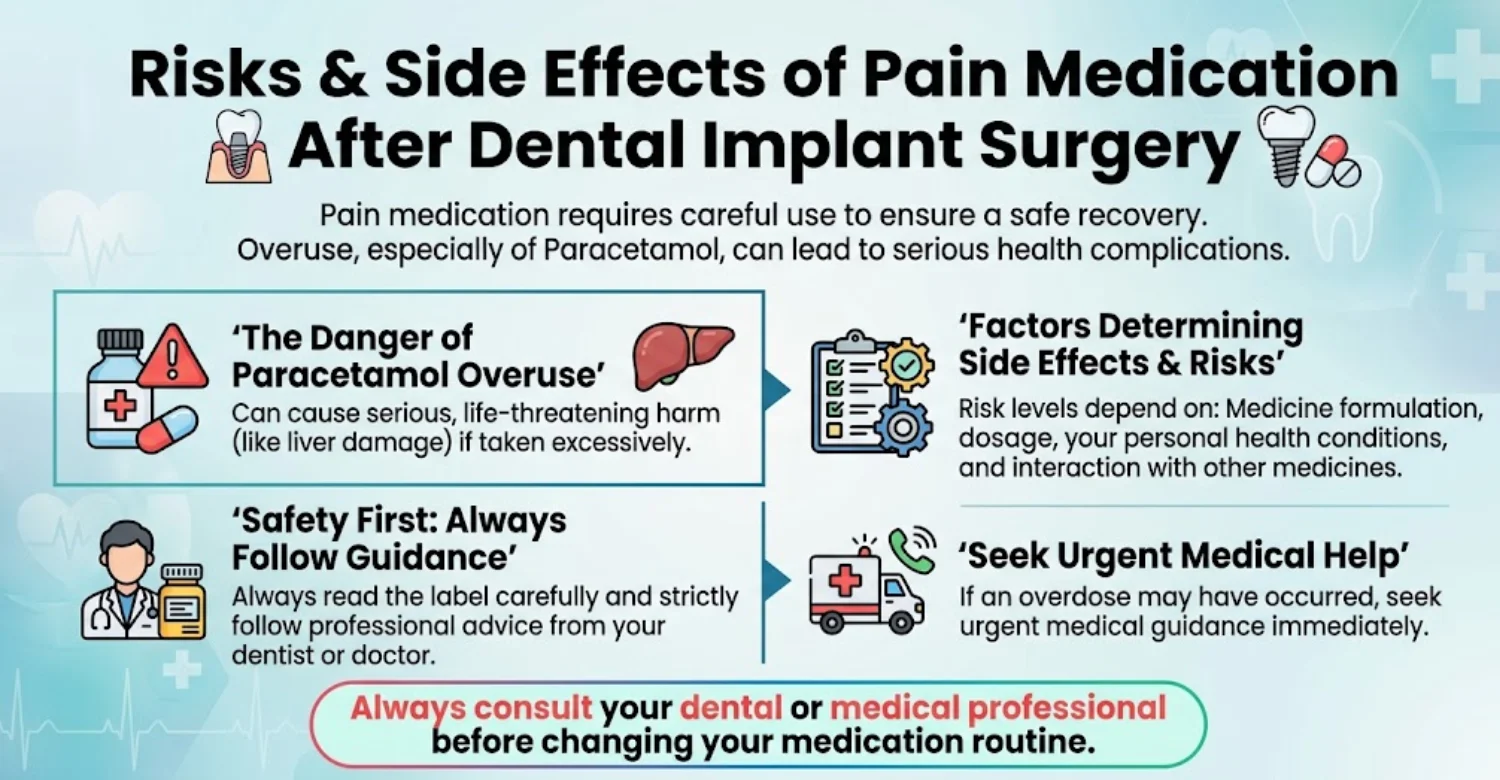
Medication after dental implant surgery may be associated with unwanted effects, although many people tolerate paracetamol when used correctly. Allergic reactions are possible but uncommon. Stop taking the product and seek medical advice if you develop a concerning reaction. Facial swelling, breathing difficulties, or collapse requires emergency medical attention.
How Can Patients Reduce the Risk of Medication-Related Problems?
Pain relief after implant surgery should involve the correct product, dose, and interval. Check the package strength and instructions before every dose. Avoid taking multiple products containing paracetamol at the same time. Keep medicines out of children's reach and never share your medication with another person.
Who Should Seek Professional Advice Before Using Pain Medication?
Pain management should be discussed with a healthcare professional if you have liver or kidney problems. Seek individualized advice if you regularly consume substantial alcohol or have experienced a previous reaction. Pregnant or breastfeeding patients should check suitability with a qualified clinician. Children require age-appropriate, weight-sensitive guidance.
Why Is It Important to Follow the Dentist's Instructions?
Pain Medication After Dental Implant surgery should follow the treating dentist's instructions and the product label. These directions help account for your procedure, medical history, and other prescribed treatments. Do not change the dose because pain persists. Contact the dental team to review ongoing symptoms and your recovery plan.
How Should Patients Use Pain Medication Safely After Dental Implant Surgery?
Pain relief after implant surgery should be used only as directed, without exceeding the recommended amount. Paracetamol is available in different formulations and strengths. The appropriate instructions depend on the specific product and patient. Ask a pharmacist or clinician if any label instruction is unclear.
What Should Patients Know About Following Prescribed Instructions?
Pain management may be supplied with personalized directions from your dental team. Follow the stated dose, timing, and maximum daily amount. Do not assume that instructions for one formulation apply to another. If you miss a dose, consult the product guidance rather than doubling the next dose.
Why Should Patients Avoid Taking More Than the Recommended Amount?
Pain relief after implant surgery must never exceed the recommended dose. Excessive paracetamol can cause severe liver damage, even when early symptoms are absent. If an overdose is suspected, seek immediate professional medical advice or emergency care. Do not wait for symptoms before getting help.
Can Combining Different Pain-Relief Products Increase Health Risks?
Pain management can become unsafe if combined products contain the same active ingredient. Read ingredient lists carefully and ask a pharmacist about possible duplication or interactions. Do not add another pain-relief product without checking first. Tell your clinician about all medicines and supplements you use.
What Should Patients Tell Their Dentist About Existing Conditions and Other Medicines?
Pain relief after implant surgery should be considered alongside your full medical history. Tell your dentist about liver or kidney conditions, pregnancy, breastfeeding, alcohol use, allergies, and all current medicines. This information helps clinicians assess potential risks. Never stop prescribed treatment without discussing it with the responsible healthcare professional.
What Should Patients Do if They Experience a Possible Side Effect?
Medication after dental implant surgery should be stopped pending urgent advice if a serious reaction is suspected. Contact a healthcare professional about unexpected symptoms or possible interactions. Suspected overdose requires immediate medical advice, even if you feel well. Breathing difficulty or swelling of the tongue or throat requires emergency help.
What Other Methods Can Help With Dental Implant Pain Relief?
Pain Medication After Dental Implant surgery is only one part of recovery. Cold compresses, appropriate foods, rest, and careful cleaning may help manage discomfort. Follow the instructions provided for your particular procedure. Home care cannot replace assessment when pain increases or other warning signs appear.
Can Cold Compresses Help Reduce Swelling and Discomfort?
Pain relief after implant surgery may be complemented by a cold compress during early recovery. Wrap the cold pack in a clean cloth and apply it externally, following your dentist's advice. Never place ice directly against the skin. Use short intervals and stop if the area becomes painfully cold.
Which Foods Are Suitable During Early Dental Implant Recovery?
Pain management may be easier to manage when patients choose comfortable, nourishing foods. Soft foods can reduce pressure on the surgical area. Avoid very hot foods while numbness persists and follow any chewing restrictions. Ask your dentist when you can safely resume your usual diet.
How Can Rest and Activity Restrictions Support Healing?
Pain relief after implant surgery works alongside rest and postoperative precautions. Take it easy on the day of surgery and follow instructions about exercise. Strenuous activity may worsen bleeding or swelling during early recovery. Follow your clinician's guidance about returning to work, driving, and normal routines.
How Should Patients Maintain Oral Hygiene After Implant Surgery?
Pain management does not replace gentle oral hygiene. Follow your dentist's instructions about brushing near the wound and when rinsing may begin. Keep other areas clean without disturbing the surgical site. Use only recommended oral-care products and contact your dentist if cleaning causes significant bleeding or pain.
Which Activities Should Patients Avoid During Initial Recovery?
Pain relief after implant surgery cannot offset the effects of disrupting the healing site. Avoid smoking and follow your clinician's instructions about alcohol, exercise, and denture use. Do not poke, pull, or repeatedly touch the wound. Ask the dental team before resuming activities that put pressure on the area.
.jpg)
.jpg)
.jpg)
.jpg)
How Can Patients Distinguish Normal Pain From Dental Implant Complications?
Pain Medication After Dental Implant surgery may help with expected soreness, but symptom patterns matter. Mild tenderness and swelling can occur during early healing. Pain that worsens, new numbness, or increasing swelling may indicate a problem. Contact your dental team when symptoms do not follow the recovery guidance you received.
What Are the Signs of Normal Postoperative Healing?
Pain Medication After Dental Implant surgery may be useful when mild soreness follows the expected recovery pattern. Tenderness, limited swelling, and slight bruising can occur during the first few days. Symptoms should gradually improve. Follow-up appointments help your clinician confirm that healing is progressing appropriately.
What Symptoms May Indicate a Dental Implant Infection?
Pain Medication After Dental Implant surgery cannot treat an infection by itself. Warning signs may include increasing pain, pus, fever, persistent swelling, or a bad taste with other symptoms. Contact your dentist promptly if these develop. The clinician will assess whether additional treatment is necessary.
Can Persistent Pain Indicate Implant Failure or Nerve Irritation?
Pain Medication After Dental Implant surgery may not resolve pain caused by implant problems or nerve irritation. Persistent numbness, tingling, altered sensation, a loose implant, or a changed bite needs professional assessment. These symptoms do not automatically prove implant failure. Examination and, when indicated, imaging help clarify the cause .
When Can Swelling, Bleeding, or Increasing Pain Require Urgent Assessment?
Pain Medication After Dental Implant surgery should not delay urgent assessment when symptoms worsen. Contact your dental team about persistent bleeding, increasing swelling, severe pain, or a fever. Seek urgent care if the clinic is unavailable and symptoms are significant. Rapidly spreading swelling requires immediate assessment.
When Should You Contact a Dentist About Pain After Dental Implant Surgery?
Pain Medication After Dental Implant surgery should not be increased to manage unexplained worsening symptoms. Contact your dentist if pain persists beyond the expected period or interferes with normal activities. Report swelling, fever, discharge, or altered sensation promptly. Your clinician can decide whether examination or further investigation is needed.
When Is Pain That Worsens Instead of Improving a Warning Sign?
Pain Medication After Dental Implant surgery may temporarily mask symptoms without resolving their cause. Pain that increases after initially improving warrants prompt dental advice. New swelling, fever, pus, or a change in implant stability strengthens the need for assessment. Do not wait for a routine follow-up if symptoms are concerning.
What Should Patients Do if Pain Relief Does Not Help?
Pain Medication After Dental Implant surgery should not be escalated beyond label instructions when relief is inadequate. Contact your dental team for advice and explain the severity, timing, and location of pain. The clinician may recommend an examination to identify the cause. Do not add medicines without checking their safety.
When Do Fever, Pus, or Increasing Facial Swelling Require Prompt Care?
Fever, pus, and increasing facial swelling after implant surgery require prompt professional assessment. Contact your dentist urgently rather than relying on pain relief alone. These symptoms may indicate infection or another complication. If swelling spreads quickly or affects breathing or swallowing, seek emergency care immediately.
Which Symptoms Require Emergency Medical Attention?
Breathing difficulty, swallowing difficulty, rapidly spreading facial or neck swelling, or severe uncontrolled bleeding requires emergency medical attention. Call your local emergency service if these symptoms occur. Do not wait for a dental appointment or attempt to manage them with home care. Severe allergic reactions also require emergency help.
.webp)
Note : All images used are for editorial and illustrative purposes only and may not originate from the original news provider or associated company.
How Does Pain Management Fit Into the Dental Implant Recovery Timeline?
Recovery varies with surgical complexity, general health, and individual healing. Keep following your personalized instructions and attend scheduled reviews.
What Can Patients Expect During the First 24 Hours After Surgery?
Mild soreness, oozing, and swelling may occur as the anaesthetic wears off. Rest, protect the surgical site, and follow instructions about cold compresses. Avoid disturbing the wound. Contact your dentist if bleeding persists or symptoms become severe.
What Is Normal During the First Week of Dental Implant Recovery?
Tenderness and swelling may be noticeable during the first few days. Symptoms should generally begin improving, although some discomfort can continue for about a week. Follow the cleaning and eating instructions provided by your dental team. explains common postoperative effects.
When Should Postoperative Pain Begin to Improve?
Pain should generally start easing over the first several days. The exact timeline depends on the procedure and individual healing. Contact your dentist if pain increases, returns strongly after improving, or remains difficult to manage.
What Should Patients Do if Discomfort Persists Beyond the Expected Recovery Period?
Arrange a dental assessment if discomfort continues beyond the timeframe your clinician provided. Persistent symptoms may relate to inflammation, infection, bite problems, or another complication. An examination can help identify the cause and guide appropriate care.







What We Notice Clinically
Pain severity is important, but dentists also assess the timing, location, and associated symptoms.
Why Should Pain Severity Be Assessed Alongside Other Symptoms?
The intensity of pain alone cannot confirm whether healing is normal. Dentists also consider swelling, bleeding, discharge, temperature, sensation, and implant stability. A clear symptom history helps determine whether routine monitoring or prompt investigation is appropriate.
How Can Dentists Distinguish Routine Recovery From a Possible Complication?
Dentists compare current symptoms with the expected healing pattern and the procedure performed. They may examine the gums, surgical wound, bite, and surrounding tissues. Additional tests may be necessary when the findings suggest infection, nerve irritation, or implant-related problems.
Clinical Note: Dr. Rifat Alsaman's Perspective on Pain Management After Dental Implant Surgery
A safe recovery plan begins with understanding the procedure and the patient's health history. Dr. Rifat Alsaman's clinical approach should prioritize individualized assessment, clear postoperative instructions, and timely review when symptoms change. Patients should not increase medication independently or ignore persistent pain.
Tips for Patients Managing Pain After Dental Implant Surgery
Preparation, careful aftercare, and early communication can make recovery easier to manage.
How Can Patients Prepare for Recovery Before Implant Placement?
Tell your dental team about existing conditions, allergies, and all medicines you take. Confirm your written instructions, recommended supplies, and emergency contact details. Arrange transport if sedation is planned. Prepare suitable foods and a comfortable place to rest.
What Questions Should Patients Ask About Pain Medication and Aftercare?
Ask which product is suitable, how to follow its label, and when to seek advice. Confirm the maximum permitted amount and what to do if pain persists. Ask about cleaning, diet, activity, and follow-up appointments. Request written instructions if anything is unclear.
How Can Patients Track Symptoms and Recognize Changes in Recovery?
Record when discomfort begins, where it occurs, and whether it improves. Note swelling, bleeding, fever, discharge, or altered sensation. This information helps the clinician assess changes. Seek prompt advice for worsening symptoms instead of waiting to complete a symptom diary.
What Should International Patients Arrange Before Traveling After Implant Surgery?
International patients should confirm follow-up arrangements before booking travel. Ask the treating clinic when flying is appropriate for their procedure and medical circumstances. Obtain written treatment records, postoperative instructions, and a contact for urgent concerns. Allow enough time for clinical review when recommended.
Vitrin Clinic Perspective: Personalized Pain Management After Dental Implant Surgery
At Vitrin Clinic, treatment planning should begin by assessing the patient's symptoms, procedure, and individual medical circumstances. Medication advice and aftercare should be tailored rather than presented as universal instructions.
How Does Clinical Assessment Help Identify the Cause of Postoperative Pain?
The dentist reviews the procedure, symptom timeline, medical history, and current medicines. An examination can assess the wound, gum tissues, bite, and surrounding area. Identifying the likely cause helps determine whether routine monitoring or further treatment is appropriate.
How Are Individual Recovery Instructions Developed After Implant Placement?
Recovery instructions depend on implant number, surgical complexity, any additional procedures, and the patient's health. The team should explain medication precautions, oral hygiene, diet, activity, and warning signs. Patients should receive clear instructions about whom to contact if symptoms change.
When May Additional Imaging or Clinical Examination Be Necessary?
A clinical examination is important when pain worsens, persists, or occurs with concerning symptoms. Dental X-rays or other imaging may be appropriate when the findings require further investigation. The choice depends on the suspected problem and whether imaging can help guide treatment.
How Does Follow-Up Support Safe Dental Implant Recovery?
Follow-up allows the dental team to assess healing and address emerging concerns. Vitrin Clinic can discuss individualized treatment estimates, review arrangements, and practical considerations for international patients. Patients should understand what is included in their plan and how to obtain advice after returning home.
Dental Treatment Costs: What Might Related Care Cost?
Costs vary by provider, tooth, complexity, and imaging needs. These figures are estimates, not guaranteed quotes.
Treatment | United States | United Kingdom | Turkey |
Exam and X-rays | 50–350 | $27.90 NHS band 1 | $33 exam; $20–$39 X-ray |
Filling | 146–340 | $76.60 NHS band 2 | $3,375–$5,300 |
Root canal | 984–1,337 | $76.60 NHS band 2 | $2,850–$7,645 |
Extraction | 177–835 | $76.60 NHS band 2 | $2,475–$11,715 |
Abscess treatment | Often variable; US examples average 604–1,048 | $27.90 urgent NHS band, when eligible | Depends on drainage and further treatment |
Ready to transform your smile?
Talk to our team and get a personal FREE treatment plan.
Key Takeaways
Pain Medication After Dental Implant surgery may help manage temporary discomfort while the surgical site heals. However, safe recovery also depends on proper aftercare, medication precautions, and professional monitoring.
What Patients Should Know About Recovery
Paracetamol may temporarily ease postoperative discomfort when suitable and used correctly. It does not treat infection, implant instability, or nerve injury. Follow the product label and your clinician's instructions.
How to Support Healing and Reduce Postoperative Discomfort
Rest, follow oral hygiene guidance, choose suitable foods, and attend planned reviews. Avoid smoking and follow activity restrictions. Contact your dentist if recovery differs from the expected pattern.
When Professional Dental Assessment Is Important
Worsening pain, pus, fever, persistent bleeding, or new numbness requires professional advice. Rapidly spreading swelling or difficulty breathing or swallowing requires emergency attention. Suspected overdose needs immediate medical advice, even without symptoms.
Medical Disclaimer
This article provides general educational information and does not replace personalized medical or dental advice. Medication suitability depends on the product, label instructions, age, weight when relevant, health conditions, pregnancy or breastfeeding, and other medicines. Always consult a qualified healthcare professional when uncertain. Suspected overdose requires immediate professional medical advice, even if symptoms have not appeared.
Reference
FAQs
Dr. Rifat Alsaman has more than 5 years of clinical experience in dentistry and currently serves as the Head of the Medical Team at Vitrin Clinic. He is dedicated to providing exceptional patient care, overseeing treatment planning, and ensuring the highest clinical standards across the team. His expertise, attention to detail, and commitment to continuous professional development have helped countless patients achieve healthier, more confident smiles.


.webp&w=3840&q=75)


