How Do You Know If You Are Ready for Extensive Dental Treatment?
Extensive dental treatment requires careful planning before appointments begin.

Extensive dental treatment requires careful planning before appointments begin. Patients need to understand their oral health, medical history, treatment options, and recovery requirements. Preparing for extensive dental treatment helps patients make informed decisions and avoid unrealistic expectations.
The World Health Organization estimates that oral diseases affect nearly 3.7 billion people worldwide . These conditions include tooth decay, gum disease, and tooth loss. This guide explains how Vitrin Clinic reviews complex cases, plans treatment, and supports international patients. It also explores All-on-6 implants, costs, recovery, and long-term dental care in Turkey.
Key Takeaways
Extensive dental treatment may combine implants, crowns, bridges, root canal treatment, extractions, and periodontal procedures.
A comprehensive clinical examination helps identify the underlying causes of dental problems and determine which treatments are necessary.
Treatment planning should consider teeth, gums, jawbone, existing restorations, bite function, medical history, and aesthetic goals.
Active infections and gum disease should be managed before definitive restorative or cosmetic procedures.
Patients should prepare dental records, medical reports, medication lists, and allergy information before travelling for treatment.
Vitrin Clinic coordinates treatment stages, appointments, digital diagnostics, laboratory procedures, and international patient arrangements.
All-on-6 may replace a complete dental arch with six implants, but suitability, costs, and treatment timelines depend on individual clinical conditions.
Recovery, follow-up, and long-term maintenance are essential for protecting dental implants, crowns, bridges, and natural teeth.
Ready to transform your smile?
Talk to our team and get a personal FREE treatment plan.
What Should You Understand Before Starting Extensive Dental Treatment?
Extensive dental treatment combines several procedures to address different oral health problems. Its purpose may include restoring damaged teeth, replacing missing teeth, and improving chewing function. Preparing for extensive dental treatment begins with understanding why multiple procedures may be necessary. The recommended procedures depend on clinical findings rather than treatment packages.
Which Procedures Can Extensive Dental Treatment Involve?
Treatment may include dental implants, crowns, bridges, root canal treatment, and extractions. Some patients also require periodontal treatment or bone grafting. Full-mouth rehabilitation may combine several procedures across both dental arches. However, every patient needs a different combination of treatments.
What Dental Problems Can Make Multiple Procedures Necessary?
Several conditions may affect different teeth simultaneously. Common examples include advanced decay, missing teeth, gum disease, repeated infections, and worn restorations. Significant tooth wear and multiple fractures can also require coordinated care. Treatment should address urgent infections before less urgent restorative concerns.
How Does Extensive Dental Work Differ From Full-Mouth Rehabilitation?
Extensive dental work | Full-mouth rehabilitation |
May involve selected teeth | Often involves both dental arches |
Targets specific dental problems | Addresses broader oral function |
May require several procedures | Requires comprehensive treatment planning |
May involve fewer appointments | Often requires multiple treatment stages |
Which Signs May Indicate That You Need Extensive Dental Treatment?
Several symptoms may suggest widespread dental problems. These include persistent pain, repeated infections, difficulty chewing, loose teeth, and multiple missing teeth. Widespread fractures, significant tooth wear, and recurring restoration failures also require attention. Bleeding or receding gums may indicate periodontal problems.
However, symptoms cannot determine the exact treatment required. A clinical examination and appropriate imaging help establish the diagnosis.
.jpg)
.jpg)

How Does Vitrin Clinic Review Your Dental Condition Before Treatment?
Vitrin Clinic reviews available dental information before your arrival in Istanbul. This preliminary review helps identify concerns and possible diagnostic requirements. Preparing for extensive dental treatment may involve sharing existing records before travelling. However, remote information cannot replace an in-person clinical examination.
What Dental Information Should You Share With Vitrin Clinic?
The team may request recent dental X-rays, CBCT scans, and clinical photographs. Previous treatment records can also clarify existing dental work. Include information about implants, crowns, bridges, and your main concerns. These records help the team understand your case before discussing possible treatment options.
What Does the Initial Clinical Examination Usually Cover?
The dentist examines your teeth, gums, oral tissues, and bite. The examination may identify decay, fractures, inflammation, and damaged restorations. Tooth mobility, missing teeth, and jaw movement may also require evaluation. These findings help determine which teeth might remain suitable for restoration.
How Are Teeth, Gums, Bone, and Existing Restorations Reviewed?
Each part of your mouth provides different clinical information.
Teeth: The dentist checks decay, fractures, wear, and remaining tooth structure.
Gums: The examination considers inflammation, bleeding, recession, and periodontal pockets.
Jawbone: Bone dimensions and anatomical structures influence implant planning.
Existing restorations: The dentist checks crown and bridge fit, damage, and stability.
Bite: Tooth contacts and excessive forces may affect treatment decisions.
When Might Digital X-Rays, CBCT, or Intraoral Scans Be Needed?
Each diagnostic method provides different information.
Diagnostic method | Clinical purpose |
Digital dental X-rays | Identify decay, infections, and bone changes |
CBCT | Examine three-dimensional bone and anatomical structures |
Intraoral scanning | Record tooth surfaces and bite relationships |
Clinical photographs | Document visible dental conditions |
How Are Functional Needs Considered Alongside Cosmetic Goals?
Vitrin Clinic reviews chewing function, bite alignment, tooth proportions, and gum appearance. Existing restorations also influence possible aesthetic changes. Digital Smile Design may help explain proposed changes visually. However, digital previews cannot guarantee final results or replace clinical judgement.
What Does Dr. Rifat Recommend Before Extensive Dental Treatment?
Dr. Rifat Alsaman, Head of the Medical Team at Vitrin Clinic, emphasises identifying each problem's underlying cause. Preparing for extensive dental treatment should involve understanding these causes before choosing procedures. Treatment decisions should follow clinical findings rather than predetermined packages.
Why Must Treatment Recommendations Differ Between Patients?
Similar symptoms do not always indicate identical dental problems. Bone quality, gum health, and remaining tooth structure influence treatment suitability. Medical history and bite forces also affect clinical decisions. One damaged tooth may remain restorable, while another may require extraction.
Why Should Dental Disease Be Controlled Before Cosmetic Restoration?
Active decay, infection, and uncontrolled gum inflammation can compromise restorative treatment. These problems should receive appropriate attention before definitive cosmetic procedures. A stable oral foundation supports more predictable treatment planning. Cosmetic improvements should not replace necessary disease management.
When Is a Staged Treatment Plan More Appropriate?
Staged treatment may be necessary after implant surgery or bone grafting. Periodontal treatment may also need completion before restorations. Complex extractions and medical considerations can influence recovery time. Additional investigations may delay definitive treatment. Reviewing healing before each stage helps guide the next clinical decision.
How Does Vitrin Clinic Organise Your Individual Treatment Plan?
Vitrin Clinic bases treatment recommendations on examination findings and individual requirements. Preparing for extensive dental treatment includes understanding the proposed procedures and their sequence. The plan should explain each procedure, its purpose, and its expected timing.
Which Dental Problems Should Be Treated First?
The treatment sequence may follow these priorities:
Manage active infections and urgent pain.
Control periodontal disease and gum inflammation.
Treat teeth requiring root canal care.
Remove teeth that cannot be predictably restored.
Plan implants and necessary bone procedures.
Complete definitive crowns and bridges.
Review bite function and restoration appearance.
When Can Procedures Be Combined Instead of Staged?
Combined treatment may be appropriate when procedures are clinically compatible. However, surgery, healing, and additional investigations may require separate appointments. Travel convenience should never determine clinical timing. Your treatment schedule must reflect recovery requirements.
How Are Extractions, Implants, and Restorations Coordinated?
Extraction timing depends on infection, bone condition, and replacement planning. Some implants can be placed immediately after extraction. Other cases require healing before implant placement. Crowns and bridges must also match implant positions and bite relationships.
How Are Temporary and Permanent Restorations Planned?
Temporary restorations protect prepared teeth between treatment stages. They may also help maintain function during healing. Permanent restorations require accurate clinical records and laboratory work. Their materials, shape, fit, and maintenance should be discussed beforehand.
What Happens When the Dentist Finds Additional Problems?
New findings may change the original treatment plan. The dentist should explain the revised diagnosis, available alternatives, and additional costs. Appointment changes may also become necessary. Patients should understand significant changes and provide consent before treatment continues.
Ready to transform your smile?
Talk to our team and get a personal FREE treatment plan.
How Should You Prepare for Extensive Dental Treatment?
Preparing for extensive dental treatment involves organising dental records, reviewing medical information, and understanding clinical instructions. Planning recovery before travelling can also make treatment arrangements easier.
Which Dental Records Should You Prepare Before Travelling?
Collect previous dental X-rays, CBCT scans, and treatment summaries. Include information about implants, restorations, and previous surgery. Recent photographs may also help explain your concerns. Older imaging may require updating if your dental condition has changed.
Which Medical Documents and Medication Details Should You Bring?
Prepare an updated list of prescribed medicines and supplements. Include medication names, strengths, and usual schedules. Bring relevant medical reports, surgical records, and allergy information. Mention previous reactions to medicines or anaesthesia.
Which Medical Conditions Should Your Dental Team Know About?
Disclose diabetes, heart conditions, and circulation problems. Mention kidney disease, liver disease, and bleeding disorders. Immune system conditions may also influence treatment planning. Pregnancy, breastfeeding, and previous jaw-related cancer treatment require disclosure. Your dentist may request information from your treating doctor.
Should You Stop Taking Medication Before Dental Surgery?
Never stop or change prescribed medication without professional instructions. Some medicines affect bleeding, healing, sedation, and drug interactions. Your dentist must review your medication list before surgery. Fasting requirements also depend on the planned anaesthesia or sedation method.
What Should You Avoid Before Dental Procedures?
Avoid smoking, particularly around surgical treatment. Follow professional instructions about alcohol, fasting, and medication. Report fever, new infections, or worsening symptoms before appointments. Do not change your prescribed medication routine independently.
How Can You Prepare for Recovery After Dental Surgery?
Arrange a comfortable place to recover and prepare suitable soft foods. Organise transportation when sedation or surgery requires assistance. Keep medication instructions and emergency contacts accessible. Allow sufficient time before returning to strenuous activities.
.jpg)
.jpg)
What Should You Arrange Before Travelling to Turkey for Dental Treatment at Vitrin Clinic?
International patients need to coordinate appointments, accommodation, transport, and follow-up. Preparing for extensive dental treatment also means organising travel arrangements around your confirmed clinical plan. Keep your schedule flexible in case additional appointments or healing time become necessary.
What Should You Pack for Your Dental Trip to Istanbul?
Bring your dental and medical records, prescribed medicines, and allergy information. Keep medicines in their original packaging whenever possible. Pack comfortable clothing, oral hygiene supplies, and medical contact details. Keep travel insurance documents and treatment correspondence easily accessible.
How Should You Plan Flights and Accommodation?
Confirm your proposed treatment schedule before booking inflexible flights. Ask how many clinic appointments your treatment may require. Check whether healing periods could require another visit. Choose accommodation with convenient clinic access and confirm available transport arrangements.
How Can You Organise Multiple Dental Appointments?
Request a proposed appointment schedule before travelling. Confirm which procedures are planned for each visit. Laboratory production may require additional appointments. Ask when temporary and permanent restorations are expected to be fitted.
What Support Should You Arrange Before Dental Surgery?
Confirm postoperative transport and recovery support before your procedure. Ask whether someone should accompany you after sedation. Prepare suitable meals and understand your activity restrictions. Avoid scheduling demanding sightseeing immediately after surgery.
Which Questions Should You Ask Before Travelling?
Confirm the responsible dentist and every procedure included in your quotation. Ask about materials, additional costs, and expected appointment numbers. Discuss possible complications, recovery requirements, and follow-up arrangements. Confirm whether your treatment may require a second trip.
What Happens During Your Treatment Journey at Vitrin Clinic?
Your treatment journey follows several coordinated stages. Preparing for extensive dental treatment includes understanding what may happen at each stage. The exact process depends on clinical findings and the procedures required.
What Happens After You First Contact Vitrin Clinic?
You explain your dental concerns and treatment goals. The team may request photographs and previous dental records. Information about existing treatments can also help preliminary discussions. This initial review does not establish a final diagnosis.
How Is Your Treatment Plan Confirmed After You Arrive?
The dentist reviews your medical history and performs a clinical examination. Additional imaging may be recommended when clinically necessary. Findings help confirm or revise preliminary recommendations. You can discuss alternatives, limitations, treatment stages, and estimated costs before consenting.
How Are Treatment Appointments Arranged?
Appointments follow clinical priorities and procedure requirements. Compatible procedures may sometimes be combined safely. Other treatments require separate visits or healing periods. The schedule should reflect these clinical requirements.
How Are Digital Scanning and Laboratory Procedures Coordinated?
Digital impressions record tooth surfaces and bite relationships. Implant scanning may record implant positions when indicated. Laboratory teams use approved clinical records to produce restorations. The dentist checks fit and function before final placement.
What Happens During the Final Clinical Review?
The dentist reviews bite contacts, restoration fit, gum condition, and comfort. Necessary adjustments should be discussed before completion. You should also receive maintenance and postoperative instructions.
What Should You Receive Before Returning Home?
Request written records of completed procedures and restoration materials. Confirm medication instructions and follow-up requirements. Keep the clinic's contact details accessible. Arrange suitable follow-up care in your home country.
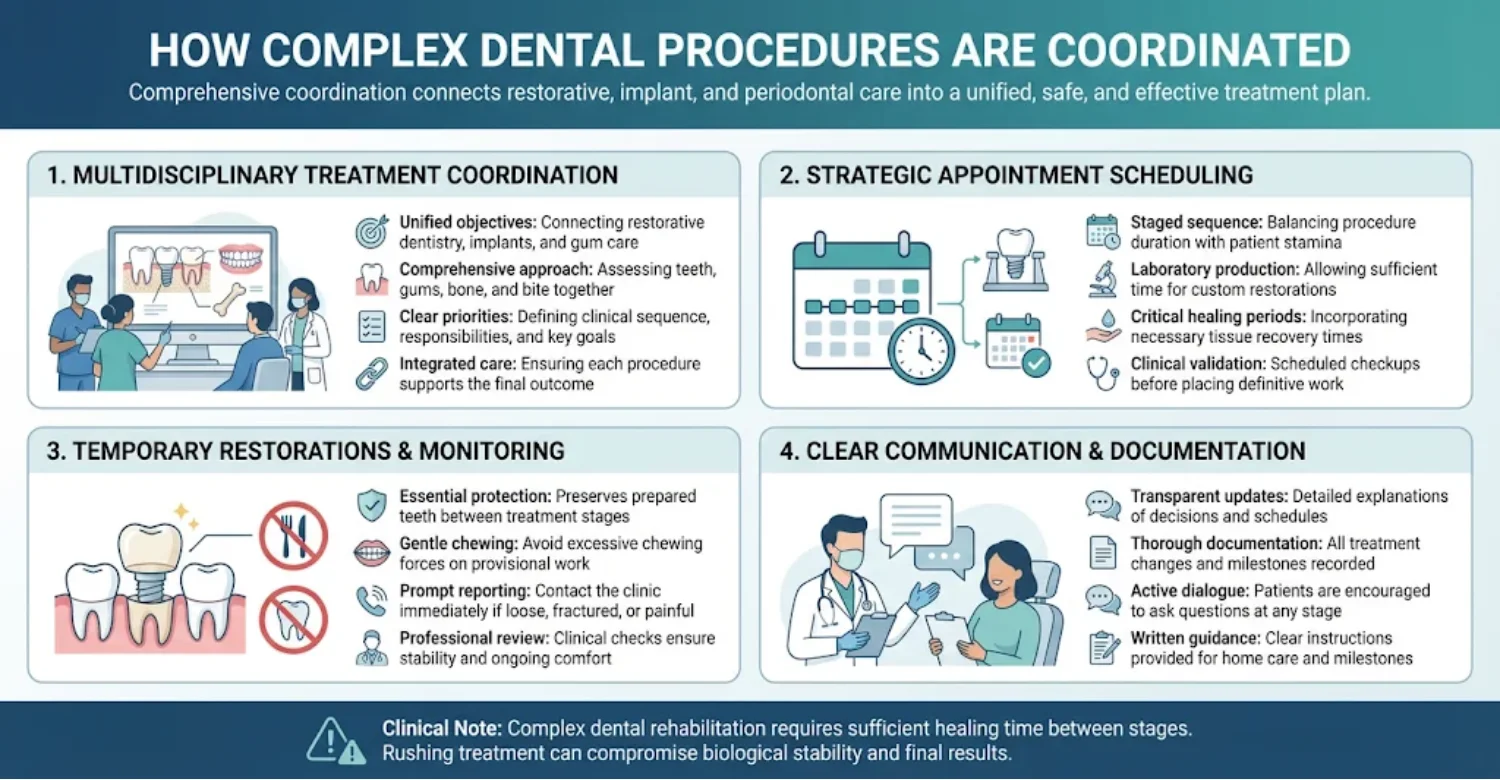
How Does Vitrin Clinic Coordinate Multiple Dental Procedures?
Complex dental cases may involve restorative dentistry, implant procedures, and gum treatment. Coordination helps connect individual procedures within one treatment plan.
How Are Different Dental Procedures Coordinated?
Each procedure should support the overall treatment objectives. Decisions must consider teeth, gums, bone, and bite function together. The responsible dentist should clarify clinical responsibilities and treatment priorities.
How Does Appointment Scheduling Affect Complex Treatment?
Appointment duration, laboratory production, and healing periods influence scheduling. Some patients need additional reviews before receiving definitive restorations. Treatment dates should allow sufficient time for clinical checks.
How Are Temporary Restorations Monitored?
Temporary restorations protect prepared teeth between treatment stages. Avoid excessive chewing forces on temporary work. Report looseness, fractures, or persistent pain promptly. These problems may require professional review.
How Is Communication Maintained During Treatment?
Your team should explain appointment updates and treatment decisions clearly. Important changes should be documented. Ask questions whenever instructions or recommendations are unclear.
Why Consider Vitrin Clinic for Extensive Dental Treatment in Turkey?
Choosing a clinic involves more than comparing treatment prices. Patients should review clinical planning, diagnostics, communication, laboratory coordination, and aftercare.
How Does Individualised Planning Support Better Treatment Decisions?
Individualised planning connects clinical findings with appropriate procedures. It helps distinguish necessary treatment from optional improvements. Your plan should explain each recommendation and possible conservative alternatives. This supports informed decisions before treatment begins.
How Can Digital Diagnostics Support Clinical Planning?
Digital X-rays and intraoral scanning provide information for specific decisions. CBCT may add three-dimensional information in selected implant cases. These technologies support clinical examination rather than replace it. Their use should depend on individual diagnostic requirements.
Why Does Laboratory Coordination Matter for Restorative Treatment?
Accurate impressions and bite records help laboratories produce restorations. The dentist checks fit, contacts, function, and appearance. Adjustments may be necessary before final acceptance. Laboratory coordination should follow clinical approval.
What Support Does Vitrin Clinic Provide to International Patients?
Vitrin Clinic coordinates patient communication and treatment arrangements. Patient services include transport arrangements and accommodation support. Patients can also ask about facilities such as the clinic terrace and Vitrin Cafe. Confirm which services are included in your individual arrangement.
How Is Aftercare Organised for Patients Returning Home?
Patients should receive written postoperative instructions and treatment records. Discuss follow-up arrangements before departure. Identify a local dentist for routine reviews and urgent care. Keep restoration information available for future dental appointments.
How Much Does Extensive Dental Treatment Cost at Vitrin Clinic?
Treatment costs depend on procedure numbers, clinical complexity, materials, and additional investigations. Preparing for extensive dental treatment should include reviewing the full financial commitment. An individual written quotation is necessary before confirming your budget.
Which Factors Can Change Your Dental Treatment Costs?
Several factors influence the final quotation:
Number of teeth requiring treatment.
Implant quantity and selected implant system.
Bone grafting or sinus lift requirements.
Crown and bridge materials.
Root canal complexity.
Surgical difficulty and specialist involvement.
Temporary restorations and laboratory work.
Additional imaging and follow-up appointments.
How Do Dental Treatment Costs Compare Across Turkey, USA, and UK?
The following figures illustrate different pricing structures. UK figures represent NHS England charges, not private fees. US figures are based on a 2025 dental fee survey. Turkey prices require individual clinic quotations.
UK
$27.90–$76.60
NHS Band 1 & Band 2 rates
Examination: $27.90
X-rays: Included when clinically needed in Band 1
Filling: Included in $76.60 Band 2
Root canal: Included in $76.60 Band 2
Extraction: Included in $76.60 Band 2
Abscess treatment: Urgent care: $27.90
Turkey, Vitrin Clinic
From 20
General & urgent dental care
Examination: 35–65
X-rays: 20–90
Filling: 75–180
Root canal: 100–350
Extraction: 55–350
Abscess treatment: 25–150
USA
From 83
US private dental benchmark
Examination: 105–165
X-rays: 83–226
Filling: 306–584
Root canal: 700–1,500
Extraction: 150–500
Abscess treatment: Depends on treatment
How Do Implants, Crowns, and Additional Procedures Affect the Price?
Implant costs depend on surgical requirements and restoration design. Additional procedures may include extractions, bone grafting, and sinus lifts. Temporary teeth and laboratory work may also affect the quotation. Confirm whether All-on-6 prices include surgery, abutments, provisional teeth, and final restorations.
What Details Should an Itemised Treatment Quotation Contain?
Component | What to confirm |
Dental procedures | Every recommended procedure |
Implants | Brand and quantity |
Restorations | Crown and bridge materials |
Temporary teeth | Type and fitting arrangements |
Diagnostics | Imaging and laboratory charges |
Surgery | Additional surgical procedures |
Follow-up | Included reviews and adjustments |
Exclusions | Possible additional costs |
Which Travel Expenses Should You Include in Your Budget?
Your total budget should include flights, accommodation, transport, meals, and travel insurance. Additional appointments may increase travel expenses. Some implant treatments require a second trip. Allow for unexpected delays and follow-up care after returning home.
How Can You Compare Dental Quotations Fairly?
Compare equivalent procedures, materials, and implant specifications. Check whether quotations include temporary teeth and final restorations. Confirm additional surgery, laboratory charges, and follow-up arrangements. A lower headline price does not necessarily represent equivalent treatment.
Ready to transform your smile?
Talk to our team and get a personal FREE treatment plan.
What Does All-on-6 Treatment Cost at Vitrin Clinic in Turkey, and Who May Need It?
All-on-6 replaces a complete dental arch using six strategically positioned implants. It supports a fixed full-arch restoration when clinically suitable. However, implant numbers alone do not determine treatment suitability or success.
What Are the Main Stages of All-on-6 Treatment?
All-on-6 treatment generally involves several stages:
Clinical examination: The dentist examines the teeth, gums, bone, and medical history.
Three-dimensional planning: CBCT imaging may evaluate bone dimensions and nearby anatomical structures.
Extractions: Teeth with a poor long-term prognosis may need removal.
Implant placement: Six implants are positioned according to bone availability and the planned restoration.
Temporary restoration: Temporary fixed teeth may be fitted when implant stability allows.
Healing: The implants need time to integrate with the surrounding bone.
Final restoration: The permanent prosthesis is fitted after healing and necessary clinical checks.
Is All-on-6 Appropriate for Every Patient?
No. Suitability depends on bone availability, gum health, and medical history. Advanced bone loss may require additional procedures. Active gum disease and uncontrolled medical conditions may need treatment first. Some patients may benefit from alternative implant arrangements.
What Potential Benefits Can All-on-6 Offer?
All-on-6 can replace multiple missing teeth with one fixed full-arch restoration. Six implants provide planned support points for the prosthesis. This approach avoids placing an individual implant for every missing tooth. It may also provide greater stability than removable dentures. However, outcomes depend on anatomy, treatment planning, and long-term maintenance.
What Limitations Should Patients Consider Before Choosing All-on-6?
All-on-6 involves surgery, recovery, and potentially higher initial costs. Some patients need bone grafting or other additional procedures. Cleaning underneath the restoration can also be challenging. Possible complications include infection, implant failure, and prosthetic repairs. Patients should consider long-term maintenance and multiple appointments.
Which Side Effects and Complications Can Occur After All-on-6?
Temporary swelling, bruising, tenderness, and minor bleeding may occur after surgery. Potential complications include infection, nerve injury, and sinus problems. Implant integration may also fail in some cases. Prosthetic complications can include loosening, fractures, and screw-related problems. Persistent or worsening symptoms require professional review.
How Does All-on-6 Compare With All-on-4?
Feature | All-on-4 | All-on-6 |
Implants per arch | Four | Six |
Implant distribution | Four planned positions | Six planned positions |
Surgical requirements | Individualised | Individualised |
Bone requirements | Depend on anatomy | Depend on anatomy |
Restoration design | Full-arch prosthesis | Full-arch prosthesis |
What Are the Indicative All-on-6 Costs at Vitrin Clinic?
The following figures are indicative planning ranges. Confirm current prices against written quotations before publication.
UK
Indicative cost per jaw: $12,000–20,000
Indicative cost per jaw
Indicative cost per jaw: $12,000–20,000
Private UK clinic standard rate
Varies by implant count & bridge material
Vitrin Clinic, Turkey
Indicative cost per jaw: $4,000–12,000
Indicative cost per jaw
Indicative cost per jaw: $4,000–12,000
Save ~67–83% vs. USA & ~40–67% vs. UK
FDA-approved & CE-marked implant systems
USA
Indicative cost per jaw: $24,000–38,000
Indicative cost per jaw
Indicative cost per jaw: $24,000–38,000
US private clinic standard rate
Highest single-jaw private expense
Based on these ranges, the estimated savings compared with the USA are approximately 50%–89.5%. UK comparisons require currency conversion and equivalent treatment quotations.
Estimated savings = (Home-country price − Vitrin price) ÷ Home-country price × 100.
These percentages compare broad price ranges, not identical treatment plans. Flights, accommodation, additional surgery, and follow-up expenses may reduce the overall savings.
What Should an All-on-6 Treatment Package Include?
Package component | What to confirm |
Initial examination | Clinical examination and treatment planning |
Diagnostics | Necessary X-rays and CBCT imaging |
Implant surgery | Six implants per jaw |
Extractions | Whether necessary extractions are included |
Temporary teeth | Restoration type and fitting arrangements |
Final prosthesis | Material and laboratory specifications |
Follow-up | Reviews and adjustments |
Additional procedures | Bone grafting and sinus lifts |
Can All-on-6 Be Completed During One Trip to Turkey at Vitrin Clinic?
Some surgical and temporary restoration stages may be completed during one trip. However, permanent restorations commonly require healing and implant integration first. Some patients therefore need a second visit to Turkey. The timeline depends on bone quality, implant stability, and individual healing.
How Should You Compare All-on-6 Packages in Turkey?
Compare implant manufacturers, prosthesis materials, implant numbers, and laboratory specifications. Confirm whether extractions, temporary teeth, and additional procedures are included. Ask about maintenance, possible complications, replacement policies, and follow-up after returning home..
.jpg)
.jpg)

What Should You Expect During Extensive Dental Treatment and Recovery?
Your confirmed clinical plan determines the procedures and recovery requirements. Preparing for extensive dental treatment also involves understanding possible side effects and recovery stages. Different treatments involve different healing periods and postoperative instructions.
Which Procedures Might Your Treatment Appointments Include?
Your appointments may involve removing damaged dental tissue and treating infected pulp. Extractions may be necessary when teeth cannot be restored. Other procedures may include implant placement and tooth preparation. Crowns, bridges, and bite adjustments may complete restorative treatment. Your dentist should explain relevant risks beforehand.
Which Anaesthesia Options May Be Used?
Local anaesthesia is commonly used for many dental procedures. Sedation may suit selected patients, depending on their circumstances. General anaesthesia is reserved for specific clinical situations. Medical history and procedure complexity influence suitability. Ask about fasting, transportation, monitoring, and recovery instructions.
How Are Temporary Restorations Checked After Placement?
Temporary restorations protect prepared teeth between treatment stages. Their fit and bite contacts should be checked before you leave. Temporary implant-supported teeth may be possible when clinical conditions allow. Avoid excessive chewing forces on temporary restorations.
How Does the Dentist Check Your Bite and Restoration Fit?
The dentist examines tooth contacts, restoration stability, and comfort. Adjustments may reduce uneven pressure on teeth and restorations. Report persistent discomfort rather than attempting adjustments yourself.
Which Postoperative Instructions Should You Follow?
Instructions may cover medication, eating, and drinking restrictions. They may also include oral hygiene and activity limitations. Smoking and alcohol guidance depends on the procedure. Follow-up appointments and temporary restoration care should also be explained. Always follow instructions specific to your treatment.
How Can You Manage Swelling, Tenderness, and Sensitivity?
Mild swelling and tenderness can occur after oral surgery. Follow your dentist's advice about cold compresses, rest, and suitable pain relief. Medication safety depends on medical history and other medicines. Seek professional advice before using medication when relevant health concerns exist. Never exceed the recommended dose.
Which Foods May Be Suitable During Early Recovery?
When a soft diet is recommended, suitable options may include:
Scrambled eggs.
Mashed vegetables.
Soft fish.
Smooth soups.
Yoghurt.
Soft pasta.
Mashed potatoes.
Avoid hard, crunchy, or very hot foods when instructed. Do not chew directly over surgical areas.
How Should You Clean Your Teeth After Multiple Procedures?
Brush gently with fluoride toothpaste using your dentist's recommended technique. Clean between teeth with suitable interdental products. Follow specific instructions around surgical sites and implant-supported restorations. Avoid disturbing healing areas.
Which Recovery Symptoms Need Prompt Professional Attention?
Contact your dental team if you experience increasing pain or swelling. Persistent bleeding, fever, pus, or an unpleasant taste also require review. Report increasing difficulty opening your mouth or loose temporary restorations. New numbness or altered sensation should also be checked. Facial or neck swelling with breathing, swallowing, or speaking difficulties requires emergency medical attention.
When Should You Attend Postoperative Follow-Up Appointments?
Your dentist determines follow-up timing according to treatment and healing. Reviews may examine surgical wounds, gum condition, implant stability, and restoration fit. Implant treatment may require several appointments before final restoration. Do not skip reviews because symptoms have improved.
How Can You Maintain Your Dental Results After Returning Home?
Long-term maintenance protects natural teeth, implants, and restorations. Regular care also helps identify problems before they become more complicated.
What Daily Care Do Crowns, Bridges, and Implants Require?
Brush twice daily with fluoride toothpaste and clean between teeth. Follow specific cleaning instructions for bridges and implants. Avoid biting hard objects or chewing ice. Attend professional dental reviews according to your dentist's recommendations.
How Often Should You Have Dental Check-Ups?
Your dentist should recommend a schedule based on your oral health. Some patients require more frequent periodontal maintenance. Implant patients need regular checks of surrounding tissues and prosthetic components. Share your treatment records with your local dentist.
How Can You Reduce Excessive Forces on Dental Restorations?
Avoid biting hard objects or opening packages with your teeth. Discuss uncomfortable bite contacts with your dentist. Uneven forces may contribute to restoration damage. Your dentist can check whether adjustments are necessary.
Can Teeth Grinding Affect Your Dental Restorations?
Teeth grinding places additional forces on natural teeth and restorations. Your dentist may recommend a protective night guard. Its suitability depends on your bite and existing restorations. Do not use a guard without appropriate clinical guidance.
How Can You Contact Vitrin Clinic After Returning Home?
Confirm the appropriate communication channel before departure. Keep your treatment summary and restoration information accessible. Photographs may help explain visible concerns, but cannot replace clinical examination. Seek local urgent care when complications are suspected.
.jpg)
.jpg)
.jpg)
What Are the Main Benefits, Limitations, and Risks of Extensive Dental Treatment?
Extensive dental treatment can address several problems through coordinated planning. However, patients should understand its limitations and possible complications before proceeding.
What Benefits Can Extensive Dental Treatment Provide?
Potential benefits include treating multiple dental problems within one plan. Suitable procedures may restore chewing function and replace missing teeth. Treatment can also address active disease and improve restoration stability. Coordinated planning connects functional and aesthetic objectives. A structured maintenance plan supports long-term care.
What Disadvantages Should You Consider Before Treatment?
Extensive treatment can involve higher costs and longer schedules. Surgical procedures may require recovery time and additional appointments. Implants and restorations need ongoing maintenance. Complications can increase treatment costs. Irreversible procedures may also limit future treatment options.
Which Temporary Side Effects Can Follow Extensive Dental Procedures?
Possible temporary effects include local tenderness and gum irritation. Swelling, bruising, and sensitivity may also occur. Some patients experience minor bleeding or difficulty chewing. Temporary speech changes may follow certain procedures. Duration and severity depend on the treatment performed.
Which Complications May Require Further Dental Treatment?
Potential complications include infection, delayed healing, and persistent bleeding. Nerve injury and restoration failure are also possible. Implant treatment may involve failed integration or inflammation around implants. Root canal treatment occasionally requires further intervention. Early professional review helps identify problems requiring treatment.
Your Dental Treatment Journey at Vitrin Clinic
Your journey at Vitrin Clinic begins before you arrive in Istanbul. Share your dental records, X-rays, and smile concerns with our team to receive a personalized treatment plan and an initial cost estimate.
Once you arrive, your treatment journey includes:
Airport Pickup and VIP Transfers: Our team coordinates your arrival and transportation to your hotel.
Comprehensive Clinical Examination: Our dentists examine your teeth, gums, and oral health to confirm your treatment needs.
Digital Diagnostics: Where clinically indicated, digital X-rays, CBCT imaging, and intraoral scans support treatment planning.
Personalised Treatment: Your procedures follow an agreed treatment sequence based on your clinical findings.
Dedicated Patient Support: Our coordinators assist you throughout your appointments and stay.
Final Review and Aftercare: Before departure, our team reviews your treatment progress and explains home care and follow-up arrangements.
From your first consultation to your final appointment, Vitrin Clinic aims to make preparing for extensive dental treatment more organised, comfortable, and clearly planned.
What Dental Treatments Are Available at Vitrin Clinic in Turkey?
Vitrin Clinic offers cosmetic, restorative, and specialist dental treatments in Istanbul. Recommendations depend on individual clinical needs.
Hollywood Smile: A personalized full smile makeover using selected materials and digital smile design.
Dental Implants: Fixed tooth replacement designed to restore function and appearance.
Subperiosteal Implants: An option for selected patients with significant jawbone loss, potentially avoiding conventional bone grafting.
Invisalign: Clear aligner treatment without traditional metal brackets.
Dental Crowns: Restorations designed to protect damaged teeth, including same-day CEREC options when suitable.
Dental Bridges: Traditional and zirconia options for replacing missing teeth.
Periodontics: Treatments for gum disease, gum recession, and supporting bone problems.
Gingival Esthetics: Gum reshaping for selected concerns, including uneven gum contours.
Endodontics: Root canal treatment to address infection inside teeth.
Teeth Whitening: Professional options for improving the shade of natural teeth.
Same Visit Dentistry: Selected fillings, root canal treatments, and implant procedures may be organised during your stay when clinically suitable.
Ready to transform your smile?
Talk to our team and get a personal FREE treatment plan.
How Can You Decide Whether Extensive Dental Treatment Is Right for You?
Preparing for extensive dental treatment means making decisions based on an accurate diagnosis and individualised treatment plan. Understand why each procedure is recommended and whether alternatives exist. Review potential complications, estimated costs, and recovery requirements before consenting. International patients should also arrange follow-up care before travelling. Clear clinical explanations help patients make informed decisions about their oral health.
.jpg)
.jpg)
.jpg)
How Can You Start Preparing for Extensive Dental Treatment with Confidence?
Preparing for extensive dental treatment starts with understanding your oral health, treatment needs, and available options. Begin with a comprehensive clinical examination and review of your dental and medical history. Ask for any necessary X-rays or scans to identify underlying problems and guide treatment planning.
Request a written treatment plan that explains each procedure, its sequence, expected timeline, estimated costs, and possible alternatives. If you are travelling abroad, confirm appointment dates, accommodation, transport, and follow-up arrangements before departure.
You should also discuss medications, existing medical conditions, recovery time, and potential complications with your clinical team. Allow enough time between appointments when multiple procedures are involved.
At Vitrin Clinic, preparing for extensive dental treatment involves reviewing your dental records, understanding your treatment options, and receiving a personalized treatment plan. This helps you make informed decisions before starting your dental journey.
Reference

Medically reviewed by
Dr. Rifat AlsamanDr. Rifat Alsaman has more than 5 years of clinical experience in dentistry and currently serves as the Head of the Medical Team at Vitrin Clinic. He is dedicated to providing exceptional patient care, overseeing treatment planning, and ensuring the highest clinical standards across the team. His expertise, attention to detail, and commitment to continuous professional development have helped countless patients achieve healthier, more confident smiles.
More in Discovery & Decision
View all 39 min readShould You Prioritise Cosmetic or Functional Dental Treatment?Understanding cosmetic vs functional dentistry helps patients decide which dental concerns need attention first. Some procedures improve smile appearance, while others protect teeth, restore chewing, or treat disease.
 18 min readHow Should You Prioritise Multiple Dental Problems When Planning Treatment?When several dental problems need attention, prioritising dental treatment helps protect oral health and prevent avoidable complications.
 25 min readCan You Combine Dental Treatment with a Holiday in Turkey?Many international patients do it, and with good planning it can be safe, comfortable, and enjoyable. A dental holiday means travelling abroad for dental care and enjoying the destination around your appointments.
 20 min readHow Much Time Should You Take Before Agreeing to Dental Treatment?There is no single waiting period that suits every patient. The right time to decide on dental treatment can be a few hours, a few days, or several weeks. It depends on how urgent your condition is, how complex the procedure is, and how ready you feel.
Still have a question?
Our patient coordinators answer every day of the week: before, during and long after your treatment.