How Should You Prioritise Multiple Dental Problems When Planning Treatment?
When several dental problems need attention, prioritising dental treatment helps protect oral health and prevent avoidable complications.

When several dental problems need attention, prioritising dental treatment helps protect oral health and prevent avoidable complications. However, treating every problem immediately is not always necessary. Some conditions require urgent care, while others can safely wait. The correct order depends on infection risk, tooth damage, gum health, chewing function, and medical history. A structured plan makes prioritising dental treatment easier and helps patients manage appointments, costs, and recovery time.
Key Takeaways
Prioritising dental treatment helps address urgent problems first and reduces the risk of avoidable complications.
Dental emergencies involving severe pain, facial swelling, uncontrolled bleeding, trauma, or spreading infection require prompt attention.
Deep decay, cracked teeth, failing restorations, and active gum disease should receive timely clinical attention.
Dentists consider infection risk, tooth damage, gum health, chewing function, and medical history when deciding treatment order.
Staged treatment allows urgent problems to be controlled before stabilising teeth and completing definitive restorations.
Not every dental problem requires immediate treatment; some concerns can be monitored or postponed under professional guidance.
Treatment costs depend on the procedures, materials, additional requirements, and follow-up arrangements. Patients should request itemised quotations.
Vitrin Clinic plans multiple dental procedures according to individual clinical findings, coordinating appointments, treatment stages, and international patient support.
Ready to transform your smile?
Talk to our team and get a personal FREE treatment plan.
Why Is Prioritising Dental Treatment Important?
Prioritising dental treatment helps prevent minor problems from developing into more complex conditions. Some dental issues can worsen quickly without appropriate care. Untreated infections may spread into surrounding tissues, while advanced gum disease can damage tooth-supporting structures.
A clear treatment sequence also helps avoid unnecessary procedures. Dentists consider the condition of each tooth, surrounding gums, and overall oral function. They also review medical history and individual needs. This approach ensures prioritising dental treatment focuses on clinical importance rather than appearance alone.
Which Dental Problems Should Be Treated First?
The most urgent dental problems usually involve infection, severe pain, uncontrolled bleeding, or significant tissue damage. These conditions may require immediate or prompt attention. However, prioritising dental treatment depends on clinical findings and the patient's overall health.
Which Dental Problems Require Immediate Attention?
Certain symptoms may indicate a dental emergency. These include facial swelling, severe toothache, uncontrolled bleeding, and dental trauma. Swelling accompanied by fever or difficulty swallowing requires urgent medical attention. Breathing difficulties require emergency care.
A dental abscess generally needs prompt treatment to control the infection source. A knocked-out permanent tooth also needs immediate attention. Prioritising dental treatment in these situations can help prevent further complications.
Which Dental Problems Should Be Addressed Soon?
Some conditions are not immediate emergencies but still require timely treatment. These include deep cavities, cracked teeth, failing restorations, and active gum disease. Delaying treatment may increase damage and make future procedures more complex.
For example, a small cavity may need a straightforward filling. If decay reaches the dental pulp, root canal treatment may become necessary. A cracked tooth can also worsen under repeated chewing pressure. Dentists use these findings when prioritising dental treatment.
Which Dental Problems Can Usually Wait?
Some dental concerns may be safely postponed when they do not threaten oral health or function. These can include minor aesthetic adjustments and stable restorations. However, postponement should always follow professional advice.
A painless problem is not necessarily harmless. Some dental conditions develop without noticeable symptoms. Regular examinations help determine whether delaying treatment is appropriate and support effective prioritising dental treatment.
.jpg)

How Do Dentists Decide Which Dental Problem Comes First?
Dentists consider several clinical factors when planning treatment. Infection risk usually receives the highest priority. They then evaluate tooth structure, gum support, and oral function.
The decision also depends on whether one problem affects another. Active gum disease may need treatment before certain restorative procedures. A severely decayed tooth may require stabilisation before a larger treatment plan begins. These factors guide prioritising dental treatment for each patient.
How Does Infection Risk Affect Treatment Priority?
Infection risk is one of the most important factors in dental planning. An untreated infection can damage surrounding tissues and cause increasing discomfort. In some cases, infection may spread beyond the original tooth.
Treatment may involve drainage, root canal treatment, or extraction. Antibiotics may be appropriate in selected cases, but they do not replace dental treatment. Infection control is therefore essential when prioritising dental treatment.
How Does Tooth Damage Influence the Treatment Order?
The extent of tooth damage helps determine how quickly treatment is needed. A small cavity may be treated with a filling. More extensive decay may require root canal treatment and a crown.
A cracked tooth also needs careful evaluation. Some cracks affect only the outer enamel, while others extend deeper. Dentists examine the remaining tooth structure and root condition before deciding whether restoration is possible. This evaluation supports prioritising dental treatment according to tooth stability.
Why Does Gum Health Matter Before Restorative Treatment?
Healthy gums provide essential support for natural teeth and dental restorations. Active gum disease can affect treatment stability and long-term maintenance. Therefore, periodontal problems may need attention before certain restorative procedures.
Gum disease can cause inflammation, bleeding, pocket formation, and bone loss. Advanced cases may lead to tooth mobility. Treating inflammation first may create a healthier environment for restorative care. Gum condition remains an important factor in prioritising dental treatment.
How Do Medical Conditions Affect Dental Treatment Priorities?
A patient's medical history can change the order and timing of dental treatment. Conditions such as diabetes may influence healing and infection risk. Certain medications can also affect bleeding or treatment decisions.
Dentists review relevant diagnoses, medications, allergies, and previous medical procedures. Some patients may require additional medical information before complex treatment. This ensures prioritising dental treatment considers both oral health and general wellbeing.
Should You Treat Painful Teeth Before Other Dental Problems?
Painful teeth often need early attention, but pain severity alone does not determine priority. Dentists must identify the underlying cause before selecting treatment. A mild toothache may involve deep decay, while severe pain can have several possible causes.
Swelling, fever, trauma, and signs of spreading infection increase urgency. A tooth with persistent pain may need pulp testing and dental imaging. Treatment could involve a filling, root canal treatment, or extraction. Accurate diagnosis helps dentists with prioritising dental treatment safely.
Can Multiple Dental Problems Be Treated During One Appointment?
Sometimes, dentists can treat more than one dental problem during a single appointment. This depends on the procedures involved, treatment duration, and patient comfort. Combining suitable procedures may reduce the number of visits.
However, not every treatment should happen together. Complex procedures may require separate appointments for healing and monitoring. Dentists consider these requirements before prioritising dental treatment across multiple visits.
Is It Better to Complete Dental Treatment in Stages?
Staged dental treatment can be useful when patients have several oral health problems. It allows dentists to address urgent conditions before moving towards longer-term procedures. It may also make complex treatment easier to manage.
The first stage usually focuses on pain, infection, and urgent damage. The next stage may involve stabilising teeth and treating gum disease. Restorative procedures can follow when the mouth is ready. This staged approach supports effective prioritising dental treatment.
What Is the Difference Between Urgent, Stabilising, and Definitive Treatment?
Dental treatment can be divided into three broad stages. Each stage has a different purpose within the overall plan.
Treatment stage | Main purpose | Examples |
Urgent treatment | Control immediate problems | Infection management, severe pain, dental trauma |
Stabilising treatment | Reduce further damage | Fillings, periodontal treatment, temporary restorations |
Definitive treatment | Restore function and structure | Crowns, bridges, implants, final restorations |
How Long Should You Wait Between Different Dental Procedures?
The waiting period depends on the procedure and the patient's healing response. Simple fillings may not require a separate recovery period. Surgical procedures may need additional time before further treatment.
Implant treatment, for example, often involves a healing period. The timing varies according to bone quality, implant stability, and individual circumstances. Dentists explain the expected schedule and use healing requirements when prioritising dental treatment.
How Can You Avoid Unnecessary Dental Treatment?
Avoiding unnecessary treatment starts with an accurate diagnosis. Patients should understand why each procedure has been recommended. Dentists should explain clinical findings, available options, and expected outcomes.
A treatment plan should distinguish between urgent needs and optional procedures. It should also explain the consequences of delaying treatment. This makes prioritising dental treatment more transparent and helps patients make informed decisions.
Before agreeing to extensive treatment, consider asking:
Which problems require immediate treatment?
Which procedures can safely wait?
What happens if I delay a recommended procedure?
Are there alternative treatment options?
Which findings support each recommendation?
What maintenance will be required afterward?
How Much Does Treating Multiple Dental Problems Cost?
The cost of treating multiple dental problems depends on the procedures, materials, and number of affected teeth. A patient needing fillings and crowns will have different costs from someone requiring implants or periodontal treatment.
Prices also vary between countries, clinics, and treatment plans. The United States, United Kingdom, and Canada generally have higher private dental treatment costs than Turkey. This makes Turkey an option worth considering for patients planning extensive dental treatment.
However, comparing prices requires checking what each quotation includes. Diagnostic imaging, temporary restorations, laboratory fees, medication, and follow-up appointments can affect the final amount.
How Much Does Dental Treatment Cost in the USA, UK, Canada, and Turkey?
The following table provides indicative private-treatment price ranges. Actual fees depend on clinical complexity, location, materials, and treatment requirements.
UK
From $300
UK private dental benchmark
Dental crown: $480–$1,150
Single dental implant with crown: $1,900–$3,500
Root canal treatment: $300–$950
Turkey
From $100
Restorative & implant pricing
Dental crown: Varies by clinic and material
Single dental implant with crown: 900–1,600
Root canal treatment: $100–$300
USA
From 700
US private dental benchmark
Dental crown: 800–2,500
Single dental implant with crown: 3,000–6,000
Root canal treatment: 700–1,500
Canada
From $750
Canadian private dental benchmark
Dental crown: $1,000–$1,700
Single dental implant with crown: $3,500–$6,000
Root canal treatment: $750–$2,000
How Much Can You Save by Choosing Dental Treatment in Turkey?
Choosing Turkey may reduce treatment expenses, particularly when several teeth need restoration. The potential difference becomes more significant when patients require multiple crowns, implants, or other complex procedures.
For example, a single implant with its crown may cost 3,000–6,000 in the USA. Comparable published prices in Turkey are considerably lower. At Vitrin Clinic, implant prices are approximately 700–1,500, depending on individual clinical requirements.
The final saving depends on the treatment plan and included services. Patients should also account for flights, accommodation, transportation, and any follow-up travel.
How Much Could You Save on Multiple Dental Crowns?
Dental crown costs can increase considerably when several teeth require restoration. Patients needing six, eight, or more crowns may face substantial expenses in their home countries.
For example, eight crowns in the USA could cost approximately 6,400–20,000. In the UK, the same number could cost approximately $3,840–$9,200. These estimates use the indicative per-crown ranges above.
Turkey may offer a lower overall treatment cost. However, the final Vitrin Clinic quotation depends on the selected material, number of crowns, and clinical findings. Patients should request an itemised estimate before making travel arrangements.
Is Dental Treatment in Turkey Worth Travelling For?
Dental treatment in Turkey may be worth considering when patients need several procedures. The potential financial difference can help offset some travel expenses. It can also make extensive treatment more accessible.
However, the decision should involve more than comparing headline prices. Patients should review treatment quality, clinical planning, materials, appointment schedules, and aftercare arrangements.
At Vitrin Clinic, patients can discuss their treatment needs before travelling. Our team reviews available dental records and explains the proposed treatment stages. Final recommendations and prices are confirmed following an in-person clinical examination.
What Factors Can Increase the Cost of Extensive Dental Treatment?
Several factors can influence the final treatment estimate:
The number of teeth requiring treatment.
The severity of decay or existing damage.
The selected crown or restoration material.
The need for root canal or gum treatment.
Additional implant procedures, including bone grafting.
Diagnostic imaging and laboratory requirements.
Temporary restorations and follow-up appointments.
Patients should request a written breakdown before starting treatment. This helps distinguish essential procedures from optional treatments and possible additional costs.
How Can You Compare Dental Treatment Packages Between Countries?
Comparing dental packages requires checking exactly what each quotation includes. A lower advertised price may exclude important treatment stages or additional services.
What to compare | Why it matters |
Clinical examination | Confirms the actual treatment requirements |
Diagnostic imaging | Identifies problems affecting treatment planning |
Materials | Different materials have different costs and indications |
Laboratory fees | May be charged separately |
Temporary restorations | Can affect the total treatment price |
Medication and aftercare | May involve additional expenses |
Follow-up arrangements | Important for monitoring treatment outcomes |
Ready to transform your smile?
Talk to our team and get a personal FREE treatment plan.
Why Choose Vitrin Clinic for Multiple Dental Treatments in Turkey?
Choosing a clinic for extensive dental treatment involves more than finding a lower price. Patients need coordinated appointments, clear treatment recommendations, and a team that understands their clinical priorities.
At Vitrin Clinic, we organise treatment around individual dental conditions and clinical findings. Our team reviews the patient's needs before recommending suitable procedures. Digital imaging may also support treatment planning when clinically indicated.
Patients can receive a proposed treatment plan and an itemised quotation. Our coordinators help organise appointments, transportation, and relevant travel arrangements. This creates a more structured experience for international patients.
Can Vitrin Clinic Treat Multiple Dental Problems During One Trip?
Some patients can complete several dental procedures during one visit to Istanbul. The possibility depends on treatment complexity, clinical priorities, and healing requirements.
Selected fillings, root canal treatments, and restorative procedures may be coordinated during the same stay. However, implant treatment can require additional healing before final restorations. Not every procedure can safely be completed within one trip.
At Vitrin Clinic, we plan appointments according to individual clinical needs. Patients receive information about expected treatment stages before travelling. Any changes depend on the findings during the clinical examination.
What Makes Vitrin Clinic Convenient for International Dental Patients?
International patients often need support beyond their dental appointments. Coordinating treatment, accommodation, transportation, and recovery can make travel planning more manageable.
Vitrin Clinic provides patient coordination and assistance with relevant travel arrangements. Patients can also benefit from the clinic's facilities, including Vitrin Cafe, a terrace, and a photo studio.
Our team explains appointment schedules and treatment stages before the visit. This helps patients prepare for their stay and understand what to expect throughout their dental journey..
How Can You Prioritise Dental Treatment When Travelling Abroad?
Planning dental treatment abroad requires additional coordination. Patients need to consider clinical priorities, appointment schedules, recovery time, and follow-up arrangements. Travel dates should not determine the treatment sequence.
A suitable plan begins with reviewing dental records and available imaging. The clinical team can identify likely treatment needs before travel. However, the final plan may change after an in-person examination. Careful preparation supports prioritising dental treatment during international dental visits.
How Does Vitrin Clinic Prioritise Multiple Dental Problems?
At Vitrin Clinic, we begin by reviewing the patient's dental concerns and clinical needs. Our team considers oral health, existing restorations, gum condition, and chewing function. We also review relevant medical history before planning treatment.
Digital X-rays, CBCT imaging, and 3D scanning may be used when clinically indicated. These tools help examine structures that cannot be evaluated through visual examination alone. Our approach to prioritising dental treatment follows individual clinical findings rather than a standard package.
What Happens During the Initial Clinical Review at Vitrin Clinic?
The process begins with a discussion of the patient's concerns and treatment expectations. Our clinical team reviews available dental records and relevant medical information. An examination helps identify problems requiring attention.
Digital imaging may be recommended when additional information is needed. The dentist evaluates teeth, gums, bone structures, and existing restorations. Patients receive an explanation of the proposed treatment stages and expected appointments.
How Does Vitrin Clinic Plan Extensive Dental Treatment?
Extensive dental treatment requires coordination between different clinical stages. The plan may involve infection management, periodontal care, restorative procedures, or tooth replacement. Each procedure depends on the patient's individual needs.
Our team considers how different dental problems affect one another. Gum health may need improvement before implant treatment. Damaged teeth may also require stabilisation before final restorations. This coordinated approach helps with prioritising dental treatment across complex cases.
Why Is Individual Treatment Planning Important at Vitrin Clinic?
No two patients have exactly the same dental condition. Similar symptoms can also have different underlying causes. Therefore, treatment should follow clinical findings rather than a standard package.
Individual planning helps avoid unnecessary procedures and unrealistic expectations. It also identifies conditions that may affect treatment timing. At Vitrin Clinic, we explain the reasons behind recommended procedures and discuss the proposed stages before treatment begins.
What Are the Risks of Delaying Necessary Dental Treatment?
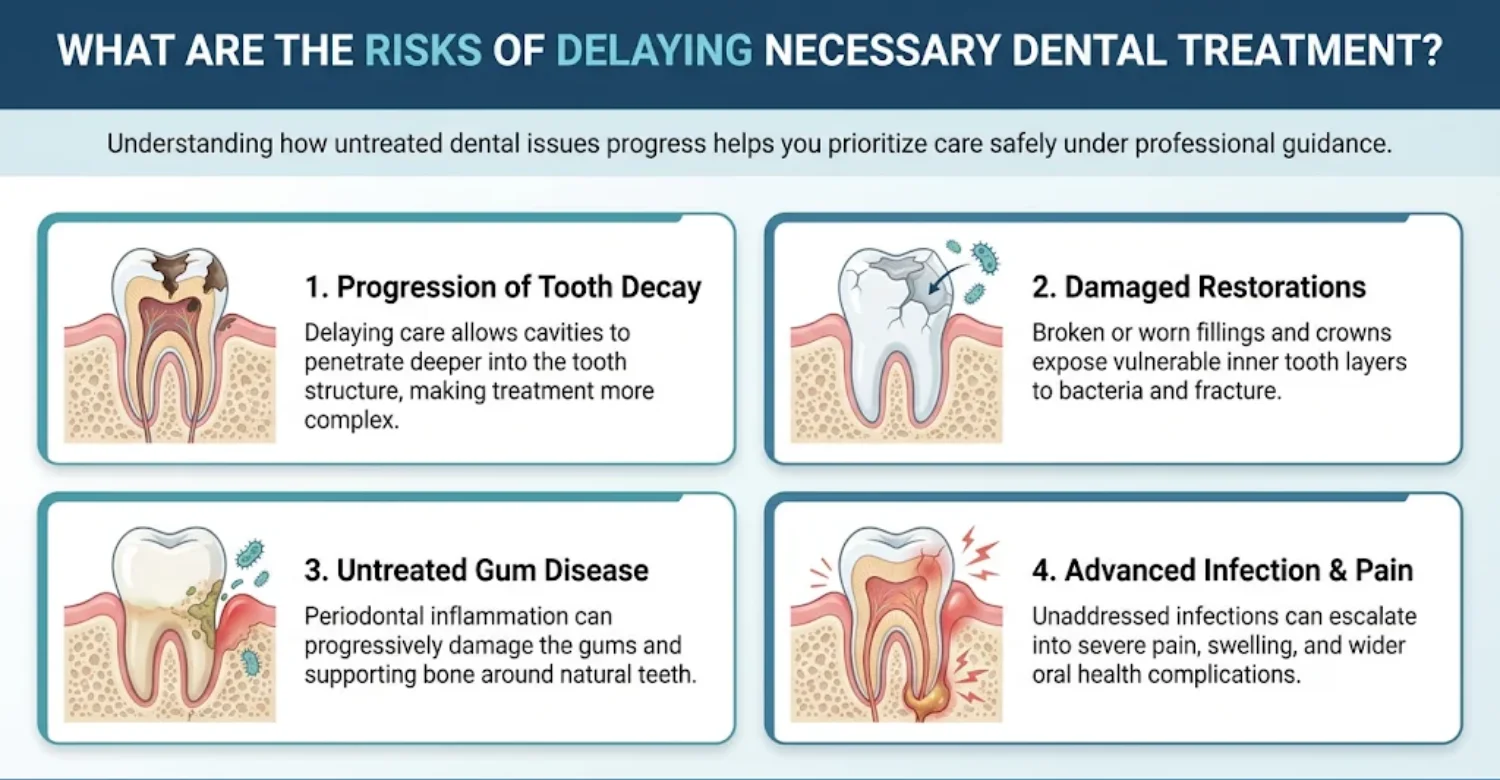
Delaying necessary treatment may allow dental problems to become more complex. Tooth decay can progress deeper into the tooth. A damaged restoration may also expose vulnerable tooth structures.
Untreated gum disease can affect the tissues supporting natural teeth. Advanced infection may lead to pain, swelling, and further complications. However, some conditions can be monitored safely under professional guidance. Understanding these differences is essential when prioritising dental treatment.
How Can You Maintain Oral Health Between Treatment Stages?
Maintaining oral hygiene is important throughout a staged treatment plan. Patients should follow the dentist's instructions for brushing and interdental cleaning. These habits help control plaque and support gum health.
Useful daily habits include:
Brush twice daily using fluoride toothpaste.
Clean between teeth with suitable interdental products.
Follow specific instructions after dental procedures.
Avoid chewing hard foods on damaged teeth.
Attend recommended follow-up appointments.
Contact the clinic if symptoms change or worsen.
Consistent maintenance supports healing and helps protect completed dental work. It also reduces the risk of additional problems during treatment.
How Does Vitrin Clinic Identify Which Dental Problems Need Priority?
At Vitrin Clinic, treatment planning begins with understanding each patient's dental condition. Our clinical team reviews existing problems, symptoms, medical history, and treatment expectations. Digital X-rays, CBCT scans, or 3D scans may be recommended when clinically necessary. These findings help identify infections, damaged teeth, gum problems, and other conditions requiring attention. We use this information to establish treatment priorities based on clinical needs. This approach makes prioritising dental treatment more organised and helps patients understand which procedures should come first. Patients also receive an explanation of the recommended treatments and their expected sequence.
How Does Vitrin Clinic Coordinate Multiple Dental Procedures?
Treating several dental problems requires careful coordination between procedures. At Vitrin Clinic, we organise treatment stages according to clinical priorities and healing requirements. Urgent conditions are addressed before suitable restorative procedures begin. When necessary, periodontal care or tooth stabilisation may come first. Our clinical team also considers appointment duration and the patient's travel schedule. This helps coordinate multiple procedures without rushing essential healing stages. Patients receive a proposed treatment schedule outlining the planned appointments. The sequence may change if clinical findings require adjustments during treatment.
What Support Does Vitrin Clinic Provide Throughout the Treatment Journey?
Managing multiple dental problems involves more than completing clinical procedures. Patients also need clear communication, appointment coordination, and suitable aftercare. At Vitrin Clinic, our patient coordinators help organise appointments and explain the treatment journey. The clinical team provides instructions relevant to each procedure and recovery stage. Patients can also discuss follow-up arrangements before travelling home. This support helps patients understand their responsibilities between appointments. It also makes extensive dental treatment easier to organise. Every recommendation remains subject to individual clinical findings and the patient's healing progress.
Ready to transform your smile?
Talk to our team and get a personal FREE treatment plan.
What Dental Treatments Can You Receive at Vitrin Clinic in Turkey?
Located in Istanbul, Vitrin Clinic provides a range of cosmetic, restorative, and specialist dental services. Each treatment is recommended according to the patient's oral health, clinical findings, and individual goals.
Hollywood Smile: A personalized full smile makeover using selected materials and digital smile design.
Dental Implants: Fixed tooth replacement designed to restore function and appearance.
Subperiosteal Implants: An option for selected patients with significant jawbone loss, potentially avoiding conventional bone grafting.
Invisalign: Clear aligner treatment without traditional metal brackets.
Dental Crowns: Restorations designed to protect damaged teeth, including same-day CEREC options when suitable.
Dental Bridges: Traditional and zirconia options for replacing missing teeth.
Periodontics: Treatments for gum disease, gum recession, and supporting bone problems.
Gingival Esthetics: Gum reshaping for selected concerns, including uneven gum contours.
Endodontics: Root canal treatment to address infection inside teeth.
Teeth Whitening: Professional options for improving the shade of natural teeth.
Same Visit Dentistry: Selected fillings, root canal treatments, and implant procedures may be organised during your stay when clinically suitable.
.jpg)

.jpg)
How Does Prioritising Dental Treatment Help You Manage Multiple Dental Problems?
Prioritising dental treatment starts with identifying urgent conditions. Infection, severe pain, trauma, and significant tissue damage usually require earlier attention. Gum health, tooth stability, and chewing function also influence treatment order.
Not every dental problem needs immediate intervention. Some procedures can be planned safely after urgent conditions are controlled. A structured plan helps prevent unnecessary delays and overlapping procedures.
At Vitrin Clinic, we organise treatment around individual clinical findings and priorities. Our team explains the proposed stages, expected appointments, and relevant limitations. This helps patients make informed decisions before starting extensive dental treatment.
Reference

Medically reviewed by
Dr. Rifat AlsamanDr. Rifat Alsaman has more than 5 years of clinical experience in dentistry and currently serves as the Head of the Medical Team at Vitrin Clinic. He is dedicated to providing exceptional patient care, overseeing treatment planning, and ensuring the highest clinical standards across the team. His expertise, attention to detail, and commitment to continuous professional development have helped countless patients achieve healthier, more confident smiles.
More in Discovery & Decision
View all 39 min readShould You Prioritise Cosmetic or Functional Dental Treatment?Understanding cosmetic vs functional dentistry helps patients decide which dental concerns need attention first. Some procedures improve smile appearance, while others protect teeth, restore chewing, or treat disease.
 27 min readHow Do You Know If You Are Ready for Extensive Dental Treatment?Extensive dental treatment requires careful planning before appointments begin.
 25 min readCan You Combine Dental Treatment with a Holiday in Turkey?Many international patients do it, and with good planning it can be safe, comfortable, and enjoyable. A dental holiday means travelling abroad for dental care and enjoying the destination around your appointments.
 20 min readHow Much Time Should You Take Before Agreeing to Dental Treatment?There is no single waiting period that suits every patient. The right time to decide on dental treatment can be a few hours, a few days, or several weeks. It depends on how urgent your condition is, how complex the procedure is, and how ready you feel.
Still have a question?
Our patient coordinators answer every day of the week: before, during and long after your treatment.